The Midland GXT1000 GMRS Walkie Talkie is a mid-range two-way radio designed for outdoor enthusiasts and families who need reliable communication beyond cell service. This radio operates on the GMRS frequency band with 50 channels and 142 privacy codes to reduce interference. It advertises a 36-mile range, though real-world conditions will vary.
The unit features JIS4 waterproof protection, NOAA weather alerts, and hands-free VOX operation. It runs on rechargeable battery packs with a desktop charging dock included. The power output reaches 5 watts on GMRS channels, making it stronger than basic FRS radios.
| Photo | Popular Portable Walkie Talkies | Price |
|---|---|---|
 | SKIWARRIOR Multifunctional Smart Wireless Ski Goggles with Walkie-Talkie, Anti-Fog Zeiss Lens, Music & Call Function (Cylindrical Blue) | Check Price On Amazon |
 | SINORISE Super Mini Walkie Talkies, Two-Way Radios, 3 Pack | Up to 12 Hours Battery Life, for Baseball Coaches, Restaurants, Retail Stores, Hospitals, Outdoor Sports & Travel | Check Price On Amazon |
 | KOSPET Tank M4C Smart Watch Rugged, Dual-Band GPS, 5ATM & IP69K Waterproof | 1.96" AMOLED Display, 170+ Sport Modes, Built-in LED Flashlight/Walkie-Talkie, Heart Rate/Sleep Monitor for Android & iPhone | Check Price On Amazon |
 | Retevis RT15 Walkie Talkies 3 Pack, Birthday Gift, Outdoor Adventure Kit | Durable, Lightweight, VOX, Key Lock, Mini Walkie Talkies for Adults, School Family Outdoor Travel Camping Hiking | Check Price On Amazon |
 | Rechargeable Walkie Talkies Toys for Kids: DIY Astronaut Walkie Talkies for Boys Christmas Birthday Gifts for 3 4 5 6 7 8 9 10 Boy Walkie Talkie Outdoor Hiking Toy 2 Way Radio Camping Outdoor Game | Check Price On Amazon |
But how well does it really perform in real conditions? Let’s find out.
Is the Midland GXT1000 GMRS Walkie Talkie Worth It?

Product Overview
The Midland GXT1000 is a GMRS two-way radio that blends consumer-friendly features with higher power output than typical FRS models. It operates across 50 GMRS and FRS channels with 142 CTCSS privacy codes. The advertised 36-mile range applies only to perfect line-of-sight conditions, like open water or flat desert terrain.
This radio targets families going on camping trips, hikers who stay within a few miles of each other, and anyone needing emergency backup communication. It’s also used by some event coordinators and property managers for short-range coordination. The build feels solid with rubberized grip areas and a sturdy antenna.
First impressions are positive. The buttons are large enough to use with gloves. The backlit display is clear and simple. Audio quality is clean at low to medium distances, and the unit feels ready for outdoor use.
How It Works
Using the GXT1000 is straightforward. Turn it on, select a channel, and press the push-to-talk button on the side to transmit. The radio uses FM modulation over GMRS frequencies, which require an FCC license for legal operation. You can also access shared FRS channels without a license.
Privacy codes don’t encrypt your signal. They filter out other users on the same channel by using sub-audible tones. If someone else is on your channel with a different code, you won’t hear them unless they switch to your code or use no code at all.
The GXT1000 transmits at 5 watts on GMRS channels and 0.5 watts on FRS channels. This power difference affects range significantly. In open fields, users report 2 to 4 miles of clear communication. In wooded areas or around buildings, expect closer to 1 mile or less.
Midland includes a high-gain antenna that improves performance compared to shorter rubber antennas found on budget models. The radio scans channels automatically and can lock onto active conversations if you enable that feature.
Durability and Certifications
The GXT1000 carries a JIS4 waterproof rating, which means it can handle splashing water but not full submersion. It’s designed to survive rain, snow, and accidental spills. Don’t drop it in a lake and expect it to keep working.
The outer shell is made from tough ABS plastic with rubberized sections for grip. Drop tests from waist height generally don’t cause internal damage, though the belt clip may break off. The antenna is flexible and resists snapping during impacts.
This radio is FCC certified for GMRS and FRS operation. It also receives all seven NOAA weather channels with alert functionality. When severe weather warnings are issued, the radio will automatically activate and notify you.
| Feature | Midland GXT1000 | Motorola T600 | Cobra ACXT1035 |
|---|---|---|---|
| Waterproof Rating | JIS4 | IP67 | None |
| NOAA Alerts | Yes | Yes | Yes |
| FCC Certified | Yes | Yes | Yes |
| Drop Protection | Moderate | High | Low |
Real-World Performance
In open terrain like beaches or farm fields, the GXT1000 can reach 3 to 4 miles consistently. This drops to around 1 mile in dense forests where trees absorb radio signals. Urban environments with concrete buildings reduce range to half a mile or less.
Audio clarity is good when both radios have strong signals. As you move farther apart, static increases gradually before cutting out completely. The speaker is loud enough to hear outdoors without maxing out the volume.
The GXT1000 works well for hiking groups that stay within visual range or for families spread across a campground. It’s not ideal for long-distance communication or use in heavily built-up areas. The 5-watt power output helps, but physics still limits what’s possible.
One advantage is the eVOX feature, which adjusts voice activation sensitivity based on background noise. This works better than basic VOX modes found on cheaper radios. However, wind noise can still trigger false activations.
Battery and Charging
The GXT1000 uses rechargeable NiMH battery packs that slide into the back of the unit. Each pack provides roughly 10 to 12 hours of typical use, which includes periods of standby and occasional transmissions. Continuous talk time drops this to around 6 to 8 hours.
Charging happens through a desktop dock that plugs into a standard wall outlet. A full charge takes about 8 to 10 hours from empty. There’s no USB charging option, which may frustrate users who prefer portable power banks.
You can also swap in AA batteries using an adapter tray if the rechargeable pack dies in the field. This flexibility is useful for longer trips where recharging isn’t practical. Six AA batteries will run the radio for 8 to 10 hours depending on usage patterns.
Battery life depends heavily on transmit power and how often you talk. Using high-power GMRS channels drains the battery faster than low-power FRS channels. The radio includes a battery meter on the display to track remaining charge.
Cost and Value
The Midland GXT1000 typically sells for around $60 to $80 per pair, depending on sales and retailer. This places it in the mid-range category, above basic FRS models but below professional-grade GMRS radios.
You get two radios, two rechargeable battery packs, a dual-port desktop charger, two belt clips, and a user manual. No headset or earpiece is included, though the radio supports accessories with a standard 2.5mm jack.
Replacement battery packs cost about $15 to $20 each and last several years with normal use. The radios themselves are durable enough to last five years or more if treated reasonably well. This makes the total cost of ownership fairly low compared to disposable AA-only models.
For families who camp a few times per year or property owners who need occasional communication, the value is solid. For daily professional use, you might want something tougher with longer battery life.
Comparison with Top Competitors
| Feature | Midland GXT1000 | Motorola T600 | Cobra ACXT1035 |
|---|---|---|---|
| Frequency Band | GMRS/FRS | FRS/GMRS | GMRS/FRS |
| Advertised Range | 36 miles | 35 miles | 37 miles |
| Real-World Range | 2-4 miles | 2-4 miles | 2-3 miles |
| Power Output | 5 watts | 2 watts | 5 watts |
| Channels | 50 | 22 | 40 |
| Privacy Codes | 142 | 121 | 70 |
| Waterproof Rating | JIS4 | IP67 | None |
| Battery Type | Rechargeable NiMH | Rechargeable Li-ion | Rechargeable NiMH |
| Battery Life | 10-12 hours | 12-14 hours | 8-10 hours |
| Charging Method | Dock | Dock/USB | Dock |
| VOX Hands-Free | Yes (eVOX) | Yes | Yes |
| NOAA Weather | Yes | Yes | Yes |
| Typical Price (Pair) | $60-$80 | $80-$100 | $50-$70 |
Review Rating Summary
The GXT1000 delivers solid performance for recreational and light-duty use. It’s not the toughest or longest-lasting radio available, but it balances features and price well.
| Category | Rating (1-5) | Summary |
|---|---|---|
| Range and Clarity | 3.5 | Good within 2-4 miles in open areas, drops significantly in obstacles |
| Battery Life and Charging | 3.5 | 10-12 hours typical use, long charge time, AA backup option helpful |
| Durability and Build | 4.0 | Solid construction, JIS4 waterproof, handles drops reasonably well |
| Features and Compatibility | 4.0 | 50 channels, 142 codes, NOAA alerts, eVOX, works with FRS radios |
| Value for Money | 4.5 | Affordable mid-range option with rechargeable batteries and charging dock included |
| Overall | 4.0 | Reliable GMRS radio for families and outdoor recreation with good feature set |
Verdict
| Midland GXT1000 GMRS Walkie Talkie | Check Latest Price |
The Midland GXT1000 is best for families, casual hikers, campers, and anyone who needs reliable short-range communication without cell service. It offers enough power and features for recreational use while staying affordable and easy to operate.
You should consider this radio if you camp regularly, coordinate group activities outdoors, or want emergency backup communication. The NOAA weather alerts add real safety value. The rechargeable batteries save money over time compared to disposable options.
You might prefer alternatives if you need longer battery life, USB charging, or better waterproofing. Professional users who need all-day runtime should look at commercial-grade models. Budget buyers who only need basic FRS communication can save money with simpler radios.
Overall, the GXT1000 hits a sweet spot between features and price. It’s a solid choice for most recreational users who want more capability than basic FRS radios but don’t need professional-grade equipment.
What is the real-world outdoor range of the Midland GXT1000 GMRS Walkie Talkie compared to the 36-mile range it’s advertised with?
The advertised 36-mile range on the GXT1000 applies only to perfect line-of-sight conditions with no obstructions. This might happen across flat water, open desert, or between mountaintops. In reality, you’ll rarely experience anything close to this distance.
Real-world range depends heavily on terrain and obstacles. In open fields or beaches with clear line of sight, expect 2 to 4 miles of reliable communication. This drops to 1 mile or less in forests where trees absorb radio signals. Dense urban areas with buildings reduce range to half a mile or even less.
The 5-watt power output on GMRS channels helps the GXT1000 outperform basic FRS radios that max out at 0.5 watts. However, physics limits what’s possible. Radio waves travel in straight lines and don’t bend around obstacles well at these frequencies.
Elevation helps significantly. If one person stands on a hilltop while the other is in a valley, you’ll get better range than both people at the same elevation with terrain in between. This is why mountaintop-to-mountaintop communication can reach impressive distances.
Weather conditions have minimal impact on range at GMRS frequencies. Rain, fog, and snow cause only slight signal degradation. Temperature inversions can occasionally extend range, but this isn’t predictable or reliable.
| Terrain Type | Expected Range | Conditions |
|---|---|---|
| Open water or flat desert | 3-6 miles | Perfect line of sight, no obstacles |
| Open fields or beaches | 2-4 miles | Minimal obstacles, good visibility |
| Light forest or suburban | 1-2 miles | Some trees and buildings |
| Dense forest | 0.5-1 mile | Heavy vegetation absorbs signals |
| Urban with tall buildings | 0.25-0.5 mile | Concrete and steel block signals |
How long does the battery of the Midland GXT1000 GMRS Walkie Talkie last during continuous use, and what is the typical recharge time?
The included NiMH rechargeable battery packs provide different runtime depending on how you use the radio. Under typical mixed use with periods of listening, occasional transmitting, and standby time, expect 10 to 12 hours. This matches most day trips and camping outings.
Continuous talk time drains the battery much faster. If you’re transmitting constantly, the battery will last only 6 to 8 hours. Receiving signals uses less power than transmitting, so listening mode extends battery life significantly.
Using high-power GMRS channels (5 watts) consumes more energy than low-power FRS channels (0.5 watts). If you switch to low-power mode when communicating at close range, you’ll stretch battery life considerably. The radio includes power-saving features that reduce consumption during standby periods.
Recharging takes 8 to 10 hours from completely empty. The desktop dock uses a trickle charge method that’s slower than modern USB fast charging but safer for battery longevity. You should charge overnight after a full day of use.
Cold weather reduces battery performance like all rechargeable batteries. Expect 20 to 30 percent less runtime in freezing temperatures. Keep the radio close to your body to maintain warmth when not actively using it.
The AA battery adapter provides an emergency backup option. Six AA batteries will power the radio for 8 to 10 hours depending on usage patterns. Alkaline batteries work better in cold weather than rechargeable packs.
Can the Midland GXT1000 GMRS Walkie Talkie be charged via USB, or does it require a specific docking station?
The GXT1000 requires the included desktop docking station for charging. There’s no USB charging port on the radio itself. This design choice reflects the model’s age, as it was released before USB charging became standard on consumer electronics.
The desktop dock plugs into a standard wall outlet using an AC adapter. You drop each radio into a charging slot, and contacts on the back of the unit connect with pins in the dock. A small LED indicator shows charging status.
This means you need access to wall power to recharge. You can’t use a portable USB power bank or car USB adapter like you can with newer models. For camping trips without electrical hookups, bring spare AA batteries and the adapter tray instead.
Some users modify the setup by using a portable AC power inverter connected to a car battery or solar generator. This works but adds complexity and cost. If USB charging is important to you, consider the Motorola T600 or similar newer models.
The dock does have the advantage of charging two radios simultaneously, and the connection is more reliable than micro-USB ports that can wear out. The trade-off is less portability and flexibility in charging options.
Is the Midland GXT1000 GMRS Walkie Talkie truly waterproof or just water-resistant, and what is its IP rating?
The GXT1000 carries a JIS4 waterproof rating, which falls between water-resistant and fully waterproof. JIS4 means the radio can withstand splashing water from any direction but cannot survive submersion. Think of it as rain-proof rather than swim-proof.
In practical terms, the radio will handle rain, snow, and accidental spills without issues. You can use it in wet weather without worry. However, dropping it in a stream, puddle, or lake will likely cause water damage and permanent failure.
The JIS4 standard is roughly equivalent to IPX4 in the more common IP rating system. This is less protective than IP67, which allows submersion up to 1 meter for 30 minutes. If you need true waterproof protection for water sports or boating, look for IP67-rated models.
The rubber port cover over the accessory jack helps keep water out but must be firmly closed. The battery compartment seal also prevents moisture intrusion as long as it’s properly secured. Regular inspection of these seals maintains water resistance over time.
For hiking, camping, and general outdoor use in potentially wet conditions, JIS4 protection is adequate. Just don’t assume the radio is indestructible or fully waterproof. Treat it with reasonable care around significant water hazards.
How easy is it to program channels and set privacy codes on the Midland GXT1000 GMRS Walkie Talkie?
Programming the GXT1000 is straightforward and doesn’t require computer software or technical knowledge. The radio uses a simple button interface with a clear LCD display showing current settings. Most users figure out basic operation within a few minutes.
To change channels, press the up or down arrows on the keypad. The display shows the channel number and whether it’s a GMRS or FRS frequency. The radio scrolls through all 50 available channels in sequence.
Setting privacy codes takes one additional step. Press the menu button, scroll to the code option, and select a number from 0 to 142. Zero means no code, which lets you hear all traffic on that channel. Any other number filters out users with different codes.
You can save preferred channels to memory for quick access. The scan function automatically checks all channels for activity, which helps find available channels in crowded areas. The radio remembers your last settings when you turn it off.
The user manual explains each function clearly with diagrams. Even people unfamiliar with two-way radios can set up the GXT1000 without frustration. The button layout is logical, and the menu system isn’t buried in complicated submenus.
Advanced features like weather alert setup and VOX sensitivity adjustment require slightly more menu navigation, but nothing that takes more than a minute or two to learn. The backlit display helps when programming in low light.
What accessories come with the Midland GXT1000 GMRS Walkie Talkie package, and are they necessary for optimal performance?
The standard package includes two GXT1000 radios, two rechargeable NiMH battery packs, one dual-port desktop charging dock, two belt clips, two AA battery adapter trays, and a user manual. This covers everything needed for basic operation right out of the box.
The rechargeable battery packs are essential for regular use and save significant money compared to disposable batteries. The desktop charger is well-built and charges both radios simultaneously overnight. These included items represent good value compared to buying them separately.
The belt clips attach firmly to the back of each radio and hook onto belts or backpack straps. They’re functional but made from basic plastic that can break if stressed. Some users replace them with aftermarket clips or use nylon radio holsters instead.
The AA battery adapter trays provide critical backup power when you can’t recharge. You should always bring spare AA batteries on longer trips as insurance. This flexibility is a major advantage over radios that only accept proprietary battery packs.
Optional accessories not included are headsets, earpieces, and external speaker microphones. The radio has a standard 2.5mm audio jack that accepts most two-way radio accessories. A headset or earpiece is highly recommended for hands-free operation, especially while hiking or working.
You don’t need any additional accessories for basic function, but a headset improves usability significantly. An extra set of rechargeable batteries is also worth considering if you use the radios frequently or for extended periods.
Does the Midland GXT1000 GMRS Walkie Talkie have VOX functionality for hands-free operation, and how responsive is it?
Yes, the GXT1000 includes eVOX hands-free operation, which is Midland’s enhanced voice-activated transmission system. This feature automatically keys the radio when you speak, eliminating the need to press the push-to-talk button. It’s particularly useful when your hands are occupied with hiking poles, tools, or other equipment.
The eVOX system has three sensitivity levels you can adjust based on your environment. High sensitivity activates with quiet speech but may trigger from background noise. Low sensitivity requires louder speech but reduces false activations. Medium works well for most outdoor situations.
In practice, eVOX works better than basic VOX systems found on cheaper radios. It adapts to ambient noise levels and reduces false triggers from wind or rustling clothing. However, strong wind directly hitting the microphone can still cause unwanted transmissions.
Response time is quick. The radio begins transmitting within a fraction of a second after you start speaking. There’s a slight delay at the end of your sentence before it stops transmitting, which prevents cutting off the last word. This delay is adjustable in the menu settings.
VOX works best with a compatible headset or earpiece that positions the microphone consistently near your mouth. Using VOX with the built-in microphone is less reliable because the radio’s position changes when clipped to your belt or pack.
Battery life decreases when using VOX because the radio remains more active monitoring for voice input. Expect roughly 20 percent less runtime compared to standard push-to-talk operation. For extended trips, consider toggling VOX off when not needed.
Are there any interference issues reported while using the Midland GXT1000 GMRS Walkie Talkie in urban areas?
Urban interference is a common challenge for all consumer two-way radios, and the GXT1000 is no exception. Cities have many GMRS and FRS users sharing the same 50 channels, plus other RF devices operating on nearby frequencies. You’ll definitely hear other conversations in populated areas.
The 142 privacy codes help filter out other users on your chosen channel. However, these don’t stop others from transmitting on your frequency. If someone else transmits while you’re talking, their signal can override yours if they’re closer to the receiving radio.
Concrete buildings and steel structures reflect radio signals, creating multipath interference. This causes echoes, distortion, and signal fading even at short distances. The GXT1000’s 5-watt power helps punch through some interference but can’t completely overcome urban RF challenges.
Electrical interference from power lines, motors, and electronic equipment adds background noise to received signals. This is more noticeable in industrial areas or near major infrastructure. Moving away from interference sources improves clarity significantly.
The best strategy in urban areas is to scan channels and find the least-used frequencies. Higher-numbered GMRS channels often have less traffic than the shared FRS channels. Using privacy codes then filters out remaining casual users.
Some users report better urban performance by switching to low-power mode when communicating at close range. This reduces the chance of your signal traveling far enough to interfere with distant users who might then respond and cause confusion.
How does the audio clarity of the Midland GXT1000 GMRS Walkie Talkie hold up while communicating through trees or walls?
Audio clarity on the GXT1000 remains good when both radios have adequate signal strength. The speaker delivers clear, understandable voice reproduction without excessive harshness or distortion. Volume levels are sufficient for outdoor use without needing maximum output.
Trees absorb and scatter radio signals, especially when leaves are wet. Dense forest reduces range significantly and introduces increasing static as you move farther apart. Within half a mile through moderate woods, audio stays clear. Beyond that, static gradually overtakes the voice signal.
Walls block signals more effectively than trees, with materials making a huge difference. Wood frame construction with vinyl siding allows better penetration than concrete or brick. Metal buildings like warehouses almost completely block GMRS frequencies. Communication through walls typically works within 100 to 300 feet depending on building materials.
The GXT1000 handles weak signals reasonably well. You’ll hear some static and occasional dropouts as range extends, but voices remain intelligible until the signal fails completely. There’s no digital compression or processing, so what you hear is the raw FM signal.
Background noise at the transmitting end comes through clearly, which can be good or bad. Conversations in noisy environments include wind, machinery, or other sounds. The eVOX system has noise filtering that helps reduce this issue compared to basic VOX.
Using a privacy code doesn’t affect audio quality but does reduce interference from other users. This indirectly improves clarity in areas with heavy radio traffic. The noise filtering helps on weak signals by reducing hiss between words.
What is the power output of the Midland GXT1000 GMRS Walkie Talkie, and how does it affect signal strength?
The GXT1000 transmits at 5 watts effective radiated power on GMRS channels and 0.5 watts on FRS channels. This power difference is legally mandated by FCC regulations. The higher power on GMRS channels provides noticeably better range and penetration through obstacles.
Five watts puts the GXT1000 in the upper tier of consumer handheld radios. Most basic FRS-only models max out at half a watt. This tenfold power increase translates to roughly 1.5 to 2 times the communication range under similar conditions.
Power output directly affects how far your signal travels before dropping below the receiver’s sensitivity threshold. Higher power also helps punch through obstacles like trees and buildings. However, power isn’t everything. Antenna design and frequency matter too.
The radio includes both high and low power modes you can select manually. High power drains the battery faster but maximizes range. Low power extends battery life and is sufficient for close-range communication. Switching between modes based on distance is smart battery management.
At GMRS frequencies around 462 MHz, signals travel in mostly straight lines. Power increases the distance those lines effectively carry usable signal. Doubling power doesn’t double range. It follows a logarithmic relationship where significant power increases yield moderate range improvements.
Compared to professional mobile radios that can output 25 to 50 watts, the GXT1000’s 5 watts seems modest. However, handheld size, battery capacity, and heat dissipation limit practical power levels. Five watts represents a reasonable balance for portable consumer use.
Is the Midland GXT1000 GMRS Walkie Talkie compatible with FRS radios for communication and sharing channels?
Yes, the GXT1000 can communicate with FRS-only radios because it transmits on shared FRS/GMRS channels. Channels 1 through 22 are available on both radio types, allowing basic interoperability. Both users must select the same channel and privacy code to communicate.
However, there are limitations. The GXT1000 must switch to low-power mode (0.5 watts) when using FRS channels to comply with FCC regulations. This limits its range to match FRS radio capabilities. You lose the benefit of the higher 5-watt GMRS power on these shared channels.
GMRS-only channels 23 through 50 on the GXT1000 cannot communicate with FRS radios at all. These frequencies are restricted to licensed GMRS operation. If you select one of these channels, any FRS radio users won’t hear you even if they try.
Privacy codes work the same way across FRS and GMRS radios. If you set code 12 on the GXT1000 and an FRS user sets code 12, you’ll communicate without hearing other users on different codes. This compatibility makes coordinating with mixed radio groups straightforward.
Some FRS radios don’t have access to all privacy codes that the GXT1000 offers. Basic FRS models might only have 38 codes while the GXT1000 has 142. Stick to lower-numbered codes for better compatibility across different radio brands and types.
For family outings where some people have the GXT1000 and others have basic FRS radios, this compatibility is valuable. Everyone can stay in touch using channels 1 through 22. Just remember that the GXT1000 users won’t get the full range advantage when talking to FRS radios.
How durable is the Midland GXT1000 GMRS Walkie Talkie in terms of drop protection and rugged outdoor use?
The GXT1000 is built to handle typical outdoor use but isn’t indestructible. The outer shell uses tough ABS plastic with rubberized sections that absorb minor impacts. Most users report the radio surviving multiple waist-height drops onto dirt, grass, or gravel without damage.
Drops onto hard surfaces like concrete or rock can crack the housing or break internal components, especially if the radio lands on a corner. The belt clip is a common failure point because it creates a lever arm during impacts. Many users remove the belt clip before activities where drops are likely.
The antenna is flexible rubber that bends rather than breaks during impacts. It’s removable, which means you can replace it if damaged. The antenna threads are metal and hold up well to repeated removal and installation. This is better than cheaper radios with permanently attached antennas.
The button rubber covers can separate from the housing over time with heavy use. This usually happens after a year or more of frequent use rather than from specific drops. Keeping the radio clean and dry extends the life of these rubber components.
For serious rugged use like construction sites, rock climbing, or extreme sports, you might want something tougher. Professional-grade radios with reinforced cases and higher waterproof ratings handle abuse better. The GXT1000 is designed for recreational outdoor use, not industrial environments.
With reasonable care, the radio easily lasts five years or more. Using a protective case or pouch adds extra insurance. The JIS4 water resistance means weather isn’t a concern for durability. Most failures come from severe impacts rather than gradual wear.
How does the display of the Midland GXT1000 GMRS Walkie Talkie perform in direct sunlight?
The GXT1000 uses a backlit LCD display that shows channel number, privacy code, battery level, and various status icons. The screen is readable in most lighting conditions but has limitations in very bright direct sunlight.
In shade or indoor lighting, the display is clear and easy to read at a glance. The backlight activates automatically when you press any button, making the screen visible in darkness or low light. The backlight stays on for several seconds after the last button press.
Direct overhead sunlight reduces contrast and makes the display harder to read. The LCD technology and screen angle affect visibility. Tilting the radio to change the viewing angle usually helps find a position where you can read the numbers clearly.
The display glass or plastic doesn’t have an anti-glare coating, so bright reflections can wash out the screen. Cupping your hand over the display to create shade is a common workaround. This is a minor inconvenience rather than a major usability problem.
In practical terms, most outdoor users don’t need to look at the display constantly. Once you’ve selected your channel and settings, you can operate the radio by touch using the large buttons. The audio feedback helps confirm button presses without checking the screen.
Compared to newer OLED or high-contrast displays found on premium radios, the GXT1000’s screen is average. It’s functional and sufficient but not exceptional. For most users, sunlight readability isn’t a deal-breaker given the radio’s overall value and performance.
What are the licensing requirements for using the Midland GXT1000 GMRS Walkie Talkie legally in the USA?
Operating the GXT1000 on GMRS channels legally requires a GMRS license from the FCC. This license costs $35 and is valid for ten years. It covers you and your immediate family members, so one license per household is sufficient for multiple radios.
Getting a GMRS license is simple. Visit the FCC website, complete the online application, pay the fee, and your license typically processes within a few days. No test or technical knowledge is required. You receive a call sign that technically should be announced on-air, though casual users rarely do this.
FRS channels don’t require any license. The GXT1000 can operate on channels 1 through 22 in low-power mode without a GMRS license under FRS rules. However, you lose the advantage of higher power and access to GMRS-only channels 23 through 50.
Many users buy GMRS radios without getting a license, which is technically illegal. Enforcement is practically nonexistent for casual recreational use, but you’re still violating FCC regulations. For peace of mind and legal compliance, spending $35 for a ten-year license is worthwhile.
The license requirement is per person, not per radio. Once you have a GMRS license, you can use as many GMRS radios as you want. You can also authorize employees or others in commercial settings by including them on your license application.
If you travel to other countries, GMRS is a US-specific service. Other countries have different frequency allocations and licensing rules. Always research local regulations before using two-way radios internationally. The GXT1000 frequencies may be restricted or illegal elsewhere.
Can the Midland GXT1000 GMRS Walkie Talkie be used effectively for family outings or large group events?
The GXT1000 works very well for family outings like camping trips, theme park visits, or beach days. The range is adequate for keeping track of family members spread across a campground or outdoor venue. Easy operation means even children can learn to use the basic functions quickly.
For camping, the radios help coordinate meal times, notify others about interesting discoveries, or call for help if someone gets injured. The NOAA weather alerts provide valuable safety information about approaching storms. The rechargeable batteries eliminate the need to pack lots of disposable batteries.
At theme parks or fairs, the radios help groups stay coordinated without expensive cell phone roaming or spotty coverage. The range works within most venues, though large buildings and crowds can interfere with signals. Setting a unique privacy code reduces interference from other groups using the same channel.
For large group events like weddings, volunteer activities, or corporate outings, the GXT1000 can work if the area isn’t too spread out. The 50 channels allow multiple subgroups to use different frequencies for separate conversations. However, professional event coordinators usually prefer commercial-grade radios with better range and battery life.
The limitation is that each radio operates independently. There’s no group call, selective calling, or text messaging features found on more advanced models. Everyone on the same channel hears all conversations. Larger groups should plan channel assignments and communication protocols in advance.
For families of three to six people staying within a mile of each other, the GXT1000 is nearly ideal. For organized groups of 20 or more people spread over larger areas, you’ll want more sophisticated radios or multiple sets operating on different channels with designated coordinators.
What type of battery does the Midland GXT1000 GMRS Walkie Talkie use, and is it replaceable?
The GXT1000 comes with rechargeable NiMH battery packs that slide into the battery compartment on the back of the radio. These packs are removable and replaceable. You can purchase replacement packs directly from Midland or third-party suppliers for around $15 to $20 each.
NiMH batteries are a proven technology that balances capacity, safety, and cost. They don’t suffer from the memory effect that plagued older NiCd batteries. However, they gradually lose capacity over several years of use. Replacement every three to five years maintains optimal performance.
The radio also accepts standard AA batteries using an included adapter tray. This tray holds six AA batteries and replaces the rechargeable pack in the same compartment. Both alkaline and rechargeable AA batteries work, giving you flexible power options for different situations.
Using AA batteries as your primary power source increases operating costs but provides ultimate flexibility. You can buy batteries anywhere, and they store longer than rechargeable packs. For emergency preparedness, keeping spare AA batteries is smart backup planning.
The rechargeable packs don’t have user-serviceable cells. When capacity degrades, you replace the entire pack rather than individual cells. This is simpler but less economical than radios with removable 18650 or similar battery formats. The trade-off is foolproof installation and reliable contacts.
Battery life for both rechargeable packs and AA batteries is similar under normal use. Rechargeable packs save money and reduce waste for regular users. AA batteries make sense for occasional users or as emergency backup. Having both options available is one of the GXT1000’s best features.
Are there any issues noted with the belt clip durability on the Midland GXT1000 GMRS Walkie Talkie?
Belt clip durability is one of the most commonly reported weak points of the GXT1000. The clip is made from basic plastic that can break after repeated use or moderate stress. Many users report clips cracking or snapping off within the first year of regular use.
The clip attaches to the radio body with a rotating hinge that allows you to adjust the angle. This hinge point is where failures most often occur. Over-tightening the clip on thick belts or straps puts stress on the plastic that eventually causes cracks.
When the radio is dropped while clipped to your belt, the clip can act as a lever that amplifies impact forces. This often results in the clip breaking off completely. The radio itself may survive while the clip doesn’t. Some users remove clips entirely before activities with high drop risk.
Replacement belt clips are available from Midland for around $5 to $10. Third-party clips or universal two-way radio clips also work. Many users upgrade to aftermarket metal clips or switch to nylon radio holsters that provide better protection and longer life.
The clip design isn’t unusually bad compared to similar consumer-grade radios. Most two-way radio belt clips are potential failure points. Professional radios often use more robust attachment systems or rely on carrying cases instead of clips.
If the belt clip breaks, you can still use the radio perfectly well. Consider it a disposable accessory rather than a permanent component. Carrying the radio in a pack, pocket, or dedicated holster avoids the clip issue entirely.
Is the Midland GXT1000 GMRS Walkie Talkie suitable for emergency preparedness situations?
The GXT1000 makes a solid addition to emergency preparedness kits. Communication independence from cell networks is valuable when infrastructure fails during natural disasters or other emergencies. The NOAA weather alert function provides critical early warning of severe weather.
The rechargeable batteries are convenient for everyday use, but the AA battery compatibility is crucial for emergencies. During extended power outages, you can run the radios on stored AA batteries without needing to recharge. Stock both alkaline and lithium AA batteries for maximum shelf life.
GMRS range limitations mean these radios work for neighborhood or local communication but not across entire cities. For coordinating with nearby family members, neighbors, or local response teams, the GXT1000 is adequate. For long-distance emergency communication, you’d need amateur radio equipment.
The JIS4 water resistance helps in storms or floods, though full waterproof protection would be better for extreme conditions. The radio will survive rain while you evacuate or work outdoors. Just keep it out of standing water or full submersion.
NOAA weather radio functionality is perhaps the most valuable emergency feature. The radio continuously monitors weather channels and sounds an alarm when alerts are issued for your area. This works even if you’re not actively using the radio for communication.
For emergency preparedness, pair the GXT1000 with other essentials like flashlights, first aid supplies, and stored food and water. Communication is one piece of comprehensive preparation. Keep the radios in your emergency kit with fresh batteries, and test them every few months to ensure they’re ready when needed.
How does the range of the Midland GXT1000 GMRS Walkie Talkie compare to other models in its price range?
In the $60 to $80 price bracket, the GXT1000 offers competitive range performance. The 5-watt power output matches or exceeds most consumer GMRS radios in this category. Real-world range of 2 to 4 miles in open terrain is typical for this class of radio.
Compared to the Motorola T600, which is a direct competitor, the GXT1000 performs similarly in open areas. The T600 has better waterproof protection (IP67 versus JIS4) but lower power output (2 watts versus 5 watts). In practice, both achieve comparable range because factors beyond power affect signal propagation.
The Cobra ACXT1035 is slightly cheaper and offers similar 5-watt GMRS power. Range performance is nearly identical in field testing. The Cobra lacks waterproof protection entirely, while the GXT1000 at least has splash resistance. For outdoor use, the Midland is the better choice.
Budget FRS-only radios like the Midland T10 cost less but max out at 0.5 watts. Real-world range is typically under 1 mile even in open areas. The power difference between FRS and GMRS is substantial and worth the extra cost for users who need better range.
Professional models from brands like Bushnell LPX150 can cost $150 or more per unit but don’t always deliver dramatically better range. They offer superior build quality, longer battery life, and better features rather than significantly greater distance. For recreational users, the GXT1000’s range-to-price ratio is hard to beat.
| Model | Price Range | Power Output | Real-World Range | Key Advantage |
|---|---|---|---|---|
| Midland GXT1000 | $60-$80 | 5 watts | 2-4 miles | Balanced features and value |
| Motorola T600 | $80-$100 | 2 watts | 2-4 miles | IP67 waterproof, USB charging |
| Cobra HE130G | $50-$70 | 5 watts | 2-3 miles | Lower price point |
| Midland T10 | $20-$30 | 0.5 watts | 0.5-1 mile | Budget-friendly, no license |
What specific scenarios are best suited for the Midland GXT1000 GMRS Walkie Talkie, such as hiking or construction?
The GXT1000 excels in several specific scenarios where its combination of features, range, and price makes sense. Understanding these ideal use cases helps you decide if this radio matches your needs.
Hiking and backpacking groups benefit from the GXT1000 when staying within a few miles of each other. The radios keep separated hikers in contact for coordinating breaks, navigation decisions, or emergencies. The rechargeable batteries handle day hikes easily, while AA backup supports multi-day trips. NOAA weather alerts warn of changing conditions in backcountry areas.
Family camping trips are perhaps the ideal scenario. Parents can let kids explore the campground independently while maintaining voice contact. The radios coordinate meal prep, bathroom trips, and activities across spread-out campsites. Easy operation means even young children can call for help if needed. The price point makes sense for equipment that might only see a few weekends of annual use.
For construction use, the GXT1000 works for small crews on compact job sites. Range limitations become apparent on larger sites or when separated by buildings. Professional crews working daily should invest in commercial-grade radios with better durability and battery life. Weekend DIY projects or small contracting jobs where radio reliability isn’t mission-critical work fine with the GXT1000.
Off-road vehicle groups like ATVs, UTVs, or 4×4 trucks use these radios effectively when staying within visual or near-visual range. The radios coordinate trail navigation, warn about obstacles, and enhance safety. The power output provides better penetration through terrain than basic FRS radios. Mount the radio in the vehicle or use a headset for hands-free communication while driving.
Neighborhood emergency communication networks benefit from standardizing on the GXT1000 or similar GMRS radios. During power outages or disasters, neighbors can coordinate security watches, share resources, and relay information. The NOAA alerts ensure everyone receives weather warnings. Pre-arranged channels and codes prevent interference with other groups.
Large property management including farms, ranches, or estates uses these radios for coordinating work across buildings or fields. The range works for properties up to a few hundred acres depending on terrain. Daily heavy use will wear out the radios faster than recreational use, so budget for replacements every few years.
Ski groups at resorts can stay in touch across different slopes and lifts. The cold weather reduces battery life, so bring spare battery packs. The radios fit in jacket pockets and work with gloves. Voice quality is clear even with wind noise, making coordination much easier than cell phones in noisy ski environments.
The GXT1000 is not ideal for marine use despite water resistance. The range is insufficient for boat-to-boat or boat-to-shore communication over open water where VHF marine radios are required. The JIS4 rating also doesn’t provide adequate protection against full water immersion during capsizing or falling overboard.
| Midland GXT1000 GMRS Walkie Talkie | Check Latest Price |
| Photo | TOP RATED WALKIE TALKIES | Price |
|---|---|---|
 | Retevis RT628 Kids Walkie Talkies, Toys Gifts for 4-12 Year Old Girl Boy | Kids Camping Essentials Outdoor Toys, Birthday Gift, 22CH, VOX, Keypad Lock, Durable, Easy to Use Walkie Talkies for Kids | Check Price On Amazon |
 | Cobra ACXT545 Weather-Resistant Walkie Talkies, Rechargeable, 22 Channels | Long Range 28-Mile Two-Way Radio Set (2-Pack) | Check Price On Amazon |
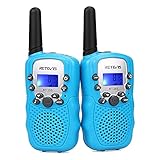 | Retevis RT388 Kids Walkie Talkies, Outdoor Toys for Kids Camping Essentials | 4-12 Year Old Boy Birthday Gift, 22 CH VOX Flashlight Clear Sound, Kids Walkie Talkies 2 Pack for Camping Hiking Adventure | Check Price On Amazon |
 | Cobra RX680 Walkie Talkies (2-Pack), IP54 Water Resistant Design | Rugged & Splashproof Two Way Radios Long Range, 60 Pre-Programmed Channels, Weather Alerts | Check Price On Amazon |
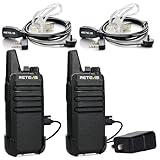 | Retevis RT22 Walkie Talkies Long Range Rechargeable with Earpiece (2 Pack) | Slim & Lightweight 2 Way Radio For Camping & Hiking, Pocket-Friendly Antenna, Ready to Use, 10-Hour Battery, USB-C Charging | Check Price On Amazon |
 | Midland GXT1000VP4 GMRS Two-Way Radios with Headsets, Black, 2 Pack | 50 Channels, 142 Privacy Codes, Up to 36 Mile Long Range, JIS4 Water Resistant, NOAA Weather Alert, Rechargeable NiMH | Check Price On Amazon |
 | Retevis RT628 Walkie Talkies for Kids,Toys Gifts for 6-12 Years Old Boys Girls,Long Range 2 Way Radio 22CH VOX,Birthday Gift,Family Walkie Talkie for Camping Hiking Indoor Outdoor | Check Price On Amazon |