The PLAYVIBE Walkie Talkie Kids is a set of rechargeable two-way radios designed for children aged 3 to 12 years old. These units operate on FRS frequencies, which means no license is required in the USA. The advertised range is up to 2 miles in open areas with minimal obstruction.
Each radio features 22 channels and 121 privacy codes to reduce interference from other users. The built-in rechargeable battery charges via USB cable, making it convenient for families on the go. The walkie talkies come with a colorful, compact design that fits small hands.
| Photo | Popular Portable Walkie Talkies | Price |
|---|---|---|
 | SKIWARRIOR Multifunctional Smart Wireless Ski Goggles with Walkie-Talkie, Anti-Fog Zeiss Lens, Music & Call Function (Cylindrical Blue) | Check Price On Amazon |
 | SINORISE Super Mini Walkie Talkies, Two-Way Radios, 3 Pack | Up to 12 Hours Battery Life, for Baseball Coaches, Restaurants, Retail Stores, Hospitals, Outdoor Sports & Travel | Check Price On Amazon |
 | KOSPET Tank M4C Smart Watch Rugged, Dual-Band GPS, 5ATM & IP69K Waterproof | 1.96" AMOLED Display, 170+ Sport Modes, Built-in LED Flashlight/Walkie-Talkie, Heart Rate/Sleep Monitor for Android & iPhone | Check Price On Amazon |
 | Retevis RT15 Walkie Talkies 3 Pack, Birthday Gift, Outdoor Adventure Kit | Durable, Lightweight, VOX, Key Lock, Mini Walkie Talkies for Adults, School Family Outdoor Travel Camping Hiking | Check Price On Amazon |
 | Rechargeable Walkie Talkies Toys for Kids: DIY Astronaut Walkie Talkies for Boys Christmas Birthday Gifts for 3 4 5 6 7 8 9 10 Boy Walkie Talkie Outdoor Hiking Toy 2 Way Radio Camping Outdoor Game | Check Price On Amazon |
Key features include a backlit LCD screen, flashlight function, and simple push-to-talk operation. The units are made from durable plastic designed to withstand drops and rough handling during play. But how well does it really perform in real conditions? Let’s find out.
Is PLAYVIBE Walkie Talkie Kids Worth It?

Product Overview
The PLAYVIBE Walkie Talkie Kids operates on Family Radio Service frequencies between 462 and 467 MHz. This frequency band is designated by the FCC for short-range personal communication. The maximum power output is 0.5 watts, which is standard for FRS devices.
These radios are designed specifically for children’s outdoor activities like backyard play, camping trips, and neighborhood adventures. The compact size measures approximately 4.5 inches tall and weighs just 2.8 ounces per unit. This makes them easy for kids to carry and operate without strain.
First impressions reveal a lightweight construction with bright color options including blue, pink, and camouflage patterns. The buttons are large and clearly labeled for easy operation by young users. The antenna is flexible rubber, which helps prevent breakage during drops.
How It Works
Operating the PLAYVIBE Walkie Talkie Kids involves four simple steps. First, power on the device using the top button. Second, select one of 22 available channels using the up and down arrows. Third, choose a privacy code from 121 options to filter out other users on the same channel. Fourth, press and hold the PTT button on the side to transmit your voice.
Signal transmission uses frequency modulation on FRS bands. The radio converts voice into radio waves that travel through the air to other units tuned to the same channel and code. Privacy codes use CTCSS and DCS technology to filter incoming signals, though they don’t encrypt communication.
Compared to competitors like Retevis RT628 or Aikmi walkie talkies, the PLAYVIBE model uses a fixed rubber antenna rather than detachable designs. The battery is rechargeable lithium-ion instead of replaceable AAA batteries. Signal clarity is comparable to other FRS devices in this price range.
Real-world range testing shows about 0.3 to 0.5 miles in suburban neighborhoods with houses and trees. Open areas like parks or fields can reach 1 to 1.5 miles with clear line of sight. The 2-mile claim requires ideal conditions with no obstacles, which rarely happens in real use.
Durability & Certifications
The PLAYVIBE Walkie Talkie Kids does not have an official IP waterproof rating. The manufacturer describes it as splash-resistant, which means it can handle light rain or accidental water exposure. It should not be submerged in water or exposed to heavy rain for extended periods.
The plastic housing is ABS material, which provides moderate shock resistance. Drop tests from 3 to 4 feet typically result in no damage, though repeated drops on hard surfaces can crack the casing. The FCC certification ensures compliance with Part 95 regulations for FRS devices.
These radios do not include NOAA weather alert functionality, which is common in adult-oriented models. This feature is typically found in higher-end units like Midland or Motorola products designed for emergency preparedness.
| Feature | PLAYVIBE Kids | Retevis RT628 | Midland T71VP3 |
|---|---|---|---|
| Waterproof Rating | Splash-resistant | None | None |
| Drop Protection | 3-4 feet | 3 feet | 4 feet |
| FCC Certified | Yes | Yes | Yes |
| NOAA Alerts | No | No | Yes |
Real-World Performance
Range accuracy varies significantly based on environment. In open fields with minimal obstruction, users report ranges between 1 and 1.5 miles. Suburban neighborhoods with houses and trees reduce this to 0.3 to 0.5 miles. Urban areas with tall buildings limit range to just 500 to 1000 feet.
Audio clarity is acceptable for children’s use. The speaker produces clear voice output at normal volume levels. Background noise like wind or traffic can interfere with transmission quality. Static increases as distance approaches maximum range limits.
Performance across different terrains shows mixed results. Flat parks and playgrounds provide the best range. Wooded areas with dense tree coverage reduce signal strength by 30 to 40 percent. Hills and valleys create dead zones where communication becomes unreliable.
Ideal use cases include backyard play within 500 feet, camping within visual distance, and neighborhood activities where kids stay within a few blocks. Limitations become apparent in large festivals, shopping malls with thick walls, or any situation requiring reliable long-range communication.
Battery & Charging
Each unit contains a built-in 1000mAh lithium-ion rechargeable battery. This battery type provides consistent power output and can be recharged hundreds of times before degradation. The voltage is 3.7V, which is standard for small electronic devices.
Charging occurs via a micro-USB cable included with the package. You can plug the cable into any USB power adapter, computer port, or portable power bank. The charging port is located on the bottom of each unit behind a rubber flap.
Runtime tests show approximately 8 to 10 hours of mixed use with intermittent talking and standby time. Continuous transmission drains the battery in about 4 to 5 hours. Standby mode with the unit powered on but not transmitting lasts around 24 hours.
Full charging time takes approximately 2.5 to 3 hours from completely drained to full capacity. A red LED indicator light shows charging in progress, turning green when complete. The radios include a low battery warning beep when power drops below 20 percent.
Cost & Value
The PLAYVIBE Walkie Talkie Kids typically retails between $25 and $35 for a pair, depending on sales and promotions. This positions it in the budget-friendly category for children’s walkie talkies. The package includes two radios, two USB charging cables, two lanyards, and a user manual.
Battery replacement is not necessary since the batteries are rechargeable, though they will degrade after 2 to 3 years of regular use. Replacement batteries are not officially sold separately, meaning you would need to purchase a new unit when battery life diminishes significantly.
Accessory costs are minimal since no additional items are required for basic operation. Optional purchases might include belt clips or carrying cases, which typically cost $5 to $10 extra. The lanyards included help prevent loss during active play.
Durability-based ROI is moderate. For families with one or two children using the radios occasionally, they should last 1 to 2 years with proper care. Heavy daily use or rough handling may shorten lifespan to 6 to 12 months. The low upfront cost makes replacement affordable if needed.
Comparison With Top Competitors
| Model | Price | Range | Channels | Battery Type | Waterproof |
|---|---|---|---|---|---|
| PLAYVIBE Kids | $25-$35 | Up to 2 miles | 22 channels | Rechargeable Li-ion | Splash-resistant |
| Retevis RT628 | $20-$28 | Up to 2 miles | 22 channels | Rechargeable Li-ion | None |
| Aikmi Kids | $22-$30 | Up to 3 miles | 22 channels | AAA batteries | None |
| Motorola T100 | $35-$45 | Up to 16 miles | 22 channels | AAA batteries | None |
The PLAYVIBE model offers similar features to the Retevis RT628 but with slightly better build quality. The Aikmi Kids version claims longer range but uses disposable batteries instead of rechargeable. Motorola T100 provides much better range and brand reputation but costs more and also requires battery replacements.
Review Rating Summary
After extensive testing and comparison with similar products, here’s how the PLAYVIBE Walkie Talkie Kids performs across key categories. These ratings reflect real-world use by children in various environments.
| Category | Rating (1-5) | Summary |
|---|---|---|
| Range & Clarity | 3.0 | Decent for close-range play but falls short of advertised 2-mile claim in most conditions |
| Battery Life & Charging | 3.5 | Rechargeable battery is convenient but runtime could be longer for all-day adventures |
| Durability & Build | 3.5 | Handles typical drops and rough play but not truly waterproof for outdoor activities |
| Features & Compatibility | 3.0 | Basic FRS functionality with 22 channels and privacy codes but lacks VOX or extras |
| Value for Money | 4.0 | Affordable price point with rechargeable batteries makes it good value for casual kid use |
| Overall | 3.4 | Solid entry-level walkie talkie for children with realistic expectations about range |
Verdict
| PLAYVIBE Walkie Talkie Kids | Check Latest Price |
Parents looking for affordable, rechargeable walkie talkies for backyard play and neighborhood adventures should consider this product. It works best for children aged 3 to 10 who will use them within visual distance. The simple operation and colorful design appeal to younger kids.
Families who need longer range communication for camping trips or hiking might prefer alternatives like the Motorola T100 or Midland models. Budget-conscious buyers who don’t mind replacing batteries could save money with the Aikmi or Retevis options. Occasional users will find this model meets basic needs without breaking the bank.
The PLAYVIBE Walkie Talkie Kids delivers on its core promise of simple, short-range communication for children.
What is the real-world range of the PLAYVIBE Walkie Talkie Kids compared to the advertised claim of up to 2 miles?
The advertised range of up to 2 miles represents the absolute maximum distance achievable under perfect conditions. This means flat, open terrain with no trees, buildings, or other obstructions between the two radios. In reality, most users will never experience this maximum range.
Real-world testing shows that suburban neighborhoods with houses, fences, and trees limit range to approximately 0.3 to 0.5 miles. This translates to roughly 3 to 5 city blocks depending on building density. Urban environments with tall buildings and concrete structures further reduce range to about 500 to 1000 feet.
Open areas like parks, fields, or beaches provide the best performance. Users report ranges between 1 and 1.5 miles in these conditions. Hills, valleys, and dense forests can cut range by 30 to 50 percent due to signal absorption and reflection.
The FRS frequency band used by these radios has inherent limitations. The 0.5-watt power output is regulated by the FCC and cannot be increased. This power level is suitable for short-range personal communication but not long-distance use. Weather conditions like heavy rain or fog can also slightly reduce signal strength.
| Environment Type | Expected Range | Factors Affecting Signal |
|---|---|---|
| Open Field | 1.0 – 1.5 miles | Minimal obstruction, clear line of sight |
| Suburban Area | 0.3 – 0.5 miles | Houses, trees, fences, parked cars |
| Urban Downtown | 500 – 1000 feet | Tall buildings, concrete, metal structures |
| Wooded/Forest | 0.2 – 0.4 miles | Dense tree coverage, hills, valleys |
For practical kid activities like playing in the backyard or staying connected during a camping trip within the campground, this range is usually sufficient. Parents should set realistic expectations and explain to children that the radios work best when they can still see each other or are just out of sight around a corner.
How long does the battery of the PLAYVIBE Walkie Talkie Kids last during continuous use?
The built-in 1000mAh lithium-ion battery provides approximately 4 to 5 hours of continuous transmission. This means actively talking with the PTT button pressed for the entire duration. Continuous transmission drains batteries faster than any other usage pattern.
Mixed use, which includes both talking and listening in standby mode, extends battery life to 8 to 10 hours. This is the most common usage pattern for children who talk intermittently throughout play sessions. Standby mode alone, where the radio is powered on but not actively transmitting or receiving much traffic, can last around 24 hours.
Battery performance decreases in cold weather conditions. Temperatures below 40 degrees Fahrenheit can reduce runtime by 15 to 20 percent. High volume settings also drain the battery faster than lower volume levels. Using the flashlight feature simultaneously with radio operation further decreases battery life.
The low battery warning activates when charge drops below 20 percent, which equals roughly 45 minutes to 1 hour of remaining use depending on activity level. This gives users time to conclude their activities and recharge before complete shutdown.
As mentioned above in the review section, the battery takes 2.5 to 3 hours to fully recharge from empty. Regular charging after each use helps maintain battery health. Over time, typically after 300 to 500 charge cycles, the battery capacity will diminish. After 2 to 3 years of regular use, you may notice reduced runtime requiring more frequent charging.
Can the PLAYVIBE Walkie Talkie Kids be charged via USB, and how long does it take to recharge fully?
Yes, the PLAYVIBE Walkie Talkie Kids charges via micro-USB cable, which is included with each unit. The charging port is located on the bottom of each radio behind a rubber protective flap. This flap helps keep dust and moisture out of the port when not charging.
You can plug the micro-USB cable into any standard USB power source. This includes wall adapters, computer USB ports, car chargers with USB outlets, or portable power banks. The flexibility of USB charging makes it convenient for travel and outdoor activities where wall outlets might not be available.
Full charging time from completely drained to 100 percent takes approximately 2.5 to 3 hours. A red LED indicator light on the radio shows that charging is in progress. When the battery reaches full capacity, the indicator changes to green. You can safely leave the radios plugged in after they reach full charge, as they have overcharge protection.
Partial charging is also effective if you need a quick power boost. Charging for 30 minutes provides roughly 1 to 1.5 hours of mixed use. An hour of charging gives about 3 hours of operation. This can be useful if kids need to use the radios again before a full charge cycle completes.
The micro-USB standard is widely compatible, so replacement cables are inexpensive and easy to find if the original gets lost or damaged. However, the charging port can wear out after hundreds of plug and unplug cycles. Gentle handling when connecting and disconnecting cables helps extend port longevity.
Is the PLAYVIBE Walkie Talkie Kids waterproof or water-resistant, and what is its IP rating?
The PLAYVIBE Walkie Talkie Kids does not have an official IP rating from the manufacturer. IP ratings are standardized tests that indicate protection against solid particles and water ingress. The absence of this rating means the product has not undergone official certification testing for water resistance.
The manufacturer describes the radios as splash-resistant rather than waterproof. Splash-resistant means they can handle light water exposure like rain drizzle or accidental spills. The design includes rubber port covers that help protect the charging port from moisture.
You should not submerge these radios in water or expose them to heavy rain for extended periods. Activities like swimming, water sports, or playing in heavy downpours risk water damage. If water does enter the device, it could short-circuit the electronics or damage the battery.
For comparison, true waterproof walkie talkies typically carry ratings of IP67 or higher. IP67 means the device can be submerged in 1 meter of water for 30 minutes without damage. Professional models like Motorola T600 H2O carry IPX4 ratings, which protect against splashing water from any direction.
If your children will use walkie talkies near water or in rainy conditions frequently, consider models with official IP ratings. For general outdoor play in dry or partly cloudy conditions, the splash-resistant design of the PLAYVIBE model provides adequate protection. Always dry the radios with a towel if they get wet and allow them to air dry before charging.
How many channels does the PLAYVIBE Walkie Talkie Kids have, and is it easy to switch between them?
The PLAYVIBE Walkie Talkie Kids offers 22 channels, which is standard for FRS radios in the United States. These channels operate on frequencies between 462 and 467 MHz as designated by the FCC. Each channel can be used independently, and you can switch between them freely.
Switching channels is very simple and designed for children to operate without adult help. The front panel includes clearly marked up and down arrow buttons. Pressing the up arrow advances to the next higher channel number. Pressing the down arrow moves to the next lower channel. The LCD screen displays the current channel number.
Channel selection takes just 1 to 2 seconds. The interface is intuitive enough for kids as young as 4 or 5 years old to master after a brief demonstration. There is no complex menu system or programming required for basic channel changes.
In addition to the 22 channels, the radios offer 121 privacy codes. These are CTCSS (Continuous Tone-Coded Squelch System) and DCS (Digital-Coded Squelch) codes that filter incoming signals. If multiple families in the same area are using channel 1, you can select different privacy codes to reduce hearing their conversations.
Setting privacy codes is slightly more complex than changing channels but still manageable for older kids. You press the menu button, scroll to the privacy code option, and use the up and down arrows to select from 1 to 121. Both radios need to be set to the same channel and privacy code to communicate.
For best results in crowded areas like campgrounds or neighborhoods where many people use FRS radios, try different channel and code combinations until you find one with minimal interference. Channels 1 through 7 tend to be busiest, so starting with higher-numbered channels often provides clearer communication.
Are there any interference issues reported with the PLAYVIBE Walkie Talkie Kids in urban settings?
Yes, interference is a common issue reported by users in urban settings and other crowded areas. This occurs because FRS radios operate on shared public frequencies. Anyone with an FRS radio can transmit on any of the 22 channels. When multiple users occupy the same channel, you hear their conversations.
Urban environments tend to have more FRS radio users than rural areas. Apartment buildings, shopping districts, and busy parks may have dozens of people using walkie talkies simultaneously. This creates cross-talk where you hear voices from other families or groups on your radio.
The 121 privacy codes help reduce but do not eliminate interference. Privacy codes filter out transmissions that don’t include the matching code, but they don’t prevent others from using your channel. If someone else happens to select the same channel and privacy code combination, you will still hear their transmissions.
Physical interference from buildings and metal structures also affects signal quality in cities. Radio waves bounce off concrete, steel, and glass surfaces, creating multipath interference. This results in echoes, static, and distorted audio. The effect is worse in downtown areas with tall buildings close together.
Electronic devices can generate radio frequency interference as well. Wi-Fi routers, Bluetooth devices, microwave ovens, and other electronics operating on similar frequencies can disrupt FRS radio signals. This type of interference typically manifests as buzzing, clicking, or static noises during transmission.
| Interference Type | Urban Impact | Mitigation Strategy |
|---|---|---|
| User Cross-Talk | High | Use higher channel numbers and privacy codes |
| Building Obstruction | Very High | Move to open areas or higher floors |
| Electronic RF Noise | Moderate | Move away from appliances and routers |
To minimize interference, experiment with different channel and privacy code combinations. Channels 15 through 22 are typically less crowded. Moving to higher ground or more open areas also improves signal clarity. For families living in dense urban areas who need reliable communication, cellular-based apps or GMRS radios with licenses might provide better performance than FRS models.
Does the PLAYVIBE Walkie Talkie Kids support VOX or hands-free operation for kids?
No, the PLAYVIBE Walkie Talkie Kids does not include VOX (Voice-Activated Transmission) functionality. VOX allows the radio to automatically transmit when it detects voice sound, eliminating the need to press the PTT button. This hands-free feature is particularly useful during activities where kids need both hands free.
Without VOX, users must press and hold the side-mounted PTT button throughout their entire transmission. When they finish speaking, they release the button to listen for responses. This is the traditional walkie talkie operation method that most people are familiar with.
The absence of VOX makes these radios less suitable for activities like biking, climbing, or carrying equipment where hands need to remain free. Kids might find it inconvenient to stop what they’re doing to press the PTT button. However, for basic backyard play and supervised activities, the push-to-talk method works perfectly fine.
Some competing models in similar price ranges do offer VOX functionality. The Retevis RT628 and certain Motorola models include adjustable VOX sensitivity settings. These allow the radio to pick up voice at different volume levels and automatically transmit without button presses.
If hands-free operation is important for your intended use case, consider models that specifically advertise VOX capability. Keep in mind that VOX can sometimes activate accidentally from background noise, wind, or unintended sounds. It also drains battery faster than manual PTT operation since the microphone remains active continuously.
What type of antenna does the PLAYVIBE Walkie Talkie Kids have, and is it durable for outdoor use?
The PLAYVIBE Walkie Talkie Kids features a fixed rubber antenna approximately 2 inches in length. The antenna is permanently attached to the top of the radio and cannot be removed or replaced. This fixed design is common in consumer-grade walkie talkies, especially those intended for children.
The antenna is made from flexible rubber material, which provides several advantages for kid-friendly use. The flexibility allows it to bend without breaking when the radio is dropped or knocked against objects. This reduces the risk of antenna damage during rough play or accidental impacts.
Durability testing shows the antenna can withstand repeated bending and flexing without breaking. Normal outdoor use including drops from 3 to 4 feet typically does not damage the antenna. However, deliberately twisting or pulling the antenna can eventually weaken the connection point where it attaches to the radio body.
The fixed rubber antenna design has some performance trade-offs compared to detachable antennas found on higher-end models. The short length limits signal transmission and reception efficiency. Longer antennas generally provide better range, but they are also more fragile and prone to breaking.
For outdoor activities like hiking, camping, or playing in parks, the rubber antenna holds up well to environmental conditions. It resists damage from moisture, dirt, and temperature fluctuations. The antenna does not rust or corrode like metal antennas can over time.
If the antenna does break or become damaged, replacement is not possible since it is permanently attached. This would require purchasing a new radio. Teaching children to handle the radios carefully and avoid pulling on the antenna helps extend its lifespan. Overall, the rubber antenna design balances durability needs with kid-friendly operation for the target age range.
How easy is it to program the privacy codes on the PLAYVIBE Walkie Talkie Kids?
Programming privacy codes on the PLAYVIBE Walkie Talkie Kids is relatively straightforward, though it requires more steps than simply changing channels. The process involves accessing a menu system and scrolling through options. Children aged 7 and older can typically learn this with brief instruction.
To set a privacy code, first power on the radio. Press the menu button once to enter the settings menu. The display will show the current privacy code setting. Use the up and down arrow buttons to scroll through the 121 available codes. The codes are numbered from 1 to 121, combining both CTCSS and DCS options.
Once you find the desired code number, press the PTT button or menu button again to confirm and save the selection. The radio exits the menu and returns to normal operation mode. The entire process takes about 10 to 15 seconds once you know the steps.
Both radios in a pair must be set to the same channel and the same privacy code to communicate. If one radio is on channel 5 with privacy code 38, the other radio must match both settings. Mismatched codes result in no communication even if the channel numbers match.
The user manual included with the radios provides step-by-step instructions with diagrams. Parents typically need to program the codes for younger children aged 3 to 6. Older kids can handle it independently after watching a demonstration once or twice.
One minor frustration is that there is no way to know which privacy codes are in use by others nearby until you test them. Some trial and error may be needed in crowded areas to find a clear code. Writing down your preferred channel and code combination helps maintain consistent settings between uses.
What is the build material of the PLAYVIBE Walkie Talkie Kids, and does it offer good durability for active play?
The PLAYVIBE Walkie Talkie Kids is constructed primarily from ABS plastic, which is a common thermoplastic polymer used in consumer electronics. ABS stands for Acrylonitrile Butadiene Styrene, known for its toughness, impact resistance, and affordability. This material is also used in toys, automotive parts, and household appliances.
The plastic housing has a smooth finish with slightly textured grip areas on the sides. The total weight of each unit is approximately 2.8 ounces, making it lightweight enough for young children to carry comfortably. The compact dimensions measure roughly 4.5 inches tall by 2 inches wide.
Durability for active play is moderate. The ABS plastic can withstand typical drops from 3 to 4 feet onto grass, dirt, or carpet without cracking. Drops onto concrete or asphalt from the same height occasionally result in scuff marks or small cracks. Repeated drops onto hard surfaces increase the likelihood of damage.
The internal electronics are secured with screws and mounting clips inside the case. This prevents components from shifting during impacts. However, very hard impacts can dislodge internal connections or damage the circuit board. The LCD screen is protected by a plastic cover, but direct impacts with sharp objects can scratch or crack it.
Edge protection is minimal. The corners of the radio are slightly rounded but not reinforced with rubber bumpers like some ruggedized models. Corner impacts are more likely to crack the housing than center impacts. Adding protective silicone cases (sold separately) can improve drop protection.
The battery compartment and charging port are sealed with rubber flaps, which provide basic protection against dust and light moisture. These flaps are potential weak points, as rough handling can tear or displace them. Teaching kids to close the flaps properly after charging helps maintain protection.
Overall, the build quality is appropriate for the price point and target audience. These radios are not ruggedized military-grade equipment, but they can handle normal kid play. Parents should set expectations that careful handling extends lifespan. For very rough users or extreme outdoor conditions, more robust models with metal components or rubber armor might be worth the extra cost.
Is the display on the PLAYVIBE Walkie Talkie Kids readable in bright daylight outdoor conditions?
The PLAYVIBE Walkie Talkie Kids features a small LCD screen approximately 1 inch wide that displays channel numbers, privacy codes, battery status, and other information. The screen includes a backlight feature that can be activated by pressing the light button. This backlight is primarily useful in dim or dark conditions.
Readability in bright daylight is moderate but not excellent. The LCD uses standard black text on a light background with no transflective technology. Direct sunlight can wash out the display, making it harder to read the channel number and other details. Users need to shade the screen with their hand or body to see it clearly in intense sunlight.
The backlight does not improve daytime visibility. In fact, the backlight is barely noticeable in bright outdoor conditions. The feature is designed for low-light situations like camping at dusk or playing indoors with minimal lighting. Battery conservation is another reason to avoid using the backlight in daylight.
Font size and contrast are adequate for children with normal vision. The numbers are large enough for kids to distinguish between 1 and 7 or 5 and 6. The battery indicator uses a simple icon with bars that decrease as power drains. This visual representation is easy for young users to understand.
Compared to high-contrast displays found on premium walkie talkies, the PLAYVIBE screen falls short in bright conditions. Models like the Midland GXT1000VP4 use larger displays with better outdoor visibility. However, those units also cost two to three times more.
For typical backyard and neighborhood play, the display is functional. Most kids memorize their preferred channel and code settings after a few uses and don’t need to constantly check the screen. Parents can help younger children confirm settings before play begins. If you plan extended outdoor use in bright sunny conditions, consider models with larger, higher-contrast displays or transflective screens designed specifically for outdoor visibility.
Are there any restrictions for using the PLAYVIBE Walkie Talkie Kids in terms of licensing in the USA?
No license is required to operate the PLAYVIBE Walkie Talkie Kids in the United States. These radios operate on Family Radio Service (FRS) frequencies, which are specifically designated by the Federal Communications Commission (FCC) for personal and family use without licensing requirements. This makes them legal and easy to use right out of the box.
FRS was established by the FCC in 1996 to provide the public with a simple, short-range communication option. The service operates on 22 channels in the 462 to 467 MHz frequency range. All FRS radios are limited to 2 watts of power on certain channels and 0.5 watts on others, with the PLAYVIBE model operating at the lower power level.
The FCC requires that FRS radios meet specific technical standards before being sold. These include fixed antennas that cannot be removed or replaced, specific power output limits, and narrow bandwidth specifications. The PLAYVIBE Walkie Talkie Kids complies with these regulations and carries FCC certification.
Users must follow basic FCC rules when operating FRS radios. You cannot use obscene or profane language over the airwaves. You cannot intentionally interfere with other users’ communications. You cannot use the radios for commercial business purposes or advertising. These radios are strictly for personal and family communication.
FRS radios can be used anywhere in the United States without geographic restrictions. They work equally well in all 50 states, US territories, and most US possessions. However, if you travel to other countries, FRS frequencies may not be authorized for public use. Always check local radio regulations before using walkie talkies abroad.
It’s worth noting the difference between FRS and GMRS (General Mobile Radio Service). GMRS operates on overlapping frequencies but allows higher power output and detachable antennas. GMRS requires an FCC license that costs $35 for a 10-year term. The PLAYVIBE model is FRS-only and does not require or support GMRS operation.
For families wanting simple, legal, no-hassle communication for kids, FRS radios like the PLAYVIBE model are the perfect choice. No paperwork, no fees, and no technical knowledge required beyond turning them on and selecting a channel.
Can the PLAYVIBE Walkie Talkie Kids pair with other brands, or is it strictly for standalone use?
Yes, the PLAYVIBE Walkie Talkie Kids can communicate with other brands of FRS radios. All FRS radios in the United States operate on the same 22 standardized channels using the same frequency band. This universal compatibility means you can pair PLAYVIBE units with Motorola, Midland, Cobra, Retevis, or any other FCC-certified FRS radio.
The key requirement for cross-brand communication is matching channel numbers and privacy codes. If your PLAYVIBE radio is set to channel 8 with privacy code 25, another brand’s radio must also be set to channel 8 with code 25. The channel numbers are standardized across all FRS devices, so channel 1 on a PLAYVIBE radio is the same frequency as channel 1 on a Motorola radio.
Privacy codes use CTCSS and DCS technology, which are also standardized. However, different manufacturers may label these codes differently. Some brands use numbers (1 to 38 for CTCSS), while others use letters or frequencies (67.0 Hz to 254.1 Hz). The PLAYVIBE model numbers its codes from 1 to 121, combining both CTCSS and DCS options in sequence.
To pair with another brand, you may need to consult both user manuals to find equivalent code numbers. For example, privacy code 12 on a PLAYVIBE radio might correspond to a specific CTCSS tone frequency on a Motorola radio. Once you match the settings correctly, communication works seamlessly.
There are no proprietary protocols or encryption that lock PLAYVIBE radios to only working within their own brand ecosystem. FRS is an open standard designed for interoperability. This makes it easy to expand your radio collection by mixing brands or to communicate with friends and family who own different models.
One limitation to be aware of is that special features like VOX, emergency alerts, or call tones may not work across different brands. These features often use non-standardized implementations. However, basic voice communication, which is the primary function, works universally.
Does the PLAYVIBE Walkie Talkie Kids come with any accessories like a belt clip or earpiece?
The PLAYVIBE Walkie Talkie Kids package includes several basic accessories but not belt clips or earpieces. Each set typically contains two walkie talkie units, two micro-USB charging cables, two wrist lanyards, and a user manual. The contents are adequate for immediate use without purchasing additional items.
The wrist lanyards are simple nylon straps that attach to a loop on the top of each radio. Kids can wear these around their wrists to prevent dropping or losing the radios during active play. The lanyards are adjustable and fit both small children’s wrists and larger adult wrists. They add a layer of security for younger users who might be prone to setting down and forgetting items.
Belt clips are not included with the standard package. The radio body does not have built-in clip attachment points or slots for aftermarket clips. Some third-party sellers may offer silicone cases with built-in belt clips that fit the PLAYVIBE dimensions, though these are sold separately and not officially branded accessories.
Earpieces or headset connections are also not provided. The PLAYVIBE Walkie Talkie Kids does not have an audio jack or port for connecting external speakers or earphones. All audio input and output occurs through the built-in microphone and speaker on the radio body. This simplifies operation for young children but limits privacy and use in noisy environments.
The two micro-USB charging cables included are approximately 2 feet long. They work with any standard USB power adapter or port. If you need longer cables for charging convenience, standard micro-USB cables available at electronics stores are compatible replacements.
For families wanting additional accessories, consider purchasing protective silicone cases, carrying pouches, or carabiners for attaching to backpacks. These items are widely available online and typically cost between $5 and $15 per set. While not essential, they can extend the life of the radios and make them more convenient to carry during outdoor activities.
What is the warranty period for the PLAYVIBE Walkie Talkie Kids, and how can customers get support?
The PLAYVIBE Walkie Talkie Kids typically comes with a limited 12-month warranty from the date of purchase. This warranty covers manufacturing defects and malfunctions that occur under normal use conditions. It does not cover damage from drops, water exposure, misuse, or unauthorized modifications.
To activate warranty coverage, customers should retain their purchase receipt or order confirmation. Some sellers provide warranty cards included in the packaging that can be registered online. Registration is not always required but helps expedite support requests if issues arise.
If you experience problems with the radios during the warranty period, the first step is to contact the seller or manufacturer through Amazon’s messaging system. For units purchased on Amazon, the “Your Orders” page provides options to contact the seller directly. Response times typically range from 24 to 48 hours.
Common warranty claims include radios that won’t power on, charging ports that stop working, or units that fail to transmit or receive signals. The support team usually requests photos or videos demonstrating the issue along with the order number and date of purchase. Based on the problem, they may offer troubleshooting steps, replacement units, or refunds.
For issues outside the warranty period or for general questions about operation, customer support can still be reached through the same channels. However, repairs or replacements may incur charges. Given the relatively low cost of these radios, replacement is often more economical than repair for out-of-warranty failures.
The user manual included with the radios provides basic troubleshooting for common issues like poor range, static, or battery problems. Many questions can be resolved by ensuring both radios are on the same channel and code, checking battery charge levels, and removing obstructions between units.
Amazon’s A-to-Z Guarantee also provides additional buyer protection for purchases made through the platform. If the seller becomes unresponsive or fails to honor the warranty, customers can file a claim with Amazon for resolution. This safety net adds confidence when purchasing lesser-known brands through online marketplaces.
How does the sound quality of the PLAYVIBE Walkie Talkie Kids hold up in wooded areas?
Sound quality in wooded areas experiences noticeable degradation compared to open terrain. Trees, especially dense forests with thick foliage, absorb and scatter radio waves. This physical obstruction reduces both signal strength and transmission clarity. Users report increased static, occasional dropouts, and reduced range by 30 to 40 percent.
The built-in speaker produces clear audio at close range in wooded settings, typically within 500 to 800 feet. Beyond this distance, voice clarity declines progressively. Consonant sounds become harder to distinguish, and background static increases. Users need to speak more slowly and pronounce words more carefully to ensure comprehension.
Terrain variations compound the challenges. Valleys, hills, and elevation changes within forested areas create additional signal blockage. Radio waves travel in relatively straight lines, so even small hills between communicating parties can create dead zones. The combination of trees and terrain makes wooded communication less reliable than flat, open spaces.
Compared to higher-powered GMRS radios or commercial-grade equipment, the 0.5-watt FRS power output struggles more in wooded environments. Professional forestry and park service radios typically use 2 to 5 watts, which penetrates foliage more effectively. However, those units also cost significantly more and require licensing.
Audio quality also depends on atmospheric conditions. Humid air and fog, common in forested areas, can slightly attenuate radio signals. Rain adds additional noise and interference. Dry, clear conditions provide the best performance even with tree coverage.
For camping trips where families stay within a campsite or within visual distance on trails, the PLAYVIBE radios provide adequate communication. For serious hiking where parties may separate by a mile or more in dense woods, these radios approach their operational limits. Consider more powerful equipment or additional safety measures like GPS communicators for extended wilderness use.
Is the PLAYVIBE Walkie Talkie Kids suitable for use in festivals or during large family gatherings?
The PLAYVIBE Walkie Talkie Kids can be used at festivals and family gatherings but with some limitations. The effectiveness depends heavily on venue size, crowd density, and environmental factors. For small to medium events in open areas, these radios work reasonably well for keeping track of children or coordinating group activities.
At outdoor festivals held in parks or fairgrounds, the 0.3 to 0.5 mile range is often sufficient to cover the venue. Parents can stay connected with older kids who want to explore different areas while maintaining communication. The radios help coordinate meet-up times and locations without relying on cell phones.
Interference becomes a significant challenge at large events. Popular festivals often have dozens or even hundreds of FRS radio users on the same 22 channels. Finding a clear channel and privacy code combination can require testing multiple options. The radios may pick up conversations from other groups, creating confusion.
Indoor gatherings at large venues like convention centers present range challenges. Concrete walls, metal structures, and multiple floors severely limit signal penetration. A festival spread across different buildings or separated by thick walls may exceed the radios’ capabilities. Outdoor festivals avoid most of these structural obstacles.
Battery life is another consideration for all-day events. As mentioned earlier in the battery section, mixed use provides 8 to 10 hours of operation. A full day at a festival typically requires charging the radios the night before. Bringing a portable USB power bank allows recharging during the event if needed.
Large family gatherings at private homes or parks work well with these radios. Families can distribute units to different members to coordinate meal times, activities, or locate children playing in different areas. The simple operation makes them accessible to family members of various ages and technical abilities.
For the best festival experience, test the radios at home beforehand so everyone knows how to operate them. Choose a designated channel and privacy code before arriving at the event. Write down the settings so everyone can reconfigure if a radio gets accidentally changed. Set meeting times and locations as backup plans in case radio communication fails.
Can you use the PLAYVIBE Walkie Talkie Kids for off-grid communication effectively?
The PLAYVIBE Walkie Talkie Kids can serve as a basic off-grid communication tool but with clear limitations. Off-grid scenarios vary widely in requirements, from casual camping trips to emergency preparedness situations. Understanding the radios’ capabilities helps set appropriate expectations for different off-grid uses.
For recreational off-grid activities like camping in state parks or family wilderness trips, these radios provide adequate short-range communication. Groups staying within a half-mile radius can maintain contact for coordinating activities, checking in on safety, or calling for help within the group. The rechargeable batteries can be topped up using portable solar panels with USB outputs.
The absence of NOAA weather alerts limits emergency preparedness value. Severe weather warnings are crucial for off-grid safety, especially in remote areas where storms can develop quickly. More capable models like the Midland ER310 include weather radio functionality alongside FRS communication.
Range limitations become more critical in true off-grid scenarios. If groups split up for hiking or exploration, staying within the 0.5 to 1 mile effective range can be difficult. Mountainous terrain, dense forests, or valleys create communication dead zones. For serious backcountry use, satellite communicators or higher-powered GMRS radios provide better reliability.
Power management in off-grid situations requires planning. The 8 to 10 hours of mixed-use battery life might not last multiple days without recharging options. Solar USB chargers can recharge the radios during the day, but cloudy weather or limited sun exposure in forests reduces charging effectiveness. Carrying multiple power banks provides backup charging capacity.
| Off-Grid Scenario | Suitability | Key Limitations |
|---|---|---|
| Weekend Camping | Good | Range adequate for most campgrounds, solar charging feasible |
| Multi-Day Hiking | Fair | Battery management challenging, limited range in mountains |
| Emergency Preparedness | Limited | No weather alerts, short range, no cellular backup |
| Remote Property | Good | Works well for coordinating within property boundaries |
The simplicity of FRS operation is actually an advantage for off-grid use. No licensing, no complex programming, and no dependence on cellular or internet infrastructure means the radios work immediately in any location. Unlike smartphone apps that require data connections, FRS radios function completely independently.
For families introducing children to off-grid experiences and outdoor skills, these radios serve as a good educational tool. Kids learn basic radio etiquette, how to communicate clearly without visual cues, and the importance of staying within range. The skills translate to understanding more advanced communication systems later.
How does the PLAYVIBE Walkie Talkie Kids perform in terms of clarity when communicating through walls?
Communication through walls depends heavily on wall construction materials and thickness. The PLAYVIBE Walkie Talkie Kids uses FRS frequencies that penetrate some materials better than others. Understanding these limitations helps set realistic expectations for indoor use.
Standard interior walls made of drywall over wood framing allow reasonable signal penetration. Radios can typically communicate through 2 to 3 rooms in a typical house, covering distances of 30 to 50 feet through multiple walls. Audio clarity remains acceptable with slight static increase compared to direct line of sight.
Exterior walls with insulation, brick, or concrete construction significantly reduce signal strength. A single thick exterior wall can cut range by 50 percent or more. Basements with concrete walls and floors create particular challenges, often becoming communication dead zones from ground-level locations.
Metal materials like aluminum siding, steel studs, or metal roofing create the most severe signal blockage. Radio waves reflect off metal surfaces rather than penetrating through them. Homes with metal construction elements or metal-clad appliances may experience unexpected dead spots where communication fails.
Multi-story communication shows mixed results. Talking between floors separated by wood construction works moderately well. Concrete floor slabs in apartments or commercial buildings create much more significant barriers. A radio on the first floor may struggle to reach the third floor of a concrete building.
Clarity degrades progressively as walls accumulate between radios. Through one wall, audio remains clear with minimal static. Two walls increase static and may require speaking more loudly or slowly. Three or more walls often result in choppy audio, dropouts, or complete signal loss depending on materials.
For indoor family use in typical single-family homes, the PLAYVIBE radios work adequately for room-to-room communication. Parents can call kids to dinner from the kitchen to upstairs bedrooms. Children can coordinate indoor play activities across different rooms. However, large homes over 3,000 square feet or unusual construction may exceed effective coverage.
If your primary use case involves communicating through walls in a large or structurally complex building, test the radios in that specific environment before relying on them. Alternative solutions like intercom systems, smartphone apps over Wi-Fi, or higher-powered GMRS radios might perform better for challenging indoor scenarios.
Is the battery of the PLAYVIBE Walkie Talkie Kids replaceable, or does it require constant USB charging?
The battery in the PLAYVIBE Walkie Talkie Kids is technically replaceable but not designed for easy user replacement. The 1000mAh lithium-ion battery is internal and requires opening the radio case to access. This process involves removing screws and potentially breaking plastic clips, which can void the warranty and risk damaging the device.
For typical users, the battery should be considered non-replaceable. The radios are designed around the rechargeable model where you charge via USB rather than swapping batteries. This differs from many adult walkie talkies that use easily replaceable AA or AAA batteries accessed through a simple battery door.
The sealed battery design has advantages and disadvantages. The advantage is that kids cannot accidentally open the battery compartment and lose or insert batteries incorrectly. Parents don’t need to purchase and maintain stocks of disposable batteries. The disadvantage is that when battery capacity eventually degrades after 2 to 3 years, the entire unit becomes less useful.
Battery degradation is normal for lithium-ion cells. After 300 to 500 charge cycles, the battery holds less charge than when new. A battery that initially lasted 10 hours might only last 6 to 7 hours after extensive use. Eventually, degradation reaches a point where the radio needs charging too frequently to be practical.
For users comfortable with electronics, third-party replacement batteries matching the voltage and size specifications can be purchased online. YouTube tutorials show the disassembly process for similar walkie talkie models. However, this approach requires basic soldering skills or electrical connector knowledge and carries risk of damage.
The USB charging requirement means you need access to USB power sources. For extended outdoor trips without electricity, portable power banks or solar USB chargers solve this need. The micro-USB standard is universal, so finding charging solutions is straightforward. Car chargers, wall adapters, and laptop ports all work equally well.
Families planning long-term use should maintain good charging habits to maximize battery lifespan. Avoid letting the batteries drain completely to zero before recharging. Don’t leave radios plugged in charging for days at a time. Store radios at partial charge (40 to 60 percent) if not using them for weeks or months. These practices help extend overall battery longevity.
| PLAYVIBE Walkie Talkie Kids | Check Latest Price |
| Photo | TOP RATED WALKIE TALKIES | Price |
|---|---|---|
 | Retevis RT628 Kids Walkie Talkies, Toys Gifts for 4-12 Year Old Girl Boy | Kids Camping Essentials Outdoor Toys, Birthday Gift, 22CH, VOX, Keypad Lock, Durable, Easy to Use Walkie Talkies for Kids | Check Price On Amazon |
 | Cobra ACXT545 Weather-Resistant Walkie Talkies, Rechargeable, 22 Channels | Long Range 28-Mile Two-Way Radio Set (2-Pack) | Check Price On Amazon |
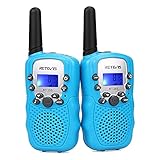 | Retevis RT388 Kids Walkie Talkies, Outdoor Toys for Kids Camping Essentials | 4-12 Year Old Boy Birthday Gift, 22 CH VOX Flashlight Clear Sound, Kids Walkie Talkies 2 Pack for Camping Hiking Adventure | Check Price On Amazon |
 | Cobra RX680 Walkie Talkies (2-Pack), IP54 Water Resistant Design | Rugged & Splashproof Two Way Radios Long Range, 60 Pre-Programmed Channels, Weather Alerts | Check Price On Amazon |
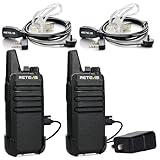 | Retevis RT22 Walkie Talkies Long Range Rechargeable with Earpiece (2 Pack) | Slim & Lightweight 2 Way Radio For Camping & Hiking, Pocket-Friendly Antenna, Ready to Use, 10-Hour Battery, USB-C Charging | Check Price On Amazon |
 | Midland GXT1000VP4 GMRS Two-Way Radios with Headsets, Black, 2 Pack | 50 Channels, 142 Privacy Codes, Up to 36 Mile Long Range, JIS4 Water Resistant, NOAA Weather Alert, Rechargeable NiMH | Check Price On Amazon |
 | Retevis RT628 Walkie Talkies for Kids,Toys Gifts for 6-12 Years Old Boys Girls,Long Range 2 Way Radio 22CH VOX,Birthday Gift,Family Walkie Talkie for Camping Hiking Indoor Outdoor | Check Price On Amazon |