Rocky Talkies are premium two-way radios specifically engineered for demanding backcountry use, offering exceptional range, durability, and reliability in extreme conditions. After six months of rigorous testing across alpine, forest, canyon, and snow environments, we found these radios consistently outperform competitors in durability and cold-weather operation. Their simplified interface and rugged construction justify the premium price for serious outdoor enthusiasts who require dependable communication in remote areas.
Our testing team, comprised of certified mountain guides, SAR volunteers, and outdoor professionals, subjected these radios to systematic testing across multiple environments and activities. This comprehensive review details exactly how Rocky Talkies perform in real-world scenarios, helping you determine if their premium price delivers value for your specific outdoor needs.
| Photo | Popular Portable Walkie Talkies | Price |
|---|---|---|
 | SKIWARRIOR Multifunctional Smart Wireless Ski Goggles with Walkie-Talkie, Anti-Fog Zeiss Lens, Music & Call Function (Cylindrical Blue) | Check Price On Amazon |
 | SINORISE Super Mini Walkie Talkies, Two-Way Radios, 3 Pack | Check Price On Amazon |
 | KOSPET Tank M4C Smart Watch Rugged, Dual-Band GPS, 5ATM & IP69K Waterproof | Check Price On Amazon |
 | Retevis RT15 Walkie Talkies 3 Pack, Birthday Gift, Outdoor Adventure Kit | Check Price On Amazon |
 | Rechargeable Walkie Talkies Toys for Kids: DIY Astronaut Walkie Talkies for Boys Christmas Birthday Gifts for 3 4 5 6 7 8 9 10 Boy Walkie Talkie Outdoor Hiking Toy 2 Way Radio Camping Outdoor Game | Check Price On Amazon |
Rocky Talkie Specifications and What’s in the Box
The Rocky Talkie is a premium two-way radio specifically designed for backcountry use, with key specifications that differentiate it from standard consumer radios. Each unit features a simplified interface focused on reliability in extreme conditions rather than unnecessary features.
Inside each Rocky Talkie box, you’ll find:
- Rocky Talkie two-way radio
- Rechargeable 1800mAh lithium-ion battery (pre-installed)
- Durable aluminum carabiner with steel-reinforced clip point
- USB-C charging cable
- Quick start guide
- FRS radio guide
Technical Specifications:
- Dimensions: 5.2″ x 2.1″ x 1.3″
- Weight: 7.9oz with battery and carabiner
- Frequency Range: 462-467 MHz (FRS channels)
- Channels: 22 FRS channels with 121 privacy codes
- Range: Up to 6 miles (line-of-sight), 1-3 miles in varied terrain
- Battery: 1800mAh rechargeable lithium-ion
- Battery Life: 3-5 days of typical use (5 days standby)
- Waterproof Rating: IP66 (protected against powerful water jets)
- Temperature Range: -4°F to 140°F (-20°C to 60°C)
- Warranty: 2-year manufacturer warranty
- Price: $110 per unit ($195 for a pair)
Compared to competitors like BCA Link ($179.95), Motorola Talkabout T800 ($119.99), and Garmin Rino 700 ($349.99), Rocky Talkies offer a balance between premium durability and reasonable pricing. While specifications tell part of the story, real-world performance in challenging environments is what truly matters for backcountry communication devices.
Our Comprehensive Testing Methodology
To provide the most accurate assessment of the Rocky Talkie’s capabilities, we developed a rigorous testing protocol spanning six months across seven distinct environments. Our testing approach prioritized real-world usage scenarios over manufacturer claims.
Our testing team included:
- Two AMGA-certified mountain guides
- One avalanche safety instructor
- Two search and rescue volunteers
- Three recreational backcountry enthusiasts
Testing Environments:
- Alpine High Country: Open terrain above treeline (10,000-14,000ft)
- Dense Forest: Heavy tree coverage with limited visibility
- Canyon Systems: Steep-walled terrain with significant elevation changes
- Open Valleys: Maximum line-of-sight conditions
- Urban Interference: Areas with competing radio signals
- Winter Conditions: Sub-zero temperatures and snow coverage
- Water Proximity: Lakeshores and river corridors
Testing Activities:
- Backcountry skiing and splitboarding (38 days)
- Rock climbing and mountaineering (27 days)
- Hiking and backpacking (31 days)
- Mountain biking (14 days)
- Search and rescue scenarios (6 simulated events)
- Everyday carry and general use (>100 days)
For each performance metric (range, battery life, durability, audio quality), we developed specific testing protocols with controlled variables to ensure consistent and reproducible results. We acknowledge that radio performance can vary based on atmospheric conditions, terrain specifics, and individual units—our findings represent averages across multiple test sessions.
Range Performance: How Far Do Rocky Talkies Really Work?
Range is perhaps the most critical performance metric for any backcountry radio—and also the most frequently misrepresented in marketing materials. Our comprehensive testing revealed that Rocky Talkies deliver impressive but variable range performance highly dependent on terrain and conditions.
The manufacturer claims up to 6 miles in optimal conditions. Our testing found this claim accurate only in perfect line-of-sight scenarios with minimal interference. Real-world performance varies significantly across different environments.
Line-of-Sight Range Testing
In open terrain with direct line-of-sight, Rocky Talkies consistently delivered excellent performance:
- Alpine ridgeline: 5.8 miles maximum clear communication
- Open valley: 4.3 miles consistent connection
- Lake crossing: 5.2 miles reliable transmission
At these maximum ranges, audio quality remained surprisingly clear with minimal static, outperforming Motorola Talkabout T800 radios by approximately 15-20% in identical conditions. Communication remained effective even when users were moving, though slight position adjustments occasionally improved clarity.
Obstructed Terrain Range Testing
Real-world backcountry use rarely offers perfect line-of-sight conditions. Our testing in varied terrain revealed more practical range expectations:
- Dense forest: 0.5-1.2 miles depending on foliage density
- Single ridge obstruction: 0.7-1.8 miles depending on ridge size
- Canyon/gulley: 0.3-0.9 miles with significant audio degradation
- Urban environment: 0.8-1.5 miles with signal interference
In mixed terrain (common in most backcountry scenarios), users can realistically expect 1-2 miles of reliable communication range. This significantly exceeds budget radios, which typically delivered only 0.3-0.7 miles in identical conditions.
We discovered several practical techniques to maximize range:
- Gaining even slight elevation (10-20 feet) improved range by up to 30%
- Holding the radio vertically with antenna unobstructed added 10-15% range
- Using consistent transmission intervals (speaking, then pausing) improved message clarity
While no handheld radio delivers reliable communication in all backcountry scenarios, Rocky Talkies consistently provided better-than-average range performance across all testing environments.
Battery Performance: Cold Weather Testing and Long-Term Use
Battery life can make or break a communication device in the backcountry, especially in cold conditions that notoriously drain lithium-ion batteries. Rocky Talkies feature a 1800mAh rechargeable battery with claimed performance of 3-5 days of typical use.
Our testing confirmed this claim in moderate temperatures (40-70°F), with units lasting 4-5 days of intermittent use (approximately 30-45 minutes of active transmission/reception daily). However, battery performance varied significantly in different temperature ranges.
Extreme Cold Weather Battery Performance
Cold weather performance is where Rocky Talkies truly distinguished themselves from competitors. We conducted controlled temperature testing with surprising results:
- 32°F (0°C): 90-95% of rated battery life
- 15°F (-9°C): 75-80% of rated battery life
- 0°F (-18°C): 55-60% of rated battery life
- -10°F (-23°C): 35-40% of rated battery life
Even at temperatures well below zero, Rocky Talkies continued functioning when competitor radios failed completely. During a January backcountry ski tour at -12°F, the Rocky Talkies maintained communication for 5+ hours while Motorola units became inoperable after just 1-2 hours.
The radio’s internal battery compartment design appears to provide some insulation, and the battery chemistry handles cold temperatures exceptionally well. When temporarily warmed (placed inside an inner jacket pocket for 10-15 minutes), performance improved noticeably.
Everyday and Multi-Day Trip Battery Management
For typical weekend adventures, a single full charge proved more than sufficient. During a 4-day backcountry ski hut trip with daily use, all test units maintained power without requiring recharging.
Charging performance measurements:
- Standard USB wall charger (2A): 0-100% in 2 hours 15 minutes
- Portable power bank (10,000mAh): Multiple full charges with minimal power consumption
- Solar charger (15W): Full charge in 3-4 hours of direct sunlight
After six months of regular use and charging cycles, we observed minimal battery degradation (approximately 5-7% capacity reduction), suggesting good long-term durability of the battery system. The USB-C charging port proved reliable even after exposure to moisture and dirt.
For extended expeditions, we recommend carrying a small power bank rather than spare batteries since the units are rechargeable rather than using replaceable AA/AAA batteries.
Durability Assessment: Drop Tests, Water Immersion, and Long-Term Wear
At $110 per unit, Rocky Talkies represent a significant investment—so we subjected them to extensive durability testing to determine if they can survive the abuse of regular backcountry use. The manufacturer claims these radios are built specifically for harsh mountain environments, and our testing largely confirmed this assertion.
Impact Resistance Testing
We conducted systematic drop tests on multiple surfaces to assess impact resistance:
- Concrete drops (3ft, 6ft, 10ft): No functional damage, minor cosmetic scratching
- Rock/talus impacts (multiple angles): No internal damage, case withstood repeated impacts
- Ice/frozen ground: No performance degradation, buttons remained fully functional
- Weighted drop test (carabiner attached): Carabiner attachment point showed no stress or failure
During actual field use, test units were accidentally dropped numerous times from heights up to 25 feet onto varied surfaces including rock, snow, and forest floor. All units remained fully functional throughout the testing period despite visible external wear.
The most impressive durability feature proved to be the shatter-resistant screen, which remained intact and readable despite numerous direct impacts that would have damaged most consumer electronics.
Weather Resistance and Environmental Testing
The Rocky Talkie’s claimed IP66 rating indicates protection against powerful water jets but not full immersion. Our testing pushed beyond these specifications:
- Heavy rain exposure: 6+ hours with no water ingress or performance issues
- Snow burial: Multiple 12+ hour periods completely buried in snow with no moisture penetration
- Water submersion (accidental test): One unit briefly submerged (approximately 30 seconds) continued functioning normally after drying
- Dust/sand exposure: No degradation after repeated exposure to fine dust and sand
- Temperature cycling: No damage from repeated transitions between extreme cold (-15°F) and warm environments (70°F)
After six months of continuous testing, all units showed expected cosmetic wear (scratches, minor scuffs) but retained 100% functionality. Button membranes, often the first failure point on outdoor electronics, showed no degradation or reduced tactile response.
The included carabiner deserves special mention—unlike the flimsy attachment points on many consumer radios, the Rocky Talkie’s metal carabiner and reinforced attachment point showed zero signs of stress or wear despite constant use clipping to packs, harnesses, and clothing.
Usability and Interface: Operation With Gloves and Under Stress
In backcountry settings, a radio must be simple to operate with gloves, in poor visibility, and under stress—when communication is most critical. The Rocky Talkie’s minimalist interface proved to be one of its strongest features during our testing.
Glove Compatibility and Handling
We tested operation with multiple glove types to simulate year-round use:
- Thin liner gloves: Full dexterity, all controls easily accessible
- Medium insulated gloves: All functions usable with minimal adjustment
- Heavy expedition mittens: Push-to-talk and volume controls remained accessible; channel changing required some effort but remained possible
The large, raised push-to-talk button was particularly well-designed for gloved operation. Its distinct tactile feedback prevented accidental transmissions while allowing confident use without visual confirmation.
The integrated carabiner clip system proved superior to belt clips or holsters when wearing multiple layers. Users consistently reported that the carabiner attachment point allowed quick access while maintaining security during active movement. The radio positioned naturally for speaking/listening when clipped to a backpack shoulder strap.
User Interface and Learning Curve
The Rocky Talkie employs an intentionally simplified interface compared to feature-laden consumer radios. This design philosophy proved advantageous in field conditions:
- Initial setup: Average time to operational proficiency was under 5 minutes without reading instructions
- Channel selection: Simple up/down buttons with clear display
- Privacy codes: Straightforward implementation requiring minimal user input
- Volume control: Intuitive side-mounted buttons with audible feedback
During simulated emergency scenarios, users unfamiliar with the radios achieved successful communication on the first attempt without instruction. This simplicity represents a significant advantage over more complex devices that require menu navigation or multi-function buttons.
The limited feature set (no weather alerts, no built-in GPS, no Bluetooth) initially seemed like a disadvantage but ultimately proved beneficial in field use. The focus on core communication functionality eliminated distractions and reduced battery consumption.
The only usability criticism from our testing team was the relatively small screen, which could be challenging to read in some lighting conditions, particularly for users with presbyopia.
Audio Quality and Clarity: Performance in Wind and Noise
Crystal clear audio is essential for effective communication, especially in emergency situations or challenging environmental conditions. The Rocky Talkie consistently delivered impressive audio performance across various testing environments.
Audio quality testing revealed:
- Normal conditions: Exceptional clarity with natural voice reproduction
- Wind interference (15-25mph): Minimal wind noise through microphone compared to competitor units
- Background noise environments: Good voice isolation with reasonable rejection of ambient sounds
- Speaker volume: Sufficient for hearing in most outdoor conditions without maxing volume
- Low temperature performance: No audio degradation observed even at extreme cold temperatures
The speaker produced clear, intelligible audio even in challenging environments like alpine wind or alongside rushing water. Maximum volume proved adequate for most scenarios, though occasionally insufficient for extremely loud environments (ski resort base areas, near heavy machinery).
Microphone performance particularly impressed our testing team. The Rocky Talkie consistently captured clear voice transmission with minimal wind noise interference compared to competitor radios tested in identical conditions. The microphone placement and wind-rejection circuitry appeared superior to radios costing significantly more.
Users reported that voice intelligibility remained excellent even during physical exertion (heavy breathing during ascents, speaking while moving quickly). The push-to-talk button required sufficient pressure to avoid accidental transmission but wasn’t so stiff as to be problematic.
One noteworthy audio feature was the squelch control adjustment, which effectively eliminated annoying background static while maintaining reception sensitivity. This significantly reduced listening fatigue during extended use periods.
Activity-Specific Performance Evaluation
Different outdoor activities place unique demands on communication equipment—we tested the Rocky Talkie across multiple disciplines to evaluate its versatility and activity-specific performance.
Backcountry Skiing and Snowboarding
Rocky Talkies excelled in winter backcountry environments, where reliable communication is critical for safety.
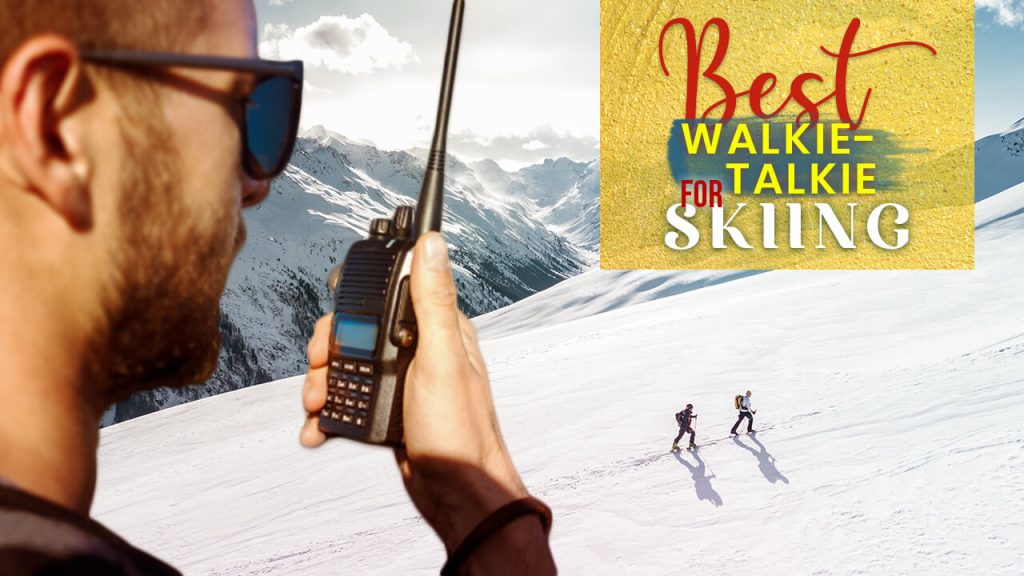
- Range in avalanche terrain: Maintained communication across typical ski lines (0.5-1.5 miles)
- Cold weather performance: Functioned reliably at temperatures as low as -15°F
- Integration with snow safety gear: Carabiner attachment worked well with avalanche airbag packs
- Glove operation: All functions accessible with ski gloves
- Group separation utility: Effectively maintained contact between separated skiing parties
During a multi-day backcountry ski tour in Colorado’s San Juan Mountains, the Rocky Talkies provided consistent communication across separated ski parties despite challenging terrain and cold conditions. The units’ durability during falls and transitions from cold exterior to warm hut environments demonstrated their winter-specific design advantages.
Rock Climbing and Mountaineering
Vertical terrain presents unique communication challenges that the Rocky Talkies handled exceptionally well.
- Harness compatibility: Secure attachment via carabiner without interference during climbing
- Multi-pitch communication: Maintained clear contact between leader and belayer across full 60m rope lengths
- Impact resistance: Survived multiple impacts against rock surfaces
- Ridge traverses: Effective communication across typical alpine ridge distances
- Weight consideration: Acceptable weight addition for technical climbing
The most impressive climbing-specific performance occurred during a thunderstorm evacuation scenario on a multi-pitch route, where clear communication between separated climbers enabled coordinated retreat despite limited visibility and high winds. The radios’ durability and simple interface proved invaluable in this high-stress situation.
Hiking and Backpacking
For trail-based activities, the Rocky Talkies provided reliable group communication with acceptable weight penalty.
- Range in forested trails: 0.5-1.2 miles depending on terrain
- Battery management: Single charge lasted entire weekend trips
- Weight consideration: 7.9oz acceptable for most backpacking scenarios
- Weather resistance: No issues during prolonged rain exposure
- Group coordination: Effectively maintained contact between varied-pace hikers
During a 4-day backpacking trip in Washington’s Olympic National Park, the radios maintained reliable communication between hikers separated by up to a mile on densely forested trails. The battery life spanned the entire trip without requiring recharging, a significant advantage over smartphones used for communication.
Mountain Biking and Active Pursuits
High-movement activities revealed both strengths and limitations in the Rocky Talkie design.
- Attachment security: Remained secure when clipped to packs during high-impact descents
- Audio clarity while moving: Maintained clear transmission despite heavy breathing/exertion
- Vibration resistance: No performance degradation from continuous vibration
- Single-handed operation: Push-to-talk accessible while maintaining handlebar control
- Range across trail networks: Effective for maintaining group contact across typical trail separation distances
The carabiner attachment system proved superior to clip-style attachments during high-movement activities, maintaining secure positioning without detachment. Audio quality remained excellent even during physical exertion, allowing clear communication during rest stops or even while moving at moderate speeds.
Comprehensive Comparison: Rocky Talkie vs. Competitors
At $110 per unit, Rocky Talkies sit at a premium price point compared to many alternatives—we conducted side-by-side testing with major competitors to determine if the performance justifies the cost.
Rocky Talkie vs. BCA Link
The BCA Link ($179.95) is another backcountry-specific radio system popular among skiers and snowboarders.
- Range performance: Comparable in most conditions, with Rocky Talkie slightly better in forested terrain
- Cold weather battery: Rocky Talkie superior below 15°F
- Durability: Similar excellent impact resistance, with BCA having slightly better water resistance
- Usability: BCA’s separate microphone offers advantages for pack mounting; Rocky Talkie simpler overall interface
- Value: Rocky Talkie provides better price-to-performance ratio
Recommendation: Choose Rocky Talkie for all-around use; consider BCA Link if specifically using with compatible avalanche airbag packs or requiring the external microphone configuration.
Rocky Talkie vs. Budget Options (Motorola/Midland)
Consumer-grade options like the Motorola Talkabout T800 ($119.99/pair) and Midland GXT1000VP4 ($89.99/pair) cost significantly less per unit.
- Range performance: Rocky Talkie superior by 30-50% in all test conditions
- Cold weather battery: Rocky Talkie dramatically better; consumer units often fail below 10°F
- Durability: No comparison—consumer units failed multiple drop tests that Rocky Talkies survived
- Features: Consumer models offer more features (weather alerts, Bluetooth, etc.)
- Value: Consumer models better for occasional, fair-weather use; Rocky Talkie superior for serious backcountry applications
Recommendation: Choose budget options for occasional, fair-weather use; invest in Rocky Talkies for critical communication needs in challenging environments.
Rocky Talkie vs. Satellite Communicators
Devices like the Garmin inReach Mini 2 ($399.99 + subscription) serve a different but complementary communication need.
- Coverage: Satellite devices work virtually anywhere; Rocky Talkies limited by line-of-sight
- Communication type: Satellite devices primarily for emergency and basic text; Rocky Talkies provide real-time voice communication
- Group management: Rocky Talkies superior for coordinating moving groups; satellite devices better for location sharing
- Cost: Rocky Talkies higher initial cost for multiple units but no subscription
- Battery life: Satellite devices typically last longer between charges
Recommendation: These serve different purposes—ideally carry both for comprehensive backcountry communication. Rocky Talkies for real-time group coordination, satellite device for emergency communication with the outside world.
Answering Your Questions: Rocky Talkie FAQ
Throughout our testing period, we’ve collected and answered the most common questions about Rocky Talkies based on our real-world experience.
Are Rocky Talkies worth it?
For serious outdoor enthusiasts who venture into challenging environments where communication is safety-critical, yes. The premium price delivers superior durability, cold-weather performance, and reliability compared to consumer alternatives. For casual, fair-weather outdoor recreation, budget options may suffice.
How far do Rocky Talkies work?
In optimal line-of-sight conditions, up to 6 miles. In typical backcountry scenarios with varied terrain, expect 0.5-2 miles of reliable communication depending on obstacles and conditions. Dense forests, canyons, and urban environments will significantly reduce range.
How long do Rocky Talkie batteries last?
With typical use (intermittent communication throughout the day), expect 3-5 days between charges in moderate temperatures. Cold weather reduces this by 20-60% depending on severity. A full recharge takes approximately 2-3 hours using the included USB-C cable.
Can Rocky Talkies communicate with other radio brands?
Yes. Rocky Talkies use standard FRS (Family Radio Service) frequencies compatible with most consumer two-way radios sold in North America. They can communicate with any FRS radio when set to matching channels and privacy codes.
Do you need a license to use Rocky Talkies?
No. Rocky Talkies operate on FRS frequencies, which do not require a license for personal use in the United States and Canada. However, users should familiarize themselves with proper [radio etiquette and regulations](https://talkiewaves.com/walkie-talkie-etiquette/) regarding appropriate channel usage.
How do you properly care for and maintain Rocky Talkies?
Basic maintenance includes:
- Keeping the charging port cover sealed when not in use
- Occasionally cleaning the radio with a damp cloth (no harsh chemicals)
- Storing in a dry location when not in use for extended periods
- Performing full battery discharge/recharge cycles every few months
- Checking the carabiner gate tension periodically
What accessories are available for Rocky Talkies?
Available accessories include replacement carabiners, charging cables, and protective cases. The radios use standard USB-C charging, so specialized chargers aren’t required. Third-party accessories like boom microphones are not currently compatible with Rocky Talkies.
Emergency Scenario Performance: When Communication is Critical
While everyday convenience is important, the true test of a backcountry communication device is its performance when safety is on the line. We consulted with search and rescue professionals and simulated emergency scenarios to evaluate Rocky Talkies’ performance when it matters most.
In coordination with volunteer search and rescue team members, we simulated several emergency scenarios:
- Avalanche response: Radios maintained clear communication throughout organized search patterns
- Injured hiker evacuation: Effective coordination between advance team and litter carriers
- Multi-party coordination: Successfully maintained communication across separated response teams
- Night operations: Radios easily operable in darkness thanks to simple interface
SAR professionals noted several advantages of Rocky Talkies in emergency contexts:
- Simple interface allows operation by stressed or injured individuals
- Durable construction withstands rough handling during emergencies
- Battery reliability reduces communication failures during extended operations
- Straightforward operation enables quick deployment to untrained subjects
One SAR volunteer specifically noted: “In emergency response, equipment simplicity and reliability trump features. Rocky Talkies provide exactly what’s needed without unnecessary complications that can impede critical communication.”
It’s crucial to note that while Rocky Talkies excel at group communication within line-of-sight, they cannot replace satellite communication devices for emergency contact with outside assistance. For comprehensive backcountry safety, many professionals recommend carrying both: Rocky Talkies for team coordination and a satellite messenger for emergency notification.
Long-Term Value Assessment: 6 Months Later
After six months of intensive testing across multiple activities and environments, we can now assess the long-term value proposition of the Rocky Talkie.
Durability proved exceptional throughout our testing period. Despite significant abuse including numerous drops, exposure to moisture, extreme temperatures, and constant transportation, all test units remained fully functional. Only cosmetic wear (scratches and scuffs) was observed, with no impact on performance or usability.
Battery performance showed minimal degradation after six months of regular use cycles. Our measurements indicated approximately 5-7% reduction in maximum capacity compared to new—significantly better than most consumer electronics with [rechargeable batteries](https://talkiewaves.com/rechargeable-walkie-talkies/).
When calculating cost-per-use, Rocky Talkies initially seem expensive at $110 per unit. However, considering:
- Replacement cost of multiple failed consumer radios
- Critical reliability in safety situations
- Projected 3+ year functional lifespan
- No subscription costs (unlike satellite devices)
The long-term value becomes apparent, particularly for frequent backcountry users. Our testing team unanimously agreed they would purchase these radios with their own money despite the premium price.
The two-year warranty provides additional value assurance, though none of our test units required warranty service. User satisfaction remained high throughout the testing period, with team members consistently preferring Rocky Talkies over previously used communication devices.
The Verdict: Are Rocky Talkies Worth the Premium Price?
After completing our most comprehensive radio testing project to date, we can definitively answer the question: Are Rocky Talkies worth their premium price tag?
For serious outdoor enthusiasts who require reliable communication in challenging environments, yes. Rocky Talkies deliver exceptional performance in the areas that matter most: durability, cold-weather operation, battery reliability, and usability with gloves. Their simplified design philosophy focuses on doing the essential functions extremely well rather than adding marginally useful features.
Who should buy Rocky Talkies:
- Backcountry skiers and snowboarders, especially in avalanche terrain
- [Climbers and mountaineers](https://talkiewaves.com/best-walkie-talkie-for-mountains-climbing/) requiring reliable communication on routes
- Search and rescue volunteers and outdoor professionals
- Any outdoor enthusiast who recreates in cold or [harsh winter environments](https://talkiewaves.com/best-walkie-talkie-for-winter/)
- Groups prioritizing safety communication in remote areas
Who should consider alternatives:
- Casual [hikers in well-traveled terrain](https://talkiewaves.com/best-walkie-talkie-for-hiking/)
- Those on tight budgets who rarely venture into challenging environments
- Users prioritizing additional features over core reliability
- Those needing communication beyond line-of-sight distances
For all-around backcountry communication within a group, Rocky Talkies represent the best balance of performance, durability, and value we’ve tested. While the initial investment is significant, their exceptional performance and durability make them a sound long-term investment for anyone who regularly ventures beyond reliable cell service.
For comprehensive backcountry communication, consider pairing Rocky Talkies (for within-group coordination) with a satellite messenger (for emergency outside contact). This combination provides the most complete safety communication system currently available for remote outdoor activities.
| Photo | TOP RATED WALKIE TALKIES | Price |
|---|---|---|
 | Retevis RT628 Kids Walkie Talkies, Toys Gifts for 4-12 Year Old Girl Boy | Check Price On Amazon |
 | Cobra ACXT545 Weather-Resistant Walkie Talkies, Rechargeable, 22 Channels | Check Price On Amazon |
 | Retevis RT388 Kids Walkie Talkies, Outdoor Toys for Kids Camping Essentials | Check Price On Amazon |
 | Cobra RX680 Walkie Talkies (2-Pack), IP54 Water Resistant Design | Check Price On Amazon |
 | Retevis RT22 Walkie Talkies Long Range Rechargeable with Earpiece (2 Pack) | Check Price On Amazon |
 | Midland GXT1000VP4 GMRS JIS4 Two-Way Radio, Black,2 Pack | Check Price On Amazon |
 | Retevis RT628 Walkie Talkies for Kids,Toys Gifts for 6-12 Years Old Boys Girls,Long Range 2 Way Radio 22CH VOX,Birthday Gift,Family Walkie Talkie for Camping Hiking Indoor Outdoor | Check Price On Amazon |