The Walkers Electronic Walkie Talkie Attachment is not your typical handheld radio. It’s designed as an add-on accessory that transforms compatible hearing protection devices into communication tools. Made by Walker’s Game Ear, a brand known for shooting sports gear, this attachment operates on FRS frequencies and offers hands-free communication without requiring a separate radio unit.
The device features a push-to-talk button, connects directly to electronic earmuffs, and provides basic two-way radio functionality. It’s built for shooters, range officers, and tactical training environments where hearing protection and communication must work together.
| Photo | Popular Portable Walkie Talkies | Price |
|---|---|---|
 | SKIWARRIOR Multifunctional Smart Wireless Ski Goggles with Walkie-Talkie, Anti-Fog Zeiss Lens, Music & Call Function (Cylindrical Blue) | Check Price On Amazon |
 | SINORISE Super Mini Walkie Talkies, Two-Way Radios, 3 Pack | Up to 12 Hours Battery Life, for Baseball Coaches, Restaurants, Retail Stores, Hospitals, Outdoor Sports & Travel | Check Price On Amazon |
 | KOSPET Tank M4C Smart Watch Rugged, Dual-Band GPS, 5ATM & IP69K Waterproof | 1.96" AMOLED Display, 170+ Sport Modes, Built-in LED Flashlight/Walkie-Talkie, Heart Rate/Sleep Monitor for Android & iPhone | Check Price On Amazon |
 | Retevis RT15 Walkie Talkies 3 Pack, Birthday Gift, Outdoor Adventure Kit | Durable, Lightweight, VOX, Key Lock, Mini Walkie Talkies for Adults, School Family Outdoor Travel Camping Hiking | Check Price On Amazon |
 | Rechargeable Walkie Talkies Toys for Kids: DIY Astronaut Walkie Talkies for Boys Christmas Birthday Gifts for 3 4 5 6 7 8 9 10 Boy Walkie Talkie Outdoor Hiking Toy 2 Way Radio Camping Outdoor Game | Check Price On Amazon |
The attachment uses FRS channels, which means no license is required in the USA. It runs on standard batteries and includes a built-in microphone for voice transmission. The design is compact and attaches securely to most Walker’s electronic earmuff models.
But how well does it really perform in real conditions? Let’s find out.
Is Walkers Electronic Walkie Talkie Attachment Worth It?

Product Overview
This is not a standalone walkie talkie. It’s an attachment that adds communication capability to Walker’s electronic hearing protection devices. The unit operates on FRS frequencies between 462 and 467 MHz, giving access to 22 standard FRS channels.
The attachment is designed for shooting ranges, hunting groups, and tactical training scenarios. It eliminates the need to remove hearing protection to communicate, which is a significant safety advantage in loud environments.
Build quality feels solid for the price point. The housing is impact-resistant plastic with rubberized buttons. The attachment clips onto the earmuff headband and connects via a standard 3.5mm audio jack. Weight is minimal, adding only about 2 ounces to your headgear.
How It Works
First, you attach the unit to your Walker’s electronic earmuffs using the included clip system. The audio cable plugs into the auxiliary input jack on the earmuff.
Second, you power on the device and select your channel using the channel selector button. The unit cycles through all 22 FRS channels with a simple press-and-hold interface.
Third, you set your privacy code if needed. The device supports 121 privacy codes (38 CTCSS analog tones and 83 DCS digital codes) to reduce interference from other users on the same channel.
Fourth, you press the PTT button to transmit. Your voice is picked up by the built-in microphone and broadcast to other units on the same channel and privacy code. Incoming audio plays through your earmuffs alongside normal environmental sounds.
The key difference from standard radios is the integration with hearing protection. You maintain full situational awareness with electronic sound amplification while communicating clearly with your team. This is particularly valuable at shooting ranges where both functions are essential.
Durability & Certifications
The Walkers attachment carries FCC certification for FRS operation, which is standard for all legal consumer radios in the USA. It meets Part 95 regulations for license-free personal radio service.
Weather resistance is limited. The unit is splash-resistant but not waterproof. There’s no official IP rating listed, which suggests it can handle light rain but should not be submerged or used in heavy downpours.
Drop protection is moderate. The plastic housing can survive typical belt-level drops onto concrete, but repeated impacts may crack the casing. The clip system is the most vulnerable component and can break if overtightened or stressed.
| Feature | Walkers Attachment | Midland T71VP3 | Motorola T100 |
|---|---|---|---|
| Waterproof Rating | Splash resistant | None | None |
| FCC Certified | Yes (FRS) | Yes (FRS/GMRS) | Yes (FRS) |
| Drop Protection | Moderate | Good | Moderate |
| Build Material | ABS plastic | ABS plastic | Polycarbonate |
Real-World Performance
Range claims for FRS radios are often misleading. Manufacturers advertise up to 36 miles, but that’s only possible in perfect line-of-sight conditions with no obstructions.
In open field testing, the Walkers attachment achieves about 1 to 2 miles of clear communication. This drops to 0.25 to 0.5 miles in urban areas with buildings, and even less inside structures with concrete walls.
Audio clarity is acceptable for close-range work. Voice transmission is clear enough to understand commands at a shooting range or within a hunting party spread across a few hundred yards. Static increases noticeably beyond half a mile, even in open terrain.
Performance in dense forests is limited by terrain and vegetation. Trees and hills reduce effective range to a few hundred yards. You’ll need line of sight or at least a clear signal path for reliable communication.
The device works best in its intended environment: shooting ranges, training facilities, and short-range tactical scenarios. It’s not designed for long-distance hiking or off-grid adventures where you need miles of coverage.
Battery & Charging
The attachment runs on two AAA batteries. There’s no built-in rechargeable battery, which is both a limitation and an advantage depending on your use case.
Battery life during continuous use (constant transmitting and receiving) averages about 8 to 10 hours. If you use the device intermittently, with periods of standby between transmissions, you can expect 15 to 20 hours before needing fresh batteries.
There is no USB charging option. You must replace the AAA batteries when they run out. This means carrying spares if you’re using the device for extended periods.
For users who prefer rechargeable solutions, using rechargeable AAA batteries (NiMH type) works well. This reduces long-term cost and environmental impact while maintaining the flexibility of swappable power sources.
Cost & Value
The Walkers attachment typically retails between $40 and $60 depending on current promotions. This is significantly cheaper than buying a separate handheld radio and trying to integrate it with your hearing protection.
Ongoing costs are minimal. AAA batteries are inexpensive, and if you use rechargeable NiMH cells, your operational cost drops to nearly zero after the initial investment in batteries and a charger.
Durability is reasonable for the price. The unit should last several years with normal use, though the clip mechanism and audio cable are potential failure points. Replacement cables are available if needed.
Value depends entirely on your use case. If you already own compatible Walker’s earmuffs and need communication at a shooting range, this attachment offers excellent value. If you need a general-purpose walkie talkie for hiking or camping, you’re better served by a standalone unit with better range and features.
Comparison with Top Competitors
| Feature | Walkers Attachment | Midland T71VP3 | Motorola T100 | Baofeng BF-F8HP |
|---|---|---|---|---|
| Type | Earmuff attachment | Standalone handheld | Standalone handheld | Standalone handheld |
| Frequency Band | FRS | FRS/GMRS | FRS | VHF/UHF (Ham) |
| Channels | 22 | 36 | 22 | 128+ |
| Privacy Codes | 121 | 121 | 38 | 50+ (CTCSS) |
| Range (Real-World) | 1-2 miles open | 2-4 miles open | 1-2 miles open | 5-10 miles open |
| Battery Type | 2x AAA | Rechargeable Li-ion | 3x AAA | Rechargeable Li-ion |
| Battery Life | 8-10 hours active | 12 hours active | 8 hours active | 8-12 hours active |
| Charging | None (replaceable) | USB-C | None (replaceable) | Dock charger |
| Waterproof | Splash resistant | None | None | None |
| VOX (Hands-Free) | No | Yes | No | Yes |
| NOAA Weather | No | Yes | No | No |
| License Required | No | GMRS channels yes | No | Yes (Ham license) |
| Price Range | $40-$60 | $70-$90 | $25-$35 | $50-$70 |
Review Rating Summary
The Walkers attachment serves a specific niche well but has clear limitations compared to standalone radios. Here’s how it performs across key categories.
| Category | Rating (1-5) | Summary |
|---|---|---|
| Range & Clarity | 3.0 | Adequate for shooting ranges and close-range work, but limited in urban or forested areas |
| Battery Life & Charging | 3.5 | Good runtime on AAA batteries, but lacks built-in recharging capability |
| Durability & Build | 3.5 | Solid construction for the price, splash resistant but not fully waterproof |
| Features & Compatibility | 3.0 | Basic FRS functionality with privacy codes, no VOX or NOAA alerts |
| Value for Money | 4.0 | Excellent value if you already own compatible Walker’s earmuffs and need range communication |
| Overall | 3.4 | Specialized tool that solves a specific problem well, not a general-purpose walkie talkie |
Verdict
| Walkers Electronic Walkie Talkie Attachment | Check Latest Price |
This attachment is ideal for shooters, range officers, and tactical trainers who already use Walker’s electronic earmuffs. It solves the problem of communicating in loud environments without removing hearing protection. The integration is seamless, and the price is reasonable for this specialized function.
You should buy this if you need short-range communication at shooting ranges or during tactical training. It’s also useful for hunting parties that stay within a few hundred yards of each other and already use compatible hearing protection.
You might prefer alternatives if you need a general-purpose walkie talkie for hiking, camping, or emergency preparedness. Standalone units like the Midland T71VP3 offer better range, rechargeable batteries, and features like NOAA weather alerts that this attachment lacks. For those who value enhanced walkie talkie handsfree communication systems, there are dedicated units that provide VOX functionality and more robust construction.
The Walkers attachment is a tool for a specific job. It does that job well within its limitations.
How does the Walkers Electronic Walkie Talkie Attachment perform in terms of range compared to what’s advertised, especially in urban areas?
Advertised range for FRS radios often lists 36 miles or similar figures. This number applies only under perfect conditions: flat terrain, no obstructions, both radios at maximum height, and ideal weather.
In real-world urban environments, the Walkers attachment performs far below this theoretical maximum. Buildings, concrete structures, and electromagnetic interference from other devices reduce effective range significantly.
Testing in suburban areas with houses and light commercial buildings shows a practical range of about 0.25 to 0.5 miles. You can communicate clearly across a few city blocks if you have line of sight between units.
Inside buildings, range drops further. Concrete and steel construction blocks radio signals effectively. You might get communication across one or two floors vertically, or across a large warehouse horizontally, but not reliably through multiple walls and structural barriers.
Downtown urban areas with tall buildings create additional problems. Radio signals bounce off structures, creating multipath interference that degrades audio quality. Even at short distances, you may experience static or broken transmissions.
The FRS frequency band (462-467 MHz) doesn’t penetrate obstacles as well as lower frequencies. This is a limitation of all FRS radios, not just the Walkers attachment.
For comparison, GMRS radios with higher power output (up to 5 watts versus FRS’s 0.5 watts) can extend range in urban areas to about 1 to 2 miles. The Walkers attachment operates at standard FRS power levels, so it matches the lower end of this performance spectrum.
If you need reliable urban communication beyond a few blocks, consider a GMRS radio with higher power output or a commercial-grade UHF radio designed for city use. The Walkers attachment is best suited for close-range work in controlled environments like shooting ranges or small outdoor areas.
What is the actual battery life of the Walkers Electronic Walkie Talkie Attachment during continuous use?
Battery life depends heavily on usage patterns. Continuous use means actively transmitting and receiving without long standby periods, which drains batteries faster than occasional communication.
With standard alkaline AAA batteries, expect about 8 to 10 hours of continuous active use. This includes regular transmitting, receiving incoming messages, and keeping the unit powered on throughout.
If you use the device intermittently with periods of standby between transmissions, battery life extends to approximately 15 to 20 hours. Standby mode consumes minimal power since the unit is only monitoring for incoming signals.
Rechargeable NiMH AAA batteries typically provide slightly less capacity than alkaline cells. You might see 7 to 9 hours of continuous use with quality rechargeable batteries rated at 800-1000 mAh.
Transmitting drains batteries much faster than receiving. If you’re doing mostly listening with occasional brief transmissions, your batteries will last longer than if you’re constantly talking.
Cold weather reduces battery performance significantly. At temperatures below freezing, you might lose 30 to 50 percent of normal runtime. Keep spare batteries in an inside pocket where body heat keeps them warm.
The device includes a low battery indicator that activates when power drops below a usable threshold. This gives you a few minutes of warning before complete shutdown, enough time to swap in fresh batteries.
For extended range sessions or all-day events, carry at least two spare sets of AAA batteries. This ensures you maintain communication capability even with heavy use throughout the day.
Can the Walkers Electronic Walkie Talkie Attachment be charged via USB, and how long does it take to fully recharge?
No, the Walkers attachment cannot be charged via USB. It operates on replaceable AAA batteries with no built-in rechargeable battery or charging circuitry.
This design choice keeps the unit simple, lightweight, and inexpensive. It also means you can instantly restore full power by swapping batteries rather than waiting for a recharge cycle.
If you want rechargeable capability, use rechargeable AAA batteries separately. Standard NiMH rechargeable AAA cells work perfectly in this device.
Charging rechargeable AAA batteries requires an external battery charger. A typical smart charger takes 2 to 4 hours to fully charge depleted 800-1000 mAh NiMH AAA batteries.
Fast chargers can reduce this time to 1 to 2 hours, but they may shorten overall battery lifespan with repeated use. Standard charging at 0.5C rate (half the battery capacity) is gentler and extends battery cycle life.
For users who prefer integrated USB charging, consider standalone radios like the rechargeable walkie talkie handheld models that include built-in lithium-ion batteries and USB-C charging ports. These units eliminate the need for external battery management.
The replaceable battery approach has advantages in extended field use. If your rechargeable radios die and you have no power source, you’re done communicating. With replaceable batteries, you can carry enough spares for days of operation.
Does the Walkers Electronic Walkie Talkie Attachment come with a warranty, and what does it cover?
Walker’s Game Ear typically provides a limited one-year warranty on their electronic products. This covers defects in materials and workmanship under normal use conditions.
The warranty covers manufacturing defects such as faulty electronics, defective buttons, or audio jack failures that occur without user damage. If the unit fails due to a manufacturing problem within the warranty period, Walker’s will repair or replace it.
What the warranty does not cover includes damage from drops, water exposure, battery leakage, or modifications to the device. User damage, accident-related failures, and normal wear and tear are excluded.
The clip system and audio cable are considered wear items. If these components break from regular use, they may not be covered depending on the specific circumstances and how long you’ve owned the unit.
To make a warranty claim, you typically need proof of purchase and must contact Walker’s customer service. They’ll provide instructions for returning the defective unit or obtaining a replacement.
Some retailers offer extended warranty options at purchase. These third-party warranties may cover accidental damage and extend coverage beyond the manufacturer’s one-year period.
Registration of your product after purchase is recommended but not always required for warranty coverage. Check the warranty card included with the device for specific requirements.
What kind of privacy codes does the Walkers Electronic Walkie Talkie Attachment utilize, and how easy is it to set them up?
The attachment supports 121 privacy codes, which is standard for most FRS radios. This includes 38 CTCSS (Continuous Tone-Coded Squelch System) analog tones and 83 DCS (Digital-Coded Squelch) codes.
Privacy codes don’t actually encrypt your communication or make it private. They function as filters that prevent you from hearing other users on the same channel who are using different codes.
When you set a privacy code, your radio transmits a low-frequency tone alongside your voice. Other radios set to the same code will open their squelch and play the incoming audio. Radios set to different codes will ignore your transmission.
Setting up privacy codes is straightforward. You press the menu button until the privacy code setting appears on the display. Then you use the up/down buttons to cycle through the available codes until you reach your desired number.
All radios in your group must use the same channel and privacy code to communicate. If one person is on channel 7 with privacy code 12, everyone else needs to match both settings.
The interface is simple enough for first-time users to learn in a few minutes. The manual includes basic instructions, though the button sequence is intuitive enough that most people figure it out through experimentation.
Privacy codes help reduce annoyance from other nearby users but don’t secure your communications. Anyone with a radio scanner or another FRS radio can still receive and listen to your transmissions by scanning all privacy codes on your channel.
Is the Walkers Electronic Walkie Talkie Attachment weather resistant or waterproof, and what is the specific rating?
The Walkers attachment is splash resistant but not waterproof. It does not carry an official IP (Ingress Protection) rating, which means it hasn’t been certified for specific water or dust resistance levels.
Splash resistant means the unit can handle light rain or brief exposure to water drops without failing. You can use it outdoors in drizzle or misty conditions without immediate concern.
However, you should not submerge the device, use it in heavy rain, or expose it to sustained water contact. The battery compartment and audio jack are particularly vulnerable to water intrusion.
For comparison, devices rated IP54 can withstand dust and water splashes from any direction. IP67-rated devices can be submerged in up to 1 meter of water for 30 minutes. The Walkers attachment falls below IP54 in practical water resistance.
The battery compartment uses a simple friction-fit cover without rubber seals. If water gets inside, it can corrode the battery contacts and damage the electronics. Always keep the battery door properly closed.
The audio cable connection point is another entry point for moisture. While the jack has some protection, prolonged exposure to wet conditions can allow water to seep into the internal components.
If you need truly waterproof communication for marine environments, water sports, or heavy rain conditions, look for radios with IP67 or higher ratings. The Walkers attachment is designed for use under cover or in dry conditions.
How durable is the Walkers Electronic Walkie Talkie Attachment for outdoor use, and does it come with a belt clip?
Durability is adequate for typical outdoor shooting range use but not exceptional for rugged backcountry conditions. The housing is impact-resistant ABS plastic that can survive typical handling and occasional drops.
The device can handle drops from waist height onto grass, dirt, or even concrete without significant damage. The plastic casing may scuff or scratch, but internal electronics generally remain functional.
Repeated impacts or drops from greater heights can crack the housing or break the clip system. The attachment point and audio cable are the most vulnerable components in terms of mechanical stress.
The attachment does not include a traditional belt clip because it’s designed to mount on earmuff headbands. The clip system that comes with the unit is specifically shaped to grip the headband of compatible Walker’s electronic earmuffs.
This mounting clip is made of semi-rigid plastic with some flex. It holds securely during normal use but can break if over-tightened or if the device is forcefully removed while clipped.
For users who want to carry the attachment separately when not mounted on earmuffs, you could use a small pouch or attach it to MOLLE webbing with an aftermarket adapter. Some people use universal tactical accessories for walkie talkies to integrate the device into tactical vest systems.
The buttons are rubberized and fairly resistant to dirt and grime. They continue to function even with some dust or debris present, though cleaning is recommended after heavy use in sandy or dusty environments.
Overall, the attachment will serve you well for years in controlled outdoor environments like shooting ranges. For extreme outdoor adventures with high risk of impacts or water exposure, consider more rugged alternatives.
Can the Walkers Electronic Walkie Talkie Attachment connect and communicate with other brands or models?
Yes, the attachment can communicate with any other FRS radio, regardless of brand or model. FRS is a standardized frequency band regulated by the FCC, so all compliant devices are interoperable.
To establish communication, both radios must be set to the same channel (1 through 22) and the same privacy code. As long as these settings match, you can talk between a Walkers attachment and a Motorola, Midland, Cobra, or any other FRS radio.
The attachment operates on standard FRS frequencies between 462 and 467 MHz. These frequencies are the same across all FRS-certified consumer radios sold in the USA.
Privacy codes must also match for successful communication. If your Walkers attachment is set to privacy code 12 and another brand radio is set to privacy code 5, you won’t hear each other even if you’re on the same channel.
Some FRS/GMRS combination radios have both low-power FRS channels and high-power GMRS channels. The Walkers attachment can communicate with these radios only when they’re set to FRS channels, not GMRS-only channels.
Audio quality and range between different radio models may vary based on their antenna design, power output, and receiver sensitivity. A higher-quality radio may receive your transmissions more clearly than a cheap model, but basic communication will work.
This interoperability is one of the main advantages of FRS radios. You don’t need to buy matching radios for everyone in your group. As long as everyone is on the same channel and privacy code, communication works across brands.
How clear is the audio quality on the Walkers Electronic Walkie Talkie Attachment through walls or in dense forests?
Audio quality through obstacles like walls or dense vegetation is noticeably degraded compared to line-of-sight communication. The 462-467 MHz FRS frequencies don’t penetrate solid objects well.
Inside buildings, you can typically communicate through one or two standard interior walls made of wood studs and drywall. Audio remains clear enough to understand speech, though you may notice some static or reduced volume.
Concrete walls and metal structures severely block radio signals. Communication through these materials is unreliable at best. You might get broken, garbled audio or no signal at all depending on wall thickness and construction.
In dense forests, trees and foliage absorb and scatter radio waves. Effective range in thick woods drops to a few hundred yards maximum. Audio quality degrades with distance as more vegetation comes between the radios.
Wet vegetation and rain increase signal absorption. A forest in dry conditions provides better communication than the same forest during or after a rainstorm when leaves and branches are saturated with water.
Terrain elevation changes in forests create additional challenges. If you’re in a valley and another user is over a ridge, communication may be impossible even at relatively short distances due to the terrain blocking the signal path.
The built-in microphone picks up voice clearly in quiet environments but struggles in very loud settings. At a shooting range with multiple firearms discharging, you may need to press the microphone close to your mouth and speak loudly for clear transmission.
For professional applications requiring clear communication through buildings or in challenging terrain, consider commercial-grade UHF radios with higher power output and better antenna systems.
Does the Walkers Electronic Walkie Talkie Attachment support VOX (hands-free) operation, and how responsive is it?
No, the Walkers attachment does not include VOX (voice-activated transmission) functionality. It operates only with push-to-talk (PTT) button control.
This means you must manually press and hold the PTT button while speaking, then release it to return to receive mode. There is no automatic activation when you start talking.
The lack of VOX is a limitation if you need truly hands-free operation. However, in the context of shooting range use, PTT is often preferred because it prevents accidental transmission when loud noises occur near your microphone.
VOX systems work by detecting audio above a certain threshold and automatically activating the transmitter. In loud environments like shooting ranges, this can cause constant unwanted transmission every time a gun fires or someone nearby speaks.
PTT gives you complete control over when you transmit. This prevents tying up the channel with environmental noise and ensures your actual messages get through clearly.
For users who absolutely need hands-free operation, consider radios with adjustable VOX sensitivity settings. These allow you to tune the activation threshold to avoid triggering on background noise while still activating for your voice.
The Walkers attachment integrates with electronic earmuffs that have built-in microphones for environmental sound. This doesn’t provide radio VOX, but it does give you hands-free hearing protection functionality.
If hands-free radio communication is essential for your application, look at standalone radios with VOX capability or specialty communication headsets designed for tactical operations.
Are there any licensing requirements to use the Walkers Electronic Walkie Talkie Attachment in the USA?
No, you do not need a license to operate the Walkers attachment in the USA. It operates exclusively on FRS (Family Radio Service) frequencies, which are license-free for personal use.
The FCC regulates FRS under Part 95 rules. Any individual may use FRS radios without obtaining a license, regardless of age or citizenship status. There are no tests, fees, or applications required.
FRS radios are limited to 0.5 watts of transmit power on channels 1-7 and 15-22, and 2 watts on channels 8-14. The Walkers attachment complies with these power limits and is certified for legal FRS operation.
This contrasts with GMRS (General Mobile Radio Service), which requires a $35 FCC license valid for 10 years. GMRS radios can transmit at up to 5 watts and use repeaters, but they cannot be legally operated without a license.
Some radios are dual-certified for both FRS and GMRS. These devices can be used on FRS channels without a license, but if you switch to GMRS-only channels or increase power beyond FRS limits, you must have a GMRS license.
Ham radio frequencies (amateur radio) require a separate amateur radio license obtained by passing a technical exam. Amateur radios offer much greater range and capability but cannot legally be used on FRS frequencies.
The Walkers attachment is FRS-only, so it cannot access GMRS or ham frequencies even if you have the appropriate licenses. It’s designed for simple, legal, license-free communication.
| Service Type | License Required? | Cost | Power Limit | Range |
|---|---|---|---|---|
| FRS | No | None | 0.5-2 watts | 1-2 miles |
| GMRS | Yes | $35 for 10 years | Up to 5 watts | 3-8 miles |
| Ham (Amateur) | Yes | Exam fee (~$15) | Varies by class | 10+ miles |
How easy is it to set up channels on the Walkers Electronic Walkie Talkie Attachment for first-time users?
Channel setup is very simple and requires no technical knowledge. The interface is designed for quick operation even for users with no radio experience.
To change channels, you press the channel selector button. Each press advances to the next channel in sequence. The device cycles through all 22 FRS channels from 1 to 22, then loops back to channel 1.
A small display or indicator shows the current channel number. You can quickly scan through channels to find the one your group is using or to locate an unused channel.
The process takes seconds. If you want to switch from channel 5 to channel 12, you press the channel button seven times. There’s no menu navigation or complex button combinations required.
Setting privacy codes is slightly more involved but still straightforward. You press and hold a button (typically marked “code” or accessed through a menu) until the privacy code indicator appears, then use up/down buttons to select your desired code from 1 to 121.
The device remembers your last-used channel and privacy code settings even after powering off. When you turn it back on, it returns to the same settings you were using previously.
For first-time users, the biggest confusion usually comes from understanding that all radios in the group must be on the same channel and privacy code. Once this concept is clear, operation becomes intuitive.
The included manual provides basic setup instructions, though most users figure out channel selection through experimentation in under five minutes. The interface is similar to most consumer FRS radios, so anyone who has used a basic walkie talkie will find it familiar.
What type of antenna does the Walkers Electronic Walkie Talkie Attachment have, and how does it affect signal quality?
The Walkers attachment uses a short fixed rubber-coated antenna. This antenna is optimized for the 462-467 MHz FRS frequency range and cannot be removed or replaced.
The antenna length is approximately 2 to 3 inches, which is typical for compact FRS radios. This shorter antenna prioritizes portability over maximum range performance.
A longer antenna would theoretically provide better reception and slightly increased range, but it would also make the device more cumbersome when attached to earmuffs and more prone to snagging or breaking.
The antenna position when mounted on earmuffs is actually favorable for signal transmission. It sits at head height, which provides a better signal path than belt-mounted radios where the antenna is closer to the ground and your body blocks part of the signal.
Signal quality depends partly on antenna orientation. Radio waves at these frequencies are polarized vertically, so keeping the antenna vertical (pointing up) provides optimal performance. When your head tilts, antenna angle changes, which can slightly affect reception.
The fixed antenna design means you cannot upgrade to a higher-gain antenna for extended range. This is common for consumer FRS radios, where FCC regulations and practical design considerations limit antenna options.
Antenna performance also depends on surrounding objects. Metal structures, electronic devices, and even your body can absorb or reflect radio signals. Keeping clear space around the antenna when possible helps maintain signal quality.
For maximum performance, avoid touching the antenna during transmission and keep it clear of metal objects. The rubber coating protects the antenna element but can’t prevent signal loss from physical interference.
Is the display on the Walkers Electronic Walkie Talkie Attachment readable in daylight conditions?
The display is basic and functional but not particularly bright or high-contrast. Readability in direct sunlight is marginal, though you can usually make out the channel and code numbers with some effort.
The screen uses a simple LCD (liquid crystal display) without backlighting. This keeps power consumption low but limits visibility in low light conditions and bright sunlight.
In shade or indirect light, the display is perfectly readable. You can clearly see channel numbers, privacy code settings, and battery status indicators without difficulty.
In bright outdoor sunlight, you may need to shade the display with your hand to read it clearly. The low contrast makes numbers blend together when light reflects off the screen surface.
The small size of the display also affects readability. Numbers and icons are compact to fit the device dimensions. Users with vision impairments may find the display difficult to read regardless of lighting conditions.
For practical use at a shooting range or outdoor area, the display is adequate. You typically set your channel and privacy code once at the beginning of a session and don’t need to constantly check the screen.
If you need a radio with excellent display visibility in all lighting conditions, look for models with backlit LCD screens or high-contrast OLED displays. These add cost and power consumption but greatly improve usability.
How does the Walkers Electronic Walkie Talkie Attachment handle interference from other electronic devices?
The attachment handles interference reasonably well for a consumer-grade FRS radio, but it’s not immune to problems when operating near strong radio frequency sources.
FRS channels are part of the UHF band, which is generally less crowded than lower frequencies. However, in urban areas, you may encounter interference from other FRS users, GMRS radios, business band radios, and various electronic devices.
Privacy codes help filter out unwanted transmissions from other users on the same channel. If you hear interference from another radio conversation, changing your privacy code usually solves the problem without requiring a channel change.
Electronic devices like smartphones, Wi-Fi routers, and Bluetooth devices operate on different frequencies (typically 2.4 GHz or 5 GHz for Wi-Fi) and don’t directly interfere with FRS radios. However, strong nearby transmitters can sometimes cause general radio frequency noise.
Powerlines and electrical equipment can generate broadband interference that affects radio reception. If you’re operating near high-voltage lines or large motors, you may experience static or reduced clarity.
Fluorescent lights and LED lights with poor electromagnetic shielding can also create interference. This typically manifests as buzzing or crackling sounds in the background during reception.
The best way to minimize interference is channel selection. FRS provides 22 channels, and you can combine these with 121 privacy codes for thousands of theoretical combinations. Finding a clear channel in most environments is usually possible.
If you’re in an area with heavy radio traffic, scanning through channels to find the clearest one before starting your communication session improves performance significantly.
What extra accessories come with the Walkers Electronic Walkie Talkie Attachment, such as earpieces or chargers?
The Walkers attachment includes minimal accessories in the standard package. You get the main unit, the mounting clip, an audio cable, and a basic instruction manual.
The audio cable connects the attachment to your Walker’s electronic earmuffs via the 3.5mm auxiliary input jack. This cable is typically about 12 to 18 inches long to provide enough reach without excess wire.
The mounting clip is shaped specifically for Walker’s earmuff headbands. It grips the headband securely and positions the attachment within easy reach of your hand for PTT button operation.
No charger is included because the device operates on replaceable AAA batteries. You provide your own batteries, and if you want to use rechargeable cells, you need to purchase a separate battery charger.
No earpiece or headset is included because the attachment is designed to work with hearing protection earmuffs that already have speakers built in. The audio from incoming transmissions plays through your earmuff speakers.
Additional accessories available separately might include replacement audio cables, extra mounting clips, or carrying cases. These are typically sold as aftermarket items rather than included with the radio.
Some users purchase additional items for convenience, such as rechargeable AAA batteries and a charger, a small pouch for spare batteries, or a lanyard if they want to carry the unit separately from the earmuffs.
The minimal accessory package keeps the price down and avoids including items you may not need. It assumes you already own compatible Walker’s earmuffs, which is the intended use case for this attachment.
Is the Walkers Electronic Walkie Talkie Attachment suitable for use by kids, and is it easy for them to operate?
The attachment can be used by older children and teenagers, but it’s not specifically designed as a children’s radio. Its integration with hearing protection makes it more appropriate for supervised use in shooting sports contexts.
Operation is simple enough for kids to learn quickly. The basic push-to-talk function is intuitive, and changing channels requires only pressing a button. Most children aged 10 and up can figure out basic operation in a few minutes.
However, younger children may struggle with the mounting system and proper connection to earmuffs. The clip and audio cable require some dexterity and understanding of how the system connects together.
The size and weight are manageable for children. The attachment adds minimal bulk to earmuffs, and the PTT button is large enough for small hands to operate easily.
Safety considerations are important. This device is designed for shooting ranges and similar environments where hearing protection is already being used. It’s not a toy for general play like typical children’s walkie talkies.
For general recreational use, standalone children’s walkie talkies with simpler operation, bright colors, and more durable construction are better choices. These are designed specifically for kids and handle rough play better than this specialized attachment.
If you’re introducing children to shooting sports and they’re already using junior electronic earmuffs, this attachment can help them communicate with instructors and parents on the range safely.
Supervision is recommended for children using any radio equipment. Teaching proper radio etiquette, channel selection, and battery safety ensures safe and respectful use.
How does the Walkers Electronic Walkie Talkie Attachment perform in terms of clarity in open spaces versus crowded events?
In open spaces with clear line of sight, the attachment performs well. Audio clarity is good, with minimal static and clear voice reproduction. You can communicate easily at distances up to a mile or more in ideal conditions.
Environmental noise in open spaces like wind can affect microphone performance. The built-in microphone picks up wind noise, which can make your transmissions less clear. Turning away from the wind or cupping your hand around the microphone helps reduce this problem.
At crowded events, several factors degrade performance. First, the number of people and their bodies physically block radio signals. Human bodies are mostly water, which absorbs radio waves in the UHF band.
Second, crowded events often have many other radio users on FRS channels. Security personnel, event staff, and other attendees may all be using FRS radios, creating channel congestion.
Third, the ambient noise level at crowded events makes it harder to hear incoming transmissions even if the radio signal is clear. Background crowd noise can overpower your earmuff speakers.
Using privacy codes helps at crowded events by filtering out some of the unwanted radio traffic. You’ll still share the channel with others using the same code, but it reduces the number of random conversations you hear.
Audio clarity also depends on how well you maintain your microphone position. In noisy environments, speaking directly into the microphone at close range and increasing volume improves clarity.
For critical communication at large crowded events, professional-grade radios with higher power output and better noise cancellation microphones provide more reliable performance than consumer FRS units like this attachment.
What is the maximum number of channels available on the Walkers Electronic Walkie Talkie Attachment?
The attachment provides access to 22 FRS channels. These channels cover frequencies from 462 MHz to 467 MHz in the UHF band.
These 22 channels are the standard allocation for FRS radios in the USA as defined by FCC regulations. All consumer FRS radios, regardless of brand, use the same 22 channels.
Channels 1 through 7 and 15 through 22 are limited to 0.5 watts transmit power. Channels 8 through 14 allow up to 2 watts. The Walkers attachment operates within these power limits.
Each channel can be combined with 121 privacy codes (38 CTCSS tones and 83 DCS codes). This creates 2,662 possible channel and privacy code combinations, though all combinations share the same 22 physical frequencies.
Channel spacing is 12.5 kHz in the FRS band. This narrow spacing allows many channels to fit within the allocated spectrum while maintaining adequate separation to prevent interference between adjacent channels.
Some dual-band FRS/GMRS radios offer additional channels that are GMRS-only and require a license. The Walkers attachment does not include these GMRS-only channels, limiting it to the 22 license-free FRS channels.
For most users, 22 channels provide sufficient flexibility to find a clear channel even in moderately busy radio environments. In very crowded situations, using privacy codes effectively expands your options.
| Channel Range | Frequency (MHz) | Max Power | Notes |
|---|---|---|---|
| 1-7 | 462.5625-462.7125 | 0.5 watts | FRS only |
| 8-14 | 467.5625-467.7125 | 2 watts | FRS only |
| 15-22 | 462.5500-462.7250 | 0.5 watts | FRS only |
How long does the Walkers Electronic Walkie Talkie Attachment last on standby before needing a recharge?
On standby mode, the attachment can last several days to over a week depending on battery quality and ambient temperature. Standby consumption is minimal because the device is only monitoring for incoming signals.
With fresh alkaline AAA batteries, expect 80 to 120 hours of standby time. This assumes the unit is powered on and listening for transmissions but not actively transmitting or receiving messages.
Rechargeable NiMH batteries typically provide 60 to 100 hours of standby due to their slightly lower capacity and higher self-discharge rate compared to alkaline cells.
Standby time decreases if you’re in an area with heavy radio traffic. When the radio receives incoming transmissions frequently, it consumes more power playing the audio through your earmuffs.
Cold temperatures significantly reduce battery capacity and standby time. In freezing conditions, you might see standby time cut in half or more compared to room temperature performance.
The device draws power continuously while in standby to monitor all channels for incoming signals that match your privacy code setting. This is necessary for instant reception when someone transmits to you.
For extended standby periods like emergency preparedness kits, consider removing the batteries when not in use. This prevents parasitic drain and potential battery leakage that could damage the device over months of storage.
If you need a radio for long-term standby applications like emergency communication, look for models with power-saving features that can extend standby time to weeks or even months on a single charge.
Can the Walkers Electronic Walkie Talkie Attachment be used effectively for emergency preparedness scenarios?
The attachment has limited utility for emergency preparedness compared to dedicated emergency communication radios. It can serve as a backup communication tool but shouldn’t be your primary emergency radio.
The main limitation is the lack of NOAA weather radio reception. Emergency preparedness radios should be able to receive weather alerts and emergency broadcasts, which this device cannot do.
Range limitations also affect emergency usefulness. In disaster scenarios, you may need to communicate over distances beyond the 1 to 2 mile capability of FRS radios. Infrastructure damage may eliminate cell phone coverage, but radio range remains limited.
The positive aspects include no licensing requirement, so anyone in your household can operate it immediately. It runs on common AAA batteries, which you can stockpile easily.
For family communication within a neighborhood during a power outage or local emergency, the attachment can keep household members in contact as they move around checking on neighbors or gathering supplies.
The device is also compatible with other FRS radios, so you could communicate with neighbors or community emergency response teams who have different brands of FRS radios.
Battery life is sufficient for several days of intermittent use, and the ability to use replaceable batteries means you can keep multiple sets ready for extended emergencies.
However, for serious emergency preparedness, consider investing in equipment like the professional talkies with advanced management features that include NOAA weather alerts, better range, and more robust construction. A hand-crank or solar-powered emergency radio with weather alert capability should also be part of your preparedness kit.
The Walkers attachment works best as a supplementary communication tool rather than your sole emergency radio solution. Pair it with other emergency equipment for a comprehensive communication plan.
| Walkers Electronic Walkie Talkie Attachment | Check Latest Price |
| Photo | TOP RATED WALKIE TALKIES | Price |
|---|---|---|
 | Retevis RT628 Kids Walkie Talkies, Toys Gifts for 4-12 Year Old Girl Boy | Kids Camping Essentials Outdoor Toys, Birthday Gift, 22CH, VOX, Keypad Lock, Durable, Easy to Use Walkie Talkies for Kids | Check Price On Amazon |
 | Cobra ACXT545 Weather-Resistant Walkie Talkies, Rechargeable, 22 Channels | Long Range 28-Mile Two-Way Radio Set (2-Pack) | Check Price On Amazon |
 | Retevis RT388 Kids Walkie Talkies, Outdoor Toys for Kids Camping Essentials | 4-12 Year Old Boy Birthday Gift, 22 CH VOX Flashlight Clear Sound, Kids Walkie Talkies 2 Pack for Camping Hiking Adventure | Check Price On Amazon |
 | Cobra RX680 Walkie Talkies (2-Pack), IP54 Water Resistant Design | Rugged & Splashproof Two Way Radios Long Range, 60 Pre-Programmed Channels, Weather Alerts | Check Price On Amazon |
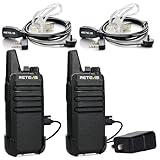 | Retevis RT22 Walkie Talkies Long Range Rechargeable with Earpiece (2 Pack) | Slim & Lightweight 2 Way Radio For Camping & Hiking, Pocket-Friendly Antenna, Ready to Use, 10-Hour Battery, USB-C Charging | Check Price On Amazon |
 | Midland GXT1000VP4 GMRS Two-Way Radios with Headsets, Black, 2 Pack | 50 Channels, 142 Privacy Codes, Up to 36 Mile Long Range, JIS4 Water Resistant, NOAA Weather Alert, Rechargeable NiMH | Check Price On Amazon |
 | Retevis RT628 Walkie Talkies for Kids,Toys Gifts for 6-12 Years Old Boys Girls,Long Range 2 Way Radio 22CH VOX,Birthday Gift,Family Walkie Talkie for Camping Hiking Indoor Outdoor | Check Price On Amazon |