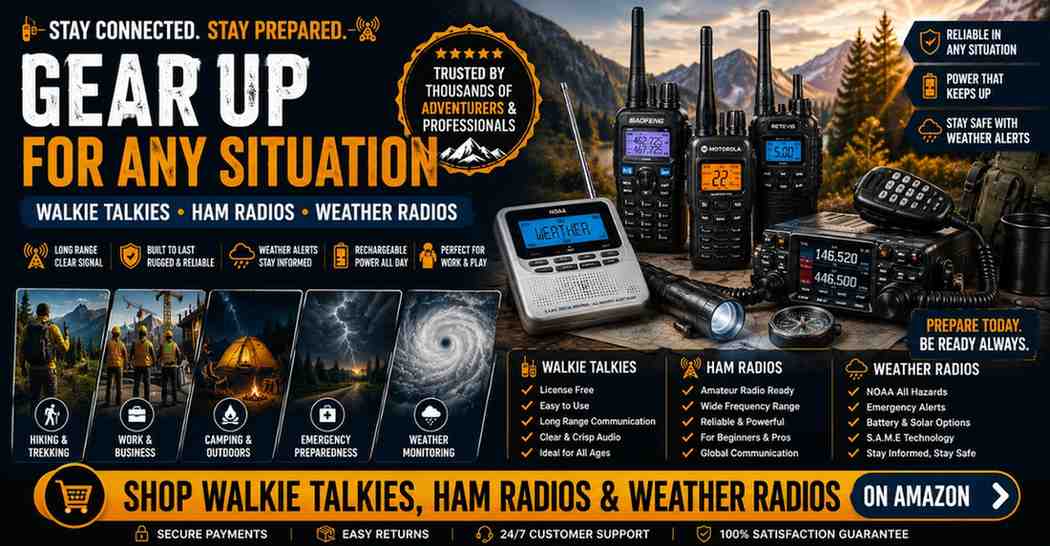
Aviation radios are specialized communication devices that allow pilots to talk with air traffic control and other aircraft. These vital tools operate on VHF frequency bands (118.000-136.975 MHz) and must meet strict reliability standards. This guide covers everything from radio types and selection to operation and troubleshooting, helping you make informed decisions about this essential flight equipment.
What Are Aviation Radios? Types and Fundamental Operation
Aviation radios are specialized communication devices that operate on VHF frequency bands designated specifically for aircraft and air traffic control communication. Unlike consumer radios, aviation radios must meet stringent requirements for reliability, clarity, and operation in challenging environments with altitude and temperature variations.
| Photo | Popular Portable Walkie Talkies | Price |
|---|---|---|
 | SKIWARRIOR Multifunctional Smart Wireless Ski Goggles with Walkie-Talkie, Anti-Fog Zeiss Lens, Music & Call Function (Cylindrical Blue) | Check Price On Amazon |
 | SINORISE Super Mini Walkie Talkies, Two-Way Radios, 3 Pack | Up to 12 Hours Battery Life, for Baseball Coaches, Restaurants, Retail Stores, Hospitals, Outdoor Sports & Travel | Check Price On Amazon |
 | KOSPET Tank M4C Smart Watch Rugged, Dual-Band GPS, 5ATM & IP69K Waterproof | 1.96" AMOLED Display, 170+ Sport Modes, Built-in LED Flashlight/Walkie-Talkie, Heart Rate/Sleep Monitor for Android & iPhone | Check Price On Amazon |
 | Retevis RT15 Walkie Talkies 3 Pack, Birthday Gift, Outdoor Adventure Kit | Durable, Lightweight, VOX, Key Lock, Mini Walkie Talkies for Adults, School Family Outdoor Travel Camping Hiking | Check Price On Amazon |
 | Rechargeable Walkie Talkies Toys for Kids: DIY Astronaut Walkie Talkies for Boys Christmas Birthday Gifts for 3 4 5 6 7 8 9 10 Boy Walkie Talkie Outdoor Hiking Toy 2 Way Radio Camping Outdoor Game | Check Price On Amazon |
These radios use the VHF range (Very High Frequency) between 118.000 and 136.975 MHz. This frequency range offers line-of-sight propagation characteristics, meaning radio waves travel in straight lines from the transmitter to the receiver. This property makes VHF ideal for aviation but also limits its range based on altitude and terrain.
All aviation radios perform two primary functions:
- Transmitting: Converting your voice into radio waves that other aircraft and ground stations can receive
- Receiving: Capturing incoming radio signals and converting them to audio you can hear
Understanding basic terminology is essential before diving deeper into aviation radio systems:
- Squelch: Control that filters out background noise when no signal is present
- Volume: Adjusts audio output level
- Frequency selection: Method for tuning to specific channels
- Standby frequencies: Secondary frequencies stored for quick access
Aviation radio technology has evolved significantly since its introduction in the 1920s. Early systems were bulky, unreliable, and limited in range. Modern aviation radios offer digital clarity, compact design, and integration with other avionics systems while maintaining backward compatibility with the fundamental VHF aviation band.
COM vs. NAV/COM Radios: Understanding the Differences
The two primary categories of aviation radios are COM (Communication) radios and NAV/COM (Navigation/Communication) radios. Understanding the differences is crucial for selecting equipment that matches your aircraft and flying needs.
COM radios focus exclusively on voice communication. They allow pilots to communicate with air traffic control facilities and other aircraft using the aviation VHF band. These units are simpler, typically less expensive, and take up less panel space than their NAV/COM counterparts.
NAV/COM radios combine communication capabilities with navigation functions. In addition to the COM radio portion, they include VOR (VHF Omnidirectional Range) receivers that can tune to ground-based navigation stations operating between 108.0 and 117.95 MHz. Many also include localizer and glideslope receivers for instrument approaches.
| Factor | COM Radio | NAV/COM Radio |
|---|---|---|
| Primary Function | Voice communication only | Voice communication + navigation |
| Panel Space Required | Smaller (typically 2.25″ height) | Larger (typically 3″ height or more) |
| Typical Price Range | $1,000-$3,000 | $3,000-$8,000+ |
| Best For | Aircraft with separate navigation systems or VFR-only operations | Aircraft needing integrated nav/com capabilities, especially for IFR flight |
The choice between COM and NAV/COM depends largely on your typical flight operations. For strictly visual flight rules (VFR) flying in less complex airspace, a COM radio might be sufficient. For instrument flight rules (IFR) operations or flying in busier airspace, a NAV/COM provides essential navigation capabilities along with communication functions.
Modern glass cockpit systems often separate these functions, with dedicated COM radios working alongside integrated GPS navigation systems that replace traditional VOR navigation. This allows for more flexible panel configurations and redundancy options.
Handheld vs. Panel Mount Aviation Radios: Pros and Cons
Aviation radios come in two primary form factors: handheld portable units and panel-mounted permanent installations. Each offers distinct advantages and limitations that pilots must consider based on their flying scenarios.
Handheld aviation radios provide flexibility and serve as excellent backup communication tools. These portable units typically operate on rechargeable or replaceable batteries, making them independent of aircraft power. They’re popular with student pilots, renters, and as emergency backups for aircraft owners.
Panel-mounted radios are permanently installed in the aircraft instrument panel. They connect directly to the aircraft’s electrical system, antenna, and audio panel or intercom system. These units offer higher power output, better reception, and seamless integration with other avionics.
| Factor | Handheld Radio | Panel Mount Radio |
|---|---|---|
| Power Output | 1.5-6 watts | 5-10 watts |
| Effective Range | 5-25 miles (varies with altitude) | 25-200+ miles (varies with altitude) |
| Installation | None required | Professional installation typically required |
| Cost Range | $200-$500 | $1,000-$4,000+ (plus installation) |
| Power Source | Batteries (typical life: 4-10 hours) | Aircraft electrical system |
| Weight | 0.5-1.5 lbs | 1-3 lbs (plus wiring, rack, antenna) |
Handheld radios excel as backup devices and for pilots who fly multiple aircraft. Their limitations include shorter range due to lower power output and less effective antennas, potential interference from aircraft systems, and the need for battery management.
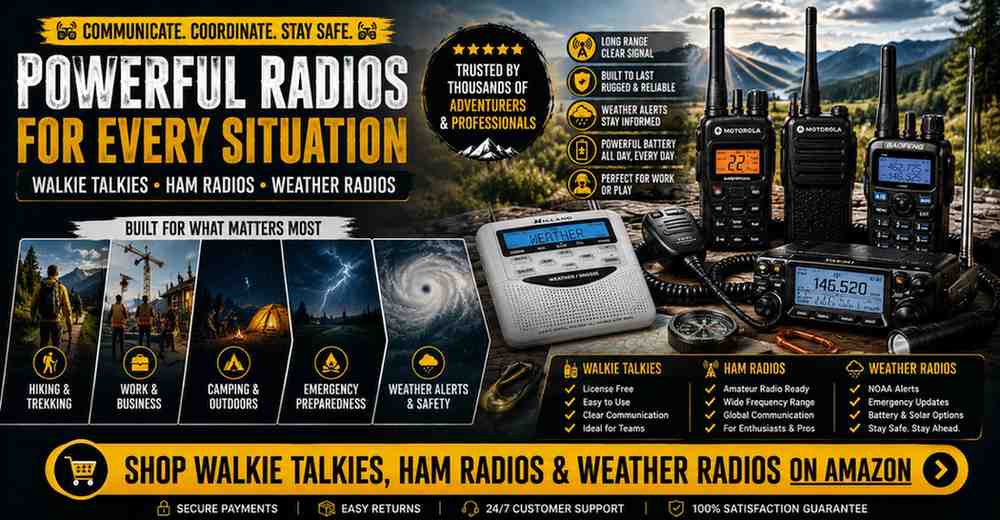
Panel-mounted radios provide superior performance through dedicated external antennas, higher transmission power, and integration with the aircraft audio system. However, they require professional installation, depend on aircraft power, and represent a significantly higher investment.
Many pilots opt for both: a quality panel-mounted system as their primary communication tool and a handheld radio as backup for emergencies or electrical system failures.
How to Select the Right Aviation Radio for Your Needs
Selecting the right aviation radio involves evaluating your specific aircraft, typical mission profile, budget, and future needs. This systematic approach will help you identify the most suitable communication solution for your situation.
Follow these steps to determine the best aviation radio for your requirements:
Step 1: Assess Your Aircraft Type and Certification
Different aircraft categories have different equipment requirements:
- Certified Aircraft: Require TSO-approved radios installed by certified technicians with appropriate documentation
- Experimental Aircraft: Allow greater flexibility in equipment selection and installation
- Light Sport Aircraft (LSA): Follow manufacturer guidelines for approved equipment
For certified aircraft, look for radios with Technical Standard Order (TSO) approval. These have undergone rigorous testing to meet FAA standards. Experimental aircraft owners have more flexibility but should still prioritize reliability and performance.
Step 2: Define Your Typical Flight Operations
Your flying habits significantly impact radio requirements:
- Local VFR Flying: May be adequately served by a simple COM radio
- Cross-Country VFR: Benefits from NAV/COM capabilities and frequency storage
- IFR Operations: Requires reliable communications with redundancy options
- Flying in Complex Airspace: Needs quick frequency changing and possibly dual COM capabilities
Step 3: Evaluate Panel Space and Integration
Consider your instrument panel constraints:
- Standard radio stack openings are 6.25″ wide by 2.25″ high
- NAV/COM units typically require 3″ or more of panel height
- Measure available space before selecting equipment
- Consider how new radio will interface with existing audio panel, intercom, and headsets
Step 4: Calculate Total Budget Including Installation
The true cost extends beyond the radio itself:
- Equipment cost ($200-$500 for handhelds, $1,000-$8,000+ for panel mount)
- Installation labor ($500-$1,500 depending on complexity)
- Antenna and cabling ($100-$300)
- Potential panel modifications ($200-$500)
- Documentation and certification ($100-$300 for certified aircraft)
Step 5: Consider Future Upgrade Paths
Think about long-term avionics planning:
- Will this radio integrate with future panel upgrades?
- Does the manufacturer offer upgrade paths or trade-in programs?
- Is the technology current or nearing obsolescence?
- Does it support 8.33 kHz channel spacing (required in some regions)?
Weight considerations are especially important for light aircraft. Panel-mounted radios typically weigh 1-3 pounds, plus installation hardware. While this may seem minimal, when combined with other avionics, the weight adds up and can affect aircraft performance and weight-and-balance calculations.
When upgrading from older equipment, consider whether your existing wiring and antennas will work with new radios. Adapter harnesses are available for some common replacements, potentially reducing installation costs.
Top Aviation Radio Brands and Models: Features Comparison
Several manufacturers dominate the aviation radio market, each offering products with different features, reliability records, and price points. This comparison will help you evaluate the major players and their flagship products.
Leading Panel-Mount Radio Manufacturers
The panel-mount aviation radio market features several established manufacturers with proven track records:
| Brand | Notable Features | Price Range | Warranty |
|---|---|---|---|
| Garmin | Intuitive interfaces, extensive dealer network, integration with other Garmin avionics | $1,200-$8,000+ | 2 years |
| Bendix King | Legacy compatibility, simple operation, extensive support network | $1,100-$5,000 | 2 years |
| Trig Avionics | Slim designs, European compliance, good value for features | $1,800-$4,000 | 2 years |
| Icom | Reliability, straightforward operation, competitive pricing | $1,000-$3,000 | 3 years |
Popular Panel-Mount Models
These standout panel-mount models represent different price points and feature sets:
- Garmin GTR 225: COM-only radio with bright display, standby frequency monitoring, and 8.33 kHz spacing. Reliable performer with straightforward operation. Check price on Amazon
- Garmin GNC 255: NAV/COM with VOR/ILS capabilities, frequency database, and dual watch features. Popular choice for IFR aircraft. Check price on Amazon
- Trig TY96: Slim COM radio requiring just 1.3″ panel height, making it ideal for space-constrained panels. Features 8.33 kHz spacing and dual watch. Check price on Amazon
- Bendix King KX 155: Legacy NAV/COM with proven reliability. Older design but compatible with many existing installations. Check price on Amazon
Handheld Aviation Radio Manufacturers
The handheld market offers more affordable options with varying features:
| Brand | Notable Features | Price Range | Warranty |
|---|---|---|---|
| Icom | Rugged construction, excellent battery life, intuitive controls | $250-$450 | 3 years |
| Yaesu | Compact design, good value, additional features like weather reception | $200-$400 | 3 years |
| Sporty’s | Pilot-focused design, good support, aviation-specific features | $200-$350 | 1 year |
Popular Handheld Models
These handheld radios offer reliable performance for various needs:
- Icom IC-A25N: Premium handheld with GPS and VOR navigation features. Excellent battery life and powerful 6W output. Check price on Amazon
- Yaesu FTA-550: Mid-range option with navigation features, good battery life, and intuitive operation. Check price on Amazon
- Sporty’s SP-400: Pilot-friendly design with large screen, simple operation, and aviation-focused features. Check price on Amazon
When comparing warranty coverage, note that manufacturer warranties typically cover defects in materials and workmanship but not damage from improper installation or use. Some manufacturers offer extended warranty options at additional cost.
Service and support availability should factor into your decision, especially for panel-mounted equipment that may require specialized maintenance. Garmin and Bendix King have extensive dealer networks, while smaller manufacturers may have more limited support options.
Aviation Radio Installation Guide: Considerations and Best Practices
Installing an aviation radio involves electrical, structural, and regulatory considerations. Whether you’re working with an avionics technician or installing in an experimental aircraft, understanding these fundamentals ensures a successful installation.
Certification Requirements
Installation requirements vary significantly between aircraft categories:
- Certified Aircraft: Require installation by an FAA-certified avionics technician or repair station. All work must be documented with FAA Form 337 for major alterations, and appropriate logbook entries must be made.
- Experimental Aircraft: Owners can perform their own installations but should follow manufacturer guidelines and best practices for safety and performance.
- Light Sport Aircraft: Follow manufacturer’s maintenance manual requirements, which may allow owner installation or require certified technicians.
Panel Considerations
Before selecting a radio, carefully measure your panel space:
- Standard panel openings are 6.25″ wide by 2.25″ high (“2¼ radio”)
- NAV/COM units often require 3″ of panel height or more
- Consider depth clearance behind the panel (typically 9-12″ needed)
- Evaluate weight distribution and mounting strength
For certified aircraft, panel modifications require additional documentation and possibly a field approval from the FAA.
Power and Wiring Requirements
Proper electrical installation is critical for reliable operation:
- Most aviation radios require 14V or 28V DC power (match to aircraft electrical system)
- Typical current draw: 0.5-2.0 amps during reception, 3-7 amps during transmission
- Use proper gauge wire for power connections (typically 18-22 AWG)
- Install circuit breaker or fuse protection (typically 3-5 amps)
- Use shielded cables for audio connections to minimize interference
- Keep radio wiring separated from other avionics when possible
Antenna Selection and Placement
Antenna performance dramatically affects radio range and clarity:
- COM antennas should be mounted vertically on the aircraft exterior
- Bottom fuselage mounting provides better ground station communication
- Top mounting may provide better air-to-air communication
- Ensure adequate ground plane (metal surface) around antenna base
- Maintain minimum separation from other antennas (typically 3 feet or more)
- Use high-quality coaxial cable (RG-58A/U or RG-400) with proper connectors
- Keep cable runs as short as practical to minimize signal loss
Interference Considerations
Radio frequency interference can degrade performance:
- Maintain separation between radio and other electronic devices
- Use proper shielding and grounding techniques
- Ferrite beads or filters may be needed on power or audio lines
- Test for interference with all aircraft systems operating
Cooling Requirements
Electronic equipment generates heat that must be managed:
- Ensure adequate airflow around the radio unit
- Follow manufacturer specifications for cooling requirements
- Some installations may require additional cooling provisions
Testing After Installation
Thorough testing is essential before flight:
- Verify proper power supply voltage at the radio
- Check all connections for security
- Test reception on multiple frequencies
- Perform transmission tests with a ground station
- Check for interference with other aircraft systems
- Verify proper audio levels in headsets and speakers
- Test emergency operation scenarios
The decision between DIY installation and professional work depends on your aircraft type, personal skills, and regulatory requirements. For experimental aircraft, DIY installation can save $500-$1,500 in labor costs but requires appropriate tools, documentation, and expertise. For certified aircraft, professional installation is required by regulations and ensures compliance with airworthiness standards.
Aviation Radio Operation: Frequencies, Procedures, and Best Practices
Effective aviation radio operation involves more than just turning knobs. It requires understanding frequencies, proper phraseology, and communication protocols that ensure safety and efficiency in the national airspace system.
Basic Radio Operation
Before communicating, master these fundamental operations:
- Power and Volume: Turn on the radio and adjust volume to a comfortable level
- Squelch Adjustment: Set squelch to eliminate background noise while still receiving transmissions
- Frequency Selection: Tune to the appropriate frequency for your location and phase of flight
- Monitoring: Listen before transmitting to avoid interrupting ongoing communications
- Transmission: Press push-to-talk switch completely before speaking, release completely after message
Essential Aviation Frequencies
Different flight phases require different frequencies:
| Service | Frequency Range | When to Use |
|---|---|---|
| ATIS/AWOS/ASOS | Various specific frequencies | Before contacting ATC for weather and airport information |
| Ground Control | 121.6-121.9 MHz | While on airport surface for taxi instructions |
| Tower | 118.0-121.3 MHz | For takeoff and landing clearances |
| Approach/Departure | 119.0-124.0 MHz | When entering or exiting terminal airspace |
| Center (ARTCC) | Various bands | For en route traffic and weather services |
| UNICOM | 122.7-122.975 MHz | At non-towered airports for airport advisories |
| MULTICOM | 122.9 MHz | At airports without UNICOM for pilot-to-pilot coordination |
| Emergency | 121.5 MHz | For declaring emergencies or urgent situations |
Always monitor 121.5 MHz on your second COM radio if available. This emergency frequency is monitored by ATC facilities and many aircraft.
Communication Sequence for Different Flight Phases
Follow these standard communication patterns:
- Pre-Departure: ATIS → Ground Control → Tower
- Departure: Tower → Departure Control → Center
- En Route: Center → Center (as you cross boundaries) → Approach
- Arrival: Approach → Tower → Ground Control
At non-towered airports, use UNICOM or MULTICOM frequencies and make position reports at key points: 10 miles out, entering downwind, base, and final approach.
Readability Scale
When asked about reception quality, use the standard 1-5 scale:
- 1: Unreadable
- 2: Readable now and then
- 3: Readable but with difficulty
- 4: Readable
- 5: Perfectly readable
Example: “Tower, Cessna 12345, reading you five” means perfect reception.
Common Mistakes to Avoid
- Cutting off transmissions by keying the mic too early or releasing too late
- Speaking too quickly or too quietly
- Using non-standard phraseology
- Transmitting without listening first
- Providing too much or too little information
- Forgetting to state your call sign
Radio Check Procedures
When requesting a radio check, use standard format:
“[Station being called], [your aircraft identification], radio check.”
Example: “Miami Ground, Cessna 12345, radio check.”
Emergency Communication Protocols
In emergency situations:
- Use “MAYDAY” for life-threatening emergencies or “PAN-PAN” for urgency
- Transmit on current frequency or switch to 121.5 MHz
- Provide aircraft identification, nature of emergency, pilot’s intentions, position, altitude, and fuel remaining
- Speak clearly and remain calm
Example: “MAYDAY, MAYDAY, MAYDAY, Miami Center, Cessna 12345, engine failure, making emergency landing in field 10 miles west of Naples airport, passing through 3,000 feet, three souls on board, 45 minutes fuel remaining.”
Aviation Radio Phraseology: A Quick Reference Guide
Proper aviation radio phraseology is standardized to ensure clear, concise communication between pilots and air traffic control. This reference guide covers essential phrases and their correct usage in various flight situations.
Initial Contact Phrases
When first contacting a facility, use this format:
- Facility name
- Your full aircraft identification
- Your current location/situation
- Your request
Example: “Orlando Approach, Cessna 12345, 15 miles southeast, 3,000 feet, landing Orlando.”
The Phonetic Alphabet
| Letter | Word | Letter | Word |
|---|---|---|---|
| A | Alpha | N | November |
| B | Bravo | O | Oscar |
| C | Charlie | P | Papa |
| D | Delta | Q | Quebec |
| E | Echo | R | Romeo |
| F | Foxtrot | S | Sierra |
| G | Golf | T | Tango |
| H | Hotel | U | Uniform |
| I | India | V | Victor |
| J | Juliet | W | Whiskey |
| K | Kilo | X | X-ray |
| L | Lima | Y | Yankee |
| M | Mike | Z | Zulu |
Number Pronunciation
- Pronounce each digit separately: “12,500” = “One Two Thousand Five Hundred”
- Altitudes in hundreds: “1,500” = “One Thousand Five Hundred”
- Altitudes in thousands: “12,000” = “One Two Thousand”
- Frequencies: “118.1” = “One One Eight Point One”
Standard Phrases for Common Situations
| Situation | Proper Phraseology |
|---|---|
| Position Report | “[Station], [Aircraft ID], [Position], [Altitude], [Intentions]” |
| Altitude Change Request | “[Station], [Aircraft ID], request climb/descent to [altitude]” |
| Reading Back Clearance | Repeat all elements in same order received |
| Frequency Change | “[Aircraft ID] frequency change approved” |
| Unable to Comply | “Unable” (followed by reason if necessary) |
| Traffic Pattern Entry | “[Airport] traffic, [Aircraft ID], entering [leg] for runway [number]” |
Real-World Communication Example
Here’s a typical exchange when departing a towered airport:
Pilot: “Orlando Ground, Cessna 12345, at Executive Jet Center, information Delta, request taxi for VFR departure to the north.”
Ground: “Cessna 12345, Orlando Ground, taxi to runway 7 via Alpha, Bravo.”
Pilot: “Taxi to runway 7 via Alpha, Bravo, Cessna 12345.”
After reaching the runway hold short line:
Pilot: “Orlando Tower, Cessna 12345, ready for departure runway 7, northbound.”
Tower: “Cessna 12345, Orlando Tower, runway 7, cleared for takeoff, fly heading 030 until reaching 2,000.”
Pilot: “Cleared for takeoff runway 7, fly heading 030 until 2,000, Cessna 12345.”
Common Mistakes to Avoid
- Using “Take off” except in actual takeoff clearance
- Saying “Roger” when you should be reading back instructions
- Using “with you” when checking in on a new frequency
- Failing to use correct airport or aircraft identification
- Speaking too quickly during busy or complex communications
Practice these phraseology patterns regularly to develop comfort and proficiency. Many pilots rehearse common exchanges before keying the microphone, especially in unfamiliar or complex airspace.
Troubleshooting Common Aviation Radio Problems
Aviation radio problems can range from simple operator error to complex technical issues. This troubleshooting guide helps you identify and resolve common problems methodically, distinguishing between equipment failures and operational misunderstandings.
No Transmission Issues
If others cannot hear your transmissions, check these common causes:
- Microphone Connection: Ensure microphone is fully plugged in
- Push-to-Talk Switch: Verify PTT switch functions properly
- Volume Settings: Check that microphone gain/volume is adequate
- Frequency Selection: Confirm correct active frequency (not standby)
- Circuit Breakers: Check for tripped circuit breakers
- Power Output: May require avionics technician to test
No Reception Issues
If you cannot hear transmissions from others:
- Volume Control: Ensure volume is turned up
- Squelch Setting: Temporarily decrease squelch to check for weak signals
- Headset Connection: Verify headset is properly connected
- Audio Panel Settings: Check correct audio sources are selected
- Frequency Selection: Confirm correct frequency is selected
- Circuit Breakers: Check for tripped audio or radio breakers
Poor Audio Quality
For unclear transmissions or reception:
- Microphone Position: Adjust microphone closer to lips (1-2 inches ideal)
- Headset Connections: Check for loose connections or damaged cables
- Interference Sources: Turn off non-essential electronics to isolate source
- Antenna Issues: Inspect antenna for damage (external inspection only)
- Ground Plane: Poor ground plane can reduce effectiveness
Range Problems
If experiencing shorter range than expected:
- Altitude Factors: Lower altitudes reduce range significantly
- Terrain Obstruction: Mountains or buildings block line-of-sight signals
- Antenna Issues: Inspect for damage or corrosion
- Power Output: May be transmitting at reduced power
- Receiver Sensitivity: Could be degraded requiring maintenance
When to Seek Professional Maintenance
Consult an avionics technician when:
- Basic troubleshooting doesn’t resolve the issue
- Radio operates intermittently
- Unusual noise or distortion occurs consistently
- Radio overheats or shows other abnormal behavior
- For annual inspections (certified aircraft)
Pre-Flight Radio Check Procedure
Perform these checks before every flight:
- Verify radio powers on normally
- Check volume and squelch function
- Tune to ATIS/AWOS and confirm reception
- Request radio check from ground control or UNICOM
- Test intercom system between crew positions
- Confirm standby radio functions (if installed)
In-Flight Troubleshooting Options
If radio issues develop during flight:
- Check connections and settings
- Try alternate headset if available
- Reset radio by cycling power (if safe to do so)
- Switch to backup radio if available
- Change altitude to improve line-of-sight reception
- Use alternate frequencies (121.5 for emergencies)
Backup Communication Strategies
Always have contingency plans:
- Carry a handheld radio with fresh or charged batteries
- Know light gun signals for towered airport operations
- Carry a cell phone for emergency use when within range
- Have non-radio arrival procedures planned for destination
- Know how to use transponder emergency codes (7700, 7600, 7500)
Document any radio issues experienced during flight in the aircraft logbook. This creates a maintenance history that helps technicians identify intermittent problems.
For experimental aircraft owners, additional testing equipment like SWR meters can help diagnose antenna system issues, potentially saving expensive shop time.
Aviation Radio Maintenance and Care
Proper maintenance of aviation radios ensures reliability and longevity. This section covers essential care procedures for both handheld and panel-mounted radio systems.
Recommended Maintenance Schedule
Follow these maintenance intervals:
| Maintenance Task | Panel Mount Frequency | Handheld Frequency |
|---|---|---|
| Operational check | Pre-flight | Pre-flight |
| Clean controls/display | Monthly | After each use |
| Inspect connections | 100 hours/Annual | Monthly |
| Check antenna/connectors | Annual | Quarterly |
| Performance verification | Annual | Annual |
Battery Care for Handheld Units
Maximize battery performance with these practices:
- Follow manufacturer-specific charging instructions
- For NiMH batteries, avoid frequent partial discharges
- For Li-ion batteries, avoid complete discharge
- Store at moderate temperatures (40-70°F)
- Remove batteries during long-term storage
- Keep spare batteries in cool, dry conditions
- Replace batteries showing reduced capacity
Cleaning Procedures
Maintain equipment appearance and function:
- Use only mild cleaners designed for electronics
- Apply cleaner to cloth, not directly to equipment
- Avoid liquid penetration around controls or seams
- Use compressed air to remove dust from knobs and vents
- Clean display screens with appropriate screen cleaners
- Keep microphone and headset connections clean
Connection Inspection
Regularly check these critical connection points:
- Antenna connections for tightness and corrosion
- Power connections for security and wire condition
- Audio panel connections
- Headset jacks for debris or damage
- Mounting hardware for security
Warning Signs Requiring Professional Attention
Seek technical help if you observe:
- Intermittent operation or “cutting out”
- Unusual noise or distortion in received audio
- Overheating during normal operation
- Dimming or flickering display
- Reduced reception range
- Failure to transmit consistently
- Unusual odors during operation
Documentation Requirements
Maintain proper records:
- Log all maintenance in aircraft logbooks (certified aircraft)
- Keep copies of installation forms (Form 337 for major alterations)
- Retain proof of required inspections
- Document firmware/software updates
- Keep original equipment manuals accessible
Storage Recommendations
For handheld radios not in regular use:
- Store in cool, dry location
- Remove batteries to prevent corrosion
- Use protective case to prevent damage
- Avoid extreme temperatures
- Perform full charge/discharge cycle every 3-4 months
Regular maintenance prevents costly failures at critical moments. For certified aircraft, certain radio maintenance must be performed by qualified technicians, while experimental aircraft owners have more flexibility to perform their own maintenance.
Aviation Radio Regulations and Licensing Requirements
Aviation radio operation is governed by specific regulations that vary by country and region. Understanding these requirements ensures legal compliance and proper certification of both equipment and operators.
Operator Licensing Requirements
In the United States, the Federal Communications Commission (FCC) regulates aviation radio operation. Pilots must obtain a Restricted Radiotelephone Operator Permit to legally operate aircraft radios. This permit:
- Does not require an examination
- Requires completing FCC Form 605
- Costs approximately $70 (subject to change)
- Is valid for the lifetime of the holder
- Must be available for inspection upon request
Exceptions exist for government aircraft operators and non-U.S. licensed pilots operating domestically for less than 90 days.
Aircraft Station License Requirements
In addition to operator permits, each aircraft with a radio requires licensing:
- FCC Aircraft Station License required for all aircraft with radios
- Obtained through FCC Form 605
- Valid for 10 years
- Must be available in the aircraft
- Required for international operations
- Call sign must be used for radio communications
Equipment Certification Standards
Radio equipment must meet specific standards:
- Panel-mounted radios in certified aircraft must have Technical Standard Order (TSO) approval
- Installation must be performed by FAA-certified technicians
- Modifications require documentation (Form 337 for major alterations)
- Experimental aircraft have more flexibility but should use quality equipment
- All aviation radios must meet frequency stability and emissions standards
International Considerations
When flying internationally:
- Aircraft Station License is mandatory
- Review destination country requirements before departure
- Some regions require 8.33 kHz channel spacing capability
- Language requirements vary (English is standard but not universal)
- Different frequency allocations may apply
Record-Keeping Requirements
Maintain documentation of:
- Operator permit and aircraft station license
- Installation approvals and Form 337s
- Maintenance records for the radio system
- Annual inspection sign-offs
- Any modifications or repairs
Recent Regulatory Changes
Stay current on evolving requirements:
- Implementation of 8.33 kHz channel spacing in Europe
- Changes to international border crossing procedures
- ADS-B integration requirements and their impact on communications
- Digital communication standards development
Consequences of Non-Compliance
Failing to meet regulatory requirements can result in:
- Monetary fines from regulatory agencies
- Grounding of aircraft until compliance is achieved
- Invalidation of insurance coverage
- Certificate action against pilot licenses
- Denial of entry to foreign airspace
While these regulations may seem bureaucratic, they ensure orderly, safe, and interference-free communication in increasingly congested airspace. Always verify current requirements, as regulations can change.
The Future of Aviation Radio: Digital Systems and Emerging Technologies
Aviation radio technology continues to evolve with digital systems, integrated capabilities, and enhanced features. Understanding these trends helps pilots make forward-looking equipment decisions that accommodate future developments.
Digital Voice Technologies
Traditional analog voice communication is gradually giving way to digital systems:
- Digital voice offers clearer communication with less static and background noise
- Error correction capabilities improve message integrity
- More efficient use of frequency spectrum
- Potential for encryption and selective calling features
- Backward compatibility with analog systems during transition period
Leading manufacturers like Garmin and Icom are already incorporating digital signal processing in current-generation radios to enhance voice clarity without changing fundamental transmission protocols.
Integration with Modern Avionics
Aviation radios increasingly function as part of integrated systems:
- Touchscreen interfaces replacing traditional knobs and buttons
- Radio control through multi-function displays
- Frequency database integration with GPS navigation
- Automatic frequency selection based on aircraft position
- Cross-fill capabilities between multiple radios
The Garmin GTN series exemplifies this trend, with COM radio functions integrated into touchscreen navigation systems that automatically suggest appropriate frequencies based on location.
Wireless Connectivity
Bluetooth and Wi-Fi capabilities are transforming radio operations:
- Wireless headset connections eliminating cockpit cable clutter
- Tablet/smartphone interfaces for radio programming
- Database and firmware updates without physical connections
- Remote audio panels controlled via mobile devices
- Flight plan transfer to communication systems
Several current-generation headsets from manufacturers like Lightspeed and Bose can connect wirelessly to panel-mounted radios equipped with Bluetooth capabilities.
Remote-Mounted Architectures
Space-saving designs change how radios are installed:
- Radio transceivers mounted remotely in avionics bays
- Small control heads in the panel requiring minimal space
- Shared displays with other avionics
- Reduced weight and power consumption
- Easier integration into glass cockpit environments
The Garmin GTR 200 and Trig’s compact radios showcase this trend, offering full functionality with minimal panel space requirements.
Software-Defined Radio
Next-generation flexibility comes through software:
- Hardware capable of multiple functions through software changes
- Future-proofing through firmware updates
- Adaptability to evolving communication standards
- Potential for multi-band operation from single hardware
- Enhanced signal processing capabilities
ADS-B Integration
Communication systems increasingly work alongside surveillance:
- Coordination of ADS-B traffic information with radio communications
- Automated position reporting potentially reducing voice traffic
- Integration of weather information with communication systems
- Enhanced situational awareness through combined systems
Next-Generation Air Traffic Management
Future airspace systems will transform communications:
- Data link communications supplementing voice for routine messages
- Controller-Pilot Data Link Communications (CPDLC) expansion
- Reduced voice congestion in high-traffic areas
- More precise and efficient clearance delivery
- Integration with performance-based navigation systems
Satellite-Based Options
Beyond line-of-sight communication is becoming more accessible:
- Satellite phones and data systems as backup communication
- Global coverage including oceanic and remote areas
- Increasingly affordable equipment and subscription costs
- Integration with traditional VHF systems
- Enhanced emergency response capabilities
While these technologies point to an exciting future, the fundamental VHF aviation band will remain the primary communication method for years to come. The transition to new systems will be gradual, with backward compatibility maintained throughout. Pilots investing in current-generation digital radios with update capabilities will be well-positioned for this evolution.
Aviation Radio FAQs: Answers to Common Questions
These frequently asked questions address common concerns and curiosities about aviation radios that pilots and aircraft owners often encounter.
How far can aviation radios transmit?
Aviation radio range depends primarily on altitude, power output, and terrain. At typical general aviation altitudes (3,000-10,000 feet), panel-mounted radios (5-10W output) can reliably communicate 50-100 miles with ground stations. Handheld radios (1.5-6W output) typically achieve 5-25 miles. Higher altitudes dramatically increase range due to line-of-sight propagation.
Do I need a license to use an aviation radio?
Yes, in the United States, pilots need a Restricted Radiotelephone Operator Permit from the FCC. Additionally, the aircraft requires an FCC Aircraft Station License. The operator permit is lifetime, while the station license requires renewal every 10 years. Both documents must be available for inspection.
What’s the difference between 8.33 kHz and 25 kHz spacing?
These terms refer to channel spacing in the VHF aviation band. Traditional 25 kHz spacing provides 760 channels in the aviation band. The newer 8.33 kHz spacing triples this to 2280 channels by dividing each 25 kHz channel into three narrower channels. This accommodates more users in congested airspace. 8.33 kHz spacing is mandatory in Europe and becoming more common worldwide.
Can I use my aviation radio internationally?
Yes, but requirements vary by country. You must have an Aircraft Station License for international operations. Some regions require 8.33 kHz channel spacing capability. Always research destination country requirements before departure. Aviation English is the international standard language but may not be used exclusively in all regions.
How long do aviation radio batteries typically last?
For handheld aviation radios, battery life varies by model and usage. Typical specifications range from 4-10 hours of operation in a 90% receive/10% transmit duty cycle. Actual performance can be less, especially in cold temperatures. Lithium-ion batteries generally outperform NiMH or NiCad batteries in both capacity and cold-weather performance. Always carry spare batteries for extended operations.
What backup options should I have if my radio fails?
Prudent pilots prepare for radio failures with:
- A handheld aviation radio with fresh batteries
- Knowledge of light gun signals for towered airport operations
- Cell phone with local ATC phone numbers (where coverage exists)
- Planned diversion to non-towered airports if necessary
- Familiarity with lost communication procedures
- Setting transponder to 7600 (radio failure code)
Is a handheld radio sufficient as a primary communication device?
While better than no radio, handhelds have significant limitations as primary communication devices. Their lower power output, less efficient antennas, and susceptibility to cockpit interference reduce effective range. For occasional flight in uncomplicated airspace, a handheld may suffice. For regular flying, especially in busy airspace or for IFR operations, a panel-mounted radio provides much better reliability and performance.
How do I interface my radio with my headset/intercom system?
Panel-mounted radios typically connect to an audio panel or intercom, which then connects to headsets. Most general aviation aircraft use standard aviation headset jacks (PJ-068 for microphone, PJ-055 for headphones). Handheld radios often require adapter cables to connect to standard aviation headsets. Some newer systems offer Bluetooth connectivity for wireless headset operation. Installation should follow manufacturer guidelines to ensure proper audio levels and functionality.
What does “readability” mean in radio communications?
Readability refers to how clearly a transmission can be understood, measured on a scale of 1-5:
- 1: Unreadable
- 2: Readable now and then
- 3: Readable but with difficulty
- 4: Readable
- 5: Perfectly readable
When asked “How do you read?”, respond with your assessment using this scale, such as “Reading you five” for perfect clarity.
When should I upgrade my older aviation radio?
Consider upgrading when:
- Reliability issues become frequent
- Repair parts become difficult to source
- You need 8.33 kHz channel spacing for your flying region
- You’re experiencing consistent range or clarity problems
- You want integration with newer avionics
- You’re upgrading other panel equipment simultaneously
Many pilots find the improved reliability, features, and reduced weight of modern radios justify upgrading 15-20 year old equipment.
How do I test my radio before flight?
Perform these pre-flight checks:
- Power on and verify normal display and audio functions
- Set proper volume and squelch levels
- Tune to ATIS/AWOS frequency and verify reception
- Request radio check from ground control or UNICOM
- Verify both transmit and receive functions
- Check standby radio if installed
- Test intercom functions between pilot and passenger positions
These checks should be part of every pre-flight routine.
Aviation Radio Resources: Where to Learn More
For pilots seeking to deepen their knowledge of aviation radio systems and communication, these resources provide valuable additional information, training, and reference materials.
Official Publications
- FAA Aeronautical Information Manual (AIM): The official guide to basic flight information and ATC procedures, including radio communications
- Advisory Circular 90-50D: “Requirements for 760-Channel VHF Radio”
- FAA Pilot/Controller Glossary: Standard terminology used in ATC communications
- FAA Radio Communications Phraseology and Techniques: Training reference for proper radio usage
Training Programs and Courses
- AOPA Air Safety Institute Communications Courses: Free online training modules for radio communications
- Sporty’s VFR Communications Course: Comprehensive training with real-world examples
- King Schools Practical Radio Communications: Interactive course for effective radio techniques
- Flight school radio communication ground school modules: Available at most flight training centers
Books and Publications
- “Say Again, Please” by Bob Gardner: Comprehensive guide to radio communications
- “Radio Navigation and Instrument Flying” by Pooley’s Flight Equipment: Covers both communication and navigation systems
- “The Aviator’s Guide to Navigation” by Donald Clausing: Includes detailed information on radio systems
- Manufacturer equipment manuals: Detailed operation guides for specific radio models
Online Communities and Forums
- AOPA Forums: Active discussions on radio equipment and techniques
- Pilots of America Forum: Popular general aviation discussion site with avionics section
- Van’s Air Force: Experimental aircraft forum with extensive avionics discussions
- Reddit r/flying: Active community with regular radio and avionics discussions
Apps and Practice Tools
- LiveATC: Listen to actual ATC communications worldwide
- Plane English: Interactive radio communication simulator and trainer
- PilotWorkshops Communications Trainer: Scenario-based communication practice
- AOPA Radio Simulator: Practice radio calls in various scenarios
Manufacturer Resources
- Garmin Aviation Support Center: Documentation, videos, and technical support
- Icom Aviation Products Knowledge Base: Detailed product information and guides
- Trig Avionics Support Portal: Technical documentation and installation guides
- Bendix King Technical Publications: Manuals and technical notes
Video Tutorials
- YouTube channels from flight schools: Many offer excellent radio communication tutorials
- Manufacturer product videos: Operation and installation guides from equipment makers
- ATC facility tour videos: Provide insight into the controller’s perspective
- Aircraft Radio Installation Videos: Step-by-step guides for experimental aircraft builders
For hands-on experience, consider scheduling a facility tour at your local air traffic control tower. Many facilities welcome pilots for educational visits, providing valuable perspective on controller operations and communication preferences.
Aviation radio operation is a skill that improves with practice. Regular use, combined with these resources, will help you develop clear, concise, and professional radio communication habits that enhance safety and efficiency in the national airspace system.
| Photo | TOP RATED WALKIE TALKIES | Price |
|---|---|---|
 | Retevis RT628 Kids Walkie Talkies, Toys Gifts for 4-12 Year Old Girl Boy | Kids Camping Essentials Outdoor Toys, Birthday Gift, 22CH, VOX, Keypad Lock, Durable, Easy to Use Walkie Talkies for Kids | Check Price On Amazon |
 | Cobra ACXT545 Weather-Resistant Walkie Talkies, Rechargeable, 22 Channels | Long Range 28-Mile Two-Way Radio Set (2-Pack) | Check Price On Amazon |
 | Retevis RT388 Kids Walkie Talkies, Outdoor Toys for Kids Camping Essentials | 4-12 Year Old Boy Birthday Gift, 22 CH VOX Flashlight Clear Sound, Kids Walkie Talkies 2 Pack for Camping Hiking Adventure | Check Price On Amazon |
 | Cobra RX680 Walkie Talkies (2-Pack), IP54 Water Resistant Design | Rugged & Splashproof Two Way Radios Long Range, 60 Pre-Programmed Channels, Weather Alerts | Check Price On Amazon |
 | Retevis RT22 Walkie Talkies Long Range Rechargeable with Earpiece (2 Pack) | Slim & Lightweight 2 Way Radio For Camping & Hiking, Pocket-Friendly Antenna, Ready to Use, 10-Hour Battery, USB-C Charging | Check Price On Amazon |
 | Midland GXT1000VP4 GMRS Two-Way Radios with Headsets, Black, 2 Pack | 50 Channels, 142 Privacy Codes, Up to 36 Mile Long Range, JIS4 Water Resistant, NOAA Weather Alert, Rechargeable NiMH | Check Price On Amazon |
 | Retevis RT628 Walkie Talkies for Kids,Toys Gifts for 6-12 Years Old Boys Girls,Long Range 2 Way Radio 22CH VOX,Birthday Gift,Family Walkie Talkie for Camping Hiking Indoor Outdoor | Check Price On Amazon |