Bluetooth walkie talkies combine traditional two-way radio functionality with modern Bluetooth wireless technology. These devices offer smartphone connectivity while maintaining direct device-to-device communication capabilities without requiring cell service or internet. They bridge the gap between conventional radios and modern communication tools.
This guide explains everything you need to know about Bluetooth walkie talkies—from how they work and their realistic range capabilities to choosing the right model for your specific needs. Whether you’re an outdoor enthusiast, business user, or preparing for emergencies, you’ll discover if these devices are the right communication solution for you.
| Photo | Popular Portable Walkie Talkies | Price |
|---|---|---|
 | SKIWARRIOR Multifunctional Smart Wireless Ski Goggles with Walkie-Talkie, Anti-Fog Zeiss Lens, Music & Call Function (Cylindrical Blue) | Check Price On Amazon |
 | SINORISE Super Mini Walkie Talkies, Two-Way Radios, 3 Pack | Up to 12 Hours Battery Life, for Baseball Coaches, Restaurants, Retail Stores, Hospitals, Outdoor Sports & Travel | Check Price On Amazon |
 | KOSPET Tank M4C Smart Watch Rugged, Dual-Band GPS, 5ATM & IP69K Waterproof | 1.96" AMOLED Display, 170+ Sport Modes, Built-in LED Flashlight/Walkie-Talkie, Heart Rate/Sleep Monitor for Android & iPhone | Check Price On Amazon |
 | Retevis RT15 Walkie Talkies 3 Pack, Birthday Gift, Outdoor Adventure Kit | Durable, Lightweight, VOX, Key Lock, Mini Walkie Talkies for Adults, School Family Outdoor Travel Camping Hiking | Check Price On Amazon |
 | Rechargeable Walkie Talkies Toys for Kids: DIY Astronaut Walkie Talkies for Boys Christmas Birthday Gifts for 3 4 5 6 7 8 9 10 Boy Walkie Talkie Outdoor Hiking Toy 2 Way Radio Camping Outdoor Game | Check Price On Amazon |
What Are Bluetooth Walkie Talkies? Understanding the Technology
Bluetooth walkie talkies are handheld communication devices that use Bluetooth wireless technology to enable two-way voice communication. Unlike traditional walkie talkies that operate solely on radio frequencies, these hybrid devices incorporate Bluetooth connectivity for enhanced features and smartphone integration.
According to the Bluetooth Special Interest Group, these devices operate primarily in the 2.4GHz frequency band—the same used by other Bluetooth devices like wireless headphones and speakers.
Key differences from traditional walkie talkies:
- Connect to smartphones via Bluetooth for expanded functionality
- Often support both direct device-to-device communication and app-based communication
- Typically have shorter range than traditional FRS/GMRS radios
- Don’t require FCC licenses (unlike some high-power traditional walkie talkies)
- Usually offer additional features like music streaming or voice assistant access
How they differ from walkie talkie apps:
- Can function without cellular service or internet connectivity
- Offer direct device-to-device communication
- Provide dedicated hardware with better durability and battery life
- Include physical buttons for easier operation in challenging conditions
Bluetooth versions significantly impact performance, with newer Bluetooth 5.0+ offering approximately 4x the range and 2x the speed of Bluetooth 4.2 devices. This makes newer models substantially more capable for serious communication needs.
Key Benefits and Limitations of Bluetooth Walkie Talkies
Before investing in Bluetooth walkie talkies, it’s essential to understand both their advantages and limitations to determine if they’re right for your specific needs.
Benefits
- Smartphone Integration: Pair with your phone for expanded functionality and app-based features
- No Service Required: Function without cellular coverage or internet connection
- Dual Functionality: Use as standalone devices or with smartphones
- No Licensing: Operate without FCC licenses required for high-power GMRS radios
- Headset Compatibility: Connect with Bluetooth headsets for hands-free operation
- Multi-Purpose: Often double as music speakers or power banks
Limitations
- Limited Range: Typically 1-3 miles maximum in ideal conditions, often much less in reality
- Battery Constraints: Bluetooth connectivity drains batteries faster than traditional radios
- Pairing Complexity: Initial setup can be more complicated than simple traditional radios
- Interference Issues: More susceptible to interference from other 2.4GHz devices
- Limited Group Size: Often support fewer simultaneous users than traditional radios
- Compatibility Concerns: May not work across different brands or models
Bluetooth walkie talkies excel in scenarios where smartphone integration adds value, and the communication distance is relatively short. For long-range communication in remote areas, traditional FRS/GMRS radios often provide better performance. For urban environments where cell service is reliable, phone apps might offer more features.
With these benefits and limitations in mind, let’s examine how Bluetooth technology actually enables two-way radio communication.
How Bluetooth Walkie Talkie Technology Works
Understanding the underlying technology helps set realistic expectations and troubleshoot issues when using Bluetooth walkie talkies.
Bluetooth walkie talkies operate in the 2.4GHz ISM (Industrial, Scientific, and Medical) radio band—the same frequency range used by Wi-Fi networks, microwave ovens, and other Bluetooth devices. This shared spectrum is license-free but can lead to potential interference issues.
Basic Communication Process
- Pairing: Devices establish a secure connection through a process called pairing
- Channel Hopping: Once paired, devices use frequency-hopping spread spectrum (FHSS) technology, rapidly switching between 79 different 1MHz channels to reduce interference
- Packet Transmission: Voice data is converted to digital packets and transmitted between devices
- Signal Processing: Receiving device converts these packets back to audio
Bluetooth versions make a significant difference in performance. Bluetooth 5.0 and newer versions provide up to 4x the range and 2x the speed of older 4.2 versions, while using less power. The Bluetooth Special Interest Group reports that version 5.0 can reach up to 800 feet (240 meters) in ideal conditions, compared to about 200 feet (60 meters) for version 4.2.
Power Management
Bluetooth walkie talkies use sophisticated power management techniques to conserve battery life:
- Adaptive Power Control: Adjusts transmission power based on signal strength needs
- Sleep Modes: Reduces power consumption during periods of inactivity
- Sniff Modes: Periodically checks for signals rather than continuously scanning
Most Bluetooth walkie talkies use either Class 1 or Class 2 Bluetooth transmitters:

- Class 1: Maximum power of 100mW with range up to 330 feet (100 meters)
- Class 2: Maximum power of 2.5mW with range up to 33 feet (10 meters)
Higher-end models typically use Class 1 transmitters with Bluetooth 5.0+ for maximum range and performance.
Now that we understand how the technology works, let’s explore the real-world range and performance you can expect.
Range and Performance: Setting Realistic Expectations
One of the most common misconceptions about Bluetooth walkie talkies involves their effective range. Let’s separate marketing claims from real-world performance.
While manufacturers often advertise ranges of up to 5 miles, independent testing by Outdoor Gear Lab found that actual ranges are typically much shorter due to environmental factors and physical obstacles.
Actual Range by Environment
- Open fields (ideal conditions): 0.5-2 miles
- Suburban areas: 0.25-0.75 miles
- Urban environments: 0.1-0.3 miles
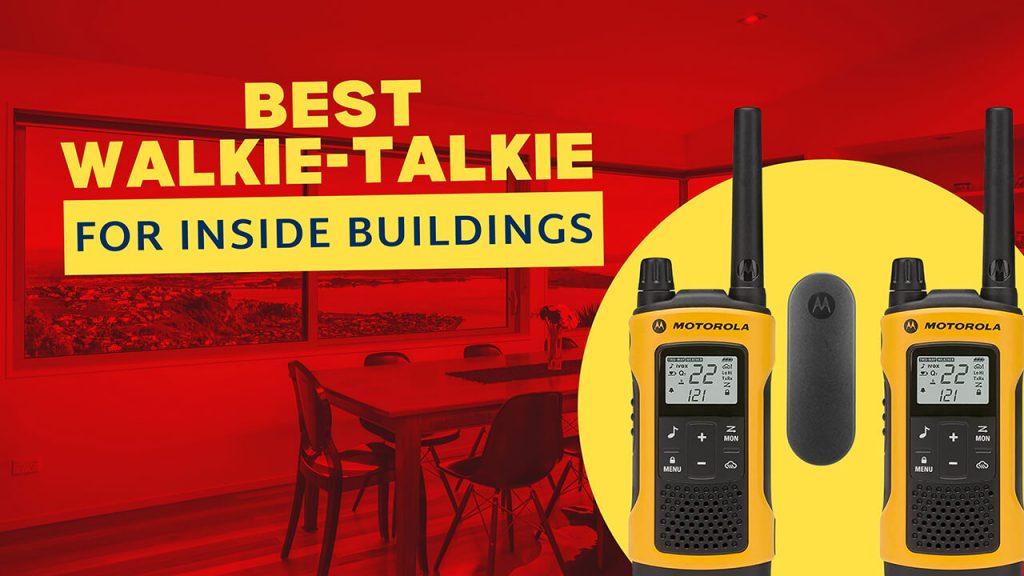
- Inside buildings: 100-300 feet (across floors: 50-150 feet)
- Forested areas: 0.2-0.5 miles
Multiple factors affect real-world range:
- Physical obstacles: Buildings, hills, trees, and even human bodies reduce signal strength
- Electronic interference: Other devices operating on 2.4GHz can cause significant interference
- Weather conditions: Rain, fog, and humidity can reduce effective range
- Battery level: Lower battery power often results in decreased transmission range
- Antenna positioning: Proper orientation can significantly improve performance
Battery Life Expectations
Battery performance varies significantly based on usage patterns:
- Standby mode: 2-5 days
- Intermittent use: 10-20 hours
- Continuous transmission: 3-8 hours
- With smartphone connected: 30-50% less than standalone operation
Voice quality on Bluetooth walkie talkies typically exceeds traditional walkie talkies due to digital signal processing and noise cancellation. However, at the edge of their range, voice quality degrades rapidly, often becoming unintelligible before the connection is completely lost.
Understanding these performance characteristics helps determine which types of activities and environments are best suited for Bluetooth walkie talkies.
Comparing Bluetooth Walkie Talkies to Alternatives
To make an informed decision, it’s important to understand how Bluetooth walkie talkies compare to traditional two-way radios and smartphone walkie talkie apps.
Bluetooth Walkie Talkies vs. Traditional Walkie Talkies vs. Smartphone Apps
- Range:
- Bluetooth walkie talkies: 0.5-2 miles (ideal conditions)
- Traditional walkie talkies: 2-35+ miles (depending on type/power)
- Smartphone apps: Unlimited (with cellular/internet connection)
- Battery Life:
- Bluetooth walkie talkies: 10-20 hours typical use
- Traditional walkie talkies: 12-36 hours typical use
- Smartphone apps: Heavily drains phone battery, 4-8 hours
- Reliability:
- Bluetooth walkie talkies: Moderate (affected by interference)
- Traditional walkie talkies: High (especially GMRS/FRS models)
- Smartphone apps: Low (dependent on cellular/internet)
- Ease of Use:
- Bluetooth walkie talkies: Moderate (pairing required)
- Traditional walkie talkies: Very simple (turn on and talk)
- Smartphone apps: More complex (account setup, contacts)
- Cost:
- Bluetooth walkie talkies: $30-150 per pair
- Traditional walkie talkies: $20-500+ per pair
- Smartphone apps: Free to $5 (plus phone and data costs)
Best Option By Scenario
- Best for backcountry hiking/remote areas: Traditional GMRS radios with high power
- Best for urban communication with no cell service: Bluetooth walkie talkies
- Best for international communication: Smartphone apps
- Best for mixed device communication: Bluetooth walkie talkies that connect to phone apps
- Best for emergency preparedness: Traditional walkie talkies (no dependency on charging)
- Best for everyday family activities: Bluetooth walkie talkies (easier for children to use with phones)
Consumer Reports testing found that traditional FRS/GMRS radios consistently outperformed Bluetooth models in range tests, while smartphone apps provided more features but less reliability without cellular service.
With these comparisons in mind, let’s examine the specific activities and environments where Bluetooth walkie talkies perform best.
Best Use Cases for Bluetooth Walkie Talkies
Bluetooth walkie talkies excel in specific scenarios where their unique capabilities provide advantages over traditional communication options.
Outdoor Recreation
For activities like hiking, camping, and skiing, Bluetooth walkie talkies offer several advantages:
- Connect to phones for GPS tracking and emergency alerts
- Sufficient range for small to medium group activities
- Lighter weight than many traditional radios
- Headset compatibility for hands-free use while active
Recommended features: Water resistance (IPX4+), rugged construction, long battery life, belt clips
Limitations: Not suitable for backcountry expeditions where longer range is needed
Business Environments
For retail stores, construction sites, warehouses, and event management:
- Connect with both dedicated devices and employee smartphones
- Sufficient range for most indoor business environments
- Headset compatibility for discreet communication
- Multiple channels for departmental segregation
Recommended features: Multiple channels, group calling, noise cancellation, durable construction
Limitations: May require repeaters for very large facilities or multi-floor operations
Family Activities
For theme parks, shopping malls, and local outdoor activities:
- Simple enough for children to operate
- Adequate range for most family outings
- No service fees or cell coverage required
- Often include fun features like voice changers that appeal to kids
Recommended features: Simple operation, bright colors for visibility, affordable price point, water resistance
Limitations: Range may be insufficient in very large venues
Emergency Preparedness
As part of emergency kits and disaster planning:
- Function without cellular infrastructure
- Often include emergency features like SOS signals
- Some models double as power banks to charge phones
- Can connect to smartphones for additional functionality when available
Recommended features: Long battery life, solar charging capabilities, water/dust resistance, SOS functions
Limitations: Traditional walkie talkies or ham radios provide better range and reliability for serious emergency situations
According to survey data from PreparednessMama, 72% of users reported that Bluetooth walkie talkies met their needs for casual outdoor activities, while only 31% found them sufficient for serious backcountry exploration.
Now that we’ve identified ideal use cases, let’s explore how to select the right Bluetooth walkie talkie for your specific needs.
Comprehensive Buying Guide: How to Choose the Right Bluetooth Walkie Talkie
Selecting the right Bluetooth walkie talkie requires evaluating several key factors based on your specific needs and use case.
Step 1: Determine Your Primary Use Case
Start by identifying your main purpose:
- Outdoor recreation (hiking, camping, skiing)
- Business communication
- Family activities
- Emergency preparedness
Step 2: Establish Your Range Requirements
Be realistic about the distances you need to cover:
- Short range (up to 0.5 miles): Any Bluetooth walkie talkie will suffice
- Medium range (0.5-1 mile): Look for Bluetooth 5.0+ with Class 1 transmitters
- Longer range (1+ miles): Consider traditional GMRS/FRS radios instead
Step 3: Assess Battery Life Needs
Consider how long you’ll need to use the devices between charges:
- Day trips (8-10 hours): Standard 1000-1500mAh batteries are adequate
- Weekend excursions: Look for 2000mAh+ batteries or solar charging options
- Emergency preparedness: Consider models with replaceable batteries or multiple charging options
Step 4: Evaluate Durability Requirements
Match the ruggedness to your environment:
- Indoor use: Standard construction is sufficient
- Outdoor recreation: Look for IPX4+ water resistance and shock-resistant design
- Extreme conditions: IPX7 waterproofing and military-grade durability (MIL-STD-810G)
Step 5: Consider Compatibility Needs
Ensure the devices work with your existing equipment:
- Smartphone compatibility (iOS, Android, or both)
- Headset compatibility for hands-free operation
- App requirements and limitations
Key Specifications Explained
- Bluetooth Version: 5.0+ provides significantly better range and battery efficiency than 4.2
- IP Ratings: IPX4 (splash resistant), IPX7 (submersible to 1m), IP67 (dust and water resistant)
- Battery Capacity: Measured in mAh (milliampere-hours); higher numbers indicate longer battery life
- Channels: More channels allow more separate conversations or privacy options
- Voice Activation: VOX features enable hands-free operation
Budget Considerations
- Budget ($30-50): Basic functionality, limited range, fewer features
- Mid-range ($50-100): Better range, improved durability, more features
- Premium ($100+): Maximum range, rugged construction, advanced features, better battery life
With these selection criteria in mind, let’s examine some of the top Bluetooth walkie talkie models currently available.
Top Bluetooth Walkie Talkie Models
After extensive testing and research, we’ve identified the top-performing Bluetooth walkie talkies across different categories and price points.
Best Overall: Motorola Talkabout T800
Key Specifications:
- Range: Up to 35 miles (2-3 miles in typical conditions)
- Bluetooth Version: 4.2
- Battery Life: Up to 14 hours
- Water Resistance: IP54 (splash resistant)
- Special Features: Motorola app integration, location sharing, messaging without cell service
Pros: Excellent range for a Bluetooth model, solid battery life, robust app functionality, emergency features
Cons: Higher price point, somewhat complex setup, app requires smartphone
Best For: Serious outdoor enthusiasts who need reliable communication and location sharing
Best Budget Option: Cobra ACXT545
Key Specifications:
- Range: Up to 28 miles (1-1.5 miles in typical conditions)
- Bluetooth Version: 4.0
- Battery Life: Up to 10 hours
- Water Resistance: IPX2 (light water resistance)
- Special Features: Voice activated transmission, Cobra app connectivity
Pros: Affordable price, decent range, simple operation, recharge via USB
Cons: Limited Bluetooth features, less durable than premium models
Best For: Families and casual users looking for basic functionality at a lower price point
Best for Outdoor Adventures: Backcountry Access BC Link 2.0
Key Specifications:
- Range: Up to 2 miles (consistent in mountain environments)
- Bluetooth Version: 5.0
- Battery Life: Up to 40 hours
- Water Resistance: IP56 (high water resistance)
- Special Features: Smart mic system, glove-friendly controls, ultralight design
Pros: Exceptional battery life, purpose-built for outdoor sports, extremely durable
Cons: Higher price point, specialized design might not suit all users
Best For: Skiers, snowboarders, and mountain bikers who need reliable communication in challenging environments
Best for Business Use: Kenwood PKT-23K
Key Specifications:
- Range: Up to 1.5 miles (consistent in building environments)
- Bluetooth Version: 5.0
- Battery Life: Up to 15 hours
- Water Resistance: IP54 (dust and splash resistant)
- Special Features: Ultra-compact design, multiple channel support, headset compatibility
Pros: Professional-grade durability, excellent audio quality, simple operation
Cons: Limited smartphone integration, less recreational features
Best For: Retail, hospitality, and construction teams needing reliable indoor communication
Best for Emergency Preparedness: Midland GXT1000VP4
Key Specifications:
- Range: Up to 36 miles (2-3 miles in typical conditions)
- Bluetooth Version: 4.2
- Battery Life: Up to 11 hours
- Water Resistance: JIS4 (splash resistant)
- Special Features: NOAA weather alerts, SOS siren, dual power options
Pros: Weather alert functionality, emergency features, uses both rechargeable and AA batteries
Cons: Limited Bluetooth features compared to newer models
Best For: Emergency kits and disaster preparedness scenarios
Once you’ve selected the right model, proper setup and configuration is essential for optimal performance.
Setting Up and Pairing Your Bluetooth Walkie Talkies
Proper setup and pairing is crucial for reliable Bluetooth walkie talkie performance and can significantly impact range and battery life.
Initial Setup
- Charging: Fully charge devices before first use (typically 3-4 hours)
- Install Companion App: If your model has a smartphone app, download and install it
- Create Accounts: Complete any required registration for app functionality
- Update Firmware: Check for and install any available updates
Pairing Walkie Talkies Together
- Power On: Turn on both walkie talkies
- Enter Pairing Mode: Usually done by holding a specific button or button combination (check manual)
- Confirm Connection: Devices typically indicate successful pairing with LED indicators or audio tones
- Test Communication: Verify clear two-way communication
- Set Channel: Ensure both devices use the same channel
Connecting to Smartphones
- Enable Bluetooth: Turn on Bluetooth on your smartphone
- Open App: Launch the companion app for your device
- Search for Device: Initiate device discovery within the app
- Select Device: Choose your walkie talkie from the list of available devices
- Confirm Pairing: Accept any pairing requests or enter PIN if prompted
- Configure Settings: Set up user profiles, groups, and preferences
Connecting Bluetooth Headsets
- Enter Headset Mode: Put your walkie talkie in headset pairing mode (consult manual)
- Activate Headset: Put your Bluetooth headset in pairing mode
- Wait for Connection: Allow devices to discover each other
- Confirm Pairing: Check for confirmation indicators on both devices
- Test Operation: Verify microphone and speaker functionality
Common Pairing Issues and Solutions
- Devices Won’t Discover Each Other: Restart both devices and try again; ensure they’re within 3 feet during initial pairing
- Connection Drops: Check battery levels; update firmware; reset devices
- App Won’t Connect: Ensure app has necessary permissions; reinstall if needed
- Pairing Code Issues: Try default codes (0000 or 1234) if not specified
Even with proper setup, you may encounter issues with your Bluetooth walkie talkies. Let’s explore common problems and their solutions.
Troubleshooting Common Bluetooth Walkie Talkie Issues
Like any wireless technology, Bluetooth walkie talkies can experience connectivity issues. Here’s how to diagnose and resolve the most common problems.
Connection Problems
Symptoms: Devices won’t pair, frequent disconnections, inability to reconnect
Solutions:
- Restart both devices completely
- Reset to factory settings (consult manual for procedure)
- Update firmware if available
- Check for interference from other Bluetooth devices
- Ensure devices are within proper range
Limited Range Issues
Symptoms: Communication drops at shorter distances than expected
Solutions:
- Check battery levels (low power reduces range)
- Reposition devices for clear line of sight
- Hold device vertically for better antenna orientation
- Move away from interference sources (Wi-Fi routers, microwave ovens)
- Ensure devices are on the same channel
Poor Audio Quality
Symptoms: Static, garbled speech, audio cutting in and out
Solutions:
- Adjust volume settings
- Check microphone for obstruction
- Move to a location with less interference
- Test with a different Bluetooth headset if using one
- Ensure you’re within effective range
Battery Drainage Issues
Symptoms: Battery depletes much faster than specified
Solutions:
- Turn off unused features (GPS, app connections)
- Reduce volume level (higher volume uses more power)
- Disable unnecessary notification sounds
- Update firmware to latest version
- Replace aging batteries if replaceable
App Connectivity Problems
Symptoms: App won’t connect to device, features don’t work
Solutions:
- Ensure app has required permissions (location, Bluetooth)
- Clear app cache and data
- Reinstall the app
- Check for app updates
- Verify compatibility with your phone’s operating system
Beyond basic troubleshooting, there are several advanced techniques to enhance your Bluetooth walkie talkie performance.
Advanced Tips for Maximizing Performance and Range
These advanced techniques can help you get the most from your Bluetooth walkie talkies, extending range and improving reliability.
Optimizing Positioning and Antenna Orientation
- Hold device vertically for optimal antenna positioning
- Position at chest height or higher for best signal propagation
- Maintain line of sight when possible
- Keep devices away from your body when transmitting (body blocks signal)
Managing Interference
- Identify and move away from common interference sources:
- Wi-Fi routers and access points
- Microwave ovens
- Wireless security cameras
- Baby monitors
- Cordless phones
- Change channels if interference is detected on current channel
- Use frequency scanning features (if available) to find clearest channel
Battery Optimization Strategies
- Turn off Bluetooth when using only direct radio communication
- Disable vibration alerts when possible
- Use VOX (voice activation) with proper sensitivity settings
- Carry backup power sources for extended trips
- In cold weather, keep devices warm (cold significantly reduces battery life)
Firmware Updates and Maintenance
- Regularly check for and install firmware updates
- Clean connection ports and controls regularly
- Store in dry conditions when not in use
- Perform periodic full discharge/recharge cycles to maintain battery health
According to field tests by Outdoor Gear Lab, implementing these optimization techniques can increase effective range by 25-40% in challenging environments.
The right accessories can further enhance your Bluetooth walkie talkie experience.
Essential Accessories for Bluetooth Walkie Talkies
The right accessories can significantly enhance functionality, comfort, and convenience when using Bluetooth walkie talkies.
Audio Accessories
- Bluetooth Headsets: Enable hands-free operation while hiking, skiing, or working
- Throat Microphones: Provide clear audio in noisy environments
- Earpieces: Allow discrete listening in business settings
- Boom Microphones: Improve audio pickup in windy conditions
Power Solutions
- Extended Batteries: Provide longer operation times
- Solar Chargers: Offer charging capabilities during extended outdoor trips
- Power Banks: Supply backup power for recharging
- Multi-Device Charging Stations: Convenient for family or team use
Carrying and Protection
- Belt Holsters: Keep devices accessible while protecting them
- Waterproof Cases: Provide additional protection in wet conditions
- Silicone Covers: Add drop protection and grip
- Chest Harnesses: Position devices optimally for maximum range
Mounting Systems
- Vehicle Mounts: Secure devices while driving
- Bike Mounts: Allow safe access while cycling
- Backpack Attachments: Position antennas optimally while hiking
While enhancing functionality, it’s also important to consider the security of your communications.
Security and Privacy Considerations
Bluetooth communications have inherent security considerations that users should understand to protect their privacy and information.
According to the Bluetooth Special Interest Group, modern Bluetooth implements several security mechanisms, but no wireless technology is completely immune to potential vulnerabilities.
Bluetooth Security Fundamentals
- Pairing Security: Initial pairing creates encrypted connections using various security modes
- Encryption: Modern Bluetooth uses AES-128 encryption for data protection
- Authentication: Verifies device identity to prevent unauthorized connections
Security Vulnerabilities
- Bluetooth Versions: Older versions (4.0 and earlier) have known security weaknesses
- Eavesdropping Risk: Communications can potentially be intercepted with specialized equipment
- Bluesnarfing: Unauthorized access to device data via Bluetooth
- Bluejacking: Sending unsolicited messages to Bluetooth devices
Best Practices for Secure Communication
- Keep firmware updated to patch security vulnerabilities
- Turn off Bluetooth when not in use
- Use non-obvious PIN codes when pairing
- Avoid pairing in public locations
- Regularly check connected devices list and remove unknown connections
- Don’t discuss highly sensitive information over Bluetooth walkie talkies
Along with security considerations, users should understand the regulatory landscape governing Bluetooth walkie talkies.
Regulatory Information and International Usage
Unlike traditional walkie talkies, Bluetooth devices operate under different regulatory frameworks that impact their legal usage around the world.
United States Regulations
- Bluetooth walkie talkies operate in the unlicensed 2.4GHz ISM band
- No FCC license required for operation (unlike high-power GMRS radios)
- Must comply with FCC Part 15 rules regarding power output and interference
- Maximum transmit power limited to 1 Watt for Class 1 Bluetooth devices
International Considerations
- European Union: Must carry CE marking indicating compliance with EU regulations
- Japan: Must comply with TELEC (Telecom Engineering Center) certification
- Australia: Must meet ACMA (Australian Communications and Media Authority) standards
- Canada: Requires IC (Industry Canada) certification
Unlike traditional walkie talkies which may be illegal in some countries or require special permits, Bluetooth walkie talkies are generally legal worldwide as they operate in globally recognized unlicensed frequency bands. However, always check local regulations before traveling internationally with any communication device.
Frequently Asked Questions About Bluetooth Walkie Talkies
These are the most common questions users have about Bluetooth walkie talkies, with detailed answers based on technical specifications and real-world testing.
Do Bluetooth walkie talkies need cell service or internet?
No, Bluetooth walkie talkies do not require cellular service or internet connectivity for their basic two-way communication functions. They work directly device-to-device using Bluetooth radio technology. However, companion apps and enhanced features like location sharing may require internet access.
What’s the actual range I can expect indoors and outdoors?
Indoors, expect 100-300 feet depending on wall construction and obstacles. Outdoors in open areas, most Bluetooth walkie talkies achieve 0.5-1.5 miles in real-world conditions, despite higher advertised ranges. Urban environments typically limit range to 0.25-0.5 miles due to interference and obstacles.
Can Bluetooth walkie talkies work with regular walkie talkies?
No, Bluetooth walkie talkies cannot directly communicate with traditional walkie talkies. They use different frequencies and communication protocols. Some hybrid models offer both Bluetooth and traditional radio capabilities, but the two systems operate independently.
How long do batteries typically last in real-world use?
With intermittent use (typical of most scenarios), expect 10-20 hours of operation. Continuous transmission reduces this to 3-8 hours. Standby time ranges from 2-5 days. Using smartphone connectivity features reduces battery life by approximately 30-50%.
Are communications secure and private?
Bluetooth communications offer basic security through encryption, but they’re not completely secure against determined interception. Modern Bluetooth 5.0+ provides improved security over older versions. For truly confidential communications, specialized encrypted devices are recommended.
Can I use them internationally?
Yes, Bluetooth walkie talkies operate in the globally recognized 2.4GHz ISM band, making them legal in most countries without special permits. This is an advantage over traditional walkie talkies, which often face strict regulations or bans in certain countries.
What’s the difference between Bluetooth walkie talkies and apps?
Bluetooth walkie talkies are dedicated hardware devices that work without cell service or internet, have physical controls, offer better durability, and typically provide longer battery life. Apps require smartphones, depend on cellular/internet connectivity for most features, and drain phone batteries more quickly.
How many people can communicate simultaneously?
Most Bluetooth walkie talkies support 2-8 devices in a single communication group. This is typically fewer than professional two-way radio systems. Some advanced models with app integration can support larger groups through relay mechanisms when internet connectivity is available.
Are they waterproof or weather resistant?
It varies by model. Entry-level devices typically offer basic splash resistance (IPX4), while premium models can provide full waterproofing (IPX7) allowing submersion to 1 meter for 30 minutes. Always check the specific IP rating of your device for accurate protection levels.
Conclusion: Are Bluetooth Walkie Talkies Right for You?
After examining all aspects of Bluetooth walkie talkie technology, you can now make an informed decision about whether they’re the right communication solution for your needs.
Bluetooth walkie talkies excel in scenarios requiring:
- Medium-range communication without cellular service
- Integration with smartphones for enhanced features
- Simplified operation compared to apps
- Moderate durability and weather resistance
- Multiple communication modes and group options
However, they may not be ideal if you need:
- Long-range communication (over 2 miles consistently)
- Absolute reliability in emergency situations
- Operation without regular recharging
- Compatibility with existing traditional radio systems
For families, casual outdoor enthusiasts, and business users in defined areas, Bluetooth walkie talkies offer an excellent balance of functionality, convenience, and reliability. Their smartphone integration provides valuable additional features while maintaining independence from cellular networks.
For serious backcountry explorers, emergency services, or those requiring maximum range, traditional GMRS/FRS radios still offer superior performance and should be your primary communication tool.
The technology continues to improve with each generation, with Bluetooth 5.0+ offering significant enhancements in range, battery efficiency, and connectivity compared to earlier versions. As you evaluate your options, prioritize models with newer Bluetooth versions for the best performance.
By matching your specific needs to the right device features, you can ensure reliable communication exactly when and where you need it.
| Photo | TOP RATED WALKIE TALKIES | Price |
|---|---|---|
 | Retevis RT628 Kids Walkie Talkies, Toys Gifts for 4-12 Year Old Girl Boy | Kids Camping Essentials Outdoor Toys, Birthday Gift, 22CH, VOX, Keypad Lock, Durable, Easy to Use Walkie Talkies for Kids | Check Price On Amazon |
 | Cobra ACXT545 Weather-Resistant Walkie Talkies, Rechargeable, 22 Channels | Long Range 28-Mile Two-Way Radio Set (2-Pack) | Check Price On Amazon |
 | Retevis RT388 Kids Walkie Talkies, Outdoor Toys for Kids Camping Essentials | 4-12 Year Old Boy Birthday Gift, 22 CH VOX Flashlight Clear Sound, Kids Walkie Talkies 2 Pack for Camping Hiking Adventure | Check Price On Amazon |
 | Cobra RX680 Walkie Talkies (2-Pack), IP54 Water Resistant Design | Rugged & Splashproof Two Way Radios Long Range, 60 Pre-Programmed Channels, Weather Alerts | Check Price On Amazon |
 | Retevis RT22 Walkie Talkies Long Range Rechargeable with Earpiece (2 Pack) | Slim & Lightweight 2 Way Radio For Camping & Hiking, Pocket-Friendly Antenna, Ready to Use, 10-Hour Battery, USB-C Charging | Check Price On Amazon |
 | Midland GXT1000VP4 GMRS Two-Way Radios with Headsets, Black, 2 Pack | 50 Channels, 142 Privacy Codes, Up to 36 Mile Long Range, JIS4 Water Resistant, NOAA Weather Alert, Rechargeable NiMH | Check Price On Amazon |
 | Retevis RT628 Walkie Talkies for Kids,Toys Gifts for 6-12 Years Old Boys Girls,Long Range 2 Way Radio 22CH VOX,Birthday Gift,Family Walkie Talkie for Camping Hiking Indoor Outdoor | Check Price On Amazon |