Wearable walkie talkies are compact, body-worn communication devices that allow hands-free operation while providing reliable two-way communication. Unlike traditional handheld radios, these devices integrate into clothing, accessories, or can be worn directly on the body, freeing users’ hands for other tasks.
The evolution from bulky handheld radios to sleek wearable communication systems represents a significant advancement in how teams coordinate across various environments. From outdoor adventures to critical workplace operations, these devices are transforming how we communicate when mobility and hands-free functionality are essential.
| Photo | Popular Portable Walkie Talkies | Price |
|---|---|---|
 | SKIWARRIOR Multifunctional Smart Wireless Ski Goggles with Walkie-Talkie, Anti-Fog Zeiss Lens, Music & Call Function (Cylindrical Blue) | Check Price On Amazon |
 | SINORISE Super Mini Walkie Talkies, Two-Way Radios, 3 Pack | Up to 12 Hours Battery Life, for Baseball Coaches, Restaurants, Retail Stores, Hospitals, Outdoor Sports & Travel | Check Price On Amazon |
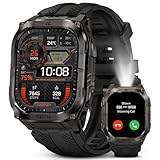 | KOSPET Tank M4C Smart Watch Rugged, Dual-Band GPS, 5ATM & IP69K Waterproof | 1.96" AMOLED Display, 170+ Sport Modes, Built-in LED Flashlight/Walkie-Talkie, Heart Rate/Sleep Monitor for Android & iPhone | Check Price On Amazon |
 | Retevis RT15 Walkie Talkies 3 Pack, Birthday Gift, Outdoor Adventure Kit | Durable, Lightweight, VOX, Key Lock, Mini Walkie Talkies for Adults, School Family Outdoor Travel Camping Hiking | Check Price On Amazon |
 | Rechargeable Walkie Talkies Toys for Kids: DIY Astronaut Walkie Talkies for Boys Christmas Birthday Gifts for 3 4 5 6 7 8 9 10 Boy Walkie Talkie Outdoor Hiking Toy 2 Way Radio Camping Outdoor Game | Check Price On Amazon |
What Are Wearable Walkie Talkies? Understanding the Technology
Wearable walkie talkies represent the evolution of traditional two-way radio technology into hands-free, body-worn communication devices that free users from handheld operation while maintaining or enhancing functionality. These devices combine radio transmission capabilities with ergonomic designs that can be worn comfortably during various activities.
Unlike standard walkie talkies that require manual handling, wearable versions incorporate several key components:
- Microphone system – Often positioned near the mouth or using bone conduction technology
- Speaker element – Placed near the ear or using bone conduction to transmit sound
- Push-to-Talk (PTT) mechanism – Redesigned for easy access while keeping hands free
- Compact radio unit – Houses the transmission components and battery
- Power source – Rechargeable batteries optimized for extended use
The fundamental technology remains similar to traditional two-way radios, using radio frequencies to transmit voice communication between devices. However, the form factor and interface are completely reimagined to prioritize wearability and hands-free operation.
Common Form Factors and Designs
Wearable walkie talkies come in various designs, each optimized for specific use cases and environments. The form factor significantly impacts comfort, usability, and suitability for different activities.
- Headset-style devices – These wrap around or over the ear with a microphone positioned near the mouth. Some use bone conduction technology to transmit sound through the skull rather than the ear canal, keeping environmental awareness intact.
- Clip-on/lapel communicators – These attach to clothing (often near the shoulder or collar) and feature a small microphone and speaker. They offer less conspicuous communication but may have reduced audio quality in noisy environments.
- Wrist-worn communicators – Resembling smartwatches, these devices strap to the wrist and combine communication functions with other features like time display or activity tracking. They offer convenient access but may require raising the wrist to speak.
- Vest-integrated systems – Popular in security, emergency services, and military applications, these systems embed communication technology directly into tactical vests or clothing, distributing weight and components across the body.
- Specialized industry designs – Healthcare settings often use lightweight devices that meet sanitization requirements, while manufacturing environments might prioritize hearing protection with integrated communication.
Each design makes specific tradeoffs between factors like weight, battery life, audio quality, durability, and ease of use.
How Wearable Walkie Talkies Work: The Technology Behind Hands-Free Communication
Understanding the technology behind wearable walkie talkies helps users select the right device and maximize its potential. These devices rely on radio frequency transmission to enable communication between multiple units without cellular infrastructure.
At their core, wearable walkie talkies operate using these key technologies:
- Radio Frequency Transmission – Devices transmit voice data over specific radio frequencies, typically in the UHF (Ultra High Frequency) or VHF (Very High Frequency) bands. When you speak, your voice converts to radio signals that travel to other devices tuned to the same frequency.
- Push-to-Talk (PTT) Mechanism – Unlike phones where both parties can speak simultaneously, walkie talkies use half-duplex communication requiring users to press a button to transmit. Wearable versions redesign this mechanism for easy access without using hands (voice activation) or with minimal hand movement (easily accessible buttons).
- Voice Activation (VOX) – Many wearable systems include voice activation technology that automatically begins transmission when you start speaking, eliminating the need to press buttons.
- Power Management – Advanced battery technology balances size and weight constraints with the need for extended operation. Most units use lithium-ion batteries providing 8-16 hours of typical use.
The maximum communication range varies significantly based on the environment and technology used. Typically, consumer-grade wearable walkie talkies offer:
- Urban environments with obstructions: 0.5-1 miles
- Suburban areas: 1-2 miles
- Open terrain: 2-5+ miles
Professional-grade systems can achieve significantly greater ranges, particularly when using repeater networks or mesh communication systems.
Communication Protocols and Technologies
Various communication protocols power today’s wearable walkie talkies, each with distinct advantages for specific applications. Understanding these differences helps in selecting the right system for your needs.
- FRS (Family Radio Service) – License-free in the US, limited to 0.5 watts, shorter range but simple to use for recreational activities
- GMRS (General Mobile Radio Service) – Requires license in the US, higher power (up to 5 watts), longer range, suitable for serious outdoor activities
- UHF (Ultra High Frequency) – Better for indoor use, urban environments, penetrates buildings more effectively
- VHF (Very High Frequency) – Better for outdoor open areas, longer range in unobstructed terrain
- DMR (Digital Mobile Radio) – Digital protocol offering clearer audio, better range, and advanced features like text messaging, but typically more expensive
Advanced systems increasingly incorporate mesh networking technology, allowing each device to act as a relay point. This creates a network where communication can “hop” between devices, significantly extending the effective range beyond what direct device-to-device communication would allow.
Many professional systems also include encryption capabilities to protect sensitive communications, particularly important in security, medical, and business environments.
Top Applications and Use Cases for Wearable Walkie Talkies
The versatility of wearable walkie talkies makes them valuable across numerous industries and activities where hands-free, reliable communication is essential. These devices solve specific problems that smartphones or traditional radios cannot address effectively.
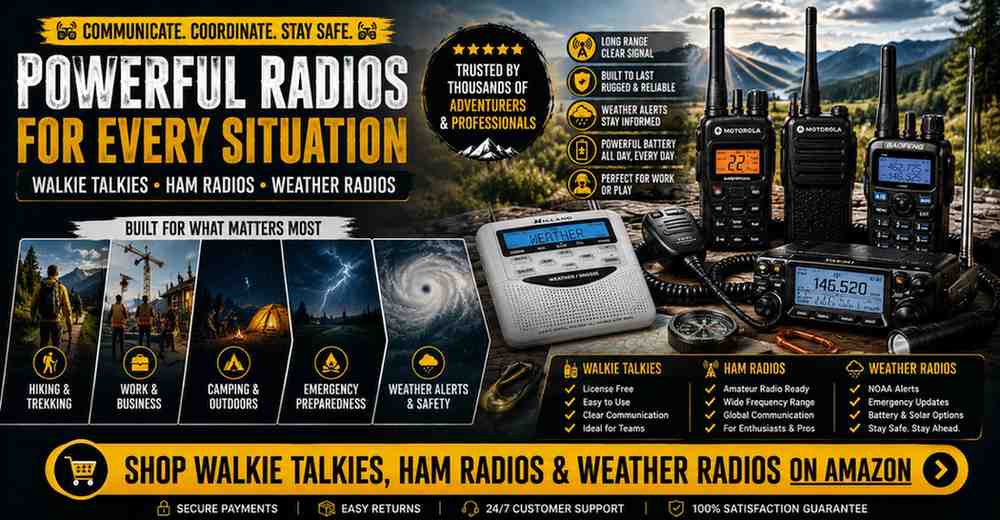
Outdoor Recreation and Adventure
Outdoor enthusiasts benefit from wearable communication in multiple scenarios:
- Hiking and Backpacking – Allows groups to stay connected when separated on trails without stopping to retrieve devices
- Skiing and Snowboarding – Enables communication without removing gloves or stopping on the slopes
- Cycling – Provides team communication without compromising safety by removing hands from handlebars
- Hunting – Offers quiet, discreet communication options critical for coordination
“For backcountry guides, wearable communication devices have become standard equipment,” explains mountain guide Robert Keller. “They allow us to coordinate with clients and other guides while keeping our hands free for safety equipment or assisting others.”
Emergency Services and Public Safety
First responders rely heavily on hands-free communication during critical operations:
- Firefighting – Integrated systems in breathing apparatus or turnout gear enable coordination in low-visibility, high-risk environments
- Emergency Medical Services – Allows coordination during patient care when both hands are needed for treatment
- Law Enforcement – Tactical operations require reliable communication without compromising weapon readiness or physical control
- Search and Rescue – Enables teams to coordinate across difficult terrain while using equipment
Industrial and Manufacturing Environments
Industrial settings benefit from wearable communication in several ways:
- Factory Floor Coordination – Workers can communicate despite loud machinery without removing hearing protection
- Warehouse Operations – Staff can coordinate picking and logistics while keeping hands free for materials handling
- Construction Sites – Workers can communicate across large sites or between floors while maintaining safety
- Oil and Gas Operations – Intrinsically safe models allow communication in hazardous environments
Hospitality and Event Management
Service industries use wearable communication to enhance customer experience:
- Hotels – Staff can coordinate housekeeping, maintenance, and guest services discreetly
- Restaurants – Kitchen and front-of-house staff can communicate seamlessly during service
- Event Production – Coordinators can manage complex logistics while remaining mobile
- Security Teams – Personnel can maintain communication while keeping hands free for other tasks
How to Choose the Right Wearable Walkie Talkie: Essential Features and Considerations
Selecting the optimal wearable walkie talkie requires evaluating several key factors based on your specific communication needs. The right device balances functionality, comfort, and durability for your environment.
Start by considering these primary factors:
1. Environment and Range Requirements
- Indoor vs. Outdoor Use – UHF frequencies typically work better indoors and urban areas, while VHF performs better in open outdoor spaces
- Distance Needs – Be realistic about actual range requirements and remember that manufacturer claims often represent ideal conditions
- Obstacles – Buildings, dense forests, and mountains significantly reduce range
2. Durability and Environmental Protection
- IP Rating – The Ingress Protection rating indicates dust and water resistance:
- IP54 – Protected against dust and water splashes
- IP67 – Fully dustproof and can withstand temporary immersion
- IP68 – Dustproof and suitable for continuous immersion
- Temperature Tolerance – Important for extreme environments (winter sports, industrial settings)
- Impact Resistance – Look for MIL-STD-810G certification for drop and shock protection
3. Battery Life and Power Management
- Operational Time – Consider how long you need the device to last between charges (8-16 hours is typical)
- Charging Options – USB charging, proprietary docks, or replaceable batteries
- Battery Type – Lithium-ion typically offers the best power-to-weight ratio
4. Comfort and Ergonomics
- Weight – Lighter devices cause less fatigue during extended wear
- Fit – Must be comfortable with any other equipment you use (helmets, glasses, etc.)
- Controls – Buttons and interfaces should be usable with gloves if needed
5. Audio Quality and Noise Management
- Noise Cancellation – Critical in loud environments
- Speaker Volume – Must be audible in your typical environment
- Voice Activation Sensitivity – Adjustable to prevent accidental transmissions
Understanding Technical Specifications
Technical specifications provide crucial information about a wearable walkie talkie’s capabilities, but understanding what these specifications mean in real-world terms is essential.
- Wattage – Transmission power affects range:
- 0.5W (typical FRS) – 0.5-2 miles in optimal conditions
- 1-2W – 2-5 miles in optimal conditions
- 4-5W (GMRS) – 5+ miles in optimal conditions
- Battery Capacity – Measured in milliampere-hours (mAh):
- 1000-1500 mAh – Typically 8-10 hours of moderate use
- 1500-2500 mAh – Typically 10-16 hours of moderate use
- 2500+ mAh – 16+ hours possible but increases weight
- Channels and Privacy Codes:
- More channels allow more separate groups to communicate
- Privacy codes (CTCSS/DCS) don’t provide true privacy but help filter unwanted transmissions
Remember that manufacturer specifications often represent ideal conditions (open terrain, no interference). Real-world performance is typically 40-60% of the maximum claimed range.
Top Wearable Walkie Talkie Solutions for Different Needs
The market offers diverse wearable communication solutions designed for specific needs and budgets. Here are top recommendations based on different use cases and requirements.
Best for Outdoor Recreation
Midland X-TALKER T75VP3 with Headsets
- Range: Up to 38 miles in optimal conditions (realistically 2-5 miles in typical terrain)
- 36 channels with 121 privacy codes
- NOAA weather alerts and water-resistant design
- Includes boom mic headsets for hands-free operation
- Price range: $80-100 for the set
Garmin Rhino 755t
- Combines GPS navigation with GMRS radio communication
- Wrist-wearable design with touch screen
- 5W transmission power for extended range
- Includes location sharing between units
- Price range: $450-550
Best for Professional and Business Use
Motorola WAVE TLK 100
- Combines radio functionality with cellular network capability
- Nationwide push-to-talk over LTE networks
- No range limitations when within cellular coverage
- Clip-on design with optional headset for hands-free use
- Price range: $350-400 plus subscription
3M PELTOR WS LiteCom Plus
- Hearing protection with integrated two-way radio
- Bluetooth connectivity for phone integration
- Noise-cancelling boom microphone
- Ideal for manufacturing, construction, and loud environments
- Price range: $500-700
Best Budget-Friendly Options
Retevis RT22 with Earpiece
- Compact clip-on design with included earpiece
- 16 channels with voice activation capability
- USB rechargeable with 8-10 hour battery life
- Simple operation with minimal controls
- Price range: $25-35 per unit
NICEAO Wearable Walkie Talkies
- Wrist-worn design with built-in speaker and microphone
- 22 channels with backlit display
- VOX hands-free operation
- Water-resistant design for outdoor use
- Price range: $40-60 per pair
Best for Noisy Environments
Eartec UltraLITE
- Full duplex communication (simultaneous talking/listening like a phone)
- No base station required for up to 4 users
- Noise-cancelling microphone
- Lightweight headset design (4 oz)
- Price range: $400-700 for multi-user systems
Integration Capabilities: Connecting Wearable Walkie Talkies with Other Systems
Modern wearable communication devices increasingly offer integration with other technologies, expanding their functionality beyond simple two-way communication. This connectivity creates more versatile and powerful communication ecosystems.
Smartphone Integration
Many newer wearable communication systems connect with smartphones through dedicated apps, offering:
- Extended range – Using cellular networks to bridge communication beyond direct radio range
- Location sharing – GPS position tracking and mapping of team members
- Text messaging – Sending text-based communication when voice isn’t practical
- Recording – Logging communications for documentation or training
To connect most Bluetooth-enabled walkie talkies with your smartphone:
- Download the manufacturer’s companion app
- Enable Bluetooth on both devices
- Follow the app’s pairing instructions
- Configure settings for your specific needs
Enterprise System Integration
Professional environments often connect wearable communication devices to broader management systems:
- Dispatch consoles – Central coordination of field teams
- Recording systems – Documentation for liability and training
- Personnel tracking – Location monitoring for safety and efficiency
- Task management – Integration with workflow systems
Specialized Equipment Integration
Industry-specific integration enhances functionality in specialized environments:
- Healthcare – Integration with nurse call systems and medical alarms
- Manufacturing – Connection to machine status monitoring and emergency shutdown systems
- Security – Integration with access control and camera systems
- Hospitality – Connection to property management and guest service systems
As technology advances, the boundaries between different communication systems continue to blur, creating more seamless connectivity across platforms and devices.
Common Challenges and Troubleshooting for Wearable Walkie Talkies
Even the best wearable communication devices can encounter issues, but most common problems have straightforward solutions. Understanding these challenges helps users maximize reliability.
Poor Range or Connectivity
- Problem: Communication distance is much shorter than expected
- Causes: Physical obstacles, interference, low battery, incorrect channel settings
- Solutions:
- Elevate your position when possible
- Ensure all units are on identical channel and privacy code settings
- Check for and remove potential sources of interference
- Replace or recharge batteries
- For digital systems, ensure all units have compatible firmware
Audio Quality Issues
- Problem: Garbled, unclear, or too quiet audio
- Causes: Microphone positioning, environmental noise, volume settings, damage
- Solutions:
- Adjust microphone position closer to mouth (typically 1-2 inches away)
- Enable noise cancellation features if available
- Check volume settings on both transmitting and receiving units
- Inspect for physical damage to microphone or speaker components
- In loud environments, consider using earpieces or headsets rather than built-in speakers
Battery and Power Problems
- Problem: Short battery life or unexpected power loss
- Causes: Battery degradation, cold temperatures, incorrect charging, high transmit power
- Solutions:
- Replace aging batteries (most lithium-ion batteries decline after 300-500 charge cycles)
- In cold environments, keep devices close to body heat when possible
- Ensure complete charging cycles (avoid frequent partial charges)
- Reduce transmission power settings if range requirements allow
- Carry backup power solutions for critical operations
Comfort and Wearability Issues
- Problem: Discomfort during extended wear
- Causes: Poor fit, weight distribution, incompatibility with other equipment
- Solutions:
- Adjust headset fit using included sizing options
- For clip-on units, experiment with different attachment positions
- Consider aftermarket comfort accessories (padded headbands, softer ear cushions)
- For all-day use, alternate between ears or positions periodically
- Ensure compatibility with other required safety equipment before purchase
Communications specialist James Renner advises: “The most common issue I see is users giving up on systems due to initial setup problems. Taking time to properly configure privacy codes, VOX sensitivity, and squelch settings makes a tremendous difference in day-to-day reliability.”
The Future of Wearable Communication: Emerging Technologies and Trends
Wearable communication technology is evolving rapidly, with several emerging trends set to transform how we interact in hands-free environments. These innovations address current limitations while opening new possibilities for connectivity.
AI-Enhanced Communication
Artificial intelligence is revolutionizing wearable communication through:
- Advanced noise filtering – AI algorithms that can isolate human voice from background noise with unprecedented clarity
- Contextual awareness – Systems that understand conversation context and prioritize relevant communications
- Voice pattern recognition – Enhanced security through speaker identification
- Automated transcription – Real-time conversion of voice to text for documentation
Miniaturization and Integration
Physical form factors continue to evolve toward less obtrusive designs:
- In-ear communication systems – Nearly invisible devices similar to wireless earbuds but with extended range capabilities
- Smart clothing integration – Communication components woven directly into fabric
- Modular systems – Components that can be reconfigured based on specific missions or activities
Extended Connectivity
The boundaries between different communication systems are dissolving:
- Seamless network transitioning – Devices that automatically switch between direct radio, mesh networks, and cellular/internet connectivity based on availability
- Cross-platform compatibility – Systems that bridge between previously incompatible radio standards
- IoT integration – Communication devices that interact with environmental sensors and automated systems
Enhanced Team Awareness
Beyond voice communication, next-generation systems provide:
- Biometric monitoring – Sharing vital signs and stress levels among team members
- Spatial awareness – Precise positioning of team members relative to each other and environmental features
- Augmented reality overlays – Visual information sharing through connected displays
Industry analyst Maria Chen predicts: “Within five years, we’ll see widespread adoption of 5G-enabled communication systems that can translate between languages in real-time, prioritize critical information automatically, and adapt to environmental conditions without user intervention.”
Environmental and Safety Considerations
As with any communication technology, wearable walkie talkies come with environmental and safety considerations that responsible users should understand. Proper use ensures both personal safety and minimal environmental impact.
Radio Frequency Safety
While wearable communication devices operate at power levels generally considered safe, users should follow these guidelines:
- Maintain the recommended distance between the antenna and body (typically at least 1 inch)
- Avoid continuous transmission for extended periods
- Be particularly cautious with high-powered (4-5 watt) devices
- Follow manufacturer guidelines for safe operation
Environmental Impact
Minimize the environmental footprint of your communication technology:
- Battery disposal – Recycle lithium-ion and other batteries through appropriate channels
- E-waste management – Return obsolete equipment to manufacturers with recycling programs
- Energy efficiency – Use lower power settings when full power isn’t needed
- Longevity – Choose durable devices designed for repair rather than replacement
Legal and Regulatory Compliance
Communication devices are subject to regulations that vary by region:
- In the United States, GMRS systems require an FCC license ($35 for 10 years)
- Many countries restrict radio frequencies, power output, and encryption capabilities
- Some locations prohibit radio use in specific areas (certain wilderness zones, hospitals, etc.)
- Always check local regulations before using communication devices in unfamiliar regions
Conclusion: Selecting the Right Wearable Communication Solution for Your Needs
Wearable walkie talkies represent a significant advancement in communication technology, offering hands-free convenience without sacrificing reliability. As we’ve explored throughout this guide, these devices provide critical capabilities across diverse applications from outdoor recreation to professional environments.
When selecting the optimal solution for your needs, remember these key considerations:
- Match the device’s form factor to your specific activity and environment
- Consider realistic range requirements rather than marketing claims
- Prioritize audio quality and noise management for your typical conditions
- Evaluate battery life against your operational requirements
- Choose appropriate durability ratings for your environment
For recreational users, balance simplicity and affordability with adequate performance. For professional applications, prioritize reliability, integration capabilities, and specialized features that enhance operational effectiveness.
As technology continues to evolve, wearable communication systems will become increasingly powerful, compact, and intuitive. The future of hands-free communication promises greater connectivity with less intrusion, allowing teams to collaborate more effectively while maintaining focus on their primary tasks.
Frequently Asked Questions About Wearable Walkie Talkies
What is the realistic range of wearable walkie talkies?
While manufacturers often advertise ranges up to 36 miles, realistic expectations in typical environments are much shorter. In urban areas with buildings, expect 0.5-1 mile; in suburban areas, 1-2 miles; and in open terrain with line-of-sight, 2-5 miles. Higher-powered GMRS units and systems with repeaters can achieve greater distances.
Do I need a license to use wearable communication devices?
It depends on the frequency band. In the US, FRS (Family Radio Service) devices don’t require a license, while GMRS (General Mobile Radio Service) requires an FCC license costing $35 for 10 years. Professional bands like commercial UHF/VHF typically require specific licensing. Always check local regulations as requirements vary by country.
How long do batteries typically last in wearable walkie talkies?
Battery life ranges from 8-16 hours of typical use depending on the device, battery capacity, and usage patterns. Factors that reduce battery life include frequent transmission, high power settings, cold temperatures, and the age of the battery. Many professional models offer hot-swappable batteries for extended operations.
Can wearable walkie talkies connect to smartphones?
Many modern wearable communication systems offer smartphone connectivity through Bluetooth or dedicated apps. This integration allows features like extended range (using cellular networks), GPS tracking, text messaging, and communication logging. The specific capabilities depend on the device and its companion software.
Are wearable walkie talkies waterproof?
Water resistance varies significantly between models. Consumer recreational models typically offer splash resistance (IP54), while professional outdoor models may provide temporary immersion protection (IP67) or continuous immersion ratings (IP68). Always check the specific IP (Ingress Protection) rating for your intended use environment.
| Photo | TOP RATED WALKIE TALKIES | Price |
|---|---|---|
 | Retevis RT628 Kids Walkie Talkies, Toys Gifts for 4-12 Year Old Girl Boy | Kids Camping Essentials Outdoor Toys, Birthday Gift, 22CH, VOX, Keypad Lock, Durable, Easy to Use Walkie Talkies for Kids | Check Price On Amazon |
 | Cobra ACXT545 Weather-Resistant Walkie Talkies, Rechargeable, 22 Channels | Long Range 28-Mile Two-Way Radio Set (2-Pack) | Check Price On Amazon |
 | Retevis RT388 Kids Walkie Talkies, Outdoor Toys for Kids Camping Essentials | 4-12 Year Old Boy Birthday Gift, 22 CH VOX Flashlight Clear Sound, Kids Walkie Talkies 2 Pack for Camping Hiking Adventure | Check Price On Amazon |
 | Cobra RX680 Walkie Talkies (2-Pack), IP54 Water Resistant Design | Rugged & Splashproof Two Way Radios Long Range, 60 Pre-Programmed Channels, Weather Alerts | Check Price On Amazon |
 | Retevis RT22 Walkie Talkies Long Range Rechargeable with Earpiece (2 Pack) | Slim & Lightweight 2 Way Radio For Camping & Hiking, Pocket-Friendly Antenna, Ready to Use, 10-Hour Battery, USB-C Charging | Check Price On Amazon |
 | Midland GXT1000VP4 GMRS Two-Way Radios with Headsets, Black, 2 Pack | 50 Channels, 142 Privacy Codes, Up to 36 Mile Long Range, JIS4 Water Resistant, NOAA Weather Alert, Rechargeable NiMH | Check Price On Amazon |
 | Retevis RT628 Walkie Talkies for Kids,Toys Gifts for 6-12 Years Old Boys Girls,Long Range 2 Way Radio 22CH VOX,Birthday Gift,Family Walkie Talkie for Camping Hiking Indoor Outdoor | Check Price On Amazon |