Digital and analog walkie talkies differ fundamentally in how they process and transmit voice signals. Analog devices convert voice into continuous radio waves, while digital systems transform voice into binary code before transmission. This technological difference creates significant performance variations in audio clarity, range, battery life, and security.
While analog remains simpler and more affordable, digital systems offer superior audio quality, enhanced privacy, and advanced features that justify their higher cost for many applications. Both technologies have specific use cases where they excel, with the choice depending on your specific communication needs and environment.
| Photo | Popular Portable Walkie Talkies | Price |
|---|---|---|
 | SKIWARRIOR Multifunctional Smart Wireless Ski Goggles with Walkie-Talkie, Anti-Fog Zeiss Lens, Music & Call Function (Cylindrical Blue) | Check Price On Amazon |
 | SINORISE Super Mini Walkie Talkies, Two-Way Radios, 3 Pack | Up to 12 Hours Battery Life, for Baseball Coaches, Restaurants, Retail Stores, Hospitals, Outdoor Sports & Travel | Check Price On Amazon |
 | KOSPET Tank M4C Smart Watch Rugged, Dual-Band GPS, 5ATM & IP69K Waterproof | 1.96" AMOLED Display, 170+ Sport Modes, Built-in LED Flashlight/Walkie-Talkie, Heart Rate/Sleep Monitor for Android & iPhone | Check Price On Amazon |
 | Retevis RT15 Walkie Talkies 3 Pack, Birthday Gift, Outdoor Adventure Kit | Durable, Lightweight, VOX, Key Lock, Mini Walkie Talkies for Adults, School Family Outdoor Travel Camping Hiking | Check Price On Amazon |
 | Rechargeable Walkie Talkies Toys for Kids: DIY Astronaut Walkie Talkies for Boys Christmas Birthday Gifts for 3 4 5 6 7 8 9 10 Boy Walkie Talkie Outdoor Hiking Toy 2 Way Radio Camping Outdoor Game | Check Price On Amazon |
This comprehensive guide examines the key technical differences, performance variations, and practical applications of both technologies to help you make an informed decision for your specific needs.
Understanding the Fundamental Technology: How Digital and Analog Walkie Talkies Work
Before comparing features, it’s essential to understand the fundamental difference in how digital and analog walkie talkies process and transmit voice signals.
Analog Technology: How Traditional Walkie Talkies Process Signals
Analog walkie talkies use a technology that has remained largely unchanged since two-way radios were first developed. When you speak into an analog radio, your voice creates sound waves that the device converts into electromagnetic waves. These waves vary in amplitude or frequency directly proportional to your voice pattern.
The radio transmits these continuous waveforms over the air using Frequency Modulation (FM). The receiving radio captures these waves and converts them back into sound through the speaker. This direct conversion means any interference or signal degradation directly affects audio quality.
Analog radios typically operate on VHF (Very High Frequency) bands between 136-174 MHz or UHF (Ultra High Frequency) bands between 400-512 MHz. These frequencies are divided into channels, with each channel occupying a specific bandwidth.
Digital Technology: How Modern Walkie Talkies Convert and Process Voice
Digital walkie talkies represent a fundamental shift in how voice is processed, converting sound into binary code before transmission. When you speak into a digital radio, an analog-to-digital converter samples your voice thousands of times per second, creating a stream of ones and zeros.
This binary data undergoes compression and error correction coding before being transmitted using digital modulation techniques like Frequency Shift Keying (FSK). At the receiving end, the binary code is reassembled and converted back to audio.
Digital radios operate using several standards:
- DMR (Digital Mobile Radio): The most common standard, offering two time slots on a single 12.5 kHz channel
- P25 (Project 25): Primarily used by public safety agencies in North America
- dPMR (Digital Private Mobile Radio): Popular in Europe and Asia
- NXDN: Developed by Icom and Kenwood for narrowband applications
The digital conversion process allows for features impossible in analog systems, including error correction, noise filtering, and encryption.
9 Key Performance Differences: Digital vs Analog Walkie Talkies Compared
The technological differences between digital and analog walkie talkies translate into several significant performance variations that impact real-world usability. These differences affect everything from basic communication quality to advanced features and long-term value. Understanding these variations is crucial for selecting the right technology for your specific needs.
The following nine factors represent the most important performance differences to consider when evaluating digital versus analog walkie talkie systems.
Audio Quality and Clarity: Why Digital Often Sounds Clearer
Perhaps the most immediately noticeable difference between digital and analog walkie talkies is audio quality, especially in challenging environments. Digital systems typically deliver clearer audio throughout most of their range.
In analog systems, any interference, background noise, or signal degradation directly affects what you hear. As you approach the edge of the coverage area, analog signals gradually become noisier with increasing static, though the message often remains partially understandable.
Digital systems employ sophisticated audio processing that filters out background noise and maintains consistent quality until the signal becomes too weak. Digital walkie talkies offer:
- Better noise rejection, particularly in industrial environments
- Consistent audio quality throughout most of the coverage area
- Enhanced clarity in windy or noisy environments
- Digital signal processing to optimize voice transmission
However, when digital signals become too weak, they fail completely rather than gradually degrading—a phenomenon known as the “digital cliff effect.” This creates clear communication until suddenly none exists.
Battery Life and Power Efficiency: The Digital Advantage
One of digital walkie talkies’ most significant operational advantages is their superior battery efficiency compared to analog counterparts. Digital radios typically offer 30-40% longer battery life under similar usage conditions.
This efficiency stems primarily from two factors:
- TDMA Technology: Time Division Multiple Access allows the radio to transmit only during its assigned time slot, remaining in standby during other periods
- Advanced Power Management: Digital radios often include sophisticated power-saving features
In practical terms, this means:
- A typical analog handheld might provide 8-10 hours of operation on a standard battery
- An equivalent digital model often delivers 12-14 hours from the same battery capacity
- Extended battery options can push digital operation to 18-24 hours between charges
For organizations with shift workers or teams in the field for extended periods, this battery advantage translates directly to operational reliability and reduced downtime.
Range and Coverage: Comparing Real-World Performance
Range claims on packaging can be misleading – the real-world performance difference between digital and analog systems is more nuanced than a simple number. Both technologies are bound by the same physical laws governing radio propagation, but they handle signal degradation differently.
In open terrain with line-of-sight conditions:
- Both technologies can achieve similar maximum ranges, typically 1-5 miles for handheld units
- Base station or repeater-enhanced systems can extend range to 20+ miles
The critical difference lies in how usable the communication remains as you approach maximum range:
- Analog Advantage: “Graceful degradation” means audio becomes increasingly noisy and static-filled but often remains partially intelligible beyond the point where digital fails completely
- Digital Advantage: Maintains clear, consistent audio quality throughout most of the coverage area before hitting the “digital cliff”
In buildings and urban environments, performance varies by frequency band more than by technology type:
- UHF (400-512 MHz) penetrates buildings better than VHF, regardless of digital or analog
- Digital signals with error correction may perform marginally better through some obstructions
- Digital systems with repeater functionality can effectively double coverage area through strategic placement
For critical applications where maximum range under all conditions is essential, analog might provide that last margin of connectivity, even if quality is poor. For applications where clarity throughout the coverage area is paramount, digital typically performs better.
Privacy and Security Features: Digital Encryption vs Analog Scrambling
For organizations where communication security is paramount, the difference between digital encryption and analog privacy features is substantial. This represents one of the clearest advantages for digital technology.
Analog security features are limited to:
- Tone squelch/CTCSS: Prevents users from hearing transmissions not meant for them but doesn’t prevent eavesdropping
- Voice inversion scrambling: Basic scrambling that inverts the audio spectrum, easily defeated with inexpensive descrambling equipment
Digital systems offer multiple security layers:
- Basic digital privacy: The conversion to digital already provides some protection against casual eavesdropping
- AES encryption: Military-grade 256-bit encryption that’s virtually unbreakable
- Key management: Advanced systems allow regular encryption key changes and remote disabling of lost radios
For healthcare organizations subject to HIPAA regulations, law enforcement agencies, or businesses discussing sensitive information, digital encryption provides meaningful security. For casual or non-sensitive communication, analog privacy features may be sufficient.
Channel Capacity and Frequency Efficiency
Digital technology makes significantly more efficient use of limited frequency spectrum, effectively doubling channel capacity compared to analog systems. This becomes particularly important in environments with many radio users or in areas with limited frequency availability.
The key efficiency difference comes from Time Division Multiple Access (TDMA) technology used in DMR digital systems, which divides each 12.5 kHz channel into two time slots. This allows:
- Two simultaneous conversations on a single frequency channel
- Twice as many users on the same number of licensed frequencies
- Reduced frequency congestion in busy environments
For organizations with many radio users, this efficiency can be critical. A construction site with 60 workers might need 6 analog channels but could operate on just 3 digital frequencies, reducing licensing costs and frequency congestion.
Additionally, digital systems often include:
- Trunking capabilities that dynamically assign available channels
- Channel scanning with priority monitoring
- Automatic channel selection based on signal strength
For small teams with minimal radio traffic, this advantage may be negligible. For larger organizations or those in frequency-congested areas, the channel efficiency of digital systems can be a decisive factor.
Compatibility and Interoperability Considerations
One of the most significant challenges when considering digital walkie talkies is compatibility with existing communication infrastructure. This is particularly important for organizations transitioning between technologies or those that must communicate with partners using different systems.
Basic compatibility limitations include:
- Digital and analog radios cannot directly communicate (without special dual-mode functionality)
- Different digital standards (DMR, P25, dPMR, NXDN) are not interoperable with each other
- Even within the same digital standard, proprietary features may limit cross-brand compatibility
Solutions for mixed environments include:
- Dual-mode radios: Modern digital radios often include analog capability, allowing communication with legacy systems
- Gateway devices: Special equipment that bridges digital and analog systems
- Multi-standard base stations: Allow cross-platform communication management
For organizations considering migration from analog to digital, phased deployment with dual-mode radios offers the smoothest transition. For interagency communication (like emergency services), standardizing on common platforms (such as P25 in public safety) is essential.
Cost Analysis: Initial Investment vs Long-Term Value
While digital walkie talkies typically require a higher initial investment, the total cost of ownership calculation is more complex than simple purchase price comparison. Understanding both immediate costs and long-term value is essential for making financially sound decisions.
Initial acquisition costs show the most significant difference:
- Basic analog handheld: $30-150 per unit
- Professional analog handheld: $150-300 per unit
- Entry-level digital handheld: $200-400 per unit
- Professional digital handheld: $400-800+ per unit
However, long-term considerations often favor digital:
- Battery efficiency: Fewer replacements and reduced charging costs
- Channel efficiency: Lower licensing fees for the same number of users
- Durability: Professional digital radios often have longer service lives
- Productivity benefits: Advanced features like text messaging and GPS can improve operational efficiency
- Future-proofing: Digital represents the ongoing direction of two-way radio technology
Organizations typically see return on investment in digital systems through:
- Reduced need for replacement batteries
- Extended equipment replacement cycles
- Operational efficiencies from advanced features
- Lower personnel costs through more efficient communication
For casual or limited use, analog’s lower initial cost often makes more sense. For business-critical communication systems with daily use, digital’s long-term advantages typically outweigh the higher acquisition cost.
Advanced Features: Digital Capabilities Not Available in Analog
Beyond the core performance differences, digital walkie talkies offer several advanced capabilities that are simply not possible with analog technology. These features can transform two-way radios from simple voice communication devices into comprehensive communication and management tools.
Key digital-only capabilities include:
- Text messaging: Send short messages between radios without voice communication
- GPS location tracking: Monitor staff positions in real-time
- Man-down/lone worker monitoring: Automatic alerts when a radio remains motionless
- Remote monitoring: Listen through a radio’s microphone remotely
- Remote disable/enable: Deactivate lost or stolen radios
- Call logging: Record communication histories for training or documentation
- Individual calling: Private conversations with specific team members
- Integration capabilities: Connect to phone systems, computers, or other networks
These features create particular value in specific scenarios:
- Text messaging: Useful in noisy environments where voice communication is difficult
- GPS tracking: Critical for managing mobile workers or ensuring safety in hazardous environments
- Lone worker monitoring: Essential for security officers or maintenance staff working alone
Organizations like hotels use individual calling to create discrete communication with specific departments. Construction companies leverage GPS to coordinate equipment and personnel across large sites. Security firms use remote monitoring and emergency features to enhance officer safety.
Durability and Environmental Resilience: Is There a Difference?
When it comes to physical durability and environmental resilience, the differences between digital and analog walkie talkies are less about the technology itself and more about implementation and price point. Both technologies can be engineered for extreme conditions when properly designed.
Key durability factors include:
- IP ratings: Indicate dust and water resistance (IP67 means completely dustproof and waterproof to 1 meter for 30 minutes)
- Military standards: MIL-STD-810 testing for drop, shock, vibration, temperature, and pressure
- Operating temperature range: Typically -22°F to +140°F (-30°C to +60°C) for professional models
- Housing materials: From basic plastic to reinforced polycarbonate or metal alloys
Generally, professional-grade radios (both digital and analog) offer similar physical durability, with many achieving IP67 ratings and military standard compliance. The difference is that most professional-grade radios today are digital, while many budget radios remain analog.
One notable performance difference in harsh environments:
- Digital signal processing can maintain voice clarity in extremely noisy environments
- Digital error correction can overcome minor signal interference from electrical equipment
- Digital radios typically have better temperature stability for frequency accuracy
For organizations operating in harsh environments like construction, manufacturing, or outdoor adventure, selecting radios with appropriate environmental ratings matters more than the digital/analog distinction itself. However, the superior audio processing of digital systems often provides better performance in these challenging conditions.
Industry-Specific Applications: Which Technology Works Best?
Different industries have unique communication requirements that may favor either digital or analog technology – here’s how the comparison applies to specific sectors. The ideal choice depends on operational needs, environment, budget constraints, and specific communication challenges.
Public Safety and Emergency Services
For public safety agencies, reliable communication can be life-critical, making the digital vs. analog decision particularly consequential. Most emergency services are transitioning to digital platforms due to several key advantages.
Critical requirements for emergency services include:
- Absolute reliability in crisis situations
- Interoperability between agencies
- Secure communication for sensitive operations
- Clear audio in chaotic environments
- Extended battery life for long incidents
Digital systems, particularly P25 in North America, have become the standard because they offer:
- Interoperable communication between different agencies and jurisdictions
- Military-grade encryption for tactical operations
- Improved audio clarity in high-noise environments
- GPS tracking for personnel safety
- Emergency alerting features
However, some rural volunteer departments still use analog systems due to budget constraints and coverage advantages in remote areas. The “graceful degradation” of analog can provide that last bit of connectivity in fringe coverage areas where digital might fail completely.
For most public safety applications, P25-compliant digital systems represent the best current technology choice, with federal grants often available to assist with migration costs.
Construction and Manufacturing Environments
High-noise industrial environments present unique challenges for two-way radio communication, affecting the digital vs. analog decision. The combination of background noise, dust, vibration, and harsh conditions requires robust communication solutions.
Key considerations for construction and manufacturing include:
- Communication clarity in extremely noisy environments
- Durability against dust, water, drops, and vibration
- Battery life for full work shifts
- Coverage across large sites, inside steel structures, and below ground
- Multiple talk groups for different teams or functions
Digital systems offer significant advantages in these environments:
- Superior noise cancellation maintains voice clarity even near heavy machinery
- TDMA technology allows twice as many conversations on the same frequencies
- Longer battery life covers extended shifts
- Text messaging enables communication in environments too loud for voice
- Worker safety features like lone worker and man-down alerts
Many construction companies report that switching to digital radios significantly improved communication effectiveness in high-noise areas like concrete batch plants or near heavy equipment operation. The noise cancellation capabilities alone often justify the additional investment.
For smaller construction operations with limited budgets, professional-grade analog radios with good IP ratings can still provide satisfactory performance, particularly with appropriate accessories like remote speaker microphones with noise cancellation.
Hospitality, Retail, and Event Management
Customer-facing environments require discreet, reliable communication systems that enhance service without disrupting the customer experience. The communication needs in these settings focus on coordination, efficiency, and professional appearance.
Essential requirements include:
- Discreet, professional-looking equipment
- Clear audio at reasonable volumes
- Long battery life for full shifts
- Selective calling to reach specific departments
- Coverage throughout buildings, including basements and back areas
Digital systems offer several advantages for these environments:
- Individual calling allows reaching specific staff without disturbing others
- Text messaging provides silent communication during events or near guests
- Better indoor coverage with the same power level
- Integration with telephone systems allows radio-to-phone communication
- Sleeker, more compact designs with better audio quality
Many hotels and resorts have found that digital radio systems significantly improve guest service by enabling more responsive and coordinated staff communication. The ability to direct messages to specific departments rather than broadcasting to everyone reduces radio chatter and creates a more efficient operation.
For smaller retail operations or temporary events, analog systems still offer cost-effective solutions, particularly with CTCSS tones to create separate channels for different departments. The simplicity of analog operation also means minimal training for temporary or seasonal staff.
Outdoor Recreation and Adventure Activities
From hiking and camping to boating and off-road adventures, outdoor recreation presents unique challenges for walkie talkie performance. These applications often prioritize simplicity, reliability, and range in remote areas.
Key requirements include:
- Maximum range in varied terrain
- Weather resistance and durability
- Easy operation with minimal training
- Long battery life for extended trips
- Lightweight and compact design
For recreational users, both technologies offer distinct advantages:
- Analog advantages:
- Lower cost allows equipping larger groups economically
- “Graceful degradation” can provide that last bit of range in emergency situations
- Simpler operation with fewer features to learn
- Compatibility with widely available consumer FRS/GMRS radios
- Digital advantages:
- Better battery life for multi-day trips
- Clearer audio throughout most of the range
- Weather alert features in some models
- GPS capabilities in higher-end units
For most casual outdoor enthusiasts, consumer-grade analog FRS/GMRS radios provide the best balance of affordability, simplicity, and performance. These systems typically cost $30-100 per pair and require no license for FRS frequencies.
For professional guides, search and rescue teams, or serious adventurers operating in extreme conditions, professional-grade digital systems with GPS capabilities offer significant safety and coordination advantages that justify their higher cost.
Planning Your Transition: From Analog to Digital Migration Strategy
For organizations considering upgrading from analog to digital walkie talkie systems, a strategic migration plan can minimize disruption while maximizing benefits. A phased approach typically offers the most practical path forward.
Essential steps in planning your migration include:
- Needs assessment: Evaluate your current communication patterns, pain points, and future requirements
- Coverage mapping: Test and document your existing coverage areas to establish a baseline
- System design: Work with vendors to design a system that addresses your specific needs
- Budget planning: Develop a realistic budget including equipment, infrastructure, training, and maintenance
- Implementation timeline: Create a phased rollout plan that minimizes operational disruption
Most organizations benefit from a gradual transition using these approaches:
- Department-by-department: Migrate one team or department at a time
- Hybrid operation: Deploy dual-mode radios that can communicate with both technologies
- Role-based deployment: Equip supervisors or key personnel with digital first
- Infrastructure-first approach: Upgrade repeaters and base stations before handheld units
Common migration challenges to anticipate include:
- User resistance to new technology
- Initial coverage differences requiring adjustment
- Training needs for advanced features
- Temporary complexity during parallel system operation
Organizations that successfully navigate digital migration typically report that the benefits become apparent quickly, with improved audio quality and battery life immediately noticeable. The advanced features like text messaging, GPS, and individual calling often see increasing adoption as users become comfortable with the new technology.
Hybrid Solutions: Getting the Best of Both Technologies
For many organizations, the best approach isn’t a complete replacement but a strategic hybrid deployment that leverages both digital and analog technologies. This approach can provide cost-effective solutions while addressing specific communication needs.
Effective hybrid strategies include:
- Dual-mode radios: Modern digital radios often include analog capability, allowing communication with legacy systems
- Role-based technology assignment: Digital for supervisors or critical roles, analog for general staff
- Environment-based deployment: Digital in high-noise areas, analog where maximum range is critical
- Gateway systems: Special equipment that bridges digital and analog networks
A manufacturing facility might deploy this hybrid approach:
- Digital radios for floor supervisors and maintenance teams who need clear communication in high-noise areas
- Analog radios for shipping/receiving where cost-effectiveness is more important than advanced features
- Gateway technology connecting both systems to ensure plant-wide communication
This approach allows organizations to:
- Spread equipment costs over multiple budget cycles
- Target technology investments where they provide the most benefit
- Extend the useful life of existing analog equipment
- Evaluate digital benefits in real operational conditions
For many organizations, hybrid operation serves as a transitional phase in a long-term migration strategy, allowing for gradual adaptation while immediately addressing the most critical communication challenges.
Future Technology Trends: Where Two-Way Radio Communication is Heading
The evolution from analog to digital is just one step in the ongoing development of two-way radio technology – understanding future trends can help inform today’s decisions. The two-way radio landscape continues to evolve with integration into broader communication ecosystems.
Key trends to watch include:
- Network integration: Seamless connectivity between radio systems, cellular networks, and Wi-Fi
- Broadband PTT: Push-to-talk over cellular/LTE networks extending radio communication range
- Enhanced location services: Indoor positioning, geofencing, and real-time tracking
- IoT integration: Radios interfacing with sensors and automated systems
- Artificial intelligence: Voice recognition, automated transcription, and smart routing
- Cloud management: Centralized programming, management, and analytics
These technologies are creating new hybrid communication platforms that combine the reliability and simplicity of traditional two-way radio with the connectivity of modern networks. For example, some systems now allow seamless roaming between direct radio communication, repeater-enhanced coverage, and cellular network extension when beyond radio range.
Organizations making equipment decisions today should consider:
- Selecting digital platforms with upgrade paths to newer technologies
- Evaluating vendor roadmaps for future feature development
- Considering open standards that promote interoperability
- Planning infrastructure that can support evolving capabilities
While analog technology will remain available for the foreseeable future, investment in forward-compatible digital systems offers the best protection against obsolescence and positions organizations to leverage emerging capabilities.
Making Your Decision: A Framework for Choosing Between Digital and Analog
With all factors considered, the decision between digital and analog walkie talkies should be based on a systematic evaluation of your specific needs and constraints. This framework helps prioritize the factors most relevant to your situation.
Begin by assessing these primary decision factors:
- Budget constraints: What initial investment is feasible? Consider both immediate and 3-5 year budgeting
- Communication environment: How noisy are your operating conditions? What obstacles affect coverage?
- Feature requirements: Which capabilities are essential versus nice-to-have?
- User technical capacity: How comfortable are users with technology? What training resources exist?
- Future expansion plans: How might your communication needs evolve over time?
Digital technology generally makes more sense when:
- Audio clarity in noisy environments is essential
- Battery life is a critical operational factor
- Security/privacy of communications is important
- Advanced features like GPS or text messaging provide operational value
- Multiple talk groups need to share limited frequencies
- Long-term scalability is important
Analog technology remains appropriate when:
- Initial budget is the overriding concern
- Maximum possible range (even with degraded quality) is critical
- Simplicity of operation is paramount
- Compatibility with existing analog systems is required
- Basic voice communication is the only requirement
For many organizations, the decision comes down to weighing the higher initial cost of digital against the long-term benefits and advanced capabilities. Those using radios daily in challenging environments typically find digital systems deliver return on investment through improved operational efficiency, better battery life, and enhanced communication effectiveness.
Expert FAQs: Your Digital vs Analog Walkie Talkie Questions Answered
Drawing on telecommunications engineering expertise and industry experience, here are expert answers to the most common questions about digital vs. analog walkie talkie technology.
Are digital walkie talkies compatible with analog ones?
Standard digital and analog walkie talkies cannot directly communicate with each other. However, many modern digital radios offer dual-mode operation, allowing them to work on both digital and analog channels. Special gateway devices can also bridge digital and analog systems in larger deployments. Without these solutions, digital and analog radios cannot interoperate.
What happens when digital walkie talkies reach their range limit?
Digital walkie talkies maintain clear audio quality until they reach what’s known as the “digital cliff” – the point where the signal becomes too weak for proper decoding. At this point, communication typically fails completely rather than gradually degrading. This differs from analog radios, which produce increasingly static-filled but often still partially intelligible audio as they approach maximum range.
Is the price premium for digital technology worth it?
For organizations using radios daily in professional environments, the digital price premium typically delivers positive return on investment through improved audio clarity, doubled channel capacity, enhanced battery life, and advanced features that improve operational efficiency. For occasional or recreational use, analog systems often provide sufficient performance at a lower cost point.
Which industries benefit most from digital technology?
Industries with high-noise environments (manufacturing, construction), security concerns (public safety, healthcare), or complex coordination needs (hospitality, events) typically benefit most from digital technology. The noise cancellation, encryption capabilities, and advanced features like individual calling and text messaging address specific pain points in these sectors.
How difficult is transitioning from analog to digital?
With proper planning, the transition can be managed with minimal disruption through phased implementation. Most challenges relate to user training and temporary complexity during parallel operation. Using dual-mode radios during transition allows organizations to migrate gradually while maintaining communication between legacy and new systems.
What maintenance differences exist between technologies?
Digital systems generally require less frequent adjustment for audio quality and frequency accuracy. However, they may require occasional software updates and more complex programming. Analog systems are mechanically simpler but may need more frequent tuning and adjustment. Both technologies require similar physical maintenance regarding antennas, batteries, and accessories.
How do environmental factors affect performance differently?
Both technologies are affected by terrain, buildings, and weather, but digital systems handle interference better through error correction. Analog signals gradually degrade with interference or distance while maintaining partial intelligibility. Digital maintains perfect clarity until the signal becomes too weak, then fails completely. In extremely cold conditions, digital systems may have slight advantages in frequency stability.
What encryption options exist for each technology?
Digital systems offer true encryption, including AES 256-bit military-grade options that provide genuine security. Analog systems are limited to basic privacy features like voice inversion scrambling, which provides minimal protection easily defeated with inexpensive equipment. For any application requiring genuine communication security, [digital encryption is the only viable option](https://talkiewaves.com/walkie-talkie-encryption/).
How are licensing requirements different?
Licensing requirements depend on frequency bands and power levels rather than technology type. However, digital systems’ spectrum efficiency allows more users on fewer licensed frequencies, potentially reducing licensing costs. Both technologies require FCC licensing for business use on most professional frequencies in the US, while some specific bands (FRS) allow [license-free operation with power restrictions](https://talkiewaves.com/frs-radio-guide/).
What is the future outlook for both technologies?
Digital represents the future direction of two-way radio technology, with ongoing development focused on enhancing digital capabilities and integration with broader communication networks. While analog technology will remain available, most manufacturers are focusing R&D on digital platforms. Organizations investing in communication systems should consider digital for [future-compatibility](https://talkiewaves.com/future-of-walkie-talkies/), though analog will continue to serve basic needs for years to come.
| Photo | TOP RATED WALKIE TALKIES | Price |
|---|---|---|
 | Retevis RT628 Kids Walkie Talkies, Toys Gifts for 4-12 Year Old Girl Boy | Kids Camping Essentials Outdoor Toys, Birthday Gift, 22CH, VOX, Keypad Lock, Durable, Easy to Use Walkie Talkies for Kids | Check Price On Amazon |
 | Cobra ACXT545 Weather-Resistant Walkie Talkies, Rechargeable, 22 Channels | Long Range 28-Mile Two-Way Radio Set (2-Pack) | Check Price On Amazon |
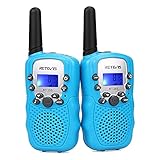 | Retevis RT388 Kids Walkie Talkies, Outdoor Toys for Kids Camping Essentials | 4-12 Year Old Boy Birthday Gift, 22 CH VOX Flashlight Clear Sound, Kids Walkie Talkies 2 Pack for Camping Hiking Adventure | Check Price On Amazon |
 | Cobra RX680 Walkie Talkies (2-Pack), IP54 Water Resistant Design | Rugged & Splashproof Two Way Radios Long Range, 60 Pre-Programmed Channels, Weather Alerts | Check Price On Amazon |
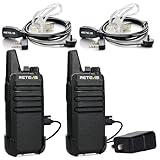 | Retevis RT22 Walkie Talkies Long Range Rechargeable with Earpiece (2 Pack) | Slim & Lightweight 2 Way Radio For Camping & Hiking, Pocket-Friendly Antenna, Ready to Use, 10-Hour Battery, USB-C Charging | Check Price On Amazon |
 | Midland GXT1000VP4 GMRS Two-Way Radios with Headsets, Black, 2 Pack | 50 Channels, 142 Privacy Codes, Up to 36 Mile Long Range, JIS4 Water Resistant, NOAA Weather Alert, Rechargeable NiMH | Check Price On Amazon |
 | Retevis RT628 Walkie Talkies for Kids,Toys Gifts for 6-12 Years Old Boys Girls,Long Range 2 Way Radio 22CH VOX,Birthday Gift,Family Walkie Talkie for Camping Hiking Indoor Outdoor | Check Price On Amazon |