Emergency Locator Transmitters (ELTs) serve as critical lifelines in aviation emergencies. When aircraft crash or encounter distress situations, proper ELT testing ensures these vital beacons function correctly when needed most. This article explains why 121.5 MHz testing remains essential for search and rescue operations, despite newer technologies, and provides pilots and aircraft owners with clear testing protocols that can make the difference between life and death.
Understanding ELT Systems and Their Role in Search and Rescue
Emergency Locator Transmitters are automated distress beacons that activate during aircraft crashes or emergencies. These devices transmit distress signals that alert search and rescue teams to an aircraft in trouble and help pinpoint its location. ELTs function as the critical link between aircraft in distress and the teams dispatched to save lives.
| Photo | Popular Portable Walkie Talkies | Price |
|---|---|---|
 | SKIWARRIOR Multifunctional Smart Wireless Ski Goggles with Walkie-Talkie, Anti-Fog Zeiss Lens, Music & Call Function (Cylindrical Blue) | Check Price On Amazon |
 | SINORISE Super Mini Walkie Talkies, Two-Way Radios, 3 Pack | Up to 12 Hours Battery Life, for Baseball Coaches, Restaurants, Retail Stores, Hospitals, Outdoor Sports & Travel | Check Price On Amazon |
 | KOSPET Tank M4C Smart Watch Rugged, Dual-Band GPS, 5ATM & IP69K Waterproof | 1.96" AMOLED Display, 170+ Sport Modes, Built-in LED Flashlight/Walkie-Talkie, Heart Rate/Sleep Monitor for Android & iPhone | Check Price On Amazon |
 | Retevis RT15 Walkie Talkies 3 Pack, Birthday Gift, Outdoor Adventure Kit | Durable, Lightweight, VOX, Key Lock, Mini Walkie Talkies for Adults, School Family Outdoor Travel Camping Hiking | Check Price On Amazon |
 | Rechargeable Walkie Talkies Toys for Kids: DIY Astronaut Walkie Talkies for Boys Christmas Birthday Gifts for 3 4 5 6 7 8 9 10 Boy Walkie Talkie Outdoor Hiking Toy 2 Way Radio Camping Outdoor Game | Check Price On Amazon |
Modern ELT systems operate on two primary frequencies:
- 121.5 MHz: The original emergency frequency still used for homing and direction-finding
- 406 MHz: The newer digital frequency that transmits to satellites with encoded identification data
The COSPAS-SARSAT satellite system monitors these frequencies, detecting distress signals and relaying information to rescue coordination centers. Since its implementation, this system has contributed to saving thousands of lives worldwide through rapid detection and precise location information.
Statistics show that properly functioning ELTs significantly improve rescue outcomes. According to search and rescue data, aircraft with operational ELTs are located up to 70% faster than those without working beacons, substantially increasing survival rates in remote crash scenarios.
The Evolution from 121.5 MHz to 406 MHz ELTs
The ELT ecosystem has undergone significant evolution, with 406 MHz systems now serving as the primary standard while 121.5 MHz continues to play a critical supporting role. This evolution represents one of the most important advancements in aviation safety technology.
Key milestones in ELT development include:
- 1970s: First generation 121.5 MHz ELTs mandated for most aircraft
- 1982: COSPAS-SARSAT system established for satellite monitoring
- 2000s: Introduction of digital 406 MHz ELTs with enhanced capabilities
- 2009: Satellite monitoring of 121.5 MHz officially discontinued
Despite the satellite monitoring shift, the 121.5 MHz frequency remains vital. While satellites no longer monitor this frequency, ground stations, air traffic control facilities, and international emergency frequencies used when flying abroad still actively monitor 121.5 MHz transmissions. Additionally, search teams use specialized direction-finding equipment tuned to 121.5 MHz for the final phase of locating downed aircraft.
| Feature | 121.5 MHz | 406 MHz |
|---|---|---|
| Signal Detection Range | 5-10 miles (ground) | Global (satellite) |
| Location Accuracy | 1-2 miles radius | 100 meters with GPS |
| Transmitted Information | Signal only | Aircraft ID, owner data |
| Current Role | Close-range homing | Initial alert and location |
How SAR Teams Use 121.5 MHz Signals During Actual Rescues
When a search and rescue operation is initiated, 121.5 MHz signals play a crucial role in the final phases of locating an aircraft in distress, serving as the “homing” frequency for ground teams. Understanding this process highlights why proper ELT testing: Why 121.5 MHz Tests Matter for SAR operations.
The typical search and rescue operation follows this sequence:
- Initial Alert: 406 MHz signal detected by satellites, providing approximate coordinates
- Search Zone Establishment: SAR teams deploy to the general area
- Direction Finding: Teams use 121.5 MHz receivers to pinpoint the exact location
- Final Approach: Ground teams home in on the 121.5 MHz signal to find the aircraft
“The 406 MHz signal gets us to the search area, but it’s the 121.5 MHz signal that takes us the last mile,” explains John Merrick, SAR Coordinator with the Civil Air Patrol. “Without a functioning 121.5 MHz component, locating a downed aircraft can take hours longer, especially in densely forested or mountainous terrain.”
SAR teams utilize specialized direction-finding equipment that measures signal strength and direction. As they move closer to the source, the signal strengthens, allowing teams to triangulate the precise location. This radio discipline and proper procedure saves lives in emergency situations.
Detection statistics show that in optimal conditions, 121.5 MHz signals can be detected by ground teams from approximately:
- Ground vehicles: 3-5 miles
- Search aircraft: 10-15 miles
- Handheld direction finders: 1-3 miles
These ranges significantly reduce search time once teams arrive in the general vicinity indicated by the 406 MHz signal.
Environmental Factors Affecting 121.5 MHz Signal Detection
The effectiveness of 121.5 MHz signals during search and rescue operations is significantly influenced by environmental conditions, terrain features, and installation factors. These variables can dramatically impact how easily SAR teams locate distress signals.
Terrain effects on signal propagation include:
- Mountains: Create shadow zones where signals cannot penetrate
- Dense forests: Absorb and attenuate signal strength
- Valleys: Can channel signals in unexpected directions
- Water bodies: Reflect signals, potentially creating false directional readings
Weather conditions also impact signal detection. Heavy precipitation, particularly snow or freezing rain, can reduce signal strength or damage antenna components. Proper installation considerations for narrow band radios like ELTs are crucial for reliable performance in adverse conditions.
Additionally, antenna positioning plays a critical role. An ELT with a damaged, improperly mounted, or obstructed antenna may transmit weakened signals that are difficult to detect. Regular inspection of the antenna system is essential for maintaining optimal signal strength.
| Environment | Approximate Range Reduction |
|---|---|
| Open terrain | 0% (baseline) |
| Light forest | 20-30% |
| Dense forest | 40-60% |
| Mountainous | 50-80% |
| Urban environment | 30-50% |
Critical Components of Proper 121.5 MHz ELT Testing
Effective ELT testing requires following specific protocols that balance thorough verification of system functionality with preventing false alarms that waste valuable SAR resources. Proper testing ensures your ELT will perform when needed while avoiding unnecessary activation of emergency services.
There are two primary types of ELT tests:
- Functional Test: Verifies operation without broadcasting a signal
- System Test: Brief transmission to verify signal broadcast
For 121.5 MHz testing, follow these steps:
- Schedule appropriately: Conduct tests during the first five minutes of any hour
- Notify authorities: Contact tower or FSS before testing if at an airport
- Limit test duration: Keep test transmissions under 3 seconds
- Monitor 121.5 MHz: Use aircraft radio to verify transmission
- Document the test: Record date, time, and results in aircraft logs
Common testing mistakes include:
- Testing outside approved windows (first 5 minutes of the hour)
- Allowing transmissions to continue too long
- Failing to monitor the frequency during testing
- Not documenting test results
- Overlooking microphone gain settings preventing distorted transmissions when using radio equipment to monitor tests
David Chen, FAA Airworthiness Inspector, emphasizes: “Regular testing is crucial, but following proper procedures is equally important. An improperly tested ELT gives a false sense of security while potentially triggering unnecessary search operations.”
Testing Procedures for Different ELT Models and Types
ELT testing procedures vary significantly based on manufacturer, model, and whether the unit is a 121.5 MHz-only system or a dual 121.5/406 MHz system. Following the correct procedure for your specific equipment ensures effective testing without triggering false alarms.
Major manufacturers have distinct testing sequences:
| Manufacturer | Model Type | Test Procedure | Indicator |
|---|---|---|---|
| Artex | ELT 110-4 | Turn to “ON” for 1 second, then back to “ARM” | Audio sweep tone, LED flash |
| Kannad | 406 AF-Compact | Press “RESET/TEST” button once | Green LED flash sequence |
| ACK | E-04 | Press and hold test button, observe LED | Red LED flash pattern |
| Emergency Beacon Corp | EBC-502 | Move switch to “TEST” position briefly | Audio alert, light indication |
When testing dual-frequency units (121.5/406 MHz), take extra precautions to avoid triggering the 406 MHz transmitter, which would immediately alert satellites and initiate a false alarm. Most modern units have specific self-test functions that check system integrity without broadcasting an actual 406 MHz emergency signal.
Always consult your specific ELT’s manual for the manufacturer’s recommended testing procedure. If you’re considering upgrading older equipment, a conversion cost calculator for equipment upgrade requirements can help determine the investment needed.
Regulatory Requirements for ELT Testing Across Jurisdictions
ELT testing requirements vary across different aviation authorities, creating important compliance considerations especially for pilots who operate internationally. Understanding these regulations ensures your aircraft remains compliant regardless of where you fly.
Key regulatory frameworks include:
| Aviation Authority | Testing Frequency | Documentation Required | Special Requirements |
|---|---|---|---|
| FAA (USA) | Every calendar year | Aircraft maintenance logs | Battery replacement records |
| EASA (Europe) | Every 12 months | Aircraft technical log | Registration verification |
| CASA (Australia) | Every 6 months | Maintenance release | Registration in national database |
| Transport Canada | Every 12 months | Journey log | Operational check records |
Recent regulatory changes have focused on improving international standardization of ELT requirements. However, significant differences remain in testing protocols, frequency, and documentation requirements. For pilots operating internationally, English proficiency requirements for international flight include understanding emergency procedures and proper radio terminology during ELT testing and actual emergencies.
The International Civil Aviation Organization (ICAO) continues to work toward harmonized standards, particularly regarding 406 MHz registration requirements and testing protocols. Nevertheless, it remains the responsibility of aircraft owners and operators to ensure compliance with the regulations of each jurisdiction in which they operate.
Consequences of Improper Testing and ELT Failures
Improper ELT testing or maintenance can have serious consequences ranging from wasted SAR resources to delayed or failed rescues in actual emergencies. Understanding these potential outcomes underscores the importance of rigorous testing protocols.
False alarms from improper testing create significant resource strain. Each mobilization of search and rescue assets costs between $10,000 and $50,000 depending on the resources deployed. According to the AOPA Air Safety Institute, in North America alone, false ELT activations trigger approximately 2,000 unnecessary SAR missions annually, diverting resources from genuine emergencies.
More critically, ELT failures during actual emergencies can have deadly consequences. Analysis of aircraft accidents reveals that non-functional ELTs significantly increase search times, sometimes by days in remote areas. Every hour of delay in locating crash survivors decreases survival probability by approximately 2.2% in hostile environments.
“When an ELT fails to activate or transmits incorrectly, we’re essentially searching for a needle in a haystack,” explains Sarah Tompkins, SAR Helicopter Pilot. “Without a signal to home in on, search areas expand exponentially, particularly in challenging terrain.”
Legal consequences also exist. Regulatory violations regarding ELT maintenance can result in:
- Civil penalties up to $10,000 per violation
- Aircraft grounding until compliance is verified
- Potential certificate action against pilots or maintenance personnel
- Insurance complications if accidents occur with non-compliant equipment
Case Studies: When ELTs Made the Difference in Real Rescues
The critical importance of properly functioning and tested ELTs is best understood through examining actual rescue operations where these devices played a decisive role. These real-world examples illustrate why proper testing protocols directly impact survival outcomes.
Case Study 1: Alaska Bush Pilot Rescue
In 2018, a bush pilot crashed in remote Alaskan wilderness after encountering severe downdrafts. Despite the aircraft sustaining significant damage, the properly maintained ELT activated automatically. The 406 MHz signal provided search teams with the approximate location, while ground teams used direction-finding equipment to home in on the 121.5 MHz signal through dense forest. The pilot was located within 4 hours despite challenging weather conditions.
“Monthly testing of my ELT saved my life,” the pilot later reported. “The rescue team told me they picked up my 121.5 signal from nearly 8 miles away because my antenna was properly installed and maintained.”
Case Study 2: Colorado Mountain Crash
A 2019 incident involved a small aircraft that crashed in the Rocky Mountains. The impact damaged the ELT’s 406 MHz transmission capability, but the 121.5 MHz component continued functioning. Search aircraft detected the weaker signal after narrowing the search area based on the flight plan. Despite the partial failure, regular testing had ensured the backup system remained operational, leading to the rescue of all occupants within 24 hours.
Best Practices for ELT Testing and Maintenance
Beyond regulatory requirements, implementing these best practices for ELT testing and maintenance ensures optimal system reliability and maximizes safety. Following these guidelines provides confidence that your emergency beacon will function when needed most.
Comprehensive Testing Schedule:
- Perform functional checks monthly
- Conduct full system tests during annual inspections
- Test after any maintenance that could affect the ELT system
- Verify operation after significant environmental exposure (heavy rain, extreme temperatures)
Documentation Best Practices:
- Maintain a dedicated ELT testing log
- Record date, time, test type, and results
- Document battery installation date and expiration
- Keep records of any maintenance or repairs
- Store manufacturer documentation and testing procedures with aircraft records
Battery Management:
- Replace batteries before expiration date, not after
- Check for corrosion during battery inspections
- Store spare batteries according to manufacturer recommendations
- Consider environmental operating conditions when establishing replacement schedules
Antenna Maintenance:
- Inspect antenna mounting and condition monthly
- Check for cracks, corrosion, or physical damage
- Ensure proper connection to the ELT unit
- Verify no new obstructions have been introduced around the antenna
Several digital tools can assist with ELT management:
- ELT Manager App: Tracks testing schedules and maintenance history
- Aircraft Maintenance Tracking Software: Integrates ELT testing into overall maintenance programs
- Digital Logbook Applications: Record and timestamp ELT tests with supporting documentation
Future Developments in ELT Technology and Testing
The emergency locator ecosystem continues to evolve with technological advances that will shape future testing requirements and rescue capabilities. Understanding these developments helps aircraft owners prepare for coming changes while maintaining current systems.
Several key innovations are reshaping ELT technology:
- Second-Generation 406 MHz ELTs: Enhanced accuracy, reduced false alarms, improved battery life
- Return Link Service (RLS): Confirmation to the user that distress signal was received
- Integration with flight tracking systems: Combines ELT data with ADS-B and flight following
- Autonomous triggering mechanisms: Improved crash detection algorithms
- Remote testing capabilities: Self-diagnostic systems with wireless monitoring
Regulatory changes on the horizon include:
- Potential mandates for dual 121.5/406 MHz systems in all aircraft
- Enhanced registration requirements with more detailed aircraft information
- Standardized international testing protocols
- Integration with emerging space-based ADS-B systems
Dr. Elena Rodriguez, avionics researcher, predicts: “While 406 MHz technology will continue advancing, the 121.5 MHz component will remain vital for ground team direction-finding for the foreseeable future. The redundancy between systems provides critical safety backup.”
Despite these technological advancements, experts emphasize that proper testing will remain essential. As systems become more complex, understanding testing protocols becomes even more important for ensuring reliability in emergency situations.
Comprehensive ELT Testing Resources and Tools
These authoritative resources provide additional guidance, tools, and reference materials for ensuring proper ELT testing and compliance. Bookmark these resources for ongoing reference.
Official Aviation Authority Resources:
- FAA Advisory Circular AC 91-44A: Provides detailed guidance on ELT operation and testing
- COSPAS-SARSAT website: Information on the international satellite system
- ICAO Guidelines for ELT Registration: International requirements and procedures
- National aviation authority websites: Country-specific regulations and requirements
Manufacturer Resources:
- Artex ELT Testing Guides: Model-specific testing procedures
- Kannad Aviation Documentation: Technical specifications and maintenance requirements
- ACK Technologies Support: Troubleshooting guides and testing protocols
- Emergency Beacon Corporation Manuals: Installation and testing documentation
Training and Education:
- AOPA Air Safety Institute: Free courses on emergency procedures and equipment
- EAA Webinars: Technical sessions on aircraft systems including ELTs
- FAA Safety Team (FAAST): Resources and seminars on regulatory compliance
Digital Tools:
- ELT Testing Log Templates (downloadable PDF and digital formats)
- 406 MHz Beacon Registration Database: Online registration for digital ELTs
- Maintenance Tracking Applications: Software for managing testing schedules
Remember that while resources provide valuable guidance, they don’t replace the specific instructions in your ELT’s manufacturer documentation. Always refer to your device’s manual for the definitive testing procedure for your particular model.
| Photo | TOP RATED WALKIE TALKIES | Price |
|---|---|---|
 | Retevis RT628 Kids Walkie Talkies, Toys Gifts for 4-12 Year Old Girl Boy | Kids Camping Essentials Outdoor Toys, Birthday Gift, 22CH, VOX, Keypad Lock, Durable, Easy to Use Walkie Talkies for Kids | Check Price On Amazon |
 | Cobra ACXT545 Weather-Resistant Walkie Talkies, Rechargeable, 22 Channels | Long Range 28-Mile Two-Way Radio Set (2-Pack) | Check Price On Amazon |
 | Retevis RT388 Kids Walkie Talkies, Outdoor Toys for Kids Camping Essentials | 4-12 Year Old Boy Birthday Gift, 22 CH VOX Flashlight Clear Sound, Kids Walkie Talkies 2 Pack for Camping Hiking Adventure | Check Price On Amazon |
 | Cobra RX680 Walkie Talkies (2-Pack), IP54 Water Resistant Design | Rugged & Splashproof Two Way Radios Long Range, 60 Pre-Programmed Channels, Weather Alerts | Check Price On Amazon |
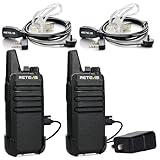 | Retevis RT22 Walkie Talkies Long Range Rechargeable with Earpiece (2 Pack) | Slim & Lightweight 2 Way Radio For Camping & Hiking, Pocket-Friendly Antenna, Ready to Use, 10-Hour Battery, USB-C Charging | Check Price On Amazon |
 | Midland GXT1000VP4 GMRS Two-Way Radios with Headsets, Black, 2 Pack | 50 Channels, 142 Privacy Codes, Up to 36 Mile Long Range, JIS4 Water Resistant, NOAA Weather Alert, Rechargeable NiMH | Check Price On Amazon |
 | Retevis RT628 Walkie Talkies for Kids,Toys Gifts for 6-12 Years Old Boys Girls,Long Range 2 Way Radio 22CH VOX,Birthday Gift,Family Walkie Talkie for Camping Hiking Indoor Outdoor | Check Price On Amazon |