Aviation radio equipment must meet strict international standards to ensure reliable communication and safety in the skies. ICAO Technical Specifications provide the critical framework that aviation professionals worldwide rely on for radio system compliance. This comprehensive guide explains these essential standards, offering practical implementation advice and certification pathways for aviation communication systems.
Understanding ICAO’s Aviation Radio Specification Framework
ICAO’s technical specifications for aviation radios are defined primarily in Annex 10 to the Convention on International Civil Aviation, specifically Volume III, which addresses Communication Systems. This comprehensive framework establishes the global standards that ensure seamless communication across international airspace.
| Photo | Popular Portable Walkie Talkies | Price |
|---|---|---|
 | SKIWARRIOR Multifunctional Smart Wireless Ski Goggles with Walkie-Talkie, Anti-Fog Zeiss Lens, Music & Call Function (Cylindrical Blue) | Check Price On Amazon |
 | SINORISE Super Mini Walkie Talkies, Two-Way Radios, 3 Pack | Up to 12 Hours Battery Life, for Baseball Coaches, Restaurants, Retail Stores, Hospitals, Outdoor Sports & Travel | Check Price On Amazon |
 | KOSPET Tank M4C Smart Watch Rugged, Dual-Band GPS, 5ATM & IP69K Waterproof | 1.96" AMOLED Display, 170+ Sport Modes, Built-in LED Flashlight/Walkie-Talkie, Heart Rate/Sleep Monitor for Android & iPhone | Check Price On Amazon |
 | Retevis RT15 Walkie Talkies 3 Pack, Birthday Gift, Outdoor Adventure Kit | Durable, Lightweight, VOX, Key Lock, Mini Walkie Talkies for Adults, School Family Outdoor Travel Camping Hiking | Check Price On Amazon |
 | Rechargeable Walkie Talkies Toys for Kids: DIY Astronaut Walkie Talkies for Boys Christmas Birthday Gifts for 3 4 5 6 7 8 9 10 Boy Walkie Talkie Outdoor Hiking Toy 2 Way Radio Camping Outdoor Game | Check Price On Amazon |
The International Civil Aviation Organization (ICAO) serves as the global regulatory body responsible for standardizing aviation communications. Through detailed technical specifications, ICAO ensures that aircraft can communicate effectively regardless of manufacturer, operator, or geographic location.
Annex 10 Volume III forms the cornerstone of these regulations, divided into specific parts addressing various communication systems. This structured approach creates a clear framework for equipment manufacturers and operators to follow.
ICAO distinguishes between Standards and Recommended Practices (SARPs):
- Standards: Mandatory specifications necessary for aviation safety
- Recommended Practices: Desirable specifications that enhance operations
The most recent amendments to these specifications include digital communication standards and updated frequency management requirements, with implementation timelines that vary by region.
While ICAO provides the global framework, regional authorities like the FAA, EASA, and CASA in Australia implement these standards through their own certification procedures. Understanding both global and regional requirements is essential for complete compliance.
Key Components of Annex 10 Volume III Related to Radio Equipment
Annex 10 Volume III contains several critical chapters that directly impact aviation radio equipment requirements. Each addresses specific aspects of aviation communications that manufacturers and operators must understand.
The main components include:
- Chapter 2: Aeronautical Mobile Service – Covers the technical requirements for air-ground communications, including frequency usage, modulation types, and performance specifications
- Chapter 3: SELCAL System – Details the selective calling system specifications that allow ground stations to alert specific aircraft
- Chapter 4: Aeronautical Speech Circuits – Establishes the technical parameters for voice communications, including clarity and reliability standards
- Chapter 5: Emergency Locator Transmitter – Defines the technical requirements for ELTs, including signal characteristics and activation parameters
- Chapter 6: Survival Radio Equipment – Sets standards for emergency communication devices carried on aircraft
The appendices provide detailed technical parameters, including specific frequency tolerances, power output requirements, and testing procedures necessary for equipment certification.
Technical Specifications for VHF Communication Systems
VHF (Very High Frequency) communication systems form the backbone of air-to-ground communications in aviation. ICAO has established precise technical specifications for these systems to ensure global interoperability and reliability.
The VHF aeronautical band spans 118-137 MHz and serves as the primary means of communication between aircraft and air traffic control. ICAO Technical Specifications mandate strict requirements for this frequency range to prevent interference and ensure clarity.
Channel spacing requirements have evolved significantly. Current standards specify:
- 25 kHz spacing in most global regions
- 8.33 kHz spacing in high-density airspace regions (particularly Europe)
Technical parameters for VHF equipment include:
| Parameter | Requirement |
|---|---|
| Frequency Stability | ±0.002% (±2 ppm) |
| Transmitter Power | 5-25W (aircraft), 50-100W (ground) |
| Receiver Sensitivity | Better than 2 μV for 6 dB S/N |
| Modulation | A3E (double sideband AM) |
| Adjacent Channel Rejection | Minimum 60 dB |
Performance requirements specify that equipment must maintain these parameters across temperature ranges from -15°C to +55°C, with altitude variations, and under various humidity and vibration conditions typical in aviation environments.
Digital VHF systems must additionally comply with specific data transmission protocols, including:
- VHF Digital Link (VDL) Mode 2 specifications
- Controller-Pilot Data Link Communications (CPDLC) compatibility
- ACARS message format standards
While temporary operations in foreign territories sometimes require special operating permits, all equipment must still meet baseline ICAO specifications regardless of operational duration.
Evolution of VHF Specifications and Implementation Timelines
ICAO’s technical specifications for VHF systems have evolved significantly over time, with several key transitions that operators and manufacturers have had to implement.
The channel spacing evolution reflects increasing demand for aviation communication frequencies:
- 1947-1958: 100 kHz spacing (few channels available)
- 1958-1972: 50 kHz spacing (increased capacity)
- 1972-present: 25 kHz spacing (global standard)
- 1999-present: 8.33 kHz spacing (European airspace, now expanding)
Implementation timelines vary significantly by region:
- Europe: Earliest adopter of 8.33 kHz spacing, mandatory above FL195 since 1999, all airspace since 2018
- North America: Maintains 25 kHz spacing but considering 8.33 kHz for future implementation
- Asia-Pacific: Mixed implementation, with high-density areas transitioning to 8.33 kHz
Digital voice communications standards continue to evolve, with VDL Mode 2 implementation increasing globally as part of modernization efforts.
The ICAO Global Air Navigation Plan (GANP) outlines future VHF communications evolution, with full digital transition expected over the next 15-20 years in most regions.
HF Radio Systems Technical Requirements and Data Link Specifications
While VHF communications dominate short-range aviation communications, HF (High Frequency) radio systems remain critical for long-range operations, particularly oceanic flights. ICAO has established specific technical requirements for these systems, including modern HF data link capabilities.
Aviation HF communications operate in several frequency bands between 2.8 and 22 MHz, allocated specifically for aeronautical mobile services. These frequencies enable long-distance communication where VHF line-of-sight systems cannot reach.
Technical specifications for HF equipment include:
| Parameter | Requirement |
|---|---|
| Transmitter Power | Aircraft: 100W PEP minimum Ground stations: 1-10 kW |
| Frequency Stability | ±10 Hz for newer equipment ±20 Hz for legacy systems |
| Emission Types | J3E (SSB), H2B (selective calling) |
| Receiver Sensitivity | Better than 5 μV for 10 dB S/N |
SELCAL (Selective Calling) system integration allows ground stations to alert specific aircraft, reducing pilot workload during long oceanic flights. ICAO specifications require compatibility with the 16-tone SELCAL system and proper tone recognition performance.
HF Data Link (HFDL) provides critical data communication capabilities with specifications including:
- Protocol requirements conforming to ARINC 753 standards
- Minimum data rates of 300-1800 bits per second
- Forward error correction requirements
- Automatic frequency selection and link establishment
The primary advantage of HF voice is its global coverage, while HFDL offers more reliable data transmission with automatic error correction. Modern systems often implement both capabilities to provide redundancy for oceanic operations.
Emergency Communication Systems and Technical Requirements
Emergency communication capabilities are perhaps the most critical aspect of aviation radio systems. ICAO has established stringent technical specifications for emergency frequencies, equipment performance, and operational requirements.
The international emergency frequencies (121.5 MHz and 243 MHz) have specific technical requirements:
- Transmitter stability of ±0.005%
- Modulation depth between 85-100%
- Distinctive audio modulation characteristics for automated detection
- Continuous monitoring capability on aircraft and ground stations
Emergency Locator Transmitter (ELT) specifications include:
- Signal characteristics: Swept-tone modulation between 700-1600 Hz
- Activation parameters: G-force sensors (3.5-5G for automatic activation)
- Testing specifications: Required functional testing intervals and procedures
- Battery requirements: Minimum operating life of 24-48 hours, replacement intervals
All modern ELTs must comply with COSPAS-SARSAT system specifications, including:
- 406 MHz digital transmission with encoded aircraft/vessel information
- 5W minimum power output on 406 MHz
- 121.5 MHz homing signal capabilities
- GPS position encoding when available
Emergency communication testing procedures must follow strict protocols to prevent false alerts. ICAO requires documented testing procedures that include coordination with monitoring agencies.
Survival radio equipment for use after evacuation must meet specialized technical standards for durability, water resistance, and ease of operation under stress conditions.
Practical Implementation Guide for ICAO Radio Equipment Compliance
Implementing ICAO technical specifications requires a systematic approach that goes beyond simply purchasing compliant equipment. This section provides a practical roadmap for operators and maintenance organizations to ensure full compliance with ICAO standards.
Step-by-step implementation checklist:
- Equipment Evaluation and Selection
- Verify manufacturer compliance documentation
- Confirm equipment type certification status
- Check compatibility with existing avionics architecture
- Assess lifecycle support availability
- Installation Planning
- Create detailed installation diagram
- Address cable routing and interference prevention
- Plan antenna placement for optimal performance
- Determine power requirements and backup systems
- Regulatory Approval Process
- Submit installation plan to appropriate authority
- Schedule inspection appointments
- Prepare required documentation package
- Testing Procedures
- Ground testing protocol implementation
- Flight testing requirements
- Performance verification measurements
- Emergency function testing
- Documentation Finalization
- Update aircraft records
- Create maintenance tracking documentation
- Develop crew operation procedures
Common implementation challenges include:
- Legacy system integration issues – often requiring interface adapters or complete replacement
- Power system compatibility – particularly with newer digital systems
- Antenna location limitations – requiring compromise between ideal placement and structural constraints
- Software version control – ensuring all components maintain compatible firmware
Integration with existing avionics requires careful planning, especially for aircraft with older “federated” systems rather than integrated digital architectures. Interface standards and data bus compatibility must be verified before equipment selection.
For operators seeking radio equipment certification from Transport Canada or other national authorities, compliance with ICAO specifications forms the baseline requirement.
Cost-effective compliance strategies include:
- Phased implementation approach for fleet operators
- Combined upgrades during scheduled maintenance events
- Standardization of equipment across similar aircraft types
- Advance planning for known regulatory deadlines
Case Study: A mid-size charter operator successfully implemented 8.33 kHz spacing requirements by developing a 24-month transition plan that combined upgrades with scheduled maintenance events, resulting in minimal operational disruption and 22% lower implementation costs compared to industry averages.
Equipment Selection and Procurement Recommendations
Selecting the right radio equipment that meets ICAO specifications while fulfilling operational needs requires careful consideration of several factors.
When evaluating equipment options, apply this selection criteria checklist:
- Technical compliance verification
- Review Type Acceptance Certificate
- Verify ICAO Annex 10 conformance documentation
- Check regional certification status (FAA TSO, EASA ETSO, etc.)
- Operational compatibility
- Panel space requirements
- Cockpit workflow integration
- User interface simplicity
- Night vision compatibility (if applicable)
- System integration factors
- Interface requirements with existing avionics
- Data bus compatibility (ARINC 429, 717, etc.)
- Audio panel integration
- Lifecycle considerations
- Manufacturer support history
- Spare parts availability
- Future upgrade path
- Warranty terms
When comparing equipment options, evaluate these factors in a structured format:
| Factor | Option A | Option B | Option C |
|---|---|---|---|
| Initial cost | $$$ | $$ | $$$$ |
| Installation complexity | Medium | Low | High |
| Feature set | Basic | Standard | Advanced |
| Support availability | Global | Regional | Limited |
| Future-proofing | 5+ years | 3-5 years | 10+ years |
When qualifying vendors, request:
- References from similar operators
- Service center locations and capabilities
- Training resources availability
- AOG support policies
Essential documentation to request from manufacturers includes:
- Type Acceptance Certificate
- Declaration of Design and Performance (DDP)
- Installation manual with interface specifications
- Maintenance requirements documentation
- Test reports demonstrating ICAO compliance
To optimize cost vs. capability, consider purchasing equipment with modular upgrade paths that allow adding features as operational needs evolve without complete replacement.
Testing and Certification Processes for ICAO-Compliant Radio Equipment
Ensuring aviation radio equipment meets ICAO technical specifications requires rigorous testing and certification processes. Understanding these processes is essential for both manufacturers and operators.
The certification pathway typically follows this sequence:
- Design verification against ICAO standards
- Laboratory testing of prototype equipment
- Environmental qualification testing
- Performance validation in operational conditions
- Documentation submission to certification authority
- Type certification issuance
- Production quality control requirements
- Continued airworthiness monitoring
Different radio types require specific tests:
- VHF Communication Systems
- Frequency stability across temperature range
- Power output measurement
- Modulation characteristics analysis
- Receiver sensitivity and selectivity
- Adjacent channel rejection performance
- HF Systems
- Frequency stability testing
- Sideband suppression measurement
- SELCAL tone recognition
- Data link performance verification
- Emergency Systems
- Activation sensor performance
- Battery capacity verification
- Signal characteristic measurement
- Environmental survival testing
Type certification establishes that the equipment design meets all applicable standards, while individual equipment certification verifies that each unit conforms to the approved type design.
Regional variations exist in certification processes:
- FAA: Technical Standard Order (TSO) process
- EASA: European Technical Standard Order (ETSO) process
- Other authorities: National certification standards that reference ICAO requirements
Documentation requirements for certification include:
- Design documentation and specifications
- Test reports demonstrating compliance
- Installation and maintenance manuals
- Declaration of Design and Performance
- Quality system documentation
Post-certification, continuing airworthiness requirements include periodic performance testing, software update validation, and monitoring for service difficulties that might affect the fleet.
Self-Certification vs. Authority Certification Requirements
Depending on the equipment category and regulatory environment, aviation radio systems may require different levels of certification, ranging from manufacturer self-certification to full authority approval.
Certification approaches vary by equipment category and usage:
| Factor | Self-Certification | Authority Certification |
|---|---|---|
| Applicable equipment | Non-required equipment Ground test equipment Some portable devices | Required navigation equipment Primary communication systems Emergency equipment |
| Documentation | Internal test reports Declaration of conformity Basic user manual | Comprehensive test documentation Design analysis Detailed installation/maintenance manuals |
| Testing standards | Manufacturer-defined tests Basic ICAO compliance | Authority-approved test plans Witnessed testing Full environmental qualification |
| Ongoing monitoring | Limited reporting requirements Voluntary recall process | Mandatory problem reporting Airworthiness directive compliance Continued operational monitoring |
The appropriate certification path depends on:
- Equipment criticality to flight safety
- Operational role (primary or backup)
- Installation permanence (installed vs. portable)
- Aircraft category (transport, general aviation, experimental)
Regional variations significantly impact certification requirements. European authorities generally require more formal certification processes than North American counterparts for similar equipment categories.
Cost and timeline implications vary significantly:
- Self-certification: Typically 1-3 months, lower cost
- Authority certification: 6-18 months, significantly higher cost
Most primary communication equipment requires full authority certification, while secondary or backup systems may qualify for simplified processes depending on the specific authority requirements.
Maintenance Requirements for ICAO-Compliant Radio Systems
Maintaining ICAO compliance for aviation radio systems requires ongoing attention to performance parameters, regular testing, and appropriate documentation. This section outlines the maintenance requirements that ensure continued compliance and reliable operation.
A typical maintenance schedule includes:
- Daily checks: Operational functionality verification
- 100-hour/Annual inspections: Performance parameter verification
- 24-month checks: Comprehensive bench testing of removed equipment
- Battery replacement: Per manufacturer schedule (typically 1-2 years)
- Software updates: As released by manufacturer
Required performance testing procedures include:
- Frequency accuracy verification
- Using calibrated test equipment
- Measuring across operating temperature range when possible
- Documenting actual vs. allowed deviation
- Power output measurement
- Verifying minimum power across frequency band
- Checking modulation characteristics
- Measuring VSWR at antenna connection
- Receiver sensitivity testing
- Signal-to-noise ratio measurement
- Minimum discernible signal determination
- Squelch function verification
Documentation requirements include maintaining records of:
- All maintenance actions performed
- Test equipment used (including calibration status)
- Actual measured values
- Parts replaced and their traceability
- Software version updates
Common maintenance issues include:
- Antenna system degradation (particularly coaxial cable)
- Connector corrosion affecting performance
- Gradual sensitivity reduction
- Control head button/switch failures
- Memory battery depletion
Required test equipment for proper maintenance includes:
- Calibrated communications service monitor
- RF wattmeter
- VSWR meter
- Audio analyzer
- Specialized manufacturer test adapters
Personnel performing maintenance must have appropriate qualifications, typically including:
- Avionics technician certification
- Manufacturer-specific equipment training
- FCC or equivalent radio maintenance license
- Recurrent training on test equipment and procedures
Regional Variations in ICAO Technical Specification Implementation
While ICAO provides global standards for aviation radio equipment, regional implementation of these specifications can vary significantly. Understanding these regional differences is crucial for operators who fly internationally.
Major regional variations include:
| Region | Implementation Specifics | Additional Requirements | Verification Process |
|---|---|---|---|
| North America (FAA) | Maintains 25 kHz VHF spacing Emphasizes performance-based standards | TSO authorization Approved model list for GA | Designated engineering representatives Conformity inspections |
| Europe (EASA) | Mandatory 8.33 kHz VHF spacing Stricter documentation requirements | ETSO certification Mode S transponder mandate | Formal design organization approval Production organization approval |
| Asia-Pacific | Varied implementation timelines Mixed 25/8.33 kHz requirements | National certifications Import permit requirements | Local authority inspections Documentation validation |
Case study: European 8.33 kHz Implementation
Europe’s transition to 8.33 kHz channel spacing illustrates significant regional variation. The European Commission mandated this change through regulation EU No 1079/2012, requiring all aircraft operating in European airspace to have 8.33 kHz capable radios by January 2018, well ahead of other regions. This created compliance challenges for non-European operators entering European airspace.
Harmonization efforts continue through ICAO working groups, particularly the Aeronautical Communications Panel, which works to coordinate implementation timelines and technical standards across regions.
For multi-region operators, practical guidance includes:
- Equipment selection that meets the most stringent regional requirements
- Documentation organization by region
- Maintaining region-specific compliance matrices
- Scheduling updates to coincide with maintenance in appropriate regions
Resources for tracking regional requirements include:
- ICAO Regional Office publications
- Aeronautical Information Publications (AIPs)
- Aviation authority websites
- Industry association regulatory committees
- Avionics manufacturer compliance bulletins
Future Trends in ICAO Radio Communication Specifications
Aviation radio communication standards continue to evolve as technology advances and operational needs change. Understanding upcoming trends in ICAO specifications helps operators and manufacturers prepare for future requirements.
The digital communication transition is accelerating, with several key developments:
- VHF Digital Link (VDL) Mode 2 expansion for Controller-Pilot Data Link Communications
- Eventual transition from voice to text-based clearance delivery
- Integration of IP-based protocols for aviation communications
- Higher bandwidth systems for enhanced weather and operational data
Spectrum management challenges are driving several specification changes:
- More efficient modulation techniques to maximize limited bandwidth
- Further channel spacing reduction potential in congested regions
- Protected spectrum allocation advocacy to prevent interference
- Dynamic frequency assignment technologies
Integration with other communication technologies is accelerating:
- Satellite voice and data as primary rather than backup in oceanic regions
- Transition timelines for data-centric communications
- Multilink capability requirements for redundancy
NextGen and SESAR programs are driving significant changes to radio specifications:
- System Wide Information Management (SWIM) integration requirements
- 4D trajectory-based operations support
- Increased automation of routine communications
- Higher reliability and integrity requirements
Cybersecurity requirements are becoming increasingly prominent:
- Authentication protocols for digital communications
- Encryption standards for sensitive transmissions
- Spoofing/jamming resistance specifications
- Security certification requirements
Anticipated changes to Annex 10 in upcoming amendment cycles include enhanced specifications for data link applications, satellite voice integration standards, and updated emergency system requirements.
Common Compliance Challenges and Solutions
Implementing and maintaining compliance with ICAO radio specifications presents several common challenges. This section identifies these challenges and provides practical solutions based on industry experience.
Challenge 1: Legacy Equipment Integration
Many operators struggle with integrating modern ICAO-compliant radio systems with legacy avionics, particularly in older aircraft with limited panel space and analog systems.
Solution: Interface adapters designed specifically for legacy integration can bridge old and new systems. For example, modern digital radios can connect to older audio panels through specialized interface units that convert digital signals to analog formats. When direct integration is impossible, consider a phased replacement approach that updates entire systems during major maintenance events.
Challenge 2: Cost Management for New Requirements
Compliance with evolving ICAO specifications often requires significant investment, particularly challenging for smaller operators with limited capital budgets.
Solution: Develop a strategic compliance roadmap that spreads costs over time. Prioritize requirements by deadline and operational impact. Consider equipment leasing options that convert capital expenses to operational costs. Industry associations sometimes negotiate fleet pricing for members, reducing per-unit costs. Case study: A regional airline reduced compliance costs by 35% through a phased 3-year implementation plan rather than attempting simultaneous fleet updates.
Challenge 3: Regional Variations Management
Aircraft operating internationally face complex compliance requirements that vary by region, creating significant documentation and equipment configuration challenges.
Solution: Create a compliance matrix organized by region, tracking specific requirements and implementation deadlines. When possible, standardize to equipment that meets the most stringent requirements across all operating regions. Maintain region-specific compliance documentation packages that can be quickly accessed when needed for inspections or operations.
Challenge 4: Testing and Verification Difficulties
Many operators lack the specialized test equipment and expertise needed to verify ICAO technical specification compliance, particularly for advanced digital systems.
Solution: Partner with avionics shops that maintain calibrated test equipment and specialized tools. Consider shared test equipment programs with other operators. Develop simplified testing protocols for routine verification while scheduling comprehensive testing at qualified facilities during major maintenance events.
Challenge 5: Documentation and Record-keeping Challenges
Maintaining comprehensive records of equipment compliance, testing, and maintenance creates significant administrative burden, particularly for organizations transitioning from paper to digital systems.
Solution: Implement electronic record-keeping systems specifically designed for aviation maintenance compliance. Create standardized documentation templates that capture all required information. Establish clear responsibility for records maintenance and regular auditing procedures to ensure completeness.
Cost-effective compliance strategies include:
- Coordinating compliance upgrades with scheduled maintenance events
- Standardizing equipment across similar aircraft when possible
- Participating in user groups for shared expertise and potentially shared costs
- Developing in-house expertise rather than relying exclusively on external consultants
Essential Resources for ICAO Radio Specification Compliance
Staying current with ICAO technical specifications for aviation radio equipment requires access to reliable resources. This section provides a comprehensive list of essential references, tools, and organizations.
Official Documentation Sources:
- ICAO Annex 10 (Volumes I-V) – Available through the ICAO online store or authorized distributors
- ICAO Doc 9718 – Handbook on Radio Frequency Spectrum Requirements for Civil Aviation
- ICAO Doc 9432 – Manual of Radiotelephony
- Regional regulatory documentation:
- FAA Advisory Circulars (particularly AC 20-67B, AC 90-50D)
- EASA Certification Specifications and Acceptable Means of Compliance
- National aviation authority technical orders and directives
Technical Resources:
- RTCA DO-160 – Environmental Conditions and Test Procedures for Airborne Equipment
- RTCA DO-186 – Minimum Operational Performance Standards for Airborne Radio Communications Equipment
- ARINC Characteristic 716 – Airborne VHF Communications Transceiver
- ARINC Characteristic 719 – Airborne HF Communications Transceiver
- EUROCAE ED-23C – Minimum Operational Performance Specification for Airborne VHF Receiver-Transmitter
Industry Organizations and Working Groups:
- ICAO Aeronautical Communications Panel
- RTCA Special Committee 242 – Minimum Operational Performance Standards for Aircraft VHF Communications
- EUROCAE Working Group 67 – VHF/UHF Data Link
- Aircraft Electronics Association (AEA)
- ARINC Industry Activities
Training Resources:
- Manufacturer-specific equipment training programs
- Aviation maintenance training schools with avionics specialization
- Aircraft Electronics Association (AEA) technical training
- Online courses through specialized aviation training providers
Consulting Services:
- Designated Engineering Representatives (DERs) specializing in radio systems
- Avionics certification consultants
- Type certificate holders’ technical support services
- Regulatory compliance specialists
Software Tools:
- Compliance tracking database systems
- Maintenance record-keeping software with regulatory compliance modules
- Technical documentation management systems
- Test equipment automation software
Conclusion: Ensuring Ongoing Compliance with ICAO Radio Specifications
Maintaining compliance with ICAO technical specifications for aviation radio equipment is an ongoing process that requires attention to changing standards, regular testing, and proper documentation.
ICAO Technical Specifications for aviation radios establish the critical global framework that ensures communication reliability and safety across international airspace. These specifications cover everything from frequency allocations and modulation characteristics to emergency system performance and testing requirements.
To maintain ongoing compliance, follow this action checklist:
- Subscribe to regulatory update services to track specification changes
- Implement a systematic maintenance program that verifies continued compliance
- Maintain comprehensive documentation of all testing and maintenance
- Develop staff expertise through regular training on standards and equipment
- Plan for equipment lifecycle management that anticipates future requirements
The importance of staying current with evolving standards cannot be overstated. Aviation radio specifications continue to evolve toward more digital, data-centric communications while maintaining backward compatibility with existing systems.
Final recommendations for key stakeholders:
- Aircraft operators: Develop a strategic compliance roadmap that anticipates future requirements and integrates upgrades with scheduled maintenance
- Maintenance organizations: Invest in proper test equipment and staff training to ensure accurate compliance verification
- Avionics manufacturers: Provide clear compliance documentation and support for legacy integration
- Regulatory compliance officers: Create comprehensive tracking systems that monitor both equipment status and regulatory changes
By understanding and properly implementing ICAO Technical Specifications for aviation radio equipment, operators ensure not just regulatory compliance, but the fundamental communication reliability that aviation safety depends upon.
| Photo | TOP RATED WALKIE TALKIES | Price |
|---|---|---|
 | Retevis RT628 Kids Walkie Talkies, Toys Gifts for 4-12 Year Old Girl Boy | Kids Camping Essentials Outdoor Toys, Birthday Gift, 22CH, VOX, Keypad Lock, Durable, Easy to Use Walkie Talkies for Kids | Check Price On Amazon |
 | Cobra ACXT545 Weather-Resistant Walkie Talkies, Rechargeable, 22 Channels | Long Range 28-Mile Two-Way Radio Set (2-Pack) | Check Price On Amazon |
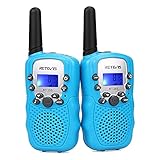 | Retevis RT388 Kids Walkie Talkies, Outdoor Toys for Kids Camping Essentials | 4-12 Year Old Boy Birthday Gift, 22 CH VOX Flashlight Clear Sound, Kids Walkie Talkies 2 Pack for Camping Hiking Adventure | Check Price On Amazon |
 | Cobra RX680 Walkie Talkies (2-Pack), IP54 Water Resistant Design | Rugged & Splashproof Two Way Radios Long Range, 60 Pre-Programmed Channels, Weather Alerts | Check Price On Amazon |
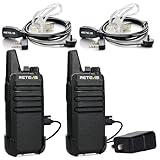 | Retevis RT22 Walkie Talkies Long Range Rechargeable with Earpiece (2 Pack) | Slim & Lightweight 2 Way Radio For Camping & Hiking, Pocket-Friendly Antenna, Ready to Use, 10-Hour Battery, USB-C Charging | Check Price On Amazon |
 | Midland GXT1000VP4 GMRS Two-Way Radios with Headsets, Black, 2 Pack | 50 Channels, 142 Privacy Codes, Up to 36 Mile Long Range, JIS4 Water Resistant, NOAA Weather Alert, Rechargeable NiMH | Check Price On Amazon |
 | Retevis RT628 Walkie Talkies for Kids,Toys Gifts for 6-12 Years Old Boys Girls,Long Range 2 Way Radio 22CH VOX,Birthday Gift,Family Walkie Talkie for Camping Hiking Indoor Outdoor | Check Price On Amazon |