Radio checks are standardized procedures pilots use to verify their radio equipment is working properly. This guide covers everything from basic radio check procedures to advanced troubleshooting techniques. You’ll learn how to conduct proper radio checks, interpret feedback accurately, and resolve common communication issues. These skills are essential for safe and effective aviation communications.
What Is an Aviation Radio Check and Why Are They Critical?
An aviation radio check is a standardized procedure used by pilots to verify their radio equipment is functioning properly and to assess the quality of their transmission signal. According to the FAA Aeronautical Information Manual, radio checks serve as the first line of defense against communication failures that could compromise flight safety.
| Photo | Popular Portable Walkie Talkies | Price |
|---|---|---|
 | SKIWARRIOR Multifunctional Smart Wireless Ski Goggles with Walkie-Talkie, Anti-Fog Zeiss Lens, Music & Call Function (Cylindrical Blue) | Check Price On Amazon |
 | SINORISE Super Mini Walkie Talkies, Two-Way Radios, 3 Pack | Up to 12 Hours Battery Life, for Baseball Coaches, Restaurants, Retail Stores, Hospitals, Outdoor Sports & Travel | Check Price On Amazon |
 | KOSPET Tank M4C Smart Watch Rugged, Dual-Band GPS, 5ATM & IP69K Waterproof | 1.96" AMOLED Display, 170+ Sport Modes, Built-in LED Flashlight/Walkie-Talkie, Heart Rate/Sleep Monitor for Android & iPhone | Check Price On Amazon |
 | Retevis RT15 Walkie Talkies 3 Pack, Birthday Gift, Outdoor Adventure Kit | Durable, Lightweight, VOX, Key Lock, Mini Walkie Talkies for Adults, School Family Outdoor Travel Camping Hiking | Check Price On Amazon |
 | Rechargeable Walkie Talkies Toys for Kids: DIY Astronaut Walkie Talkies for Boys Christmas Birthday Gifts for 3 4 5 6 7 8 9 10 Boy Walkie Talkie Outdoor Hiking Toy 2 Way Radio Camping Outdoor Game | Check Price On Amazon |
Radio checks differ from normal communications because they focus specifically on signal quality rather than operational information. While regular transmissions convey flight details, positions, or intentions, radio checks solely evaluate the technical aspects of the communication system.
The critical importance of radio checks stems from several factors:
- They confirm your ability to transmit and receive vital information
- They identify potential equipment issues before they become dangerous
- They establish your presence on the frequency to other aircraft and controllers
- They help maintain situational awareness in busy airspace
Radio checks became standard practice in the 1930s as aviation radio technology developed. Today, they remain a fundamental part of preflight procedures, with techniques refined over decades of operational experience.
When to Perform a Radio Check: Essential Timing and Situations
Knowing when to perform a radio check is as important as knowing how to conduct one properly. Certain situations demand verification of your radio’s functionality before proceeding with flight operations.
The most common scenarios requiring radio checks include:
- During preflight preparations: Radio checks should be performed as part of your regular preflight checklist, typically after engine start but before taxi.
- After initial power-up: The first radio contact after powering up your communications system should include a radio check.
- Following maintenance: Any time your aircraft has undergone maintenance that might affect electrical systems or radio equipment, perform a comprehensive radio check.
- When using unfamiliar equipment: If flying a new or rental aircraft, verify radio functionality before departure.
- When entering new airspace: Consider a quick radio check when transitioning to a new frequency, especially in areas with known coverage challenges.
- After suspected issues: If you notice any anomalies in radio performance, conduct a check immediately.
At controlled airports, radio checks are often performed with ground control or clearance delivery before requesting taxi instructions. At uncontrolled fields, pilots typically conduct radio checks on the CTAF frequency with other aircraft or nearby facilities.
International operations may require additional radio checks due to different equipment standards and potential language barriers. Adapting your communication style for international operations becomes essential when flying across borders.
How to Conduct a Proper Radio Check: Step-by-Step Procedure
Following standardized radio check procedures ensures you receive useful feedback while maintaining radio discipline. This step-by-step guide covers the exact process from preparation to interpretation.
- Prepare your equipment: Adjust volume, squelch, and frequency settings before transmitting.
- Listen before transmitting: Monitor the frequency for at least 3-5 seconds to ensure you won’t interrupt ongoing communications.
- Select the appropriate frequency: Use ground control at towered airports or CTAF at non-towered fields.
- Press and hold the transmit button: Wait a full second before speaking to avoid cutting off the beginning of your transmission.
- Speak clearly using standard phraseology: Maintain proper microphone position, about 1-2 inches from your lips.
- Make your radio check request: State the station being called, your aircraft identification, and “radio check.”
- Release the transmit button: This allows the receiving station to respond.
- Listen for response: Note the readability assessment provided in the response.
- Acknowledge the response: Confirm receipt of the information.
At controlled airports, your call might sound like: “Chicago Ground, Cessna Three Four Five Six Alpha, radio check.” At uncontrolled airports, use: “Winchester Traffic, Cessna Three Four Five Six Alpha, radio check.”
Common errors to avoid include speaking too quickly, using non-standard phraseology, and failing to identify your aircraft properly. Proper radio discipline is essential for effective communications and contributes directly to aviation safety.
Radio Check Phraseology: Exact Wording to Use
Using correct phraseology during radio checks is essential for clarity and professionalism. These standardized phrases are designed to be concise while conveying all necessary information.
The basic format for a radio check call is:
“[Station being called], [Your callsign], radio check”
Examples for different situations:
- At a towered airport with ground control: “Boston Ground, Cessna One Two Three Four Alpha, radio check”
- At an uncontrolled airport: “Georgetown Traffic, Cessna One Two Three Four Alpha, radio check”
- With Flight Service Station: “Seattle Radio, Cessna One Two Three Four Alpha, radio check”
- With another aircraft (when appropriate): “Aircraft calling Montgomery Traffic, Cessna One Two Three Four Alpha, radio check”
Always use the phonetic alphabet for your aircraft identification. For example, say “November One Two Three Four Alpha” rather than just the numbers and letters.
Avoid non-standard phrases such as “How do you read me?” or “How do you hear me?” These introduce unnecessary variation and may cause confusion, especially in international operations.
Understanding Radio Check Responses: The Readability Scale Explained
When you receive a response to your radio check, it typically includes an assessment of your signal quality using standardized scales. Understanding these ratings is crucial for determining if your equipment is functioning properly.
The standard readability scale ranges from 1 to 5:
| Readability | Definition | Meaning |
|---|---|---|
| 1 | Unreadable | Nothing can be understood |
| 2 | Barely readable | Occasional words distinguishable |
| 3 | Readable with difficulty | Understandable but with effort |
| 4 | Readable | Clear with minimal issues |
| 5 | Perfectly readable | Perfect clarity, like face-to-face |
Similarly, signal strength uses a 1-5 scale:
| Strength | Definition |
|---|---|
| 1 | Barely perceptible |
| 2 | Weak |
| 3 | Fairly good |
| 4 | Good |
| 5 | Excellent |
The phrase “5 by 5” indicates perfect readability (5) and excellent signal strength (5). This is the ideal response you want to receive.
Military communications sometimes use a slightly different system, with “Lima Charlie” (Loud and Clear) being equivalent to “5 by 5” in civilian communications.
Regional variations exist, with some areas using simple “Loud and Clear” responses rather than numerical ratings. International operations may include slight differences in response phraseology based on local practices.
Common Radio Check Responses and What They Mean
Different radio check responses indicate specific qualities of your transmission and may require different actions on your part. Learning to interpret these responses properly is a key pilot skill.
- “Loud and clear” or “5 by 5”: Your transmission is perfect in both readability and strength. No action required except acknowledgment.
- “Readability 4”: Your transmission is clear but not perfect. Minor issues exist but no action typically needed.
- “Readability 3, Strength 5”: You have strong signal power but something is affecting clarity. Check microphone position and speaking technique.
- “Weak but readable”: Your signal has low power but can still be understood. Consider position issues or power problems.
- “Broken transmission”: Parts of your message are missing. Check for intermittent microphone button issues or radio problems.
- “Unreadable”: Your transmission cannot be understood at all. Major equipment issues likely exist.
If you receive no response to your radio check, try again once. If still unsuccessful, consider:
- Verifying you’re on the correct frequency
- Checking volume settings
- Testing with another frequency or station
- Inspecting connections and power
Responses from ground stations typically provide more detailed feedback than those from other aircraft, as controllers have more sophisticated equipment and greater experience evaluating transmissions.
Troubleshooting Poor Radio Check Responses: A Diagnostic Approach
When you receive less than optimal feedback during a radio check, a systematic troubleshooting approach can help identify and resolve the issue quickly. This section provides a diagnostic framework based on specific radio check responses.
Start by categorizing the issue:
- Readability problems: Issues with clarity, distortion, or speech intelligibility
- Strength problems: Issues with signal power, range, or consistency
- Combined problems: Issues affecting both aspects
For readability issues (when strength is adequate):
- Check microphone position: Keep it 1-2 inches from your lips, slightly to the side
- Adjust speaking technique: Speak clearly at moderate pace
- Inspect microphone connections: Look for loose connections or damage
- Check for electrical interference: Turn off unnecessary electrical equipment
- Test headset: Try a different headset if available
For strength issues (when readability is adequate):
- Check transmitter power settings: Ensure proper output level
- Inspect antenna: Look for damage or poor connections
- Consider position and obstacles: Buildings, terrain or distance may be factors
- Verify power supply: Battery issues can reduce transmission power
- Test with different stations: Determine if the issue is location-specific
For combined issues:
- Perform complete radio system check: Power cycle equipment
- Check all connections: Inspect every component in the communication chain
- Verify settings: Check volume, squelch, and frequency
- Consider maintenance: Equipment may require professional service
Develop a mental decision tree for diagnosing issues based on specific responses. For example, if your transmission is reported as “unreadable,” focus first on microphone and transmitter problems. If “weak but readable,” focus on antenna and power issues.
Technical Solutions for Common Radio Problems
Specific technical adjustments can often resolve radio transmission issues identified during radio checks. These solutions address the most common problems pilots encounter with their communication systems.
Squelch Adjustment
Improper squelch settings can cut off transmissions or allow excessive noise. Set squelch by turning it fully counterclockwise until you hear static, then slowly adjust clockwise until the static just disappears. This is the optimal setting for most conditions.
Microphone Gain Optimization
Some radios have adjustable microphone gain. Too high causes distortion; too low creates weak transmissions. If available, adjust according to the manual specifications or have it professionally calibrated during annual inspections.
Antenna Issues
For fixed installations, check for corrosion or loose connections at the base. For handheld radios, ensure the antenna is fully extended and properly attached. The orientation matters: keep handheld antennas vertical when possible.
Frequency Congestion Solutions
In busy airspace, frequency congestion can impact communication quality. Wait for a clear moment before transmitting, keep messages concise, and consider using alternative frequencies when appropriate.
Power Supply Problems
Battery-powered radios may show declining performance as batteries deplete. Carry spares and replace at the first sign of power issues. For panel-mounted radios, check circuit breakers and the master switch if experiencing problems.
Headset Positioning
Proper headset fit affects audio quality. Ensure ear cups completely cover your ears and the microphone is positioned correctly. For boom microphones, position them at the corner of your mouth, not directly in front.
Advanced Radio Check Techniques for Optimal Communications
Beyond basic radio checks, advanced techniques can help you achieve optimal communication quality and troubleshoot subtle issues. These methods are particularly valuable in challenging environments or when standard procedures yield ambiguous results.
Isolating Microphone vs. Radio Issues
To determine if problems stem from your microphone or radio transmitter, perform comparative tests. If available, try a different headset with the same radio. If the issue persists, the radio is likely at fault. If it resolves, the original headset needs attention.
Secondary Frequency Testing
When receiving poor radio check results, try a check on a different frequency with another station. If results improve, the issue may be frequency-specific interference or reception problems at the original station rather than your equipment.
Position Optimization
Aircraft position significantly affects radio performance. For ground operations, identify local dead spots at your airport and avoid them during radio checks. For airborne operations, altitude generally improves range and clarity. Even small position changes (like taxiing 100 feet) can sometimes resolve reception issues.
Voice Technique Refinement
Professional pilots develop specific speaking techniques for radio clarity:
- Speak at a consistent, moderate pace
- Slightly increase volume without shouting
- Enunciate consonants clearly
- Pause briefly between words when clarity is critical
- Avoid unnecessary filler words
Environmental Adaptation
Adjust your radio check technique based on conditions. In high-noise environments, speaking slightly slower improves comprehension. In marginal reception areas, request feedback from multiple stations to better evaluate your signal quality.
International and Regional Variations in Radio Check Procedures
Radio check procedures and phraseology can vary significantly when operating internationally or in special regions. Understanding these differences is essential for pilots who fly beyond their home country or in unique operational environments.
ICAO vs. FAA Standards
While the FAA generally follows ICAO standards, subtle differences exist. ICAO places greater emphasis on standardized phraseology worldwide, while FAA procedures sometimes include regional variations. When flying internationally, default to ICAO standards unless instructed otherwise.
European Variations
European air traffic control often uses slightly different phraseology. For example, you might hear “Reading you strength 5” rather than “Loud and clear” or the American “5 by 5.” Additionally, European controllers may respond to radio checks with more formal language.
Non-English Speaking Regions
In countries where English is not the primary language, you may encounter:
- Shorter, more concise responses
- Greater use of standard ICAO phraseology
- Less conversational style
- More emphasis on numerical readability scales
Military/Civilian Interface
When operating near military facilities, you may encounter different radio check protocols. Military controllers might use terms like “Lima Charlie” (Loud and Clear) or other specialized phraseology. Follow their lead and adapt to their preferred communication style.
Remote and Oceanic Areas
In remote or oceanic regions, radio check procedures often include more detailed position information and may involve relay stations. Be prepared for longer response times and the potential need for message relay through other aircraft.
Overcoming Radio Anxiety: The Psychological Side of Radio Checks
Many pilots, especially those new to aviation, experience anxiety when using the radio. Understanding the psychological aspects of radio communication can help overcome this common challenge and improve your radio check effectiveness.
Sources of Radio Anxiety
Radio anxiety typically stems from:
- Fear of making mistakes publicly
- Concern about misunderstanding instructions
- Pressure to speak quickly and clearly
- Uncertainty about proper phraseology
- Worry about sounding inexperienced
Preparation Techniques
Reduce anxiety through thorough preparation:
- Write down expected calls before transmitting
- Keep a phraseology reference card handy
- Practice with a voice recorder
- Listen to live ATC feeds online to familiarize yourself with patterns
- Mentally rehearse your transmission before keying the microphone
Handling Mistakes
Everyone makes radio errors, including professional pilots. When you make a mistake:
- Simply correct it briefly and move on
- Avoid lengthy apologies or explanations
- Remember that controllers are accustomed to working with pilots of all experience levels
Building Confidence
Confidence develops through practice and exposure:
- Start with quieter airports and simple communications
- Use simulation software or apps to practice
- Consider a communication-focused flight lesson with an instructor
- Record and review your own radio transmissions
Flight instructors consistently report that radio proficiency builds quickly with regular practice, and anxiety typically diminishes significantly within 5-10 hours of focused communications practice.
Modern Aviation Radio Technology and Its Impact on Signal Quality
Aviation radio technology has evolved significantly, with modern systems offering improved clarity, reliability, and features that affect how radio checks are performed and interpreted. Understanding these technologies can help you optimize your communications.
Digital vs. Analog Communications
While most aviation VHF communications remain analog, digital technologies are increasingly integrated into modern systems. Digital systems offer improved clarity with less static and background noise, but may cut out completely rather than degrading gradually when reaching range limits.
Advanced Panel-Mount Systems
Modern panel-mount radios include features that enhance communication quality:
- Automatic squelch optimization
- Digital signal processing
- Frequency databases
- Standby frequency monitoring
- Integration with audio panels for optimized audio routing
Handheld Radio Advancements
Today’s backup handheld radios offer significantly better performance than older models, with:
- Improved battery life (8+ hours vs. 2-3 hours)
- Better antenna efficiency
- Water and impact resistance
- GPS integration
- Bluetooth connectivity
Noise-Canceling Technology
Noise-canceling headsets dramatically improve radio check effectiveness by:
- Reducing cockpit noise that might interfere with your reception
- Providing clearer microphone input by filtering ambient noise
- Allowing lower volume settings that reduce fatigue
- Enabling better concentration on critical communications
Automatic Radio Check Systems
Some airports now offer automated radio check systems that provide standardized feedback. Simply transmit your radio check to the specified frequency, and an automated system will record and replay your transmission, allowing you to assess quality objectively.
Radio Check Procedures During Emergencies and Abnormal Situations
During emergencies or abnormal situations, radio check procedures take on heightened importance while following modified protocols. Understanding these special circumstances can be critical to maintaining communications during challenging situations.
Emergency Communication Priority
In emergencies, standard radio checks may be abbreviated or modified. The key principle is that emergency communications take absolute priority over routine transmissions. Critical emergency phraseology becomes essential when dealing with abnormal situations.
Distress and Urgency Calls
For true emergencies, begin with “Mayday” (distress) or “Pan-Pan” (urgency) rather than standard radio check phraseology. These internationally recognized terms immediately signal priority status:
- “Mayday, Mayday, Mayday” – Immediate danger to life or aircraft
- “Pan-Pan, Pan-Pan, Pan-Pan” – Urgent situation without immediate life threat
Partial Equipment Failure
With partial radio failure, modify standard radio checks to identify specific issues:
- For receive-only capability: “Transmitting blind” prefix
- For transmit-only capability: Request “clicks” or light signals
- For intermittent operation: Identify specific limitations
Alternative Communication Methods
When standard radio checks reveal equipment failures, be prepared to use alternatives:
- Handheld backup radios
- Cell phones (where coverage exists and regulations permit)
- Visual signals
- Relay through other aircraft
Documentation Requirements
Following any emergency or abnormal situation involving radio communications:
- Document the nature of any radio issues in maintenance logs
- Consider filing a NASA Aviation Safety Reporting System report
- Note specific symptoms to aid in troubleshooting
Remember that in true emergencies, controllers expect and will accommodate non-standard phraseology. The priority is clear communication of your situation rather than perfect adherence to standard procedures.
Radio Check Best Practices: Putting It All Together
Mastering radio check procedures requires combining technical knowledge, proper technique, and practical experience. These best practices distill the essentials into actionable guidelines for pilots at all experience levels.
Top Radio Check Best Practices
- Be concise but complete: Use standard phraseology without unnecessary words.
- Prepare before transmitting: Know exactly what you’ll say before pressing the microphone button.
- Listen first: Always monitor the frequency before transmitting to avoid stepping on other communications.
- Maintain proper microphone technique: Position the microphone 1-2 inches from your lips, slightly to the side.
- Speak at moderate pace: Not too fast, not too slow. Aim for about 100 words per minute.
- Use appropriate volume: Speak in a normal, conversational volume. Shouting distorts your transmission.
- Release the button completely: Ensure you fully release the transmit button between transmissions.
- Acknowledge all responses: Confirm receipt of radio check responses to complete the communication loop.
- Document persistent issues: Note any recurring radio problems for maintenance attention.
- Practice regularly: Maintain proficiency through frequent use and deliberate practice.
Pre-Flight Radio Preparation
- Gather all necessary frequencies before engine start
- Set up your audio panel and headset properly
- Test intercom functions before radio communications
- Verify proper volume levels
- Conduct radio checks as early as practical in the pre-taxi sequence
Common Mistakes to Avoid
- Rushing transmissions when nervous
- Using non-standard phraseology
- Releasing the transmit button before finishing your message
- Forgetting your call sign
- Making overly long transmissions
- Failing to verify the correct active frequency
Air traffic controllers consistently report that the most professional pilots maintain radio discipline even during busy or stressful situations. This includes proper radio checks, standard phraseology, and appropriate responses to queries about signal quality.
By integrating these practices into your flying routine, you’ll develop communication habits that enhance safety, efficiency, and professionalism. Remember that radio proficiency, like any aviation skill, improves with deliberate practice and attention to detail.
| Photo | TOP RATED WALKIE TALKIES | Price |
|---|---|---|
 | Retevis RT628 Kids Walkie Talkies, Toys Gifts for 4-12 Year Old Girl Boy | Kids Camping Essentials Outdoor Toys, Birthday Gift, 22CH, VOX, Keypad Lock, Durable, Easy to Use Walkie Talkies for Kids | Check Price On Amazon |
 | Cobra ACXT545 Weather-Resistant Walkie Talkies, Rechargeable, 22 Channels | Long Range 28-Mile Two-Way Radio Set (2-Pack) | Check Price On Amazon |
 | Retevis RT388 Kids Walkie Talkies, Outdoor Toys for Kids Camping Essentials | 4-12 Year Old Boy Birthday Gift, 22 CH VOX Flashlight Clear Sound, Kids Walkie Talkies 2 Pack for Camping Hiking Adventure | Check Price On Amazon |
 | Cobra RX680 Walkie Talkies (2-Pack), IP54 Water Resistant Design | Rugged & Splashproof Two Way Radios Long Range, 60 Pre-Programmed Channels, Weather Alerts | Check Price On Amazon |
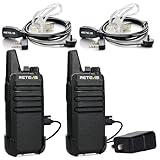 | Retevis RT22 Walkie Talkies Long Range Rechargeable with Earpiece (2 Pack) | Slim & Lightweight 2 Way Radio For Camping & Hiking, Pocket-Friendly Antenna, Ready to Use, 10-Hour Battery, USB-C Charging | Check Price On Amazon |
 | Midland GXT1000VP4 GMRS Two-Way Radios with Headsets, Black, 2 Pack | 50 Channels, 142 Privacy Codes, Up to 36 Mile Long Range, JIS4 Water Resistant, NOAA Weather Alert, Rechargeable NiMH | Check Price On Amazon |
 | Retevis RT628 Walkie Talkies for Kids,Toys Gifts for 6-12 Years Old Boys Girls,Long Range 2 Way Radio 22CH VOX,Birthday Gift,Family Walkie Talkie for Camping Hiking Indoor Outdoor | Check Price On Amazon |