Walkie talkie compliance testing involves verifying that two-way radio devices meet regulatory standards before market release. These regulations ensure proper operation, prevent interference with other devices, and protect user safety. Understanding these requirements is crucial for manufacturers, importers, and distributors to gain market access globally.
Understanding Walkie Talkie Regulatory Landscape: Global Standards Overview
The regulatory landscape for walkie talkies spans multiple jurisdictions, each with distinct requirements. Understanding these standards is the foundation of successful compliance testing and certification. Each country or region maintains its own set of rules governing radio frequency devices, though some harmonization exists across certain regions.
| Photo | Popular Portable Walkie Talkies | Price |
|---|---|---|
 | SKIWARRIOR Multifunctional Smart Wireless Ski Goggles with Walkie-Talkie, Anti-Fog Zeiss Lens, Music & Call Function (Cylindrical Blue) | Check Price On Amazon |
 | SINORISE Super Mini Walkie Talkies, Two-Way Radios, 3 Pack | Check Price On Amazon |
 | KOSPET Tank M4C Smart Watch Rugged, Dual-Band GPS, 5ATM & IP69K Waterproof | Check Price On Amazon |
 | Retevis RT15 Walkie Talkies 3 Pack, Birthday Gift, Outdoor Adventure Kit | Check Price On Amazon |
 | Rechargeable Walkie Talkies Toys for Kids: DIY Astronaut Walkie Talkies for Boys Christmas Birthday Gifts for 3 4 5 6 7 8 9 10 Boy Walkie Talkie Outdoor Hiking Toy 2 Way Radio Camping Outdoor Game | Check Price On Amazon |
According to the International Telecommunication Union (ITU), radio equipment regulations aim to ensure efficient spectrum use, prevent interference, and protect public health. These goals translate into specific technical requirements that vary by location.
Key Regulatory Bodies and Their Jurisdictions
Several regulatory authorities govern walkie talkie standards worldwide, each with specific jurisdictional authority and technical requirements. These authorities enforce standards that manufacturers must meet before selling products in their markets.
- Federal Communications Commission (FCC): Regulates radio communications in the United States under Title 47 of the Code of Federal Regulations. Parts 90 (Land Mobile Radio) and 95 (Personal Radio Services) specifically apply to most walkie talkies.
- European Telecommunications Standards Institute (ETSI): Develops standards for the European Union in conjunction with the Radio Equipment Directive (RED 2014/53/EU).
- Innovation, Science and Economic Development Canada (ISED): Formerly Industry Canada, regulates radio equipment through the Radio Standards Specifications (RSS).
- United Kingdom Conformity Assessment (UKCA): Following Brexit, the UK now requires this marking for products previously covered by CE marking.
- Ministry of Internal Affairs and Communications (MIC): Regulates radio equipment in Japan.
- Australian Communications and Media Authority (ACMA): Oversees compliance in Australia.
Each authority maintains its own certification database and enforcement mechanisms, though some offer mutual recognition arrangements to streamline approval processes.
Recent Regulatory Changes Affecting Walkie Talkie Compliance
The regulatory landscape for walkie talkies continues to evolve, with several significant changes in recent years that manufacturers must address. Staying current with these changes is essential for maintaining compliance.
- European Union RED Implementation: The Radio Equipment Directive replaced the R&TTE Directive, introducing more stringent requirements for software-controlled radio devices.
- FCC Narrow-banding Initiative: Required Land Mobile Radio Services to transition from 25 kHz to 12.5 kHz channel bandwidth.
- UK Transition to UKCA: Following Brexit, manufacturers must now obtain UKCA marking for the UK market, though a transition period allows for CE marking acceptance until certain deadlines.
- Enhanced Security Requirements: Many jurisdictions now require cybersecurity measures for digital walkie talkies with network connectivity.
Industry analyst reports from Technavio indicate the regulatory compliance cost for manufacturers has increased by approximately 15% due to these changes, making strategic compliance planning more important than ever.
Equipment Classification: Determining Which Standards Apply to Your Device
Before beginning compliance testing, you must correctly classify your walkie talkie device to determine which regulations apply. Misclassification is a leading cause of compliance failures and market access delays. Your device classification directly determines testing requirements, frequency allocations, and certification pathways.
According to compliance data from the FCC, approximately 22% of initial application rejections result from incorrect equipment classification. Proper classification depends on several key factors:
- Operating Frequency: Which bands your device uses (VHF, UHF, etc.)
- Transmit Power: Maximum output power in watts
- Intended Use: Consumer, professional, emergency services, etc.
- Features: Voice-only, data capabilities, encryption, etc.
These factors determine which specific regulations apply to your device. For instance, a 5-watt UHF business radio falls under different requirements than a 0.5-watt FRS consumer walkie talkie.
Professional vs. Consumer Walkie Talkie Requirements
The regulatory requirements for professional and consumer walkie talkies differ significantly, affecting everything from permissible frequencies to testing methodologies. These differences impact your compliance strategy and market access approach.
| Feature | Consumer Walkie Talkies | Professional Walkie Talkies |
|---|---|---|
| Frequency Bands | Limited to specific bands (FRS, PMR446) | Access to broader spectrum with licensing |
| Power Output | Typically limited (0.5-2 watts) | Higher power allowed (1-5 watts or more) |
| Licensing | License-free operation | Often requires licensing |
| Features | Limited (often no detachable antennas) | Enhanced (selectable power, encryption, etc.) |
| Testing Rigor | Standard compliance testing | More extensive testing, especially for special uses |
Consumer devices like Family Radio Service (FRS) units must comply with FCC Part 95 in the US, while professional units typically fall under Part 90. In Europe, PMR446 regulations govern consumer units, with different standards for professional equipment.
Essential Testing Requirements for Walkie Talkie Compliance
Compliance testing for walkie talkies encompasses several critical test categories that verify a device meets all applicable regulatory standards. Understanding these test requirements is essential for successful certification. These tests evaluate different aspects of device performance and safety.
According to test lab statistics, comprehensive testing typically requires 3-4 weeks and identifies issues in approximately 70% of first-time submissions. A structured testing approach addresses all regulatory requirements.
Radio Frequency (RF) Performance Testing
RF performance testing evaluates your walkie talkie’s transmission characteristics, ensuring it operates within allocated frequency bands and power limits. This testing forms the core of regulatory compliance for any radio device.
Key RF parameters tested include:
- Frequency Accuracy: Verifies the device transmits on assigned frequencies with acceptable tolerance (typically ±2.5 ppm)
- Power Output: Measures transmitter power to ensure it doesn’t exceed regulatory limits
- Bandwidth and Spectral Mask: Confirms signals stay within allocated channel width
- Spurious Emissions: Checks for unwanted signals outside the intended transmission band
- Frequency Stability: Tests device performance across temperature ranges
- Adjacent Channel Power: Measures signal leakage into neighboring channels
Testing typically uses specialized equipment including spectrum analyzers, power meters, and environmental chambers. The FCC’s acceptable limit for spurious emissions is typically 2.5 μV/m at 3 meters, though this varies by frequency and device class.
Electromagnetic Compatibility (EMC) Testing
EMC testing ensures your walkie talkie neither causes harmful interference to other devices nor is susceptible to interference from external sources. This testing addresses both emissions and immunity aspects.
Primary EMC tests include:
- Radiated Emissions: Measures unintentional electromagnetic energy the device produces
- Conducted Emissions: Tests unwanted signals traveling through power cords or cables
- Immunity Testing: Verifies the device maintains performance when exposed to:
- Electrostatic discharge (ESD)
- Radiated RF fields
- Electrical fast transients
- Surge events
EMC standards vary by region but typically reference CISPR 32 (emissions) and IEC 61000-4 series (immunity). Testing occurs in specialized chambers using antennas, current probes, and signal generators. Common failures occur with inadequate shielding or improper grounding in circuit design.
Safety and SAR Testing Requirements
Safety testing for walkie talkies focuses on electrical safety and RF exposure limits to ensure devices can be used without risk to human health. These tests address both direct hazards and long-term exposure concerns.
Critical safety tests include:
- Specific Absorption Rate (SAR): Measures RF energy absorbed by body tissues when using the device. The FCC limit is 1.6 W/kg averaged over 1 gram of tissue.
- Electrical Safety: Verifies protection against:
- Electric shock
- Fire hazards
- Mechanical dangers
- Battery Safety: Tests for thermal runaway, short circuit protection, and overcharging safeguards
- Environmental Testing: Evaluates performance in extreme conditions (temperature, humidity, etc.)
SAR testing uses specialized phantoms filled with tissue-simulating liquid and robotic probes to measure RF energy absorption. IEC 62209 standards provide the testing methodology, while safety testing follows IEC 62368-1 requirements.
Certification Pathways: Routes to Compliance for Different Markets
Multiple certification pathways exist for walkie talkies, with the appropriate route depending on your device classification, target markets, and business objectives. Choosing the right pathway impacts timeline, cost, and market access strategy.
According to certification consultants, improper pathway selection can increase compliance costs by up to 40% and delay market entry by 3-6 months. Understanding available options helps optimize your certification strategy.
FCC Certification Process for Walkie Talkies
The FCC certification process for walkie talkies follows specific procedures that vary based on your device classification and technical characteristics. This process enables legal marketing and sale in the United States.
The FCC certification pathway includes:
- Determine Equipment Authorization Procedure: Most walkie talkies require Certification (the most rigorous process)
- Select an FCC-Recognized Testing Laboratory: Choose an accredited lab for testing
- Complete Testing: Conduct all required tests according to applicable standards
- Prepare Documentation: Compile test reports, user manual, block diagrams, schematics, etc.
- Submit to Telecommunications Certification Body (TCB): A TCB reviews your application and issues certification
- Receive FCC ID: Upon approval, receive your unique identifier
- Apply Proper Labeling: Mark device with FCC ID and any required statements
Typical timeline: 4-8 weeks after completing testing. Costs range from $3,000-$10,000 depending on device complexity. The FCC maintains a searchable equipment authorization database where all certified devices are listed.
CE/RED Certification for European Market Access
Accessing the European market requires compliance with the Radio Equipment Directive (RED), with specific procedures for walkie talkie certification. This process differs significantly from the FCC approach.
The CE/RED certification pathway includes:
- Identify Applicable Harmonized Standards: Determine which ETSI standards apply to your device
- Decide on Conformity Assessment Route: Choose between:
- Self-declaration (for simple devices meeting harmonized standards)
- Notified Body assessment (for more complex devices or when not using harmonized standards)
- Complete Testing: Conduct tests against applicable standards
- Prepare Technical Documentation: Create technical file with test reports and device details
- Draft Declaration of Conformity (DoC): Formal statement of compliance
- Apply CE Marking: Add marking to device and packaging
- Maintain Technical File: Keep documentation available for 10 years
Timeline typically ranges from 3-12 weeks depending on assessment route. Unlike the FCC process, there’s no central database for RED-compliant devices, and manufacturers self-declare compliance in many cases.
Technical Documentation Requirements: Building a Compliance File
Comprehensive technical documentation is critical for successful certification and ongoing compliance. A well-prepared compliance file demonstrates your device meets all applicable standards. Documentation deficiencies cause approximately 30% of certification delays.
Your technical file must include:
- Product Description: Detailed explanation of device functionality and features
- Block Diagrams and Schematics: Technical drawings of circuitry and components
- Parts List: Comprehensive component inventory with specifications
- User Manual: Complete instructions including regulatory statements
- Test Reports: Results from all required tests with pass/fail criteria
- Risk Assessment: Analysis of potential hazards and mitigations
- Photos: Internal and external device images showing key components
- Label Artwork: Regulatory markings and identifiers
- Declaration of Conformity: Formal compliance statement (for CE marking)
The technical file serves as your compliance evidence during audits or market surveillance activities. Documentation organization varies by regulatory framework, with the EU requiring more structured documentation than the FCC.
Test Reports and Results Documentation
Test reports form the cornerstone of your technical documentation, providing evidence that your walkie talkie meets all applicable standards. Properly structured test reports demonstrate compliance to regulatory authorities.
Essential test report elements include:
- Testing Laboratory Information: Name, accreditation, and contact details
- Device Under Test (DUT) Details: Model number, serial number, and configuration
- Test Standards Reference: Specific standards and versions applied
- Test Setup Description: Equipment used and configuration details
- Measurement Results: Raw data, calculations, and uncertainty analysis
- Pass/Fail Criteria: Limit values from applicable standards
- Conclusions: Clear statement of compliance or non-compliance
- Deviations: Any variations from standard test methods
- Signatures: Approval by qualified test engineers
For non-compliant results, document remediation actions taken and retest results. Test reports must demonstrate traceability to national measurement standards and include calibration information for test equipment.
Pre-Compliance Testing: Strategies to Ensure Certification Success
Pre-compliance testing represents a strategic investment that can significantly reduce certification costs and timelines by identifying and addressing issues early in the development process. This proactive approach typically reduces final certification failures by 60-80%.
According to test lab data, devices that undergo pre-compliance testing are 3.5 times more likely to pass formal certification on the first attempt. This translates to average savings of $15,000-$25,000 in development costs.
Effective pre-compliance strategies include:
- Early Design Reviews: Evaluate circuits and components for compliance risks
- Staged Testing: Test subsystems before final assembly
- In-house Screening: Conduct basic emissions and functional tests with affordable equipment
- Third-party Pre-testing: Use test labs for preliminary assessments at reduced rates
- Peer Review: Have experienced engineers evaluate designs
- Compliance Checklists: Systematic verification of requirements
Basic pre-compliance testing equipment includes spectrum analyzers, near-field probes, and power meters. For more advanced testing, consider renting equipment or using third-party labs for short test sessions.
Common Compliance Failures and Remediation Strategies
Understanding common compliance failures can help you avoid costly delays and redesigns. This section examines frequent issues and provides proven remediation strategies. Industry data shows that addressing these common issues proactively can reduce development cycles by up to 30%.
According to test laboratory statistics, the most common walkie talkie compliance failures include:
- Spurious Emissions (38%): Unwanted transmissions outside the authorized band
- Frequency Stability (21%): Drift beyond acceptable limits in varying conditions
- Power Output Variations (17%): Inconsistent or excessive transmit power
- SAR Exceedances (12%): RF exposure levels above permitted limits
- Documentation Deficiencies (8%): Incomplete or incorrect technical files
- Labeling Issues (4%): Missing or incorrect regulatory markings
Each failure type requires specific remediation approaches to address root causes rather than symptoms.
RF Emissions and Frequency Stability Issues
RF emissions and frequency stability represent the most common compliance failures for walkie talkies, but can be addressed through specific design and testing approaches. These issues often stem from fundamental design choices rather than manufacturing defects.
Common causes and solutions include:
- Oscillator Design:
- Problem: Poor temperature compensation causing frequency drift
- Solution: Use temperature-compensated crystal oscillators (TCXOs) with ±1.5 ppm stability
- PCB Layout:
- Problem: Inadequate isolation between RF stages
- Solution: Implement proper grounding, shielding, and component placement
- Filtering:
- Problem: Insufficient harmonic suppression
- Solution: Add appropriate low-pass filters on RF output stages
- Power Supply Design:
- Problem: Voltage variations affecting RF circuits
- Solution: Implement better voltage regulation and filtering
Testing for these issues requires temperature cycling (-30°C to +60°C typical range) while monitoring frequency and power output. Spectrum analysis helps identify harmonics and spurious emissions that require suppression.
Post-Certification Requirements: Maintaining Compliance
Certification is not the end of compliance obligations for walkie talkie manufacturers. Ongoing requirements must be met to maintain compliance and market access. Non-compliance with these continuing obligations can result in market removal, fines, or import restrictions.
Key post-certification responsibilities include:
- Production Testing: Verify sample units from production runs meet the same standards as certified units
- Change Management: Document and evaluate all design or component changes for compliance impact
- Labeling Maintenance: Ensure all regulatory markings remain correct and visible
- Documentation Updates: Keep technical files current with product changes
- Market Surveillance Response: Cooperate with authorities during spot checks or investigations
- Complaint Handling: Track and address user reports of interference or other issues
- Recertification: Renew certifications when required by regulations
The FCC requires manufacturers to submit new applications when making changes affecting frequency, power, or modulation characteristics. Less significant changes may require a “permissive change” application. The EU RED requires reevaluation of compliance for any significant changes.
International Market Access: Navigating Multiple Regulatory Frameworks
Manufacturers targeting multiple international markets must navigate a complex web of regulatory frameworks. Strategic approaches can streamline compliance across jurisdictions. Effective planning can reduce multi-market certification costs by 25-40%.
Key strategies for efficient global compliance include:
- Hierarchical Testing: Start with the most stringent requirements first
- Modular Certification: Certify core radio modules that can be used across multiple products
- Leverage Mutual Recognition Agreements (MRAs): Use test results from one region for another where agreements exist
- Unified Documentation System: Create a master technical file with region-specific annexes
- Simultaneous Submissions: Coordinate applications across multiple jurisdictions
- Localized Partners: Engage in-country representatives for complex markets
Notable MRAs include the agreement between the United States and Canada allowing test results from either country to be used for certification in both. The EU has similar arrangements with several countries including Australia, New Zealand, and Japan.
| Market | Key Standard | Unique Requirements | Approximate Timeline |
|---|---|---|---|
| USA | FCC Parts 90/95 | FCC ID labeling | 4-8 weeks |
| EU | RED 2014/53/EU | Technical file maintenance | 3-12 weeks |
| Canada | RSS-210/RSS-119 | Bilingual labeling | 4-6 weeks |
| Japan | MIC Technical Regulations | Local representative required | 8-12 weeks |
| Australia | AS/NZS 4268 | RCM marking | 3-6 weeks |
Market entry sequencing typically begins with larger markets (US, EU) and expands to others as resources allow. Some manufacturers develop region-specific product variants to avoid overengineering for global compliance.
Cost and Timeline Optimization: Streamlining the Compliance Process
Compliance testing and certification represent significant investments in time and resources. Strategic approaches can optimize both costs and timelines while ensuring successful outcomes. Industry data shows that proper planning can reduce overall compliance costs by 30-50%.
Typical compliance costs include:
- Testing Fees: $5,000-$15,000 per device model (varies by complexity)
- Certification Fees: $1,000-$3,000 per market
- Consultant Costs: $150-$250 per hour if external expertise is needed
- Design Modifications: $5,000-$25,000 if failures require changes
- Production Delays: $1,000-$10,000 per day of missed market opportunity
Cost optimization strategies include:
- Design for Compliance: Address regulatory requirements during initial design
- Family Certifications: Group similar products under one certification where allowed
- Test Plan Optimization: Combine test sessions to reduce setup costs
- Pre-compliance Investment: Spend 15-20% of certification budget on early testing
- Strategic Lab Selection: Choose labs with experience in your specific device type
- Documentation Preparation: Complete all paperwork before testing begins
Timeline management is equally important. A typical certification process takes 2-4 months from design completion to market approval. Critical path analysis shows that documentation preparation often causes the greatest delays.
Expert Insights: Future Trends in Walkie Talkie Compliance
The regulatory landscape for walkie talkies continues to evolve. Industry experts provide insights into emerging trends and future compliance challenges. Understanding these trends helps manufacturers prepare for upcoming requirements.
According to John Miller, Compliance Director at Radio Testing Associates, “The next three years will bring significant changes to walkie talkie regulations globally, with increased focus on cybersecurity, environmental impact, and spectrum efficiency.”
Key emerging trends include:
- Software Security Requirements: Increasing focus on preventing unauthorized modifications
- Environmental Compliance: Stricter materials restrictions and energy efficiency standards
- Digital Transformation: Shift from analog to digital technologies with new testing requirements
- IoT Integration: Connected walkie talkies facing additional network security testing
- Spectrum Sharing Technologies: Requirements for dynamic frequency selection and sharing
- Enhanced Privacy Regulations: Data protection requirements for devices with recording capabilities
Dr. Sarah Chen, Telecommunications Policy Analyst, notes that “Manufacturers should prepare for more stringent cybersecurity requirements, particularly for devices that connect to networks or use software-defined radio technology with encryption capabilities.”
Industry statistics indicate that 65% of new walkie talkie designs now incorporate digital technology, up from 40% three years ago, driving significant changes in compliance requirements and regulatory frameworks.
Conclusion: Building a Robust Walkie Talkie Compliance Strategy
Successful walkie talkie compliance requires a strategic approach that begins early in product development and continues throughout the product lifecycle. By understanding regulatory requirements, implementing pre-compliance testing, and maintaining post-certification obligations, manufacturers can ensure market access and avoid costly delays.
Key takeaways include:
- Begin compliance planning during early design phases
- Correctly classify your device to determine applicable standards
- Invest in pre-compliance testing to identify issues early
- Develop comprehensive technical documentation
- Consider international requirements for global market access
- Maintain compliance through production and product updates
- Stay informed about regulatory changes and emerging requirements
With radio technology continuing to evolve, maintaining regulatory compliance remains an ongoing commitment rather than a one-time achievement. Manufacturers who build compliance into their development process gain competitive advantage through faster market access and reduced compliance costs. For those just starting with walkie talkie technology, our comprehensive beginners guide provides fundamental knowledge to understand the basics before diving into compliance matters.
| Photo | TOP RATED WALKIE TALKIES | Price |
|---|---|---|
 | Retevis RT628 Kids Walkie Talkies, Toys Gifts for 4-12 Year Old Girl Boy | Check Price On Amazon |
 | Cobra ACXT545 Weather-Resistant Walkie Talkies, Rechargeable, 22 Channels | Check Price On Amazon |
 | Retevis RT388 Kids Walkie Talkies, Outdoor Toys for Kids Camping Essentials | Check Price On Amazon |
 | Cobra RX680 Walkie Talkies (2-Pack), IP54 Water Resistant Design | Check Price On Amazon |
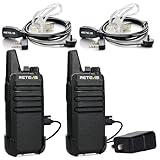 | Retevis RT22 Walkie Talkies Long Range Rechargeable with Earpiece (2 Pack) | Check Price On Amazon |
 | Midland GXT1000VP4 GMRS Two-Way Radios with Headsets, Black, 2 Pack | Check Price On Amazon |
 | Retevis RT628 Walkie Talkies for Kids,Toys Gifts for 6-12 Years Old Boys Girls,Long Range 2 Way Radio 22CH VOX,Birthday Gift,Family Walkie Talkie for Camping Hiking Indoor Outdoor | Check Price On Amazon |