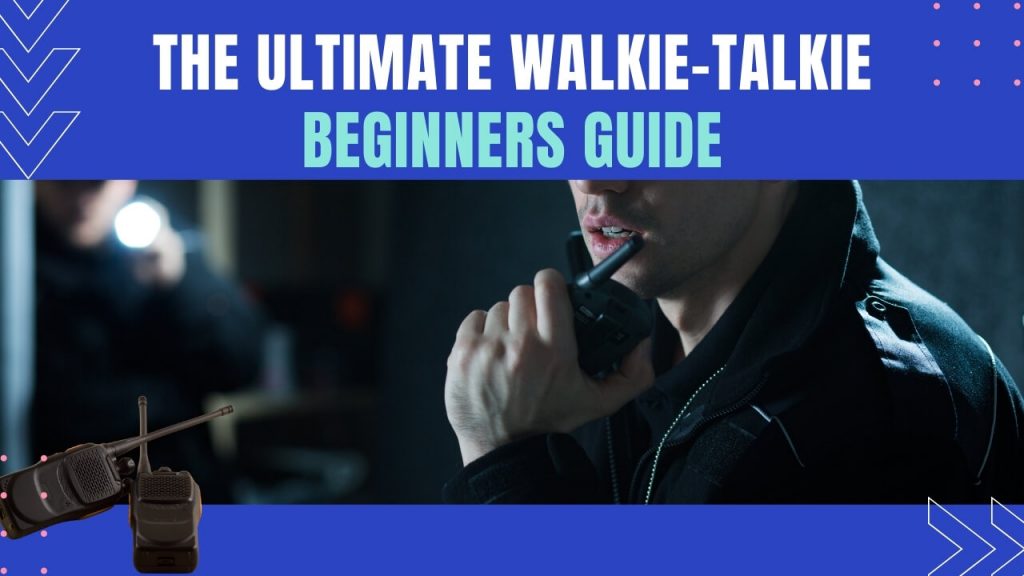
Radio communication terminology forms the backbone of effective two-way radio usage. This comprehensive glossary covers essential terms, codes, and protocols used across emergency services, business, recreation, and technical applications. Understanding these standardized terms ensures clear, efficient communication regardless of signal quality or operational environment. Whether you’re a first responder, business user, outdoor enthusiast, or radio hobbyist, mastering this terminology will significantly improve your radio communication effectiveness.
This guide organizes radio terminology into logical categories, progressing from basic concepts to specialized applications, making it accessible for beginners while providing depth for experienced users. We’ve included both traditional analog and modern digital radio terminology to serve all equipment types.
| Photo | Popular Portable Walkie Talkies | Price |
|---|---|---|
 | SKIWARRIOR Multifunctional Smart Wireless Ski Goggles with Walkie-Talkie, Anti-Fog Zeiss Lens, Music & Call Function (Cylindrical Blue) | Check Price On Amazon |
 | SINORISE Super Mini Walkie Talkies, Two-Way Radios, 3 Pack | Up to 12 Hours Battery Life, for Baseball Coaches, Restaurants, Retail Stores, Hospitals, Outdoor Sports & Travel | Check Price On Amazon |
 | KOSPET Tank M4C Smart Watch Rugged, Dual-Band GPS, 5ATM & IP69K Waterproof | 1.96" AMOLED Display, 170+ Sport Modes, Built-in LED Flashlight/Walkie-Talkie, Heart Rate/Sleep Monitor for Android & iPhone | Check Price On Amazon |
 | Retevis RT15 Walkie Talkies 3 Pack, Birthday Gift, Outdoor Adventure Kit | Durable, Lightweight, VOX, Key Lock, Mini Walkie Talkies for Adults, School Family Outdoor Travel Camping Hiking | Check Price On Amazon |
 | Rechargeable Walkie Talkies Toys for Kids: DIY Astronaut Walkie Talkies for Boys Christmas Birthday Gifts for 3 4 5 6 7 8 9 10 Boy Walkie Talkie Outdoor Hiking Toy 2 Way Radio Camping Outdoor Game | Check Price On Amazon |
Essential Radio Communication Basics: Core Terminology
Before diving into specialized codes and protocols, let’s establish the fundamental radio communication terminology that all users should understand. These essential terms form the foundation of effective two-way radio communication.
- Walkie Talkie: A handheld, portable two-way radio transceiver. Originally military terminology now used primarily for consumer-grade devices.
- Two-Way Radio: Any transceiver allowing users to both transmit and receive voice communications, including handheld portables, mobile units (vehicle-mounted), and base stations.
- Transceiver: A device that both transmits and receives radio signals (combines transmitter and receiver functions).
- Channel: A designated frequency or frequency pair used for communication.
- Frequency: The number of radio wave cycles per second, measured in Hertz (Hz), kilohertz (kHz), or megahertz (MHz).
- Push-to-Talk (PTT): Button that activates transmission when pressed and returns to receive mode when released.
- Squelch: Circuit that eliminates background noise when no signal is present.
- Transmission: The act of sending a radio signal.
- Reception: The act of receiving a radio signal.
- Duplex: Communication mode allowing simultaneous transmission and reception.
- Simplex: Communication mode where users take turns transmitting and receiving on the same frequency.
Understanding Radio Signal Terminology
Radio communication quality depends heavily on signal characteristics. Understanding these terms will help you troubleshoot common issues and optimize your radio performance.
- Signal Strength: Measure of how powerful a radio signal is at a given location, often described as “strong” or “weak.”
- Radio Frequency Interference (RFI): Disruption of radio signals caused by other electronic devices or transmissions.
- Electromagnetic Interference (EMI): Interference caused by electromagnetic radiation from non-radio sources like motors or power lines.
- Range: Maximum distance over which radios can communicate effectively. Varies based on terrain, power, antenna, and frequency.
- Line of Sight: Direct visual path between radios. VHF/UHF signals work best with clear line of sight.
- Breaking Up: When a transmission becomes partially unintelligible due to poor signal.
- Static: Random noise interference heard as a crackling sound.
- Dead Spot: Location where radio signals cannot be received due to physical obstructions or interference.
- Signal-to-Noise Ratio: Comparison of desired signal level to background noise level. Higher ratio means clearer communication.
- Fading: Gradual reduction in signal strength during transmission.
Radio Hardware and Component Terminology
Every walkie talkie contains specific components with standardized terminology. Knowing these terms helps with both operation and troubleshooting.
- Antenna: Device that converts electrical signals to radio waves (transmitting) and vice versa (receiving).
- Whip Antenna: Long, flexible antenna commonly found on portable radios.
- Stubby Antenna: Short, rigid antenna trading range for convenience and durability.
- Speaker-Microphone (Speaker-Mic): External accessory combining speaker and microphone functions.
- Display: Screen showing channel, battery, and other operational information.
- Battery Pack: Rechargeable or replaceable power source.
- Belt Clip: Attachment for securing radio to user’s belt or clothing.
- Charging Cradle: Base station for recharging radio batteries.
- Volume Control: Knob or button adjusting audio output level.
- Channel Selector: Switch or button for changing communication channels.
- IP Rating: International Protection marking indicating dust and water resistance (e.g., IP67).
- MIL-STD: Military standard ratings for durability, shock resistance, and environmental protection.
The Phonetic Alphabet: International Radio Communication Standard
The phonetic alphabet is essential for clear communication when spelling words over radio. Each letter has a standardized word to prevent misunderstanding, especially in poor signal conditions.
The NATO phonetic alphabet is the most widely used standard across military, aviation, emergency services, and civilian radio communications:
- A – Alpha (AL-fah)
- B – Bravo (BRAH-voh)
- C – Charlie (CHAR-lee)
- D – Delta (DEL-tah)
- E – Echo (EK-oh)
- F – Foxtrot (FOKS-trot)
- G – Golf (GOLF)
- H – Hotel (hoh-TEL)
- I – India (IN-dee-ah)
- J – Juliett (JEW-lee-ett)
- K – Kilo (KEY-loh)
- L – Lima (LEE-mah)
- M – Mike (MIKE)
- N – November (no-VEM-ber)
- O – Oscar (OSS-cah)
- P – Papa (pah-PAH)
- Q – Quebec (keh-BEK)
- R – Romeo (ROW-me-oh)
- S – Sierra (see-AIR-rah)
- T – Tango (TANG-go)
- U – Uniform (YOU-nee-form)
- V – Victor (VIK-ter)
- W – Whiskey (WISS-key)
- X – X-ray (EKS-ray)
- Y – Yankee (YANG-key)
- Z – Zulu (ZOO-loo)
This alphabet evolved from earlier versions, reaching its current form in 1956 when adopted by the International Civil Aviation Organization. Using it correctly ensures critical information like call signs, license plates, and addresses are accurately communicated despite poor signal conditions.
Procedural Words (Prowords): Standard Radio Communication Terms
Procedural words, or “prowords,” are standardized terms used to make radio communication more efficient and clear. These words have precise meanings that help streamline transmissions.
- Over: Indicates you’ve finished speaking and expect a response.
- Out: Indicates the end of transmission with no response expected.
- Roger: Message received and understood.
- Wilco: Will comply with instructions.
- Affirmative: Yes or correct.
- Negative: No or incorrect.
- Say Again: Request to repeat last transmission.
- I Spell: Indicates you’ll spell a word using the phonetic alphabet.
- Break: Indicates separation between portions of a message.
- Break Break: Indicates urgent need to interrupt ongoing communications.
- Standby: Wait temporarily; I’ll get back to you.
- Copy: I understand the message.
- Clear: Communication is ended, frequency is available for use.
- Figures: Indicates numbers will follow.
- Words Twice: Request for critical information to be repeated.
Common misuse: Never say “Over and Out” together, as they have contradictory meanings. “Over” requests a response while “Out” indicates no response is expected.
Sample dialogue:
“Base Station to Unit 5, proceed to Main Street and Oak Avenue for traffic control, Over.”
“Unit 5 to Base, Roger, proceeding to Main and Oak for traffic control, Out.”
10-Codes: The Standard Numeric Radio Code System
10-Codes are numeric shorthand developed to streamline radio communications. Originally created for law enforcement, these codes have found widespread use across many radio communication contexts.
The most widely used 10-codes include:

- 10-1: Poor reception/Signal weak
- 10-2: Good reception/Signal good
- 10-3: Stop transmitting/Maintain radio silence
- 10-4: Message received and understood (Acknowledgment)
- 10-5: Relay message
- 10-6: Busy, stand by
- 10-7: Out of service
- 10-8: In service/Available
- 10-9: Repeat message
- 10-10: Transmission completed (Off duty)
- 10-12: Visitors/Officials present (Be cautious)
- 10-13: Weather/Road conditions
- 10-16: Pick up/Meet at location
- 10-17: Urgent business
- 10-18: Urgent (Lights and siren)
- 10-19: Return to station/base
- 10-20: Location/What is your location?
- 10-21: Call by telephone
- 10-22: Disregard/Cancel
- 10-23: Arrived at scene
- 10-25: Report in person
- 10-27: Driver’s license information
- 10-28: Vehicle registration information
- 10-29: Check for wanted/stolen
- 10-30: Unnecessary use of radio
- 10-31: Crime in progress
- 10-32: Person with gun
- 10-33: Emergency/Highest priority
- 10-36: Current time
- 10-37: Suspicious vehicle/person
- 10-38: Traffic stop
- 10-42: Officer’s residence
- 10-45: Animal problem
- 10-46: Assist motorist
- 10-49: Traffic light out
- 10-50: Accident
- 10-51: Wrecker needed
- 10-52: Ambulance needed
- 10-53: Road blocked
- 10-54: Livestock on highway
- 10-55: Intoxicated driver
- 10-56: Intoxicated pedestrian
- 10-57: Hit and run
- 10-58: Direct traffic
- 10-59: Escort
- 10-60: Squad in vicinity
- 10-61: Personnel in area
- 10-62: Reply to message
- 10-63: Prepare to make written copy
- 10-66: Message cancellation
- 10-67: Clear for net message
- 10-68: Dispatch information
- 10-69: Message received
- 10-70: Fire alarm
- 10-71: Advise nature of fire
- 10-72: Report progress on fire
- 10-73: Smoke report
- 10-79: Bomb threat
- 10-91: Animal pickup
- 10-94: Illegal parking
- 10-95: Prisoner/Subject in custody
- 10-96: Mental subject
- 10-97: Security check
- 10-98: Prison/Jail break
- 10-99: Wanted/Stolen record
While 10-codes were intended to standardize communication, regional variations emerged over time. For example, 10-55 might mean “intoxicated driver” in one jurisdiction but “security check” in another. This inconsistency led many emergency services to shift toward plain language, especially after communication challenges during major incidents like the 9/11 attacks.
Most Common 10-Codes Everyone Should Know
While there are dozens of 10-codes, certain ones appear frequently across most radio communications. These essential codes are worth memorizing regardless of your specific radio application.
- 10-4: Message received and understood. The most universally recognized 10-code, used to acknowledge instructions.
- 10-9: Repeat message. Used when transmission wasn’t clear or audible.
- 10-20: Location. Used to ask or report someone’s position (“What’s your 10-20?”).
- 10-33: Emergency. Indicates highest priority situation requiring immediate attention.
- 10-1/10-2: Poor reception/Good reception. Used to report signal quality issues.
- 10-6: Busy, stand by. Indicates temporary unavailability.
- 10-7/10-8: Out of service/In service. Indicates operational status.
- 10-22: Disregard/Cancel previous message.
- 10-23: Arrived at scene. Confirms reaching the intended destination.
- 10-36: Current time. Request for or providing the current time.
Business and security applications tend to use this smaller subset of codes consistently, while emergency services may use the full range depending on local protocols.
Q-Codes: International Radio Communication Shorthand
Q-codes originated in maritime communications and were adopted by ham radio operators. These three-letter codes beginning with ‘Q’ function as both questions and answers, making them extremely efficient for radio communication.
- QRM: “Are you experiencing interference?” / “I am experiencing interference”
- QRN: “Are you troubled by static?” / “I am troubled by static”
- QRP: “Shall I decrease power?” / “Decrease your power” (Also refers to low-power operation)
- QRT: “Shall I stop transmitting?” / “Stop your transmission”
- QRZ: “Who is calling me?” / “You are being called by…”
- QSL: “Can you acknowledge receipt?” / “I acknowledge receipt” (Also refers to confirmation cards)
- QSO: “Can you communicate with… directly?” / “I can communicate with… directly” (Also refers to a radio conversation)
- QSY: “Shall I change frequency?” / “Change your frequency to…”
- QTH: “What is your location?” / “My location is…”
- QRX: “When will you call again?” / “I will call you again at… hours”
Q-codes serve different purposes across various radio services. Amateur radio operators use them extensively during contacts, while aviation services have a specific subset for air traffic communication. Unlike 10-codes which are spoken as “ten-four,” Q-codes are pronounced as single words, like “Q-R-M” or “Q-S-L.”
Digital Radio Terminology: Modern Two-Way Radio Technology
As radio technology evolves from analog to digital systems, new terminology has emerged. Understanding these digital radio terms is essential for users of modern equipment.
- Analog Radio: Traditional radio technology using continuous signals to transmit voice.
- Digital Radio: Modern radio technology converting voice into digital data for transmission, offering better audio quality, range, and features.
- DMR (Digital Mobile Radio): Popular digital radio standard using Time Division Multiple Access technology.
- TDMA (Time Division Multiple Access): Technology allowing two conversations to share one frequency by alternating time slots.
- FDMA (Frequency Division Multiple Access): Technology dividing a radio channel into multiple sub-channels.
- Trunking: System automatically assigning available frequencies to users as needed.
- P25 (Project 25): Digital radio standard used primarily by North American public safety agencies.
- TETRA (Terrestrial Trunked Radio): European digital radio standard for public safety and commercial applications.
- dPMR (Digital Private Mobile Radio): Open digital radio standard using FDMA technology.
- NXDN: Digital protocol developed by Icom and Kenwood.
- Encryption: Technology that scrambles transmissions to prevent unauthorized listening.
- Digital Vocoder: System that converts voice to digital data and back.
- Codeplug: Configuration file containing all programming parameters for a digital radio.
- CPS (Customer Programming Software): Software used to program digital radios.
- Over-the-Air Programming (OTAP): Ability to update radio settings wirelessly.
- Software-Defined Radio (SDR): Radio system where components traditionally implemented in hardware are instead handled by software.
Digital radio offers significant advantages over analog, including better audio quality at the edge of coverage range, increased spectrum efficiency, integrated data services, and enhanced privacy options.
DMR (Digital Mobile Radio) Specific Terminology
DMR (Digital Mobile Radio) is one of the most common digital radio standards. Understanding its specific terminology helps users maximize the benefits of this technology.
- Tier I: License-free DMR standard for consumer and light commercial use.
- Tier II: Licensed DMR standard for professional use, supporting two time slots per channel.
- Tier III: Trunked version of DMR for large-scale operations.
- Time Slot: One of two communication paths on a single DMR channel (Time Slot 1 or Time Slot 2).
- Color Code: Digital equivalent of CTCSS/DCS in analog systems, preventing interference between nearby systems (0-15).
- Talk Group: Virtual channel allowing specific groups to communicate without disturbing others.
- Radio ID: Unique 7-digit identification number assigned to each DMR radio (like a phone number).
- Private Call: Direct call between two specific radios using their Radio IDs.
- Group Call: Call to all radios monitoring a specific Talk Group.
- All Call: Broadcast to all radios regardless of Talk Group.
- Codeplug: Configuration file containing channels, contacts, zones and settings.
- Zone: Group of channels organized for easier access.
- Roaming: Automatic selection of the best repeater as the radio moves between coverage areas.
DMR users must register for a unique Radio ID through regional database administrators. This ID identifies each radio on the network, enabling features like private calling and user identification.
Radio Communication Protocols: Proper Transmission Procedures
Effective radio communication follows established protocols that ensure clarity, efficiency, and proper etiquette. These procedures are especially important in emergency or high-traffic situations.
Basic Transmission Procedure
- Listen First: Always check if the channel is clear before transmitting.
- Press and Hold: Press the PTT button and hold for 1-2 seconds before speaking.
- Identify Clearly: State the recipient’s call sign/identifier followed by your own (e.g., “Base Station, this is Unit 5”).
- Speak Clearly: Use normal volume, speak slightly slower than normal conversation, and enunciate clearly.
- Keep it Brief: Transmit only essential information to minimize channel usage.
- Use Standard Terminology: Employ proper prowords, codes, and phonetic alphabet when appropriate.
- End Properly: Indicate transmission end with appropriate proword (“Over” or “Out”).
- Release PTT: Release the PTT button immediately after speaking.
Message Structure
For maximum clarity, structure messages in this order:
- Address: Who you’re calling
- Identity: Who you are
- Information: The actual message content
- Instruction: Any requested action
- Confirmation Request: Request acknowledgment if needed
- Close: End with appropriate proword
Example: “Security Base, this is Patrol 2. Suspicious individual at north entrance wearing red jacket. Request backup to investigate. Please confirm, Over.”
Emergency Communication Protocol
- Declare Emergency: Begin with “EMERGENCY” or “MAYDAY” or use appropriate emergency code (10-33).
- Identify: State who you are.
- Location: Provide exact location.
- Situation: Describe the emergency.
- Needs: Specify what assistance is required.
- Hazards: Mention any dangers responders should know about.
- End Status: Indicate if you’re staying on channel or switching frequencies.
Radio Communication Etiquette and Best Practices
Beyond formal protocols, radio communication has unwritten rules of etiquette that professional users follow. These best practices ensure smooth, professional, and effective communication.
- Listen Before Speaking: Always ensure the channel is clear before transmitting.
- Respect Channel Priority: Emergency traffic always takes precedence over routine communications.
- Microphone Technique: Hold microphone 1-2 inches from mouth, slightly to the side to reduce breathing sounds.
- Voice Control: Speak clearly at moderate volume; shouting causes distortion.
- Brevity: Keep transmissions short and focused on essential information.
- Avoid Dead Air: Plan what to say before pressing PTT to avoid unnecessary channel occupation.
- Professional Language: Avoid slang, jokes, and personal conversations.
- No Interruptions: Wait for ongoing transmissions to complete before breaking in (except for emergencies).
- Acknowledge Receipt: Always confirm messages with appropriate response.
- Channel Discipline: Use designated channels for their intended purpose only.
- Radio Check: Conduct radio checks during low-traffic periods.
Following these protocols and practices ensures efficient communication even in challenging conditions or emergency situations.
Industry-Specific Radio Terminology
Different industries and applications have developed specialized radio terminology to address their unique needs. Understanding these sector-specific terms is crucial for professionals in these fields.
Emergency Services Radio Terminology
- Dispatched: Assigned to respond to a call or incident.
- En Route: Traveling to the incident location.
- On Scene: Arrived at incident location.
- Available: Ready for assignment.
- MDT: Mobile Data Terminal, computer in emergency vehicles.
- ETA: Estimated Time of Arrival.
- EOC: Emergency Operations Center.
- Staging Area: Location where resources gather before deployment.
- Command: Incident commander or command post.
Military Tactical Radio Terminology
- Comms Check: Verifying radio communication functionality.
- Oscar Mike: On the Move.
- Lima Charlie: Loud and Clear (good communications).
- Sitrep: Situation Report.
- Grid: Map coordinates.
- Freq: Frequency.
- Net: Radio network or circuit.
- Traffic: Messages being sent.
- Brevity Codes: Short code words representing complex tactical information.
Aviation Radio Phraseology
- Roger: Message received and understood.
- Wilco: Will comply with instructions.
- Standby: Wait for further transmission.
- Say Again: Repeat your last transmission.
- Read Back: Repeat my instructions exactly as received.
- Affirm: Yes.
- Negative: No.
- Mayday: Distress call (life-threatening emergency).
- Pan-Pan: Urgency call (serious situation but not immediately life-threatening).
Maritime Radio Terminology
- Mayday: Distress signal for life-threatening emergencies.
- Pan-Pan: Urgency signal for serious situations not immediately life-threatening.
- Securite: Safety signal for navigational hazards or weather warnings.
- Over: End of transmission, response expected.
- Out: End of transmission, no response expected.
- Channel 16: International VHF marine distress, safety, and calling channel.
- DSC: Digital Selective Calling, automated calling system.
- Radio Check: Request to verify radio functionality.
Business and Retail Radio Terms
- Copy: Message received and understood.
- Go Ahead: Ready to receive transmission.
- Standing By: Listening but not currently participating.
- Back Door: Rear entrance of facility.
- Eyes On: Visual confirmation of person or situation.
- Code 1: Customer needing assistance (varies by business).
- Code Blue: Medical emergency (common in hospitals).
- All Clear: Situation resolved, resume normal operations.
Radio Equipment Specifications: Understanding Technical Terminology
Radio specification sheets contain technical terminology that can be confusing to new users. Understanding these terms helps you select the right equipment and compare different models effectively.
- Frequency Range: Spectrum band(s) the radio operates within, measured in MHz or GHz.
- VHF (Very High Frequency): 30-300 MHz range, better for longer distances and outdoor use.
- UHF (Ultra High Frequency): 300-3000 MHz range, better for indoor penetration.
- GMRS (General Mobile Radio Service): Licensed UHF band for personal/family use in US.
- FRS (Family Radio Service): License-free UHF band for personal use in US.
- PMR446: License-free UHF band for personal use in Europe.
- Wattage/Power Output: Transmission power, typically 0.5W to 5W for handhelds.
- mAh (Milliamp Hours): Battery capacity measurement.
- Li-ion (Lithium-ion): Rechargeable battery technology with high capacity.
- NiMH (Nickel-Metal Hydride): Alternative rechargeable battery technology.
- IP Rating: International Protection marking for dust/water resistance (e.g., IP67).
- MIL-STD-810: Military durability standard for shock, vibration, temperature extremes.
- CTCSS (Continuous Tone-Coded Squelch System): Subaudible tone that prevents hearing transmissions from other users on same frequency.
- DCS (Digital-Coded Squelch): Digital version of CTCSS.
- Sensitivity: Ability to receive weak signals, measured in microvolts (μV).
- Selectivity: Ability to distinguish between signals on adjacent frequencies.
- Duty Cycle: Recommended transmission/reception ratio to prevent overheating.
When comparing radios, remember that manufacturer-stated range claims are typically based on ideal conditions (clear line of sight, no interference). Actual range in real-world conditions is usually significantly less.
Antenna Terminology and Concepts
The antenna is one of the most critical components affecting radio performance. Understanding antenna terminology helps users optimize their communication range and quality.
- Whip Antenna: Long, flexible antenna providing better range.
- Stubby Antenna: Short, rigid antenna trading range for portability.
- Gain: Measure of antenna directional focus, measured in decibels (dB).
- Omnidirectional: Antenna that radiates equally in all horizontal directions.
- Directional: Antenna focused in specific direction for increased range.
- Radiation Pattern: 3D diagram showing signal strength in different directions.
- SWR (Standing Wave Ratio): Measure of antenna efficiency; lower is better.
- Antenna Tuning: Adjusting antenna for optimal performance on specific frequency.
- Base-Loaded: Antenna with loading coil at bottom.
- Center-Loaded: Antenna with loading coil in middle.
- Magnetic Mount: Antenna base with magnet for temporary vehicle mounting.
- J-Pole: Simple DIY antenna design for base stations.
Antenna quality often has more impact on communication range than radio power. A high-quality antenna on a lower-power radio frequently outperforms a poor antenna on a high-power radio.
Troubleshooting Radio Communications: Problem-Solving Terminology
When radio communications experience problems, specific terminology helps identify and resolve issues quickly. This section covers the language of radio troubleshooting.
Common Signal Problems
- Breaking Up: Intermittent reception where parts of transmission are lost.
- Solution: Move to higher ground or reposition antenna.
- Prevention: Maintain line of sight when possible.
- Scratchy Audio: Rough, distorted sound quality.
- Solution: Check and clean connections; replace damaged accessories.
- Prevention: Regular maintenance and keeping connections clean.
- Fade Out: Signal gradually weakens during transmission.
- Solution: Reposition for better line of sight; check battery level.
- Prevention: Maintain charged batteries and optimal positioning.
- Bleedover: Hearing transmissions from adjacent channels.
- Solution: Use CTCSS/DCS tones; increase squelch level.
- Prevention: Program proper privacy codes on all radios.
- Dead Spots: Locations where communication fails consistently.
- Solution: Identify and map problem areas; use repeaters if available.
- Prevention: Deploy additional radio assets or repeaters in critical areas.
Equipment Problems
- No Power: Radio won’t turn on.
- Solution: Check battery installation; replace or recharge battery.
- Prevention: Regular battery maintenance and carrying spares.
- Stuck in Transmit: Radio continuously transmits without PTT pressed.
- Solution: Check for stuck PTT button; remove and reconnect battery.
- Prevention: Keep radio clean and protected from dirt/moisture.
- Overheating: Radio becomes excessively hot.
- Solution: Power off immediately; allow cooling; check for blocked vents.
- Prevention: Follow duty cycle guidelines; avoid prolonged transmissions.
- VOX Triggering: Voice-activation triggers unexpectedly.
- Solution: Adjust VOX sensitivity; disable in noisy environments.
- Prevention: Use PTT mode in high-noise environments.
When reporting technical problems to management or technical support, use specific terminology describing exactly what you observe rather than general statements like “radio not working.” Include frequency, location, time of day, and specific symptoms for faster troubleshooting.
Evolution of Radio Terminology: From Traditional to Modern Communications
Radio terminology has evolved significantly since the early days of wireless communication. Understanding this evolution provides context for today’s standard terms and reveals how technology has shaped communication language.
The earliest radio terminology derived from telegraph communications, with operators using Morse code abbreviations like “CQ” (calling any station) and “SK” (end of contact). When voice transmission became possible in the 1920s, radio operators needed new protocols designed specifically for spoken communication.
Military forces developed standardized voice procedures during World War II, creating the foundation for modern radio communication terminology. The phonetic alphabet evolved through several versions before reaching its current NATO standard in 1956. The need for brevity and clarity in combat situations led to the development of prowords like “Over,” “Out,” and “Roger.”
Police departments in the United States began using 10-codes in the 1940s to communicate efficiently on early radio systems with limited range and clarity. These codes spread to other emergency services and eventually to civilian applications like CB (Citizens Band) radio in the 1970s.
The digital radio revolution beginning in the 1990s introduced entirely new terminology focused on technical capabilities rather than communication procedures. Terms like “time slots,” “talk groups,” and “digital IDs” reflect how modern radio technology has evolved beyond simple voice transmission to become sophisticated communication networks.
Today’s radio terminology continues to evolve with the integration of cellular technology, smartphone apps that interface with radio systems, and IP-based dispatch. Terms like “push-to-talk over cellular” (PoC) and “radio over IP” (RoIP) represent the blending of traditional radio concepts with modern networking technology.
Radio Communication Resources: Further Learning and References
For those seeking to deepen their knowledge of radio terminology and protocols, these additional resources provide valuable reference materials, training opportunities, and communities.
Official Standards and References
- APCO (Association of Public-Safety Communications Officials): Standards for public safety communications.
- ITU (International Telecommunication Union): Global standards for radio communication.
- NFPA 1221: Standard for emergency services communication systems.
- FCC (Federal Communications Commission): Regulations and licensing information for U.S. radio services.
- Military Radio Systems Handbook: Comprehensive guide to tactical communications.
Training Resources
- APCO Institute: Offers certification courses for professional communicators.
- Ham Radio License Courses: Excellent foundation in radio fundamentals.
- FEMA Independent Study Program: Free courses on emergency communications.
- Search and Rescue Communications Courses: Field-oriented communications training.
- Industry-Specific Training: Many industries offer specialized communications training.
Online Communities and Forums
- RadioReference.com: Extensive database and forums for radio communications.
- Reddit r/amateurradio: Active community discussing all aspects of radio.
- DMR-MARC.net: Resources for DMR digital radio users.
- Manufacturer Forums: Many radio manufacturers host user communities.
Mobile Apps
- Scanner Radio: Listen to radio communications worldwide.
- APRSdroid: Amateur radio position reporting system for Android.
- ICS Go: Incident Command System forms and references.
- Police Scanner+: Live police, fire, and EMS radio.
- Radio Codes & Signals: Reference app for various radio codes.
Printable Radio Terminology Quick Reference Guide
For field use and quick reference, consider creating a printable guide covering the most essential radio terminology. Print this waterproof card to keep with your radio equipment.
A comprehensive quick reference should include:
- Complete phonetic alphabet
- 10 most common 10-codes for your organization
- Essential prowords (Over, Out, Roger, etc.)
- Emergency procedures specific to your operation
- Channel assignments and call signs
- Basic troubleshooting steps
Laminate this reference card or print on waterproof paper to ensure durability in field conditions. Many organizations provide standard reference cards for their radio users; if yours doesn’t, creating your own personalized reference can significantly improve operational efficiency.
Conclusion
Effective radio communication depends on a shared understanding of standardized terminology. This glossary provides a comprehensive reference covering everything from basic concepts to specialized digital radio technologies. Whether you’re a beginner just learning radio basics or an experienced user working with advanced systems, proper terminology ensures your messages are received clearly and understood correctly.
The evolution from simple analog systems to sophisticated digital networks has expanded radio terminology while maintaining the core principles of clarity, brevity, and precision. As communication technology continues to advance, the fundamental purpose remains unchanged: enabling reliable information exchange even in challenging conditions.
Keep this guide handy as a reference, continue building your knowledge through practice and additional resources, and remember that effective radio communication is a skill that improves with consistent application of proper terminology and protocols.
| Photo | TOP RATED WALKIE TALKIES | Price |
|---|---|---|
 | Retevis RT628 Kids Walkie Talkies, Toys Gifts for 4-12 Year Old Girl Boy | Kids Camping Essentials Outdoor Toys, Birthday Gift, 22CH, VOX, Keypad Lock, Durable, Easy to Use Walkie Talkies for Kids | Check Price On Amazon |
 | Cobra ACXT545 Weather-Resistant Walkie Talkies, Rechargeable, 22 Channels | Long Range 28-Mile Two-Way Radio Set (2-Pack) | Check Price On Amazon |
 | Retevis RT388 Kids Walkie Talkies, Outdoor Toys for Kids Camping Essentials | 4-12 Year Old Boy Birthday Gift, 22 CH VOX Flashlight Clear Sound, Kids Walkie Talkies 2 Pack for Camping Hiking Adventure | Check Price On Amazon |
 | Cobra RX680 Walkie Talkies (2-Pack), IP54 Water Resistant Design | Rugged & Splashproof Two Way Radios Long Range, 60 Pre-Programmed Channels, Weather Alerts | Check Price On Amazon |
 | Retevis RT22 Walkie Talkies Long Range Rechargeable with Earpiece (2 Pack) | Slim & Lightweight 2 Way Radio For Camping & Hiking, Pocket-Friendly Antenna, Ready to Use, 10-Hour Battery, USB-C Charging | Check Price On Amazon |
 | Midland GXT1000VP4 GMRS Two-Way Radios with Headsets, Black, 2 Pack | 50 Channels, 142 Privacy Codes, Up to 36 Mile Long Range, JIS4 Water Resistant, NOAA Weather Alert, Rechargeable NiMH | Check Price On Amazon |
 | Retevis RT628 Walkie Talkies for Kids,Toys Gifts for 6-12 Years Old Boys Girls,Long Range 2 Way Radio 22CH VOX,Birthday Gift,Family Walkie Talkie for Camping Hiking Indoor Outdoor | Check Price On Amazon |