
Aviation radio communication demands precision and clarity, especially for non-native English speakers. Clear communication across language barriers is vital for flight safety and operational efficiency. This guide provides seven proven strategies to help pilots, controllers, and aviation professionals overcome language challenges in radio communications while meeting international standards.
Understanding ICAO Language Proficiency Requirements for Aviation Professionals
The International Civil Aviation Organization (ICAO) established specific language proficiency requirements that all pilots and controllers operating in international airspace must meet. Understanding these requirements is the first step toward mastering aviation radio communication.
| Photo | Popular Portable Walkie Talkies | Price |
|---|---|---|
 | SKIWARRIOR Multifunctional Smart Wireless Ski Goggles with Walkie-Talkie, Anti-Fog Zeiss Lens, Music & Call Function (Cylindrical Blue) | Check Price On Amazon |
 | SINORISE Super Mini Walkie Talkies, Two-Way Radios, 3 Pack | Check Price On Amazon |
 | KOSPET Tank M4C Smart Watch Rugged, Dual-Band GPS, 5ATM & IP69K Waterproof | Check Price On Amazon |
 | Retevis RT15 Walkie Talkies 3 Pack, Birthday Gift, Outdoor Adventure Kit | Check Price On Amazon |
 | Rechargeable Walkie Talkies Toys for Kids: DIY Astronaut Walkie Talkies for Boys Christmas Birthday Gifts for 3 4 5 6 7 8 9 10 Boy Walkie Talkie Outdoor Hiking Toy 2 Way Radio Camping Outdoor Game | Check Price On Amazon |
ICAO created these standards to ensure consistent communication safety worldwide. The requirements focus on operational language proficiency rather than perfect grammar or accent-free speech. Meeting these standards requires specific strategies, especially for non-native English speakers.
Key ICAO requirements include:
- Minimum Level 4 proficiency for international operations
- Regular testing and recertification
- Demonstrated ability to handle routine and non-routine situations
- Proficiency in both standard phraseology and plain English
The Six Elements of ICAO Language Proficiency Explained
Each of the six elements of ICAO language proficiency represents a distinct aspect of communication that pilots and controllers must master. Let’s examine what each element means in practical terms.
| Element | Definition | Challenge for Non-Native Speakers |
|---|---|---|
| Pronunciation | Clear articulation of sounds and words | Interference from native language phonetics |
| Structure | Appropriate grammatical patterns | Simplified grammar under pressure |
| Vocabulary | Range of words for aviation contexts | Limited technical vocabulary |
| Fluency | Natural, uninterrupted speech | Hesitations during real-time communication |
| Comprehension | Understanding spoken language | Difficulty with unfamiliar accents and rapid speech |
| Interactions | Appropriate responses and clarifications | Hesitancy to seek clarification |
Self-assessment questions to consider:
- Can others understand your numbers and callsigns consistently?
- Do you hesitate frequently when speaking?
- Can you understand communications at normal speed?
- Do you feel confident asking for clarification?
Understanding these elements allows you to identify your specific areas for improvement.
How ICAO Testing Works and What to Expect
The ICAO English proficiency testing process can seem intimidating, but knowing exactly what to expect will help you prepare effectively and reduce test anxiety.
Typical ICAO testing involves:
- Listening comprehension assessment
- Interactive speaking evaluation
- Scenario-based communication tasks
- Assessment of both routine and non-routine situations
Most authorized testing centers use a combination of computer-based assessments and live examiner interactions. The test typically takes 30-45 minutes to complete. According to industry statistics, about 40% of first-time test-takers achieve Level 4 proficiency or higher.
While passing the test is crucial, the real goal is developing practical communication skills for everyday aviation operations.
The Most Common Aviation Radio Communication Challenges for Non-Native Speakers
Non-native English speakers face specific challenges in aviation radio communication that go beyond general language proficiency. Identifying these challenges is the first step toward overcoming them.
Aviation safety studies show that approximately 70% of aviation incidents involving miscommunication have language factors as contributing elements. According to Dr. Elizabeth Mathews, aviation language specialist, “The aviation environment creates unique language demands that amplify the normal challenges of second-language communication.”
The most significant challenges include:
- Accent and pronunciation barriers: Difficulty producing certain English sounds that don’t exist in the native language
- Speed of communication: Struggling to process rapid speech from native English speakers
- Technical vocabulary: Managing specialized terminology alongside regular English
- Radio quality issues: Deciphering communications through static, background noise, and transmission limitations
- Stress effects: Language ability deteriorating under high workload or emergency conditions
For example, a Spanish-speaking pilot might struggle with the “th” sound in “three thousand” during altitude assignments, or a Japanese controller might have difficulty distinguishing between “r” and “l” sounds in rapidly spoken instructions.

Once you recognize these specific challenges, you can apply targeted strategies to address each one.
The Psychology of Communication Under Pressure
For non-native English speakers, the cognitive load of communicating in a second language is amplified by the high-pressure environment of aviation operations.
Cognitive research shows that under stress, language processing moves from automatic to conscious processing, requiring more mental resources. This shift creates several effects:
- Working memory capacity decreases by up to 30%
- Speech production becomes more hesitant and error-prone
- Accent becomes more pronounced
- Vocabulary access narrows to familiar terms
- Listening comprehension slows significantly
Fatigue compounds these effects. After 12 hours of duty time, studies show language performance decreases by approximately 20-30% for non-native speakers.
Effective cognitive techniques include:
- Mental rehearsal before communications
- Controlled breathing during high-stress phases
- Developing automatic responses for common scenarios
- Consciously slowing speech rate when stress increases
Understanding these psychological factors allows you to implement effective coping mechanisms.
Regional and Cultural Variations in Aviation English
Despite standardization efforts, aviation English varies significantly across different regions, creating additional challenges for international operations.
Regional variations include:
- North American: Typically faster speech with abbreviated phrases
- European: More formal with distinct national accents
- Asian: Often more precise adherence to standard phraseology
- Latin American: Distinctive rhythm and pronunciation patterns
Cultural differences also affect communication styles. For example:
- Some cultures are less direct in reporting problems
- Status relationships may affect willingness to question instructions
- Politeness conventions can add unnecessary words
When flying to Tokyo, pilots might notice controllers use extremely precise standard phraseology but hesitate when plain English is required. In contrast, New York controllers might use rapid speech with regional expressions that can confuse non-native speakers.
Awareness of these variations allows you to prepare for international operations and adapt your communication style when flying abroad more effectively.
Strategy 1: Master Standard Phraseology Before Plain English
Standard phraseology forms the foundation of aviation communication and should be your primary focus before attempting to master plain English for non-standard situations.
Standard phraseology provides a structured, limited vocabulary system designed for clarity and precision. According to ICAO safety data, consistent use of standard phraseology reduces communication errors by approximately 75%.
Follow this step-by-step approach to master phraseology:
- Learn the exact wording: Memorize phrases exactly as prescribed, not approximate versions
- Practice pronunciation of each phrase: Focus on rhythm and stress patterns
- Categorize by flight phase: Group phrases by when you’ll use them
- Practice with recordings: Listen and repeat using official examples
- Simulate real conditions: Practice with background noise and time pressure
Common phraseology mistakes by non-native speakers include:
- Adding unnecessary words (“We are descending to altitude 5000 feet”)
- Using indirect speech (“Can we climb to FL240?”)
- Mixing standard terms with plain English unnecessarily
While standard phraseology covers about 80% of routine communications, you’ll need additional techniques for handling non-standard situations.
When and How to Transition from Standard Phraseology to Plain English
One of the most challenging aspects of aviation communication is knowing when to transition from standard phraseology to plain English, particularly in non-routine situations.
Use this decision framework:
- Try standard phraseology first: Exhaust all standard options before switching
- Signal the transition: Indicate you’re moving to plain English
- Keep it simple: Use short, direct sentences
- Return to standard phraseology: Switch back as soon as possible
Situations requiring plain English include:
- Medical emergencies
- Unusual technical problems
- Weather phenomena not covered by standard terms
- Security situations
Effective transition phrases include:
- “Be advised…”
- “For your information…”
- “Request information about…”
Regardless of whether you’re using standard phraseology or plain English, clear pronunciation remains essential.
Strategy 2: Targeted Pronunciation Improvement for Critical Aviation Terms
For non-native English speakers, pronunciation challenges can significantly impact communication clarity. Focusing on aviation-specific pronunciation rather than general accent reduction yields the most immediate safety benefits.
The most frequently misunderstood elements in aviation communication are:
- Numbers: Especially 5/9, 2/3, and 4/7 pairs
- Altitude assignments: “Two four thousand” vs. “Two thousand four hundred”
- Weather terminology: Especially condition descriptions
- Aircraft callsigns: Particularly alphanumeric combinations
- Navigational fixes: Often containing unusual letter combinations
For targeted improvement:
- Identify your specific trouble sounds: Record yourself reading aviation terms
- Practice minimal pairs: Words differing by just one sound (e.g., “tree/three”)
- Exaggerate critical consonants: Especially at the ends of words
- Master number pronunciation: Practice the “tree, fow-er, fife, niner” patterns
Effective communication requires not just clear speaking but also precise listening skills.
Language-Specific Pronunciation Challenges and Solutions
Different language backgrounds create specific pronunciation challenges in aviation English. Understanding the particular difficulties associated with your native language allows for more targeted improvement.
| Native Language | Common Challenges | Focused Practice |
|---|---|---|
| Spanish | Difficulty with /th/ sound; adding vowels to word endings | Practice “three/tree,” “thousand/tousand”; consonant-ending words |
| Mandarin/Cantonese | Trouble with /r/ vs. /l/; final consonants | Focus on “right/light,” word-final sounds like “niner” |
| Arabic | Challenges with /p/ vs. /b/; certain vowel distinctions | Practice “back/pack,” “descend/descent” |
| Japanese | Difficulty with /r/ vs. /l/; consonant clusters | Practice “right/light,” “cleared/feared” |
| French | Silent final consonants; /h/ sound often dropped | Emphasize word endings; practice “heading,” “hold” |
Captain Miguel Rodriguez, a Spanish native speaker flying for a major European airline, shares: “I focused specifically on the ‘th’ sound in ‘three thousand’ and ‘thousand feet’ by practicing those phrases for just five minutes daily. After three weeks, controllers stopped asking me to repeat altitude assignments.”
Pronunciation and listening comprehension are closely linked skills that must be developed together.
Strategy 3: Active Listening Techniques for ATC Communications
Active listening is perhaps the most crucial skill for non-native English speakers in aviation communication, yet it’s often overlooked in traditional language training.
Active listening in aviation means consciously processing communications rather than passively hearing them. Research shows that pilots who practice active listening techniques improve comprehension by up to 60% in challenging communication environments.
The active listening process for aviation communications:
- Prepare mentally: Anticipate likely communications for your phase of flight
- Listen for keywords: Focus on callsigns, altitudes, headings, and instructions
- Visualize the instruction: Mentally picture what’s being requested
- Process critically: Does this make sense for your situation?
- Confirm understanding: Through proper readback or clarification
For unfamiliar accents:
- Focus on content words (nouns, verbs) rather than pronunciation
- Listen for patterns rather than individual sounds
- Use context to fill in gaps
Practice exercise: Listen to recorded ATC communications at progressively faster speeds, starting with 70% and working up to full speed.
Even with excellent listening skills, there will be times when clarification is necessary.
Developing Mental Models to Anticipate Communications
Experienced pilots and controllers develop mental models that allow them to anticipate communications, significantly reducing the cognitive load of real-time processing.
Mental models in aviation communication are structured expectations of what you’re likely to hear at specific points in a flight. They function as cognitive frameworks that help you process information more efficiently.
To build these anticipatory skills:
- Study the typical ATC communication pattern for each phase of flight
- Create expected communication scripts for your regular routes
- Visualize the entire communication sequence before starting the flight
- Anticipate likely variations based on weather, traffic, etc.
For example, on approach to a familiar airport, you can anticipate the likely approach clearance, speed restrictions, and handoff instructions based on typical patterns.
Exercise: Before each flight phase, write down the three most likely instructions you expect to receive. Check your accuracy afterward and refine your expectations for next time.
While anticipation improves efficiency, knowing how to clarify is essential when expectations don’t match reality.
Strategy 4: Effective Clarification and Readback Techniques
Knowing when and how to seek clarification is not a sign of weakness but a mark of professionalism and safety consciousness in aviation communication.
Effective clarification techniques include:
- Be specific about what you didn’t understand: “Confirm heading” is better than “Say again”
- Use standard clarification phrases: “Say again,” “Confirm you want us to…”
- State what you think you heard, then ask for confirmation
- Request slower speech when needed: “Request speak slower”
The “three C’s” of effective readbacks:
- Clear: Proper pronunciation and emphasis
- Complete: All critical elements included
- Concise: No unnecessary words or information
Common readback errors include:
- Partial readbacks missing critical information
- Readbacks with incorrect word order
- Adding unofficial words or phrases
- Unclear pronunciation of critical numbers
Research shows that approximately 60% of miscommunications could be resolved with proper clarification techniques.
While effective clarification techniques are essential, proper preparation can significantly reduce the need for clarification.
Handling Misunderstandings Without Compromising Safety
Misunderstandings in aviation communication can quickly escalate into safety issues if not properly managed. Having a systematic approach to resolving communication breakdowns is essential.
Warning signs of communication breakdown include:
- Repeated requests for readbacks
- Controller sounds confused or frustrated
- Instructions don’t match expectations or make sense
- You feel uncertain about what was said
When communication breaks down, follow this resolution process:
- Acknowledge the problem: “Unable to copy last transmission”
- Request specific help: “Request speak slower” or “Request different words”
- If still unclear, state your situation: “For your information, we are at FL300 heading 270”
- If safety is at risk, use emergency phraseology: “PAN PAN or MAYDAY as appropriate for critical communications under pressure“
In a recent case study, a non-native English-speaking crew avoided a potential altitude bust by clearly stating their uncertainty about a clearance and requesting verification, demonstrating how proper communication recovery prevents incidents.
While these recovery techniques are crucial, proper preparation remains your best defense against communication failures.
Strategy 5: Pre-Flight Communication Preparation Techniques
Successful aviation communication for non-native English speakers begins long before the radio is keyed. A systematic preparation process significantly reduces in-flight communication stress.
Pre-flight communication checklist:
- Review typical phraseology for departure and arrival airports
- Study local accent characteristics of your destination
- Practice expected clearances based on filed route
- Prepare for likely route/altitude changes based on weather and traffic
- Anticipate non-standard situations that might require plain English
- Brief communication responsibilities between crew members
Captain Wei Chen, who flies internationally from Asia, recommends: “I listen to LiveATC recordings of my destination airport for 10 minutes during flight planning. This small investment helps me adjust to local speech patterns and anticipate instructions.”
For challenging destinations:
- Prepare written notes for expected complex clearances
- Review airport-specific terminology and procedures
- Practice pronunciation of difficult waypoint names
- Identify potential communication hotspots
While preparation is essential, various tools can support your communication effectiveness both during preparation and actual operations.
Creating Personal Communication Reference Materials
Developing personalized reference materials tailored to your specific communication challenges can significantly improve your confidence and performance.
Effective personal reference materials include:
- Personalized phraseology guide organized by flight phase
- Pronunciation troubleshooting cards for your specific language challenges
- Quick-reference sheets for frequently used numbers and terms
- Airport-specific communication notes for regular destinations
Digital reference organization tips:
- Use tablet apps that allow quick access during flight
- Organize by flight phase for easy reference
- Include audio recordings of correct pronunciations
- Update regularly based on communication challenges
First Officer Aliya Kazmi shares: “I created a small laminated card with the ten phrases I struggled with most. Having them visible during flight eliminated my hesitation when using these terms.”
While physical references are valuable, technological solutions offer additional advantages.
Strategy 6: Leveraging Technology to Improve Aviation English Skills
Modern technology offers powerful tools specifically designed to help non-native English speakers improve their aviation communication skills both on the ground and in the cockpit.
Top aviation English training apps and tools:
- Aviation English Training Apps
- Fluentpilot (comprehensive aviation English practice)
- ATCommunication Simulator (realistic ATC interaction practice)
- Aviation English Mobile (vocabulary and listening exercises)
- Radio Communication Simulation Tools
- PILOT English (scenario-based communication practice)
- ATC Simulator (realistic ATC environment)
- VatSim/IVAO (online flight simulation networks)
- Voice Recognition Technology
- Speech analysis apps that identify pronunciation errors
- AI-based feedback systems for readback practice
For listening practice, resources include:
- LiveATC.net for real ATC communications
- YouTube channels with ATC recordings
- Aviation English podcasts focusing on communication
Aviation language specialist Dr. Robert Thompson recommends: “Combine technology with human interaction. Use apps for consistent practice, but also find opportunities to receive feedback from experienced aviation English speakers.”
While technology provides valuable support, developing a systematic approach to ongoing improvement remains essential.
Using Recording and Playback for Self-Assessment
One of the most effective yet underutilized techniques for improving aviation English is the systematic recording and analysis of your own radio communications.
Legal considerations first:
- Check local regulations regarding recording of ATC communications
- Use only for personal training purposes
- Maintain privacy and confidentiality
Technical setup for recording:
- Use a small digital recorder connected to headset
- Smartphone apps that capture aviation radio frequencies
- Some modern avionics include communication recording features
Self-assessment methodology:
- Record multiple communications over several flights
- Listen objectively to your transmissions
- Identify patterns in your communication style
- Note specific pronunciation challenges or hesitations
- Compare your readbacks to the original instructions
Look for patterns such as:
- Words or phrases that consistently cause problems
- Situations where you hesitate or become unclear
- Differences between routine and non-routine communications
Track improvement by recording similar situations over time and noting increased clarity and confidence.
Self-assessment through recording provides the feedback necessary for focused, continuous improvement.
Strategy 7: Ongoing Practice and Proficiency Maintenance
Achieving ICAO Level 4 proficiency is only the beginning. Maintaining and improving your aviation English requires a systematic, ongoing practice regimen.
Structured practice schedule based on proficiency level:
- For ICAO Level 3-4: Daily practice (20-30 minutes) focusing on pronunciation, standard phraseology, and listening comprehension
- For ICAO Level 4-5: 3-4 times weekly practice (15-20 minutes) focusing on non-routine situations and regional variations
- For ICAO Level 5-6: Weekly maintenance (10-15 minutes) focusing on advanced scenarios and continuous refinement
Between-flight maintenance techniques:
- Listen to LiveATC during commutes
- Practice readbacks while reviewing flight plans
- Join online communities for aviation English practice
- Find a practice partner for weekly radio exercises
To simulate high-pressure communications:
- Practice while performing other tasks
- Add background noise during practice sessions
- Impose time constraints on responses
- Create unexpected scenario changes
Aviation English instructor Maria Gonzalez advises: “Consistency matters more than duration. Ten minutes of focused practice daily yields better results than two hours once a week.”
Consistent application of these maintenance strategies ensures not just compliance with requirements but genuine communication confidence.
Creating a Personal Development Plan for Aviation English
A personalized development plan with specific goals and milestones is the most effective way to systematically improve your aviation English proficiency.
Your development plan should include:
- Assessment of current strengths and weaknesses
- Self-evaluation of each ICAO proficiency element
- Feedback from check airmen or instructors
- Recording analysis results
- Specific, measurable goals with deadlines
- “Master the pronunciation of numbers within 30 days”
- “Reduce hesitations in non-routine communications by 50% in 60 days”
- “Achieve 90% first-time comprehension of US controllers within 90 days”
- Structured practice activities for each goal
- Progress tracking method
- Regular reassessment schedule
For example, a successful development plan might focus on pronunciation for the first month, listening comprehension for the second month, and non-routine communications for the third month, with specific exercises and assessment methods for each.
With a structured plan and consistent application of the strategies we’ve covered, you can transform your aviation English from a source of stress to a point of professional pride.
Case Studies: Success Stories from Non-Native English Speaking Aviation Professionals
The journey to aviation English proficiency can seem daunting, but many non-native English speakers have successfully overcome significant language barriers to build successful aviation careers.
Case Study 1: Captain Carlos Mendez (Native Spanish Speaker)
Starting point: ICAO Level 3 with significant pronunciation challenges
Key challenges: Struggled with “th” sounds and rapid ATC communications in busy US airspace
Effective strategies: Daily pronunciation drills focused on problem sounds; recording and analyzing all communications; creating a personal phraseology guide
Timeline: Reached ICAO Level 5 within 8 months
“I transformed my commute time into practice time by listening to ATC recordings. This consistent exposure made the biggest difference in my comprehension speed.”
Case Study 2: First Officer Mei Lin (Native Mandarin Speaker)
Starting point: ICAO Level 4 with excellent phraseology but struggled with plain English
Key challenges: Difficulty with unexpected instructions and emergency scenarios
Effective strategies: Regular practice with non-routine scenario simulations; joining an international pilot study group; creating a plain English emergency phrase list
Timeline: Achieved ICAO Level 6 within 12 months
“I found that practicing proper radio discipline and procedures consistently helped me stay calm during real non-standard situations. The more I practiced unusual scenarios, the more confident I became.”
Case Study 3: Controller Ahmed Khalid (Native Arabic Speaker)
Starting point: ICAO Level 3 with accent challenges
Key challenges: Difficulty distinguishing and producing certain vowel sounds; fast-paced environment
Effective strategies: Working with a speech coach; developing mental models for anticipation; extensive listening practice
Timeline: Reached ICAO Level 5 within 10 months
“Recording myself and comparing my pronunciation to standard examples was uncomfortable at first but showed me exactly what I needed to improve. Small adjustments made a huge difference in pilot comprehension.”
These success stories demonstrate what’s possible with the right approach and resources.
Essential Resources for Aviation English Improvement
Accelerate your aviation English improvement with these carefully selected resources designed specifically for non-native English speaking aviation professionals.
Training Programs:
- Aviation Language Training International (comprehensive courses, $300-700)
- ICAO Aviation English (official training aligned with standards, $200-500)
- Embry-Riddle Aviation English ($150-400 for specialized courses)
Books and Manuals:
- “Aviation English: A Lingua Franca for Pilots and Air Traffic Controllers” by Dominique Estival
- “Flightpath: Aviation English for Pilots and ATCOs” by Philip Shawcross
- “Aviation English Made Easy” by Liz Marzán (good for beginners)
Digital Resources:
- Aviationlish.com (free and premium exercises, $10/month for premium)
- LiveATC.net (free authentic ATC communications)
- Aviation English YouTube channels (English for Aviation, ATClips)
Practice Communities:
- Aviation English Hub (online practice groups)
- VATSIM/IVAO networks (virtual ATC practice)
- Regional aviation English meetup groups
According to aviation English evaluator Sarah Johnson: “The most effective resources are those that combine authentic aviation communication examples with structured practice opportunities. Look for materials developed by aviation professionals who understand both language teaching and operational realities.”
With these resources and the strategies outlined in this guide, you have everything needed to master aviation English communication.
Conclusion: Your Roadmap to Aviation English Mastery
Clear communication across language barriers is not just a regulatory requirement but a fundamental safety skill that enhances your professionalism and career prospects.
The seven strategies we’ve covered provide a comprehensive approach to mastering aviation English:
- Master standard phraseology before plain English
- Focus on targeted pronunciation improvement
- Develop active listening techniques
- Perfect clarification and readback methods
- Prepare thoroughly before flights
- Leverage technology for improvement
- Maintain ongoing practice routines
Start your improvement journey today with these prioritized actions:
- Assess your current strengths and weaknesses
- Create a 90-day improvement plan with specific goals
- Begin daily practice with the techniques described
- Find a practice partner or mentor for feedback
- Track your progress and adjust your approach as needed
Remember that every professional pilot or controller started as a learner. With dedication to these proven strategies, you can transform language from a barrier into a bridge, ensuring safety and building confidence in every radio transmission.
| Photo | TOP RATED WALKIE TALKIES | Price |
|---|---|---|
 | Retevis RT628 Kids Walkie Talkies, Toys Gifts for 4-12 Year Old Girl Boy | Check Price On Amazon |
 | Cobra ACXT545 Weather-Resistant Walkie Talkies, Rechargeable, 22 Channels | Check Price On Amazon |
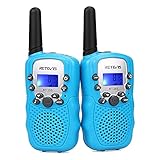 | Retevis RT388 Kids Walkie Talkies, Outdoor Toys for Kids Camping Essentials | Check Price On Amazon |
 | Cobra RX680 Walkie Talkies (2-Pack), IP54 Water Resistant Design | Check Price On Amazon |
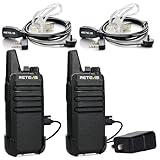 | Retevis RT22 Walkie Talkies Long Range Rechargeable with Earpiece (2 Pack) | Check Price On Amazon |
 | Midland GXT1000VP4 GMRS Two-Way Radios with Headsets, Black, 2 Pack | Check Price On Amazon |
 | Retevis RT628 Walkie Talkies for Kids,Toys Gifts for 6-12 Years Old Boys Girls,Long Range 2 Way Radio 22CH VOX,Birthday Gift,Family Walkie Talkie for Camping Hiking Indoor Outdoor | Check Price On Amazon |