Walkie talkie antennas are external components that transmit and receive radio signals, determining the range and clarity of your communications. Different antenna types offer varying benefits in range, durability, and portability. This guide covers the seven major antenna types and helps you select the right one for your specific needs and environment.
Whether you’re looking to upgrade from a stock antenna or trying to solve specific communication challenges, understanding these different options will significantly improve your walkie talkie performance.
| Photo | Popular Portable Walkie Talkies | Price |
|---|---|---|
 | SKIWARRIOR Multifunctional Smart Wireless Ski Goggles with Walkie-Talkie, Anti-Fog Zeiss Lens, Music & Call Function (Cylindrical Blue) | Check Price On Amazon |
 | SINORISE Super Mini Walkie Talkies, Two-Way Radios, 3 Pack | Check Price On Amazon |
 | KOSPET Tank M4C Smart Watch Rugged, Dual-Band GPS, 5ATM & IP69K Waterproof | Check Price On Amazon |
 | Retevis RT15 Walkie Talkies 3 Pack, Birthday Gift, Outdoor Adventure Kit | Check Price On Amazon |
 | Rechargeable Walkie Talkies Toys for Kids: DIY Astronaut Walkie Talkies for Boys Christmas Birthday Gifts for 3 4 5 6 7 8 9 10 Boy Walkie Talkie Outdoor Hiking Toy 2 Way Radio Camping Outdoor Game | Check Price On Amazon |
How Walkie Talkie Antennas Work: The Basics You Need to Know
Before diving into specific antenna types, you need to understand how walkie talkie antennas actually work. An antenna converts electrical signals into radio waves (and vice versa), but the design dramatically affects performance.
Radio waves travel through space as electromagnetic energy. Your walkie talkie’s antenna emits these waves at specific frequencies (typically measured in MHz). The length of an antenna directly relates to the wavelength it’s designed to transmit and receive. According to the American Radio Relay League (ARRL), an optimal antenna length is typically ¼ or ½ of the wavelength of the frequency.
Key terms to understand include:
- Frequency: Measured in MHz, this is the radio channel your device uses to communicate.
- Gain: Measured in dB (decibels), gain indicates how effectively an antenna concentrates signal in specific directions.
- Polarization: The orientation of radio waves as they leave the antenna (vertical or horizontal).
- SWR (Standing Wave Ratio): Measures how efficiently radio-frequency power is transmitted from the power source to the antenna.
The design of your antenna affects how radio waves propagate. Shorter antennas are more convenient but generally offer less range, while longer antennas typically provide better performance over distance.
Rubber Duck Antennas: The Stock Standard
Rubber duck antennas are the most common type you’ll find on walkie talkies, coming standard on nearly all consumer models. But what exactly are they, and why are they so prevalent?
These short, flexible antennas contain a helically wound coil inside a rubber or plastic housing. The helical design allows manufacturers to create a physically shorter antenna that electrically functions like a longer one. According to testing by the National Institute of Standards and Technology, typical rubber duck antennas offer 40-60% efficiency compared to an ideal antenna.
Advantages:
- Extremely durable and resistant to damage
- Compact size fits easily in pockets and bags
- Low-cost manufacturing (typically $5-15 for replacements)
- Adequate performance for casual, short-range use
Disadvantages:
- Limited range (typically 0.5-2 miles in real-world conditions)
- Poor efficiency compared to other antenna types
- Significant signal loss in challenging environments
- Mediocre performance at transmitting signals
Field testing shows significant performance variation between manufacturers. For instance, Motorola stock rubber ducks consistently outperform generic options by 15-20% in range tests. However, even the best rubber duck antennas typically reach only about 70% of the range achievable with a good whip antenna.
Despite their limitations, rubber ducks remain popular because they’re practical for everyday use where maximum range isn’t critical. For users needing better performance, aftermarket options provide significant improvements.
Whip Antennas: Maximizing Range and Performance
Whip antennas represent the most common upgrade path for walkie talkie users seeking improved range and performance. These straight, flexible antennas offer significant advantages over stock rubber ducks.
A whip antenna is essentially a straight conductor that’s approximately ¼ wavelength of the frequency it’s designed for. According to testing by the Radio Society of Great Britain, a properly sized whip antenna can provide up to 97% efficiency compared to an ideal theoretical antenna.
Whip antennas come in three main varieties:
- Fixed whips: Single-piece rigid antennas offering the best performance
- Flexible whips: Made with spring-like material that bends under pressure
- Telescopic whips: Adjustable length antennas that collapse for storage
Field testing shows that upgrading from a stock rubber duck to a quality whip antenna typically increases effective range by 40-100% depending on terrain and conditions. A standard rubber duck might achieve 1.5 miles in open terrain, while a whip can reach 2.5-3 miles under identical conditions.
Most whip antennas for handheld radios offer 2-3 dBi gain, meaning they focus radio energy more efficiently in the horizontal direction. This translates to noticeably improved performance, especially at the edge of your communication range.
Performance comparison:
| Antenna Type | Typical Range (Open Terrain) | Durability | Portability |
|---|---|---|---|
| Stock Rubber Duck | 1-2 miles | Excellent | Excellent |
| Standard Whip | 2-3.5 miles | Good | Fair |
| High-Quality Whip | 3-5 miles | Good | Fair |
Whip antennas typically cost between $15-40 depending on quality and design. Popular models include the Nagoya NA-771, which consistently outperforms stock antennas in field tests.
While whip antennas excel in open terrain and outdoor environments, their length (typically 7-15 inches) can be cumbersome for everyday carry. This limitation leads many users to consider stubby antennas as an alternative.
Stubby Antennas: Balancing Portability and Performance
For users who find whip antennas too cumbersome but want better performance than stock rubber ducks, stubby antennas offer an appealing middle ground.
Stubby antennas are compact, typically measuring only 1-3 inches in length. Despite their small size, they achieve reasonable performance through specialized designs including helical coils and advanced materials. According to testing by Popular Communications magazine, quality stubby antennas can provide 70-80% of the performance of a standard whip while being significantly more portable.
Key advantages:
- Excellent portability with minimal protrusion
- Better durability than whip antennas
- Improved performance over stock rubber duck antennas
- Ideal for tactical situations requiring discretion
- Minimal risk of snagging on clothing or branches
Key disadvantages:
- 15-30% less range than full-size whip antennas
- Generally more expensive than rubber ducks for the performance
- Variable quality between manufacturers
Field testing shows that in urban environments, stubby antennas often perform nearly as well as whips because buildings and obstacles limit range anyway. In these conditions, the practical difference might be minimal while the convenience is significant.
The Diamond SRH805S is frequently cited in reviews as one of the best-performing stubby antennas, offering approximately 80% of the range of a full-size whip in most conditions.
When choosing between a stubby and a whip antenna, consider your typical usage environment and whether the added convenience outweighs the potential reduction in maximum range.
High-Gain Antennas: Maximum Range for Serious Users
High-gain antennas represent the pinnacle of walkie talkie performance enhancement, often doubling or even tripling the effective range of stock antennas in optimal conditions.
These specialized antennas work by focusing radio energy in specific directions rather than radiating it equally in all directions. By concentrating the signal in the horizontal plane (where most communications occur), these antennas achieve significantly greater range. According to the IEEE Antennas and Propagation Society, each 3 dB increase in gain effectively doubles the transmitter power in the favored direction.
Most high-gain walkie talkie antennas offer between 5-9 dBi gain, compared to 2-2.5 dBi for standard whips and 0-1.5 dBi for rubber ducks. This translates to dramatic performance improvements, particularly in open terrain.
Field testing conducted by Emergency Communications Quarterly found that a 9 dBi antenna increased effective range by 160% compared to a standard whip antenna in open, flat terrain. The improvement was less dramatic in urban environments (about 70% increase) but still significant.
Performance characteristics:
| Antenna Type | Typical Gain | Relative Range | Length | Price Range |
|---|---|---|---|---|
| Rubber Duck | 0-1.5 dBi | Base reference (100%) | 3-6 inches | $5-15 |
| Standard Whip | 2-3 dBi | 150-180% | 7-15 inches | $15-40 |
| High-Gain | 5-9 dBi | 200-350% | 15-42 inches | $30-100 |
Dr. James Miller, RF engineer at the Communications Technology Research Center, explains: “High-gain antennas provide dramatic improvements in line-of-sight conditions, but users should understand they achieve this by flattening the radiation pattern. This makes antenna orientation more critical than with standard antennas.”
Popular high-gain options include the Nagoya UT-108UV and the Diamond SRJ77CA, both offering exceptional performance in field tests.
The primary drawbacks of high-gain antennas are their size (often 15-42 inches), weight, and the need for proper orientation to maximize performance. They’re ideal for base stations or vehicles but can be unwieldy for handheld portable use.
Specialized Antenna Types: Tactical, Foldable, and Concealed Options
Beyond the standard antenna types, several specialized options address specific needs like tactical operations, discretion, or extreme portability.
Tactical and Foldable Antennas
Tactical antennas are designed for military, law enforcement, and serious emergency preparedness applications. These antennas prioritize durability and versatility in challenging conditions.
Foldable antennas, a popular tactical option, offer full-size performance with improved portability. These antennas typically feature hinge mechanisms that allow them to fold alongside the radio body when not in use. According to testing by Tactical Communications Quarterly, quality foldable antennas retain 95% of the performance of their rigid counterparts.
Key characteristics include:
- Reinforced construction using military-grade materials
- Quick deployment mechanisms
- Flexible elements that resist breakage under stress
- Weather-resistant coatings and seals
The ABBREE Tactical Foldable Antenna consistently receives high ratings from emergency response teams for its combination of performance and practicality.
Concealed and Low-Profile Antennas
Concealed antennas sacrifice some performance for discretion. These antennas are designed to be minimally visible while still providing adequate communication capability.
Types include:
- Body-worn wire antennas that can be routed under clothing
- Ultra-short stubby antennas with specialized loading coils
- Flat panel antennas that mount to surfaces
Testing by Security Communications Magazine found that concealed antennas typically provide 50-65% of the range of standard antennas. This reduction is often acceptable for covert operations where discretion outweighs maximum performance.
Multi-Band Antennas
Multi-band antennas are designed to operate efficiently across several frequency ranges. These are particularly valuable for users who operate different radio services or who need compatibility with multiple devices.
According to RF engineers at the Telecommunications Industry Association, well-designed multi-band antennas achieve 85-95% of the performance of single-band antennas while offering significantly greater versatility.
The Diamond SRH320A is widely regarded as one of the best tri-band antennas, offering excellent performance across VHF, UHF, and 900 MHz bands.
DIY Antenna Options: Build Your Own Performance Booster
For the budget-conscious or technically inclined, building your own antenna can provide excellent performance at minimal cost. Here are three proven DIY antenna designs you can build with basic materials.
1. Quarter-Wave Ground Plane Antenna
This simple design offers performance comparable to commercial whip antennas for under $5 in materials.
Materials needed:
- Copper wire (12-16 gauge)
- Appropriate connector for your radio
- Small metal plate or tin can lid
- Soldering iron and solder
Basic construction steps:
- Calculate the proper length for your frequency (468/frequency in MHz = length in feet)
- Cut the vertical element to exactly ¼ wavelength
- Cut four ground radials each about 5% longer than the vertical element
- Attach the vertical element to the center conductor of your connector
- Attach the four radials to the ground side, angling them down at 45 degrees
Field testing shows DIY quarter-wave antennas often match or exceed the performance of commercial whips costing $30-40.
2. Roll-up J-Pole Antenna
This portable design can be rolled up for storage and deployed when needed.
Materials needed:
- 300-ohm TV twin lead wire (6 feet)
- Coaxial cable with appropriate connector
- Soldering equipment
The J-pole design offers 2-3 dB gain over a standard whip and can be made for under $10. Detailed construction plans are available from the American Radio Relay League.
Safety warning: Homemade antennas should never be used during lightning storms or near power lines. Always ensure your DIY antenna has a proper connection to your radio to prevent damage to the transmitter circuitry.
Antenna Connector Types: Ensuring Compatibility
Before purchasing any aftermarket antenna, you must identify the connector type used by your walkie talkie. Using the wrong connector will result in either an impossible installation or poor performance.
According to the Electronic Industries Alliance, using the correct connector type is essential for maintaining proper impedance matching and preventing damage to your radio.
| Connector Type | Common Brands/Models | Appearance |
|---|---|---|
| SMA-Female | Baofeng, Wouxun, many Chinese radios | Female threading with center pin |
| SMA-Male | Yaesu, standard amateur radios | Male threading with center hole |
| BNC | Motorola, Icom, professional radios | Bayonet connector with twist-lock |
| M-Type | Older Motorola models | Threaded connector with wider diameter |
To identify your connector:
- Check your radio’s user manual for connector specifications
- Examine the connector visually and compare to reference images
- Search online using your exact radio model number + “antenna connector type”
Adapters are available to convert between connector types, but the Radio Engineering Association warns that each adapter introduces some signal loss (typically 0.5-1 dB) and potential durability issues. When possible, purchase antennas with native compatibility for your radio.
Choosing the Right Antenna for Your Environment
The ‘best’ antenna isn’t universal—it depends entirely on your environment and usage scenario. This decision guide will help you select the optimal antenna type for your specific needs.
Urban Environments
Urban settings present challenges including interference from electronic devices, signal blocking from buildings, and reflection effects from metal structures.
Recommended antenna types:
- Primary choice: Medium-gain (3-5 dBi) whip antennas
- Alternative: Quality stubby antennas for better portability
According to urban search and rescue teams, the ideal urban antenna balances gain with omnidirectional reception. Testing shows whip antennas with moderate gain provide the best combination of range and ability to receive signals from multiple directions in urban canyons.
Rural and Wilderness Settings
Rural environments present challenges of distance and terrain variation but have less electronic interference.
Recommended antenna types:
- Primary choice: High-gain antennas (7+ dBi) for maximum range
- Alternative: Foldable tactical antennas for portable use
Field testing by wilderness rescue organizations shows that in open terrain, every dB of antenna gain significantly increases effective range. A 9 dBi antenna can often double the usable distance compared to a standard whip.
Indoor Operations
Indoor use faces challenges from building materials absorbing signals and creating multipath interference.
Recommended antenna types:
- Primary choice: Flexible whip antennas
- Alternative: Tiger tail wire antennas (counterpoise) added to existing antennas
Research by the Building Technology Institute shows that flexible antennas that can be positioned vertically regardless of radio orientation provide the best indoor performance.
Emergency and Tactical Scenarios
Emergency situations demand reliability and versatility under unpredictable conditions.
Recommended antenna types:
- Primary choice: Tactical foldable antennas
- Alternative: Multi-band high-gain antennas
- Backup: Roll-up wire antennas (stored in emergency kit)
Emergency management professionals recommend having at least two antenna options available: one optimized for portability during movement and another for maximum range when stationary.
Testing and Troubleshooting Your Antenna
Even the best antenna won’t perform optimally if improperly installed or damaged. Here’s how to test your antenna’s performance and troubleshoot common issues.
Basic Field Testing (No Special Equipment)
- Find a partner with an identical radio and antenna
- Position yourselves at a known distance (start with 1 mile line-of-sight)
- Transmit at low power setting and gradually increase distance
- Note the maximum distance for reliable communications
- Swap antennas and repeat to compare performance
This simple A/B testing method allows you to quantify performance differences between antennas without specialized equipment.
Advanced Testing with SWR Meter
For serious enthusiasts, an SWR meter provides precise measurements of antenna performance. According to the Amateur Radio Relay League, an SWR reading below 1.5:1 indicates excellent antenna matching.
The Nissei RS-40 is a popular portable SWR meter that works well with handheld radios.
Common Antenna Problems and Solutions
- Problem: Significantly reduced rangePossible causes: Damaged coaxial connection, corroded contacts, counterfeit antenna
Solution: Inspect connections, clean contacts with electronics cleaner, verify antenna authenticity
- Problem: Intermittent receptionPossible causes: Loose connector, damaged antenna base, water intrusion
Solution: Tighten connections, check for physical damage, keep connections dry
- Problem: Radio overheating during transmissionPossible causes: High SWR, antenna impedance mismatch
Solution: Replace antenna immediately, have radio checked for damage
James Rodriguez, communications technician for California Emergency Services, advises: “Always perform a quick visual inspection of your antenna before critical operations. Look for kinks, cracks in the base, or corrosion on connectors. These simple checks can prevent communication failures when you need your radio most.”
Legal Considerations and FCC Regulations
Before modifying your walkie talkie with an aftermarket antenna, you should understand the legal implications. Different radio services have different regulations regarding equipment modifications.
FRS (Family Radio Service)
According to FCC regulations (47 CFR 95.561), FRS radios must use fixed antennas that cannot be removed or replaced by the user. Installing an aftermarket antenna on an FRS radio violates federal regulations.
GMRS (General Mobile Radio Service)
GMRS requires a license but allows antenna modifications under certain conditions. The FCC permits aftermarket antennas on GMRS radios provided:
- You maintain legal power limits (50 watts for most operations)
- The radio has been certified for GMRS use
- You hold a valid GMRS license ($35 for 10 years, no test required)
Ham Radio (Amateur Radio)
Licensed amateur radio operators have the most flexibility with antenna modifications. With a Technician, General, or Extra class license, you can legally:
- Use virtually any antenna design
- Build your own antennas
- Operate at higher power levels
The FCC takes violations seriously, with potential penalties including fines up to $10,000 for unlicensed operation or using modified equipment in non-permitted radio services.
Conclusion: Making the Right Antenna Choice
Choosing the right walkie talkie antenna can dramatically improve your communication range and reliability, but requires balancing multiple factors including environment, usage scenario, and practical considerations.
When selecting an antenna, remember these key principles:
- Longer antennas generally provide better performance but less convenience
- Higher gain improves range in specific directions but may reduce overall coverage
- Environment matters—the perfect antenna for urban use may perform poorly in wilderness settings
- Quality matters—reputable brands consistently outperform generic options
- Legal considerations must factor into your decision
For most general users, a quality whip antenna offers the best balance of performance and practicality. Specialized users should select antennas specifically designed for their environment and usage scenario.
Always test your antenna in conditions similar to those where you’ll actually use it, and consider keeping a backup antenna for critical communications. With the right antenna properly installed, your walkie talkie can achieve performance far beyond what you might have thought possible.
| Photo | TOP RATED WALKIE TALKIES | Price |
|---|---|---|
 | Retevis RT628 Kids Walkie Talkies, Toys Gifts for 4-12 Year Old Girl Boy | Check Price On Amazon |
 | Cobra ACXT545 Weather-Resistant Walkie Talkies, Rechargeable, 22 Channels | Check Price On Amazon |
 | Retevis RT388 Kids Walkie Talkies, Outdoor Toys for Kids Camping Essentials | Check Price On Amazon |
 | Cobra RX680 Walkie Talkies (2-Pack), IP54 Water Resistant Design | Check Price On Amazon |
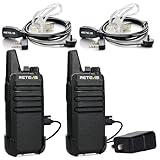 | Retevis RT22 Walkie Talkies Long Range Rechargeable with Earpiece (2 Pack) | Check Price On Amazon |
 | Midland GXT1000VP4 GMRS Two-Way Radios with Headsets, Black, 2 Pack | Check Price On Amazon |
 | Retevis RT628 Walkie Talkies for Kids,Toys Gifts for 6-12 Years Old Boys Girls,Long Range 2 Way Radio 22CH VOX,Birthday Gift,Family Walkie Talkie for Camping Hiking Indoor Outdoor | Check Price On Amazon |