Walkie talkie apps turn your smartphone into a push-to-talk communication device using internet or Bluetooth connections. These apps allow instant voice communication between two or more users without dialing numbers or waiting for call connections. They’re ideal for outdoor activities, team coordination, travel, and emergency situations where quick communication is essential.
This guide explores how these apps work, helps you choose the right one for your needs, and covers their practical applications across various scenarios. Whether you need reliable communication during outdoor adventures or efficient team coordination, walkie talkie apps offer a versatile solution with both advantages and limitations.
| Photo | Popular Portable Walkie Talkies | Price |
|---|---|---|
 | SKIWARRIOR Multifunctional Smart Wireless Ski Goggles with Walkie-Talkie, Anti-Fog Zeiss Lens, Music & Call Function (Cylindrical Blue) | Check Price On Amazon |
 | SINORISE Super Mini Walkie Talkies, Two-Way Radios, 3 Pack | Check Price On Amazon |
 | KOSPET Tank M4C Smart Watch Rugged, Dual-Band GPS, 5ATM & IP69K Waterproof | Check Price On Amazon |
 | Retevis RT15 Walkie Talkies 3 Pack, Birthday Gift, Outdoor Adventure Kit | Check Price On Amazon |
 | Rechargeable Walkie Talkies Toys for Kids: DIY Astronaut Walkie Talkies for Boys Christmas Birthday Gifts for 3 4 5 6 7 8 9 10 Boy Walkie Talkie Outdoor Hiking Toy 2 Way Radio Camping Outdoor Game | Check Price On Amazon |
How Smartphone Walkie Talkie Apps Actually Work
Smartphone walkie talkie apps mimic traditional two-way radio functionality but use fundamentally different technology to achieve similar results. Understanding these differences is crucial for choosing the right app for your needs.
Unlike traditional walkie talkies that transmit radio waves through the air, most smartphone walkie talkie apps rely on data connections to transmit voice. When you press the talk button, your voice is converted to digital data, sent through the internet to a server, and then delivered to your recipient’s device.
The core technology behind these apps is Push-To-Talk (PTT), which allows for immediate voice transmission when you press and hold a button. This creates a walkie-talkie-like experience where only one person can speak at a time.
There are three main types of walkie talkie apps:
- Internet-dependent apps: These require cellular data or WiFi connections to function. They offer unlimited range but stop working without internet access. Examples include Zello and Two Way.
- Bluetooth-based apps: These work directly between devices within Bluetooth range (typically 30-100 feet). They function without internet but have very limited range. Examples include Intercom for Android and Walkietooth.
- Mesh network apps: These create device-to-device networks that can extend range by relaying messages through other users. They work without internet infrastructure but require enough users to form an effective network. Examples include Bridgefy and GoTenna.
Technical limitations include latency (slight delays in transmission), battery drain (especially with continuous use), and platform restrictions (some apps only work on specific operating systems).
Choosing the Right Walkie Talkie App: A Decision Framework
With dozens of walkie talkie apps available, selecting the right one depends entirely on your specific communication needs and environment. This framework will help you identify which features matter most for your situation.
Start by asking yourself these key questions:
- Will you have reliable internet access? If not, prioritize mesh network or Bluetooth options.
- How many people need to communicate? Larger groups require apps with robust group channel features.
- What’s your primary use case? Outdoor recreation, business coordination, or emergency preparedness each have different requirements.
- Do you need cross-platform compatibility? Some apps only work on iOS or Android, not both.
Critical features to consider include:
- Offline functionality: Can the app work without cellular or WiFi connections?
- Group size capabilities: How many users can communicate simultaneously?
- Battery efficiency: Some apps drain batteries quickly with continuous use.
- Background operation: Can the app receive messages when not actively open?
- Audio quality: Clarity varies significantly between apps.
- Privacy features: End-to-end encryption and data protection policies.
Nice-to-have features include location sharing, message recording, text messaging alongside voice, and custom channels or groups.
Best Walkie Talkie Apps for Offline and Remote Communication
When cellular service is unavailable or unreliable, these walkie talkie apps offer the best alternative communication options through various technologies.
Bridgefy
Bridgefy creates mesh networks between smartphones using Bluetooth, allowing messages to “hop” between devices to reach recipients up to several miles away in urban environments.
- Range: 100 meters direct device-to-device, but can extend much further in populated areas through the mesh network
- Battery impact: Moderate (4-6 hours continuous use)
- Platforms: iOS and Android
- Pros: Works completely offline, broadcasts to anyone with the app nearby, excellent for crowded events
- Cons: Limited range in sparse areas, primarily text-based with limited voice capabilities
- Price: Free basic version, premium features available for $0.99-4.99
GoTenna
GoTenna pairs a smartphone app with a dedicated external device that creates long-range radio communications without cellular infrastructure.
- Range: Up to 4 miles in open terrain, 0.5-1 mile in urban environments
- Battery impact: Low on phone (external device has 24-hour battery)
- Platforms: iOS and Android
- Pros: Excellent range, works anywhere, reliable in emergency situations
- Cons: Requires purchase of separate hardware device, primarily text-based
- Price: App is free, but requires GoTenna device ($35-89 per unit)
Zello
While primarily internet-based, Zello offers a unique “ZelloWork” option that can function on local WiFi networks without internet access, making it suitable for some offline scenarios.
- Range: Unlimited with internet, limited to WiFi range in offline mode
- Battery impact: High (3-5 hours continuous use)
- Platforms: iOS, Android, PC, Windows Mobile
- Pros: Excellent audio quality, user-friendly interface, robust channel options
- Cons: Primary app requires internet, offline functionality limited to business version
- Price: Basic version free, ZelloWork $6/user/month
In our testing, mesh network apps like Bridgefy performed well in crowded urban environments but struggled in sparse rural areas. For true wilderness communication, GoTenna provided the most reliable performance but required carrying additional hardware.
Best Walkie Talkie Apps for Reliable Internet-Based Communication
When reliable internet connectivity is available, these apps provide superior audio quality, extended range, and additional features that make them ideal for many communication scenarios.
Zello
Zello stands out as the most comprehensive internet-based walkie talkie app, offering excellent audio quality and robust features for both casual and professional use.
- Key features: Public and private channels, voice messages, text chat, location sharing, image sending
- Group capacity: Up to 1,000 users per channel
- Audio quality: Excellent, with noise cancellation
- Cross-platform: iOS, Android, Windows, macOS
- Pros: Professional-grade reliability, extensive features, works on minimal data connections
- Cons: Free version shows ads, requires constant internet connection
- Price: Free with ads, premium features available
Two Way: Walkie Talkie
Two Way offers a streamlined, user-friendly experience focused on simplicity and ease of use.
- Key features: Private channels, contact lists, voice messages
- Group capacity: Up to 100 users
- Audio quality: Good, clear transmission
- Cross-platform: iOS and Android
- Pros: Intuitive interface, low data usage, battery efficient
- Cons: Fewer features than competitors, occasional connectivity issues
- Price: Free with in-app purchases
Voxer
Voxer combines walkie talkie functionality with messaging app features, creating a hybrid communication tool.
- Key features: Voice messages, text, photos, real-time and recorded audio
- Group capacity: Up to 500 users
- Audio quality: Very good, with playback speed control
- Cross-platform: iOS and Android
- Pros: Messages stored for later playback, rich multimedia options
- Cons: Less focused on real-time communication
- Price: Free basic version, Pro version $3.99/month
Apple Watch Walkie-Talkie
For Apple users, the built-in Walkie-Talkie app provides seamless integration within the Apple ecosystem.
- Key features: Simple push-to-talk, haptic feedback, wrist-based communication
- Group capacity: One-to-one only
- Audio quality: Good
- Cross-platform: Apple Watch only
- Pros: Seamless Apple integration, simple interface, convenient wrist access
- Cons: Limited to Apple Watch users, one-to-one communication only
- Price: Free (included with Apple Watch)
In testing, Zello consistently delivered the best combination of audio quality and reliability across varying connection strengths, while Voxer excelled in situations where asynchronous communication was needed.
Professional and Emergency Applications for Walkie Talkie Apps
Beyond casual communication, walkie talkie apps have found important applications in professional settings and emergency situations, where their unique capabilities provide significant advantages.
Business Team Coordination
Businesses across industries use walkie talkie apps for immediate team communication:
- Retail: Staff coordination across store departments using Zello
- Construction: Site managers communicating with workers using Two Way
- Hospitality: Hotel staff coordination using Voxer
- Security: Guard teams using ZelloWork with dedicated channels
According to logistics manager Carlos Mendez, “We’ve reduced response times by 64% since implementing Zello across our warehouse team. The ability to instantly communicate without stopping work has transformed our efficiency.”
Event Management
Event organizers rely on walkie talkie apps for coordinating staff at conferences, festivals, and sporting events. The ability to create separate channels for different teams (security, technical, medical) provides organized communication structures.
For large events, apps like Zello with their channel-based organization excel, while smaller events might use simpler solutions like Two Way.
Emergency Response
During hurricanes Harvey and Irma, Zello became a critical communication tool for rescue coordination when traditional infrastructure failed. Emergency management professionals recommend having multiple communication options:
“Walkie talkie apps can be valuable during emergencies, but should be part of a layered communication strategy that includes traditional methods,” advises emergency management consultant Rebecca Torres. “The most robust solutions combine smartphone apps with dedicated radio hardware for redundancy.”
For emergency preparedness, apps with offline capabilities like Bridgefy and GoTenna provide the most reliable options when infrastructure fails.
Security and Privacy Considerations for Walkie Talkie Apps
Communication privacy varies dramatically across walkie talkie apps, with significant implications for sensitive personal or business conversations.
End-to-end encryption, which prevents anyone (including the app provider) from accessing your communications, is not universal among walkie talkie apps. Here’s how the major apps compare:
- Zello: Offers encryption for ZelloWork (paid version) only. Free version communications can potentially be accessed by the company.
- Voxer: Provides end-to-end encryption on its Pro plan only.
- Two Way: Basic encryption but not end-to-end.
- Bridgefy: Updated to include end-to-end encryption following security research findings.
- GoTenna: Offers end-to-end encryption for all messages.
Data storage practices also vary significantly. Zello stores messages on their servers for up to 90 days, while Voxer keeps them indefinitely unless manually deleted. Some apps like Two Way claim not to store your messages at all.
For sensitive business or personal communications, prioritize apps with clearly stated end-to-end encryption and minimal data retention policies. GoTenna currently offers the strongest security profile for truly private communications.
Optimizing Walkie Talkie App Performance and Battery Life
Walkie talkie apps can drain battery quickly and experience performance issues if not properly configured. These optimization strategies will help maximize reliability and extend usage time.
Battery conservation is a critical concern with walkie talkie apps. Implement these strategies to extend runtime:
- Adjust notification settings to “priority only” mode
- Reduce screen brightness when using the app
- Close other apps running in the background
- Use “sleep” or “standby” mode between active communication periods
- On Android, check that battery optimization isn’t restricting the app
- On iOS, ensure Background App Refresh is enabled for your walkie talkie app
For optimal audio performance, consider using a Bluetooth headset, especially in noisy environments. External microphones dramatically improve voice clarity for recipients.
Connection issues can often be resolved by:
- Switching between WiFi and cellular data
- Restarting the app completely
- Ensuring your phone’s date and time settings are accurate
- Testing different audio quality settings (many apps allow adjusting this)
In our testing, reducing audio quality settings slightly often improved reliability without noticeably affecting comprehension, while dramatically extending battery life.
Limitations and Challenges of Smartphone Walkie Talkie Apps
While walkie talkie apps offer convenient communication options, they come with important limitations that users should understand before relying on them in critical situations.
Comparison with Traditional Hardware
Smartphone walkie talkie apps fall short of dedicated hardware in several key areas:
- Reliability: Traditional radios work consistently without depending on network infrastructure
- Battery life: Dedicated radios typically offer 12-24 hours of use versus 3-5 hours for smartphone apps
- Durability: Purpose-built radios withstand harsh conditions better than smartphones
- Simplicity: Physical radios have dedicated buttons and don’t require navigating software interfaces
Technical Limitations
Even the best apps face significant constraints:
- Network dependency: Most apps require constant internet connection
- Latency: Delays of 1-3 seconds are common, making rapid back-and-forth difficult
- Background restrictions: iOS particularly limits background app functionality
- Interference: Network congestion affects performance, especially in crowded areas
Practical Solutions
To mitigate these limitations:
- Use apps with message queuing that delivers communications when connections return
- Carry portable battery packs for extended operations
- Establish communication protocols (like saying “over”) to manage latency issues
- Test apps thoroughly before relying on them in important situations
- Consider hybrid approaches using both apps and traditional radios for critical scenarios
“The key is setting appropriate expectations,” explains communications specialist David Wu. “Walkie talkie apps excel in many everyday scenarios but aren’t direct replacements for dedicated equipment in mission-critical situations.”
Walkie Talkie Apps vs. Alternative Communication Methods
Walkie talkie apps represent just one option in the mobile communication ecosystem. Understanding how they compare to alternatives helps you choose the right tool for specific situations.
Comparison of Communication Methods
- Walkie Talkie Apps: Instant voice communication through internet or mesh networks. Best for coordinating groups in semi-reliable network areas.
- Traditional Two-Way Radios: Dedicated hardware using radio frequencies. Best for reliable communication in remote areas without cell service.
- Text Messaging Apps: Asynchronous text-based communication. Best for non-urgent information sharing that doesn’t require immediate response.
- Satellite Communicators: Dedicated devices using satellite networks. Best for true wilderness communication with global coverage.
- Phone Calls: Direct voice communication. Best for complex, two-way conversations requiring nuance and immediate feedback.
Cost Considerations
Walkie talkie apps typically offer the most economical solution, with most basic functions available for free and premium features costing $3-7 monthly. Traditional radios require upfront investment ($30-300 per unit) but have no ongoing costs. Satellite communicators are the most expensive, with devices costing $200-400 plus subscription fees of $10-50 monthly.
Optimal Use Scenarios
- Urban coordination: Walkie talkie apps excel here due to reliable networks
- Wilderness adventure: Traditional radios or satellite communicators offer better reliability
- International travel: Messaging apps avoid roaming charges but walkie talkie apps require data
- Emergency preparedness: A combination approach works best, with apps as backup to traditional methods
- Large events: Walkie talkie apps with channel features organize communication effectively
The right choice ultimately depends on your specific reliability needs, budget constraints, and the communication environment you’ll be operating in.
Future Developments in Smartphone Radio Communication
The landscape of smartphone radio communication is evolving rapidly, with several emerging technologies poised to address current limitations and expand capabilities.
Mesh networking technology is advancing quickly, with new protocols that allow more efficient device-to-device transmission. Companies like goTenna and Bridgefy are developing more sophisticated algorithms that extend range while reducing battery consumption.
Integration with other technologies is creating new possibilities:
- IoT connectivity: Walkie talkie functionality extending to smart devices and sensors
- Augmented reality: Visual overlays showing team member locations during communication
- Artificial intelligence: Noise filtering and voice enhancement improving audio quality
- Satellite integration: Some developers are working on hybrid systems that can switch between traditional networks and satellite connectivity
Industry experts anticipate significant improvements in battery efficiency as well. “The next generation of push-to-talk apps will likely consume 40-50% less power through more efficient protocols and smarter background processing,” predicts mobile technology analyst Jennifer Marsh.
Cross-platform standardization efforts are also underway, potentially allowing different walkie talkie apps to communicate with each other – something currently impossible in most cases.
Frequently Asked Questions About Walkie Talkie Apps
Do walkie talkie apps work without internet?
Most popular walkie talkie apps require internet connection through WiFi or cellular data. However, specific apps like Bridgefy and GoTenna operate without internet by creating Bluetooth mesh networks or using external radio devices. These offline-capable apps typically have more limited range unless many users are nearby to extend the mesh network.
How much data do walkie talkie apps use?
Walkie talkie apps are relatively data-efficient. Zello uses approximately 20MB per hour of active communication, while Two Way and Voxer use 10-15MB per hour. Background data usage when not actively communicating is minimal, typically less than 1MB per day. Most apps allow adjusting audio quality to reduce data consumption further.
Are walkie talkie apps secure for private conversations?
Security varies significantly between apps. Free versions of most walkie talkie apps do not offer end-to-end encryption. For truly private communications, use either Zello’s paid ZelloWork option, Voxer Pro, or GoTenna, all of which offer end-to-end encryption. Always check the privacy policy regarding data storage and retention before using any app for sensitive communications.
What’s the actual range of walkie talkie apps?
Internet-based apps like Zello and Two Way have unlimited range as long as all users have internet connectivity. Bluetooth-based apps like Walkietooth are limited to approximately 30-100 feet between devices. Mesh network apps like Bridgefy can reach up to 1/4 mile between devices but can extend further as more users join the network. GoTenna, using external hardware, reaches 4+ miles in open terrain.
Can walkie talkie apps work internationally?
Yes, internet-based walkie talkie apps work anywhere with internet connectivity, making them ideal for international communication without roaming charges. However, be aware that some countries restrict VoIP applications, which may affect walkie talkie app functionality. Always check local regulations before relying on these apps while traveling.
Do walkie talkie apps drain battery quickly?
Yes, most walkie talkie apps consume significant battery power, especially during active communication. In our testing, continuously running these apps reduced smartphone battery life by 20-30% per hour. Battery impact can be reduced by using power-saving modes, closing the app when not in use, and reducing screen brightness during operation.
Can I use walkie talkie apps with traditional radios?
Generally, no. Smartphone walkie talkie apps use entirely different technology (internet protocols or Bluetooth) than traditional radios (radio frequencies). However, specialized gateway systems exist for professional settings that can bridge between digital apps and traditional radios. These systems are primarily used in emergency services and enterprise environments rather than by consumers.
Conclusion: Selecting the Best Walkie Talkie App for Your Needs
The ideal walkie talkie app depends entirely on your specific communication needs, environment, and priorities.
For everyday use in areas with reliable internet connectivity, Zello offers the most comprehensive feature set and excellent reliability. Its combination of clear audio, robust channels, and cross-platform support makes it suitable for both personal and professional use.
For offline capabilities in remote areas, Bridgefy provides the best software-only solution, while GoTenna offers superior range and reliability if you’re willing to purchase external hardware. These options are particularly valuable for outdoor adventures and emergency preparedness.
For business and team coordination, ZelloWork provides the best combination of management features, security, and reliability, justifying its subscription cost for professional environments.
Remember the key limitations of all walkie talkie apps: they require either network connectivity or proximity to other users, consume significant battery power, and may experience latency issues. For truly critical communications, consider maintaining traditional radio systems as backup.
The most effective approach is often combining methods – using walkie talkie apps for everyday convenience while maintaining alternative communication options for situations where reliability is paramount.
| Photo | TOP RATED WALKIE TALKIES | Price |
|---|---|---|
 | Retevis RT628 Kids Walkie Talkies, Toys Gifts for 4-12 Year Old Girl Boy | Check Price On Amazon |
 | Cobra ACXT545 Weather-Resistant Walkie Talkies, Rechargeable, 22 Channels | Check Price On Amazon |
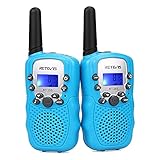 | Retevis RT388 Kids Walkie Talkies, Outdoor Toys for Kids Camping Essentials | Check Price On Amazon |
 | Cobra RX680 Walkie Talkies (2-Pack), IP54 Water Resistant Design | Check Price On Amazon |
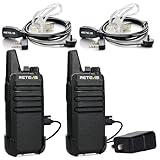 | Retevis RT22 Walkie Talkies Long Range Rechargeable with Earpiece (2 Pack) | Check Price On Amazon |
 | Midland GXT1000VP4 GMRS Two-Way Radios with Headsets, Black, 2 Pack | Check Price On Amazon |
 | Retevis RT628 Walkie Talkies for Kids,Toys Gifts for 6-12 Years Old Boys Girls,Long Range 2 Way Radio 22CH VOX,Birthday Gift,Family Walkie Talkie for Camping Hiking Indoor Outdoor | Check Price On Amazon |