Clear audio quality in walkie talkies makes the difference between successful communication and dangerous misunderstandings. When emergency services coordinate rescues or construction teams manage complex operations, reliable audio becomes critical. This guide covers everything about walkie talkie speakers and microphones – from basic technology to advanced troubleshooting. You’ll learn how to evaluate, select, and maintain two-way radio audio components for optimal performance in any environment.
Understanding Walkie Talkie Audio Quality Fundamentals
Audio quality in walkie talkies depends on several interconnected factors affecting both transmission and reception clarity. Understanding these basics helps you make informed decisions when selecting or upgrading your equipment.
| Photo | Popular Portable Walkie Talkies | Price |
|---|---|---|
 | SKIWARRIOR Multifunctional Smart Wireless Ski Goggles with Walkie-Talkie, Anti-Fog Zeiss Lens, Music & Call Function (Cylindrical Blue) | Check Price On Amazon |
 | SINORISE Super Mini Walkie Talkies, Two-Way Radios, 3 Pack | Up to 12 Hours Battery Life, for Baseball Coaches, Restaurants, Retail Stores, Hospitals, Outdoor Sports & Travel | Check Price On Amazon |
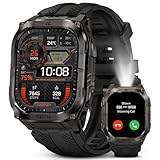 | KOSPET Tank M4C Smart Watch Rugged, Dual-Band GPS, 5ATM & IP69K Waterproof | 1.96" AMOLED Display, 170+ Sport Modes, Built-in LED Flashlight/Walkie-Talkie, Heart Rate/Sleep Monitor for Android & iPhone | Check Price On Amazon |
 | Retevis RT15 Walkie Talkies 3 Pack, Birthday Gift, Outdoor Adventure Kit | Durable, Lightweight, VOX, Key Lock, Mini Walkie Talkies for Adults, School Family Outdoor Travel Camping Hiking | Check Price On Amazon |
 | Rechargeable Walkie Talkies Toys for Kids: DIY Astronaut Walkie Talkies for Boys Christmas Birthday Gifts for 3 4 5 6 7 8 9 10 Boy Walkie Talkie Outdoor Hiking Toy 2 Way Radio Camping Outdoor Game | Check Price On Amazon |
Walkie talkie audio quality consists of two main components:
- Transmission audio: How clearly your voice reaches others through the microphone
- Reception audio: How clearly you hear others through the speaker
For optimal voice communication, walkie talkies typically operate in the 300Hz-3400Hz frequency range. This range captures the essential components of human speech while filtering out unnecessary frequencies that would consume battery power and bandwidth.
Key audio quality factors include:
- Volume level: Typically 75-85dB for clear speech in moderate environments
- Signal-to-noise ratio: Higher ratios (above 20dB) mean clearer communication with less background interference
- Audio processing: How the radio filters and enhances voice while reducing unwanted sounds
- Component quality: Better speakers and microphones capture and reproduce voice more accurately
Why Audio Quality Matters in Different Environments
The importance of audio quality varies dramatically depending on your environment and use case. What works for casual hiking might be dangerously insufficient for emergency services or industrial settings.
In emergency services, poor audio quality creates serious safety risks:
- Missed instructions during critical operations
- Misunderstood coordinates or directions
- Inability to hear warnings or calls for help
According to the National Fire Protection Association standard NFPA 1802, emergency service communications must maintain clear voice intelligibility under stress and in adverse conditions. This standard recognizes that audio quality isn’t just a convenience but a safety requirement.
In industrial settings, audio challenges include:
- Machinery noise exceeding 95dB
- Multiple teams communicating simultaneously
- Metal structures causing signal reflection and echo
For outdoor recreation, environmental factors create different challenges:
- Wind noise interfering with microphone pickup
- Water and moisture affecting speaker performance
- Temperature extremes impacting overall audio clarity
Walkie Talkie Speaker Technology Explained
The speaker is your lifeline to incoming communications. Understanding speaker technology helps you evaluate what makes a quality walkie talkie capable of delivering clear audio even in challenging environments.
Most walkie talkies use one of two speaker technologies:
- Dynamic speakers: Use electromagnets to move a cone, producing sound. These offer better bass response and volume but are larger and heavier.
- Piezoelectric speakers: Use crystals that change shape when electricity is applied. These are smaller, lighter, and more durable but typically have less rich sound.
Speaker specifications that impact performance include:
- Size: Typically 36-45mm in diameter. Larger speakers generally produce better audio quality but require more space.
- Power handling: Usually 0.5W-2W for walkie talkies. Higher wattage allows for louder volume but consumes more battery.
- Impedance: Typically 8-16 ohms. This electrical resistance affects how efficiently the speaker uses power.
- Frequency response: The range of sounds the speaker can reproduce. For voice communication, 300Hz-3400Hz is standard.
Durability features also impact speaker performance:
- IP ratings: Indicate dust and water resistance. IP67 means the speaker is fully dust-proof and can survive temporary immersion in water.
- Shock resistance: How well the speaker withstands drops and impacts without damage or performance degradation.
Speaker Output Power and Clarity: What Really Matters
Many manufacturers highlight speaker wattage as the primary indicator of quality, but the relationship between power and clarity is more complex than marketing suggests.

Higher wattage doesn’t always mean better audio quality. A 1W speaker with good design and components often sounds clearer than a 2W speaker with poor construction. What matters more is how efficiently the speaker converts power to sound and how well it reproduces the frequencies most important for voice communication.
Typical walkie talkie speaker specifications comparison:
| Feature | Budget Models | Mid-Range Models | Professional Models |
|---|---|---|---|
| Speaker Size | 36mm | 40mm | 45mm |
| Output Power | 0.5W | 1W | 1.5-2W |
| Max Volume | 80dB | 85dB | 90+dB |
| Audio Processing | Basic filtering | Noise cancellation | Advanced DSP |
Audio processing technology often makes a bigger difference than raw power. Features like automatic gain control, digital signal processing, and adaptive noise filtering help maintain clarity even when volume increases.
Microphone Technology and Voice Transmission Quality
While speakers receive communications, microphones determine how clearly your voice reaches others. Understanding microphone technology is essential for ensuring your transmissions are intelligible in any environment.
Walkie talkies typically use three types of microphones:
- Dynamic microphones: Durable and resistant to moisture and temperature extremes. They handle loud environments well but may lack sensitivity for quieter voices.
- Condenser microphones: More sensitive with better frequency response, but require power and are more susceptible to environmental damage.
- MEMS microphones (Micro-Electrical-Mechanical Systems): Tiny silicon-based microphones that offer good performance, low power usage, and resistance to shock and vibration.
Key microphone specifications include:
- Sensitivity: Typically -42dB to -38dB, indicating how effectively the microphone converts voice to electrical signals. Higher numbers (closer to zero) mean greater sensitivity.
- Frequency response: The range of frequencies the microphone can detect. For voice, 300Hz-3400Hz captures essential speech components.
- Signal-to-noise ratio: How well the microphone distinguishes voice from background noise. Higher is better.
Microphone technology comparison:
| Feature | Dynamic | Condenser | MEMS |
|---|---|---|---|
| Durability | Excellent | Fair | Good |
| Sensitivity | Moderate | High | Good |
| Power Requirements | None | High | Low |
| Size | Larger | Medium | Very small |
| Best For | Harsh environments | Clear voice transmission | Modern compact radios |
Professional walkie talkies often include additional microphone features:
- Wind noise reduction: Physical or electronic systems that minimize wind interference
- Automatic gain control: Adjusts microphone sensitivity based on how loud you speak
- Voice activation: Triggers transmission only when speech is detected
Understanding Microphone Polar Patterns and Directionality
Microphone polar patterns determine how sensitive your walkie talkie is to sounds coming from different directions. Choosing the right pattern for your environment can dramatically improve voice clarity.
The two main polar patterns in walkie talkie microphones are:
- Omnidirectional: Picks up sound equally from all directions. Good for team environments where you might not always face the radio, but captures more ambient noise.
- Unidirectional/Cardioid: More sensitive to sounds directly in front of the microphone. Better for noisy environments as it focuses on your voice while reducing background noise.
The right polar pattern depends on your specific situation:
- For high-noise environments (construction sites, public events): Unidirectional provides better voice isolation
- For team operations where the radio might be clipped to different positions: Omnidirectional ensures your voice is picked up regardless of microphone orientation
- For mobile use while walking or driving: Unidirectional reduces wind and movement noise
Some professional models offer switchable patterns or adaptive systems that change directionality based on environmental noise levels.
Noise Cancellation and Audio Enhancement Technologies
Modern walkie talkies employ sophisticated noise cancellation and audio enhancement technologies that can mean the difference between clear communication and dangerous miscommunication in challenging environments.
These technologies work at different stages of the audio chain:
Microphone-Level Noise Reduction
- Passive noise cancellation: Physical barriers and microphone positioning that naturally block unwanted sounds
- Active noise cancellation: Electronic systems that detect and remove background noise before transmission
- Wind noise reduction: Specialized filters and screens that minimize wind interference
Signal Processing Technologies
- Digital Signal Processing (DSP): Algorithms that enhance voice frequencies while suppressing others
- Acoustic Echo Cancellation (AEC): Prevents feedback loops between speaker and microphone
- Automatic Gain Control: Adjusts volume levels to maintain consistent audio regardless of how loudly someone speaks
Manufacturer-specific technologies include:
- Motorola ClearTone: DSP technology that filters background noise and enhances voice clarity
- Hytera Noise Cancellation: Dual-microphone system that compares audio inputs to identify and remove noise
- Kenwood Noise Reducer: Multi-stage filtering system that processes audio at both transmission and reception
The effectiveness of these technologies varies significantly between budget and professional models. Professional-grade walkie talkies can maintain voice intelligibility even with background noise levels up to 95dB, while budget models may become unusable above 75dB of ambient noise.
Digital vs. Analog Audio Processing: Impact on Voice Clarity
The divide between digital and analog walkie talkies extends beyond transmission methods to how audio is processed, with significant implications for voice clarity and intelligibility.
Comparison of digital vs. analog audio processing:
| Feature | Analog Processing | Digital Processing |
|---|---|---|
| Noise Handling | Noise travels with signal | Can separate noise from voice |
| Voice Quality at Edge of Range | Gradually degrades with static | Maintains clarity until digital dropout |
| Audio Enhancement | Limited filtering options | Advanced algorithms possible |
| Battery Impact | Lower power consumption | Higher processing demands |
| Compatibility | Works with all analog systems | Requires compatible digital systems |
Digital audio processing offers significant advantages for voice clarity:
- Can isolate human voice from background noise
- Maintains consistent audio quality throughout most of the transmission range
- Supports advanced features like text messages and individual calling
However, analog systems still offer advantages in certain situations:
- Graceful degradation at range edges (you hear static but can still understand messages)
- Universal compatibility with other analog systems
- Simpler operation with fewer settings to configure
Many professional users opt for hybrid systems that can operate in both digital and analog modes, providing flexibility across different environments and compatibility with various equipment.
Environmental Factors Affecting Walkie Talkie Audio Quality
Environmental conditions can severely degrade walkie talkie audio quality regardless of equipment quality. Understanding these challenges and how to mitigate them is essential for maintaining clear communications.
High Ambient Noise Environments
Challenge: Industrial machinery, crowd noise, and traffic can make it difficult to hear incoming transmissions and can interfere with microphone pickup.
Solutions:
- Use earpieces or headsets to isolate received audio
- Position microphone 1-2 inches from mouth
- Enable noise cancellation features when available
- Use models with higher speaker wattage (1.5W+)
Wind Interference
Challenge: Wind creates noise as it passes over the microphone, often making transmission unintelligible above 10mph wind speeds.
Solutions:
- Use wind screens or foam microphone covers
- Position body to shield microphone from direct wind
- Use remote speaker microphones that can be positioned inside clothing
- Select walkie talkies with wind noise reduction technology
Weather Conditions
Challenge: Rain, humidity, and temperature extremes can damage audio components or degrade performance.
Solutions:
- Select appropriate IP-rated equipment (minimum IP54 for rain, IP67 for immersion)
- Use sealed accessory connectors
- Store equipment in dry conditions when not in use
- Allow equipment to gradually adjust to temperature changes to prevent condensation
Physical Obstructions
Challenge: Buildings, terrain, and other physical barriers can cause signal degradation that affects audio quality.
Solutions:
- Position antenna vertically for optimal transmission
- Move to higher ground when possible
- Use higher power settings when necessary
- Consider repeater systems for consistent coverage
Understanding your operating environment is crucial for equipment selection. The IP rating system helps identify suitable equipment for different conditions:
| IP Rating | Protection Level | Suitable Environments |
|---|---|---|
| IP54 | Dust-protected, splash-resistant | Light rain, dusty conditions |
| IP65 | Dust-tight, water jet resistant | Heavy rain, construction sites |
| IP67 | Dust-tight, temporary immersion | Water crossings, extreme weather |
| IP68 | Dust-tight, continuous immersion | Marine environments, emergency services |
Temperature and Weather Effects on Audio Components
Temperature extremes and weather conditions can significantly affect both speaker and microphone performance in ways that aren’t immediately obvious but can critically impact communication reliability.
Cold Weather Effects (Below 32°F/0°C):
- Battery capacity decreases, reducing available power for speakers
- Speaker materials become less flexible, affecting sound quality
- Condensation can form when moving between temperature extremes
Solutions:
- Keep batteries warm by storing close to body when not in use
- Allow equipment to warm up before use when possible
- Use lithium batteries which perform better in cold conditions
- Keep equipment in sealed bags when moving between temperature extremes
Hot Weather Effects (Above 95°F/35°C):
- Electronic components may overheat, causing audio distortion
- Battery life decreases significantly
- Humidity combined with heat can damage internal components
Solutions:
- Store equipment out of direct sunlight
- Use ventilated cases that allow heat dissipation
- Consider heat-resistant models for extreme environments
- Use external microphones to keep main unit cooler
Most commercial walkie talkies are designed to operate in temperatures from 14°F to 131°F (-10°C to 55°C). For operations outside this range, specialized equipment may be necessary.
Essential Audio Accessories for Improved Communication
While built-in speakers and microphones have improved dramatically, specialized audio accessories can significantly enhance clarity, comfort, and functionality in specific environments and use cases.
Remote Speaker Microphones (RSMs)
These handheld devices connect to your walkie talkie and allow you to speak and listen without removing the radio from your belt or pocket.
Best For: Security personnel, public safety, and anyone who needs quick access while keeping the radio secured.
Key Features:
- IP ratings matching or exceeding the radio (IP54 minimum for outdoor use)
- Emergency button access
- Wind noise reduction
- 360° rotating clip for versatile positioning
- Additional audio ports for private listening
Price Range: $30-$150 depending on features and durability
Quality options include the Motorola PMMN4013A Remote Speaker Microphone for professional applications.
Earpieces and Headsets
These accessories provide private listening and hands-free operation, with options ranging from simple earpieces to complex headsets with boom microphones.
Best For: Noisy environments, security operations, and situations requiring discretion.
Types:
- 2-Wire Kits: Simple earpiece with inline microphone and PTT button
- 3-Wire Kits: Separate earpiece, microphone, and PTT for concealed use
- Over-the-ear Headsets: Combine speaker and microphone in one unit
- Heavy-duty Headsets: Provide hearing protection with integrated communications
Price Range: $20-$300 depending on type and quality
For noisy environments, the 3M Peltor MT53H7A4600-NA Headset offers excellent noise reduction with integrated communications capabilities.
Throat Microphones
These specialized microphones pick up voice vibrations directly from the throat, providing excellent transmission in extremely noisy environments.
Best For: Motorsports, industrial settings, military/tactical operations.
Key Features:
- Noise isolation even in 100dB+ environments
- Water and dust resistance
- Comfortable neckband design
- Discreet profile under clothing
Price Range: $40-$200 depending on quality and features
Bone Conduction Accessories
These devices transmit sound through vibrations against your skull, leaving ears open to hear environmental sounds.
Best For: Security personnel, situations requiring situational awareness.
Key Features:
- Leaves ears unobstructed
- Works with hearing protection
- Comfortable for extended wear
- Often water-resistant
Price Range: $80-$300 for professional-grade options
Bluetooth Adapters
These adapters allow walkie talkies to connect with Bluetooth headsets and smartphone apps.
Best For: Users who prefer wireless accessories or need to integrate with other communication systems.
Key Features:
- Wireless range (typically 10-30 feet)
- Battery life (8-12 hours typical)
- Multi-device pairing capabilities
- App compatibility for advanced features
Price Range: $50-$150 for quality adapters
Accessory comparison for different environments:
| Environment | Recommended Accessory | Key Benefits |
|---|---|---|
| Construction Sites (95dB+) | Heavy-duty Headsets | Hearing protection with clear communications |
| Security Operations | 3-Wire Surveillance Kits | Discreet communications with clear reception |
| Outdoor/Weather Exposure | IP67 Rated RSMs | Weather resistance with convenient access |
| High Mobility (Running, Climbing) | Secure Earpieces with PTT | Stays in place during movement |
| Extremely Loud Environments | Throat Microphones | Voice transmission regardless of ambient noise |
Remote Speaker Microphones: Selection Guide and Best Practices
Remote speaker microphones (RSMs) are among the most popular walkie talkie accessories, but selecting the right one involves more than just compatibility—it requires evaluating several key factors that directly impact audio performance.
Key Selection Criteria:
- IP Rating: Match or exceed your radio’s rating. Minimum IP54 for outdoor use, IP67 for wet conditions.
- Cable Quality: Look for reinforced cables with strain relief at connection points. Kevlar-reinforced cables offer the best durability.
- Connector Type: Must match your specific radio model. Some universal RSMs use adapters but may compromise waterproofing.
- Audio Output: Speaker should deliver at least 500mW for outdoor use, 1W or more for noisy environments.
- Microphone Sensitivity: Should be adjustable or matched to typical usage distance (usually -35dB to -45dB sensitivity).
- Additional Features: Emergency button access, volume controls, and auxiliary ports add functionality.
Optimal Placement Techniques:
- Position microphone 1-2 inches from mouth for optimal voice pickup
- Clip to shoulder or lapel at collar bone level for best results
- Face microphone toward mouth rather than directly forward
- In windy conditions, position behind collar or lapel for wind protection
Maintenance Best Practices:
- Clean connections monthly with electronics-safe contact cleaner
- Inspect cables for wear or damage before each use
- Allow wet RSMs to dry completely before storage
- Store with cables coiled loosely to prevent strain
How to Test and Evaluate Walkie Talkie Audio Quality
Evaluating walkie talkie audio quality requires more than just casual listening. A systematic approach to testing helps identify strengths and weaknesses in different environments and ensures your equipment meets your specific needs.
Speaker Testing Procedure
- Volume Test: Measure maximum volume using a sound meter app. Stand 3 feet from radio. Professional models should reach 85-90dB.
- Clarity Test: Have someone read standardized phrases at different distances. Record percentage of words correctly understood.
- Distortion Test: Check for audio clarity at 25%, 50%, 75%, and 100% volume. Note any crackling or distortion.
- Environmental Test: Test in quiet conditions, then with background noise at 70dB, 80dB, and 90dB. Compare word recognition rates.
Microphone Testing Procedure
- Sensitivity Test: Speak at 6″, 12″, and 24″ distances. Have listeners rate clarity on 1-5 scale.
- Noise Rejection Test: Speak with background noise at various levels. Measure how well your voice is isolated.
- Wind Test: Test in calm conditions, then with fan creating 5mph, 10mph, and 15mph wind. Compare intelligibility.
- Voice Activation Test (if applicable): Test VOX activation at different sensitivity settings with various background noise levels.
Battery Impact Testing
- Audio Degradation Test: Test audio quality with full battery, then at 75%, 50%, and 25% charge levels.
- Volume Consistency Test: Measure maximum volume at different battery levels to identify power-related performance changes.
Use this printable evaluation checklist for systematic testing:
| Test Category | Measurement | Acceptable Result | Your Result |
|---|---|---|---|
| Maximum Volume | Decibels at 3 feet | 85dB+ for professional use | |
| Word Recognition (Quiet) | Percentage of words understood | 95%+ | |
| Word Recognition (80dB noise) | Percentage of words understood | 85%+ for professional use | |
| Microphone Range | Maximum clear transmission distance | 24″+ for hands-free operation | |
| Wind Resistance | Maximum wind speed for clear transmission | 10mph+ for outdoor use | |
| Battery Impact | Volume change from 100% to 25% battery | Less than 3dB difference |
When evaluating test results, prioritize factors most relevant to your specific environment and use case. Emergency services should prioritize performance in high-noise environments, while outdoor recreation users might focus more on wind and weather resistance.
Audio Intelligibility Testing: Beyond Volume and Clarity
Audio volume is easy to measure, but intelligibility—how well speech can be understood—is the true measure of communication effectiveness and requires specific testing approaches.
Professional intelligibility standards use complex methods like the Speech Transmission Index (STI) and Modified Rhyme Test (MRT), but you can approximate these with simplified field tests:
Basic Rhyme Test:
- Create a list of 50 simple rhyming words (cap, map, tap, etc.)
- Have a speaker transmit words randomly from the list
- Listeners write down what they hear without seeing the list
- Calculate percentage of correctly identified words
- Professional equipment should score 85%+ in moderate noise
Critical Phrase Test:
- Create a list of 20 phrases containing critical information (addresses, coordinates, technical terms)
- Transmit these phrases in random order with background noise
- Listeners transcribe exactly what they hear
- Count errors in critical elements (numbers, specialized terms)
- Professional equipment should have less than 5% critical errors
Signal-to-Noise Testing:
- Measure background noise level with sound meter
- Measure received audio level during transmission
- Calculate difference (signal minus noise)
- A difference of 15dB+ is required for reliable communication
- 20dB+ difference is ideal for critical communications
These tests are more meaningful than simple volume measurements because they evaluate the practical effectiveness of communication in real-world conditions.
Troubleshooting Common Walkie Talkie Audio Problems
Even high-quality walkie talkies can develop audio issues over time. Knowing how to diagnose and resolve these problems can extend equipment life and maintain communication reliability.
Low Volume or Muffled Sound
Symptoms: Difficult to hear transmissions, sound lacks clarity, volume seems lower than normal.
Diagnosis:
- Check volume settings and ensure they’re at appropriate level
- Inspect speaker grill for debris, dust, or water intrusion
- Test with and without accessories to isolate problem source
- Try receiving from different radios to determine if issue is with transmitter or receiver
Solutions:
- Clean speaker grill with soft brush and electronics-safe cleaner
- Dry thoroughly if moisture is present (rice method works for minor exposure)
- Reset radio to factory defaults if settings might be causing issue
- If using digital mode, try switching to analog to isolate processing issues
Microphone Sensitivity Problems
Symptoms: Others can’t hear you clearly, need to speak loudly, or transmissions cut in and out.
Diagnosis:
- Test microphone at different speaking distances
- Check for physical obstructions or debris on microphone port
- Verify microphone gain settings if your model has adjustable sensitivity
- Test with and without accessories to isolate problem
Solutions:
- Clean microphone port with compressed air (gentle bursts only)
- Adjust microphone gain settings if available
- Position microphone closer to mouth (1-2 inches ideal)
- For accessory issues, check and clean connection points
Distortion or Crackling
Symptoms: Audio breaks up, contains static or crackling, or sounds distorted.
Diagnosis:
- Test at different volume levels to see if distortion is volume-related
- Try different channels to rule out interference
- Check battery level and replace if below 25%
- Test in different locations to rule out environmental interference
Solutions:
- Replace batteries or recharge fully
- Clean all connection points with electronics-safe contact cleaner
- Change to a different channel or frequency
- If digital, try changing encryption settings or switching to analog mode
- Perform factory reset if software issues are suspected
Echo or Feedback
Symptoms: Hear your own voice or repeated sounds, high-pitched squealing during transmission.
Diagnosis:
- Test with different accessory combinations
- Check proximity to other radios on same channel
- Verify if issue occurs in specific locations only
Solutions:
- Increase distance between radios operating on same channel
- Lower volume to reduce feedback loop potential
- For accessories, ensure proper connection and try alternative equipment
- Enable acoustic echo cancellation if your model supports it
Preventive maintenance that helps avoid common audio problems:
- Monthly cleaning of speaker grills and microphone ports
- Regular inspection of accessory connections and cables
- Proper storage in dry conditions with moderate temperatures
- Battery maintenance according to manufacturer recommendations
- Firmware updates when available from manufacturer
DIY Audio Enhancement Modifications and Adjustments
While major modifications may void warranties, several simple adjustments and minor modifications can significantly improve audio performance without risking equipment damage.
Menu Settings Optimization
Difficulty: Easy
Tools Required: None
- Microphone Gain Adjustment: Increase for quiet voices, decrease for loud environments
- Audio Profiles: Many professional models have selectable profiles for different environments
- VOX Sensitivity: Tune for optimal hands-free operation without false triggering
- Squelch Settings: Adjust to eliminate background hiss while ensuring weak signals are received
Accessory Optimization
Difficulty: Easy
Tools Required: Small scissors, foam material
- DIY Wind Screen: Create custom foam covers for microphone ports using open-cell foam
- Earpiece Customization: Modify generic earpieces with memory foam tips for better fit and audio isolation
- Cable Management: Use lightweight cord organizers to prevent cable noise during movement
Performance Enhancements
Difficulty: Moderate
Tools Required: Small screwdriver, cleaning supplies
- Contact Cleaning: Clean battery contacts and accessory ports with electronics contact cleaner
- Speaker Port Optimization: Ensure speaker ports are fully clear of debris and protective films
- Antenna Optimization: Ensure antenna is properly seated and in vertical position during use
Warning: Opening radio cases or modifying internal components will void warranties and may violate FCC regulations. Stick to external adjustments and authorized modifications only.
Maintenance Procedures for Optimal Audio Performance
Regular maintenance of audio components is essential for maintaining performance over time. A systematic maintenance schedule can prevent degradation and extend the useful life of your equipment.
Weekly Maintenance Tasks
- Speaker Grill Cleaning: Use soft brush to remove dust and debris from speaker grills
- Microphone Port Inspection: Check for blockage or debris in microphone openings
- Accessory Connection Check: Verify secure fit and clean contact points
- Basic Performance Test: Conduct simple voice clarity check with team members
Monthly Maintenance Tasks
- Deep Speaker Cleaning: Use compressed air (at safe distance) to clear speaker ports
- Microphone Deep Clean: Use electronics-safe cleaner on microphone grills
- Control Cleaning: Clean volume knobs and PTT buttons with contact cleaner
- Accessory Cable Inspection: Check for wear, kinks, or damage to accessory cables
- Battery Contact Cleaning: Clean battery contacts with appropriate contact cleaner
Quarterly Maintenance Tasks
- Comprehensive Audio Testing: Perform complete audio quality evaluation
- Accessory Deep Cleaning: Disassemble and clean compatible accessories
- Gasket and Seal Inspection: Check waterproof gaskets for damage or wear
- Firmware Updates: Check for and apply any manufacturer updates
Recommended Cleaning Materials
- For General Cleaning: Microfiber cloths, soft brushes, electronics-safe wipes
- For Contacts: DeoxIT or similar electronic contact cleaner
- For Stubborn Dirt: 91% isopropyl alcohol (avoid on rubber components)
- For Compressed Air: Use canned air designed for electronics with moisture filter
Storage Recommendations:
- Store in cool, dry environment (40-70°F, 30-50% humidity ideal)
- Remove batteries during long-term storage
- Store accessories disconnected from main unit
- Use silica gel packets in storage containers in humid environments
- Avoid extreme temperature fluctuations that can cause condensation
Signs That Maintenance Is Needed:
- Decreased maximum volume
- Scratchy or intermittent audio
- Others reporting difficulty understanding transmissions
- Inconsistent accessory performance
- Crackling when adjusting volume or pressing buttons
Future Trends in Walkie Talkie Audio Technology
Walkie talkie audio technology continues to evolve rapidly, with several emerging trends promising significant improvements in clarity, durability, and integration with other systems.
AI-Based Noise Cancellation
Current State: Advanced algorithms that can distinguish human voice from background noise are beginning to appear in premium models.
Expected Benefits:
- Dramatic improvement in voice clarity in extremely noisy environments (95dB+)
- Adaptive learning that improves performance over time
- Ability to isolate specific voices in multi-speaker environments
Timeline: Already available in limited high-end models; mainstream adoption expected within 2-3 years.
Adaptive Audio Profiles
Current State: Some professional models offer manually selectable audio profiles for different environments.
Expected Benefits:
- Automatic detection of environmental conditions
- Real-time adjustment of audio processing parameters
- Customized audio profiles that learn user preferences
Timeline: Basic implementations available now; fully automatic systems expected within 3-4 years.
Bone Conduction Integration
Current State: Separate bone conduction accessories available for some models.
Expected Benefits:
- Direct integration into radio designs
- Dual-mode operation (traditional speaker and bone conduction)
- Improved performance in high-noise environments while maintaining situational awareness
Timeline: Integrated solutions expected within 2-3 years for professional models.
Mesh Network Audio Enhancements
Current State: Basic mesh networking for extended range and coverage.
Expected Benefits:
- Intelligent audio routing through strongest signal paths
- Prioritized bandwidth for voice quality over other data
- Dynamic compression based on network conditions
Timeline: Early implementations appearing now; advanced features expected within 3-5 years.
Smart Device Integration
Current State: Basic Bluetooth connectivity to smartphones and limited app functionality.
Expected Benefits:
- Seamless audio transfer between radio and smartphone systems
- Advanced audio processing using smartphone computational power
- Cloud-based voice enhancement and language translation
Timeline: Basic integration available now; advanced features rolling out over next 2-4 years.
These developments will significantly impact how organizations select and deploy communication systems, with modular, software-updatable platforms likely becoming the standard for professional applications.
Selecting the Right Audio Solution: Decision Guide
With so many options and factors affecting walkie talkie audio quality, a systematic approach to selection ensures you invest in equipment that meets your specific needs without unnecessary expense.
Step 1: Define Your Environment
Identify your primary operating conditions:
| Environment Type | Key Audio Requirements | Recommended Features |
|---|---|---|
| High Noise (95dB+) Industrial, Construction | Extreme noise rejection High volume output | Digital processing Noise cancellation 1.5W+ speaker Heavy-duty headsets |
| Outdoor/Elements Forestry, Recreation | Weather resistance Wind noise reduction | IP67+ rating Wind-protected mic Enhanced bass response Remote speaker mics |
| Public Safety Fire, Police, EMS | Reliability in all conditions Clarity under stress | NFPA 1802 compliance Emergency audio profile Bone conduction options Advanced DSP |
| Business/Retail Warehouses, Stores | Clear indoor communication Battery efficiency | Echo cancellation Lightweight headsets Bluetooth integration Voice activation |
Step 2: Establish Your Budget Framework
Audio quality generally correlates with price, but strategic investments in specific features offer the best value:
- Budget Range ($50-150): Focus on basic functionality with best possible speaker quality
- Mid-Range ($150-300): Prioritize noise cancellation and environmental resistance
- Professional ($300-500+): Invest in advanced audio processing and accessory compatibility
Step 3: Identify Must-Have Features
For audio quality specifically, prioritize these features based on your environment:
| Feature | When It’s Essential | When It’s Optional |
|---|---|---|
| Digital Audio Processing | High noise environments Critical communications | Quiet environments Casual use |
| IP67+ Waterproofing | Outdoor all-weather use Marine environments | Indoor use Occasional outdoor use |
| 1.5W+ Speaker | High ambient noise Heavy machinery areas | Office environments Quiet outdoor settings |
| Accessory Compatibility | Specialized operations Hearing protection needs | General communication Limited use cases |
Step 4: Brand and Model Recommendations
Based on environment and requirements, consider these options:
For Emergency Services/Public Safety:
- High-End: Motorola APX series with dual microphone noise cancellation
- Mid-Range: Kenwood NX-5000 series with enhanced audio profiles
- Budget-Conscious: Hytera PD700 series with digital audio processing
For Industrial/Construction:
- High-End: Motorola XPR7000e with advanced noise cancellation
- Mid-Range: Kenwood ProTalk XLS with clear audio technology
- Budget-Conscious: Blackbox Plus with IP67 rating and 2W speaker
For Outdoor Recreation:
- High-End: Garmin Rino series with weather-resistant audio components
- Mid-Range: Midland GXT1000VP4 with noise cancellation and weather resistance
- Budget-Conscious: Motorola T605 Talkabout with water-resistant speaker
For Business/Retail:
- High-End: Motorola DTR series with digital audio clarity
- Mid-Range: Kenwood PKT-23 with voice optimization
- Budget-Conscious: Retevis RT22 with voice inversion privacy
Step 5: Consider Growth and Compatibility
When selecting audio solutions, consider future needs:
- Choose systems with firmware update capabilities for future audio enhancements
- Select radios with standard accessory ports that work with multiple brands
- Consider digital systems that can operate in analog mode for backward compatibility
- Evaluate whether modular audio components allow for future upgrades without replacing radios
By following this systematic approach, you can select audio solutions that provide the best performance for your specific requirements while avoiding unnecessary features that increase cost without adding value.
Conclusion: Achieving Optimal Walkie Talkie Audio Quality
Clear, reliable audio is the foundation of effective two-way radio communication. Throughout this guide, we’ve explored the technical factors, environmental challenges, and solutions that impact walkie talkie audio quality.
The key takeaways for ensuring optimal audio performance include:
- Understanding the fundamental components of audio quality and how they impact different environments
- Selecting appropriate speaker and microphone technology for your specific needs
- Implementing noise cancellation and audio enhancement technologies when necessary
- Addressing environmental challenges through proper equipment selection and accessories
- Following systematic testing and maintenance procedures to maintain performance
Remember that audio quality directly impacts operational effectiveness and safety. The best equipment combines appropriate technology with proper maintenance and usage techniques. By applying the knowledge in this guide, you can make informed decisions that ensure clear communication when it matters most.
Evaluate your current audio solutions against the criteria we’ve discussed, implement a regular maintenance schedule, and consider upgrades that address your specific environmental challenges. Clear communication isn’t just about convenience—in many situations, it can be the difference between success and failure or even safety and danger.
| Photo | TOP RATED WALKIE TALKIES | Price |
|---|---|---|
 | Retevis RT628 Kids Walkie Talkies, Toys Gifts for 4-12 Year Old Girl Boy | Kids Camping Essentials Outdoor Toys, Birthday Gift, 22CH, VOX, Keypad Lock, Durable, Easy to Use Walkie Talkies for Kids | Check Price On Amazon |
 | Cobra ACXT545 Weather-Resistant Walkie Talkies, Rechargeable, 22 Channels | Long Range 28-Mile Two-Way Radio Set (2-Pack) | Check Price On Amazon |
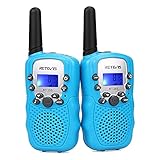 | Retevis RT388 Kids Walkie Talkies, Outdoor Toys for Kids Camping Essentials | 4-12 Year Old Boy Birthday Gift, 22 CH VOX Flashlight Clear Sound, Kids Walkie Talkies 2 Pack for Camping Hiking Adventure | Check Price On Amazon |
 | Cobra RX680 Walkie Talkies (2-Pack), IP54 Water Resistant Design | Rugged & Splashproof Two Way Radios Long Range, 60 Pre-Programmed Channels, Weather Alerts | Check Price On Amazon |
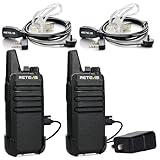 | Retevis RT22 Walkie Talkies Long Range Rechargeable with Earpiece (2 Pack) | Slim & Lightweight 2 Way Radio For Camping & Hiking, Pocket-Friendly Antenna, Ready to Use, 10-Hour Battery, USB-C Charging | Check Price On Amazon |
 | Midland GXT1000VP4 GMRS Two-Way Radios with Headsets, Black, 2 Pack | 50 Channels, 142 Privacy Codes, Up to 36 Mile Long Range, JIS4 Water Resistant, NOAA Weather Alert, Rechargeable NiMH | Check Price On Amazon |
 | Retevis RT628 Walkie Talkies for Kids,Toys Gifts for 6-12 Years Old Boys Girls,Long Range 2 Way Radio 22CH VOX,Birthday Gift,Family Walkie Talkie for Camping Hiking Indoor Outdoor | Check Price On Amazon |