Two-way radios need protection from harsh weather and environmental conditions to function reliably. Understanding walkie talkie environmental protection ratings helps you choose the right device for your specific needs. These ratings indicate how well your radio can resist water, dust, impacts, and temperature extremes—critical information for both professionals and outdoor enthusiasts.
Understanding IP Ratings for Two-Way Radios
IP ratings (Ingress Protection) are the international standard that defines how well electronic devices, including walkie talkies, are protected against environmental elements like dust and water. Understanding these ratings is essential for selecting the right radio for your specific needs.
| Photo | Popular Portable Walkie Talkies | Price |
|---|---|---|
 | SKIWARRIOR Multifunctional Smart Wireless Ski Goggles with Walkie-Talkie, Anti-Fog Zeiss Lens, Music & Call Function (Cylindrical Blue) | Check Price On Amazon |
 | SINORISE Super Mini Walkie Talkies, Two-Way Radios, 3 Pack | Check Price On Amazon |
 | KOSPET Tank M4C Smart Watch Rugged, Dual-Band GPS, 5ATM & IP69K Waterproof | Check Price On Amazon |
 | Retevis RT15 Walkie Talkies 3 Pack, Birthday Gift, Outdoor Adventure Kit | Check Price On Amazon |
 | Rechargeable Walkie Talkies Toys for Kids: DIY Astronaut Walkie Talkies for Boys Christmas Birthday Gifts for 3 4 5 6 7 8 9 10 Boy Walkie Talkie Outdoor Hiking Toy 2 Way Radio Camping Outdoor Game | Check Price On Amazon |
The IP rating system uses a two-digit code to indicate protection levels. The first digit (0-6) shows protection against solid objects and dust, while the second digit (0-9) indicates water resistance. Higher numbers mean better protection in both categories.
According to the International Electrotechnical Commission (IEC), which establishes these standards, the rating appears as “IPXX” where the X’s are replaced by specific numbers. Some manufacturers also use an “X” in place of a digit when that type of protection isn’t tested or relevant.
Decoding the First Digit: Dust Protection
The first digit in an IP rating indicates the level of protection against solid objects, from large body parts to microscopic dust particles. For two-way radio users, this rating is particularly important in environments with airborne particulates.
| Level | Protection | Practical Meaning |
|---|---|---|
| 0 | No protection | No special protection against solid objects |
| 1 | Protected against objects >50mm | Protected against large body parts like hands (but not deliberate access) |
| 2 | Protected against objects >12.5mm | Protected against fingers or similar objects |
| 3 | Protected against objects >2.5mm | Protected against tools, thick wires |
| 4 | Protected against objects >1mm | Protected against most wires, screws, small tools |
| 5 | Dust protected | Dust can’t enter enough to harm operation |
| 6 | Dust tight | Complete protection against dust |
For construction sites, beaches, and desert environments, radios with at least IP5X (dust protected) are recommended. Dust particles can damage internal components, interfere with buttons and switches, and clog speaker grilles, reducing audio quality.
Common dust-related radio failures include:
- Switch and button malfunctions
- Battery contact issues
- Speaker and microphone blockage
- Internal circuit board contamination
Decoding the Second Digit: Water Protection
The second digit in an IP rating indicates water protection, ranging from dripping water to continuous immersion. This rating is critical for determining whether your radio can withstand rain, splashes, or even submersion.
| Level | Protection | Practical Meaning |
|---|---|---|
| 0 | No protection | No special protection against water |
| 1 | Protected against dripping water | Can handle light drips for 10 minutes |
| 2 | Protected against dripping water when tilted 15° | Can handle light rain at angles |
| 3 | Protected against spraying water | Resistant to light spray for 5 minutes |
| 4 | Protected against splashing water | Resistant to water splashes from any direction |
| 5 | Protected against water jets | Can withstand low-pressure water jets for 3 minutes |
| 6 | Protected against powerful water jets | Can withstand high-pressure water jets for 3 minutes |
| 7 | Protected against temporary immersion | Can be submerged up to 1 meter for 30 minutes |
| 8 | Protected against continuous immersion | Can be continuously submerged beyond 1 meter (manufacturer specifies) |
| 9 | Protected against high-pressure, high-temperature water jets | Can withstand close-range high-pressure water jets |
Water resistance (typically IPX4) means a device can handle splashes and light rain. Waterproof ratings (IPX7/IPX8) mean the device can survive temporary or continuous submersion.
Important to note: Even with IPX7 or IPX8 ratings, manufacturers specify depth and duration limits. For instance, a radio rated IPX7 can typically handle submersion at 1 meter for 30 minutes—not indefinite underwater use.
Water testing conditions are also controlled. Fresh water at room temperature is standard for testing. Salt water, chlorinated water, or extreme temperatures may affect performance even with high ratings.
Military Standards (MIL-STD): Beyond IP Ratings
While IP ratings focus on dust and water protection, Military Standards (MIL-STD) provide a more comprehensive assessment of a device’s durability in extreme conditions. For many professional users, radios meeting MIL-STD-810 specifications offer superior environmental protection.
MIL-STD-810 is a United States Military Standard that tests equipment under various environmental stresses. For two-way radios, these tests evaluate how devices perform in conditions far beyond normal consumer use.
Key environmental tests in MIL-STD-810 include:
- Low and high temperature operation
- Temperature shock (rapid changes)
- Rain, humidity, and fungus resistance
- Salt fog for corrosion testing
- Sand and dust exposure
- Immersion testing
- Vibration resistance
- Shock resistance (drops and impacts)
- Altitude testing
- Solar radiation exposure
According to testing experts at TÜV SÜD, professional-grade radios undergo more rigorous certification processes than consumer models. While consumer testing might involve a few samples tested once, professional testing often requires multiple samples to undergo repeated testing cycles.
MIL-STD and IP ratings complement each other. IP ratings focus specifically on ingress protection (water and dust), while MIL-STD covers a broader range of environmental challenges. A radio with both certifications offers the most comprehensive protection.
Temperature and Altitude Testing
Beyond water and dust protection, quality two-way radios must function in temperature extremes and varying altitudes. MIL-STD-810 testing includes rigorous examination of performance in these challenging conditions.
Temperature testing evaluates radios in both operational and non-operational (storage) states. Professional-grade radios typically operate in temperatures from -30°C to +60°C (-22°F to +140°F), though specific models vary.
Extreme cold poses several challenges for radios:
- Battery efficiency drops dramatically
- LCD displays respond slowly or fail
- Plastic components become brittle
- Condensation forms when moving between temperature zones
Extreme heat causes different problems:
- Electronic components can overheat
- Battery life shortens significantly
- Plastic casings may warp
- Display screens can become damaged
Altitude testing assesses radio performance at different elevations. At high altitudes, reduced air pressure can affect electronic components, while rapid altitude changes can stress seals and waterproofing.
Common temperature-related failures include battery problems, display malfunctions, and seal failures due to material expansion and contraction.
Impact and Vibration Resistance
Drops, impacts, and constant vibration can quickly damage electronic devices. For professionals in fields like construction, emergency services, or outdoor guiding, impact resistance is as important as water protection.
MIL-STD-810 drop tests typically involve dropping the radio onto concrete from specific heights (often 1.2 to 1.5 meters) multiple times in different orientations. This simulates accidental drops during field use.
Vibration testing involves securing the radio to a vibrating platform that simulates conditions found in vehicles, machinery, or aircraft. Tests can last several hours to verify long-term durability.
Materials that enhance impact resistance include:
- Rubberized exterior casings
- Internal shock-absorbing frames
- Reinforced corners and edges
- Recessed displays and controls
- Composite materials designed to flex rather than break
The most common failure points after impacts are:
- Cracked display screens
- Broken battery latches or compartments
- Damaged antenna connections
- Compromised water-resistant seals
- Internal component disconnections
Professional-grade radios typically use thicker materials, better internal support structures, and more robust connection points than consumer models.
Environmental Protection in Real-World Conditions
Understanding ratings is important, but knowing how they translate to real-world performance is essential. This section bridges the gap between technical specifications and practical applications in different environments.
Laboratory testing happens under controlled conditions that don’t always match field realities. A radio might perform perfectly in standardized tests but fail in specific real-world scenarios where multiple environmental stressors combine.
For marine and coastal environments, consider:
- Salt water is more damaging than fresh water due to corrosion
- Constant humidity can degrade seals over time
- UV exposure weakens plastic components
- Recommended minimum: IPX7 water protection with salt fog testing
For desert environments, consider:
- Fine dust penetrates even small openings
- Extreme temperature fluctuations stress seals
- Battery life decreases in high heat
- Recommended minimum: IP6X dust protection with temperature cycling tests
For arctic/mountain environments, consider:
- Battery performance drops dramatically in extreme cold
- Condensation forms when moving between temperature zones
- Snow melt can enter seams and freeze
- Recommended minimum: IPX5 with low-temperature operation certification
For tropical environments, consider:
- Constant high humidity affects electronics
- Heavy rainfall requires better than splash protection
- Fungus and mold can grow on and in equipment
- Recommended minimum: IPX5 with fungus resistance testing
For industrial environments, consider:
- Chemical exposure may degrade standard seals
- Oils and greases require special protection
- Abrasive dust damages exteriors
- Recommended minimum: IP65 with additional chemical resistance
The Impact of Climate Change on Equipment Needs
As extreme weather events become more common, environmental protection requirements for communication equipment are evolving. Understanding these changing conditions is crucial for selecting appropriately protected equipment.
According to the National Oceanic and Atmospheric Administration (NOAA), extreme weather events have increased in frequency and intensity. This trend affects equipment needs in several ways:
More intense rainfall events require better water protection ratings. Standard IPX4 (splash resistance) may no longer be sufficient in regions experiencing heavier precipitation patterns.
Expanding wildfire zones mean more equipment needs protection against extreme heat and ash/particulate exposure. Radios used in fire-prone regions benefit from higher temperature ratings and better dust sealing.
Rising sea levels and increased coastal flooding expose more equipment to salt water. Emergency communication systems in coastal areas increasingly need marine-grade protection.
Emergency response agencies have adapted by upgrading communication equipment specifications. Many now require IPX7 water protection as standard, rather than the IPX4 that was common a decade ago.
How to Select the Right Environmental Protection for Your Needs
Choosing the appropriate level of environmental protection involves balancing your specific needs with budget considerations. This section will help you determine exactly what level of protection you need without overspending on unnecessary features.
Start by honestly assessing your usage environment:
- Primarily indoor use with occasional outdoor exposure requires minimal protection (IP54)
- Regular outdoor use in varied weather needs moderate protection (IP65/IP67)
- Extreme environments or professional use demands maximum protection (IP68 with MIL-STD)
Next, evaluate your specific weather exposure:
- Light rain/snow: IPX4 may be sufficient
- Heavy rain or water splashes: IPX5/IPX6 recommended
- Possible submersion (river crossings, boats): IPX7 minimum
- Regular submersion or underwater use: IPX8 required
Consider temperature extremes you’ll encounter:
- Standard consumer range (-10°C to +50°C) for casual use
- Extended range (-20°C to +55°C) for regular outdoor activities
- Extreme range (-30°C to +60°C) for professional/expedition use
For different user types, minimum recommendations include:
Casual recreational users: IP54 (dust protected, splash resistant) is typically sufficient for occasional hiking, camping, or general outdoor use in fair weather.
Regular outdoor enthusiasts: IP67 (dustproof, temporary immersion) provides reliable protection for activities like hiking, camping, and boating without extreme conditions.
Professional guides/instructors: IP67 or IP68 with MIL-STD-810G for impact/drop protection. These users need reliability in challenging conditions.
Emergency services: IP68 with full MIL-STD-810G certification, including temperature extremes, is standard for critical communications.
Industrial/construction users: IP65 or IP66 (dust-tight, powerful water jets) with impact protection for dusty environments with potential liquid exposure.
Marine applications: IPX8 (continuous immersion) with salt fog testing is essential for reliable performance on water.
Comparing Top-Rated Environmentally Protected Radios
To illustrate how environmental protection varies across different models, this comparison highlights some of the most popular weather-resistant two-way radios and their specific protection features.
| Model | IP Rating | MIL-STD | Temp Range | Price Range | Best For |
|---|---|---|---|---|---|
| Motorola T600 | IP67 | No | -20°C to +55°C | $80-120 | Recreational water activities |
| Midland GXT1000VP4 | IPX4 | No | -10°C to +50°C | $60-90 | Casual outdoor use |
| Motorola APX 8000 | IP68 | MIL-STD-810G | -30°C to +60°C | $3,000-5,000 | Emergency services |
| Kenwood TK-3230DX | IP54/55 | MIL-STD-810 | -30°C to +60°C | $160-200 | Construction/industrial |
| Cobra ACXT1035R FLT | IPX4 | No | -10°C to +50°C | $50-80 | Light outdoor recreation |
Notable observations from this comparison:
Price generally correlates with protection level. Professional-grade radios with IP68 and MIL-STD certification cost significantly more than consumer models.
Many consumer radios advertise “waterproof” features but only offer IPX4 (splash resistance) rather than true submersion protection.
The jump from recreational to professional-grade protection includes not just better ratings but also expanded temperature ranges and additional testing.
For most recreational users, mid-range protection (IP67) offers the best balance of protection and price. Professional users generally require IP68 with MIL-STD certification despite the significant price increase.
Maintaining Environmental Protection Over Time
Environmental protection isn’t permanent – seals deteriorate, materials degrade, and protection can be compromised through regular use. Proper maintenance of your walkie talkie is essential to preserve your radio’s weather resistance.
Water and dust protection depend on rubber seals and gaskets that naturally degrade with time, use, and exposure to elements. Even the best-protected radio will lose its resistance without proper maintenance.
Key maintenance procedures include:
- Regular inspection: Check all seals, gaskets, and port covers for signs of wear, cracking, or deformation. Pay special attention to battery compartment seals and charging port covers.
- Proper cleaning: After exposure to dirt, salt water, or other contaminants, clean the radio thoroughly. Use fresh water to rinse salt water exposure before it dries.
- Seal conditioning: Apply silicon grease to rubber seals periodically (check manufacturer recommendations). This prevents drying and cracking.
- Correct reassembly: When replacing batteries or accessing compartments, ensure proper alignment of all seals before closing.
- Proper drying: If the radio gets wet, dry it completely before opening any compartments. Pay special attention to speaker grilles and microphone ports.
Warning signs that environmental protection is compromised include:
- Visible damage to exterior seals or gaskets
- Condensation visible under display
- Corrosion on battery contacts
- Port covers that no longer fit tightly
- Changes in speaker sound quality
Different environments require specific cleaning approaches:
Salt water exposure: Rinse thoroughly with fresh water as soon as possible. Salt residue accelerates corrosion if left to dry.
Mud and dirt: Rinse with clean water without pressure that might force contaminants past seals. Allow to dry completely before opening.
Dust: Use compressed air at safe distances to blow out particles from speaker grilles and microphone ports. Avoid high pressure that might force dust inside.
Chemicals/oils: Wipe clean with appropriate solvent recommended by manufacturer, followed by damp cloth. Never soak the device.
Recovering from Environmental Damage
Even with appropriate environmental protection ratings, accidents happen. Knowing how to properly respond when your radio is exposed beyond its rated protection can potentially save your device.
If your radio is submerged beyond its rated depth or time:
- Remove from water immediately
- Power off the device
- Remove the battery if possible (without forcing compartments)
- Rinse with fresh water if it was submerged in salt or dirty water
- Gently shake out excess water (don’t use compressed air yet)
- Place in a dry area with good airflow
- Consider using desiccant packets nearby (not directly on device)
- Allow 48-72 hours of complete drying before attempting to power on
For extreme temperature exposure:
- Allow the radio to gradually return to room temperature
- Check for condensation and dry thoroughly if present
- Inspect all seals for damage from expansion/contraction
- Test battery performance, as extreme temperatures often affect batteries first
Common mistakes to avoid:
- Using a hair dryer or heat source to speed drying (can damage components)
- Opening compartments while the device is still wet
- Attempting to power on immediately after exposure
- Ignoring minor water exposure because the radio still works
- Using rice for drying (can leave dust and starch residue)
Most manufacturer warranties specifically exclude water damage, even for waterproof devices, if the damage resulted from improper use or maintenance. Professional service is recommended for valuable equipment.
Environmental Impact and Sustainability of Two-Way Radios
While protecting radios from the environment is important, considering their impact on the environment is equally crucial. Modern two-way radio users increasingly seek sustainable options that minimize environmental footprint.
Two-way radios have several environmental impacts:
Manufacturing requires metals like copper, aluminum, and sometimes rare earth elements. Mining these materials can cause significant environmental disruption. According to the Electronics TakeBack Coalition, producing a single electronic device generates 1,000 times its weight in waste.
Battery technologies present different environmental challenges:
- Alkaline batteries: Disposable and not ideal for regular use
- NiCad batteries: Contain toxic cadmium but are rechargeable
- NiMH batteries: Better environmental profile but lower capacity
- Lithium-ion: Higher capacity but require proper disposal
Energy efficiency varies widely between models. Some radios provide 30+ hours of operation per charge, while others require new batteries after 8-10 hours. Longer battery life means fewer replacements and less waste.
Proper disposal is essential. Two-way radios should never go into regular trash as they contain circuit boards, batteries, and sometimes lead solder or other hazardous materials. Many manufacturers now offer take-back programs.
The environmental impact of alternatives varies:
- Cell phones require extensive network infrastructure but offer multiple functions
- Satellite phones have higher environmental manufacturing impact but may replace multiple devices
- Two-way radios generally have longer service lives than smartphones
Several manufacturers now promote more sustainable practices, including:
- Energy-efficient charging systems
- Reduced packaging waste
- Longer-lasting products that need less frequent replacement
- Take-back and recycling programs
Sustainable Alternatives and Innovations
The communications industry is evolving to address environmental concerns while maintaining robust environmental protection. Several innovative approaches are making two-way radios more sustainable without compromising durability.
Emerging sustainable materials include:
- Bioplastics derived from renewable resources for non-critical components
- Recycled metals and plastics for casings and internal components
- Water-based, non-toxic waterproofing treatments
- Reduced use of PVC and brominated flame retardants
Alternative power sources are gaining popularity:
- Solar charging cases extend field use without battery replacement
- Hand-crank emergency chargers provide power when batteries fail
- Kinetic charging systems capture energy from movement
- Fuel cell technologies for extended field operations
Modular design approaches allow for:
- Replacement of single components rather than entire devices
- Upgradable firmware extending useful life
- Standardized batteries across product lines
- Easier separation of materials for recycling
Leading manufacturers now offer equipment take-back programs. These programs ensure proper recycling of electronic components and reduce e-waste in landfills. Some companies refurbish returned units for secondary markets or donation programs.
Testing and Verifying Environmental Protection Claims
Manufacturer claims about environmental protection don’t always match real-world performance. This section provides methods to verify protection claims and ensure your radio will perform as expected in challenging conditions.
Manufacturers typically test environmental protection through:
- Laboratory testing in controlled environments
- Testing to specific standards (IP, MIL-STD)
- Testing by independent certification bodies
- Internal quality control testing
Reputable independent testing organizations include:
- Underwriters Laboratories (UL)
- TÜV Rheinland
- SGS
- Intertek
Look for specific certifications and test details rather than vague claims. “Waterproof” means little without an actual IPX7 or IPX8 rating and testing details.
Before relying on a radio in critical situations, consider these DIY verification approaches:
- For water resistance: Test in controlled conditions (sink or bucket) at less than the rated depth/time
- For dust: Inspect seal integrity and port protection
- For drop resistance: Test on grass or carpet from increasing heights
- For temperature: Test in non-critical situations before relying on it in extreme conditions
Warning signs of exaggerated protection claims include:
- Using terms like “waterproof” without specific IP ratings
- Claiming “military-grade” without specifying MIL-STD testing
- Lack of specific test parameters (depth, time, temperature range)
- Unusually low pricing for claimed protection levels
- Fine print that contradicts marketing claims
Questions to ask manufacturers:
- “What specific tests were performed to achieve this rating?”
- “Was testing done by an independent laboratory?”
- “What are the specific limits of the environmental protection?”
- “How does the warranty cover failures related to environmental exposure?”
Conclusion: Balancing Protection, Performance, and Sustainability
Selecting a walkie talkie with appropriate environmental protection requires balancing technical specifications with practical needs, while increasingly considering environmental impact.
IP ratings and military standards provide a framework for understanding how well a radio will resist environmental challenges. These standardized tests help users match protection levels to their specific needs without overpaying for unnecessary features.
Proper maintenance extends both the environmental protection and overall lifespan of your equipment. Regular inspection of seals, appropriate cleaning after exposure, and proper storage of your walkie talkie all contribute to longer-lasting protection.
As environmental awareness grows, manufacturers are developing more sustainable options with reduced environmental impact. Energy-efficient designs, better battery technologies, and recyclable materials help minimize the ecological footprint of two-way radio use.
The future of two-way radio environmental protection will likely include more sustainable materials, better power management, and increasingly resilient designs to handle changing climate conditions and more extreme weather events.
If you’re looking for specific models with excellent water resistance for marine environments, you might want to explore our guide to waterproof walkie talkies for detailed reviews and recommendations.
Choose a radio that matches your actual needs, maintain it properly, and dispose of it responsibly when its useful life ends. This approach ensures reliable communication while minimizing environmental impact.
| Photo | TOP RATED WALKIE TALKIES | Price |
|---|---|---|
 | Retevis RT628 Kids Walkie Talkies, Toys Gifts for 4-12 Year Old Girl Boy | Check Price On Amazon |
 | Cobra ACXT545 Weather-Resistant Walkie Talkies, Rechargeable, 22 Channels | Check Price On Amazon |
 | Retevis RT388 Kids Walkie Talkies, Outdoor Toys for Kids Camping Essentials | Check Price On Amazon |
 | Cobra RX680 Walkie Talkies (2-Pack), IP54 Water Resistant Design | Check Price On Amazon |
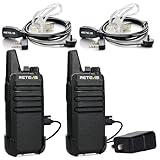 | Retevis RT22 Walkie Talkies Long Range Rechargeable with Earpiece (2 Pack) | Check Price On Amazon |
 | Midland GXT1000VP4 GMRS Two-Way Radios with Headsets, Black, 2 Pack | Check Price On Amazon |
 | Retevis RT628 Walkie Talkies for Kids,Toys Gifts for 6-12 Years Old Boys Girls,Long Range 2 Way Radio 22CH VOX,Birthday Gift,Family Walkie Talkie for Camping Hiking Indoor Outdoor | Check Price On Amazon |