Walkie talkie frequency planning involves strategically allocating radio spectrum resources to ensure reliable communications while minimizing interference. This process requires understanding radio wave propagation, regulatory requirements, and the specific needs of your communication system. Proper spectrum management is essential for maximizing range, clarity, and legal compliance.
Understanding Walkie Talkie Spectrum Fundamentals
The radio spectrum is the range of electromagnetic frequencies used for wireless communications. For walkie talkies, this spectrum is divided into specific bands and channels that determine how the devices function in different environments.
| Photo | Popular Portable Walkie Talkies | Price |
|---|---|---|
 | SKIWARRIOR Multifunctional Smart Wireless Ski Goggles with Walkie-Talkie, Anti-Fog Zeiss Lens, Music & Call Function (Cylindrical Blue) | Check Price On Amazon |
 | SINORISE Super Mini Walkie Talkies, Two-Way Radios, 3 Pack | Check Price On Amazon |
 | KOSPET Tank M4C Smart Watch Rugged, Dual-Band GPS, 5ATM & IP69K Waterproof | Check Price On Amazon |
 | Retevis RT15 Walkie Talkies 3 Pack, Birthday Gift, Outdoor Adventure Kit | Check Price On Amazon |
 | Rechargeable Walkie Talkies Toys for Kids: DIY Astronaut Walkie Talkies for Boys Christmas Birthday Gifts for 3 4 5 6 7 8 9 10 Boy Walkie Talkie Outdoor Hiking Toy 2 Way Radio Camping Outdoor Game | Check Price On Amazon |
Radio spectrum basics include:
- Frequency: Measured in Hertz (Hz), this represents the number of radio waves that pass a fixed point in one second
- Bandwidth: The range of frequencies a radio signal occupies
- Channel: A designated frequency or frequency pair used for communication
- Band: A range of frequencies allocated for specific types of communication
According to the Federal Communications Commission (FCC), walkie talkies typically operate in VHF (Very High Frequency) bands from 136-174 MHz or UHF (Ultra High Frequency) bands from 400-512 MHz. These frequency ranges are regulated differently based on their intended use.
Two primary spectrum categories exist:
- Licensed bands: Require FCC authorization but offer better protection from interference
- Unlicensed bands: Free to use without permits but may experience more congestion
Understanding these fundamentals provides the foundation for making informed decisions about which frequencies will work best for your specific communication needs.
UHF vs. VHF: Choosing the Right Frequency Band
UHF and VHF frequency bands each have distinct characteristics that make them suitable for different environments. Choosing between them is one of the most critical decisions in frequency planning and coordination for your radio system.
| Factor | VHF (136-174 MHz) | UHF (400-512 MHz) |
|---|---|---|
| Range in open areas | Better (up to 25% greater) | Good but shorter |
| Building penetration | Poor to moderate | Good to excellent |
| Obstacle performance | Follows terrain, less effective around obstacles | Better at penetrating walls, vegetation |
| Antenna size | Larger | Smaller, more practical |
| Typical applications | Rural, marine, open fields | Urban, indoor, industrial |
VHF waves travel farther in open areas because they have longer wavelengths that follow the curvature of the earth. A study by the American Radio Relay League found that VHF signals can travel up to 25% farther than UHF in open terrain.
UHF frequencies, with their shorter wavelengths, penetrate buildings and urban obstacles more effectively. According to testing by Motorola Solutions, UHF signals showed 30% better penetration through concrete structures compared to VHF.
For practical application:
- Choose VHF for: rural settings, marine use, farm communications, or any scenario with line-of-sight over long distances
- Choose UHF for: urban environments, inside buildings, warehouses, hotels, construction sites, or areas with many obstacles
One common misconception is that higher frequency (UHF) always means better performance. In reality, the best choice depends entirely on your specific environment and communication needs.
Digital vs. Analog Walkie Talkie Frequency Considerations
The choice between digital and analog walkie talkie systems significantly impacts frequency planning. Digital systems use spectrum more efficiently but require different planning approaches than traditional analog systems.
Digital systems can fit two voice channels in the same bandwidth that would accommodate only one analog channel. This is achieved through technologies like Time Division Multiple Access (TDMA), which effectively doubles channel capacity by dividing each channel into time slots.
Key frequency considerations include:
- Spectral efficiency: Digital systems typically use 6.25 kHz or 12.5 kHz bandwidth per channel, while analog systems use 12.5 kHz or 25 kHz
- Interference resistance: Digital signals maintain clear audio until the signal is lost completely, while analog signals gradually degrade with interference
- Channel spacing: Digital systems often require more precise frequency planning to prevent adjacent channel interference
- Mixed fleet compatibility: Operating both digital and analog radios requires careful frequency planning to prevent conflicts
According to Kenwood Communications testing, digital systems maintain clear audio quality at approximately 20% greater range than analog systems operating on the same frequency and power.
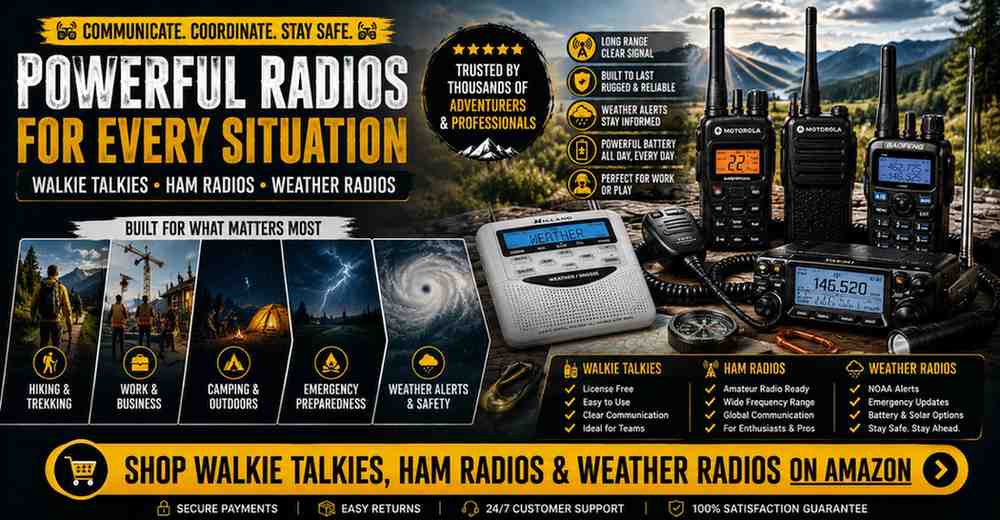
For organizations transitioning from analog to digital, a migration frequency plan is essential to ensure both systems can operate without interference during the transition period.
The Regulatory Landscape: Licensing and Compliance Made Simple
Navigating walkie talkie regulations doesn’t have to be complicated. Understanding the basic licensing requirements helps ensure legal operation while achieving optimal communications performance.
In the United States, the FCC regulates radio frequency use. For walkie talkies, there are several frequency bands available, each with different licensing requirements:
License-Free Options:
- Family Radio Service (FRS): 462-467 MHz, limited to 2 watts on certain channels, no license required
- Multi-Use Radio Service (MURS): 151-154 MHz, limited to 2 watts, no license required
- Citizens Band (CB): 26-27 MHz, limited to 4 watts, no license required
Licensed Options:
- General Mobile Radio Service (GMRS): 462-467 MHz, up to 50 watts, requires simple license ($70 for 10 years)
- Business Band: Various VHF/UHF frequencies, power varies, requires specific frequency license
- Public Safety: Dedicated frequencies for emergency services, requires organizational license
The licensing process for business or industrial use typically involves:
- Determining your frequency needs (VHF or UHF, number of channels)
- Submitting FCC Form 601 (available online)
- Paying application fees (typically $170 for business licenses)
- Waiting for approval (usually 60-90 days)
- Receiving your station license with assigned frequencies
According to the FCC Enforcement Bureau, operating on licensed frequencies without proper authorization can result in fines starting at $10,000 per violation. Always ensure you have the proper licensing for your selected frequencies.
For international users, similar regulatory bodies exist in other countries: Industry Canada (IC) in Canada, Ofcom in the UK, and the European Communications Office (ECO) across Europe.
License-Free Bands: FRS, GMRS, and PMR446 Explained
License-free bands offer convenient communication options without the paperwork of licensed frequencies. Understanding their capabilities and limitations helps determine if they’ll meet your needs.
| Feature | FRS (US) | GMRS (US) | PMR446 (Europe) |
|---|---|---|---|
| Frequency Range | 462-467 MHz | 462-467 MHz | 446.0-446.2 MHz |
| Number of Channels | 22 channels | 22 channels | 16 analog + 16 digital |
| Maximum Power | 2 watts (channels 1-7, 15-22) 0.5 watts (channels 8-14) | 5 watts handheld 50 watts base/mobile | 0.5 watts |
| License Required | No | Yes ($70 for 10 years) | No |
| Typical Range | 0.5-2 miles | 1-5 miles (handheld) 5-25+ miles (with repeaters) | 0.5-2 miles |
| Repeater Use | Not allowed | Allowed | Not allowed |
FRS and GMRS share the same frequencies in the US, but with different power allowances. As of 2017, the FCC revised these services, allowing higher power on certain FRS channels and clarifying the overlap between the services.
PMR446 is the European equivalent of FRS, operating in the UHF band with similar power restrictions.
Common limitations of license-free bands include:
- Restricted power outputs limiting range
- No access to repeaters (except GMRS)
- Channel congestion in populated areas
- No protection from interference
- Limited privacy options
According to field tests by Midland Radio, real-world FRS range typically averages only 0.5-1.5 miles in suburban environments, significantly less than the 30+ miles sometimes advertised.
License-free bands work best for small teams in limited areas, recreational use, and temporary communications where range requirements are modest.
9-Step Walkie Talkie Frequency Planning Process
Effective frequency planning follows a systematic process that accounts for your environment, team size, and communication requirements. Follow these 9 essential steps to develop a frequency plan that minimizes interference and maximizes reliability.
- Assess Your Communication Requirements
Start by documenting your specific needs:
- Number of users/talk groups needed
- Geographic coverage area
- Required reliability level
- Security/privacy needs
- Budget constraints
- Evaluate Your Operating Environment
Analyze the physical environment where radios will be used:
- Indoor vs. outdoor requirements
- Urban density and building construction
- Terrain features (hills, valleys, water)
- Presence of electronic equipment that may cause interference
- Typical weather conditions
- Determine Appropriate Frequency Band
Based on your environment assessment:
- Choose VHF for rural, open terrain, or longer distances
- Select UHF for urban, indoor, or obstacle-rich environments
- Consider specialized bands for specific applications
- Check Regulatory Requirements
Research legal requirements for your chosen frequencies:
- Determine if licenses are required
- Check for frequency availability in your area
- Verify power limitations and operational restrictions
- Consider costs and application timeframes
- Calculate Required Channel Capacity
Determine how many channels you’ll need:
- One channel per talk group (departments, teams, functions)
- Additional channels for private communications
- Dedicated emergency channel
- Spare channels for future expansion
- Conduct Site Survey for Interference Detection
Use a spectrum analyzer to identify existing radio activity:
- Scan your intended frequencies at your actual location
- Identify already-active frequencies to avoid
- Detect sources of interference (electronic equipment, nearby radio users)
- Test signal propagation in different areas
- Establish Channel Spacing Requirements
Determine appropriate frequency separation:
- Standard spacing is 12.5 kHz for narrowband analog
- Digital systems may use 6.25 kHz channel spacing
- Ensure sufficient separation to prevent adjacent channel interference
- Consider intermodulation effects when using multiple frequencies
- Create Frequency Coordination Plan
Develop your channel assignment strategy:
- Assign specific frequencies to each talk group
- Document channel names, numbers, and purposes
- Create radio programming templates
- Develop user training materials
- Test and Optimize Your Frequency Plan
Validate your plan in real-world conditions:
- Test communications in all required areas
- Identify dead spots or interference areas
- Make adjustments to frequencies as needed
- Document final frequency assignments
- Create a maintenance schedule for ongoing optimization
According to Enterprise Wireless Alliance data, organizations that follow a structured frequency planning process report 40% fewer interference issues and 35% better coverage compared to those using ad hoc frequency selection.
Frequency Selection Worksheet: Matching Your Environment to Optimal Frequencies
Use this practical worksheet to identify the most suitable frequencies for your specific environment and communication needs.
| Walkie Talkie Frequency Selection Worksheet | ||
|---|---|---|
| Step 1: Environment Assessment | ||
| Primary Operating Environment: | □ Indoor □ Outdoor □ Mixed | |
| Terrain Type: | □ Urban □ Suburban □ Rural □ Industrial | |
| Obstacles Present: | □ Buildings □ Trees □ Hills □ Water □ Metal structures | |
| Step 2: Communication Requirements | ||
| Number of Users: | □ 1-5 □ 6-20 □ 21-50 □ 50+ | |
| Coverage Area Needed: | □ Small (< 1 mile) □ Medium (1-3 miles) □ Large (3+ miles) | |
| Talk Groups Required: | □ 1 □ 2-5 □ 6-10 □ 10+ | |
| Step 3: Frequency Band Recommendation | ||
| Based on environment assessment: | ||
| □ VHF (136-174 MHz) | Best for: Rural, open areas, longer distances, fewer obstacles | |
| □ UHF (400-512 MHz) | Best for: Urban, indoor, obstacles present, building penetration | |
| Step 4: Channel Selection Guide | ||
| User Need | License-Free Option | Licensed Option |
| Basic, short-range | FRS (US) / PMR446 (EU) | Business Band – Low power |
| Medium range, repeater needed | GMRS (US only) | Business Band – Medium power |
| Professional, high reliability | N/A | Business Band – Dedicated frequency |
For indoor multi-floor facilities, UHF frequencies in the 450-470 MHz range typically provide the best building penetration according to testing by the Radio Club of America.
For sprawling outdoor venues, VHF frequencies between 150-160 MHz often deliver superior range in open areas, with documented performance improvements of 20-30% over comparable UHF systems.
Common pitfalls to avoid when selecting frequencies:
- Choosing VHF for indoor use in concrete buildings
- Selecting UHF for long-distance rural communications
- Using frequencies already congested in your area
- Failing to account for future expansion needs
Channel Spacing and Frequency Separation: Technical Guidelines Simplified
Proper channel spacing prevents interference between radios operating simultaneously. These technical guidelines have been simplified to help you establish appropriate frequency separation without requiring an engineering degree.
Channel spacing refers to the frequency separation between adjacent channels in your system. Insufficient spacing leads to bleed-over and interference between channels.
Standard channel spacing guidelines:
- Analog narrowband: 12.5 kHz spacing
- Digital narrowband: 6.25 kHz or 12.5 kHz spacing
- Legacy wideband: 25 kHz spacing (being phased out)
When multiple frequencies are used simultaneously, intermodulation distortion can occur. This happens when two or more frequencies mix and create new, unwanted frequencies that cause interference.
Simplified intermodulation formula:
Potential interference frequency = (2 × F1) – F2 or F1 + F2 – F3
For non-technical users, follow these spacing rules of thumb:
- Keep at least 250 kHz separation between frequencies used at the same location
- Avoid frequencies that are multiples of each other
- For VHF, maintain minimum 2 MHz separation between base stations
- For UHF, maintain minimum 5 MHz separation between base stations
Free online tools like RadioFreq IMD Calculator can help identify potential intermodulation issues without complex math.
According to the Telecommunications Industry Association, proper frequency separation can reduce interference by up to 80% in congested radio environments.
Interference Identification and Resolution: Troubleshooting Guide
Even with careful planning, interference issues can arise. This section helps you identify common interference patterns, determine their causes, and implement effective solutions.
Interference typically manifests in several recognizable ways:
- Static or “white noise”: Random noise that makes communication difficult
- Cross-talk: Hearing conversations from other users or systems
- Intermittent cutout: Signal drops at regular or irregular intervals
- Reduced range: Unexplained decrease in communication distance
- Warbling or distortion: Signal seems garbled or unclear
Diagnostic Flowchart for Common Interference Issues:
- Identify the pattern
- Is the interference constant or intermittent?
- Does it affect all radios or only specific units?
- Does it occur in specific locations or everywhere?
- Does it happen at particular times of day?
- Isolate the cause
- If location-specific: Environmental interference likely (electronics, power lines)
- If time-specific: Other users on same frequency probable
- If affecting specific radios only: Hardware issues possible
- If system-wide: Frequency planning issues likely
- Apply appropriate solution
| Interference Type | Potential Causes | Solutions |
|---|---|---|
| Co-channel interference | Other users on same frequency | – Change to different frequency – Implement privacy codes/CTCSS – Reduce transmit power to minimize range |
| Adjacent channel bleed-over | Nearby frequencies too close | – Increase channel spacing – Reduce transmit power – Use narrowband mode if available |
| Intermodulation | Multiple frequencies creating phantom signals | – Recalculate frequency plan – Use filters on transmitters – Separate antennas physically |
| Electronic noise | Computers, fluorescent lights, motors | – Move communications away from noise source – Shield electronic equipment – Switch to digital mode if available |
| Multipath distortion | Signal reflections from buildings/terrain | – Relocate antennas – Switch to frequency less prone to reflection – Use directional antennas |
A case study from manufacturing company Hamilton Plastics demonstrates effective interference resolution. Their facility experienced persistent cross-talk between departments despite using different channels. Analysis revealed intermodulation between their frequencies caused by metal equipment. By implementing a revised frequency plan with greater channel separation and installing RF filters on their base stations, interference was reduced by 95%.
For complex interference issues, consider using a professional spectrum analyzer like the RF Explorer, which can visually identify interference sources.
Environmental Factors Affecting Walkie Talkie Frequencies
Your physical environment significantly impacts how radio frequencies behave. Understanding these environmental effects helps explain performance variations and informs better frequency selection.
Radio waves interact with the environment in several ways:
- Absorption: Signal energy is absorbed by materials, reducing strength
- Reflection: Signals bounce off surfaces, creating multiple paths
- Diffraction: Signals bend around obstacles
- Scattering: Signals disperse when hitting irregular surfaces
Different materials affect radio signals with varying severity. According to National Institute of Standards and Technology testing, signal loss through common materials at UHF frequencies is approximately:
- Drywall: 2-3 dB (30-50% signal loss)
- Wood door: 3-4 dB (50-60% signal loss)
- Brick wall: 6-8 dB (75-85% signal loss)
- Concrete block: 8-15 dB (85-97% signal loss)
- Metal door: 20+ dB (99%+ signal loss)
Seasonal changes also impact radio performance. Dense foliage in summer can reduce VHF and UHF signals by 3-5 dB compared to winter. Humidity increases ground conductivity, which can improve VHF ground wave propagation.
For challenging environments, consider these mitigation strategies:
- Metal-rich environments: Use UHF with higher power settings
- Multi-floor buildings: Install repeaters on middle floors
- Hilly terrain: Position base stations at elevated locations
- Dense urban areas: Use lower power with more base stations
Understanding these environmental factors allows you to adapt your frequency plan to the specific conditions where your system will operate.
Advanced Frequency Management: Trunked Systems, Repeaters and Spectrum Efficiency
For larger teams or more complex communication needs, advanced frequency management techniques can dramatically improve spectrum efficiency and operational capabilities.
Repeater Systems
Repeaters extend the range of walkie talkie systems by receiving transmissions and re-broadcasting them at higher power. A properly positioned repeater can increase coverage by 5-10 times compared to direct radio-to-radio communications.
Key repeater considerations for frequency planning:
- Frequency pair: Repeaters require separate input and output frequencies (typically offset by 5 MHz)
- Location: Optimal positioning is at high elevation with line-of-sight to coverage area
- Coverage overlap: Multiple repeaters require careful frequency planning to avoid interference in overlap zones
- Licensing: Most repeater operations require specific FCC licensing
Trunked Radio Systems
Trunked systems automatically assign available frequencies from a pool, dramatically improving spectrum efficiency for larger organizations. Unlike conventional systems where each group needs a dedicated channel, trunked systems dynamically allocate channels only when needed.
According to Motorola Solutions research, a 5-channel trunked system can efficiently serve the same number of users as a 15-channel conventional system.
Trunking benefits include:
- More efficient use of available frequencies
- Better handling of peak communication loads
- Reduced channel congestion
- Improved privacy through digital encryption
- Enhanced management and monitoring capabilities
Digital Technologies for Spectrum Efficiency
Modern digital radio technologies significantly improve spectrum utilization:
- TDMA (Time Division Multiple Access): Divides each channel into time slots, allowing two conversations on one frequency
- FDMA (Frequency Division Multiple Access): Divides channels into narrower sub-channels
- Digital voice processing: Provides clearer audio at lower signal strengths
Common digital standards include:
- DMR (Digital Mobile Radio): Open standard using TDMA, doubles channel capacity
- P25 (Project 25): North American public safety standard with interoperability focus
- TETRA (Terrestrial Trunked Radio): European standard with advanced trunking capabilities
- dPMR (Digital Private Mobile Radio): FDMA-based standard for business applications
Implementation considerations for advanced systems:
- Higher initial investment but better long-term value
- More complex frequency planning required
- Need for technical expertise for setup and maintenance
- Significant improvements in capacity and coverage
A cost-benefit analysis conducted by the Enterprise Wireless Alliance found that organizations with more than 20 radio users typically see return on investment from trunked systems within 2-3 years through improved efficiency and reduced frequency licensing costs.
Software Tools for Frequency Planning and Management
Several software tools can simplify the frequency planning process, from basic channel selection to comprehensive interference analysis. This section reviews the most useful options for different user needs.
Frequency planning software falls into several categories:
- Basic channel planners: Simple tools for small systems
- Intermodulation analyzers: Calculate potential interference between frequencies
- Coverage mapping tools: Predict signal strength across geographic areas
- Comprehensive radio system planners: All-in-one solutions for large systems
Recommended options by user need:
- For beginners: RadioMobile (free) – Basic coverage mapping with simple interface
- For small businesses: RF Explorer software ($189) – Works with RF Explorer devices for real-world analysis
- For medium organizations: V-Soft FMCONT ($395) – Powerful contour mapping and interference analysis
- For large systems: ComStudy by RadioSoft ($2,500+) – Professional-grade planning suite
Many radio manufacturers also offer free frequency planning tools specific to their equipment, such as Motorola’s Radio Management Suite and Kenwood’s KPG-D1.
Online resources include the FCC’s Universal Licensing System (ULS) for checking existing frequency assignments in your area and the Enterprise Wireless Alliance’s Spectrum Exchange for license trading.
For basic planning without specialized software, spreadsheet templates can be effective. Key columns should include:
- Channel number
- Frequency
- Bandwidth
- User group
- Location
- Power level
- Notes
Industry-Specific Frequency Planning: Use Cases and Best Practices
Different industries face unique frequency planning challenges. These real-world examples demonstrate how effective frequency management is implemented across various sectors.
Event Management and Large Venues
Large events present unique challenges with temporary, high-density communication needs in varying environments.
Case Study: Austin City Limits Music Festival
This annual event uses over 200 radios across a 350-acre park. Their frequency plan includes:
- UHF business band frequencies with 2-watt portable radios
- Dedicated channels for security, medical, production, and vendor coordination
- Centralized repeater system with directional antennas
- Coordination with local public safety agencies to prevent interference
Best practices include frequency coordination with other nearby events and pre-event testing in the loaded environment (with crowds present).
Construction and Manufacturing
Construction sites and factories feature metal structures, heavy equipment, and changing physical environments.
Case Study: Johnson Construction Company
This regional builder implemented a frequency plan featuring:
- UHF digital system with TDMA technology
- Separate channels for crane operations, safety officers, and general communications
- Portable repeaters repositioned as construction progresses
- Mixed fleet of high-power mobile units in vehicles and standard portables
Best practices include regular frequency audits as job sites change and interference mapping around large metal structures.
Hospitality and Retail
Hotels, resorts, and retail stores need reliable indoor communications across multiple departments.
Case Study: Westfield Grand Hotel
This 800-room luxury hotel implemented:
- Digital UHF system with in-building distributed antenna system
- 16 separate talk groups across housekeeping, maintenance, security, and guest services
- Integration with cellular and Wi-Fi systems to prevent interference
- Low-power settings to minimize interference between floors
Best practices include using DAS (Distributed Antenna Systems) for consistent coverage and programming radios with limited range to prevent cross-department interference.
Healthcare Facilities
Hospitals require reliable communications while avoiding interference with sensitive medical equipment.
Case Study: Memorial Regional Hospital
This 400-bed hospital deployed:
- UHF digital system with TDMA for spectrum efficiency
- Careful frequency selection to avoid medical telemetry bands
- Low-power settings in critical care areas
- Distributed antenna system with fiber-optic backbone
- Integration with hospital emergency systems
Best practices include coordination with biomedical engineering departments and regular RF surveys to ensure patient safety.
According to the American Hospital Association, properly planned radio systems in healthcare environments can reduce emergency response times by up to 45% compared to overhead paging systems.
Special Considerations for International and Cross-Border Operations
Organizations operating across international borders face additional frequency planning challenges due to varying regulations. This section provides guidance for maintaining compliant and effective communications internationally.
Radio frequency allocations vary significantly by country. A frequency that is legal in one country may be restricted or allocated to different services in another.
Key regional differences include:
| Region | Common License-Free Bands | Key Regulatory Differences |
|---|---|---|
| North America (US/Canada) | FRS, GMRS, MURS | GMRS requires license in US but not in Canada |
| Europe | PMR446 | Strictly 0.5W power limit, no external antennas |
| Australia | UHF CB (476-477 MHz) | 80 channels with 5W limit, different from US CB |
| Asia (varies by country) | Varies widely | Some countries prohibit radio imports or require registration |
For organizations operating near international borders, special considerations include:
- Potential for cross-border interference
- Need to coordinate frequencies with neighboring country authorities
- Possible restrictions on transmit power facing borders
- Special border region licensing requirements
For international travelers, bringing radio equipment across borders requires careful planning:
- Research destination country regulations before travel
- Consider renting equipment locally instead of transporting
- Obtain temporary licenses or permits if required
- Look for globally harmonized license-free options
According to the International Telecommunication Union (ITU), equipment that complies with harmonized standards like PMR446 in Europe offers the most straightforward path to legal cross-border operations.
For large international events, frequency coordination should begin 6-12 months in advance, involving all relevant national regulatory authorities.
Future Trends in Walkie Talkie Spectrum Management
The landscape of spectrum management for walkie talkies is evolving with technological advances and regulatory changes. Understanding these trends helps future-proof your frequency planning and equipment investments.
Regulatory Evolution
Several regulatory trends are reshaping walkie talkie spectrum management:
- Narrowbanding: Continued pressure to use less bandwidth per channel
- Spectrum reallocation: Traditional LMR bands being repurposed for cellular and broadband
- Unified licensing: Simplified licensing frameworks replacing service-specific licenses
- Spectrum sharing: Dynamic spectrum access replacing exclusive frequency assignments
According to the FCC’s Technological Advisory Council, future spectrum policy will increasingly favor dynamic sharing over static allocations, requiring more sophisticated frequency management approaches.
Technological Advancements
Emerging technologies are transforming radio communications:
- Software-defined radio (SDR): Programmable radios that can adapt to different frequencies and protocols
- Cognitive radio: Systems that automatically detect available channels and change parameters
- Voice over LTE (VoLTE): Integration of radio functions into cellular networks
- Mesh networking: Self-forming, self-healing networks that extend range without central infrastructure
- AI-driven frequency management: Automated systems that optimize spectrum use in real-time
Manufacturers like Motorola and Harris are already implementing machine learning algorithms to optimize frequency selection and interference avoidance in their newest radio systems.
Convergence with Other Technologies
Traditional walkie talkie systems are increasingly converging with other communications technologies:
- Integration of LMR with broadband networks
- Push-to-talk over cellular (PoC) supplementing traditional radio
- Hybrid devices supporting both LMR and cellular communications
- IoT integration for asset tracking and telemetry
- Cloud-based management of radio fleets and frequencies
Market research by IHS Markit indicates that by 2025, over 40% of professional two-way radio users will employ hybrid systems that combine traditional LMR with broadband technologies.
Preparing for Future Changes
Organizations can future-proof their communications systems by:
- Investing in software-defined and multi-mode radio platforms
- Planning for migration paths between current and future technologies
- Following regulatory developments that may affect spectrum availability
- Considering spectral efficiency in all equipment purchases
- Building flexibility into frequency plans to accommodate changes
The most future-ready systems will combine traditional spectrum management with newer dynamic access technologies, providing redundancy and flexibility as the communications landscape evolves.
Conclusion: Implementing Your Walkie Talkie Frequency Plan
Effective frequency planning is an ongoing process that requires initial setup followed by regular monitoring and adjustment. These final implementation steps will help ensure your communication system performs optimally over time.
Key implementation principles to remember:
- Match your frequency band (UHF/VHF) to your specific environment
- Ensure compliance with regulatory requirements and walkie talkie laws
- Plan for appropriate channel separation to prevent interference
- Test thoroughly in actual operating conditions
- Document your frequency plan for future reference
Implementation checklist:
- Finalize frequency selections based on environment and needs
- Obtain necessary licenses (if required)
- Program all radios consistently
- Train users on proper channel usage
- Test communications in all required areas
- Document channel assignments and configurations
- Create maintenance schedule for periodic review
Establish a review cycle to evaluate your frequency plan at least annually, or whenever:
- Adding significant numbers of new radios
- Expanding into new geographic areas
- Experiencing new interference issues
- Regulatory changes occur
- Major infrastructure changes happen in your environment
With careful planning, regular maintenance, and adaptation to changing conditions, your walkie talkie communications system will provide reliable service even in challenging environments.
For ongoing support, consider joining industry groups like the Enterprise Wireless Alliance or the Radio Club of America, which provide resources and expertise for professional walkie talkie users.
| Photo | TOP RATED WALKIE TALKIES | Price |
|---|---|---|
 | Retevis RT628 Kids Walkie Talkies, Toys Gifts for 4-12 Year Old Girl Boy | Check Price On Amazon |
 | Cobra ACXT545 Weather-Resistant Walkie Talkies, Rechargeable, 22 Channels | Check Price On Amazon |
 | Retevis RT388 Kids Walkie Talkies, Outdoor Toys for Kids Camping Essentials | Check Price On Amazon |
 | Cobra RX680 Walkie Talkies (2-Pack), IP54 Water Resistant Design | Check Price On Amazon |
 | Retevis RT22 Walkie Talkies Long Range Rechargeable with Earpiece (2 Pack) | Check Price On Amazon |
 | Midland GXT1000VP4 GMRS Two-Way Radios with Headsets, Black, 2 Pack | Check Price On Amazon |
 | Retevis RT628 Walkie Talkies for Kids,Toys Gifts for 6-12 Years Old Boys Girls,Long Range 2 Way Radio 22CH VOX,Birthday Gift,Family Walkie Talkie for Camping Hiking Indoor Outdoor | Check Price On Amazon |