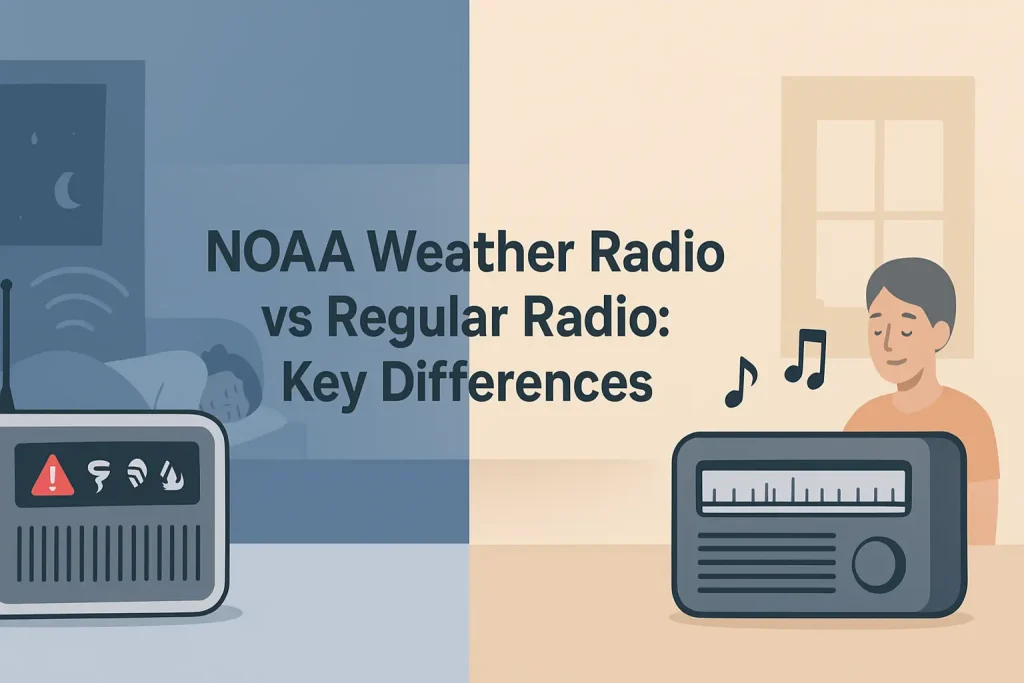
NOAA Weather Radio broadcasts critical alerts on seven dedicated frequencies between 162.400 and 162.550 MHz. S.A.M.E. technology uses 6-digit FIPS codes to filter alerts for your exact county.
This filtering prevents your radio from waking you for storms passing 50 miles away. You need the exact FIPS code for your county to use this feature properly.
| Photo | Popular Portable Walkie Talkies | Price |
|---|---|---|
 | SKIWARRIOR Multifunctional Smart Wireless Ski Goggles with Walkie-Talkie, Anti-Fog Zeiss Lens, Music & Call Function (Cylindrical Blue) | Check Price On Amazon |
 | SINORISE Super Mini Walkie Talkies, Two-Way Radios, 3 Pack | Check Price On Amazon |
 | KOSPET Tank M4C Smart Watch Rugged, Dual-Band GPS, 5ATM & IP69K Waterproof | Check Price On Amazon |
 | Retevis RT15 Walkie Talkies 3 Pack, Birthday Gift, Outdoor Adventure Kit | Check Price On Amazon |
 | Rechargeable Walkie Talkies Toys for Kids: DIY Astronaut Walkie Talkies for Boys Christmas Birthday Gifts for 3 4 5 6 7 8 9 10 Boy Walkie Talkie Outdoor Hiking Toy 2 Way Radio Camping Outdoor Game | Check Price On Amazon |
By the Numbers
NOAA FIPS and S.A.M.E. Technology – Key Specifications and Standards
Sources: NOAA NWR documentation, FEMA public alert guidelines
What Are NOAA FIPS Codes and Why Do They Matter?
FIPS codes are Federal Information Processing Standards numbers that identify specific geographic counties. Programming these into your weather radio restricts alerts to your immediate area.
This happens because S.A.M.E. (Specific Area Message Encoding) technology embeds the code in the digital header of the alert broadcast. Your radio compares the received code to your programmed codes.
If the code matches, the radio unmutes and sounds the alert. If the code does not match, the radio stays silent and you sleep through the warning.
FIPS codes matter because a weather radio without S.A.M.E. programming will alert for every county in the broadcast range. You will hear warnings for storms that pose no threat to your location.
According to NOAA National Weather Service documentation, S.A.M.E. decoding is the standard for filtering emergency alerts. This localized filtering reduces alert fatigue and ensures you take real warnings seriously.
You can learn more about this alert system in our guide on how S.A.M.E. weather radio technology works.
How to Read a 6-Digit S.A.M.E. FIPS Code
A standard S.A.M.E. FIPS code consists of exactly six digits. You must enter all six digits correctly for the radio to accept the code.
The code breaks down into three parts. The first digit represents the subdivision code, which is usually zero for an entire county.
The next two digits are the state identifier. For example, 06 represents California and 48 represents Texas.
The final three digits are the county identifier within that state. Combining zero, state code 48, and county code 201 gives you 048201.
This exact 6-digit sequence, 048201, represents Travis County, Texas. Entering this into your radio ensures you only receive alerts for that specific county.
How to Find and Program Your County FIPS Code
Find your local code requires using the NOAA Weather Radio county code lookup tool or navigating the FCC database. You must program this code into your radio to activate the S.A.M.E. filtering feature.
Use the step-by-step process below to program your radio correctly. Following these steps ensures your radio receives the correct localized alerts.
Step-by-Step Guide
How to Program NOAA FIPS Codes on a Weather Radio
4 steps – Estimated time: 5 minutes
Locate Your 6-Digit County Code
Use the NOAA county code lookup tool online to find the exact 6-digit FIPS code for your specific county before touching your radio.
Enter Programming Mode
Press the Menu button on your weather radio, navigate to the S.A.M.E. or Location setup screen to begin code entry.
Input the 6-Digit FIPS Sequence
Use the up and down arrows on your radio keypad to select each digit, confirming each number as you enter the full 6-digit code.
Save and Exit the Menu
Press Menu or Select to save the code to the memory slot, then exit to return to standby mode for active alert monitoring.
State-by-State FIPS Code Lookup Guide
Every state has a specific two-digit identifier that forms the basis of all county codes within its borders. You need this state code to verify you are using the correct FIPS sequence.
For a comprehensive lookup of every county code by state, you can use our extensive S.A.M.E. weather radio codes database. This tool ensures you get the exact 6-digit sequence without errors.
State codes generally follow alphabetical order. For example, Alabama is 01 and Wyoming is 56.
When you search for your local code, double-check that the state identifier matches your location. A single digit error will cause your radio to monitor the wrong county.
Public Alert Certified Weather Radios for S.A.M.E. Programming
Not all weather radios support S.A.M.E. technology. You must verify that the device packaging displays the Public Alert logo before purchasing.
The Midland WR400 weather radio is an excellent desktop option that supports up to 25 different alert types.
- Key Specifications: Frequency: 162.400 to 162.550 MHz (7 NOAA channels).
- S.A.M.E. alert types: 25.
- Alert memory: 50 programmable S.A.M.E. codes.
- Power: AC adapter + 6x AA battery backup.
This model allows you to program multiple locations, which is useful if you live near a county border. The color-coded alert display also shows the severity of the warning instantly.
Another solid choice for localized alerts is the Uniden BC365CRS weather radio. It includes S.A.M.E. decoding and a built-in scanner for local public safety channels.
You can compare these models with other top-rated options in our comprehensive review of the best weather radios for home use.
Understanding NOAA Alert Types and EAS Codes
NOAA Weather Radio broadcasts more than just severe weather warnings. The system uses Emergency Alert System (EAS) codes to categorize different types of hazards.
Your S.A.M.E. equipped radio reads these EAS codes to determine how to alert you. A Tornado Warning triggers a loud siren, while a routine bulletin uses a softer tone.
According to current FEMA guidelines, the system categorizes alerts into three threat levels. These include warnings, watches, and advisories.
Warnings indicate an imminent threat to life and property. Watches mean conditions are favorable for severe weather, and advisories highlight less hazardous conditions.
You need to understand these categories to decide whether to seek shelter immediately or just monitor the sky. Our guide on how NOAA weather radio alerts work explains these hazard codes in detail.
Why Your Weather Radio Antenna Position Matters for Reception
Programming the correct FIPS code is useless if your radio cannot receive the broadcast signal. NOAA transmits on VHF frequencies between 162.400 and 162.550 MHz, which require a clear line of sight.
This happens because VHF radio waves travel in relatively straight lines and do not penetrate dense obstacles easily. Mountains, large hills, and thick concrete buildings will block the signal.
This only occurs when you place the radio near an exterior wall or window. Placing the unit in a basement with concrete walls often results in total signal loss.
If your reception is poor, the result is missed alerts even during a tornado warning. Fix it by extending the telescopic antenna fully and moving the radio to a window facing the nearest transmitter.
You can find the transmitter locations and frequencies by checking the local NOAA weather radio frequency list.
Troubleshooting S.A.M.E. Alert Issues
Sometimes a programmed weather radio fails to sound an alert during a severe storm. The most frequent cause is an incorrectly entered FIPS code.
Check to ensure you did not transpose any digits in your 6-digit county code. A common mistake is entering the state code backwards or missing the leading zero.
Another common issue is over-filtering alerts. If you disable certain EAS codes while programming, you might silence critical warnings like Flash Flood alerts.
Battery failure also causes missed alerts. If your AC power goes out during a storm and your backup batteries are dead, the radio cannot function.
Test your radio weekly using the built-in test button when NOAA broadcasts their weekly test. This ensures your speaker and circuitry are working properly.
For step-by-step instructions on managing these alerts, refer to our guide on how to operate a NOAA weather radio.
How Preppers Use S.A.M.E. Codes for Severe Weather Tracking
Emergency preparedness enthusiasts use multiple S.A.M.E. codes to track storms moving across their region. Programming your home county plus adjacent counties gives you early warning.
If you program the county to your west, you receive alerts when a storm enters that area. This gives you 15 to 30 minutes of advance notice before the storm hits your location.
This strategy is particularly useful during active tornado seasons. You will know a tornado warning is likely before the local sirens even sound.
You need a reliable, highly durable radio for emergency scenarios. We recommend checking out the best weather alert radios for tornadoes for this specific application.
Can I Program Multiple FIPS Codes Into One Weather Radio?
Yes, most modern S.A.M.E. weather radios allow you to program multiple 6-digit FIPS codes into the memory bank. The Midland WR400 supports up to 25 different county codes simultaneously.
This feature is highly recommended if you live near a county or state border. You will receive alerts for areas where storms might soon track into your neighborhood.
Programming adjacent counties to your immediate west or south gives you actionable lead time during severe weather. You can use this extra time to move to your storm shelter or secure your property.
Keep in mind that programming too many counties will increase the number of alerts you receive. Choose only the areas directly upwind of your location to prevent alert fatigue.
Why Does My Weather Radio Not Alert When the County Issues a Warning?
Your radio fails to alert during an active warning usually due to an incorrectly programmed FIPS code or poor signal reception. Verify your 6-digit code starts with a zero and matches your exact county.
If the code is correct, check the telescopic antenna to ensure it is fully extended. Relocate the radio to a window facing the direction of the nearest NOAA transmitter tower.
Battery depletion is the third leading cause of missed alerts. Power outages frequently accompany severe storms, so fresh backup batteries are critical for continuous operation.
Do S.A.M.E. FIPS Codes Change Over Time?
No, FIPS codes for designated counties rarely change unless there is a major geopolitical boundary adjustment. The 6-digit sequence assigned to your county remains valid indefinitely.
However, NOAA occasionally updates the EAS event codes that accompany the FIPS codes in the broadcast header. You should ensure your radio firmware or programming logic supports current EAS standards.
Always verify your programmed codes after a prolonged power outage. Older model radios sometimes lose their S.A.M.E. memory if the backup batteries die completely.
Conclusion
Programming the correct 6-digit FIPS code into your S.A.M.E. weather radio ensures you receive life-saving alerts for your exact location. By filtering out neighboring counties, you eliminate false alarms and take real warnings seriously.
Verify your state and county code today, install fresh backup batteries, and test your receiver to ensure it is ready for the next storm. Proper programming is the most critical step in emergency radio preparedness.
| Photo | TOP RATED WALKIE TALKIES | Price |
|---|---|---|
 | Retevis RT628 Kids Walkie Talkies, Toys Gifts for 4-12 Year Old Girl Boy | Check Price On Amazon |
 | Cobra ACXT545 Weather-Resistant Walkie Talkies, Rechargeable, 22 Channels | Check Price On Amazon |
 | Retevis RT388 Kids Walkie Talkies, Outdoor Toys for Kids Camping Essentials | Check Price On Amazon |
 | Cobra RX680 Walkie Talkies (2-Pack), IP54 Water Resistant Design | Check Price On Amazon |
 | Retevis RT22 Walkie Talkies Long Range Rechargeable with Earpiece (2 Pack) | Check Price On Amazon |
 | Midland GXT1000VP4 GMRS JIS4 Two-Way Radio, Black,2 Pack | Check Price On Amazon |
 | Retevis RT628 Walkie Talkies for Kids,Toys Gifts for 6-12 Years Old Boys Girls,Long Range 2 Way Radio 22CH VOX,Birthday Gift,Family Walkie Talkie for Camping Hiking Indoor Outdoor | Check Price On Amazon |