Your phone already receives NOAA weather alerts through the Wireless Emergency Alert system, but that is a completely different technology from NOAA Weather Radio All Hazards (NWR). The good news is that you can get true NOAA weather radio on your phone through dedicated apps that stream live NWR broadcasts directly from the seven official frequencies between 162.400 and 162.550 MHz.
This guide covers every method available, including free apps for iPhone and Android, hardware receivers that work with your phone, and when a dedicated NOAA weather alert radio is still the smarter choice for emergency preparedness.
| Photo | Popular Portable Walkie Talkies | Price |
|---|---|---|
 | SKIWARRIOR Multifunctional Smart Wireless Ski Goggles with Walkie-Talkie, Anti-Fog Zeiss Lens, Music & Call Function (Cylindrical Blue) | Check Price On Amazon |
 | SINORISE Super Mini Walkie Talkies, Two-Way Radios, 3 Pack | Up to 12 Hours Battery Life, for Baseball Coaches, Restaurants, Retail Stores, Hospitals, Outdoor Sports & Travel | Check Price On Amazon |
 | KOSPET Tank M4C Smart Watch Rugged, Dual-Band GPS, 5ATM & IP69K Waterproof | 1.96" AMOLED Display, 170+ Sport Modes, Built-in LED Flashlight/Walkie-Talkie, Heart Rate/Sleep Monitor for Android & iPhone | Check Price On Amazon |
 | Retevis RT15 Walkie Talkies 3 Pack, Birthday Gift, Outdoor Adventure Kit | Durable, Lightweight, VOX, Key Lock, Mini Walkie Talkies for Adults, School Family Outdoor Travel Camping Hiking | Check Price On Amazon |
 | Rechargeable Walkie Talkies Toys for Kids: DIY Astronaut Walkie Talkies for Boys Christmas Birthday Gifts for 3 4 5 6 7 8 9 10 Boy Walkie Talkie Outdoor Hiking Toy 2 Way Radio Camping Outdoor Game | Check Price On Amazon |
By the Numbers
NOAA Weather Radio All Hazards – Key Coverage and Technology Facts
Sources: NOAA National Weather Service NWR documentation, FCC Part 90 frequency allocations.
What Is NOAA Weather Radio and Why Does Your Phone Not Already Receive It?
NOAA Weather Radio All Hazards is a nationwide network of radio stations broadcasting continuous weather information directly from National Weather Service offices on seven VHF frequencies between 162.400 and 162.550 MHz. These frequencies sit in a narrow slice of the VHF high band reserved exclusively for government weather broadcasts, which is why standard FM radios (88-108 MHz) and cell phone radios cannot tune to them.
The reason your phone cannot receive NWR natively is a hardware limitation, not a software one. Modern smartphones include a cellular modem, a Bluetooth chip, and sometimes an FM radio chip covering 87.5-108 MHz, but none include a VHF receiver capable of reaching 162 MHz. That gap is roughly 54 MHz above the top of the FM band, which requires a completely different tuner circuit.
Wireless Emergency Alerts (WEA), the system that sends tornado and flood warnings as loud text messages to your phone, is a separate technology entirely. WEA messages travel over the cellular network using a broadcast channel called Cell Broadcast Service. They are fast and reach any phone within range of a cell tower, but they carry only short text messages and depend entirely on the cellular network remaining operational.
NOAA Weather Radio broadcasts continuously on dedicated VHF frequencies regardless of cellular network status, and it carries full audio briefings, hourly forecasts, and S.A.M.E.-coded alerts that can wake a sleeping receiver for a specific county without sounding for the entire state. For a deeper explanation of what the NWR network is and how it operates, the full breakdown of the NOAA weather radio broadcast system covers the transmitter network, alert encoding, and coverage zones in detail.
The practical consequence is this: if the cellular towers in your area lose power during a major storm, WEA stops working. NOAA Weather Radio keeps broadcasting.
Can You Actually Get NOAA Weather Radio on Your Phone?
Yes, but with one important condition: your phone does not receive the 162 MHz signal directly, so every phone-based method either streams the audio over the internet or uses an external hardware receiver plugged into your phone. Both approaches work well under normal conditions, but only the hardware receiver approach works when the internet is down.
There are three practical methods for getting NWR on a smartphone. The first uses internet-streaming apps that rebroadcast the live NWR audio feed. The second uses a software-defined radio (SDR) receiver connected to your phone via USB OTG, which receives the actual 162 MHz signal. The third uses a dedicated portable NOAA weather radio alongside your phone rather than replacing it.
Each method has a different failure point and a different setup complexity. The right choice depends on whether you need weather radio access during a power outage, how technically comfortable you are with radio hardware, and whether you want alerts that wake your phone automatically like a dedicated weather radio does.
Method 1: NOAA Weather Radio Apps That Stream Live NWR Audio
The simplest way to hear NOAA Weather Radio on your phone is through an internet-streaming app that connects to live audio feeds of NWR transmitter broadcasts. These apps do not receive the 162 MHz signal directly. Instead, they connect to servers that have receiver hardware pointed at NWR transmitters and stream the audio to your phone over Wi-Fi or cellular data.
The most reliable apps for this use case include the following options, each with distinct strengths.
NOAA Weather Radio App (iOS and Android)
The official NOAA Weather Radio app from the National Weather Service streams live audio from any of the 1,000+ NWR transmitters in the network. You select your nearest transmitter by state and county, and the app plays the continuous broadcast including hourly forecasts, current conditions, and all active alerts.
The app also supports push notification alerts based on your GPS location, which means it can notify you of a tornado warning for your specific county without requiring you to have the audio stream running. This mimics the county-specific S.A.M.E. alert function of a dedicated weather radio, delivered over the internet.
Key limitation: the app requires an active internet connection. If cellular service is disrupted during a major weather event, the stream stops.
Weather Radio by Elertus
The Elertus weather alert system takes a different approach. It pairs a physical monitor device in your home with a smartphone app. The monitor receives the actual NWR broadcast on 162 MHz using a built-in VHF receiver, then retransmits alert notifications to your phone via Wi-Fi on your local network. This gives you local VHF reception with smartphone notification delivery, and it works even if the cellular network is congested during a storm because it routes through your home Wi-Fi, not a cell tower.
Broadcastify (RadioReference Audio Streaming)
Broadcastify streams live audio from hundreds of radio feeds including NOAA Weather Radio stations across all 50 states. It is primarily a scanner app for public safety radio, but NWR feeds are among the most popular streams on the platform. You can bookmark your local NWR transmitter and return to it instantly.
Broadcastify does not send push alerts when warnings are issued. It is a passive listening tool, which makes it more useful for monitoring conditions than for receiving automatic warnings.
For a comprehensive comparison of the best iPhone-specific weather radio apps with feature-by-feature breakdowns, the top-rated NOAA weather radio apps for iPhone guide covers setup, alert settings, and when each app outperforms the others.
Method 2: Receiving the Actual 162 MHz Signal with a Hardware Receiver on Your Phone
If you want your phone to receive the real 162.400-162.550 MHz NWR signal without depending on the internet, a software-defined radio (SDR) dongle connected to your phone via USB OTG is the only hardware method that accomplishes this. An SDR dongle is a small USB receiver, typically based on the RTL2832U chipset, that can tune to frequencies from roughly 25 MHz to 1,750 MHz when combined with compatible software.
This approach requires an Android phone with USB OTG support, an RTL-SDR V3 dongle with antenna, a USB OTG adapter matching your phone’s port type, and an Android app such as SDR Touch or SDRoid that processes the radio signal in software.
Setup involves connecting the dongle to your phone through the OTG adapter, launching the SDR app, tuning to your nearest NWR frequency (for example, 162.550 MHz for WX1), and setting the modulation mode to NFM (narrow FM). The app demodulates the signal in real time and plays the audio through your phone’s speaker.
Key Specifications for RTL-SDR V3 Dongle:
- Frequency range: 500 kHz to 1.75 GHz (covers all 7 NWR frequencies at 162 MHz)
- Modulation modes supported: FM, AM, SSB, CW (via software)
- Interface: USB 2.0 (requires OTG adapter for Android phones)
- iOS compatible: No (iOS does not support USB OTG audio streaming from SDR apps)
- Typical price: $25-35 for the dongle plus antenna
The SDR method works offline because it receives the actual radio signal broadcast from the NWR transmitter. It does not require cellular data or Wi-Fi. The practical limitation is battery drain: the SDR dongle draws power from the phone’s battery through the USB port, which can reduce battery life by 15-25% per hour of active use.
This method also does not send automatic alerts. You must have the app open and running to hear an alert tone when a warning is issued. It is best suited for active monitoring during severe weather rather than passive overnight alerting.
Method 3: Using a Dedicated Weather Radio Alongside Your Phone
The most reliable approach for emergency preparedness is not to replace a dedicated weather radio with your phone, but to use both. A Midland WR400 weather radio or Uniden BC365CRS receives NWR directly on 162 MHz, decodes S.A.M.E. alert codes to filter warnings by county, and wakes itself from standby with an alarm tone when a relevant alert is broadcast, all without requiring internet access or battery drain from a smartphone.
A dedicated weather radio continues operating on AA battery backup when grid power is lost during a storm. Your phone-based streaming apps stop working the moment cellular data is disrupted or your phone battery dies.
Key Specifications for Midland WR400:
- NWR frequencies: All 7 channels (162.400, 162.425, 162.450, 162.475, 162.500, 162.525, 162.550 MHz)
- S.A.M.E. alert codes: 25 programmable event types
- Location codes: Up to 50 programmable FIPS S.A.M.E. county codes
- Power: AC adapter with 6x AA battery backup
- Alert output: 90 dB alarm tone plus voice alert broadcast
- Typical price: $40-55
The strategic use case for both devices is straightforward: the dedicated weather radio handles overnight alerting and power-outage scenarios, while your phone’s streaming app provides convenient daytime monitoring and push notifications when you are away from home.
Use the table below to compare the three phone-based methods against a dedicated weather radio across the dimensions that matter most for emergency preparedness.
| Method | Works Offline | Auto Alerts | S.A.M.E. Filter | Setup Cost | Best For |
|---|---|---|---|---|---|
| Streaming App (NOAA WR App) | No | Yes (push) | Yes (GPS) | Free | Daily monitoring, travel |
| SDR Dongle + Android | Yes | No | No | $25-35 | Off-grid active monitoring |
| Elertus Monitor + App | Partial (home Wi-Fi) | Yes | Yes | $50-80 | Home alerting, families |
| Dedicated Weather Radio | Yes | Yes | Yes | $30-60 | Emergency preparedness, power outages |
The right combination for most households is a free streaming app for daily use and a dedicated weather radio for emergency standby. That covers both the convenience scenario and the power-outage scenario without relying on a single point of failure.
Here is a step-by-step guide to setting up each method so you can choose the one that fits your situation.
Step-by-Step Guide
How to Set Up NOAA Weather Radio on Your Phone Using the Official NWR App
6 steps · Estimated time: 5 minutes · Works on iOS and Android
Download the NOAA Weather Radio app from the App Store or Google Play
Search for “NOAA Weather Radio” in your device’s app store. The official app is published by the National Weather Service and is free with no in-app purchases.
Allow location permissions when prompted
The app uses your GPS coordinates to identify your nearest NWR transmitter and to filter push alerts to your specific county using GPS-based S.A.M.E. code matching. Without location access, county-specific alerting does not function.
Select your state and nearest NWR transmitter from the station list
The app lists NWR transmitters by state and call sign (for example, KEC49 in Memphis, TN broadcasting on 162.550 MHz). Choose the transmitter closest to your location for the strongest and most locally relevant signal.
Enable push notifications and set the alert severity threshold
In the app’s notification settings, choose which alert types wake your phone: Warnings (Tornado, Flash Flood), Watches, Advisories, or all three. Setting threshold to Warnings only reduces false wake-ups from lower-priority advisories.
Tap the Play button to start the live NWR audio stream
The app connects to the internet stream of your selected transmitter and begins playing live NWR audio. You will hear the synthesized voice reading current conditions, forecasts, and any active alerts for your area.
Test the alert function using the app’s test alert feature or during the next scheduled weekly NWR test
NOAA broadcasts a required weekly test of the NWR alert system every Wednesday between 11 AM and noon local time. Confirm your app delivers the test notification to verify your alert settings are configured correctly.
The Seven NOAA Weather Radio Frequencies and How to Find the Right One for Your Location
NOAA Weather Radio broadcasts on seven frequencies in the 162 MHz VHF band, and each frequency serves a different geographic region. Most smartphones and streaming apps automatically select the nearest transmitter based on your GPS location, but if you are configuring an SDR receiver or a dedicated weather radio manually, you need to know which frequency your nearest transmitter uses.
The seven NWR frequencies are as follows: 162.400 MHz (WX2), 162.425 MHz (WX4), 162.450 MHz (WX5), 162.475 MHz (WX6), 162.500 MHz (WX3), 162.525 MHz (WX7), and 162.550 MHz (WX1). WX1 at 162.550 MHz is the most widely used frequency in the United States and is the first to try if you are scanning for a signal manually.
Transmitter coverage typically extends 40 miles from the broadcast site at ground level. In mountainous terrain, coverage can drop to 20-25 miles in valleys due to line-of-sight blocking. For the complete list of transmitter locations organized by state, the state-by-state NWR transmitter station directory lists every active transmitter with its call sign, frequency, and coverage area.
If you are between two transmitters, listen to both frequencies and use the one with the stronger, cleaner signal. A signal with heavy static or dropout during a storm is not reliable enough for emergency alerting, and an SDR dongle with a better VHF antenna tuned for 162 MHz can significantly improve reception compared to the short stub antenna included with most RTL-SDR kits.
Knowing which frequency your nearest transmitter uses is the single most important setup step for any manual NWR receiver configuration.
What S.A.M.E. Technology Is and Why It Matters for Phone-Based Weather Radio
S.A.M.E. stands for Specific Area Message Encoding. It is a digital header code broadcast at the beginning of every NWR alert that identifies the geographic area affected, the type of hazard, and the alert’s valid time. A weather radio or app that decodes S.A.M.E. codes can wake you for a tornado warning in your specific county while staying silent for an identical warning in a neighboring county 30 miles away.
S.A.M.E. codes use the Federal Information Processing Standard (FIPS) format: a 6-digit code where the first digit is a subdivision identifier (usually 0 for the whole county), the next two digits are the state FIPS code, and the final three digits identify the county. For example, 037113 identifies Cook County, Illinois.
On a dedicated weather radio like the Midland WR120 or Uniden Bearcat weather radio with S.A.M.E., you program your county’s FIPS code into the receiver and it only activates its alarm for that county and adjacent counties you specify. Without S.A.M.E. filtering, a weather radio alerts for every county served by the transmitter, which can mean 10-20 alerts per night in an active storm season.
Phone-based streaming apps handle S.A.M.E. filtering differently. The NOAA Weather Radio app and similar services use your GPS coordinates to determine your county FIPS code automatically, then filter incoming NWR alert headers against that code before sending a push notification. This mimics S.A.M.E. filtering without requiring you to look up or enter a FIPS code manually.
The SDR dongle method does not include S.A.M.E. decoding unless you run specialized decoding software alongside the SDR app. The open-source multimon-ng tool can decode S.A.M.E. headers from an SDR audio stream on Android, but setup requires technical configuration beyond the scope of basic SDR use. For most users, the streaming app approach delivers equivalent alert filtering with far less complexity.
To understand the complete list of S.A.M.E. event codes and what triggers each one, the guide to all seven NOAA weather radio frequencies and S.A.M.E. alert codes covers every event type from Tornado Warnings to Special Marine Statements with the broadcast priority for each.
How Phone-Based NOAA Weather Radio Compares to Wireless Emergency Alerts
Wireless Emergency Alerts (WEA) and NOAA Weather Radio are both federal alert systems, but they operate on entirely different infrastructure and serve different alerting purposes. Understanding the difference determines when your phone’s built-in WEA capability is sufficient and when you need the NWR system running as a supplement.
Use the table below to understand which system handles which type of emergency alert and what the key performance differences are between them.
| Characteristic | Wireless Emergency Alerts (WEA) | NOAA Weather Radio (NWR) |
|---|---|---|
| Transmission method | Cell Broadcast over LTE/5G | VHF radio at 162.400-162.550 MHz |
| Works without cell service | No | Yes (dedicated receiver required) |
| Alert types covered | Presidential, Imminent Threat, AMBER, Public Safety | 25+ event types including marine, aviation, hazmat |
| Geographic precision | Cell tower coverage polygon | FIPS county code (S.A.M.E.) |
| Continuous broadcast | No (alert-only) | Yes (24/7 audio) |
| Forecasts and conditions | No | Yes (hourly updates) |
| Hardware required | None (built into phone) | App (internet) or external receiver |
WEA handles the most critical life-safety alerts with zero setup and no additional hardware. NWR provides deeper coverage, continuous forecasts, and resilience when the cellular network fails. A full breakdown of how these two systems differ in real storm scenarios, including which one activates first during a tornado warning, is covered in the comparison of weather radio versus wireless emergency alert systems with response time data from actual severe weather events.
The two systems complement each other rather than competing: use WEA as your automatic baseline and NWR as your deeper monitoring layer.
What Happens to Your Phone-Based Weather Radio When the Internet Goes Down
Internet-dependent NWR streaming apps stop functioning the moment your cellular data or home Wi-Fi is disrupted. During major weather events including hurricanes, ice storms, and large tornado outbreaks, cellular networks frequently become congested or lose power at tower sites, which is exactly when weather alert access is most critical.
This is the core failure mode of the streaming app approach. The 162 MHz NWR signal continues broadcasting from the NWR transmitter, but your streaming app cannot reach the internet relay server that delivers it to your phone. The broadcast is happening, but you cannot hear it.
The SDR dongle method avoids this failure because it receives the actual 162 MHz signal directly from the transmitter, not through the internet. If you are in the coverage area of an NWR transmitter (within 40 miles under normal conditions), the SDR dongle will receive the broadcast regardless of cellular or internet status, as long as your phone has battery power.
A hand-crank solar emergency weather radio eliminates the battery dependency entirely. Models like the Midland ER310 include a hand-crank generator, a solar panel, and a 2,600 mAh battery that can also charge your phone via USB. This provides NWR reception with no dependence on grid power, cellular networks, or internet infrastructure.
For a full map of NWR transmitter locations and coverage polygons, which helps you determine whether you are within reliable 162 MHz reception range, the interactive NOAA weather radio transmitter coverage map shows every active site with signal strength contours and the frequency each transmitter broadcasts on.
The practical recommendation for emergency preparedness is to treat the streaming app as a convenience tool and the dedicated weather radio or SDR dongle as the backup that functions when infrastructure fails.
Quick Reference: Key NOAA Weather Radio Terms
Quick Reference
NWR (NOAA Weather Radio All Hazards): The federal network of over 1,000 VHF radio transmitters that broadcasts continuous weather information on seven frequencies between 162.400 and 162.550 MHz.
S.A.M.E. (Specific Area Message Encoding): A digital header code in NWR broadcasts that identifies the affected county by FIPS code, the hazard type, and the alert’s expiration time, allowing receivers to filter alerts by location.
FIPS code: A 6-digit Federal Information Processing Standard number that uniquely identifies each US county. Used in S.A.M.E. headers to specify which counties an alert applies to.
WEA (Wireless Emergency Alerts): A government alert system that broadcasts short text messages to all cell phones within range of activated cell towers. Separate from NWR and does not require any app or setup.
EAS (Emergency Alert System): The federal system that interrupts broadcast television and radio with emergency alerts. NWR is part of the EAS infrastructure alongside broadcast TV and AM/FM radio.
SDR (Software-Defined Radio): A radio receiver where signal processing is handled in software rather than dedicated hardware circuits. An RTL-SDR dongle plugged into a phone can tune to 162 MHz NWR frequencies.
RTL-SDR: A type of SDR dongle based on the RTL2832U chip, originally designed for digital TV reception. Covers roughly 25 MHz to 1.75 GHz, making it capable of receiving NWR at 162 MHz.
USB OTG (On-The-Go): A USB standard that allows Android phones to act as a USB host, enabling connection of peripherals like SDR dongles directly to the phone’s charging port via an adapter.
NFM (Narrow FM): The modulation mode used by NWR transmitters. When using an SDR app to receive NWR, you must set the demodulation mode to NFM to decode the audio correctly.
VHF high band: The frequency range from 136 to 174 MHz. NOAA Weather Radio at 162 MHz sits within this band, which is also used for aviation communication (118-136 MHz) and marine VHF (156-174 MHz).
Does NOAA Weather Radio Work on iPhone?
NOAA Weather Radio streaming apps work on iPhone through internet-based NWR audio streams. The NOAA Weather Radio app, available free from the App Store, streams live NWR broadcasts and sends push notifications for county-specific alerts based on your GPS location. iPhone hardware does not include a VHF receiver capable of tuning to 162 MHz, and Apple’s iOS does not support USB OTG connections to SDR dongles, so direct radio reception on iPhone requires a separate Bluetooth or Wi-Fi-connected hardware device rather than a USB dongle.
iPhone users have three practical options. First, use the free NOAA Weather Radio app or a third-party streaming app like Broadcastify to listen to live NWR audio over the internet. Second, use an Elertus monitor, which acts as a home NWR receiver and pushes alerts to your iPhone via your local Wi-Fi network, bypassing cellular congestion. Third, keep a dedicated battery-powered weather radio as a standalone backup device.
The streaming app covers everyday monitoring. The dedicated receiver covers power-outage scenarios where the streaming app fails.
Is a NOAA Weather Radio App as Good as a Dedicated Weather Radio?
A NOAA Weather Radio streaming app is equally effective for daily monitoring but significantly less reliable during the severe weather events it is designed for. The core difference is infrastructure dependency: a streaming app requires cellular data or Wi-Fi to function, while a dedicated weather radio like the Sangean CL-100 receives the 162 MHz NWR signal directly from the transmitter with no internet connection required.
In a major hurricane or ice storm scenario, cellular networks frequently fail due to tower flooding, power loss at cell sites, or extreme congestion from millions of simultaneous calls. NOAA Weather Radio transmitters are designed with backup power and continue broadcasting through extended grid outages. A phone app stops working precisely when weather conditions are most dangerous, while a dedicated weather radio with battery backup continues operating.
For households in tornado-prone or hurricane-affected regions, the correct answer is both: use the app for convenient daily access and maintain a dedicated weather radio as the emergency backup that does not depend on any other infrastructure.
Can You Receive NOAA Weather Radio Without Wi-Fi or Cell Service?
Yes, but only with hardware that receives the 162 MHz VHF signal directly rather than streaming it over the internet. A dedicated NOAA weather radio, an SDR dongle connected to an Android phone via USB OTG, or a combination emergency AM/FM/NOAA weather radio all receive the NWR broadcast without any internet or cellular connection. The signal comes directly from the nearest NOAA transmitter, which broadcasts continuously on 162.400-162.550 MHz regardless of internet infrastructure status.
Streaming apps that deliver NWR audio over the internet cannot receive NWR without Wi-Fi or cell service, because they are relaying the audio from a server rather than receiving the radio signal directly. This is why the choice between streaming and hardware reception matters significantly for emergency preparedness use cases rather than casual daily monitoring.
Which NOAA Weather Radio Frequency Should You Tune to for Your Area?
The most common NWR frequency in the United States is 162.550 MHz (WX1), used by more transmitters than any other channel. Start there if you are unsure of your local transmitter’s frequency. If you get no signal or poor audio quality, scan through the remaining six frequencies: 162.400 (WX2), 162.425 (WX4), 162.450 (WX5), 162.475 (WX6), 162.500 (WX3), and 162.525 (WX7) in order until you find a clear broadcast.
Most streaming apps and dedicated weather radios with automatic channel scan (such as the Uniden BC365CRS) will automatically identify the strongest NWR signal in your area and lock onto it. For manual SDR tuning, 162.550 MHz is always the first frequency to try. If you are within 40 miles of a major metropolitan area, the transmitter almost certainly broadcasts on either 162.550 or 162.400 MHz.
Do NOAA Weather Radio Apps Drain Your Phone Battery?
Internet-streaming NWR apps consume approximately the same battery power as any other internet audio streaming app: roughly 5-10% of battery per hour when actively streaming, and minimal battery drain when running in the background with push notifications enabled but audio stream paused. The NOAA Weather Radio app in push-notification-only mode (no active audio stream) draws similar power to any other location-aware notification app, typically 1-3% of battery per hour depending on GPS polling frequency.
The SDR dongle method draws significantly more battery because it continuously powers the USB hardware through the phone’s OTG port. An RTL-SDR dongle draws approximately 160-300 mA, which can reduce phone battery life by 20-30% per hour depending on phone model and screen state. Keep the phone plugged into a USB power bank when using the SDR dongle method for extended monitoring sessions.
What Is the Difference Between NOAA Weather Radio and the Emergency Alert System?
NOAA Weather Radio (NWR) and the Emergency Alert System (EAS) are related but distinct systems. NWR is a specific radio broadcast network operating on seven VHF frequencies between 162.400 and 162.550 MHz. The EAS is the broader federal framework that activates emergency interruptions across all broadcast media simultaneously, including NWR, AM/FM radio, broadcast TV, cable TV, and satellite radio. NWR is one component of the EAS infrastructure, not a synonym for it.
When a tornado warning is issued, the National Weather Service sends an EAS activation message to all participating broadcasters simultaneously. This activates the alert tone on dedicated weather radios and triggers the characteristic attention signal heard on broadcast TV and radio. WEA messages sent to cell phones are issued through the Integrated Public Alert and Warning System (IPAWS), which overlaps with EAS but uses the cellular network’s Cell Broadcast Service channel rather than radio frequencies.
Can You Use NOAA Weather Radio While Camping or in a Remote Area Without Cell Service?
Yes, with the right hardware. A battery-powered or hand-crank weather radio receives the 162 MHz NWR signal directly from the nearest transmitter, and NWR coverage reaches approximately 95% of the US population according to NOAA documentation. In remote areas, coverage depends entirely on distance from the nearest transmitter and terrain. Open terrain with clear line of sight to a transmitter can extend usable reception to 50-60 miles. Dense forest, mountains, or valleys can reduce usable range to 20 miles or less.
For camping use, a hand-crank emergency weather radio with a built-in solar panel is the most practical option. It requires no battery purchases, charges during daylight hours, and receives all seven NWR frequencies without any internet dependency. Models like the Midland ER310 also include a USB output for phone charging, making them dual-purpose emergency tools. If you are camping in a location where no NWR frequency produces a clean signal, a satellite messenger device provides weather alerts from orbit with no dependency on terrestrial radio infrastructure.
Are There Free NOAA Weather Radio Apps, or Do You Have to Pay?
The official NOAA Weather Radio app from the National Weather Service is completely free with no in-app purchases or subscription fees. It streams live NWR audio, sends push notifications for county-specific alerts based on GPS location, and provides access to every transmitter in the NWR network. Broadcastify, which includes NWR feeds among its scanner audio streams, is also free for basic use with an optional premium tier that removes ads and unlocks additional features.
Third-party weather apps such as Weather Underground, the Weather Channel app, and AccuWeather include NWS alert notifications but do not stream actual NWR audio. These apps send NWS-issued warning notifications derived from the same alert data that feeds NWR, but they are not delivering the actual radio broadcast. For true NWR audio streaming on a phone, the official NOAA Weather Radio app is the simplest, most reliable, and completely free option for both iOS and Android.
How Do You Know If Your NOAA Weather Radio App Is Working Correctly?
NOAA broadcasts a required weekly test of the NWR alert system every Wednesday between 11 AM and noon local time in most regions. This test includes the standard EAS attention tone followed by a voice announcement identifying it as a required weekly test. If your app delivers this test notification and plays the test audio, both the alert notification function and the audio streaming function are confirmed working correctly.
If you miss the weekly test, you can verify push notifications by enabling the “All Hazard” notification setting in your app, which includes lower-priority advisories and statements that are issued frequently in most regions. Receiving any advisory notification confirms the push alert system is functional. You can also manually open the app and tap Play to confirm the audio stream is connecting and playing the live NWR broadcast. A complete silence or buffering loop indicates a connectivity issue with the stream relay server, not a problem with the NWR transmitter itself.
Getting NOAA Weather Radio on your phone takes five minutes with a free app, and adding a dedicated weather radio as a backup costs less than $40 for a reliable S.A.M.E.-capable unit. Use the streaming app for daily convenience, keep a battery-powered receiver for the nights when infrastructure fails, and you have complete NWR coverage across every scenario from routine daily monitoring to a major storm that takes down cell towers.
| Photo | TOP RATED WALKIE TALKIES | Price |
|---|---|---|
 | Retevis RT628 Kids Walkie Talkies, Toys Gifts for 4-12 Year Old Girl Boy | Kids Camping Essentials Outdoor Toys, Birthday Gift, 22CH, VOX, Keypad Lock, Durable, Easy to Use Walkie Talkies for Kids | Check Price On Amazon |
 | Cobra ACXT545 Weather-Resistant Walkie Talkies, Rechargeable, 22 Channels | Long Range 28-Mile Two-Way Radio Set (2-Pack) | Check Price On Amazon |
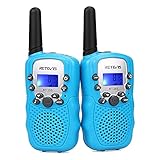 | Retevis RT388 Kids Walkie Talkies, Outdoor Toys for Kids Camping Essentials | 4-12 Year Old Boy Birthday Gift, 22 CH VOX Flashlight Clear Sound, Kids Walkie Talkies 2 Pack for Camping Hiking Adventure | Check Price On Amazon |
 | Cobra RX680 Walkie Talkies (2-Pack), IP54 Water Resistant Design | Rugged & Splashproof Two Way Radios Long Range, 60 Pre-Programmed Channels, Weather Alerts | Check Price On Amazon |
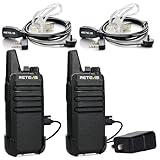 | Retevis RT22 Walkie Talkies Long Range Rechargeable with Earpiece (2 Pack) | Slim & Lightweight 2 Way Radio For Camping & Hiking, Pocket-Friendly Antenna, Ready to Use, 10-Hour Battery, USB-C Charging | Check Price On Amazon |
 | Midland GXT1000VP4 GMRS Two-Way Radios with Headsets, Black, 2 Pack | 50 Channels, 142 Privacy Codes, Up to 36 Mile Long Range, JIS4 Water Resistant, NOAA Weather Alert, Rechargeable NiMH | Check Price On Amazon |
 | Retevis RT628 Walkie Talkies for Kids,Toys Gifts for 6-12 Years Old Boys Girls,Long Range 2 Way Radio 22CH VOX,Birthday Gift,Family Walkie Talkie for Camping Hiking Indoor Outdoor | Check Price On Amazon |