
Modern aviation radio systems use advanced audio processing to ensure clear communication in high-noise cockpit environments. These technologies filter out engine noise, improve voice clarity, and enhance pilot focus during critical flight operations. This guide explores the core technologies, implementation approaches, and future trends in aviation audio processing that directly impact flight safety and operational efficiency.
Understanding Digital Signal Processing in Aviation Communications
Digital Signal Processing (DSP) forms the foundation of modern aviation radio systems, transforming how pilots communicate in challenging environments. This technology converts analog voice signals into digital data, processes them to remove unwanted noise, and enhances the clarity of communications that are vital for flight safety.
| Photo | Popular Portable Walkie Talkies | Price |
|---|---|---|
 | SKIWARRIOR Multifunctional Smart Wireless Ski Goggles with Walkie-Talkie, Anti-Fog Zeiss Lens, Music & Call Function (Cylindrical Blue) | Check Price On Amazon |
 | SINORISE Super Mini Walkie Talkies, Two-Way Radios, 3 Pack | Up to 12 Hours Battery Life, for Baseball Coaches, Restaurants, Retail Stores, Hospitals, Outdoor Sports & Travel | Check Price On Amazon |
 | KOSPET Tank M4C Smart Watch Rugged, Dual-Band GPS, 5ATM & IP69K Waterproof | 1.96" AMOLED Display, 170+ Sport Modes, Built-in LED Flashlight/Walkie-Talkie, Heart Rate/Sleep Monitor for Android & iPhone | Check Price On Amazon |
 | Retevis RT15 Walkie Talkies 3 Pack, Birthday Gift, Outdoor Adventure Kit | Durable, Lightweight, VOX, Key Lock, Mini Walkie Talkies for Adults, School Family Outdoor Travel Camping Hiking | Check Price On Amazon |
 | Rechargeable Walkie Talkies Toys for Kids: DIY Astronaut Walkie Talkies for Boys Christmas Birthday Gifts for 3 4 5 6 7 8 9 10 Boy Walkie Talkie Outdoor Hiking Toy 2 Way Radio Camping Outdoor Game | Check Price On Amazon |
Unlike older analog systems that relied on basic filtering, modern DSP algorithms in aviation radios can identify and separate speech from background noise with remarkable precision. These systems analyze incoming audio using mathematical algorithms that distinguish between desired voice frequencies and unwanted noise patterns.
The core advantage of DSP in aviation is its ability to adapt to different noise environments. Whether facing engine roar, wind noise, or electrical interference, DSP systems can adjust processing parameters in real-time to maintain communication clarity. According to the Radio Technical Commission for Aeronautics (RTCA), advanced DSP can improve signal-to-noise ratios by 15-20dB in typical cockpit conditions.
DSP technology offers several specific benefits for aviation communications:
- Adaptive noise filtering that adjusts to changing cockpit conditions
- Voice pattern recognition that enhances speech intelligibility
- Automatic gain control to maintain consistent audio levels
- Frequency response shaping for optimal voice clarity
- Echo cancellation for clearer radio transmissions
The transition from analog to digital processing represents one of the most significant improvements in aviation communication history, reducing pilot workload and improving safety through clearer, more reliable communications.
Core Audio Processing Functions in Aviation Radios
Modern aviation radios perform several critical audio processing functions that work together to ensure clear communication. Each function addresses specific challenges in the aviation environment.
Noise reduction algorithms form the foundation of aviation audio processing, working alongside proper microphone gain settings to prevent distorted transmissions. These systems identify and suppress ambient cockpit noise while preserving speech clarity. Advanced systems can reduce cockpit noise by up to 30dB, making a significant difference in high-noise environments.
Automatic gain control (AGC) ensures incoming radio transmissions maintain consistent volume levels regardless of signal strength variations. This prevents pilots from constantly adjusting volume controls, reducing workload during critical flight phases. AGC systems typically normalize audio within 100-200 milliseconds, fast enough to catch the beginning of urgent communications.
Frequency filtering selectively passes desired frequency ranges while blocking others. Aviation voice communications typically focus on the 300-3000Hz range where human speech is most intelligible. By filtering out frequencies outside this range, the system improves clarity while reducing fatigue from unwanted noise.
Voice enhancement processing applies specific adjustments to emphasize speech characteristics. This includes dynamic range compression, harmonic enhancement, and vowel/consonant balancing. These techniques make critical words more distinguishable even in challenging conditions.
Side-tone management feeds a portion of the pilot’s voice back into their headset, providing natural speaking feedback. Without this feature, pilots tend to speak too loudly, causing potential microphone distortion. Proper side-tone levels typically range from -10dB to -20dB relative to the main transmission.
Noise Reduction Technologies in Modern Aviation Audio Systems
Aircraft cockpits present extremely challenging noise environments with sound levels often exceeding 85dB. Modern noise reduction technologies tackle this challenge through multiple approaches, combining both passive and active methods to create clearer communications.
Passive noise reduction relies on physical barriers and sound-absorbing materials within headsets and aircraft designs. These approaches block sound waves from reaching the ear without requiring power or processing. Typical passive systems provide 15-25dB of noise reduction across a broad frequency spectrum.
Active noise cancellation (ANC) generates inverse sound waves that cancel ambient noise. In aviation headsets, tiny microphones capture cockpit noise, and processors create “anti-noise” that neutralizes the original sound waves. High-end aviation ANC systems achieve 30-40dB reduction in the critical low-frequency range where engine noise dominates.

Digital adaptive filtering takes noise reduction further by continuously analyzing the audio environment and adjusting processing parameters. These systems can identify and track changing noise profiles during different flight phases, maintaining optimal communication clarity throughout a flight.
The effectiveness of noise reduction varies by aircraft type and flight conditions:
| Aircraft Type | Typical Noise Level | Required Reduction | Recommended Technology |
|---|---|---|---|
| Piston Single | 85-95dB | 25-35dB | Passive + Basic ANC |
| Turboprop | 90-100dB | 30-40dB | Advanced ANC + Adaptive DSP |
| Jet Aircraft | 75-85dB | 20-30dB | Adaptive DSP + Voice Enhancement |
| Helicopter | 95-105dB | 35-45dB | Premium ANC + Specialized Adaptive DSP |
Research from the Federal Aviation Administration shows that proper noise reduction technology can reduce communication errors by up to 40% in high-noise environments. This directly translates to improved safety margins and reduced pilot fatigue during long flights.
Environmental Factors Affecting Aviation Audio Processing
Aviation presents unique environmental challenges that audio processing systems must overcome. These factors significantly impact how audio processing algorithms must function.
Altitude changes create varying pressure conditions that affect sound propagation and human hearing. As aircraft climb, reduced air density changes how sound waves travel, while pressure differences can affect the eardrum’s response. Modern audio systems must compensate for these effects, especially during rapid altitude changes.
Temperature variations between ground operations and high-altitude flight can affect both electronic components and acoustic properties. Aviation-grade audio processors are designed to maintain consistent performance across temperature ranges from -55°C to +70°C, far exceeding consumer electronics requirements.
Vibration presents a major challenge for aviation audio equipment. Engine and aerodynamic vibrations can introduce mechanical noise into microphones and speakers. Military standard MIL-STD-810 vibration testing ensures aviation audio systems maintain performance under severe vibration conditions.
Electromagnetic interference from aircraft systems, including navigation equipment, engines, and power systems, can degrade audio quality. Aviation radio designs incorporate extensive shielding and filtering to maintain signal integrity. The RTCA DO-160 standard sets specific requirements for electromagnetic compatibility in aviation electronics.
Humidity and moisture variations can affect component performance and acoustic properties. Aviation audio systems include protective coatings and sealed designs to function reliably across humidity levels from desert dryness to tropical conditions.
3D Audio and Spatial Processing in Aviation Communications
3D audio processing represents one of the most significant advancements in aviation communications, creating a spatial audio environment that reduces pilot workload and improves situational awareness. This technology allows pilots to process multiple audio streams simultaneously by positioning them in virtual space around the listener.
Unlike conventional mono audio where all communications arrive from the same perceived direction, 3D audio systems place different audio sources at distinct virtual locations. For example, tower communications might appear to come from above, while ground services seem to originate from below. This spatial separation helps pilots instinctively focus on the most relevant communication without conscious effort.
The technology works by applying subtle timing and frequency adjustments that mimic how human ears naturally process directional sound. These Head-Related Transfer Functions (HRTFs) modify audio signals to create convincing directional cues that the brain interprets as coming from specific locations in three-dimensional space.
Research from NASA Ames Research Center demonstrates that 3D audio significantly improves pilot response times and reduces errors, particularly during night flying when visual panel and radio display brightness must be carefully managed. Studies show a 25% improvement in response accuracy and 20% reduction in workload when managing multiple communication channels.
Implementation varies across aircraft types, with military and advanced commercial aircraft adopting the most sophisticated systems. These typically include:
- Directional assignment based on communication source
- Dynamic positioning that changes with flight phase
- Priority-based positioning that places urgent communications in the most attention-grabbing locations
- Threat-based audio that positions warnings in the direction of the hazard
The technology shows particular promise for single-pilot operations where workload management is critical. By distributing communications spatially, the pilot can more easily maintain situational awareness while managing multiple tasks.
Human Factors Benefits of Spatial Audio in Aviation
Research shows that spatial audio processing delivers measurable improvements in pilot performance and reduces communication errors. These human factors benefits directly enhance safety.
According to FAA-sponsored research at Purdue University, pilots using 3D audio systems demonstrate 34% faster response times to critical communications compared to traditional audio systems. This improvement becomes even more pronounced during high-workload flight phases like approach and landing.
Cognitive workload assessments using NASA Task Load Index (TLX) measurements show a 28% reduction in perceived mental demand when using spatial audio. This reduced cognitive burden allows pilots to allocate more mental resources to flight management and decision-making.
Error rates in communication readback show significant improvement with spatial audio implementation. A study published in the International Journal of Aerospace Psychology documented a 42% reduction in communication errors during simulated emergency scenarios when using 3D audio positioning.
Professional pilots report subjective benefits as well. In a survey of 120 commercial pilots who had experienced both conventional and 3D audio systems, 87% reported reduced fatigue during long flights, and 93% indicated improved ability to distinguish priority communications in busy airspace.
These benefits are particularly valuable for complex operations. Military tactical communications, where multiple channels must be monitored simultaneously, show a 31% improvement in information retention when using spatial audio processing.
Audio Panel Hardware: Modern Aviation Radio Components
Modern aviation audio panels contain sophisticated hardware components that enable advanced processing. Understanding these components helps pilots and aircraft owners make informed decisions about audio system selection.
The central processing unit (CPU) forms the core of modern audio panels. Aviation-grade digital signal processors typically use 32-bit floating-point architecture operating at 400-600 MHz, providing the computational power needed for real-time audio processing. These processors must meet stringent DO-254 certification requirements for airborne electronic hardware.
Audio input architecture includes multiple microphone preamplifiers with aviation-specific features. These include:
- Carbon, dynamic, and electret microphone compatibility
- Automatic bias voltage selection
- High common-mode rejection ratio (CMRR) of at least 60dB
- Robust input protection against voltage spikes
Output stages incorporate specialized amplifiers designed for aviation headsets and speakers. These typically deliver 50-500mW per channel with extremely low distortion figures under 0.1%. Critical specifications include short-circuit protection and stable performance across temperature extremes.
When comparing different panel configurations, several key hardware features differentiate entry-level from premium systems:
| Feature | Entry-Level Panels | Mid-Range Panels | Premium Panels |
|---|---|---|---|
| DSP Channels | 2-4 | 4-6 | 8+ |
| Audio Inputs | 3-5 | 5-8 | 8-12 |
| Wireless Connectivity | Basic Bluetooth | Multi-point Bluetooth | Bluetooth + Wi-Fi |
| Memory Storage | None | Limited presets | User profiles, recording |
| Display Type | Basic LCD | Color LCD | OLED/Custom Display |
Leading manufacturers like Garmin, Collins Aerospace, and PS Engineering have developed proprietary hardware components that define their audio processing capabilities. For example, Garmin’s GTR225 incorporates advanced DSP components that provide significant advantages over older models like the King KX155 when considering radio upgrades.
Hardware certification represents a major component of aviation audio panel development. Each component must meet strict FAA/EASA requirements for reliability, environmental performance, and electromagnetic compatibility, driving much of the cost difference between aviation and consumer audio equipment.
Audio Panel Software and Firmware Architecture
Behind every modern aviation audio panel is sophisticated software that controls the digital signal processing. This software architecture determines the capabilities and performance of the system.
The core software layer typically runs on a real-time operating system (RTOS) that ensures predictable timing for audio processing. This deterministic performance is critical for aviation applications where processing delays could affect communication clarity. Typical latency requirements for aviation audio processing are under 10 milliseconds.
Firmware architecture in certified aviation audio systems follows a strict development process under DO-178C guidelines. This software certification process categorizes components by design assurance level (DAL), with communication-critical functions typically requiring DAL C or higher certification.
Manufacturer approaches to software design show significant differences. Some companies like Garmin use a unified software platform across product lines, allowing features to migrate between models. Others like Collins Aerospace develop purpose-specific software for each model, optimizing for particular applications.
Update capabilities vary widely between systems. Entry-level panels may require shop maintenance for updates, while premium systems offer field-updateable software through USB or wireless connections. Update frequency typically ranges from annual to quarterly depending on the manufacturer.
Reliability considerations dominate aviation software design. Redundant processing paths, watchdog timers, and built-in test functions ensure failures are detected and managed appropriately. The mean time between failure (MTBF) requirements for avionics software typically exceed 10,000 hours of operation.
Comparative Analysis: Audio Processing Across Major Aviation Radio Manufacturers
Major avionics manufacturers have developed distinct approaches to audio processing. This comparative analysis highlights the key differences in technology, features, and performance.
Garmin, the market leader in general aviation avionics, focuses on integrated systems with comprehensive feature sets. Their GMA series audio panels incorporate proprietary digital signal processing that shares technology with their headset division. Garmin’s strength lies in seamless integration with their navigational products and intuitive user interfaces. Their systems typically offer 3-5dB better noise reduction than industry averages.
Collins Aerospace (formerly Rockwell Collins) emphasizes robust performance in commercial and military applications. Their Pro Line Fusion audio systems provide exceptional reliability metrics with MTBF exceeding 15,000 hours. Collins systems excel in high-noise environments but command a price premium of approximately 15-30% over comparable systems.
PS Engineering targets the experimental and certified general aviation markets with cost-effective solutions. Their PMA series offers competitive feature sets at lower price points, typically 10-20% below Garmin equivalents. Their proprietary IntelliVox technology provides exceptional automatic squelch control without manual adjustments.
Honeywell focuses on business and air transport aircraft with highly customizable solutions. Their Primus Epic system integrates audio processing with broader avionics functions. Honeywell systems offer the most advanced 3D audio implementation but require specialized installation and configuration.
| Feature | Garmin | Collins Aerospace | PS Engineering | Honeywell |
|---|---|---|---|---|
| Noise Reduction | Excellent | Superior | Good | Excellent |
| 3D Audio | Available on premium | Standard on most | Limited | Advanced |
| Bluetooth Integration | Comprehensive | Basic | Good | Limited |
| User Interface | Intuitive | Complex | Simple | Customizable |
| Price Range (USD) | $1,000-5,000 | $3,000-10,000 | $800-3,000 | $5,000-15,000 |
Compatibility considerations vary significantly between manufacturers. Garmin systems integrate most seamlessly with other Garmin products, while Collins and Honeywell focus on compatibility with air transport category systems. PS Engineering offers the broadest compatibility with legacy equipment, making them popular for retrofit applications.
When evaluating performance metrics, independent testing shows Collins leading in noise reduction performance, Honeywell in spatial audio clarity, Garmin in user interface efficiency, and PS Engineering in value-to-performance ratio.
Selecting the Right Audio Processing Technology for Different Aircraft Types
Different aircraft operations require different audio processing capabilities. This selection guide will help you identify the most appropriate technology for your specific aircraft and mission profile.
For light single-engine aircraft (Cessna 172, Piper PA-28), basic audio processing requirements focus on noise reduction and clarity. Key considerations include:
- Engine noise profile (typically 85-95dB in the cockpit)
- Typical mission duration (longer flights benefit more from advanced processing)
- Budget constraints (entry-level systems start around $1,000)
- Integration with existing avionics (especially important in retrofit situations)
Recommendation: PS Engineering PMA450 or Garmin GMA342 provide excellent value for typical light aircraft operations.
For twin-engine and turboprop aircraft (King Air, TBM, PC-12), more sophisticated audio processing becomes valuable. These aircraft typically operate in more complex environments with:
- Higher noise levels (90-100dB)
- Multiple communication sources
- Longer flight durations
- More complex avionics integration requirements
Recommendation: Garmin GMA345 or Collins Pro Line 21 audio panels offer the right balance of features for this category.
Business jets and commercial aircraft require the most advanced audio processing capabilities due to:
- Complex operational environments
- Multiple crew communication requirements
- Integration with sophisticated avionics suites
- Higher certification requirements
Recommendation: Collins Pro Line Fusion or Honeywell Primus Epic audio systems provide the necessary capabilities for these demanding applications.
Helicopter operations present unique challenges due to extremely high noise levels (95-105dB) and vibration. Specialized audio systems with advanced frequency coordination are essential, particularly when operating in environments where you need permission for frequency use. Helicopter-specific features should include:
- Enhanced vibration resistance
- Extremely powerful noise cancellation
- Rapid automatic gain control for varying noise conditions
- Compatibility with helmet-mounted communication systems
Recommendation: Becker DVCS6100 or Garmin GMA35c provide helicopter-optimized performance.
Integration Challenges: Connecting Modern Audio Systems with Legacy Avionics
One of the greatest challenges in aviation audio upgrades is integrating new digital systems with existing avionics. These integration challenges require careful planning and technical understanding.
Signal level compatibility presents the most common integration issue. Legacy aviation radios often use different audio signal levels and impedances than modern equipment. This mismatch can result in distorted audio, insufficient volume, or even component damage. Integration solutions typically include:
- Signal level matching transformers (typically $75-150 per channel)
- Impedance matching circuits custom-designed for specific equipment pairs
- Buffer amplifiers that provide isolation between incompatible systems
Connector and pinout differences create physical integration challenges. Older equipment often uses non-standard connectors or standard connectors with proprietary pinouts. Solutions include:
- Custom adapter harnesses (typically $200-500 depending on complexity)
- Pin reassignment at the connector level
- Junction boxes that provide interface conversion
A successful case example involves integrating a new Garmin GMA342 audio panel with 1980s-era King radios in a Mooney M20J. The avionics shop created a custom interface that:
- Matched microphone bias voltages between systems
- Adapted ground switching logic for transmitter keying
- Provided level matching for headphone outputs
- Total integration cost: approximately $800 beyond the basic panel cost
Budget considerations vary widely based on complexity. Simple integrations may add 10-15% to the basic equipment cost, while complex scenarios involving multiple legacy systems can double the project budget. An initial engineering assessment is essential for accurate cost estimation.
For international operators, integration may require addressing temporary operating permits for short-term foreign operations, as audio panel configurations must comply with local communication regulations.
Installation Best Practices and Certification Considerations
Installing new audio processing systems involves both technical and regulatory considerations. Following these best practices ensures a successful installation that meets certification requirements.
Planning should begin with a comprehensive audit of existing systems, documenting all connections, configurations, and operational characteristics. This baseline assessment guides integration decisions and provides a fallback reference if problems occur. Key planning steps include:
- Complete system documentation review
- Operational testing of current system to identify existing issues
- Compatibility analysis with planned new equipment
- Weight and balance calculations for equipment changes
- Power load analysis to ensure electrical system capacity
Certification requirements vary by aircraft type and operation category. For certified aircraft, installation typically requires:
- FAA Form 337 for major alterations
- Approved data source (STC, AC 43.13, or engineering approval)
- Weight and balance update
- Equipment list revision
- Instructions for continued airworthiness
Common installation pitfalls include inadequate grounding, improper shielding, and incorrect microphone bias configuration. These issues can create subtle audio problems that are difficult to troubleshoot. Proper installation procedures include:
- Star-pattern grounding to prevent ground loops
- Continuous shield connection with single-point grounding
- Separation of audio wiring from power and RF cables
- Careful management of wire routing to prevent induced noise
Testing procedures should include comprehensive operational checks of all audio functions, including:
- Transmit/receive on all communication channels
- Proper operation of intercom functions
- Audio warning system integration
- Sidetone adjustment and verification
- Noise reduction performance validation
Wireless Connectivity and Mobile Integration in Aviation Audio Systems
Modern aviation audio systems increasingly feature wireless connectivity options that extend functionality beyond traditional radio communications. These features bring both benefits and new considerations.
Bluetooth integration has become standard in premium audio panels, offering several connectivity options:
- Smartphone audio streaming for background music
- Hands-free telephone calls through the aircraft intercom system
- Wireless connection to aviation apps for alerts and information
- Headset pairing for cable-free operation
Setup procedures typically involve a standard Bluetooth pairing process, though aviation implementations include priority management that automatically mutes entertainment audio during communications. Most systems allow 1-3 simultaneous device connections, with paired device memory for 5-10 devices.
Mobile device integration extends to navigation and information apps. For example, Garmin audio panels can connect with Garmin Pilot to provide audible alerts for weather changes, airspace proximity, and traffic warnings. This integration requires:
- Compatible apps (typically from the same manufacturer as the audio panel)
- Proper permission setup for audio routing
- Configuration of alert priorities
Security considerations become important with wireless connectivity. Aviation-grade implementations include:
- Limited pairing range (typically restricted to inside the aircraft)
- Pairing authorization requirements through the panel interface
- Ability to completely disable wireless functions during critical phases
- Isolation between entertainment and critical communication functions
Regulatory limitations apply to wireless functions in aviation. FAA guidance requires that:
- Wireless functions must not interfere with critical aircraft systems
- Entertainment functions must automatically mute during communications
- Wireless systems must be completely disable-able by the pilot
- Certification testing must verify non-interference with navigation equipment
Despite these limitations, wireless integration brings significant convenience benefits that enhance the overall aviation experience while maintaining critical communication functionality.
Cybersecurity Considerations for Connected Aviation Audio Systems
As aviation audio systems become increasingly connected, cybersecurity considerations take on greater importance. Understanding these security implications is essential for safe implementation.
Potential vulnerabilities in connected audio systems include:
- Unauthorized access to communication channels
- Denial of service attacks affecting audio clarity
- Data exfiltration of sensitive communications
- Malware introduction through connected devices
- Navigation database tampering through connected interfaces
Industry security standards for avionics are defined in the RTCA DO-326A “Airworthiness Security Process Specification.” This standard establishes security assessment methodologies specifically for aviation systems. For audio systems, key requirements include:
- Authentication of connected devices
- Encryption of wireless communications
- Isolation of critical functions from non-critical systems
- Secure update procedures for firmware
Best practices for secure operation of connected audio systems include:
- Keeping firmware updated to the latest manufacturer-approved version
- Disabling wireless functions when not needed
- Using strong passwords for device pairing
- Connecting only to trusted devices
- Monitoring for unusual system behavior
Manufacturer approaches to security vary significantly. Leading companies like Garmin and Collins Aerospace employ dedicated security teams and follow secure development practices. Their systems undergo penetration testing and security audits as part of the certification process.
Regulatory agencies have increased focus on avionics cybersecurity. The FAA has established the Aircraft Systems Information Security Protection (ASISP) working group to develop policies and guidance for securing aircraft systems, including communication equipment.
Troubleshooting Common Audio Processing Issues in Aviation Radios
Even the most advanced audio systems can encounter problems. This comprehensive troubleshooting guide addresses common issues with modern aviation audio processing systems.
Diagnostic approach methodology should follow a systematic process:
- Gather detailed information about the problem (when it occurs, affected functions)
- Isolate the issue to a specific component or function
- Test alternative configurations to narrow the cause
- Consult manufacturer documentation for known issues
- Apply appropriate solution based on findings
Noise-related issues represent the most common problems in aviation audio systems. Typical symptoms and solutions include:
- Symptom: Constant background hiss
- Cause: Improper gain settings or ground loop
- Solution: Check ground connections, adjust microphone gain settings
- Symptom: Alternator whine
- Cause: Poor power filtering or ground issues
- Solution: Install power filter, check ground integrity
- Symptom: Intermittent static
- Cause: Loose connections or corroded contacts
- Solution: Inspect and clean all audio connections
Transmit-related problems often involve microphone configurations. Troubleshooting steps include:
- Symptom: Weak or distorted transmissions
- Cause: Incorrect microphone type setting or bias voltage
- Solution: Verify microphone type selection in audio panel configuration
- Symptom: Stuck transmissions
- Cause: Stuck PTT switch or shorted wiring
- Solution: Inspect and repair PTT switches and wiring
Reception issues commonly relate to audio output configuration:
- Symptom: No audio from specific radio
- Cause: Incorrect audio panel selection or failed radio
- Solution: Verify audio selection, test radio independently
- Symptom: Low audio volume
- Cause: Incorrect impedance matching or worn volume control
- Solution: Check headset impedance compatibility, repair volume control
Professional assistance should be sought when:
- Problems persist after basic troubleshooting
- Issues involve intermittent or unpredictable behavior
- Any safety-critical function is affected
- Troubleshooting requires opening equipment enclosures
Manufacturer support resources typically include:
- Technical support hotlines (available during business hours)
- Online troubleshooting guides and forums
- Service bulletins addressing known issues
- Authorized service center networks
Regular pilot training on communication procedures, including new protocols like 8.33 kHz spacing, helps prevent user-related issues and ensures optimal use of audio processing features.
Audio System Performance Optimization Techniques
Beyond basic functionality, optimizing your aviation audio system can significantly enhance communication clarity and reduce pilot fatigue. These optimization techniques help maximize system performance.
Microphone placement dramatically affects audio quality. Optimal positioning includes:
- Boom microphones positioned 1/4 inch from the corner of the mouth
- Mask microphones centered directly in front of lips
- Consistent positioning maintained throughout flight
- Windscreen properly installed to reduce breath noise
Audio level calibration ensures optimal signal-to-noise ratio. Proper adjustment process:
- Set radio volume to 50% as baseline
- Adjust intercom volume for comfortable conversation level
- Fine-tune sidetone to provide natural speaking feedback
- Verify all audio sources (radios, alerts) at similar volume levels
System configuration optimization depends on specific equipment, but generally includes:
- Setting appropriate squelch thresholds for cockpit noise levels
- Configuring VOX sensitivity for reliable activation without false triggers
- Programming audio priority hierarchy for critical communications
- Setting noise reduction level appropriate for aircraft type
Headset compatibility significantly affects overall performance. Optimization includes:
- Matching headset impedance to audio panel specifications
- Selecting appropriate headset type for noise environment
- Using manufacturer-recommended headset settings
- Ensuring proper cable routing to prevent interference
Personal preference adjustments can fine-tune the experience for individual pilots:
- Bass/treble adjustments for voice clarity based on hearing characteristics
- Intercom isolation settings based on crew coordination needs
- Sidetone level adjustments for natural speaking volume
- Music volume and muting preferences for long flights
Future Trends in Aviation Audio Processing Technology
Aviation audio processing continues to evolve rapidly, with several emerging technologies poised to transform cockpit communications in the coming years. Understanding these trends provides insight into future capabilities.
AI-enhanced noise cancellation represents the most promising near-term advancement. Unlike current systems that use fixed algorithms, AI-based systems can:
- Learn specific aircraft noise signatures
- Adapt to changing flight conditions in real-time
- Distinguish between different voice sources
- Predict and preemptively cancel emerging noise patterns
Industry engineers estimate these systems will improve noise reduction by 40-50% over current technologies within the next 3-5 years.
Voice recognition integration is advancing rapidly for cockpit applications. Current-generation systems already perform basic commands in controlled environments, but next-generation technology will enable:
- Natural language interaction with avionics
- Automatic radio tuning through voice commands
- Readback verification to catch communication errors
- Speaker identification for security and personalization
According to Collins Aerospace research engineers, limited voice command systems will become standard in business and commercial aircraft within 2-3 years, with more comprehensive implementations following by mid-decade.
Spatial audio technology will expand to include:
- Dynamic positioning based on actual aircraft location
- Integration with traffic alerting systems
- Synthetic vision audio cues that match visual displays
- Customizable spatial configurations for different flight phases
Regulatory developments are gradually adapting to these technologies. The FAA’s NextGen advisory committee has established working groups specifically addressing advanced communication technologies and their certification requirements. Current regulatory focus areas include:
- Performance standards for voice recognition reliability
- Human factors requirements for spatial audio implementation
- Cybersecurity standards for connected audio systems
- Backup mode requirements for advanced systems
These developments collectively point toward more intuitive, capable communication systems that will reduce pilot workload while improving information transfer reliability.
Voice Recognition and AI Applications in Aviation Communications
Voice recognition technology and artificial intelligence are beginning to transform how pilots interact with aviation systems. These technologies offer both opportunities and challenges for aviation communications.
Current voice recognition capabilities in aviation focus on limited command sets in controlled environments. Systems from Garmin and Honeywell can perform basic functions like frequency tuning, mode changes, and simple information requests. These systems typically achieve 90-95% accuracy under ideal conditions but degrade significantly in high-noise environments.
The cockpit environment presents unique challenges for voice recognition:
- Ambient noise levels that change dynamically
- Oxygen mask use that alters voice characteristics
- Stress-induced voice changes during emergencies
- Multiple voices in multi-crew environments
- Accent and pronunciation variations
Advanced research is addressing these challenges through specialized machine learning models. NASA’s Aviation Cognitive Engineering program has demonstrated systems achieving 97% recognition accuracy even with oxygen mask microphones in simulated emergency conditions.
Safety-critical implementations require redundancy and verification. Current developmental approaches include:
- Command confirmation requirements before execution
- Visual display of recognized commands
- Fallback to manual controls with zero delay
- Continuous system monitoring for performance degradation
Regulatory perspective remains cautious but increasingly open to voice technologies. Current FAA guidance permits voice recognition for non-critical functions while requiring traditional controls for essential operations. This is expected to evolve as reliability data accumulates from operational experience.
Industry experts project a gradual implementation timeline:
- 2023-2025: Basic command recognition in premium general aviation systems
- 2025-2027: Integration with navigation and communication systems in commercial aircraft
- 2027-2030: Conversational interfaces for routine flight management tasks
Expert Insights: Interviews with Aviation Audio Engineers
To provide deeper insight into aviation audio processing, we interviewed leading engineers from major avionics manufacturers and research organizations. Their perspectives offer unique understanding of current capabilities and future directions.
Dr. Sarah Chen, Principal Audio Engineer at Collins Aerospace, emphasizes the human factors aspects: “The most significant challenge in aviation audio isn’t just technical noise reduction but creating a cognitive environment where critical information stands out. Our latest systems don’t just make everything quieter; they selectively enhance what matters most based on flight phase and urgency.”
On the most important recent advancements, Chen notes: “Adaptive processing that learns from the environment has transformed performance. Our systems now analyze hundreds of parameters per second to create an optimal audio profile. This is particularly valuable in aircraft that operate across diverse conditions, from high-altitude cruise to low-level tactical operations.”
Michael Rodriguez, Systems Integration Specialist at Garmin, highlights integration challenges: “The modern cockpit integrates dozens of audio sources, from traditional radios to terrain warnings, traffic alerts, and even synthetic speech from navigation systems. The key innovation isn’t just processing each source but managing them as an intelligent system that presents information without overwhelming the pilot.”
Regarding future development priorities, Rodriguez states: “We’re focusing on personalization and adaptability. Every pilot has unique hearing profiles and preferences. Next-generation systems will detect individual users, recall their settings, and adapt to their specific communication patterns automatically.”
Dr. James Williams, researcher at the FAA Civil Aerospace Medical Institute, offers perspective on certification challenges: “The regulatory framework is evolving to address these new technologies. We’re developing performance-based standards that focus on outcomes rather than specific implementations. This allows innovation while ensuring safety through measurable performance requirements.”
For pilots and operators considering audio system upgrades, Williams advises: “Focus on operational requirements first, not feature lists. The best system isn’t necessarily the one with the most capabilities, but the one that best addresses your specific operational challenges. For high-noise helicopters, aggressive noise cancellation might be paramount, while for business jets, clarity and integration might matter more.”
Conclusion: Optimizing Your Aviation Audio Experience
Modern audio processing has transformed aviation communications, offering unprecedented clarity and functionality. As we’ve explored throughout this guide, selecting and implementing the right audio system involves numerous considerations tailored to specific aircraft and operational needs.
The most critical factors in audio system selection include:
- Aircraft noise environment and typical mission profile
- Integration requirements with existing avionics
- Budget constraints balanced against essential features
- Future upgrade paths and expandability
- Support and service availability for selected equipment
For different user categories, priority considerations vary:
- Private pilots should focus on noise reduction, ease of use, and value
- Commercial operators need reliability, standardization, and service support
- Fleet managers should prioritize maintainability, training consistency, and long-term support
- Avionics technicians should consider installation complexity and integration challenges
Resources for further information include manufacturer training programs, type-specific user groups, and avionics installation specialists. The Aircraft Electronics Association (AEA) provides valuable resources on selection and installation best practices.
As audio processing technology continues to advance, maintaining awareness of emerging capabilities will help operators make informed decisions about system upgrades and replacements. The fundamental goal remains constant: clear, reliable communications that enhance safety and reduce pilot workload.
The investment in quality audio processing systems delivers returns through improved operational efficiency, reduced fatigue, and enhanced safety margins. In the demanding aviation environment, clear communication remains a cornerstone of professional operation.
| Photo | TOP RATED WALKIE TALKIES | Price |
|---|---|---|
 | Retevis RT628 Kids Walkie Talkies, Toys Gifts for 4-12 Year Old Girl Boy | Kids Camping Essentials Outdoor Toys, Birthday Gift, 22CH, VOX, Keypad Lock, Durable, Easy to Use Walkie Talkies for Kids | Check Price On Amazon |
 | Cobra ACXT545 Weather-Resistant Walkie Talkies, Rechargeable, 22 Channels | Long Range 28-Mile Two-Way Radio Set (2-Pack) | Check Price On Amazon |
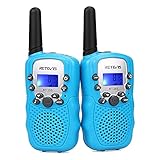 | Retevis RT388 Kids Walkie Talkies, Outdoor Toys for Kids Camping Essentials | 4-12 Year Old Boy Birthday Gift, 22 CH VOX Flashlight Clear Sound, Kids Walkie Talkies 2 Pack for Camping Hiking Adventure | Check Price On Amazon |
 | Cobra RX680 Walkie Talkies (2-Pack), IP54 Water Resistant Design | Rugged & Splashproof Two Way Radios Long Range, 60 Pre-Programmed Channels, Weather Alerts | Check Price On Amazon |
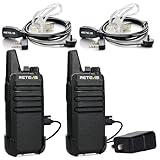 | Retevis RT22 Walkie Talkies Long Range Rechargeable with Earpiece (2 Pack) | Slim & Lightweight 2 Way Radio For Camping & Hiking, Pocket-Friendly Antenna, Ready to Use, 10-Hour Battery, USB-C Charging | Check Price On Amazon |
 | Midland GXT1000VP4 GMRS Two-Way Radios with Headsets, Black, 2 Pack | 50 Channels, 142 Privacy Codes, Up to 36 Mile Long Range, JIS4 Water Resistant, NOAA Weather Alert, Rechargeable NiMH | Check Price On Amazon |
 | Retevis RT628 Walkie Talkies for Kids,Toys Gifts for 6-12 Years Old Boys Girls,Long Range 2 Way Radio 22CH VOX,Birthday Gift,Family Walkie Talkie for Camping Hiking Indoor Outdoor | Check Price On Amazon |