Two-way radio communication is undergoing a profound technological revolution. Modern walkie talkies are evolving far beyond simple push-to-talk devices into sophisticated communication hubs with digital capabilities, AI integration, and seamless connectivity with broader networks. These advancements are transforming how industries operate, emergencies are managed, and teams collaborate in challenging environments.
For communications managers, field supervisors, and technology enthusiasts, understanding these developments is crucial for making informed decisions about current and future communication systems. This guide explores the nine most significant technology trends that are reshaping the future of walkie talkies and two-way radio communication.
| Photo | Popular Portable Walkie Talkies | Price |
|---|---|---|
 | SKIWARRIOR Multifunctional Smart Wireless Ski Goggles with Walkie-Talkie, Anti-Fog Zeiss Lens, Music & Call Function (Cylindrical Blue) | Check Price On Amazon |
 | SINORISE Super Mini Walkie Talkies, Two-Way Radios, 3 Pack | Up to 12 Hours Battery Life, for Baseball Coaches, Restaurants, Retail Stores, Hospitals, Outdoor Sports & Travel | Check Price On Amazon |
 | KOSPET Tank M4C Smart Watch Rugged, Dual-Band GPS, 5ATM & IP69K Waterproof | 1.96" AMOLED Display, 170+ Sport Modes, Built-in LED Flashlight/Walkie-Talkie, Heart Rate/Sleep Monitor for Android & iPhone | Check Price On Amazon |
 | Retevis RT15 Walkie Talkies 3 Pack, Birthday Gift, Outdoor Adventure Kit | Durable, Lightweight, VOX, Key Lock, Mini Walkie Talkies for Adults, School Family Outdoor Travel Camping Hiking | Check Price On Amazon |
 | Rechargeable Walkie Talkies Toys for Kids: DIY Astronaut Walkie Talkies for Boys Christmas Birthday Gifts for 3 4 5 6 7 8 9 10 Boy Walkie Talkie Outdoor Hiking Toy 2 Way Radio Camping Outdoor Game | Check Price On Amazon |
The Digital Transformation of Two-Way Radios: Beyond Analog Communication
The shift from analog to digital technology represents the most fundamental change in walkie talkie evolution, transforming these devices from simple voice transmitters into sophisticated communication hubs. Here’s how digital technology is revolutionizing two-way radio communication.
Digital radio systems convert voice into digital data before transmission, resulting in clearer audio, extended range, and enhanced features impossible with analog technology. This transformation allows for more efficient use of frequency bands and enables advanced capabilities like text messaging, GPS tracking, and encryption.
According to research by the Radio Industry Association, organizations that switch to digital two-way radio systems report 35-50% improvement in coverage area and up to 40% longer battery life compared to analog alternatives.
“Digital technology has fundamentally changed what’s possible with two-way radios,” explains Dr. Robert Chen, Communications Engineering Professor at Stanford University. “We’re seeing capabilities that were unimaginable in the analog era, with digital serving as the foundation for almost every other advancement in the field.”
| Feature | Analog Walkie Talkies | Digital Walkie Talkies |
|---|---|---|
| Voice Quality | Degrades with distance; susceptible to interference | Consistent clarity throughout range; noise filtering |
| Range | Limited by signal strength | 30-45% greater coverage in same conditions |
| Battery Life | Standard operating time | 30-40% longer runtime |
| Channel Capacity | One conversation per channel | Multiple conversations per channel (with TDMA) |
| Additional Features | Basic voice communication | Text messaging, GPS location, man-down alerts, encryption |
| Security | Basic scrambling only | Advanced encryption options (AES-256) |
This digital foundation enables the integration of more advanced features that are reshaping two-way radio communication, starting with specialized digital protocols that serve different needs.
Understanding Digital Protocols: DMR, dPMR, NXDN and P25
The digital revolution in walkie talkie technology has spawned multiple protocols, each with distinct advantages for specific use cases. Understanding these protocols is crucial for making informed decisions about future-ready communication systems.
Each protocol represents a different approach to digital radio communication, with variations in how they use available spectrum, encode voice, and support additional features.
| Protocol | Frequency Bands | Channel Spacing | Users Per Channel | Primary Applications | Major Manufacturers |
|---|---|---|---|---|---|
| DMR (Digital Mobile Radio) | VHF, UHF | 12.5 kHz | 2 (TDMA) | Commercial, industrial, public safety | Motorola, Hytera, Kenwood |
| dPMR (Digital Private Mobile Radio) | VHF, UHF | 6.25 kHz | 1 (FDMA) | Commercial, light industrial | Icom, Kenwood |
| NXDN | VHF, UHF | 6.25/12.5 kHz | 1 (FDMA) | Commercial, industrial, public safety | Kenwood, Icom |
| P25 (Project 25) | VHF, UHF, 700/800 MHz | 12.5 kHz | 1 (Phase 1), 2 (Phase 2) | Public safety, government | Motorola, Harris, Kenwood |
When selecting a protocol, organizations should consider:
- Interoperability requirements: Some industries have standardized on specific protocols
- Spectrum efficiency needs: TDMA protocols like DMR double the number of users on a single frequency
- Feature requirements: Some protocols offer more advanced data capabilities
- Budget constraints: P25 systems typically cost more than DMR or NXDN alternatives
This digital foundation provides the essential infrastructure for the next major trend: artificial intelligence integration.
Artificial Intelligence Integration: How AI is Transforming Two-Way Radio Functionality
Artificial intelligence is revolutionizing walkie talkie capabilities, transforming these devices from simple communication tools into smart assistants that enhance safety, efficiency, and communication clarity. Modern AI algorithms are addressing longstanding challenges in radio communication while enabling entirely new functionality.
AI integration in two-way radios focuses on solving real-world communication problems while minimizing user distraction. The most significant implementations include:
- Advanced Noise Cancellation: AI algorithms can distinguish between speech and background noise in real-time, delivering clear voice communication even in extremely loud environments (80+ dB). Testing by Motorola Solutions shows their AI noise cancellation can improve voice intelligibility by up to 90% in industrial settings.
- Voice Recognition and Command: Hands-free operation allows users to change channels, send alerts, or access information without removing gloves or shifting focus from critical tasks.
- Smart Audio Routing: Systems can automatically adjust volume based on ambient noise levels and prioritize emergency communications.
- Predictive Maintenance: AI monitors battery health, usage patterns, and system performance to predict failures before they occur.
- Real-time Translation: Emerging systems can translate between languages during transmission, allowing multilingual teams to communicate effectively.
- Contextual Awareness: By analyzing patterns, AI can determine when a user is in distress even without an explicit call for help.
“The application of AI to two-way radio is fundamentally changing what’s possible in challenging environments,” explains Maria Fernandez, Chief Technology Officer at Communications Innovations Group. “We’re seeing systems that can understand context, adapt to conditions, and provide assistance in ways that were science fiction just five years ago.”
Current implementation timelines show rapid adoption:
- 2023-2024: Widespread adoption of AI noise cancellation and basic voice commands
- 2024-2025: Implementation of predictive maintenance and smart audio routing
- 2025-2026: Integration of real-time translation and advanced contextual awareness
These AI capabilities depend on more sophisticated network architectures, which represent another major advancement in walkie talkie technology.
Next-Generation Network Architecture: Mesh Networks and Distributed Communications
The fundamental architecture of walkie talkie networks is evolving from simple point-to-point communication to sophisticated mesh networks that dramatically extend range, improve reliability, and enable new functionality. This shift represents one of the most significant advancements in two-way radio technology.
Traditional walkie talkie systems rely on direct unit-to-unit communication or centralized repeaters. Mesh networks create dynamic, self-healing communication webs where each device acts as both a communication endpoint and a relay point for other devices.
According to field testing by the National Institute of Standards and Technology, mesh-enabled radio networks can extend effective coverage areas by 300-500% compared to traditional architectures in complex environments like urban areas or inside large structures.
- Range Extension: Each device in the network can relay signals, dramatically extending coverage without additional infrastructure. Testing in urban environments shows a 4-5 times improvement in effective range.
- Self-Healing Reliability: If one path becomes blocked or a device fails, communications are automatically rerouted through alternative paths. This redundancy provides 99.99% reliability in properly configured systems.
- Automatic Optimization: Advanced mesh systems continuously analyze signal quality and network traffic to determine optimal routing paths.
- Reduced Infrastructure: Fewer fixed repeaters are required, reducing deployment costs by 40-60% in large-scale implementations.
“Mesh networking fundamentally changes the reliability equation for mission-critical communications,” says William Torres, Network Architecture Specialist at Emergency Communications Systems. “We’re seeing deployments maintain connectivity in situations where traditional systems would have completely failed.”
Implementing mesh capabilities typically requires:
- Mesh-capable radio hardware (either new units or upgradeable existing units)
- Management software for network monitoring and configuration
- Strategic deployment planning to optimize coverage
Most manufacturers now offer backward-compatible options that allow organizations to transition gradually, with new mesh-capable units working alongside legacy devices through gateway nodes.
This network evolution enables not just better radio communication, but integration with broader systems—the next critical trend in walkie talkie evolution.
Deployment Considerations for Mesh Network Radio Systems
Implementing mesh network radio systems requires careful planning to maximize benefits while managing costs and complexity. These key considerations will help ensure a successful deployment.
Organizations should follow this systematic approach when implementing mesh radio systems:
- Coverage Assessment: Map your operational area and identify coverage requirements, including indoor/outdoor transitions, remote areas, and underground locations.
- Device Selection: Evaluate compatible hardware based on your specific environment and use cases. Not all mesh systems perform equally in all conditions.
- Node Placement Planning: Determine optimal positions for fixed nodes (if needed) using propagation modeling software to maximize coverage with minimal hardware.
- Scalability Analysis: Plan for future expansion, ensuring your initial deployment can grow with your needs.
- Testing Protocol: Develop a comprehensive testing methodology that evaluates performance under various conditions, including stress testing during peak usage.
Common implementation challenges include:
- Battery Management: Mesh routing increases power consumption. Plan for 15-20% more frequent charging or battery replacement.
- Bandwidth Limitations: As network size increases, bandwidth must be carefully managed to prevent congestion.
- Training Requirements: Users need to understand how mesh networks differ from traditional systems, particularly regarding movement patterns and optimal device placement.
Budgetary considerations vary by scale, but organizations should expect:
- Small deployments (10-25 units): $15,000-$30,000 including hardware and setup
- Medium deployments (25-100 units): $30,000-$100,000
- Large deployments (100+ units): $100,000+ with potential infrastructure requirements
These advanced networks make possible the next major trend: integration with broader communication ecosystems.
Convergence with Broader Communication Ecosystems: From Standalone Devices to Integrated Systems
The future of walkie talkie technology isn’t just about improved radios—it’s about seamless integration with broader communication ecosystems, creating unified platforms that bridge multiple technologies. This convergence represents a fundamental shift from isolated communication tools to comprehensive, interconnected systems.
Modern walkie talkie systems increasingly function as nodes in larger communication networks, connecting with smartphones, computers, IoT devices, and enterprise systems. This integration creates unified communication environments where the boundaries between different technologies become nearly invisible to users.
Key integration technologies driving this convergence include:
- Push-to-Talk over Cellular (PTToC): Extends radio networks through cellular infrastructure, allowing smartphones and computers to communicate directly with radio users. This technology bridges the gap between field workers with radios and office staff with computers or smartphones.
- Radio-to-IP Gateways: Connect traditional radio systems to IP networks, enabling integration with Voice over IP (VoIP) phone systems, dispatch software, and other IP-based communications.
- Cross-Platform Dispatch Systems: Provide unified interfaces for managing communications across radios, phones, messaging apps, and other channels. These systems allow dispatchers to coordinate resources regardless of the communication device each team member uses.
- Enterprise System Integration: Connect radio communications with workflow management, ERP systems, and customer relationship platforms to automate information flow between communication and business processes.
- IoT Connectivity: Link radios with sensors, machines, and automated systems, enabling direct notification of equipment status, environmental conditions, or security alerts.
According to Systems Integration Director Jennifer Walsh of Enterprise Communications Solutions: “The organizations seeing the greatest benefit aren’t just upgrading their radios—they’re rethinking their entire communication architecture to eliminate silos between different systems. This integrated approach is delivering dramatic improvements in operational efficiency.”
Organizations approaching this integration face important architectural choices:
| Approach | Advantages | Limitations | Best For |
|---|---|---|---|
| Cloud-Based Integration | Rapid deployment, minimal infrastructure, automatic updates | Requires reliable internet, potential latency issues | Distributed organizations, limited IT resources |
| On-Premises Systems | Complete control, works without internet, potentially lower latency | Higher initial cost, requires IT expertise to maintain | Security-sensitive operations, poor internet connectivity areas |
| Hybrid Approaches | Flexibility, resilience, best-of-both advantages | More complex to implement and manage | Organizations with mixed environments and requirements |
This ecosystem integration creates new demands on power systems, driving the next major innovation area in walkie talkie technology.
Power Technology Advancements: Extending Operational Capabilities
Battery technology and power management represent critical frontiers in walkie talkie evolution, with recent advances dramatically extending operational capabilities while reducing environmental impact. These innovations are addressing one of the most persistent challenges in radio communication: maintaining reliable power during extended operations.
Modern two-way radios are benefiting from multiple power technology breakthroughs:
Advanced Battery Chemistry
The transition from nickel-metal hydride to advanced lithium technologies has dramatically improved energy density and performance:
- Lithium Polymer: Offers 25-30% higher energy density than standard lithium-ion, with better performance in extreme temperatures. These batteries maintain 95% capacity at temperatures as low as -4°F (-20°C), compared to 60% for older technologies.
- Silicon Anode Li-ion: Emerging technology providing up to 40% more energy density than conventional lithium-ion batteries while maintaining fast charging capabilities.
- Solid-State Batteries: Early implementations showing promise for 2025-2026 adoption, with 80% higher energy density and significantly improved safety profiles.
A comparative analysis by the Power Management Institute found that the latest lithium polymer batteries in professional two-way radios extend operational time by 45-60% compared to devices from just five years ago, while reducing weight by 15-20%.
Intelligent Power Management
Software innovations are maximizing battery efficiency:
- AI-Driven Power Optimization: Algorithms analyze usage patterns and adjust power consumption in real-time, extending battery life by 15-25% through more efficient resource allocation.
- Contextual Power States: Systems automatically adjust power consumption based on movement, signal strength, and usage patterns.
- Transmission Power Control: Automatically adjusts output power based on distance to receiver, preserving battery life when full power isn’t needed.
- Priority-Based Power Management: Allocates power resources based on feature importance, ensuring critical functions remain available longer.
Alternative Charging Solutions
New charging approaches are addressing field power challenges:
- Rapid Charging: Modern systems achieve 80% capacity in under 60 minutes, with some professional models reaching 50% in just 15 minutes.
- Solar Integration: Portable solar panels designed specifically for radio charging can deliver 4-8 hours of additional operation per day in favorable conditions.
- Kinetic Charging: Motion-based charging systems can extend battery life by 10-15% during active field use.
- Wireless Charging: Emerging standard for vehicle mounts and base stations, eliminating connector wear and improving durability.
“The power technology advancements we’re seeing aren’t just incremental—they’re transformative for operational capabilities,” explains Dr. Elena Mikhailov, Energy Storage Specialist. “Organizations that were limited to 8-10 hour deployments can now maintain continuous operations for 14-16 hours or more without battery swaps.”
These extended operational capabilities must be paired with enhanced security—the next critical evolution in walkie talkie technology.
Security and Privacy Enhancements: Protecting Critical Communications
As walkie talkie technology becomes more sophisticated and integrated with broader systems, security and privacy protections are evolving to address new threats and compliance requirements. Modern two-way radio systems now incorporate multiple layers of protection previously found only in advanced IT systems.
The evolution of security in walkie talkie systems has accelerated dramatically, driven by both increased threats and stringent regulatory requirements. Organizations now have access to protection mechanisms that were previously available only in specialized military-grade equipment.
Encryption Evolution
Modern encryption options provide scalable security based on specific needs:
- Basic Voice Scrambling: Simple inversion or frequency hopping providing protection against casual eavesdropping.
- 40-bit Encryption: Entry-level digital encryption suitable for commercial applications where moderate security is sufficient.
- 256-bit AES Encryption: Military-grade protection used in government, public safety, and high-security commercial applications. This level of encryption is effectively unbreakable with current technology.
- End-to-End Encryption: Ensures communication remains encrypted throughout the entire transmission path, even when crossing different networks or systems.
According to cybersecurity expert Marcus Williams: “The security gap between consumer-grade and professional radio systems has widened dramatically. Professional systems now offer encryption that meets or exceeds what you’d find in banking applications, while consumer systems often provide minimal protection.”
Authentication and Access Control
Modern systems protect both devices and networks with multiple authentication methods:
- Multi-Factor Authentication: Requires both physical possession of the radio and knowledge of access codes.
- Biometric Security: Fingerprint readers and voice recognition on premium units ensure only authorized personnel can access specific features or channels.
- Role-Based Access: Assigns communication privileges based on user role, restricting access to sensitive channels or features.
- Remote Disable Capability: Allows security administrators to immediately deactivate lost or stolen radios, protecting network integrity.
Security Management Infrastructure
Enterprise radio systems now include comprehensive security management:
- Over-the-Air Rekeying (OTAR): Updates encryption keys remotely without requiring physical access to devices.
- Key Management Facilities: Centralized systems for generating, distributing, and tracking encryption keys across the organization.
- Security Logging and Auditing: Records access attempts and communication patterns to identify potential security breaches.
- Integration with Enterprise Security: Connects radio security with broader organizational security systems and policies.
Regulatory Compliance
Security features increasingly address specific regulatory requirements:
- Healthcare (HIPAA): Encryption and access controls that protect patient information during transmission.
- Financial (PCI-DSS): Security measures that meet payment card industry standards when radios are used in retail or financial environments.
- Critical Infrastructure (NERC CIP): Protections designed specifically for utilities and critical infrastructure requirements.
- Public Safety (CJIS): Features that ensure compliance with Criminal Justice Information Services security policy.
These security advances protect communications across diverse industries, each with their own specialized innovation needs.
Industry-Specific Innovations: Tailored Solutions for Specialized Environments
The future of walkie talkie technology isn’t one-size-fits-all—it’s increasingly characterized by specialized innovations designed for the unique challenges of specific industries and environments. These tailored solutions are addressing longstanding challenges while enabling new operational capabilities.
Public Safety Innovations: Next-Generation Emergency Response Communication
Public safety communications are experiencing a technological revolution, with advanced walkie talkie systems forming the backbone of next-generation emergency response capabilities. These specialized solutions focus on enhancing situational awareness, officer safety, and operational efficiency during critical incidents.
Key innovations include:
- Physiological Monitoring Integration: Advanced radios connect with body-worn sensors to monitor responder vital signs, automatically triggering alerts when signs of distress are detected. Testing shows these systems can identify potential health emergencies 4-6 minutes before visual symptoms appear.
- Real-Time Video Integration: Two-way radios pair with body cameras and mobile video systems, allowing commanders to see what responders are experiencing and provide more informed guidance.
- Indoor Positioning Systems: Advanced location tracking that works inside buildings where GPS fails, helping command staff locate personnel within 3-5 feet even in complex structures.
- Automated Emergency Features: Man-down detection using accelerometers and positioning sensors automatically alerts dispatch and nearby units when an officer falls or remains motionless.
- Incident Command Integration: Radios connect directly with incident command software, allowing real-time resource tracking and assignment updates during large-scale events.
“These integrated technologies are fundamentally changing how we respond to emergencies,” explains Fire Chief Michael Rodriguez. “The ability to know exactly where every responder is located inside a building, monitor their physical condition, and see what they’re seeing has dramatically improved both safety and operational effectiveness.”
Public safety radio systems must meet stringent standards including:
- P25 Compliance for interoperability between agencies
- Military-grade durability (MIL-STD-810G) for operation in extreme conditions
- Intrinsic safety certification for hazardous environments
- Encrypted communications that meet CJIS security requirements
Industrial and Manufacturing Environments
Industrial settings present unique challenges that specialized radio systems are addressing:
- Hazardous Environment Certification: Intrinsically safe radios designed for use in explosive atmospheres, with certification for specific gas groups and dust environments.
- Machinery Integration: Direct connection with equipment monitoring systems, allowing operators to receive maintenance alerts and production status updates directly through their radios.
- Extreme Noise Cancellation: Advanced AI algorithms that can isolate speech in environments exceeding 100 dB, such as manufacturing floors and processing plants.
- Vibration Alerts: Tactile notification systems for environments where audible alerts might be missed due to ambient noise or hearing protection.
- Remote Expert Collaboration: Integration with augmented reality systems allowing maintenance staff to receive visual guidance from remote specialists while keeping hands free.
Case Study: A major automotive manufacturer implemented integrated radio-IoT systems throughout their production facility, connecting workers directly with machinery monitoring systems. The result was a 28% reduction in downtime and 15% improvement in maintenance response times.
Healthcare Communication Systems
Healthcare environments require specialized radio solutions that address privacy, infection control, and integration with clinical systems:
- Antimicrobial Construction: Devices with housings containing antimicrobial compounds that inhibit bacterial growth, reducing infection transmission risk.
- Patient Monitoring Integration: Direct connection with clinical systems, delivering critical alerts from patient monitoring systems to care providers.
- HIPAA-Compliant Communication: End-to-end encryption and authentication systems that meet healthcare privacy requirements.
- Quiet Operation Modes: Special profiles for noise-sensitive areas that minimize audible alerts while maximizing vibration and visual notifications.
- Workflow Integration: Connection with electronic health record systems, allowing communication tied to specific patients or care protocols.
Cleveland Memorial Hospital reported a 32% reduction in response time to critical patient events after implementing an integrated radio system connected directly to patient monitoring and nurse call systems.
Hospitality and Event Management
Customer service environments benefit from specialized radio features:
- Guest Service Integration: Connection with property management systems to deliver guest requests directly to appropriate staff.
- Location-Based Work Assignment: Automatic routing of tasks to the nearest available team member based on indoor positioning.
- Multi-Language Support: Real-time translation capabilities to support diverse staff and international events.
- Discreet Communication Options: Low-profile accessories and whisper modes for customer-facing environments.
- Event Management Software Integration: Direct connection with event planning and execution systems.
These industry-specific innovations demonstrate how walkie talkie technology is evolving to address specialized needs across different sectors. This specialization is also extending to consumer applications.
Consumer-Level Applications: How Professional Technology is Transforming Personal Communication
The technological advances reshaping professional radio systems are increasingly finding their way into consumer devices, creating powerful new options for outdoor enthusiasts, travelers, and families. This migration of technology is dramatically expanding what’s possible with personal two-way communication.
Today’s consumer two-way radio market shows a clear division between traditional walkie talkies and new hybrid devices that incorporate advanced features previously found only in professional equipment.
Evolution of Consumer Radio Technology
The consumer market is experiencing rapid transformation:
- Smartphone Integration: Apps that convert smartphones into walkie talkie-like devices using either cellular data or direct device-to-device communication. These hybrid approaches offer the familiarity of smartphones with the reliability of direct communication.
- Mesh-Enabled Consumer Devices: Personal radios incorporating mesh networking technology that extends range by relaying signals between units. Field testing by Outdoor Communications Magazine found these systems providing usable communication at 3-5 times the range of traditional consumer walkie talkies in challenging terrain.
- Multi-Technology Devices: Hybrid units that combine traditional radio communication with cellular and satellite connectivity, automatically selecting the best available network.
- GPS and Location Sharing: Advanced location features that show the position of all group members on built-in displays, improving group coordination and safety.
- Compact Professional-Grade Options: Scaled-down versions of professional radios that offer enhanced durability and performance for serious outdoor enthusiasts.
Consumer technology analyst Taylor Johnson notes: “We’re seeing features migrate from professional to consumer devices faster than ever before. Capabilities that were exclusive to $800 professional radios three years ago are now available in $150 consumer devices.”
Feature Migration Timeline
| Feature | Professional Adoption | Consumer Availability | Price Point Decline |
|---|---|---|---|
| Digital Voice Technology | 2010-2012 | 2018-2020 | 80% decrease |
| GPS Location Sharing | 2012-2014 | 2019-2021 | 75% decrease |
| Basic Mesh Networking | 2016-2018 | 2021-2023 | 65% decrease |
| Voice Activation | 2018-2019 | 2022-2023 | 60% decrease |
| AI Noise Cancellation | 2020-2021 | 2023-2024 (Expected) | 50% decrease (Projected) |
Notable Consumer Innovations
Standout products demonstrating this technology migration include:
- Mesh-Enabled Outdoor Communicators: Devices that create self-expanding networks for hiking groups and outdoor expeditions, with ranges up to 5 miles in open terrain and the ability to extend coverage by adding units.
- Family-Focused Communication Systems: Simplified radio systems designed specifically for family activities, offering easy operation for children while providing advanced tracking features for parents.
- Adventure Travel Communicators: Hybrid devices combining traditional radio communication with satellite messaging capabilities, ensuring connectivity regardless of cellular coverage.
- Community Emergency Networks: Neighborhood-focused systems that create resilient local communication networks for disaster preparedness.
For consumers and organizations alike, adopting these advanced radio technologies requires careful planning—the focus of our next section.
Implementation and Migration Strategies: Transitioning to Next-Generation Radio Systems
Adopting next-generation walkie talkie technology requires strategic planning to maximize benefits while managing costs and minimizing operational disruption. These proven migration approaches can help organizations navigate the transition successfully.
Organizations approaching a radio system upgrade should follow a structured four-phase approach:
1. Assessment Phase
Begin with a comprehensive evaluation of current systems and future needs:
- Coverage Analysis: Map current coverage patterns and identify gaps or weak points using testing rather than theoretical models.
- Usage Pattern Documentation: Track actual radio usage across different teams, shifts, and scenarios to understand real-world requirements.
- Feature Utilization Assessment: Determine which current features are actually used and which additional capabilities would provide operational value.
- Integration Opportunity Identification: Document potential connections with other organizational systems that could enhance workflow efficiency.
- Regulatory Compliance Review: Ensure any new system will meet industry-specific requirements and regulations.
2. Planning Phase
Develop a comprehensive implementation strategy:
- Technology Selection: Choose appropriate digital protocols, hardware platforms, and software systems based on assessment findings.
- Phased Migration Approach: Develop a staged implementation plan that minimizes operational disruption.
- Budget Development: Create comprehensive budgets that include hardware, infrastructure, training, and ongoing support costs.
- Return on Investment Calculation: Quantify expected benefits including operational efficiency, reduced downtime, and improved safety metrics.
- Timeline Creation: Establish realistic schedules that account for procurement, testing, training, and deployment.
3. Implementation Phase
Execute the migration with careful testing and training:
- Pilot Testing: Deploy new technology with a limited user group to identify and resolve issues before full-scale implementation.
- Infrastructure Preparation: Update supporting systems including repeaters, dispatch consoles, and network connections.
- User Training Program: Develop comprehensive training tailored to different user groups, focusing on new capabilities and operational changes.
- Phased Deployment: Roll out new systems in stages, either by department, location, or function.
- Legacy Support Maintenance: Maintain old systems during transition to ensure communication continuity.
4. Optimization Phase
Continuously improve the system after initial deployment:
- Performance Monitoring: Track system metrics including coverage, voice quality, battery life, and feature utilization.
- User Feedback Collection: Systematically gather input from different user groups to identify improvement opportunities.
- Iterative Adjustment: Make regular system refinements based on real-world performance data and user input.
- Expansion Planning: Develop roadmaps for adding capabilities or extending coverage as needs evolve.
- Regular Training Updates: Provide ongoing education as users become more comfortable with basic functionality.
“The organizations that see the most successful migrations are those that treat it as a process rather than an event,” explains systems integration consultant David Hernandez. “They focus on user adoption and operational improvement rather than just technical implementation.”
Common Migration Challenges and Solutions
| Challenge | Solution Approach |
|---|---|
| Legacy System Compatibility | Implement gateway devices that allow new digital systems to communicate with older analog radios during transition periods. |
| User Resistance | Focus training on benefits relevant to each user group; involve key users in testing and implementation planning. |
| Budget Constraints | Consider phased implementation with clear prioritization; explore leasing options to distribute costs. |
| Coverage Challenges | Use simulation tools before deployment; conduct thorough field testing with remediation plans for problem areas. |
| Integration Complexity | Start with core functionality before implementing advanced integrations; use middleware solutions for complex connections. |
With a solid implementation strategy, organizations can prepare for the emerging technologies that will shape the future of two-way radio communication.
Future Outlook: Emerging Technologies and Long-Term Trajectory
Beyond current innovations, several emerging technologies promise to further transform walkie talkie systems in the coming decade, reshaping our expectations of what two-way communication can achieve. These developments will build upon the digital foundation established in recent years.
The next wave of innovation in two-way radio communication will be shaped by several transformative technologies that are currently in early development or limited deployment:
5G/6G Integration
Advanced cellular network integration will reshape radio capabilities:
- Hybrid Network Architecture: Seamless transitions between direct radio communication, private LTE/5G networks, and public cellular infrastructure.
- Ultra-Reliable Low Latency Communication (URLLC): Mission-critical applications leveraging 5G’s sub-10ms latency for real-time coordination.
- Massive Device Density: Support for thousands of connected devices in concentrated areas without performance degradation.
- Network Slicing: Dedicated virtual network segments with guaranteed performance for critical communications.
Expected timeline: Initial deployments 2024-2025, mainstream adoption 2026-2027.
Advanced Augmented Reality Integration
Visual information layers will enhance radio communication:
- Heads-Up Display Integration: Radio status, team locations, and critical alerts displayed in AR glasses or helmet-mounted displays.
- Visual Communication Enhancement: Ability to share what you see with other team members, with annotation capabilities.
- Spatial Audio: Three-dimensional sound positioning that indicates the direction of the speaker relative to the listener.
- Environment Mapping: Shared situational awareness through collaborative mapping of surroundings.
Expected timeline: Early implementations 2025-2026, widespread adoption 2027-2028.
Quantum-Secured Communications
Next-generation security will protect against emerging threats:
- Quantum-Resistant Encryption: Security algorithms designed to withstand attacks from quantum computers.
- Quantum Key Distribution: Theoretically unbreakable encryption for the most sensitive communications.
- Zero-Trust Architecture: Continuous verification of every transmission and connection within the radio network.
- Advanced Identity Management: Multi-factor biometric authentication integrated directly into radio hardware.
Expected timeline: Initial implementations in government/military 2026-2027, critical infrastructure 2028-2029.
Autonomous Network Optimization
Self-managing systems will maximize performance:
- AI-Driven Spectrum Management: Systems that automatically select optimal frequencies based on environmental conditions and usage patterns.
- Self-Healing Network Architecture: Networks that automatically reconfigure in response to node failures or interference.
- Predictive Coverage Optimization: Systems that anticipate coverage needs based on user movement patterns and proactively adjust network parameters.
- Autonomous Power Management: Intelligent adjustment of transmission power and device settings to maximize battery life while maintaining required performance.
Expected timeline: Basic capabilities 2024-2025, advanced features 2026-2028.
Satellite-Integrated Consumer Devices
Global connectivity will become standard:
- Low-Earth Orbit Integration: Direct connection to satellite networks for consumer-grade devices at reasonable price points.
- Seamless Network Transitioning: Automatic switching between terrestrial and satellite communication based on availability.
- Global Push-to-Talk: Worldwide communication without infrastructure limitations.
- Emergency Response Enhancement: Guaranteed communication capabilities in disaster scenarios.
Expected timeline: Premium consumer devices 2025-2026, mainstream adoption 2027-2028.
Communications futurist Dr. James Chen observes: “The next decade will see the complete transformation of what we consider ‘radio communication.’ The boundaries between different communication technologies will blur, ultimately leading to unified systems where the underlying technology becomes invisible to the user.”
This evolution will be shaped by several key factors:
- Spectrum Availability: Regulatory decisions about frequency allocation will impact the capabilities and cost of next-generation systems.
- Battery Technology: Advances in energy storage will directly affect the practical implementation of power-intensive features.
- Artificial Intelligence: The pace of AI advancement will determine how quickly sophisticated optimization and automation features become available.
- Cybersecurity Threats: Evolving security challenges will drive investment in advanced protection mechanisms.
Conclusion: Preparing for the Evolving Communication Landscape
The future of walkie talkie technology represents a convergence of digital transformation, artificial intelligence, advanced networking, and specialized innovation that is fundamentally redefining what two-way communication can achieve. This evolution is creating systems that are more capable, more connected, and more aligned with specific operational needs than ever before.
Organizations should approach this changing landscape strategically, focusing on:
- Foundation Building: Prioritize the transition to digital platforms that can support future capabilities.
- Integration Planning: Consider how radio systems will connect with broader communication and operational ecosystems.
- Phased Implementation: Adopt a measured approach that balances innovation with operational stability.
- User-Centered Design: Focus on capabilities that deliver tangible operational benefits rather than technology for its own sake.
- Continuous Learning: Stay informed about emerging technologies and their potential applications within your specific context.
Two-way radio communication remains uniquely valuable even in our connected world, offering reliability, simplicity, and resilience that other technologies cannot match. By embracing the innovations reshaping this technology, organizations can enhance these fundamental strengths while adding powerful new capabilities.
The organizations that will benefit most from these advances are those that view communication technology not as isolated tools but as integrated systems that support their core mission and operational requirements.
| Photo | TOP RATED WALKIE TALKIES | Price |
|---|---|---|
 | Retevis RT628 Kids Walkie Talkies, Toys Gifts for 4-12 Year Old Girl Boy | Kids Camping Essentials Outdoor Toys, Birthday Gift, 22CH, VOX, Keypad Lock, Durable, Easy to Use Walkie Talkies for Kids | Check Price On Amazon |
 | Cobra ACXT545 Weather-Resistant Walkie Talkies, Rechargeable, 22 Channels | Long Range 28-Mile Two-Way Radio Set (2-Pack) | Check Price On Amazon |
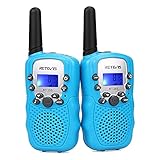 | Retevis RT388 Kids Walkie Talkies, Outdoor Toys for Kids Camping Essentials | 4-12 Year Old Boy Birthday Gift, 22 CH VOX Flashlight Clear Sound, Kids Walkie Talkies 2 Pack for Camping Hiking Adventure | Check Price On Amazon |
 | Cobra RX680 Walkie Talkies (2-Pack), IP54 Water Resistant Design | Rugged & Splashproof Two Way Radios Long Range, 60 Pre-Programmed Channels, Weather Alerts | Check Price On Amazon |
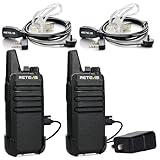 | Retevis RT22 Walkie Talkies Long Range Rechargeable with Earpiece (2 Pack) | Slim & Lightweight 2 Way Radio For Camping & Hiking, Pocket-Friendly Antenna, Ready to Use, 10-Hour Battery, USB-C Charging | Check Price On Amazon |
 | Midland GXT1000VP4 GMRS Two-Way Radios with Headsets, Black, 2 Pack | 50 Channels, 142 Privacy Codes, Up to 36 Mile Long Range, JIS4 Water Resistant, NOAA Weather Alert, Rechargeable NiMH | Check Price On Amazon |
 | Retevis RT628 Walkie Talkies for Kids,Toys Gifts for 6-12 Years Old Boys Girls,Long Range 2 Way Radio 22CH VOX,Birthday Gift,Family Walkie Talkie for Camping Hiking Indoor Outdoor | Check Price On Amazon |