GMRS (General Mobile Radio Service) is a licensed radio service regulated by the Federal Communications Commission (FCC) that allows for enhanced two-way personal communications up to 50 miles. All GMRS operators must obtain a license before transmission, which costs $35 and is valid for 10 years.
This comprehensive guide covers everything you need to know about GMRS licensing: who needs it, how to apply, what frequencies you can access, and how to stay compliant with current FCC regulations. Whether you’re a first-time applicant or renewing your existing license, you’ll find all the essential information here.
| Photo | Popular Portable Walkie Talkies | Price |
|---|---|---|
 | SKIWARRIOR Multifunctional Smart Wireless Ski Goggles with Walkie-Talkie, Anti-Fog Zeiss Lens, Music & Call Function (Cylindrical Blue) | Check Price On Amazon |
 | SINORISE Super Mini Walkie Talkies, Two-Way Radios, 3 Pack | Check Price On Amazon |
 | KOSPET Tank M4C Smart Watch Rugged, Dual-Band GPS, 5ATM & IP69K Waterproof | Check Price On Amazon |
 | Retevis RT15 Walkie Talkies 3 Pack, Birthday Gift, Outdoor Adventure Kit | Check Price On Amazon |
 | Rechargeable Walkie Talkies Toys for Kids: DIY Astronaut Walkie Talkies for Boys Christmas Birthday Gifts for 3 4 5 6 7 8 9 10 Boy Walkie Talkie Outdoor Hiking Toy 2 Way Radio Camping Outdoor Game | Check Price On Amazon |
What is GMRS and Why Do You Need a License?
GMRS (General Mobile Radio Service) is a licensed radio service regulated by the Federal Communications Commission (FCC) that allows for enhanced two-way personal communications. It operates on specific UHF frequencies between 462 and 467 MHz and provides reliable short to medium-range communications.
The legal basis for GMRS licensing is established in the Code of Federal Regulations (CFR) Title 47, Part 95. According to FCC regulations, anyone operating on GMRS frequencies must have a valid license, with penalties for unauthorized use reaching up to $19,246 for a single violation.
You need a GMRS license for:
- Operating any radio explicitly marketed as a GMRS device
- Transmitting on any of the designated GMRS frequencies
- Using higher power levels (up to 50 watts) not permitted on unlicensed services
- Operating or using GMRS repeater stations
Benefits of obtaining a GMRS license include:
- Legal access to higher power levels (up to 50 watts vs. 0.5 watts for unlicensed FRS)
- Permission to use detachable antennas for extended range
- Access to repeater channels that can dramatically increase communication distance
- Coverage for your entire immediate family under one license fee
- Legal protection of your right to operate on these frequencies
Now that you understand why you need a GMRS license, let’s examine exactly who can apply and how the process works.
GMRS vs. FRS: Understanding the Key Differences
Many consumers confuse GMRS with FRS (Family Radio Service), as some radios support both services. Here’s how they differ and why it matters for licensing requirements.
| Feature | GMRS | FRS |
|---|---|---|
| License Required | Yes ($35 for 10 years) | No |
| Maximum Power | 50 watts on main channels 5 watts on interstitial channels | 2 watts on channels 1-7, 15-22 0.5 watts on channels 8-14 |
| Antenna Options | Detachable/external antennas allowed | Fixed antennas only |
| Repeater Use | Permitted | Not permitted |
| Typical Range | 5-50 miles (depending on conditions) | 0.5-2 miles |
| Digital Transmissions | Permitted (since 2021) | Not permitted |
The FCC’s 2017 rule changes significantly redefined the boundary between these services. Previously, channels 1-7 were shared between FRS and GMRS. Now, FRS has exclusive use of channels 8-14, while channels 1-7 and 15-22 are shared, but with different power limitations depending on whether you’re licensed.
Many “bubble pack” radios sold at retail stores are dual-service FRS/GMRS radios. If you use these radios with more than 2 watts of power or on repeater channels, you must have a GMRS license.
Understanding these differences helps explain why GMRS requires licensing while FRS doesn’t. Next, we’ll look at exactly who can apply for a GMRS license.
Who Can Apply for a GMRS License: Eligibility Requirements
GMRS licenses are available to individuals and their family members, with specific eligibility requirements established by the FCC.
To be eligible for a GMRS license, you must:
- Be an individual person (not a business entity)
- Be at least 18 years of age
- Not be a representative of a foreign government
- Be a legal resident of the United States
According to FCC regulations, the following entities are not eligible for GMRS licenses:
- Corporations and businesses
- Associations and organizations
- Partnerships and clubs
- Governmental entities
While businesses cannot hold GMRS licenses, business-related communications are permitted under an individual’s license when the communication relates to the business activities of the individual license holder.
Individuals with prior FCC rule violations may be disqualified from obtaining a GMRS license. The FCC reviews applications against their enforcement database, and those with severe or repeated violations may be denied.
Now that you know if you’re eligible for a GMRS license, let’s examine exactly what the license covers and the privileges it grants.
GMRS License Coverage: What One License Includes
One of the most valuable aspects of a GMRS license is its coverage of family members, effectively providing multi-person authorization under a single license fee.
A single GMRS license covers:
- The individual licensee (primary license holder)
- Spouse of the licensee
- Children of the licensee or spouse
- Parents of the licensee or spouse
- Grandchildren of the licensee or spouse
- Grandparents of the licensee or spouse
- Brothers and sisters of the licensee or spouse
- In-laws (relatives by marriage)
Non-family members may operate under your license only while in the presence of and supervised by someone covered by the license. This allows friends or colleagues to use your GMRS equipment during joint activities.
Your GMRS license is valid throughout the United States, its territories, and possessions. There are no geographical restrictions within these areas, meaning you can operate anywhere in the country under the same license.
There is no limit to the number of radios your license covers, so you can equip as many family members as needed without additional licensing costs.
With a clear understanding of who can be covered under your license, let’s look at the exact costs involved and what you’re paying for.
GMRS License Cost and Validity Period
A GMRS license currently costs $35 for a 10-year license period, making it one of the most cost-effective communications solutions for families and groups.
The FCC last updated the GMRS license fee in September 2020, reducing it from $70 to the current $35 rate. This fee is paid once per decade, breaking down to just $3.50 per year or about 29 cents per month.
When you consider that a single license covers all eligible family members, the per-person cost becomes extremely economical. For a family of four, the cost equates to less than 8 cents per person per month over the license period.
The FCC accepts payment by:
- Credit card (Visa, Mastercard, American Express, Discover)
- ACH payment (direct from bank account)
- Wire transfer
The license fee is non-refundable once processed, even if you later decide not to use GMRS radio services.
License renewal requires the same $35 fee and can be submitted up to 90 days before expiration. There is no discount for early renewal, and the new 10-year period begins at the end of your current license term.
Now that you understand the costs involved, we’ll walk through the step-by-step application process to help you obtain your license.
How to Apply for a GMRS License: Step-by-Step Guide
The GMRS license application process is completed entirely online through the FCC’s Universal Licensing System (ULS). Follow these steps to apply for your license correctly the first time.
Prerequisites Before Starting
Before beginning your application, gather the following:
- Personal information (name, address, phone number, email)
- Payment method (credit card or bank account information)
- Social Security Number (for identity verification)
- Register for an FCC Registration Number (FRN)
- Visit the FCC Commission Registration System at https://apps.fcc.gov/coresWeb/publicHome.do
- Click “Register” and select “An Individual”
- Complete the form with your personal information
- Create a password (store it securely as you’ll need it later)
- Provide your Social Security Number for identity verification
- Submit the form
- Record your assigned 10-digit FRN
- Access the ULS Online Filing System
- Go to https://www.fcc.gov/wireless/universal-licensing-system
- Click “Online Filing” at the top of the page
- Log in with your FRN and password
- Start a New Application
- Select “Apply for a New License”
- Under Service Selection, choose “ZA – General Mobile Radio (GMRS)”
- Click “Continue”
- Complete Form 605
- On the Application Information screen, leave most fields at their default values
- For Application Purpose, select “NE – New”
- Answer “No” to the felony question (unless applicable)
- Click “Continue”
- Review your pre-filled personal information for accuracy
- Complete any missing fields
- Click “Continue”
- Submit Your Application
- Review the summary page carefully for errors
- Check the certification box at the bottom
- Click “Submit Application”
- Pay the Application Fee
- After submission, you’ll be directed to the payment page
- Select your payment method (credit card or ACH)
- Enter the required payment information
- Confirm the $35 payment
- Save the confirmation page and note your application file number
Most GMRS applications are processed automatically within 24-48 hours if there are no issues. Complex applications or those requiring manual review may take up to 10 business days. You can begin operating as soon as your callsign appears in the FCC database, even before receiving official confirmation.
Common application errors to avoid include:
- Applying for a business rather than an individual license
- Providing inconsistent name or address information
- Failing to complete all required fields
- Payment processing issues
After submitting your application, you’ll need to understand what happens next and how to check your application status.
Tracking Your GMRS License Application Status
After submitting your GMRS license application, you can track its progress through the FCC’s Universal Licensing System. Here’s how to check your status and what each status means.
- Access the ULS System
- Go to https://wireless2.fcc.gov/UlsApp/UlsSearch/searchLicense.jsp
- Log in with your FRN and password
- Check Application Status
- Click “Applications” tab
- Enter your FRN in the search field
- Click “Search”
Your application will show one of these status codes:
- Received: Application submitted but processing hasn’t begun
- Pending: Under review by FCC staff
- Granted: Approved and callsign assigned
- Returned: Application incomplete or contains errors
- Dismissed: Application rejected for eligibility or other issues
Most applications are granted within 48 hours. If your status shows “Returned,” check the correspondence section of your ULS account for specific issues that need correction.
For application problems, contact the FCC Licensing Support Center at 1-877-480-3201, Monday through Friday, 8 AM to 6 PM Eastern Time.
Once your license is granted, you’ll be assigned a callsign, which is an important part of your GMRS operations.
Understanding Your GMRS Callsign: Format and Usage
When your GMRS license is issued, the FCC assigns you a unique callsign that you’re legally required to use during radio operations. Here’s what your callsign means and how to use it properly.
GMRS callsigns follow a specific format: one letter (typically W or K), followed by a second letter, followed by a number, and ending with three or four letters (e.g., WQPC123 or KAB1234).
You can find your assigned callsign by:
- Checking your license grant notice from the FCC
- Looking up your FRN in the ULS database
- Reviewing your official license document
According to FCC regulations, you must identify your station by transmitting your callsign:
- At the beginning and end of a series of transmissions
- At least every 15 minutes during extended communications
- Using voice identification (not Morse code or digital methods)
Proper callsign usage examples:
- “WQPC123, this is WQPC123 monitoring channel 20.”
- “This is WQPC123 calling KAB1234, do you copy?”
- “Group, this is WQPC123 signing off.”
Unlike amateur radio callsigns, GMRS callsigns cannot be customized or vanity callsigns. You must use the exact callsign assigned by the FCC.
With your callsign assigned, you’ll need to understand exactly what frequencies and operations your new license authorizes.
GMRS Frequencies and Permitted Operations
Your GMRS license grants you access to specific frequencies and operations that aren’t available to unlicensed users. Understanding these capabilities is essential to maximize your radio system.
| Channel | Frequency (MHz) | Max Power | Usage Notes |
|---|---|---|---|
| 1 | 462.5625 | 5 watts | Shared with FRS (limited to 2W without license) |
| 2 | 462.5875 | 5 watts | Shared with FRS (limited to 2W without license) |
| 3 | 462.6125 | 5 watts | Shared with FRS (limited to 2W without license) |
| 4 | 462.6375 | 5 watts | Shared with FRS (limited to 2W without license) |
| 5 | 462.6625 | 5 watts | Shared with FRS (limited to 2W without license) |
| 6 | 462.6875 | 5 watts | Shared with FRS (limited to 2W without license) |
| 7 | 462.7125 | 5 watts | Shared with FRS (limited to 2W without license) |
| 8 | 467.5625 | 0.5 watts | FRS channels 8-14 (GMRS license provides no advantage) |
| 9 | 467.5875 | 0.5 watts | FRS channels 8-14 (GMRS license provides no advantage) |
| 10 | 467.6125 | 0.5 watts | FRS channels 8-14 (GMRS license provides no advantage) |
| 11 | 467.6375 | 0.5 watts | FRS channels 8-14 (GMRS license provides no advantage) |
| 12 | 467.6625 | 0.5 watts | FRS channels 8-14 (GMRS license provides no advantage) |
| 13 | 467.6875 | 0.5 watts | FRS channels 8-14 (GMRS license provides no advantage) |
| 14 | 467.7125 | 0.5 watts | FRS channels 8-14 (GMRS license provides no advantage) |
| 15 | 462.5500 | 50 watts | GMRS main channel, repeater input |
| 16 | 462.5750 | 50 watts | GMRS main channel, repeater input |
| 17 | 462.6000 | 50 watts | GMRS main channel, repeater input |
| 18 | 462.6250 | 50 watts | GMRS main channel, repeater input |
| 19 | 462.6500 | 50 watts | GMRS main channel, repeater input |
| 20 | 462.6750 | 50 watts | GMRS main channel, repeater input |
| 21 | 462.7000 | 50 watts | GMRS main channel, repeater input |
| 22 | 462.7250 | 50 watts | GMRS main channel, repeater input |
| 15R | 467.5500 | 50 watts | Repeater output only |
| 16R | 467.5750 | 50 watts | Repeater output only |
| 17R | 467.6000 | 50 watts | Repeater output only |
| 18R | 467.6250 | 50 watts | Repeater output only |
| 19R | 467.6500 | 50 watts | Repeater output only |
| 20R | 467.6750 | 50 watts | Repeater output only |
| 21R | 467.7000 | 50 watts | Repeater output only |
| 22R | 467.7250 | 50 watts | Repeater output only |
Your GMRS license authorizes these operations:
- Higher Power: Up to 50 watts on main channels (15-22), far more than the 0.5-2 watts allowed on FRS
- Repeater Use: Permission to use and operate repeaters on channels 15R-22R
- External Antennas: Use of detachable and high-gain antennas for extended range
- Digital Transmissions: As of 2021, digital voice and data transmissions are permitted
Technical limitations to be aware of:
- Maximum antenna height is 20 feet above structure or 60 feet above ground
- Maximum bandwidth is 20 kHz for analog and 12.5 kHz for digital transmissions
- No aviation operations are permitted on GMRS
- No encrypted or scrambled transmissions are allowed
Now that you understand what operations your license permits, let’s look at the equipment you can legally use with your GMRS license.
Legal Equipment for GMRS License Holders
GMRS license holders must use properly certified equipment that complies with FCC regulations. Here’s how to ensure your radios are legal and how to properly select GMRS-compliant equipment.
All GMRS equipment must be certified under FCC Part 95 regulations. When purchasing a radio, look for:
- FCC Part 95E certification specifically for GMRS
- FCC ID number on the device (usually on a label)
- Explicit marketing as a GMRS radio (not just “two-way radio”)
Common GMRS radio types include:
- Handheld GMRS radios: Portable units with 1-5 watts of power, suitable for personal use
- Mobile GMRS radios: Vehicle-mounted units with 5-50 watts, providing extended range
- Base station GMRS radios: Fixed-location units with maximum legal power and larger antennas
- GMRS repeaters: Systems that receive and retransmit signals to extend range
Be cautious with these equipment types:
- Dual-service FRS/GMRS radios: Legal for GMRS use only with proper license
- Amateur (ham) radios: Most are not certified for GMRS even if they can transmit on GMRS frequencies
- Business/commercial radios: May not have proper GMRS certification
- Imported radios: Many lack proper FCC certification
Legally prohibited modifications include:
- Increasing transmitter power beyond certified limits
- Modifying frequency ranges to access non-GMRS frequencies
- Altering modulation or bandwidth characteristics
- Changing antenna connectors on radios certified with fixed antennas
Popular GMRS-compliant radio models include the Midland MXT400 for mobile use and the Midland GXT1000VP4 for handheld applications.
Understanding equipment compliance is critical, as is knowing how to properly renew your license when it expires.
GMRS License Renewal, Modification, and Transfers
GMRS licenses are valid for 10 years, after which you must renew to continue legal operation. You may also need to modify your license information or understand transfer limitations.
License Renewal Process
The FCC allows renewal applications up to 90 days before your license expires. For best results, renew at least 30 days before expiration to ensure continuous authorization.
- Access the ULS Online Filing System
- Go to https://www.fcc.gov/wireless/universal-licensing-system
- Log in with your FRN and password
- Start Renewal Application
- Select “My Licenses” to view your current licenses
- Find your GMRS license in the list
- Click the license callsign
- Select “Renew License” from the menu
- Complete Renewal Form
- For Application Purpose, verify “RM – Renewal” is selected
- Update any outdated personal information
- Answer regulatory questions
- Certify and submit the application
- Pay Renewal Fee
- Pay the $35 renewal fee using credit card or ACH
- Save confirmation details
If your license has expired within the past year, you can still file a late renewal. Beyond one year, you’ll need to apply for a new license and may be assigned a different callsign.
License Modifications
To update your name, address, or contact information:
- Log into the ULS system
- Select “My Licenses”
- Click on your callsign
- Select “Modify License”
- Update the necessary information
- Submit (no fee is required for basic modifications)
License Transfer Limitations
GMRS licenses are not transferable between individuals. Unlike some other FCC licenses, you cannot sell, give, or transfer your GMRS license to another person. If someone else needs GMRS privileges, they must apply for their own license.
If the original licensee becomes deceased, family members should apply for a new license rather than attempting to transfer the existing one.
Beyond basic licensing, many GMRS users are interested in advanced operations, particularly repeater access and operation.
GMRS Repeaters: Access, Operation, and Licensing
One of the most significant advantages of a GMRS license is the ability to use and operate repeaters, which can dramatically extend your communication range.
How GMRS Repeaters Work
A GMRS repeater is a fixed station that automatically retransmits signals from GMRS radios, significantly extending communication range. Repeaters work by:
- Receiving transmissions on an input frequency (channels 15-22)
- Amplifying the signal
- Simultaneously retransmitting on an output frequency (channels 15R-22R)
For example, when you transmit on channel 15 (462.5500 MHz), a repeater receives this signal and retransmits it on channel 15R (467.5500 MHz), allowing your message to reach radios far beyond your direct range.
Using Existing Repeaters
To access public GMRS repeaters:
- Find local repeaters using directories like MyGMRS.com
- Program the repeater’s input/output frequencies into your radio
- Set the appropriate CTCSS tone (if required by the repeater)
- Transmit on the input frequency (your radio should handle this automatically when properly programmed)
Proper repeater etiquette includes:
- Listening before transmitting to avoid interrupting ongoing conversations
- Keeping transmissions brief (under 30 seconds)
- Identifying with your callsign according to FCC rules
- Leaving pauses between transmissions to allow others to join
- Respecting the repeater owner’s guidelines
Operating Your Own Repeater
Your GMRS license permits you to operate your own repeater, subject to these requirements:
- Use only FCC-certified GMRS repeater equipment
- Operate on designated GMRS repeater pairs (channels 15-22 paired with 15R-22R)
- Limit maximum power to 50 watts
- Coordinate frequencies with other repeater operators in your area (voluntary but recommended)
- Identify the repeater with your callsign (automated ID system is recommended)
Commercial GMRS repeaters start around $500, with popular options including the BTech GMRS-V1. Proper installation with quality antennas and appropriate height is crucial for maximum coverage.
Understanding repeater operations enhances your GMRS capabilities. Next, let’s address some specific scenarios and applications for your GMRS license.
Practical Applications for GMRS License Holders
A GMRS license opens up numerous practical communication possibilities for families, outdoor enthusiasts, and communities. Here are some of the most effective ways to use your licensed capabilities.
Family Communication Systems
Create a reliable family communication network:
- Home Base Station: Install a 50-watt base station with an elevated antenna at your home
- Mobile Units: Equip family vehicles with 15-40 watt mobile radios
- Handheld Units: Provide family members with 5-watt handheld radios
- Channel Plan: Establish primary and backup channels for different scenarios
This setup enables communication during daily activities, coordination during shopping trips, and reliable contact during local emergencies when cell networks may be congested.
Outdoor Recreation
Enhance safety and coordination during outdoor activities:
- Hiking: Maintain contact between separated group members with 2-5 mile ranges in varied terrain
- Camping: Coordinate between camp and exploration teams
- Off-Roading: Communicate between vehicles on trails where cell service is unavailable
- Hunting: Maintain silent, efficient coordination with text-capable GMRS radios
For off-road applications, a mobile radio like the Midland MXT275 mounted in vehicles paired with handheld units for when users leave the vehicle creates an effective communication network.
Community Emergency Preparedness
Develop neighborhood communication capabilities:
- Neighborhood Watch: Coordinate security observations
- Disaster Response: Maintain local communications when infrastructure fails
- Community Events: Coordinate staff during festivals, parades, or sporting events
- Weather Emergencies: Share real-time observations during severe weather
A strategically placed repeater can provide coverage for an entire neighborhood or small town, enabling community-wide communications even when other services fail.
Travel and Road Trips
GMRS provides reliable communication for travel scenarios:
- Multi-Vehicle Caravans: Maintain contact between vehicles separated by up to 5-10 miles on highways
- Rest Stop Coordination: Communicate with family members at large rest areas
- Emergency Assistance: Contact other GMRS users for help in remote areas
- Roadside Communications: Coordinate with family during vehicle breakdowns
Range expectations vary by environment:
- Urban areas: 1-3 miles between handhelds, 5-15 miles with mobile/base units
- Suburban areas: 2-5 miles between handhelds, 10-20 miles with mobile/base units
- Open rural areas: 5-10 miles between handhelds, 20-50 miles with mobile/base units
- With repeater access: Coverage can extend 3-4 times these distances
These practical applications demonstrate the value of your GMRS license. Let’s address some of the most common questions license holders and applicants have.
GMRS Licensing: Frequently Asked Questions
We’ve compiled answers to the most common questions about GMRS licensing, from application concerns to operational questions.
Application and Licensing Questions
Q: Do I really need a license to use my GMRS radio?
A: Yes. Federal law requires a license for any GMRS radio operation, regardless of power level. Operating without a license can result in fines up to $19,246 per violation.
Q: How long does it take to get a GMRS license after applying?
A: Most applications are processed automatically within 24-48 hours. Complex cases may take up to 10 business days.
Q: Do I need to take a test to get a GMRS license?
A: No. Unlike amateur radio, GMRS licenses do not require any examination. You simply complete the application and pay the fee.
Q: Can my business apply for a GMRS license?
A: No. Only individuals can hold GMRS licenses. However, individuals can use their GMRS license for business-related communications related to their personal activities.
Operational Questions
Q: How far can GMRS radios communicate?
A: Range varies greatly by terrain and equipment. Handheld units typically reach 1-5 miles, mobile units 5-15 miles, and with repeaters, communications can extend to 30+ miles.
Q: Can I use my GMRS license internationally?
A: No. GMRS licenses are only valid in the United States and its territories. Other countries have different licensing systems and frequency allocations.
Q: Are GMRS communications private?
A: No. All GMRS communications are shared with other users on the same frequency. Encryption or scrambling is prohibited. Anyone with a scanner or GMRS radio can listen to your transmissions.
Q: Can I use a ham radio on GMRS frequencies with my GMRS license?
A: No. You must use equipment specifically certified for GMRS under Part 95E. Most amateur radios are not certified for GMRS even if they can transmit on those frequencies.
Technical Questions
Q: Can I use both digital and analog modes with my GMRS license?
A: Yes. As of 2021, the FCC allows digital voice and data on GMRS, provided the equipment is properly certified for GMRS use.
Q: What is the maximum power allowed with a GMRS license?
A: 50 watts on the main channels (15-22) and their repeater pairs. Interstitial channels (1-7) are limited to 5 watts.
Q: Do I need a separate license for each radio?
A: No. One license covers an unlimited number of radios used by you and your immediate family members.
Q: Can I operate a GMRS repeater?
A: Yes. Your GMRS license permits you to operate a repeater on designated repeater channel pairs.
Emergency Use Questions
Q: Can I use GMRS during emergencies without a license?
A: FCC rules permit the use of any radio service, including GMRS, in genuine emergencies when life or property is in danger. However, this exception is very narrow and does not cover routine or preparedness communications.
Q: Can GMRS be used for emergency services or search and rescue?
A: While individuals can use GMRS for emergency communications, official emergency services generally use dedicated public safety radio systems. GMRS can complement these systems for personal emergency communications.
These FAQs address many common questions, but if you’re considering GMRS, you might also want to compare it with other communication options.
GMRS vs. Other Communication Options: Making the Right Choice
GMRS is one of several communication options available, each with different requirements, capabilities, and use cases. Here’s how GMRS compares to help you make the right choice.
| Feature | GMRS | FRS | Amateur (Ham) Radio | CB Radio | MURS |
|---|---|---|---|---|---|
| License Required | Yes – $35 for 10 years No test required | No license required | Yes – Free Exam required | No license required | No license required |
| Max Power | 50 watts | 2 watts | 1,500 watts (varies by license class) | 4 watts AM 12 watts SSB | 2 watts |
| Typical Range | 1-50 miles | 0.5-2 miles | 1-3,000+ miles (varies by band/mode) | 1-15 miles | 1-3 miles |
| Frequency Band | UHF (462-467 MHz) | UHF (462-467 MHz) | Multiple bands from HF to microwave | HF (27 MHz) | VHF (151-154 MHz) |
| Repeater Use | Permitted | Not permitted | Permitted (extensive networks) | Not permitted | Not permitted |
| Equipment Cost | $40-500 | $20-100 | $30-3,000+ | $30-200 | $40-200 |
| Learning Curve | Low | Very Low | High | Low | Low |
When to Choose GMRS
GMRS is ideal when you need:
- Family communications with good range but simple operation
- Moderate range (5-15 miles) without technical complexity
- Vehicle-to-vehicle communications for travel or off-roading
- Neighborhood emergency communications systems
- Legal access to repeaters without taking ham radio exams
When to Choose Other Services
- Choose FRS when you need simple, license-free communications under 2 miles and don’t want to pay for a license
- Choose Amateur Radio when you want maximum flexibility, long-range capabilities, and are willing to study for exams
- Choose CB when you need highway communications with truckers or want a service with an established user base
- Choose MURS when you need license-free VHF communications with slightly better building penetration than FRS
Understanding how GMRS compares to alternatives helps ensure you’ve made the right choice. Finally, let’s look at how to stay compliant with your license.
Staying Compliant: Rules and Etiquette for GMRS License Holders
Once licensed, GMRS operators must follow specific rules and etiquette to maintain compliance and contribute positively to the GMRS community.
Essential FCC Regulations
Key operational rules from the FCC include:
- Identify with your callsign at the beginning and end of transmissions and every 15 minutes during extended communications
- Operate only on authorized GMRS frequencies
- Never exceed maximum permitted power levels
- Use only FCC-certified GMRS equipment
- Ensure all operators are either licensed or covered family members
- Keep your contact information current with the FCC
Prohibited Communications
The following are illegal on GMRS:
- False distress calls or emergency signals
- Obscene, indecent, or profane language
- Music, whistling, sound effects, or other entertainment content
- Advertisements or offers for sale of goods or services
- Coded messages or those with hidden meanings
- Continuous or unidentified transmissions
- Interference with other users (intentional or negligent)
- Transmissions to stations in foreign countries
GMRS Etiquette
Good operating practices include:
- Listen before transmitting to avoid interrupting ongoing conversations
- Keep transmissions brief and to the point
- Yield repeaters for emergency communications
- Respect channel “ownership” (if someone is using a channel, find another)
- Use the minimum power necessary for reliable communications
- Save testing and radio checks for low-usage periods
- Assist other users when requested (providing directions, weather information, etc.)
- Use standard language and avoid specialized codes or jargon
Emergency Communications Protocol
For emergency situations:
- Begin with “BREAK, BREAK, EMERGENCY” to alert others
- Identify yourself with your callsign
- State the nature and location of the emergency
- Specify what help is needed
- End with your callsign and “standing by”
Remember that false emergency calls are illegal and subject to severe penalties.
Following these guidelines ensures legal compliance and good standing in the GMRS community.
2021 FCC Rule Changes: What GMRS License Holders Need to Know
In 2021, the FCC implemented significant rule changes affecting GMRS operations. Here’s what these changes mean for current and future license holders.
The most important changes implemented on May 27, 2021 include:
- Digital Transmissions: GMRS now permits both digital voice and data transmissions, expanding the types of communications possible
- Increased Power Limits: Maximum power on 467 MHz repeater frequencies increased from 5 watts to 50 watts
- Repeater Restrictions Removed: Prohibition on linking GMRS repeaters was eliminated
- Bandwidth Specifications: Digital emissions limited to 12.5 kHz bandwidth
- Equipment Certification: Clarification of certification requirements for Part 95E compliance
These changes have significantly expanded GMRS capabilities, particularly for those interested in digital voice systems and improved repeater networks. Users can now:
- Use digital voice modes for clearer communications
- Send limited data messages and GPS locations
- Create more extensive repeater systems
- Take advantage of improved power limits on repeater outputs
To comply with the new rules, licensees should:
- Ensure any digital equipment used is properly certified for GMRS under Part 95E
- Maintain bandwidth limitations (20 kHz for analog, 12.5 kHz for digital)
- Continue following all identification and operating rules
- Verify that repeater operations meet updated specifications
These rule changes have modernized GMRS and made it more versatile for users, aligning it better with current radio technologies while maintaining its accessibility for family use.
Conclusion and Next Steps for GMRS License Holders
Obtaining your GMRS license is just the beginning of your radio communications journey. Here are the recommended next steps to make the most of your new privileges.
Your GMRS license grants you and your family legal access to enhanced communications capabilities, including higher power, repeater access, and digital transmissions. At just $35 for 10 years of service, it represents one of the most cost-effective communications solutions available.
After receiving your license, consider these next steps:
- Invest in quality equipment appropriate for your specific needs and use cases
- Program your callsign into your radios’ memories for easy identification
- Research local repeaters in areas you frequently visit
- Create a family channel plan with primary and backup frequencies
- Practice proper radio procedures with family members
- Join GMRS user groups in your area to connect with other users
- Consider advanced setups like home base stations or mobile installations
Valuable resources for GMRS users include:
- MyGMRS.com – Repeater directory and user forums
- FCC GMRS Information Page – Official regulatory information
- RadioReference Forums – Discussion groups for GMRS users
Remember that your GMRS license represents both a privilege and a responsibility. By following the rules, practicing good etiquette, and helping others, you contribute to a positive GMRS community that benefits everyone.
Whether you’re using GMRS for family communications, outdoor activities, travel coordination, or emergency preparedness, your license opens up reliable communication options that aren’t dependent on cellular infrastructure or internet connectivity.
Start small, expand your system as needed, and enjoy the peace of mind that comes with having reliable, licensed communications capabilities for you and your family.
| Photo | TOP RATED WALKIE TALKIES | Price |
|---|---|---|
 | Retevis RT628 Kids Walkie Talkies, Toys Gifts for 4-12 Year Old Girl Boy | Check Price On Amazon |
 | Cobra ACXT545 Weather-Resistant Walkie Talkies, Rechargeable, 22 Channels | Check Price On Amazon |
 | Retevis RT388 Kids Walkie Talkies, Outdoor Toys for Kids Camping Essentials | Check Price On Amazon |
 | Cobra RX680 Walkie Talkies (2-Pack), IP54 Water Resistant Design | Check Price On Amazon |
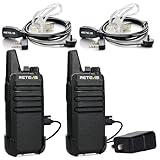 | Retevis RT22 Walkie Talkies Long Range Rechargeable with Earpiece (2 Pack) | Check Price On Amazon |
 | Midland GXT1000VP4 GMRS Two-Way Radios with Headsets, Black, 2 Pack | Check Price On Amazon |
 | Retevis RT628 Walkie Talkies for Kids,Toys Gifts for 6-12 Years Old Boys Girls,Long Range 2 Way Radio 22CH VOX,Birthday Gift,Family Walkie Talkie for Camping Hiking Indoor Outdoor | Check Price On Amazon |