Walkie talkies use three main battery types: Alkaline (disposable), NiMH (rechargeable), and Lithium-Ion (rechargeable premium option). Your choice significantly impacts talk time, reliability, and overall cost. This guide examines each battery technology’s performance characteristics, helping you select the right power source for your specific communication needs.
| Battery Type | Best For | Run Time | Cycle Life | Temperature Range |
|---|---|---|---|---|
| Alkaline | Occasional use, emergency backup | 8-12 hours | Single use | 0°F to 130°F |
| NiMH | Regular use, budget-conscious users | 6-10 hours | 500-1000 cycles | 32°F to 113°F |
| Lithium-Ion | Professional use, extreme conditions | 10-18 hours | 300-500 cycles | -4°F to 140°F |
Understanding Walkie Talkie Battery Types: Core Technologies Compared
Walkie talkies utilize three primary battery technologies, each with distinct characteristics that affect performance, cost, and reliability. Understanding these fundamental differences is essential for selecting the right power source for your communication needs.
| Photo | Popular Portable Walkie Talkies | Price |
|---|---|---|
 | SKIWARRIOR Multifunctional Smart Wireless Ski Goggles with Walkie-Talkie, Anti-Fog Zeiss Lens, Music & Call Function (Cylindrical Blue) | Check Price On Amazon |
 | SINORISE Super Mini Walkie Talkies, Two-Way Radios, 3 Pack | Check Price On Amazon |
 | KOSPET Tank M4C Smart Watch Rugged, Dual-Band GPS, 5ATM & IP69K Waterproof | Check Price On Amazon |
 | Retevis RT15 Walkie Talkies 3 Pack, Birthday Gift, Outdoor Adventure Kit | Check Price On Amazon |
 | Rechargeable Walkie Talkies Toys for Kids: DIY Astronaut Walkie Talkies for Boys Christmas Birthday Gifts for 3 4 5 6 7 8 9 10 Boy Walkie Talkie Outdoor Hiking Toy 2 Way Radio Camping Outdoor Game | Check Price On Amazon |
Disposable Alkaline Batteries
Alkaline batteries are the most widely available power option for consumer walkie talkies, offering practical advantages despite being single-use. These batteries use a manganese dioxide cathode and zinc anode in an alkaline electrolyte.
Key characteristics of alkaline batteries include:
- Voltage: Typically 1.5V per cell (radios often use 3-4 batteries)
- Capacity: 1800-2800mAh for AA size
- Shelf life: 5-10 years when stored properly
- Configuration: Commonly AA or AAA in consumer walkie talkies
- Run time: 8-12 hours of typical use (5% transmit, 5% receive, 90% standby)
Alkaline batteries perform best at room temperature, with performance dropping by up to 50% at 32°F. They require no charging infrastructure and are available worldwide, making them ideal for emergency kits and occasional users.
According to battery testing data, alkaline batteries maintain a relatively stable voltage until about 80% of their capacity is used, then voltage drops rapidly, causing sudden device failure.
Rechargeable Nickel-Metal Hydride (NiMH) Batteries
Nickel-Metal Hydride batteries represent a middle ground in walkie talkie power solutions, balancing cost-effectiveness with reasonable performance characteristics. They’ve largely replaced older Nickel-Cadmium (NiCd) batteries due to better capacity and reduced environmental impact.
Key characteristics of NiMH batteries include:
- Voltage: 1.2V per cell (lower than alkaline)
- Capacity: 1800-2500mAh for AA size
- Self-discharge: 20-30% per month for standard NiMH; 5-10% for low self-discharge variants
- Cycle life: 500-1000 recharge cycles with proper care
- Memory effect: Minimal in modern NiMH batteries
NiMH batteries provide better value than alkaline for regular users, with the cost-per-use dropping significantly after 12-15 recharge cycles. Using a quality NiMH charger is essential for maximizing battery life and performance.
These batteries perform well in moderate temperatures but lose capacity faster than alkaline in cold conditions, retaining only about 60% capacity at 32°F. Low self-discharge (LSD) NiMH batteries are worth the premium for users who don’t use their radios daily.
Lithium-Ion (Li-ion) Batteries
Lithium-Ion batteries represent the premium power solution for modern professional walkie talkies, offering superior energy density and performance characteristics that justify their higher cost.
Key characteristics of Li-ion batteries include:
- Voltage: 3.6-3.7V per cell
- Energy density: 250-300 Wh/kg (3 times higher than NiMH)
- Capacity: 1500-3000mAh in typical walkie talkie packs
- Self-discharge: Only 2-3% per month
- Cycle life: 300-500 cycles to 80% of original capacity
- Memory effect: None
Professional radios like Motorola and Kenwood models typically use proprietary Li-ion packs with built-in protection circuits that prevent overcharging and over-discharging. These safety features are crucial as Li-ion chemistry can be unstable if mishandled.
Li-ion batteries maintain performance in extreme temperatures better than other types, functioning from -4°F to 140°F, though capacity is reduced at temperature extremes. They also provide the best weight-to-runtime ratio, with professional packs weighing 30-40% less than equivalent NiMH options while delivering 20-30% more operating time.
Emerging Battery Technologies: Lithium Polymer (LiPo) and Beyond
While traditional battery types dominate the current walkie talkie market, emerging technologies like Lithium Polymer (LiPo) batteries are beginning to appear in newer models, offering potential advantages in form factor and performance.

LiPo batteries use the same basic chemistry as Li-ion but with a polymer electrolyte that allows for thinner, lighter, and more flexible battery shapes. This flexibility enables manufacturers to design slimmer radios with better ergonomics.
Key advantages of LiPo batteries include:
- Custom shapes that conform to radio body designs
- Higher discharge rates for power-hungry applications
- Similar or slightly better energy density than standard Li-ion
However, LiPo batteries require more careful handling than standard Li-ion, with greater sensitivity to physical damage and overcharging. They also typically cost 15-20% more than equivalent Li-ion packs.
Looking further ahead, solid-state batteries represent the next significant advancement, potentially offering 2-3 times the energy density of current Li-ion technology with improved safety profiles. These batteries are expected to begin appearing in premium communication devices within the next 3-5 years.
Battery Performance Factors: What Affects Runtime and Reliability
A battery’s specifications tell only part of the story. Multiple factors influence real-world performance in walkie talkies, often creating significant differences between theoretical and actual runtime.
Power Consumption Variables
The single biggest factor affecting battery life is transmit power. Most consumer walkie talkies operate at 0.5-2 watts, while professional models can use up to 5 watts. Each watt approximately doubles power consumption during transmission.
Typical power consumption patterns:
- Transmitting: 0.5W = ~150mA, 1W = ~300mA, 5W = ~1500mA
- Receiving: 30-70mA (with audio at medium volume)
- Standby: 8-15mA
Using this data, we can calculate that a walkie talkie with a 2000mAh battery pack operating at 1W with a typical duty cycle (5% transmit, 5% receive, 90% standby) would provide approximately:
(2000mAh ÷ ((300mA × 0.05) + (50mA × 0.05) + (10mA × 0.90))) = 2000mAh ÷ 26.5mA = ~75 hours
However, real-world conditions typically deliver 50-70% of this theoretical maximum due to additional factors.
Environmental Impacts on Battery Life
Temperature has a dramatic effect on all battery chemistries:
- Cold temperatures (32°F/0°C): Alkaline loses 50%, NiMH loses 40%, Li-ion loses 20% capacity
- Hot temperatures (95°F/35°C): All battery types lose 15-25% runtime and experience accelerated degradation
Additional features that drain power include:
- Display backlight: Increases consumption by 10-30mA when active
- GPS functionality: Adds 20-50mA continuous drain
- Bluetooth connectivity: Adds 15-30mA when active
- Scanning multiple channels: Increases receive-mode power consumption by 10-20%
Battery age also significantly impacts performance, with rechargeable batteries losing capacity over time regardless of use. NiMH typically loses 10-20% capacity per year, while quality Li-ion loses 5-10% per year under normal conditions.
Environmental Performance: How Battery Types Handle Extreme Conditions
Environmental conditions dramatically affect battery performance, with each battery chemistry responding differently to temperature extremes, humidity, and other factors.
Cold Weather Performance
In cold environments, chemical reactions within batteries slow down, reducing available capacity:
| Temperature | Alkaline | NiMH | Li-ion |
|---|---|---|---|
| 68°F (20°C) | 100% | 100% | 100% |
| 32°F (0°C) | 50% | 60% | 80% |
| 14°F (-10°C) | 30% | 40% | 60% |
| -4°F (-20°C) | 10% | 20% | 40% |
Li-ion clearly outperforms other battery types in cold weather. For users operating in cold environments, keeping spare batteries in an inside pocket close to body heat can help maintain capacity.
Hot Weather Performance
High temperatures actually improve immediate battery performance but significantly reduce overall lifespan:
- At 95°F (35°C), Li-ion batteries may deliver slightly higher capacity but will degrade 2-3 times faster than at room temperature
- At 113°F (45°C), battery degradation accelerates dramatically, with Li-ion potentially losing 20-30% of total capacity per year
- Above 130°F (55°C), safety mechanisms in Li-ion batteries may activate, shutting down the battery to prevent thermal runaway
Alkaline batteries are the most heat-tolerant, maintaining stable performance up to about 130°F (55°C) with minimal safety concerns. However, they may leak at extremely high temperatures.
Humidity and Water Exposure
Modern commercial walkie talkie battery packs, especially those in professional models, typically include moisture protection features:
- Sealed contacts to prevent corrosion
- Conformal coatings on circuit boards in smart battery packs
- Gaskets and O-rings on battery doors for consumer models
Even with these protections, consistent exposure to high humidity accelerates corrosion of battery contacts and internal components. If operating in humid environments, users should:
- Inspect battery contacts regularly for corrosion
- Consider using silica gel packs when storing batteries
- Select waterproof radio models with fully sealed battery compartments
Battery Selection Guide: Choosing the Right Power Source for Your Needs
Selecting the optimal battery type requires balancing multiple factors including your specific usage scenario, environmental conditions, budget constraints, and performance requirements.
Decision Factors for Different User Types
For Casual/Occasional Users:
- Best option: Alkaline batteries or low self-discharge NiMH
- Why: Alkalines provide reliable power without investment in chargers. LSD NiMH offers better value for users who can plan ahead
- Typical usage: Camping trips, occasional events, emergency preparedness
For Regular Recreational Users:
- Best option: Standard NiMH rechargeable batteries
- Why: Cost-effective for regular use, reasonable performance in moderate conditions
- Typical usage: Weekend outdoor activities, family communications, light business use
For Professional/Heavy Users:
- Best option: Lithium-Ion battery packs
- Why: Superior runtime, reliable performance, better cold weather operation
- Typical usage: Construction sites, security operations, emergency services
For Extreme Environment Operations:
- Best option: Lithium-Ion with spare batteries
- Why: Best temperature range performance, consistent power delivery
- Typical usage: Winter sports, desert operations, maritime use
Special Considerations for Critical Communications
For emergency services, search and rescue teams, and other critical operations, battery reliability can be a life-safety issue. In these applications:
- Use only manufacturer-approved Li-ion battery packs from reputable sources
- Implement a rigorous battery rotation system
- Carry alkaline battery trays as emergency backups
- Consider extended-capacity battery options, even with weight penalties
- Use battery conditioners to maintain optimal performance
Many professional organizations employ the “rule of thirds” for mission-critical communications: one battery in use, one fully charged spare, and one being recharged.
Battery Maintenance and Optimization: Maximizing Performance and Lifespan
Proper maintenance and usage practices can significantly extend battery life and maintain optimal performance, regardless of which battery technology you’ve selected.
Maintenance Procedures by Battery Type
Alkaline Battery Maintenance:
- Store in cool, dry location below 80°F (27°C)
- Remove from devices during long-term storage
- Check expiration dates before installation
- Clean battery contacts with alcohol wipes if corrosion appears
- Never attempt to recharge standard alkaline batteries
NiMH Battery Maintenance:
- Break in new batteries with 3-5 full charge/discharge cycles
- Use smart chargers that prevent overcharging
- Avoid extreme discharge (below 1.0V per cell)
- Periodically (every 3 months) perform a full discharge/recharge cycle
- Store at approximately 40% charge if unused for extended periods
- Clean battery contacts regularly with electronics-grade contact cleaner
Lithium-Ion Battery Maintenance:
- Avoid complete discharges when possible (Li-ion prefers partial cycles)
- Store at 40-60% charge if unused for extended periods
- Keep cool – avoid exposure to temperatures above 86°F (30°C)
- Use only manufacturer-recommended chargers
- Avoid “trickle charging” or leaving on chargers for days
- Replace batteries showing signs of physical damage immediately
Recognizing Battery Degradation Signs
All rechargeable batteries degrade over time. Watch for these warning signs:
- Significantly reduced runtime (less than 70% of original capacity)
- Swelling or physical deformation (especially in Li-ion packs)
- Excessive heating during charging or use
- Radio cutting out during transmission
- Battery failing to hold charge when stored
For professional users, consider investing in a battery analyzer that can measure actual capacity and help identify batteries that need replacement before they fail in the field.
Battery Management for Organizations: Fleet Solutions and Best Practices
Organizations managing multiple two-way radios face unique battery challenges that require systematic approaches to maintenance, rotation, and replacement.
Battery Fleet Management Systems
Effective battery management requires tracking individual batteries throughout their lifecycle. Implement these strategies:
- Unique identification: Assign ID numbers to each battery using labels or RFID tags
- Usage tracking: Record date of purchase, cycles completed, and performance issues
- Regular testing: Schedule capacity tests every 3-6 months
- Rotation system: Distribute wear evenly across your battery inventory
- Retirement policy: Set specific criteria for battery replacement (e.g., below 70% capacity)
Organizations with 20+ radios should consider dedicated battery management software or services that track performance metrics and predict replacement needs.
Charging Infrastructure Planning
Proper charging infrastructure is essential for organizations:
- Multi-unit chargers: Install charging banks that accommodate your daily usage patterns
- Conditioning chargers: For NiMH batteries, use chargers with reconditioning features
- Smart charging systems: Consider systems like Motorola IMPRES that track battery health
- Backup power: Ensure charging systems have UPS or generator backup
For field operations, vehicle charging systems and portable solar options can maintain battery readiness during extended deployments.
Environmental and Safety Considerations
Battery selection impacts not only performance but also environmental sustainability and safety, with each technology presenting different considerations.
Environmental Impact Comparison
From most to least environmental impact:
- Alkaline batteries: Single-use design creates significant waste. Modern alkalines no longer contain mercury but still require proper disposal
- NiMH batteries: Rechargeable design reduces waste, but manufacturing has moderate environmental impact. Contains no extremely toxic materials
- Lithium-Ion batteries: Resource-intensive production but longest lifespan. Contains materials requiring careful recycling
According to EPA estimates, rechargeable batteries create 1/100th the waste of disposables over their lifetime, despite higher manufacturing impacts.
Proper Disposal and Recycling
Each battery type requires specific disposal approaches:
- Alkaline: Can go into regular trash in most locations, but recycling is preferable
- NiMH: Should be recycled; many electronics retailers offer free collection
- Lithium-Ion: Must be recycled; improper disposal can cause fires in waste processing facilities
For US users, locate battery recycling centers through Call2Recycle’s recycling locator. Many communities also offer hazardous waste collection events that accept batteries.
Safety Precautions
To prevent safety incidents:
- Never puncture or disassemble any battery
- Store batteries away from metal objects that could cause shorts
- Inspect Li-ion packs regularly for damage or swelling
- Use only manufacturer-approved charging systems
- Follow air transport restrictions for spare batteries
If a battery overheats, swells, or leaks, place it in a non-flammable container and take it to a recycling center immediately.
Economic Analysis: Total Cost of Ownership for Different Battery Types
Initial purchase price tells only part of the economic story. Understanding the total cost of ownership helps make financially sound battery decisions for both individuals and organizations.
Five-Year Cost Comparison
Let’s analyze the costs for powering two walkie talkies used 8 hours weekly:
| Factor | Alkaline | NiMH | Li-ion |
|---|---|---|---|
| Initial cost | $8 (8 AA batteries) | $50 (8 AA + charger) | $120 (2 packs + charger) |
| Replacements needed | 52 sets (weekly) | 3 sets (every 18 months) | 1 set (after 3 years) |
| Replacement cost | $416 | $48 | $80 |
| Electricity cost | $0 | ~$25 | ~$20 |
| 5-year total | $424 | $123 | $220 |
The break-even point where NiMH becomes cheaper than alkaline occurs after approximately 12-15 uses. For heavy users, the cost difference becomes dramatic within just a few months.
Hidden Costs to Consider
Beyond direct purchase costs, consider:
- Downtime costs: Li-ion offers the lowest risk of unexpected failures
- Replacement logistics: Alkaline requires constant supply chain management
- Disposal costs: Organizations may pay for proper battery disposal
- Performance costs: Lower-quality batteries may reduce radio range and clarity
For business users, these hidden costs often outweigh the direct purchase price differences, making premium battery options more economical despite higher upfront costs.
Advanced Battery Technologies and Future Trends
The battery technology landscape continues to evolve, with several emerging innovations poised to impact the two-way radio market in coming years.
Solid-State Battery Technology
Solid-state batteries replace liquid electrolytes with solid compounds, offering several advantages:
- 30-100% higher energy density than current Li-ion
- Significantly improved safety (non-flammable)
- Wider operating temperature range
- Faster charging capabilities
- Longer cycle life (potentially 1000+ cycles)
Major manufacturers expect solid-state batteries to begin appearing in portable electronics within 2-4 years, with initial premium pricing that will decline as production scales.
Fast-Charging Innovations
New charging technologies are reducing downtime for all battery types:
- Advanced Li-ion chargers now offer 80% capacity in 30-45 minutes
- Future fast-charging batteries may reach 80% in under 15 minutes
- Smart charging algorithms that adapt to battery condition and temperature
- Wireless charging options for simplified battery management
These technologies will particularly benefit emergency services and industries where radio downtime is operationally critical.
Smart Battery Integration
Battery intelligence continues to advance with:
- More accurate remaining capacity indicators
- Bluetooth connectivity to smartphones for battery monitoring
- Predictive analytics that forecast battery failures before they occur
- Temperature management systems that optimize charging and discharging
These smart features will eventually migrate from professional radio systems to consumer models as costs decrease.
FAQ: Common Questions About Walkie Talkie Batteries
Can I use rechargeable batteries in any walkie talkie?
Most consumer walkie talkies that accept AA or AAA batteries can use either alkaline or NiMH rechargeable batteries. However, the slightly lower voltage of NiMH (1.2V vs 1.5V) may affect performance in some models. Professional radios with proprietary battery packs must use the specific battery type designed for that model.
How long do walkie talkie batteries typically last?
Runtime varies significantly based on usage patterns and battery type. With typical use (5% transmit, 5% receive, 90% standby), alkaline batteries provide 8-12 hours, NiMH batteries 6-10 hours, and Li-ion packs 10-18 hours. Constant transmission reduces these times by 80-90%.
Is it OK to leave my walkie talkie on the charger all the time?
Modern Li-ion chargers typically have overcharge protection, but continuous charging still causes stress and heat that degrades batteries faster. Best practice is to remove batteries from chargers once fully charged. For storage, keep Li-ion batteries at 40-60% charge, not 100%.
Why do my NiMH batteries die so quickly?
Rapid NiMH battery depletion usually stems from one of three issues: 1) Self-discharge (standard NiMH batteries lose 20-30% charge monthly), 2) Battery age (NiMH typically lasts 2-3 years before significant capacity loss), or 3) Memory effect from improper charging patterns. Try reconditioning the batteries with a full discharge/charge cycle.
Can I use a higher capacity battery in my walkie talkie?
For consumer radios using standard battery sizes, you can use higher capacity batteries of the same size (e.g., 2500mAh AA NiMH instead of 1800mAh). For radios with proprietary battery packs, you must use only manufacturer-approved batteries with the correct voltage and connection type. Some manufacturers offer extended capacity options.
Are aftermarket Li-ion battery packs safe?
Quality varies dramatically among aftermarket batteries. Some are manufactured to standards comparable to OEM, while others lack proper protection circuits and quality control. For mission-critical applications, always use manufacturer-original batteries. If cost is a concern, stick with reputable third-party brands that offer warranties and safety certifications.
How do I store walkie talkie batteries when not in use?
For long-term storage (more than 2 months): Alkaline batteries should be removed from devices and stored in cool, dry locations. NiMH batteries should be charged to about 40% and stored in cool conditions. Li-ion batteries last longest when stored at 40-60% charge in cool (not cold) conditions around 59°F (15°C). For more detailed guidance on preserving battery life during periods of inactivity, check out our walkie talkie storage guide.
What’s the fastest way to recharge batteries in an emergency?
For emergency recharging, rapid-rate chargers can bring Li-ion batteries to 80% capacity in 45-60 minutes. Vehicle chargers or USB power banks with proper adapters offer field charging options. For consumer radios using standard batteries, keeping pre-charged spares or alkaline backup batteries is the most reliable emergency option.
Conclusion: Making the Right Battery Choice for Reliable Communication
Selecting the optimal battery solution for your walkie talkie needs requires balancing performance requirements, environmental conditions, budget constraints, and practical considerations.
For casual and emergency users, the simplicity and shelf stability of alkaline batteries remain valuable, despite higher long-term costs. Regular recreational users gain significant cost advantages from NiMH rechargeable batteries, particularly low self-discharge variants. Professional and construction industry users benefit from the superior performance of Li-ion technology, which justifies the higher initial investment.
Remember that battery maintenance significantly impacts performance regardless of chemistry. Regular charging cycles, proper storage, and timely replacement of degraded batteries will ensure your communications remain reliable when needed most.
As battery technology continues to evolve, future options will offer longer runtimes, faster charging, and better environmental profiles. For now, match your battery choice to your specific usage patterns, and consider keeping multiple battery types available for different scenarios to ensure you’re never without communication capability when it matters most.
If you’re looking for radios with exceptional battery performance in challenging environments, our guide to cold weather walkie talkies provides specialized recommendations for reliable winter communication. For those considering rechargeable options, our comprehensive rechargeable walkie talkie guide offers additional insights on battery life optimization and charging best practices.
| Photo | TOP RATED WALKIE TALKIES | Price |
|---|---|---|
 | Retevis RT628 Kids Walkie Talkies, Toys Gifts for 4-12 Year Old Girl Boy | Check Price On Amazon |
 | Cobra ACXT545 Weather-Resistant Walkie Talkies, Rechargeable, 22 Channels | Check Price On Amazon |
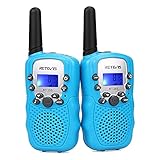 | Retevis RT388 Kids Walkie Talkies, Outdoor Toys for Kids Camping Essentials | Check Price On Amazon |
 | Cobra RX680 Walkie Talkies (2-Pack), IP54 Water Resistant Design | Check Price On Amazon |
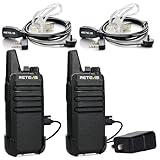 | Retevis RT22 Walkie Talkies Long Range Rechargeable with Earpiece (2 Pack) | Check Price On Amazon |
 | Midland GXT1000VP4 GMRS Two-Way Radios with Headsets, Black, 2 Pack | Check Price On Amazon |
 | Retevis RT628 Walkie Talkies for Kids,Toys Gifts for 6-12 Years Old Boys Girls,Long Range 2 Way Radio 22CH VOX,Birthday Gift,Family Walkie Talkie for Camping Hiking Indoor Outdoor | Check Price On Amazon |