GPS walkie talkies combine traditional two-way radio communication with satellite positioning technology, allowing users to track locations while maintaining voice contact. These devices offer crucial safety benefits for outdoor adventures, family outings, and professional activities by enabling location sharing, emergency alerts, and navigation capabilities without cellular networks.
This guide explores how GPS walkie talkies work, their essential safety features, and how to select the right device for various activities. Whether you’re planning a backcountry hike or want better family coordination, understanding these devices can significantly enhance your safety and peace of mind.
| Photo | Popular Portable Walkie Talkies | Price |
|---|---|---|
 | SKIWARRIOR Multifunctional Smart Wireless Ski Goggles with Walkie-Talkie, Anti-Fog Zeiss Lens, Music & Call Function (Cylindrical Blue) | Check Price On Amazon |
 | SINORISE Super Mini Walkie Talkies, Two-Way Radios, 3 Pack | Check Price On Amazon |
 | KOSPET Tank M4C Smart Watch Rugged, Dual-Band GPS, 5ATM & IP69K Waterproof | Check Price On Amazon |
 | Retevis RT15 Walkie Talkies 3 Pack, Birthday Gift, Outdoor Adventure Kit | Check Price On Amazon |
 | Rechargeable Walkie Talkies Toys for Kids: DIY Astronaut Walkie Talkies for Boys Christmas Birthday Gifts for 3 4 5 6 7 8 9 10 Boy Walkie Talkie Outdoor Hiking Toy 2 Way Radio Camping Outdoor Game | Check Price On Amazon |
How GPS Technology Works in Two-Way Radios
GPS functionality in walkie talkies represents the convergence of two distinct technologies: radio communication and satellite positioning. Understanding how they work together is key to maximizing their safety benefits.
Traditional walkie talkies transmit voice through radio frequencies, allowing communication without cell networks. GPS-enabled models add satellite receivers that calculate the device’s precise location by triangulating signals from orbiting satellites. This location data can then be transmitted between units using the same radio frequencies that carry voice communications.
When you press the location sharing button on your GPS walkie talkie, it broadcasts your coordinates to other compatible units in range. The receiving units then display this information on their screens, often overlaid on a basic map.
Unlike smartphone GPS that requires cellular data to display detailed maps, walkie talkie GPS systems typically use pre-loaded base maps or simple coordinate displays, allowing them to function completely off-grid.
Differences Between GPS Systems: GPS vs. GLONASS vs. Galileo
Modern GPS walkie talkies often support multiple satellite positioning systems, each with distinct advantages. Understanding these differences can help you choose the right device for your specific environment.
| System | Origin | Typical Accuracy | Strengths |
|---|---|---|---|
| GPS | United States | 3-5 meters | Excellent global coverage, industry standard |
| GLONASS | Russia | 4-7 meters | Better performance in northern latitudes |
| Galileo | European Union | 1-2 meters | Highest accuracy, growing constellation |
Premium walkie talkies often support multiple satellite systems simultaneously. This multi-constellation capability provides redundancy and improves accuracy, especially in challenging environments like dense forests or deep canyons. According to the European GNSS Agency, devices using both GPS and Galileo can achieve position accuracy improvements of up to 40% compared to GPS alone.
GPS Accuracy in Real-World Conditions
GPS accuracy in walkie talkies isn’t just about the specifications on paper—real-world conditions significantly impact performance. Here’s what affects location precision when you’re in the field.
While manufacturers may advertise “up to 3-meter accuracy,” actual performance varies dramatically based on environmental conditions. In open fields with clear sky views, you might achieve near-ideal accuracy. However, in forests, accuracy typically drops to 10-15 meters, while in canyons or urban environments with tall buildings, errors can exceed 30 meters.
Factors affecting GPS accuracy include:
- Sky visibility – Obstructions like tree cover, cliffs, or buildings block satellite signals
- Atmospheric conditions – Heavy cloud cover and storms can degrade signal quality
- Satellite geometry – The positioning of satellites overhead affects triangulation precision
- Device quality – Higher-quality receivers and antennas improve signal processing
- Battery level – Low batteries can reduce GPS receiver performance
Professional-grade walkie talkies typically use better antennas and more sensitive receivers than consumer models, resulting in more reliable positioning in challenging conditions.
Essential GPS Features for Safety and Coordination
The safety value of GPS-enabled walkie talkies comes from specific features designed for emergency situations and group coordination. Understanding these capabilities is crucial for selecting the right device for your needs.
Emergency SOS Functions Explained
The SOS functionality in GPS walkie talkies can be a lifesaver in emergency situations, but understanding how these systems work is essential for effective use when it matters most.
Most GPS walkie talkies feature dedicated emergency buttons that, when activated, send alert signals with your current coordinates to other units in your group. This differs from satellite communicators like SPOT or Garmin inReach that can contact emergency services directly.
Typical SOS activation process:
- Press and hold the emergency button (usually 3-5 seconds to prevent accidental activation)
- The device broadcasts an alert tone and your GPS coordinates to all compatible units in range
- Some models repeat this transmission at regular intervals until canceled
- Receiving units display alert notifications with the sender’s location
- Some advanced models can relay SOS signals between units to extend range
“The most critical aspect of walkie talkie SOS features is setting clear protocols with your group before heading out,” explains John Randall, search and rescue coordinator with Rocky Mountain Rescue Group. “Everyone needs to understand what to do when they receive an SOS signal.”
Premium models like the Garmin Rino 755t allow users to include brief status information with emergency signals, helping responders understand the nature of the emergency.
Group Tracking and Coordination Features
Keeping track of group members in outdoor settings is one of the most valuable applications of GPS walkie talkies. Here’s how these features work and how to use them effectively.
Most GPS walkie talkies periodically broadcast position updates to other compatible units. This allows everyone in the group to see other members’ locations on their device screens. The frequency of these updates affects battery life—more frequent updates provide better tracking but drain batteries faster.
To set up group tracking:
- Ensure all devices are set to the same channel and privacy code
- Enable position reporting in the GPS menu (usually set to automatic)
- Set appropriate update intervals (2-5 minutes balances tracking with battery life)
- Confirm all devices show the correct number of group members
- Test the system before separating
For hiking groups, position reporting helps prevent separation when members travel at different speeds. For families at theme parks or large events, these features help quickly locate separated children.
Most devices display group members as icons on a simple map screen. Some advanced models like the Midland GXT1000VP4 can calculate and display the direction and distance to other users, which is especially useful when detailed maps aren’t available.
Top GPS Walkie Talkies for Different Activities
With a clear understanding of GPS technology and key safety features, let’s examine the best GPS walkie talkie options for specific activities and user needs.
Best GPS Walkie Talkies for Hiking and Backcountry Adventures
Backcountry adventures demand GPS walkie talkies with specific capabilities: excellent battery life, rugged construction, and reliable performance in remote areas. These models excel in wilderness settings.
Garmin Rino 755t – Check price on Amazon
Pros:
- 5-watt transmission power for extended range
- Multi-constellation support (GPS and GLONASS)
- Color touchscreen with preloaded topographic maps
- IPX7 waterproof rating (submersible to 1 meter for 30 minutes)
- Exceptional position reporting accuracy (3-5 meters in good conditions)
Cons:
- Premium price point ($450-550)
- Complex interface requires learning curve
- Heavier than basic models (11.5 oz)
Motorola T800 – Check price on Amazon
Pros:
- Bluetooth connectivity with smartphone app for detailed maps
- Compact and lightweight (7.2 oz)
- IPX4 water-resistant rating
- Affordable price point ($99-120 for pair)
- Up to 25-mile range in ideal conditions
Cons:
- Requires smartphone for full map functionality
- Less rugged than dedicated outdoor models
- Limited battery life when using GPS features (8-10 hours)
Cobra ACXT1035R FLT – Check price on Amazon
Pros:
- Floats in water and fully waterproof (IPX7)
- Bright orange color aids visibility if dropped
- Built-in flashlight for emergency use
- Affordable price point ($80-100 for pair)
- Simple, intuitive interface
Cons:
- Basic GPS functionality without detailed mapping
- Limited range compared to premium models
- Less accurate position reporting
Family-Friendly GPS Walkie Talkies for Everyday Safety
For family activities and everyday safety, the ideal GPS walkie talkie balances ease of use with reliable tracking features. These models are designed with simplicity and practicality in mind.
Midland LXT600VP3 – Check price on Amazon
Pros:
- Simple interface suitable for children 8+
- Affordable price point ($60-80 for three units)
- Basic position sharing with distance/direction display
- Compact size fits in small hands
- Good battery life (up to 30 hours)
Cons:
- Limited range in real-world conditions (0.5-2 miles)
- Basic GPS features without mapping
- Less durable than outdoor-specific models
Motorola T600 H2O – Check price on Amazon
Pros:
- Fully waterproof and floating design
- Built-in flashlight with red LED option
- Simple location sharing button
- Bright colors help prevent loss
- Reasonable price point ($80-100 for pair)
Cons:
- Limited GPS features compared to premium models
- No mapping capabilities
- Location sharing requires line of sight in most environments
Cobra CXT1045R-FLT – Check price on Amazon
Pros:
- Floating design with water-activated flashlight
- Simple location sharing with one button
- VibrAlert feature for silent notification
- NOAA weather alerts
- Good value ($75-90 for pair)
Cons:
- Basic GPS functionality
- Limited range in crowded areas
- Battery life diminishes with GPS use
Optimizing Battery Life While Using GPS Features
GPS functionality significantly increases power consumption in two-way radios. These proven strategies will help maximize battery life without sacrificing the safety benefits of location tracking.
GPS receivers continuously draw power to maintain satellite connections, reducing battery life by 30-50% compared to standard walkie talkie operation. A typical walkie talkie might last 10-15 hours of regular use, but only 5-8 hours with GPS features active.
To extend battery life:
- Adjust position reporting intervals – Change from 1-minute to 5-minute updates to save significant power
- Turn off GPS when stationary – Disable location features during lunch breaks or overnight at camp
- Reduce screen brightness – Lower settings can add hours of operation
- Use power-saving modes – Many models offer economy settings that reduce transmission power
- Carry spare batteries – Lithium batteries perform better than alkaline in cold weather
- Consider solar chargers – For multi-day trips, portable solar panels can recharge compatible units
Most current models use either standard AA batteries or proprietary rechargeable packs. AA-powered units offer the advantage of easy replacement in the field, while rechargeable models typically provide more consistent performance over time.
The Anker PowerCore 10000 portable battery pack can recharge most USB-compatible walkie talkies multiple times, making it an excellent backup for extended trips.
Setting Up and Using GPS Walkie Talkie Safety Features
Proper setup and usage of GPS safety features ensures they’ll work correctly when needed. Follow these guidelines to configure your devices for maximum safety benefit.
Before heading out, take time to properly set up your devices:
- Update firmware – Check manufacturer websites for the latest software updates
- Set unit identification – Program unique names for each device to identify users
- Establish common channels – Ensure all units use identical channel and privacy code settings
- Test GPS acquisition – Power on outdoors and verify GPS lock before departing
- Verify position sharing – Conduct a test between all units to confirm location display
- Test emergency features – Practice SOS activation in a controlled setting
- Set appropriate update intervals – Balance tracking frequency with battery conservation
When using your GPS walkie talkie in the field:
- Carry the device in an accessible location, not buried in a backpack
- Keep antennas vertical when possible for best signal transmission
- Check battery levels regularly and replace/recharge before they fall below 25%
- Use waypoint marking to identify important locations like trailheads or meeting points
- Conduct periodic radio checks if group members are separated
If someone becomes separated from the group, immediately check their position on your GPS display. Establish voice contact if possible, and coordinate a plan to reunite based on their location data.
Creating an Effective Communication Plan
GPS features work best as part of a comprehensive communication plan. Here’s how to establish protocols that maximize safety and coordination for any group activity.
Before any outing, establish and share these key protocols:
- Check-in schedule – Set specific times for all group members to report in
- Emergency procedures – Define exactly what to do if someone activates SOS
- Separation protocol – Establish steps to take if someone becomes separated
- Battery conservation plan – Determine when GPS features can be turned off
- Backup communication methods – Identify alternatives if walkie talkies fail
Sample hiking communication plan:
- Radio check every hour on the hour
- If separated, stop moving and establish radio contact
- SOS signal means “stop all activity and respond immediately”
- GPS tracking set to 3-minute intervals while moving
- Designated channel 7, privacy code 22
- Whistle backup: 3 short blasts for emergency
“The most effective safety plans are simple enough to remember in stressful situations,” notes Maria Rodriguez, outdoor education instructor. “Practice your communication protocols before you need them in a real emergency.”
GPS Walkie Talkie Limitations and Alternatives
Understanding the limitations of GPS walkie talkies is just as important as knowing their capabilities. Here’s where these devices may fall short and what alternatives to consider for comprehensive safety planning.
While GPS walkie talkies provide valuable safety features, they have several important limitations:
- Range constraints – Despite “up to 35 mile” claims, real-world range is typically 0.5-2 miles in forests or hills
- No emergency services contact – Unlike satellite communicators, most cannot directly alert rescue services
- Limited mapping – Basic or no topographic mapping compared to dedicated GPS units
- Line-of-sight dependence – Radio signals cannot penetrate significant terrain obstacles
- Battery limitations – GPS features significantly reduce operating time
- Weather vulnerability – Heavy precipitation can reduce both range and GPS accuracy
| Device Type | Pros | Cons | Typical Cost |
|---|---|---|---|
| GPS Walkie Talkie | Group communication, location sharing, no subscription | Limited range, no emergency services contact | $60-500 |
| Satellite Communicator | Global coverage, SOS to emergency services, tracking | Monthly subscription, limited voice capability | $200-400 + $12-50/month |
| Personal Locator Beacon | No subscription, direct emergency notification | One-way communication only, no tracking | $200-350 |
| Smartphone with Apps | Familiar interface, detailed maps | Requires cell service for most functions, fragile | Existing phone + app costs |
For comprehensive safety, consider a layered approach. GPS walkie talkies work well for group coordination in moderate terrain, while satellite communicators like the Garmin inReach Mini provide true emergency response capabilities in remote areas.
Privacy and Security Considerations
Location sharing raises important privacy considerations that are often overlooked. Understanding these issues and implementing appropriate safeguards ensures your GPS walkie talkies enhance safety without compromising privacy.
Standard walkie talkie communications are not encrypted and can be intercepted by anyone using the same channel within range. This means your voice communications and, in the case of GPS models, your location data could potentially be monitored by others.
To enhance privacy and security:
- Use privacy codes (CTCSS/DCS) to reduce casual eavesdropping
- Switch channels periodically in popular areas
- Disable GPS tracking when not needed for safety
- Never announce specific campsite locations over radio in public areas
- Consider models with direct unit-to-unit communication for sensitive location sharing
- For children, use models with restricted channel changing capabilities
Be aware that some higher-end models store location history that could be accessed if the device is lost or stolen. Check if your model has a feature to clear this data.
Expert Advice: Real-World GPS Walkie Talkie Usage
To provide real-world perspective on GPS walkie talkie usage, we consulted professional outdoor guides, search and rescue personnel, and experienced users. Here’s their expert advice on maximizing safety and effectiveness.
Robert Chen, wilderness guide with 15 years of experience leading backcountry trips, emphasizes testing before critical situations: “I’ve seen too many groups try to figure out their GPS walkie talkies during an actual emergency. Practice with your devices before you need them. Set waypoints, share locations, and activate emergency features in a safe environment first.”
Sarah Tompkins, search and rescue coordinator, focuses on realistic expectations: “The biggest mistake I see is people relying solely on GPS walkie talkies for backcountry safety. They’re valuable tools but should be part of a comprehensive safety system that includes maps, compass, and emergency supplies.”
On selecting appropriate devices, outdoor educator Michael Ramirez suggests: “Match your device to your specific needs. For family camping in established campgrounds, simple models with basic location sharing are sufficient. For backcountry hiking expeditions, invest in professional-grade units with better receivers and longer battery life.”
Common mistakes reported by our experts include:
- Failing to fully charge devices before outings
- Not carrying spare batteries
- Setting position reporting intervals too frequently (draining batteries)
- Keeping devices in deep pockets or backpacks where signals are obstructed
- Not establishing clear communication protocols before separation
- Relying on manufacturer range claims rather than testing actual performance
For maintenance, most experts recommend regular battery checks, keeping electrical contacts clean, and storing units in dry conditions when not in use.
Frequently Asked Questions About GPS Walkie Talkies
These frequently asked questions address common concerns and misconceptions about GPS walkie talkies and their safety features.
What walkie talkie has GPS?
Several major manufacturers offer walkie talkies with built-in GPS. The most notable include Garmin Rino series (755t, 700, 650), Motorola T800 series, Midland GXT series, and Cobra ACXT models. These range from basic units with simple location sharing to advanced devices with detailed mapping capabilities.
Can walkie talkies track your location?
GPS-enabled walkie talkies can track and share location information between compatible units within radio range. They calculate position using satellite signals and transmit these coordinates to other devices on the same channel. However, they don’t provide tracking to outside parties or emergency services unless paired with smartphone apps offering additional functionality.
What is the range of Garmin Rino?
Garmin Rino models advertise up to 20 miles of range under ideal conditions (unobstructed line of sight, high elevation). However, in typical real-world conditions like forests or rolling terrain, the actual range is usually 1-2 miles. Urban environments with buildings further reduce this to 0.5-1 mile in most cases.
Does Motorola make a two-way radio with GPS?
Yes, Motorola offers several GPS-enabled two-way radios. Their T800 series features Bluetooth connectivity to smartphones for enhanced mapping and messaging features. The T800 and T801 models provide basic GPS functionality with their app, allowing location sharing and tracking between compatible units.
How accurate is walkie talkie GPS?
GPS accuracy in walkie talkies typically ranges from 3-15 meters (10-50 feet) depending on conditions and device quality. Premium models like Garmin Rino series offer better accuracy (3-5 meters) in good conditions. Dense forest cover, canyons, or urban environments can reduce accuracy to 10-30 meters or worse.
Do I need a license to use GPS walkie talkies?
Many GPS walkie talkies operate on General Mobile Radio Service (GMRS) frequencies, which require an FCC license in the United States. The license costs $35 for 10 years and covers your entire family. Some models operate on license-free Family Radio Service (FRS) channels but typically have lower power and reduced range.
Will GPS walkie talkies work without cell service?
Yes, true GPS walkie talkies function completely without cell service. They use satellite signals for positioning and radio frequencies for communication between units. This makes them ideal for remote areas where cellular networks are unavailable. Some hybrid models that pair with smartphones may have limited functionality without cell service.
Conclusion: Choosing the Right GPS Walkie Talkie for Your Safety Needs
Selecting the right GPS walkie talkie ultimately depends on your specific activities, environment, and safety requirements. This decision framework will help you make the best choice for your situation.
For casual family outings and moderate outdoor activities, mid-range options like the Midland GXT series or Cobra ACXT models provide adequate location sharing capabilities with simple interfaces at reasonable prices ($60-100 per pair).
For serious backcountry adventures, invest in professional-grade units like the Garmin Rino series that offer better GPS accuracy, longer battery life, and more robust construction, despite their higher cost ($350-500 per unit).
Remember that GPS walkie talkies are most effective when:
- All group members carry compatible units
- Devices are properly set up and tested before departure
- Clear communication protocols are established
- Users understand both capabilities and limitations
- They’re part of a comprehensive safety system
Whichever model you choose, the ability to communicate and share location information can provide invaluable peace of mind and tangible safety benefits for all your adventures.
| Photo | TOP RATED WALKIE TALKIES | Price |
|---|---|---|
 | Retevis RT628 Kids Walkie Talkies, Toys Gifts for 4-12 Year Old Girl Boy | Check Price On Amazon |
 | Cobra ACXT545 Weather-Resistant Walkie Talkies, Rechargeable, 22 Channels | Check Price On Amazon |
 | Retevis RT388 Kids Walkie Talkies, Outdoor Toys for Kids Camping Essentials | Check Price On Amazon |
 | Cobra RX680 Walkie Talkies (2-Pack), IP54 Water Resistant Design | Check Price On Amazon |
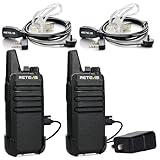 | Retevis RT22 Walkie Talkies Long Range Rechargeable with Earpiece (2 Pack) | Check Price On Amazon |
 | Midland GXT1000VP4 GMRS Two-Way Radios with Headsets, Black, 2 Pack | Check Price On Amazon |
 | Retevis RT628 Walkie Talkies for Kids,Toys Gifts for 6-12 Years Old Boys Girls,Long Range 2 Way Radio 22CH VOX,Birthday Gift,Family Walkie Talkie for Camping Hiking Indoor Outdoor | Check Price On Amazon |