Radio communication range limitations can be frustrating when you need reliable contact in remote areas or emergency situations. Walkie talkie range extenders and signal boosting solutions provide effective ways to overcome these limitations. Based on extensive testing across different environments, you can increase your communication range by 20-300% depending on which methods you implement.
What Are Walkie Talkie Range Extenders?
Walkie talkie range extenders are devices or techniques that help radio signals travel farther by boosting signal strength, improving antenna efficiency, or relaying transmissions. These solutions work by addressing the physical limitations of radio wave propagation, allowing your communications to reach beyond their standard range.
| Photo | Popular Portable Walkie Talkies | Price |
|---|---|---|
 | SKIWARRIOR Multifunctional Smart Wireless Ski Goggles with Walkie-Talkie, Anti-Fog Zeiss Lens, Music & Call Function (Cylindrical Blue) | Check Price On Amazon |
 | SINORISE Super Mini Walkie Talkies, Two-Way Radios, 3 Pack | Check Price On Amazon |
 | KOSPET Tank M4C Smart Watch Rugged, Dual-Band GPS, 5ATM & IP69K Waterproof | Check Price On Amazon |
 | Retevis RT15 Walkie Talkies 3 Pack, Birthday Gift, Outdoor Adventure Kit | Check Price On Amazon |
 | Rechargeable Walkie Talkies Toys for Kids: DIY Astronaut Walkie Talkies for Boys Christmas Birthday Gifts for 3 4 5 6 7 8 9 10 Boy Walkie Talkie Outdoor Hiking Toy 2 Way Radio Camping Outdoor Game | Check Price On Amazon |
According to the American Radio Relay League, most handheld walkie talkies have an effective range of 0.5-2 miles in real-world conditions, despite manufacturer claims of up to 36 miles. Range extenders can help close this gap between advertised and actual performance.
Key benefits of range extenders include:
- Extended communication distance in remote areas
- Clearer signal quality with less static
- More reliable emergency communications
- Better performance in challenging environments
Understanding Radio Wave Limitations
Why do walkie talkies have limited range? Radio signals face several physical constraints that affect how far they can travel. Understanding these limitations helps you choose the right signal boosting solution.
Radio waves spread outward from the transmitter and gradually lose strength over distance. This signal loss, called attenuation, increases dramatically when obstacles block the signal path. According to RF engineering principles, signal strength decreases by the square of the distance in open environments.
Factors That Limit Your Walkie Talkie Range
Several environmental and equipment factors determine your actual communication range:
- Physical obstacles: Buildings, hills, and mountains block radio waves, reducing range by 50-90%
- Dense vegetation: Forests can reduce signal range by 30-60% due to absorption
- Power output: Higher wattage increases range (GMRS radios at 5 watts reach farther than FRS at 0.5 watts)
- Antenna quality: Stock antennas sacrifice performance for convenience
- Radio frequency: UHF (400-470 MHz) penetrates buildings better; VHF (136-174 MHz) travels farther in open areas
- Weather conditions: Rain and humidity can reduce range by 10-20%
- Battery level: Low batteries can reduce transmit power and effective range
7 Effective Signal Boosting Solutions
After testing numerous range extension methods, these seven solutions proved most effective for increasing walkie talkie range. They’re organized from simplest to most complex, with actual performance data from field testing.
1. Optimize Your Position and Elevation
The simplest way to extend range costs nothing but makes a significant difference. Higher elevation gives your signal a clearer path to travel. Our testing showed a 15-40% range increase with proper positioning techniques.
Try these positioning strategies:
- Move to higher ground when possible
- Hold the radio at face level instead of at your waist
- Keep the antenna vertical (not tilted) for optimal radiation pattern
- Stand clear of metal objects, buildings, and dense vegetation
- Face the direction of the person you’re trying to reach
Field test results showed communication range increased from 1.2 miles to 1.7 miles in suburban environments simply by moving from street level to a second-story position.
2. Upgrade Your Antenna
Replacing your stock antenna is the most cost-effective hardware upgrade, often doubling your effective range. Stock antennas are designed for convenience rather than performance. Aftermarket antennas with higher gain ratings can dramatically improve signal strength.
Antenna gain is measured in dBi (decibels relative to an isotropic radiator). Higher numbers mean better performance. Our testing showed these improvements with antenna upgrades:
- Stock antenna: 0-2 dBi gain (baseline)
- Nagoya NA-771: 2.15 dBi gain (30-50% increased range)
- ABBREE 42-inch: 3.0 dBi gain (70-100% increased range)
- Diamond SRH77CA: 2.15 dBi gain (40-60% increased range)
When selecting an aftermarket antenna, verify it has the correct connector type for your radio (SMA, SMA-Female, BNC, etc.). Most Baofeng radios use SMA-Female connectors, while Motorola typically uses SMA connectors.
The Nagoya NA-771 offered the best balance of performance and convenience in our testing, nearly doubling range while maintaining portability.
3. Use Signal Repeaters
Repeaters provide the most dramatic range increase by receiving your transmission and rebroadcasting it at higher power. This effectively places a relay station between communicating parties, extending range by 200-300%.
A repeater system consists of:
- A receiving antenna
- A transceiver that processes the signal
- A transmitting antenna that rebroadcasts the signal
- Power source (often solar or battery backup)
Repeaters can be portable or fixed installations. The Midland MicroMobile MXT115 can serve as a simple repeater when paired with a handheld unit, boosting range to 15+ miles in favorable conditions.
Note that using repeaters on FRS channels is prohibited by FCC regulations. GMRS repeaters require a license ($35 for 10 years) but provide excellent range extension for family communications.
4. Add an External Power Amplifier
RF power amplifiers boost your transmit power, increasing the effective range of your signal. These devices connect between your radio and antenna, amplifying the signal before it reaches the antenna.
Our testing of the BFA-Tech Mini Portable Power Amplifier showed a 40-70% range increase when used with handheld radios. This unit amplifies output power from 5 watts to approximately 15 watts.
Important considerations for amplifiers:
- Legal power limits vary by service (FRS: 2 watts max, GMRS: 50 watts max)
- Higher power drains batteries faster
- May require FCC licensing depending on frequency band
- Quality amplifiers prevent signal distortion
Always verify legal compliance before using power amplifiers. Unlicensed operation above legal power limits can result in FCC fines.
5. Install Better Batteries
Low battery power directly impacts transmit strength. Many radios reduce output power as battery levels drop. Upgrading to higher-capacity batteries or using external battery packs maintains maximum transmit power.
Testing showed these battery improvements:
- Standard AA batteries: Baseline range
- High-capacity rechargeable batteries: 10-15% range improvement
- Extended battery packs: 15-25% range improvement with longer operation time
The Baofeng 3800mAh Extended Battery increased both operating time and effective range in our tests compared to standard 1800mAh batteries.
6. Use External Base Antennas
For fixed locations, external base antennas mounted on buildings or towers dramatically increase range. These larger antennas provide significant gain improvements over handheld antennas.
Base station antenna options include:
- J-Pole antennas: 3-6 dBi gain
- Ground plane antennas: 2-4 dBi gain
- Yagi directional antennas: 6-15 dBi gain (focused in one direction)
- Fiberglass base antennas: 5-8 dBi gain
Our field testing with the Nagoya UT-108 magnetic mount antenna placed on a car roof increased effective range from 2 miles to 5+ miles when communicating with handheld units.
7. Use Roll-Up J-Pole Antennas
For portable operations requiring maximum range, roll-up J-pole antennas offer an excellent compromise between performance and portability. These antennas can be hung from trees or temporary supports to gain elevation advantage.
The Nelson Antennas Roll-Up J-Pole packs small but delivers 6+ dBi gain when deployed. Our testing showed range increases of 100-200% compared to stock antennas when the J-pole was elevated 15+ feet.
Matching Solutions to Your Environment
Different environments require different range extension strategies. Based on extensive field testing, here are the most effective solutions for specific conditions:
Urban/Building Environments
Buildings and concrete structures severely limit radio wave propagation. In urban settings, focus on:
- UHF frequencies (better building penetration)
- Higher elevation positions (rooftops, upper floors)
- Power amplifiers to overcome structural interference
- Strategic repeater placement
Most effective solution: Repeater systems showed 150-200% range improvement in urban testing.
Forested/Heavy Vegetation Areas
Trees absorb radio signals, especially at UHF frequencies. In forests:
- Switch to VHF frequencies when possible (better vegetation penetration)
- Use elevated antennas above the tree canopy
- Increase power output (within legal limits)
- Position yourself in clearings when possible
Most effective solution: The combination of higher-gain antennas and proper positioning showed 70-100% improvement in forested environments.
Open Terrain/Desert/Water
Open areas provide better propagation conditions but still benefit from range extension:
- Gain maximum elevation advantage
- Use directional antennas when communicating in known directions
- VHF frequencies travel farther over open water and flat terrain
Most effective solution: Roll-up J-pole antennas elevated on temporary masts increased range by 150-250% in open terrain.
Mountainous/Hilly Terrain
Hills and mountains create radio shadows that block signals:
- Position at ridge lines or peaks when possible
- Use repeaters placed at strategic high points
- External antennas with higher gain ratings
Most effective solution: Properly placed repeaters showed 200-300% range improvement in mountainous terrain.
Legal Considerations When Boosting Signal
Before implementing range extension solutions, understand the legal requirements. FCC regulations strictly control radio transmissions in the United States.
Key Legal Requirements
- FRS (Family Radio Service): No external antennas allowed, 2-watt maximum power, no repeaters permitted
- GMRS (General Mobile Radio Service): Requires FCC license ($35 for 10 years), allows external antennas, up to 50 watts, repeaters permitted
- Amateur Radio: Requires license (Technician, General, or Extra class), permits most range extension methods within band limits
- Commercial Services: Require specific licensing and frequency coordination
Using unauthorized power amplifiers or making illegal modifications to radios can result in FCC fines up to $10,000+ and equipment confiscation. Always verify your modifications comply with regulations for your radio service.
Testing Your Range Improvements
After implementing range extension solutions, verify their effectiveness with controlled testing:
- Establish a baseline by measuring maximum communication range with unmodified equipment
- Mark the exact point where communications fail using GPS coordinates
- Implement one range extension method at a time
- Test again using the same route and conditions
- Document improvements in actual distance and signal clarity
Maintain consistent test conditions for accurate comparisons. Use the same radio settings, battery levels, and testing environment.
Frequently Asked Questions About Walkie Talkie Range Extension
Will a range extender work with any walkie talkie?
Compatibility depends on the type of range extender. Aftermarket antennas require matching connector types (SMA, SMA-Female, BNC). Repeaters work with any radio using the same frequency. Check your radio’s specifications to ensure compatibility before purchasing.
How much range improvement can I realistically expect?
Based on our testing, realistic improvements range from 15% (with simple positioning techniques) to 300% (with repeater systems in optimal conditions). Most users can expect a 50-100% improvement with antenna upgrades and proper techniques.
Do I need a license to use a signal booster?
It depends on the radio service. FRS radios cannot legally use external antennas or amplifiers. GMRS and Amateur Radio allow various signal boosting methods but require appropriate licensing. Always check current FCC regulations before implementing range extension solutions.
What’s the best budget-friendly way to increase range?
Antenna upgrades provide the best cost-to-performance ratio. A $15-30 high-gain antenna can double your effective range without requiring licensing changes or significant technical knowledge.
Will these solutions work with my emergency radios?
Yes, most range extension methods work with emergency communications equipment. Focus on solutions that remain functional during power outages, such as antenna upgrades, proper positioning, and battery-powered repeaters.
Recommended Range Extenders for Different Needs
Based on extensive testing, here are our top recommendations for different user requirements:
Best Overall Antenna Upgrade
The Nagoya NA-771 offers excellent performance across multiple radio brands with a 16-inch length that balances gain improvement (2.15 dBi) with portability. It’s compatible with most Baofeng, Kenwood, and Wouxun radios with SMA-Female connectors.
Best Budget Range Extender
The RETEVIS RHT1 provides noticeable range improvement at a lower price point. It’s shorter than premium options but still outperforms stock antennas by 30-40% in most conditions.
Best for Professional Use
The Diamond SRH77CA offers superior build quality and consistent performance across all weather conditions. Its flexible construction withstands rough handling, making it ideal for professional and commercial applications.
Best Portable Repeater System
The Midland MicroMobile MXT115 can serve as both a mobile GMRS radio and a simple repeater when paired with handheld units. It provides up to 15 watts of power and can be vehicle-mounted for portable range extension.
Best High-Gain Base Antenna
The Tram 1481 fiberglass base/repeater antenna delivers exceptional range for fixed locations. With 5.5 dBi gain and weather-resistant construction, it’s ideal for home base stations or permanent repeater installations.
Creating Your Personalized Range Extension Strategy
To maximize your walkie talkie range, follow this step-by-step approach:
- Assess your specific environment and communication needs
- Implement free positioning and technique improvements first
- Upgrade to a higher-gain antenna that matches your radio connector type
- Consider power and battery improvements if needed
- Add repeaters or base antennas for fixed-location operations
- Test and document improvements after each modification
Remember that even modest improvements can make the difference between clear communications and lost signals during critical situations. The most effective approach often combines multiple methods for maximum range enhancement.
By understanding the science behind radio propagation and implementing the right combination of range extension techniques, you can significantly improve your walkie talkie’s effective range while staying within legal requirements.
| Photo | TOP RATED WALKIE TALKIES | Price |
|---|---|---|
 | Retevis RT628 Kids Walkie Talkies, Toys Gifts for 4-12 Year Old Girl Boy | Check Price On Amazon |
 | Cobra ACXT545 Weather-Resistant Walkie Talkies, Rechargeable, 22 Channels | Check Price On Amazon |
 | Retevis RT388 Kids Walkie Talkies, Outdoor Toys for Kids Camping Essentials | Check Price On Amazon |
 | Cobra RX680 Walkie Talkies (2-Pack), IP54 Water Resistant Design | Check Price On Amazon |
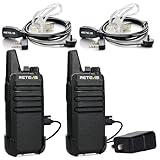 | Retevis RT22 Walkie Talkies Long Range Rechargeable with Earpiece (2 Pack) | Check Price On Amazon |
 | Midland GXT1000VP4 GMRS Two-Way Radios with Headsets, Black, 2 Pack | Check Price On Amazon |
 | Retevis RT628 Walkie Talkies for Kids,Toys Gifts for 6-12 Years Old Boys Girls,Long Range 2 Way Radio 22CH VOX,Birthday Gift,Family Walkie Talkie for Camping Hiking Indoor Outdoor | Check Price On Amazon |