Walkie talkie certification might seem complex, but it’s essential for ensuring communication devices meet safety, performance, and regulatory standards. Whether you’re a manufacturer seeking product approval, a procurement specialist evaluating equipment, or an end user concerned about quality, understanding these standards is crucial. This guide covers all major certification types including FCC regulations, IP ratings, MIL-STD-810 testing, and more to help you navigate the certification landscape.
Understanding Walkie Talkie Certification Fundamentals
Walkie talkie certification encompasses various standards that verify equipment functionality, safety, durability, and regulatory compliance. Understanding these fundamentals is essential whether you’re manufacturing, purchasing, or using two-way radio equipment.
| Photo | Popular Portable Walkie Talkies | Price |
|---|---|---|
 | SKIWARRIOR Multifunctional Smart Wireless Ski Goggles with Walkie-Talkie, Anti-Fog Zeiss Lens, Music & Call Function (Cylindrical Blue) | Check Price On Amazon |
 | SINORISE Super Mini Walkie Talkies, Two-Way Radios, 3 Pack | Check Price On Amazon |
 | KOSPET Tank M4C Smart Watch Rugged, Dual-Band GPS, 5ATM & IP69K Waterproof | Check Price On Amazon |
 | Retevis RT15 Walkie Talkies 3 Pack, Birthday Gift, Outdoor Adventure Kit | Check Price On Amazon |
 | Rechargeable Walkie Talkies Toys for Kids: DIY Astronaut Walkie Talkies for Boys Christmas Birthday Gifts for 3 4 5 6 7 8 9 10 Boy Walkie Talkie Outdoor Hiking Toy 2 Way Radio Camping Outdoor Game | Check Price On Amazon |
Certification for two-way radios falls into two main categories:
- Mandatory certifications: Required by law for market access (like FCC certification in the US)
- Voluntary certifications: Optional standards that verify quality, durability, or specialized capabilities
Both types serve as quality indicators, but mandatory certifications focus primarily on regulatory compliance while voluntary ones often address performance characteristics.
The certification process typically involves laboratory testing against established standards, documentation review, and official verification. For manufacturers, this means submitting products to accredited testing facilities and providing technical documentation proving compliance.
Why Certification Matters: Legal Requirements vs. Quality Indicators
Walkie talkie certifications serve dual purposes: ensuring legal compliance for manufacturers and signaling quality assurance for purchasers.
From a legal standpoint, selling non-certified radio equipment can result in:
- Significant financial penalties (up to $20,000 per violation in some jurisdictions)
- Product recalls and market withdrawal orders
- Import restrictions and customs seizures
- Legal liability for interference with critical communications
Beyond legal requirements, certifications provide valuable quality signals:
| Certification Type | Mandatory/Voluntary | What It Signals |
|---|---|---|
| FCC Certification | Mandatory (US) | Regulatory compliance, interference prevention |
| IP Ratings | Voluntary | Water/dust resistance, environmental durability |
| MIL-STD-810 | Voluntary | Durability under extreme conditions |
| Intrinsically Safe | Mandatory (for hazardous environments) | Safety in explosive atmospheres |
According to a survey by Industrial Safety Equipment Association, 78% of professional radio users consider certification an important factor in purchasing decisions, highlighting its significance beyond mere regulatory compliance.
FCC Certification for Two-Way Radios: Complete Requirements Guide
The Federal Communications Commission (FCC) certification is mandatory for all two-way radios sold or operated in the United States. This certification ensures radio equipment operates within designated frequency bands and meets interference prevention standards.
Different types of walkie talkies fall under specific FCC regulations:
- Part 90 (Private Land Mobile Radio Services): Professional business radios, public safety, industrial use
- Part 95 (Personal Radio Services): FRS, GMRS, and other consumer radios
- Part 15: Low-power unlicensed devices and unintentional radiators
The FCC certification process follows these steps:
- Pre-testing evaluation: Initial product assessment against applicable standards
- Laboratory testing: Measuring radio frequency output, spectrum use, and potential interference
- Documentation preparation: Technical specifications, test reports, user manual
- FCC ID assignment: Unique identifier for equipment authorization
- Application submission: Filing through FCC’s online system with required documentation
- Application review: FCC evaluation of submitted materials (2-8 weeks typically)
- Certification granted: Authorization to market and sell the device
Costs for FCC certification typically range from $3,000 to $10,000 depending on device complexity and testing requirements. The most common reasons for certification rejection include:
- Frequency band violations or excessive output power
- Incomplete or inaccurate technical documentation
- Spurious emissions exceeding allowable limits
- Labeling or user manual deficiencies
FCC Testing Procedures: Inside the Laboratory
FCC certification requires rigorous laboratory testing procedures that examine radio frequency parameters, emissions, and performance characteristics.
The core testing procedures include:
- Radiated emissions testing: Measuring radio frequency energy transmitted through the air in a specialized radio frequency (RF) chamber
- Conducted emissions testing: Measuring signals transmitted through power or interface cables
- Frequency stability testing: Verifying the device maintains its assigned frequency
- Output power measurement: Confirming transmitter power falls within legal limits
- Bandwidth occupation testing: Ensuring the device uses only its assigned spectrum
- Spurious emissions testing: Checking for unintended signals outside the assigned band
Testing equipment includes spectrum analyzers, signal generators, power meters, and specialized antennas. Tests typically occur in radio frequency anechoic chambers that eliminate outside interference for accurate measurements.
According to Jack Miller, RF testing engineer at Communications Certification Laboratory, “The most common failure points we see are spurious emissions and frequency instability, especially when devices are tested at temperature extremes.”
IP Ratings Explained: Water and Dust Protection Standards
IP (Ingress Protection) ratings are international standards that indicate a walkie talkie’s resistance to water and dust infiltration. Understanding these ratings is crucial for selecting equipment appropriate for specific environments.
The IP rating consists of two digits: the first indicates dust protection (0-6), and the second indicates water protection (0-9K).
| First Digit (Dust) | Protection Level | Second Digit (Water) | Protection Level |
|---|---|---|---|
| 0 | No protection | 0 | No protection |
| 1 | Protection against objects >50mm | 1 | Protected against dripping water |
| 2 | Protection against objects >12.5mm | 2 | Protected against dripping water when tilted 15° |
| 3 | Protection against objects >2.5mm | 3 | Protected against spraying water |
| 4 | Protection against objects >1mm | 4 | Protected against splashing water |
| 5 | Dust protected (limited ingress) | 5 | Protected against water jets |
| 6 | Dust tight (no ingress) | 6 | Protected against powerful water jets |
| – | – | 7 | Protected against temporary immersion (up to 1m for 30 min) |
| – | – | 8 | Protected against continuous immersion (beyond 1m, manufacturer specified) |
| – | – | 9K | Protected against high-pressure, high-temperature jet sprays |
Common IP ratings for walkie talkies include:
- IP54: Dust protected and resistant to splashing water (basic outdoor use)
- IP67: Dust tight and can withstand temporary immersion (most popular for rugged radios)
- IP68: Dust tight and protected against continuous immersion (underwater capable)
A common misconception is that any IP rating with water protection means the device is “waterproof.” In reality, specific conditions (depth, duration, water pressure) determine the actual protection level.
IP Testing Methodology: How Walkie Talkies Are Tested for Environmental Protection
IP certification involves standardized testing procedures that simulate real-world environmental conditions to verify a walkie talkie’s resistance to dust and water.
For dust protection testing (first digit):
- Devices are placed in a dust chamber containing talcum powder or other fine particulate
- Air circulation keeps dust particles suspended throughout the test
- Test duration ranges from 8 to 24 hours depending on protection level
- Vacuum may be applied for higher ratings (5 and 6) to simulate pressure differences
- Post-test inspection checks for dust penetration and functionality
For water protection testing (second digit):
- Tests range from dripping water (IPX1-IPX2) to full immersion (IPX7-IPX8)
- IPX4 testing uses oscillating spray nozzles from all directions
- IPX5-IPX6 testing uses water jets at various pressures (30 kPa to 100 kPa)
- IPX7 requires complete immersion at 1 meter for 30 minutes
- IPX8 testing parameters are specified by the manufacturer (typically deeper or longer than IPX7)
- IPX9K uses high-pressure (8-10 MPa), high-temperature (80°C) water jets
After testing, devices must not only prevent water/dust ingress but also maintain full functionality to receive certification.
MIL-STD-810 Testing: Military Durability Standards for Two-Way Radios
MIL-STD-810 is a United States Military Standard that establishes environmental testing methods for equipment durability. For walkie talkies, these tests verify performance under extreme conditions including drops, vibration, temperature extremes, and more.
The current version, MIL-STD-810H (released in 2019), replaced MIL-STD-810G and includes 29 test methods. For two-way radios, the most relevant tests include:
- Method 501.7: High Temperature (operation at 120°F to 160°F)
- Method 502.7: Low Temperature (operation at -40°F to 0°F)
- Method 506.6: Rain (driving rain for 30-60 minutes)
- Method 507.6: Humidity (up to 95% relative humidity over multiple cycles)
- Method 510.7: Sand and Dust (8-12 hours of exposure to blowing particulates)
- Method 514.8: Vibration (simulating vehicle transport and operation)
- Method 516.8: Shock/Drop (26 drops from 4-5 feet onto concrete)
- Method 528.1: Mechanical Vibrations of Shipboard Equipment (added in 810H)
A critical distinction in MIL-STD-810 is between “Tested to” and “Compliant with” claims:
- “Tested to MIL-STD-810”: Indicates some testing was done, but doesn’t guarantee passing or complete testing
- “Compliant with MIL-STD-810”: Indicates the device passed the specified tests
According to Diane Rodriguez, military equipment certification specialist, “The biggest misconception is that ‘military grade’ means indestructible. In reality, MIL-STD-810 defines specific test parameters that may or may not match a user’s actual environment.”
For legitimate MIL-STD-810 claims, manufacturers should specify which test methods were applied and passed.
Drop Test and Shock Resistance: Behind the Scenes
Drop testing under MIL-STD-810 subjects walkie talkies to controlled impacts from multiple angles and heights to verify their ability to withstand real-world accidents.
The standard drop test procedure includes:
- 26 total drops from 4 feet height (1.2 meters) for portable equipment
- Drops onto 2-inch thick plywood over concrete
- Specific drop orientation sequence including each face, edge, and corner
- Pre-test and post-test functional verification
- Visual inspection for damage and internal examination
For shock resistance testing (different from drop testing), devices are secured to a test fixture and subjected to controlled shock pulses of specific acceleration and duration, typically 20-40G forces.
Common design features that improve drop resistance include:
- Rubberized outer casings and corner bumpers
- Suspended internal chassis to absorb impact
- Recessed displays and controls
- Shock-absorbing material between components
- Reinforced mounting for circuit boards and connections
To pass testing, the radio must not only physically survive but also maintain full functionality after all 26 drops.
Intrinsically Safe Certification: Standards for Hazardous Environments
Intrinsically Safe certification is critical for walkie talkies used in hazardous environments where flammable gases, vapors, or dust may be present. These certifications verify that equipment cannot produce sufficient energy to trigger an explosion.
Multiple certification standards exist for intrinsic safety:
- North America: UL 913, CSA C22.2, FM 3610 (United States and Canada)
- Europe: ATEX Directive 2014/34/EU (European Union)
- International: IECEx (global standard)
Hazardous locations are classified into different categories:
| North American System | European/International System | Description |
|---|---|---|
| Class I | Gas Group I, II | Flammable gases and vapors |
| Class II | Dust Group III | Combustible dusts |
| Class III | – | Ignitable fibers/flyings |
| Division 1 | Zone 0, Zone 1 | Hazards present under normal conditions |
| Division 2 | Zone 2 | Hazards present under abnormal conditions |
Certification markings on intrinsically safe radios include detailed codes like “Class I, Division 1, Groups A, B, C, D, T4” or “II 2G Ex ib IIC T4 Gb” that precisely indicate which environments the radio can safely operate in.
Testing for intrinsic safety certification involves:
- Thermal testing to ensure maximum surface temperatures
- Spark ignition testing with specific gas mixtures
- Battery fault condition simulation
- Impact and drop testing with safety evaluation
- Component analysis for energy limitation
Intrinsically safe certification costs are typically higher than standard certifications, ranging from $15,000 to $30,000 due to the specialized testing and critical safety requirements.
International Certification Requirements: Global Market Access Guide
Two-way radio equipment requires specific certifications for legal sale and operation in different countries. Understanding these international requirements is essential for global market access.
Key regional requirements include:
| Region | Required Certification | Testing Requirements | Timeframe |
|---|---|---|---|
| United States | FCC (Parts 15, 90, 95) | RF emissions, frequency stability, power output | 2-8 weeks |
| European Union | CE marking (RED Directive) | RF, EMC, safety, spectrum efficiency | 4-12 weeks |
| Canada | ISED (IC) | Similar to FCC plus Canada-specific requirements | 3-8 weeks |
| Australia | RCM | EMC, radio communications standards | 3-10 weeks |
| Japan | GITEKI (Technical Conformity Mark) | Radio Law technical standards compliance | 6-12 weeks |
| China | SRRC, CCC | Radio type approval, safety standards | 8-16 weeks |
Many countries have mutual recognition agreements (MRAs) that can streamline certification. For example, test reports for FCC certification might be accepted for Canadian ISED approval, reducing duplicate testing requirements.
Strategic approaches for efficient global certification include:
- Starting with regions having the strictest requirements (typically EU or Japan)
- Seeking testing labs that can perform multiple certification tests simultaneously
- Prioritizing major markets first, then expanding to secondary markets
- Designing products with global standards in mind from the beginning
Frequency allocation is particularly important as allowed frequencies vary significantly by country. A radio legally operating at 462 MHz in the US might be illegal in countries where this frequency is reserved for other services.
CE Marking and European Radio Equipment Directive (RED)
The CE marking and Radio Equipment Directive (RED) establish compliance requirements for all radio equipment sold within the European Economic Area.
The RED (Directive 2014/53/EU) covers all equipment that intentionally transmits or receives radio waves, replacing the older R&TTE Directive. For walkie talkies, RED compliance requires meeting three essential requirements:
- Health and safety protection (electrical safety, RF exposure limits)
- Electromagnetic compatibility (EMC) requirements
- Efficient use of radio spectrum
Unlike FCC certification, CE marking typically follows a self-declaration process where manufacturers:
- Conduct required testing through accredited laboratories
- Prepare a technical file with test reports and product documentation
- Issue a Declaration of Conformity (DoC)
- Apply the CE mark to the product
For certain categories of radio equipment, a Notified Body must be involved in the assessment process. The technical documentation must be maintained for 10 years after the last product is manufactured.
Key differences from FCC certification include:
- Self-declaration process for many products (vs. FCC’s required approval)
- Broader scope including safety requirements (not just RF parameters)
- Different frequency allocations and power limitations
- Requirement to provide user information in local languages
DMR Certification: Digital Mobile Radio Interoperability Standards
Digital Mobile Radio (DMR) certification ensures interoperability between different manufacturers’ equipment that follows the DMR standard. This certification is crucial for systems where radios from multiple vendors need to work together seamlessly.
DMR is an ETSI standard (ETSI TS 102 361) for digital two-way radio communications, organized into three tiers:
- Tier I: License-free, direct mode operation (DMO)
- Tier II: Licensed conventional systems (repeaters, TDMA)
- Tier III: Licensed trunked radio systems
The DMR Association manages certification through a specific Interoperability Process (IOP) that involves:
- Air interface protocol implementation
- Conformance testing against the standard
- Interoperability testing with equipment from other manufacturers
- Documentation review and verification
- Certification issuance upon successful completion
Certified products receive the DMR Association logo and are listed in the official product database. This certification benefits:
- End users: Ensuring cross-brand compatibility and future expansion options
- Manufacturers: Market credibility and compatibility assurance
- System integrators: Simplified deployment with verified interoperability
Compared to other digital radio standards like P25 or TETRA, DMR certification focuses specifically on the interoperability aspects rather than regulatory compliance (which is handled separately by bodies like FCC or CE).
Cost Analysis: Budgeting for Two-Way Radio Certification
Certification costs represent a significant investment for radio equipment manufacturers. Understanding these expenses helps with effective budget planning and go-to-market strategies.
Average certification costs by type:
| Certification Type | Testing Costs | Filing/Admin Fees | Total Range | Timeframe |
|---|---|---|---|---|
| FCC Certification | $2,500-$8,000 | $500-$1,000 | $3,000-$9,000 | 2-8 weeks |
| CE/RED Compliance | $3,000-$10,000 | $500-$1,500 | $3,500-$11,500 | 4-12 weeks |
| IP Rating Certification | $1,000-$3,000 | $300-$500 | $1,300-$3,500 | 1-3 weeks |
| MIL-STD-810 Testing | $5,000-$25,000 | $500-$1,000 | $5,500-$26,000 | 3-12 weeks |
| Intrinsically Safe | $12,000-$25,000 | $3,000-$5,000 | $15,000-$30,000 | 8-16 weeks |
| DMR Certification | $5,000-$10,000 | $2,000-$3,000 | $7,000-$13,000 | 4-8 weeks |
Additional costs to consider include:
- Engineering preparation: $3,000-$10,000 (design modifications for compliance)
- Documentation development: $1,000-$5,000 (technical files, user manuals)
- Pre-compliance testing: $1,500-$4,000 (identifying issues before formal testing)
- Travel expenses: Variable (if in-person testing supervision is required)
- Annual fees: $500-$2,000 (for some certification types that require renewal)
Cost-saving strategies include:
- Combining multiple certifications with one testing lab when possible
- Conducting thorough pre-compliance testing to prevent expensive re-tests
- Designing for compliance from the beginning rather than retrofitting
- Leveraging mutual recognition agreements between countries
- Prioritizing certifications based on target markets and revenue potential
“The costliest mistake we see is manufacturers trying to save money by skipping pre-compliance testing,” notes Sandra Kim, certification consultant. “Failing official tests can double your certification costs and delay market entry by months.”
Certification Preparation Guide: Steps for Successful Testing
Proper preparation significantly increases the likelihood of successful certification testing. This step-by-step guide outlines the process from product design through final certification.
- Design Phase Integration
- Research applicable standards before finalizing design
- Incorporate certification requirements into initial specifications
- Select components with existing compliance documentation when possible
- Design with testing access points for certification measurements
- Pre-Compliance Testing
- Conduct in-house testing using calibrated equipment
- Hire consultants for specialized pre-compliance evaluation
- Document all test results and improvement iterations
- Address any identified issues before formal submission
- Testing Laboratory Selection
- Verify laboratory accreditation for your specific certifications
- Compare pricing, timeframes, and service offerings
- Check if multiple certifications can be handled simultaneously
- Review the lab’s experience with similar products
- Documentation Preparation
- Create comprehensive technical file including schematics and PCB layouts
- Develop compliant user manual with required warnings and information
- Prepare parts list with supplier certifications for critical components
- Organize test reports from pre-compliance testing
- Sample Preparation
- Provide production-equivalent samples (not prototypes)
- Include all accessories that will be sold with the product
- Ensure batteries are fully functional and properly certified
- Verify sample is properly labeled with model numbers
- Test Monitoring and Support
- Designate technical contact person for laboratory questions
- Arrange for rapid response to any testing issues
- Request preliminary results during testing when possible
- Prepare for possible design modifications if problems arise
- Post-Testing Response
- Address any non-compliance issues promptly
- Document all modifications made to achieve compliance
- Update technical file with final test results
- Verify final product matches tested samples
Common certification pitfalls to avoid:
- Submitting incomplete documentation (most common delay factor)
- Using components that differ from those in the final product
- Failing to account for production variations
- Underestimating preparation time requirements
- Selecting testing labs solely based on lowest cost
Documentation Requirements: Complete Certification Submission Guide
Proper documentation is critical for successful certification applications. This comprehensive guide covers all required documentation for the major certification types.
Core documentation required for most certifications includes:
- Product Information
- Model number, product description, and intended use
- Operational frequencies and power output specifications
- Block diagrams and system architecture explanations
- Product photographs (internal and external)
- Technical Construction File
- Circuit schematics and PCB layouts
- Bill of materials with component specifications
- Antenna specifications and gain calculations
- Software/firmware descriptions and versions
- Test Reports
- Pre-compliance test results
- Component supplier test certificates
- Previous certification reports (if applicable)
- Risk assessment documentation
- User Documentation
- Installation and operation manual
- Required safety warnings and notices
- FCC-required statements (for US certification)
- Maintenance and service information
- Administrative Documents
- Application forms specific to each certification body
- Authorization letters and agent designations
- Confidentiality requests for proprietary information
- Fee payment information and invoicing details
Certification-specific documentation requirements:
- FCC Certification: FCC Form 731, test setup photos, RF exposure analysis
- CE Marking: Declaration of Conformity, standards applied list, technical rationale
- Intrinsically Safe: Component safety certifications, detailed circuit analysis, thermal analysis
- IP Rating: Sealing design details, gasket specifications, water ingress prevention methods
- MIL-STD-810: Specific test method selection justification, test procedure details
Document organization tips:
- Create a master document index for easy reference
- Use consistent naming conventions for all files
- Provide both PDF and native file formats when requested
- Maintain separate folders for each certification type
- Include document revision history and control information
Certification Verification: How to Identify Legitimate Walkie Talkie Certifications
With certification claims appearing on packaging and marketing materials, it’s important to know how to verify legitimate certifications and identify potentially misleading claims.
Legitimate certification markings have specific characteristics:
- FCC Certification: FCC ID in format “XYZMODEL123” where XYZ is the grantee code
- CE Marking: Proper CE symbol with correct proportions (not “China Export” lookalike)
- IP Ratings: Complete rating with both digits (IP67, not just “waterproof”)
- MIL-STD-810: Specific version (G/H) and test methods listed
- Intrinsically Safe: Complete classification codes and certification body markings
To verify certification authenticity:
- FCC Certification: Search the FCC ID Search tool with the FCC ID from the device
- CE Marking: Request the Declaration of Conformity from the manufacturer
- IP Ratings: Ask for the test report from an accredited laboratory
- Intrinsically Safe: Verify through certification body databases (UL, ATEX, etc.)
- MIL-STD-810: Request specific test reports for claimed methods
Red flags that suggest potentially false certification claims:
- Vague claims like “military grade” without specific standards
- Missing certification identification numbers
- Unusually low prices compared to certified competitors
- Incomplete certification markings or incorrect symbol usage
- Resistance to providing verification documentation
- Claims that seem technically impossible (like “IP69” which doesn’t exist)
If you suspect false certification claims, you can report to:
- FCC for radio certification violations
- Federal Trade Commission for deceptive marketing
- Local consumer protection agencies
- Industry associations like DMR Association
Emerging Standards: Future Trends in Two-Way Radio Certification
The evolution of radio technology, along with changing regulatory environments and user expectations, continues to drive new certification requirements and standards.
Key emerging trends include:
- Cybersecurity Certification
- New requirements for encrypted communications security
- Vulnerability testing for software-defined radios
- Protocol security verification for networked radio systems
- Expected implementation within 2-3 years
- Environmental Sustainability
- Battery recycling certification requirements
- Energy efficiency standards for charging systems
- Material restriction compliance (beyond RoHS)
- Carbon footprint documentation
- Enhanced RF Exposure Standards
- More stringent SAR (Specific Absorption Rate) testing
- Updated exposure limits based on new research
- Testing for multiple radio technologies in single devices
- Body-worn specific testing requirements
- International Harmonization
- Efforts to align testing requirements across major markets
- Expanded mutual recognition agreements
- Standardized test methods across certification bodies
- Global database for certification verification
According to wireless communications regulatory expert Robert Chen, “The most significant near-term change will be integrating cybersecurity requirements into radio equipment certification. As more two-way radios connect to networks and use software-defined technologies, security vulnerabilities become a greater concern.”
Manufacturers should prepare by:
- Monitoring regulatory developments in major markets
- Participating in standards development when possible
- Incorporating flexible design approaches that can adapt to new requirements
- Developing expertise in emerging certification areas like cybersecurity
Industry-Specific Certification Requirements: Specialized Sectors Guide
Different industries have specialized certification requirements for two-way radios based on their operating environments and communication needs.
| Industry | Critical Certifications | Unique Requirements |
|---|---|---|
| Oil and Gas | Intrinsically Safe (Class I, Div 1), ATEX Zone 0/1 | Highest explosion protection, chemical resistance, extreme temperature operation |
| Mining | MSHA certification, IP67+, Intrinsically Safe | Coal dust specific protection, methane gas safety, emergency alerting capabilities |
| Healthcare | IEC 60601-1-2 (medical EMC), IP54+ | Non-interference with medical equipment, cleanable surfaces for infection control |
| Public Safety | P25 Compliance, AES encryption certification | Interoperability with emergency services, FIPS 140-2 encryption validation |
| Manufacturing | IP65+, Noise reduction certification | Hearing protection compatibility, machine noise resistance, integration with safety systems |
| Maritime | IPX7/IPX8, IEC 60945, GMDSS approval | Salt fog resistance, floating capability, emergency channel monitoring |
Industry-specific certification priorities:
- Chemical Industry: Prioritize intrinsic safety certifications over durability standards
- Construction: Emphasize drop resistance and dust protection over immersion ratings
- Hospitality: Focus on RF interference compliance and battery certifications
- Utilities: Require both high voltage environment safety and weather resistance
- Transportation: Need vibration certification and specific frequency authorizations
“The most common mistake is applying generic certification requirements across specialized industries,” explains industry certification specialist Thomas Wong. “For example, a radio perfectly certified for construction might be completely unsuitable or even dangerous in a chemical plant.”
When selecting radios for specialized industries, look for:
- Industry-specific certification rather than general-purpose approvals
- Testing that simulates your specific operating environment
- Additional certifications for industry-specific accessories
- Documentation of compliance with industry regulatory requirements
Conclusion: Making Informed Decisions About Walkie Talkie Certification
Understanding walkie talkie certification standards is essential whether you’re a manufacturer seeking compliance, a procurement specialist evaluating equipment, or an end user concerned about quality and performance.
Key takeaways from this guide include:
- For Manufacturers: Integrate certification requirements early in the design process, conduct thorough pre-compliance testing, and budget appropriately for certification costs
- For Procurement Specialists: Verify certification claims using official databases, understand which certifications matter for your specific use case, and recognize red flags for potentially false claims
- For End Users: Know which certifications indicate durability and performance in your environment, and understand the real-world meaning of ratings like IP67 or MIL-STD-810
The certification landscape continues to evolve with new technologies and regulatory requirements. Staying informed about emerging standards and industry-specific requirements will help ensure your two-way radio equipment remains compliant, safe, and effective.
Remember that certification is not just about legal compliance—it’s about ensuring performance, safety, and reliability in the environments where communication is often most critical. By understanding these standards, you can make informed decisions that support your communication needs while meeting all regulatory requirements.
| Photo | TOP RATED WALKIE TALKIES | Price |
|---|---|---|
 | Retevis RT628 Kids Walkie Talkies, Toys Gifts for 4-12 Year Old Girl Boy | Check Price On Amazon |
 | Cobra ACXT545 Weather-Resistant Walkie Talkies, Rechargeable, 22 Channels | Check Price On Amazon |
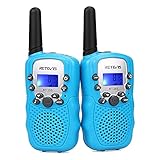 | Retevis RT388 Kids Walkie Talkies, Outdoor Toys for Kids Camping Essentials | Check Price On Amazon |
 | Cobra RX680 Walkie Talkies (2-Pack), IP54 Water Resistant Design | Check Price On Amazon |
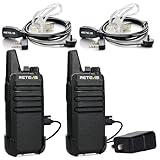 | Retevis RT22 Walkie Talkies Long Range Rechargeable with Earpiece (2 Pack) | Check Price On Amazon |
 | Midland GXT1000VP4 GMRS Two-Way Radios with Headsets, Black, 2 Pack | Check Price On Amazon |
 | Retevis RT628 Walkie Talkies for Kids,Toys Gifts for 6-12 Years Old Boys Girls,Long Range 2 Way Radio 22CH VOX,Birthday Gift,Family Walkie Talkie for Camping Hiking Indoor Outdoor | Check Price On Amazon |