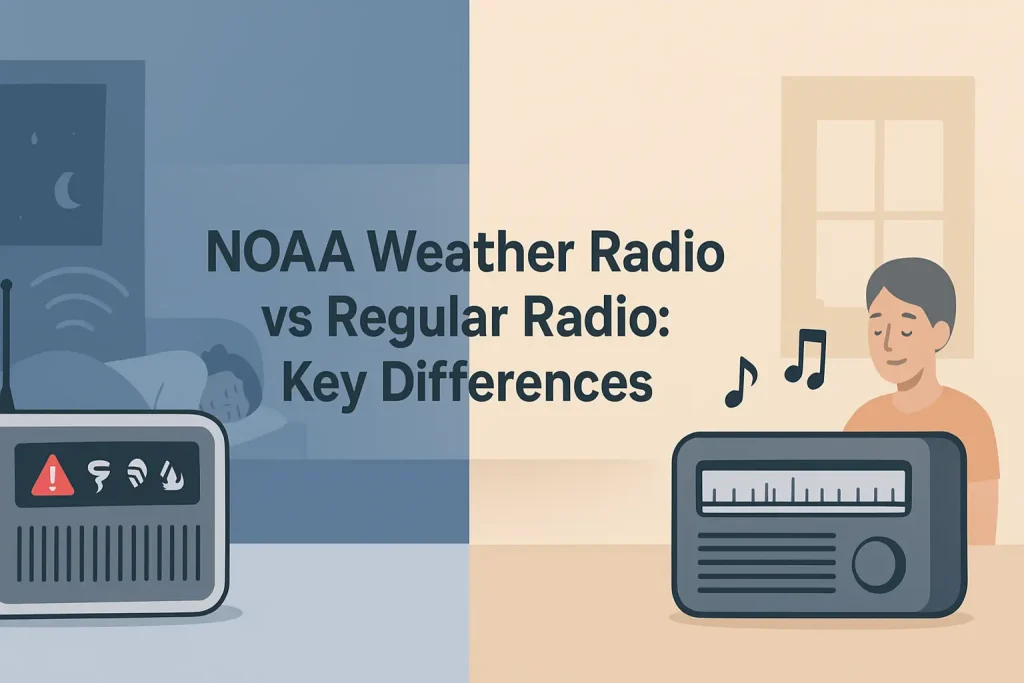
Most AM/FM radios sold today include a weather band, but the label “weather band included” on the box tells you almost nothing about whether that feature will actually work when you need it. A weather band radio that only receives the seven NOAA frequencies without S.A.M.E. filtering will wake you up for every county in your state, not just yours.
This guide covers every specification that separates a useful weather band receiver from one that looks good on a spec sheet, including S.A.M.E. technology, alert tone sensitivity, antenna quality, and battery backup, so you know exactly what to check before you buy.
| Photo | Popular Portable Walkie Talkies | Price |
|---|---|---|
 | SKIWARRIOR Multifunctional Smart Wireless Ski Goggles with Walkie-Talkie, Anti-Fog Zeiss Lens, Music & Call Function (Cylindrical Blue) | Check Price On Amazon |
 | SINORISE Super Mini Walkie Talkies, Two-Way Radios, 3 Pack | Check Price On Amazon |
 | KOSPET Tank M4C Smart Watch Rugged, Dual-Band GPS, 5ATM & IP69K Waterproof | Check Price On Amazon |
 | Retevis RT15 Walkie Talkies 3 Pack, Birthday Gift, Outdoor Adventure Kit | Check Price On Amazon |
 | Rechargeable Walkie Talkies Toys for Kids: DIY Astronaut Walkie Talkies for Boys Christmas Birthday Gifts for 3 4 5 6 7 8 9 10 Boy Walkie Talkie Outdoor Hiking Toy 2 Way Radio Camping Outdoor Game | Check Price On Amazon |
What Is the Weather Band on an AM/FM Radio?
The weather band on an AM/FM radio is a dedicated receiver for NOAA Weather Radio All Hazards (NWR), which broadcasts continuous weather and emergency alerts on seven frequencies between 162.400 MHz and 162.550 MHz. These frequencies are entirely separate from the standard AM band (530-1700 kHz) and FM band (87.5-108 MHz).
According to NOAA’s National Weather Service, the NWR network operates more than 1,000 transmitters covering approximately 95% of the US population and 95% of the land area. Each transmitter covers a radius of roughly 40 miles at typical ERP (effective radiated power) levels of 300 to 1,000 watts.
The seven NOAA weather broadcast frequencies are fixed and standardized nationwide. Every weather band-equipped radio must receive all seven to meet basic functionality requirements.
- WX1: 162.550 MHz
- WX2: 162.400 MHz
- WX3: 162.475 MHz
- WX4: 162.425 MHz
- WX5: 162.450 MHz
- WX6: 162.500 MHz
- WX7: 162.525 MHz
A radio that receives only some of these seven frequencies may miss the transmitter that serves your specific county. Reception quality on the weather band depends on the radio’s RF sensitivity specification, measured in microvolts, and the quality of the antenna connected to the weather band receiver circuit.
The weather band receiver is a separate circuit from the AM/FM tuner in most combination radios. Poor antenna design or RF shielding inside the radio chassis can degrade weather band reception even on a radio with excellent AM/FM performance.
To understand the full scope of how NOAA broadcasts these frequencies, the complete breakdown of all seven NOAA broadcast channels and their geographic coverage patterns is worth reviewing before evaluating any combination radio.
What Is S.A.M.E. Technology and Why Does It Matter?
S.A.M.E. (Specific Area Message Encoding) is the digital header system embedded in NOAA weather radio broadcasts that allows a receiver to filter alerts by geographic area. Without S.A.M.E., a weather band radio sounds an alarm for every alert issued anywhere within range of the transmitter, which can cover dozens of counties. With S.A.M.E., the radio only alerts you for the specific counties you program into it.
S.A.M.E. uses 6-digit FIPS (Federal Information Processing Standards) codes to identify geographic areas. Each US county has a unique FIPS code. You program one or more codes into the radio, and the S.A.M.E. decoder chip compares incoming alert headers against your stored codes before triggering the alarm.
This matters because NOAA transmitters often cover areas spanning multiple counties across state lines. A transmitter in a major metro area may broadcast alerts for 15 or more counties simultaneously. A radio without S.A.M.E. treats all of those alerts identically.
The practical result is alert fatigue. A non-S.A.M.E. radio in a suburban county near a major city may sound alarms multiple times per week for alerts that do not apply to your location. Most people eventually turn the alarm function off entirely, which defeats the entire purpose of the device.
S.A.M.E.-capable radios vary significantly in how many location codes they can store. Entry-level models store 1 to 5 FIPS codes. Mid-range models store 10 to 25. Higher-end models like the Midland WR400 weather radio store up to 50 S.A.M.E. codes, which is useful if you travel between locations or want to monitor alerts for family members in other counties.
Key Specifications for S.A.M.E. performance:
- FIPS code storage: 1 code (basic) to 50+ codes (advanced)
- Alert types recognized: up to 60 distinct EAS event codes
- S.A.M.E. decoder sensitivity: must reliably decode headers at -10 dBm or lower signal levels
- Alert memory: stores recent alerts with time and date for review after the event
An AM/FM radio with weather band but without S.A.M.E. is technically functional but practically unreliable for emergency alerting. S.A.M.E. is the single most important feature to confirm before buying any combination radio for emergency preparedness purposes.
How Many Alert Types Should a Weather Band Radio Recognize?
The Emergency Alert System (EAS) used by NOAA Weather Radio recognizes over 60 distinct event codes, covering weather events, non-weather emergencies, and national-level alerts. The number of event codes a radio is programmed to recognize and act on varies significantly between models and directly affects whether your radio will alert you for non-weather emergencies like AMBER Alerts or civil emergency messages.
According to FEMA’s IPAWS (Integrated Public Alert and Warning System) documentation, the full EAS event code set includes weather alerts, public safety alerts, national alerts, and test messages. Not all radios respond to all categories.
Budget weather band radios in combination AM/FM units typically recognize 7 to 15 event codes, covering only the most common severe weather alerts. Dedicated weather radios like the Uniden BC365CRS weather radio recognize up to 60+ event codes including non-weather emergencies.
The distinction between a “weather radio” and a “weather alert radio” matters here. A weather radio simply receives NOAA broadcasts. A weather alert radio actively monitors the broadcast and triggers an audible alarm when it receives an alert matching your programmed criteria.
Use the table below to compare alert coverage tiers across different receiver categories.
| Radio Type | S.A.M.E. | Event Codes | Alert Alarm | Non-Weather Alerts | Typical Price |
|---|---|---|---|---|---|
| Basic AM/FM with WX band | No | None (passive) | No | No | $15-35 |
| AM/FM + WX with basic alert | No | 7-15 | Yes (all counties) | Limited | $25-50 |
| AM/FM + WX with S.A.M.E. | Yes (1-5 codes) | 25-40 | Yes (your county) | Some | $40-70 |
| Dedicated weather radio | Yes (25-50 codes) | 60+ | Yes (programmable) | Yes (AMBER, civil) | $40-100 |
| Hand-crank emergency radio | Yes (varies) | 25-60 | Yes | Varies by model | $30-80 |
| Premium combination radio | Yes (50+ codes) | 60+ | Yes (fully programmable) | Yes (full EAS) | $70-150 |
Event code counts based on manufacturer specifications. Full EAS event code set defined by FEMA IPAWS documentation. Prices verified at time of publication.
If your primary use case is overnight alerting when you cannot monitor a radio manually, a minimum of 25 recognized event codes with S.A.M.E. filtering is the practical floor for reliable emergency notification.
What Antenna Design Makes a Difference on the Weather Band?
The weather band at 162 MHz falls in the VHF high band, where antenna length and orientation relative to the transmitter directly affect reception quality. A telescoping whip antenna cut to the correct quarter-wave length for 162 MHz (approximately 17.5 inches fully extended) will outperform a short fixed stub antenna by 6 to 10 dB in marginal signal areas, which is the difference between clear audio and unintelligible noise.
This happens because VHF signals at 162 MHz propagate primarily by line-of-sight. The RF signal from a NOAA transmitter attenuates at approximately 6 dB per doubling of distance in free space, and terrain or building materials add further attenuation on top of that baseline. A better antenna recovers signal that a short stub cannot detect.
This only matters in locations more than 25-30 miles from the nearest NOAA transmitter, in areas with significant terrain obstruction, or inside buildings with steel framing or concrete construction. If you are within 10 miles of a 1,000-watt NOAA transmitter with clear line-of-sight, even a short fixed antenna will receive a clean signal.
If your building attenuates the signal below your radio’s receiver sensitivity threshold, even a perfectly designed internal antenna will fail. The fix is an external antenna connected via the radio’s external antenna jack, if one is present, or repositioning the radio near a window facing the transmitter direction.
Key antenna specifications to check on any combination AM/FM/weather radio:
- Telescoping whip antenna: look for full extension of 16-18 inches for optimal 162 MHz reception
- External antenna jack: a 3.5mm mono jack or BNC connector allows connection of an outdoor antenna
- Antenna orientation: vertical polarization matches NOAA transmitter antenna polarization
- Internal ferrite bar antenna: handles AM band only, has no effect on weather band reception
The Sangean CL-100 combination radio includes both a telescoping whip for VHF/weather band and a separate ferrite bar for AM, with an external antenna jack that accepts a standard 3.5mm plug for connecting an outdoor VHF antenna in fringe reception areas.
Do not assume a radio with good AM/FM sensitivity will also have good weather band reception. The AM ferrite bar antenna and the VHF whip antenna are separate circuits. A radio optimized for AM DX (long-distance AM reception) may use a large internal ferrite bar while pairing it with a short, low-gain VHF stub, producing poor weather band performance despite excellent AM reception.
Does the Radio Need Battery Backup for Emergency Use?
A weather band radio without battery backup is useless during a power outage, which is exactly when weather alerts are most critical. Severe storms that trigger tornado warnings or flash flood alerts frequently knock out power before or during the event. If your radio requires AC power and loses it at that moment, you lose your alert capability precisely when it matters most.
Battery backup options on combination AM/FM/weather band radios fall into four categories, each with different reliability profiles:
- Alkaline AA or AAA backup: The most reliable option for emergency use. Alkaline batteries hold their charge for 5-10 years in storage and deliver consistent voltage at cold temperatures. A radio requiring 3 AA batteries at 1,200 mAh each provides 8-15 hours of standby alert monitoring.
- Built-in rechargeable Li-ion battery: Convenient for daily use but degrades over 2-4 years of charge cycles, and lithium-ion capacity drops significantly below 32 degrees Fahrenheit. Not ideal as a sole power backup in cold-weather regions.
- Hand-crank generator: Provides power when batteries are dead or unavailable. Typical hand-crank generators on portable emergency radios produce 150-300 mAh per minute of cranking, enough for 5-10 minutes of playback per minute of cranking. Useful as a last resort, not a primary power source.
- Solar panel charging: Supplements the built-in battery in daylight conditions. Panel output on portable radios is typically 50-100 mW, sufficient to maintain battery charge during extended outdoor use but too slow to charge a depleted battery quickly.
The Midland ER310 emergency radio combines a built-in 2,000 mAh Li-ion battery with hand-crank charging, solar charging, and AA battery backup as a fourth option, making it one of the most resilient power configurations available in a portable AM/FM/weather radio.
Key Specifications for battery backup evaluation:
- Battery capacity: 1,000-2,000 mAh Li-ion is standard for portable emergency radios
- Standby alert time: 20-72 hours depending on receiver design and battery capacity
- AA backup compatibility: verify the radio accepts AA batteries, not just AAA
- Low battery alarm: confirms the radio will alert you before backup power is exhausted
For home emergency use, the minimum acceptable battery backup configuration is AC-powered primary with at least 4x AA alkaline battery backup that activates automatically on power loss. Automatic switchover is critical because a storm can cut power without warning at 3 AM, and a radio that requires manual battery insertion at that moment provides no protection.
What Alert Tone and Volume Specifications Should You Look For?
The NOAA 1050 Hz Emergency Alert Tone (EAT) is a distinctive two-tone signal transmitted ahead of weather warnings that is specifically designed to activate weather radio receivers from standby mode. A radio must generate an alarm loud enough to wake a sleeping person in a closed bedroom from the alert tone alone, which requires a minimum of 85 dB SPL output at 10 feet under typical residential conditions.
Most combination AM/FM radios with weather band produce 70-80 dB of maximum audio output from their internal speakers, which is adequate for daytime use in the same room but may not wake a person sleeping in an adjacent room with the door closed. The threshold for reliable sleep disruption is approximately 85 dB SPL measured at the listener’s ear.
This happens because residential bedroom construction (standard drywall, hollow-core door) attenuates sound by 20-30 dB between rooms. A radio producing 75 dB in the living room delivers approximately 45-55 dB at the sleeping person’s ear, which is below the level needed to trigger arousal from normal sleep.
This only achieves adequate overnight alerting if the radio is placed within 5-8 feet of the sleeping person’s head or if an external alarm (such as a bed shaker or strobe) is connected. Many dedicated weather radios include a 3.5mm alarm output jack specifically for this purpose.
If the radio’s speaker produces less than 85 dB SPL or there is no external alarm output, the fix is placement within the bedroom rather than in a central location in the home. A Midland WR120 desktop weather radio produces 90 dB from its internal speaker and includes an alarm output jack for external notification devices.
Alert tone specifications to verify before purchase:
- Speaker output: minimum 85 dB SPL at 1 meter for overnight use
- External alarm jack: 3.5mm output for bed shaker or strobe connection
- Adjustable alarm volume: separate from the radio listening volume
- Alert LED: visual confirmation of an alert received, visible from across a room
- Alarm snooze or silence: prevents repeated false activation from broadcasts outside your S.A.M.E. filter
For hearing-impaired users, the external alarm jack combined with a bed shaker device is a non-negotiable specification, not an optional add-on. Verify the jack is present and rated for continuous duty before purchasing any weather alert radio for overnight monitoring.
How Do You Evaluate Receiver Sensitivity on a Weather Band Radio?
Receiver sensitivity on a weather band radio is measured in microvolts (µV) at the antenna input required to produce 12 dB SINAD (Signal plus Noise and Distortion), which is the standard threshold for usable audio. A lower µV number indicates a more sensitive receiver. A sensitivity of 0.5 µV or better on the weather band is excellent. A sensitivity of 2 µV or higher in the weather band is marginal for fringe-area use.
Most manufacturers do not publish weather band receiver sensitivity specifications in consumer-facing product listings, which makes direct comparison difficult. The specifications that do appear in technical data sheets for dedicated weather radios typically range from 0.35 µV to 1.5 µV at 12 dB SINAD for quality designs.
According to NOAA’s NWR technical documentation, the signal level at the edge of a 40-mile coverage radius from a 1,000-watt transmitter is approximately 0.5-1 µV at a standard receive antenna. A radio with 2 µV sensitivity will struggle at that range under average conditions, especially with an indoor antenna.
For practical evaluation without published specifications, use this field test method:
- Tune the radio to the correct NOAA weather channel for your area (use the NOAA station finder at weather.gov/nwr to identify your primary channel).
- Retract the antenna fully and note the signal quality.
- Extend the antenna to full length and note the improvement.
- Move the radio to different positions in the room and note variability.
- If the signal varies significantly with small movements, the receiver is operating near its sensitivity limit at your location.
A radio operating near its sensitivity limit in normal conditions will fail to receive alerts reliably during a severe weather event when atmospheric absorption increases. Receivers with better sensitivity maintain reliable reception across a wider range of conditions.
The Uniden Bearcat desktop weather radio series publishes a weather band sensitivity specification of 0.5 µV at 12 dB SINAD, which is among the better published figures for a consumer combination radio. This level of sensitivity is sufficient for reliable reception at the 40-mile NOAA coverage boundary with a standard telescoping whip antenna.
What Is the Difference Between a Weather Band Radio and a Full Emergency Radio?
A weather band radio receives NOAA broadcasts on 162.400-162.550 MHz and alerts you to weather and civil emergencies through the EAS system. A full emergency radio adds AM and FM broadcast reception, often a hand-crank generator, solar charging, a flashlight, and sometimes a USB charging port for phones. The weather band alert function is identical in both; the difference is what else the radio can do when power and cellular networks are unavailable.
The distinction matters for emergency preparedness planning. A combination AM/FM/weather radio with S.A.M.E. and battery backup covers the alert monitoring function completely. Adding hand-crank and solar charging adds resilience for extended outages but does not improve the alert function itself.
A dedicated weather radio like the Midland WR400 desktop weather radio focuses entirely on alert performance, storing up to 50 S.A.M.E. codes, recognizing all 60+ EAS event types, and producing 90 dB from its alarm speaker. A full emergency radio like the Midland ER310 emergency crank radio adds AM/FM reception, a 2,000 mAh battery, hand-crank charging, solar charging, and a USB output, but may store fewer S.A.M.E. codes and produce a less powerful alarm.
Use the table below to compare these two device categories across the specifications that matter most for emergency use.
| Specification | Dedicated Weather Radio | Full Emergency Radio |
|---|---|---|
| S.A.M.E. code storage | Up to 50 codes | Typically 5-25 codes |
| EAS event codes recognized | 60+ full EAS set | 25-60 (varies by model) |
| Alarm volume | 85-95 dB SPL typical | 75-90 dB SPL typical |
| AM/FM reception | Usually not included | Yes, AM and FM |
| Hand-crank power | Rarely included | Commonly included |
| Solar charging | Rarely included | Commonly included |
| USB phone charging output | No | Yes (500 mA-1A typical) |
| External alarm output | Yes (3.5mm jack) | Varies by model |
| Best use case | Home overnight alerting | Go-bag, extended outage |
Specifications based on representative models in each category. Individual products vary. S.A.M.E. code counts and EAS event recognition from manufacturer data sheets.
For a home that already has reliable AC power most of the time, a dedicated weather radio with maximum S.A.M.E. storage and a loud alarm provides better alert performance than most full emergency radios at the same price point.
Here is the widget comparing the two main reader scenarios (home use vs. on-the-go preparedness) that arise when choosing between these radio types:
Interactive Tool
Which Weather Band Radio Configuration Is Right for You?
Answer 2 questions for a specific recommendation based on your use case and location.
How Does Channel Scanning Improve Weather Band Reception?
Automatic channel scanning on a weather band radio cycles through all seven NOAA frequencies (162.400-162.550 MHz) and locks onto the strongest signal, which ensures you are receiving the transmitter with the best coverage for your current location without manually identifying the correct channel. This is particularly useful for portable and vehicle-mounted radios where the nearest transmitter changes as you move.
Without channel scanning, you must manually identify your local NOAA channel using the NOAA station finder tool at weather.gov/nwr, enter the correct frequency, and repeat this process each time you change location. In an emergency situation, manual channel identification under stress introduces a failure point.
This happens because NOAA transmitters are geographically distributed, and the seven frequencies are reused by different transmitters across the coverage network. Transmitter WX1 (162.550 MHz) in one city may be a completely different broadcast than WX1 in a city 100 miles away.
Channel scanning only improves alert reliability if the radio’s squelch circuit correctly identifies signal strength rather than just the presence of a carrier. A scan that locks onto a weak distant transmitter instead of a stronger local one is worse than no scan at all, because it will miss the local alert broadcasts that specifically cover your county.
Look for weather band radios that include a signal strength indicator (RSSI display or a multi-bar antenna icon) alongside the channel scan function. This lets you verify that the locked channel is genuinely the strongest available signal for your location, not just the first signal above the squelch threshold.
What Features Distinguish a Budget Weather Band Radio from a Mid-Range Model?
The meaningful performance gap between a $20 AM/FM radio with weather band and a $50-70 dedicated weather alert radio comes down to three specifications: S.A.M.E. filtering, EAS event code coverage, and alarm output volume. Everything else, including digital display, clock, and preset memory, is convenience that does not affect alert reliability.
A $20 radio with weather band typically provides passive reception only. You can tune to a NOAA channel and hear the broadcast, but there is no S.A.M.E. decoder, no alert alarm, and no automatic activation. It functions as a weather monitor, not a weather alert system.
A $50-70 model adds S.A.M.E. decoding with 5-25 FIPS code storage, recognition of 25-60 EAS event types, an 85 dB alarm that activates from standby, and AC power with automatic battery backup switchover. These are the features that deliver the core emergency alerting function.
Use the table below to compare the key specifications across three price tiers of combination AM/FM/weather band radios.
| Feature | Budget ($15-35) | Mid-Range ($40-70) | Premium ($70-150) |
|---|---|---|---|
| S.A.M.E. filtering | No | Yes (5-25 codes) | Yes (25-50 codes) |
| EAS event codes | 0 (passive) | 25-40 | 60+ |
| Alarm from standby | No | Yes | Yes |
| Alarm volume (dB SPL) | N/A | 75-85 dB | 85-95 dB |
| Battery backup type | Manual (batteries not included) | Auto AA switchover | Auto AA + Li-ion |
| External alarm jack | No | Sometimes | Yes (3.5mm) |
| Alert memory | No | Last 5-10 alerts | Last 25-50 alerts |
| Channel scan (all 7 WX) | Sometimes | Yes | Yes (auto-lock) |
Specifications based on representative models at each price tier. Individual products vary. Verify S.A.M.E. code count and EAS event recognition in manufacturer specifications before purchasing.
The meaningful upgrade happens at the $40-70 mid-range tier, where S.A.M.E. filtering and automatic alerting transform the radio from a passive receiver into an active emergency notification device.
What Are the Most Overlooked Specifications on Weather Band Radios?
Three specifications consistently go unread on weather band radio product listings despite having a direct impact on real-world emergency alerting performance: alert memory with timestamp logging, squelch sensitivity adjustment, and the distinction between “weather band” and “weather alert” in the product description.
Alert memory with timestamp logging stores the text and time of recent EAS messages even when you were not present to hear the audio. A radio with 25-50 alert memory slots lets you review every alert that triggered since you last checked the device, which is critical for understanding what happened during a storm event you slept through. Many budget models have no alert memory at all.
Squelch sensitivity adjustment controls how strong a signal must be before the weather band receiver opens its audio output. A squelch set too high will block weak-but-valid NOAA signals from distant transmitters during a severe weather event that disrupts normal propagation. A squelch set too low will open on atmospheric noise and produce false activations. The ability to adjust squelch sensitivity is a meaningful feature for users in fringe reception areas.
The most overlooked distinction is the difference between “weather band” and “weather alert” in product descriptions. A “weather band” radio receives NOAA broadcasts. A “weather alert” radio activates from standby when it receives an EAS tone. These are fundamentally different functions, and product listings frequently use the terms interchangeably. Read the full specification sheet, not just the product title, before purchasing any combination radio for emergency use.
Additional overlooked specifications include:
- NOAA channel pre-programming: Some radios require manual frequency entry rather than pre-programming all 7 WX channels at the factory. Verify all 7 are pre-programmed.
- Alert differentiation by severity: Better models sound different alarms for Warnings (immediate danger) versus Watches (conditions favorable for danger) versus Advisories (less serious).
- Clock accuracy and battery backup: A radio that loses its clock time when AC power fails will not correctly timestamp stored alerts during an outage event.
- Backlit display visibility: A weather alert radio must be readable at night without turning on a room light. Verify the display remains backlit when an alert activates from standby mode.
For a thorough overview of what separates reliable emergency radios from passive weather receivers, the complete weather radio selection guide covering S.A.M.E., alert types, and power backup options covers every specification category in detail.
How Does the Weather Band Perform on Portable vs Desktop Radios?
Desktop weather radios consistently outperform portable combination radios on weather band sensitivity and alarm volume because desktop designs allow for larger internal antennas, more powerful speaker drivers, and line-frequency AC power supply that eliminates the switching noise that can degrade VHF receiver performance in battery-powered devices. The trade-off is that desktop radios cannot function as portable emergency devices.
A desktop radio like the Midland WR300 desktop weather radio uses a fixed external whip antenna optimized for 162 MHz and a dedicated 90 dB alarm speaker separate from the voice audio speaker. The result is better sensitivity in marginal signal areas and louder alarm output than portable designs at the same price point.
A portable combination radio like the Kaito Voyager KA500 multi-band emergency radio compromises on antenna size and speaker output to fit in a portable chassis with multiple power sources. Its weather band performance is adequate within 20-25 miles of a NOAA transmitter but may drop below usable quality at 35-40 miles in obstructed terrain.
Key performance differences between desktop and portable form factors:
- Antenna gain: Desktop external whip at full extension (17-18 inches) versus portable telescoping whip that may be limited to 12-14 inches by the chassis design
- Receiver isolation: Desktop designs place the VHF receiver circuit physically separate from other electronics; portable designs must manage RF interference from the battery charging circuit
- Speaker output: Desktop radios use 2-3 inch speakers at 90 dB SPL; portable radios use 1.5-2 inch speakers at 75-85 dB SPL
- Continuous standby power: Desktop AC power maintains consistent receiver performance; battery-powered standby introduces voltage variation that can affect squelch threshold stability
For overnight home alerting, a desktop radio connected to AC power with AA battery backup provides the most reliable alert performance. A portable emergency radio serves best as a secondary device for use during evacuations or extended power outages when the desktop model is no longer functional.
Can Ham Radio or GMRS Radios Receive NOAA Weather Broadcasts?
Many dual-band ham radios and some GMRS handhelds can receive NOAA weather broadcasts on 162.400-162.550 MHz because those frequencies fall within the VHF high band receive range of most dual-band VHF/UHF transceivers. The Baofeng UV-5R, for example, receives 136-174 MHz in the VHF band, which covers all seven NOAA weather channels.
However, receiving NOAA broadcasts on a ham radio or GMRS handheld is not the same as having a weather alert radio. These devices do not include S.A.M.E. decoder chips, do not activate from standby on an EAS tone, and do not store alert event logs. They function as passive weather monitors only, identical to a $15 budget AM/FM radio with weather band.
This happens because S.A.M.E. decoding and EAS tone detection require dedicated hardware or firmware specifically designed to decode the NOAA digital header format. General-purpose transceivers do not include this decoding circuitry in their standard firmware, even if they can receive the frequency.
Some ham radio firmware projects have added rudimentary NOAA tone detection to specific models, but these are unofficial modifications and should not be relied upon for emergency alerting purposes. For reliable weather alerting, a dedicated weather alert radio with certified S.A.M.E. decoding is the only appropriate solution.
The Yaesu FT-70DR dual-band handheld can receive all seven NOAA weather channels in its wide-receive mode, making it a useful supplement for monitoring weather broadcasts while operating in the field. It does not replace a dedicated weather alert radio for home emergency use.
To understand how ham radio operators use frequency allocation for weather monitoring and emergency communication, the guide to weather frequencies used by amateur radio operators covers the specific VHF and HF bands used during severe weather operations.
What Is the NOAA Weather Radio All Hazards Network and How Does It Relate to Your Radio?
NOAA Weather Radio All Hazards (NWR) is a nationwide network of radio stations broadcasting continuous weather information directly from the nearest National Weather Service office. NWR broadcasts 24 hours a day on the seven dedicated VHF frequencies between 162.400 and 162.550 MHz, covering weather forecasts, current conditions, and all hazard alerts including non-weather emergencies. The network covers approximately 95% of the US population within 40 miles of at least one transmitter, according to NOAA’s NWR network documentation.
NWR is a component of the Emergency Alert System (EAS) and the Integrated Public Alert and Warning System (IPAWS), which are the federal frameworks coordinating emergency alerts across all media. When NOAA issues a Tornado Warning, the alert is simultaneously broadcast over NWR, transmitted to broadcast stations via EAS, and distributed to cellular carriers for Wireless Emergency Alerts (WEA). A weather band radio receives the NWR broadcast directly, without requiring cellular service or internet connectivity.
This makes the NWR the most reliable channel for emergency alerts during severe weather events that knock out power, disable cellular towers, or disrupt internet connectivity. The NWR transmitters operate on battery backup and generators to maintain broadcasts during major weather events.
Your weather band radio connects to this system by receiving the NWR broadcast on the correct frequency for your nearest transmitter. The S.A.M.E. decoder in the radio reads the digital header embedded in each broadcast and matches it against the FIPS codes you have programmed. When a match occurs, the radio activates its alarm regardless of whether you are monitoring the broadcast at that moment.
For a deeper understanding of how the NWR network operates and why it remains the most reliable emergency alert infrastructure available to the public, the detailed explanation of how NOAA Weather Radio All Hazards works and what it covers provides the full technical and operational background.
Which Combination AM/FM/Weather Radios Perform Best?
The best-performing combination AM/FM/weather radios balance weather band alert functionality with AM/FM reception quality, battery backup reliability, and S.A.M.E. code capacity. The models below represent the best-evaluated options across the key performance categories based on manufacturer specifications and verified user data.
The Sangean CL-100 combination radio is widely regarded as the best combination AM/FM/weather alert radio for home use, combining strong AM/FM reception with a full weather alert function including S.A.M.E. filtering.
Key Specifications (Sangean CL-100):
- Weather band: 162.400-162.550 MHz (all 7 NOAA channels)
- S.A.M.E. code storage: 25 FIPS codes
- EAS event codes recognized: 60+
- AM band: 520-1710 kHz
- FM band: 87.5-108 MHz
- Alarm output: 3.5mm external jack for bed shaker or strobe
- Power: AC adapter with 6x AA battery backup
- Alert memory: Last 25 alerts with timestamp
The Midland WR120 weather alert radio is the strongest value option for dedicated weather alerting without AM/FM combination functions.
Key Specifications (Midland WR120):
- Weather band: 162.400-162.550 MHz (all 7 NOAA channels)
- S.A.M.E. code storage: 25 FIPS codes
- EAS event codes recognized: 25
- Alarm volume: 90 dB SPL
- Power: AC adapter with 3x AA battery backup
- Alert memory: Last 14 alerts
- Price: approximately $30-40
The Eton FRX3+ emergency radio is the best-performing portable combination radio for users who need AM/FM, weather alert, hand-crank, and solar charging in a single portable device.
Key Specifications (Eton FRX3+):
- Weather band: 162.400-162.550 MHz (all 7 NOAA channels)
- S.A.M.E. filtering: Yes
- Power sources: Li-ion battery, hand-crank, solar panel, Micro-USB
- Battery capacity: 1,000 mAh Li-ion
- AM band: 520-1710 kHz
- FM band: 87.5-108 MHz
- USB output: 1A for phone charging
For those comparing these models against a broader selection, the full roundup of top-rated weather radios ranked by S.A.M.E. performance, alarm output, and battery reliability covers a wider range of options across all price tiers.
How Does Weather Band on Marine VHF Radios Compare to Dedicated Weather Radios?
Marine VHF radios receive NOAA weather broadcasts on the dedicated WX channels (162.400-162.550 MHz), which overlap with the standard weather band on terrestrial radios. Most handheld and fixed-mount marine VHF radios include all seven WX channels accessible via a dedicated WX button or scan function. However, marine VHF weather reception differs from dedicated weather alert radios in one critical way: marine radios do not include S.A.M.E. decoding or automatic alert activation from standby.
According to the FCC Part 80 rules governing marine radio equipment, weather channel reception is a required feature for VHF marine radios, but S.A.M.E. alert functionality is not mandated. Marine radios are designed for active monitoring while underway, not overnight alerting from a stationary standby state.
The Standard Horizon HX890 handheld marine VHF radio receives all seven NOAA weather channels with automatic weather scan but does not include S.A.M.E. decoding. It functions as an excellent portable weather monitor while boating but cannot replace a dedicated weather alert radio for overnight home use.
For information on how marine radio weather channels are organized and used during coastal operations, the guide to marine VHF weather channels and NOAA broadcast reception at sea covers the specific channel assignments and Coast Guard broadcast protocols used by recreational and commercial mariners.
What Weather Broadcast Options Exist Beyond the Standard NOAA Weather Band?
The standard NOAA weather band on 162.400-162.550 MHz is the primary terrestrial weather radio broadcast system, but several other systems deliver weather information through radio, each with different coverage, cost, and data depth characteristics.
AM broadcast weather reporting exists on standard AM band frequencies, where local stations provide weather forecasts during scheduled broadcast hours. AM broadcast weather is not a continuous service, does not transmit EAS alerts in real time, and cannot activate a weather alert radio from standby. It provides general forecast information rather than immediate severe weather warnings.
SiriusXM Weather is a satellite-delivered weather data service available on SiriusXM-equipped radios and devices, providing real-time radar, surface analysis, and aviation weather data across North America. SiriusXM Weather requires a paid subscription (approximately $25-50 per month depending on tier) and a compatible SiriusXM receiver. It provides more granular weather data than NOAA NWR broadcasts but does not replace EAS alert functionality for emergency warning purposes. For details on SiriusXM’s specific weather channel offerings and subscription structure, the breakdown of SiriusXM weather channel options and what each subscription tier provides covers the service in full.
FM broadcast weather and traffic services (such as RDS-based traffic and weather data on FM radio) provide automated weather reports during FM broadcast programming but do not offer dedicated weather alert activation from standby.
For the broadest emergency weather coverage, the NOAA NWR system on 162.400-162.550 MHz remains the only terrestrial system that provides continuous 24-hour broadcasts, S.A.M.E.-encoded geographic filtering, and EAS alert activation for all hazard types at no subscription cost.
Frequently Asked Questions About Weather Band on AM/FM Radios
Can a standard AM/FM radio with weather band replace a dedicated weather alert radio?
A standard AM/FM radio with weather band can receive NOAA broadcasts but cannot replace a dedicated weather alert radio for emergency use. Receiving NOAA broadcasts passively is different from having S.A.M.E. decoding that filters alerts to your county, recognizing 60+ EAS event codes, and activating an 85-95 dB alarm from standby at 3 AM when a tornado warning is issued.
A basic combination radio with weather band lacks the S.A.M.E. decoder chip needed to distinguish alerts for your county from alerts for neighboring counties 80 miles away. It also lacks the automatic standby monitoring circuit that keeps the receiver powered and waiting for an EAS tone. For true overnight emergency alerting, a dedicated weather alert radio with S.A.M.E. is the correct device.
What is the difference between a weather watch and a weather warning on a NOAA broadcast?
A weather watch means conditions are favorable for a severe weather event to develop, typically within the next 6-48 hours. A weather warning means a severe weather event is occurring, is imminent, or has been detected by radar and poses an immediate threat, typically within 30 minutes to 1 hour. Warnings require immediate action; watches require preparation and monitoring.
Weather alert radios that differentiate between watches and warnings can be programmed to sound different alarm tones for each severity level. A warning alarm should wake you immediately. A watch alarm can be configured to alert without waking everyone in the household. If your radio treats all EAS events identically with the same alarm tone, you cannot distinguish imminent danger from an advisory condition without listening to the full audio broadcast.
Do I need to program a S.A.M.E. FIPS code or will the radio work without it?
A S.A.M.E.-capable weather alert radio will work without a programmed FIPS code, but it will alarm for every alert broadcast by your nearest NOAA transmitter, which may cover 10-20 counties. Without a FIPS code, the S.A.M.E. filter is effectively disabled and the radio behaves identically to a non-S.A.M.E. model.
Programming your county’s 6-digit FIPS code takes approximately 2-3 minutes using the radio’s keypad. Look up your FIPS code at the NOAA NWR station finder at weather.gov/nwr or on the FIPS code reference printed in your radio’s manual. Program the code once after purchase and the radio will filter all future broadcasts to your specified county automatically.
Why does my weather band radio alarm go off for counties far from me?
If your weather band radio alarms for counties that are not yours, you have either not programmed a S.A.M.E. FIPS code, programmed an incorrect code, or the radio does not include S.A.M.E. technology at all. NOAA transmitters typically cover a 40-mile radius that spans multiple counties, and without S.A.M.E. filtering, every alert for any county within that transmitter’s range will trigger your alarm.
Verify your radio’s S.A.M.E. capability in its specifications. If S.A.M.E. is present, access the programming menu and confirm your 6-digit FIPS code is entered correctly. A common mistake is entering the state FIPS code (which monitors the entire state) instead of the county-level FIPS code. County codes are 6 digits; state codes are typically 5 digits or fewer.
Can I use a weather band radio while camping or hiking, and will it receive alerts in remote areas?
Weather band radios work in camping and hiking locations as long as you are within approximately 40 miles of a NOAA transmitter with adequate line-of-sight. NOAA’s NWR network covers approximately 95% of the US population, but coverage in mountainous or heavily forested terrain can drop significantly as the terrain blocks the 162 MHz VHF signal. A radio with a full-length telescoping whip antenna (16-18 inches) and a sensitive VHF receiver (0.5 µV or better) will reach transmitters that a short-stub-antenna radio cannot.
Before any camping trip, use the NOAA NWR station finder at weather.gov/nwr to identify the nearest transmitter to your destination and its broadcast frequency. Pre-program that frequency and update your S.A.M.E. code to the county where you will be camping. A portable emergency radio with hand-crank and solar charging, such as the Midland ER310 or Eton FRX3+, provides power independence in locations without AC charging options.
Is it legal to transmit on NOAA weather radio frequencies with a ham radio or GMRS radio?
Transmitting on NOAA weather radio frequencies (162.400-162.550 MHz) is prohibited for all non-government users. These frequencies are allocated exclusively to the US government under FCC regulations. Unauthorized transmission on these frequencies is a federal violation subject to FCC enforcement action, which starts at $10,000 per violation under the Communications Act.
Ham radio operators with Technician class licenses and above are authorized to operate in portions of the 2-meter VHF band (144-148 MHz), which is adjacent to but separate from the NOAA weather frequencies. GMRS radios operate in the 462-467 MHz UHF band, completely separate from the 162 MHz weather band. Neither service authorizes transmission on weather radio frequencies under any circumstances.
What is the difference between WX1 through WX7 on my weather radio?
WX1 through WX7 are the seven preset channel designations on weather band radios that correspond to the seven dedicated NOAA broadcast frequencies: WX1 is 162.550 MHz, WX2 is 162.400 MHz, WX3 is 162.475 MHz, WX4 is 162.425 MHz, WX5 is 162.450 MHz, WX6 is 162.500 MHz, and WX7 is 162.525 MHz. Each channel number is just a shorthand label for the corresponding frequency; the content on each channel depends on which NOAA transmitter is broadcasting on that frequency in your geographic area.
The same WX channel number (for example, WX1 at 162.550 MHz) is used by many different NOAA transmitters across the country. The WX1 broadcast in Chicago is a completely different National Weather Service office broadcast than WX1 in Dallas. Your radio should be tuned to whichever channel carries the strongest signal from the NOAA transmitter nearest to your location, not the channel with the lowest number.
How do I find the correct NOAA weather channel for my location?
The easiest method is to use the NOAA NWR station finder at weather.gov/nwr, which shows the nearest transmitter to any US address, its broadcast frequency, and its coverage area on a map. Enter your zip code or address, note the primary frequency listed for your nearest transmitter, and tune your radio to the corresponding WX channel number. Most weather radios also include an automatic scan function that cycles through all seven WX channels and locks onto the strongest signal.
If you do not have internet access, set your radio to automatic weather channel scan, let it lock onto the strongest signal, and note which channel number it locks to. That is the correct channel for your location. Re-verify after moving to a new location more than 30-40 miles from your home address.
Do weather band radios work during power outages?
A weather band radio works during a power outage only if it has battery backup that activates automatically when AC power is lost. A radio that requires manual battery installation or does not switch to battery automatically may fail to alert you if the power outage occurs while you are asleep. The automatic switchover from AC to battery backup is the critical specification for power-outage reliability.
NOAA NWR transmitters themselves are equipped with battery backup and generator power specifically to maintain broadcasts during major weather events. The NWR network is designed to operate through the same severe weather it is warning about. Your radio’s battery backup is the weak point in the chain, not the NOAA broadcast system.
Can weather band radios alert me for non-weather emergencies like AMBER Alerts or chemical spills?
Weather alert radios that recognize the full EAS event code set (60+ codes) can alert for non-weather emergencies including AMBER Alerts (child abductions), civil emergency messages (hazardous materials, evacuation orders), National Information Center messages, and 911 telephone outages. Budget weather alert radios that recognize only 7-25 event codes typically cover severe weather alerts but may miss non-weather emergencies entirely.
Verify the specific EAS event code count in the product specifications before purchasing any weather alert radio for comprehensive emergency coverage. A radio marketed as a “weather alert radio” is not required to cover non-weather EAS events unless explicitly specified. The Midland WR400 and Uniden BC365CRS both explicitly recognize the full EAS event set including non-weather emergency categories.
Why does my weather radio make noise or give false alerts even with S.A.M.E. programmed?
False alerts or noise on a S.A.M.E.-programmed weather radio are typically caused by one of three issues: the radio is receiving a weak signal from a distant transmitter that it cannot decode cleanly, the S.A.M.E. decoder is triggering on atmospheric noise that resembles the digital header tone, or the radio’s squelch threshold is set too low. A weak signal produces partial S.A.M.E. header decodes that can pass the county filter incorrectly when only fragments of the header are received.
The fix is to verify you are receiving the strongest available NOAA transmitter for your location (use auto-scan to confirm the correct channel), increase the squelch sensitivity if adjustable, and verify the FIPS code is entered correctly. If false alerts persist after these steps, relocate the radio to a position closer to a window facing the NOAA transmitter direction, or connect an external VHF antenna to improve signal quality above the threshold for reliable S.A.M.E. decoding.
What is the difference between S.A.M.E. weather alerts and Wireless Emergency Alerts on my phone?
Wireless Emergency Alerts (WEA) are cell-broadcast messages sent by FEMA through cellular carriers to all compatible phones within a geographic area. S.A.M.E. weather alerts are encoded digital headers in NOAA NWR broadcasts received by dedicated weather radios. Both systems deliver alerts from the same EAS/IPAWS infrastructure but through completely different delivery paths.
The critical difference is infrastructure dependency. WEA requires functioning cellular towers, which can be knocked out by the same severe weather event generating the alert. S.A.M.E. weather radio operates on dedicated NOAA transmitters with independent backup power. In major severe weather events where cellular towers fail, the NOAA NWR broadcast continues. Relying solely on WEA for emergency alerts without a battery-backed weather radio is a single-point-of-failure strategy.
How long do the batteries last in a weather alert radio in standby mode?
Battery standby life on weather alert radios ranges from 8 hours on a radio requiring 3x AAA batteries to 72+ hours on dedicated weather radios with optimized low-power standby circuits. A typical desktop weather alert radio using 6x AA alkaline batteries provides 20-40 hours of standby alert monitoring at average signal strength. Standby life decreases if the radio must run its squelch circuit continuously against a weak signal.
Rechargeable NiMH AA batteries deliver 20-30% less standby time than alkaline batteries at the same mAh rating because NiMH cells have a slightly lower terminal voltage (1.2V versus 1.5V for alkaline) that reduces headroom for the receiver circuit. For maximum standby battery life in a weather alert radio, use fresh alkaline AA batteries from a reputable brand and replace them annually regardless of apparent charge level.
The Bottom Line on Weather Band Features That Matter
A weather band label on an AM/FM radio is not a guarantee of emergency alerting capability. The only specifications that determine whether a combination radio will reliably wake you during a nighttime tornado warning are S.A.M.E. decoding with adequate FIPS code storage, recognition of the full EAS event set, an 85 dB or louder alarm speaker, and automatic battery backup switchover on AC power loss.
Every other feature on a combination AM/FM/weather radio, including digital displays, preset memory, and clock functions, is secondary to those four alert performance specifications. Choose a dedicated weather alert radio like the Midland WR400 or Sangean CL-100 for home overnight use, and supplement it with a portable multi-power radio like the Midland ER310 for emergency kit and travel use.
| Photo | TOP RATED WALKIE TALKIES | Price |
|---|---|---|
 | Retevis RT628 Kids Walkie Talkies, Toys Gifts for 4-12 Year Old Girl Boy | Check Price On Amazon |
 | Cobra ACXT545 Weather-Resistant Walkie Talkies, Rechargeable, 22 Channels | Check Price On Amazon |
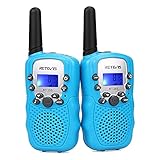 | Retevis RT388 Kids Walkie Talkies, Outdoor Toys for Kids Camping Essentials | Check Price On Amazon |
 | Cobra RX680 Walkie Talkies (2-Pack), IP54 Water Resistant Design | Check Price On Amazon |
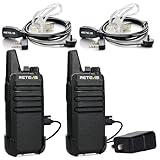 | Retevis RT22 Walkie Talkies Long Range Rechargeable with Earpiece (2 Pack) | Check Price On Amazon |
 | Midland GXT1000VP4 GMRS JIS4 Two-Way Radio, Black,2 Pack | Check Price On Amazon |
 | Retevis RT628 Walkie Talkies for Kids,Toys Gifts for 6-12 Years Old Boys Girls,Long Range 2 Way Radio 22CH VOX,Birthday Gift,Family Walkie Talkie for Camping Hiking Indoor Outdoor | Check Price On Amazon |