

Transport Canada radio approval ensures your aviation equipment meets strict safety and performance standards. This certification process is required for all radio devices used in Canadian aircraft. Understanding this process saves you time, prevents costly mistakes, and keeps your aircraft legally compliant. This guide walks you through everything you need to know about getting your aviation radio equipment properly certified.
Understanding the Canadian Aviation Radio Regulatory Framework
The Canadian aviation radio regulatory landscape involves multiple government agencies with different but interconnected responsibilities. Understanding this framework is the first step toward successful equipment certification.
| Photo | Popular Portable Walkie Talkies | Price |
|---|---|---|
 | SKIWARRIOR Multifunctional Smart Wireless Ski Goggles with Walkie-Talkie, Anti-Fog Zeiss Lens, Music & Call Function (Cylindrical Blue) | Check Price On Amazon |
 | SINORISE Super Mini Walkie Talkies, Two-Way Radios, 3 Pack | Check Price On Amazon |
 | KOSPET Tank M4C Smart Watch Rugged, Dual-Band GPS, 5ATM & IP69K Waterproof | Check Price On Amazon |
 | Retevis RT15 Walkie Talkies 3 Pack, Birthday Gift, Outdoor Adventure Kit | Check Price On Amazon |
 | Rechargeable Walkie Talkies Toys for Kids: DIY Astronaut Walkie Talkies for Boys Christmas Birthday Gifts for 3 4 5 6 7 8 9 10 Boy Walkie Talkie Outdoor Hiking Toy 2 Way Radio Camping Outdoor Game | Check Price On Amazon |
Transport Canada oversees aviation safety regulations, including the certification of aircraft and their components. They ensure all installed equipment meets safety standards and functions properly in aviation environments. Meanwhile, Innovation, Science and Economic Development Canada (ISED) specifically manages radio equipment certification through spectrum management and technical compliance verification.
The Radio Equipment List (REL) maintained by ISED serves as the official registry of approved radio equipment for use in Canada. This list is crucial as it documents all devices that have passed certification requirements. Equipment must meet Radio Standards Specifications (RSS), which define technical requirements for various types of radio equipment.
Technical Standard Orders (TSOs) provide detailed performance standards for specific aviation equipment types. These standards ensure consistent quality and compatibility across different manufacturers. Canadian Aviation Regulations (CARs) provide the legal framework for these requirements, specifying when and how certified equipment must be used.
This regulatory division between transport safety and radio communications creates a unique approval process that requires coordination between both agencies for complete compliance.
Types of Aviation Radio Equipment Requiring Certification
Not all aviation radio equipment follows the same certification path. This section breaks down the different types of equipment and their specific certification requirements.
Communication radios are the most common type requiring certification. These include:
- VHF radios (118.000-136.975 MHz) for standard air-to-ground communications
- HF radios for long-distance communications over oceans or remote areas
Navigation equipment uses radio signals to determine position and route guidance:
- VOR (VHF Omnidirectional Range) receivers
- ILS (Instrument Landing System) receivers
- GPS and satellite navigation systems
Surveillance equipment enables air traffic control to monitor aircraft:
- Transponders (Modes A, C, and S)
- ADS-B (Automatic Dependent Surveillance-Broadcast) systems
Emergency locator transmitters (ELTs) require special certification due to their critical safety role. These devices activate automatically in a crash and transmit distress signals on designated emergency frequencies.
The certification requirements differ between permanently installed and portable equipment. Installed equipment faces more rigorous testing for vibration resistance, power supply variations, and environmental factors. Portable aviation radios like the Yaesu FTA-250L and Icom IC-A25N have their own specific certification standards focused on battery life, durability, and interference limitations.
Digital and software-defined radios present additional certification challenges due to their programmable nature and need for cybersecurity validation.
Aircraft Radio Station Licensing Exemptions Explained
Before proceeding with certification, determine if your situation qualifies for an exemption. Transport Canada provides specific criteria under which aircraft radio stations may be exempt from licensing requirements.
Aircraft registered in Canada operating domestically may qualify for exemption from individual radio station licenses under these conditions:

- The aircraft is registered in Canada
- All radio equipment is type-approved by ISED Canada
- Equipment is operated within its certified parameters
- The operator holds appropriate aviation and radio operator certificates
Despite these exemptions, you still need:
- Equipment type approval certifications
- Proper installation documentation
- Maintenance records for all radio equipment
Common misconceptions include believing that exemption from station licensing means exemption from equipment certification. This is incorrect. All equipment must still meet technical standards and appear on the Radio Equipment List.
Exemptions don’t apply when:
- Operating internationally (additional permits may be required)
- Using experimental or non-certified equipment
- Operating beyond the equipment’s certified parameters
Understanding these exemptions can save unnecessary paperwork while ensuring you remain compliant with all essential safety regulations.
Certification Authorities: Transport Canada vs. ISED Canada Roles
Understanding which government agency handles which aspect of certification is crucial for navigating the process efficiently. This section clarifies the distinct but complementary roles of Transport Canada and Innovation, Science and Economic Development Canada.
| Aspect | Transport Canada | ISED Canada |
|---|---|---|
| Primary Focus | Aviation safety and airworthiness | Radio spectrum and equipment technical compliance |
| Certification Type | Aircraft installation approval | Radio equipment type approval |
| Key Documentation | Supplemental Type Certificates (STCs), Technical Standard Orders (TSOs) | Radio Equipment List (REL), Technical Acceptance Certificates (TACs) |
| Inspection Focus | Installation quality, system integration, safety impact | Signal characteristics, interference potential, spectrum compliance |
When seeking certification, your path typically starts with ISED for equipment type approval, followed by Transport Canada for installation approval. This sequence ensures the equipment first meets technical radio standards before being evaluated for safe aircraft integration.
The agencies coordinate through shared databases and notification systems, but applicants are responsible for submitting appropriate documentation to each agency. Understanding the enforcement roles of each agency helps avoid penalties for unauthorized frequency use, which can include fines and equipment confiscation.
For questions about radio specifications and type approval, contact ISED’s Certification and Engineering Bureau. For installation approvals and airworthiness concerns, contact Transport Canada’s regional Aircraft Certification office.
Step-by-Step Radio Equipment Certification Process
The certification process for aviation radio equipment follows a specific sequence of steps. This section provides a detailed roadmap from initial application to final approval.
- Pre-Application Research: Identify applicable standards and requirements for your specific equipment type. Verify if similar equipment has been previously certified by checking the Radio Equipment List.
- Testing Preparation: Select an accredited testing laboratory recognized by ISED. Prepare equipment samples and technical documentation for testing.
- Laboratory Testing: Have your equipment tested against applicable Radio Standards Specifications (RSS). Tests typically include frequency stability, power output, spurious emissions, and receiver sensitivity.
- ISED Application Submission: Submit your Technical Acceptance Certificate (TAC) application to ISED including test reports, technical specifications, user manuals, and required fees.
- ISED Review: ISED evaluates your application and test results. This typically takes 4-8 weeks for standard applications. Complex or novel equipment may require additional review time.
- Technical Acceptance Certificate Issuance: Upon approval, ISED issues a TAC and adds your equipment to the Radio Equipment List.
- Transport Canada Documentation: Prepare installation documentation including equipment specifications, installation diagrams, and maintenance procedures.
- Installation Approval Application: Submit documentation to Transport Canada for installation approval, which may require a Supplemental Type Certificate (STC) or other authorization.
- Transport Canada Review: Your installation plan is reviewed for airworthiness impact, safety considerations, and compliance with aviation regulations.
- Final Approval and Documentation: Upon approval, receive final documentation authorizing the equipment’s use in aircraft.
The complete process typically takes 3-6 months from initial testing to final approval. Budget between $5,000-$25,000 for the entire certification process, depending on equipment complexity and testing requirements.
Common reasons for delays include incomplete documentation, test failures requiring equipment modifications, and unclear installation plans. Maintain regular communication with both agencies throughout the process to address any questions promptly.
Pre-Certification Preparation: Essential Documentation
Proper preparation before submitting your certification application can significantly improve approval chances and reduce processing time. This checklist covers all documentation you should prepare.
- Technical Specifications Document: Complete details of frequency ranges, power output, modulation types, and receiver specifications
- Block Diagrams and Schematics: Technical drawings showing equipment design and signal flow
- User and Installation Manuals: Detailed operating instructions and installation guidelines
- Test Reports: Results from accredited laboratory testing showing compliance with RSS standards
- Declaration of Conformity: Formal statement confirming compliance with applicable standards
- Representative Photographs: Clear images showing equipment from multiple angles, including identification labels
- Label Samples: Examples of certification labels to be applied to equipment
- For Imported Equipment: Additional documentation showing approval in country of origin
Common documentation errors include incomplete technical specifications, missing test parameters, and inadequate installation guidelines. Have all documents reviewed by technical experts familiar with certification requirements before submission.
Organize documentation in a structured manner following agency guidelines for faster processing. Maintain digital and physical copies of all submissions for reference throughout the certification process.
Technical Testing Requirements for Different Equipment Categories
Each type of aviation radio equipment must meet specific technical standards through proper testing. This section outlines the testing requirements by equipment category.
Communication Radios (VHF/HF)
- Frequency stability: Must maintain frequency within ±0.002% (VHF) or ±0.005% (HF)
- Transmitter power output: Tested at nominal voltage and at ±15% of nominal
- Spurious emissions: Must be at least 60 dB below carrier
- Receiver sensitivity: Typically -107 dBm for 12 dB SINAD
- Adjacent channel rejection: Minimum 60 dB
Navigation Equipment
- Signal processing accuracy: Typically ±3 degrees for VOR
- Course deviation sensitivity: Must meet TSO-C40c or equivalent
- Environmental stress testing: Temperature, altitude, vibration per RTCA DO-160
Transponders
- Reply efficiency: Minimum 90% to valid interrogations
- Mode S address protocols: Verified for proper aircraft identification
- Power output: 125W minimum peak pulse at antenna end of transmission line
Emergency Locator Transmitters
- Activation sensing: Proper response to impact forces
- Signal characteristics: Compliance with COSPAS-SARSAT specifications
- Battery performance: Capacity at various temperatures
Testing must be conducted by laboratories accredited by the Standards Council of Canada or recognized by ISED through mutual recognition agreements. Proper frequency coordination testing ensures your equipment manages limited spectrum resources efficiently and won’t cause interference with other systems.
International test results may be accepted if the testing laboratory is recognized under a Mutual Recognition Agreement (MRA) and tests were conducted to Canadian standards.
Application Submission: Forms, Fees, and Processing Times
With documentation and testing complete, the next step is proper application submission. This section covers the forms, fees, and typical processing timeframes.
ISED Radio Equipment Certification
- Application Form: ISED-ISDE3051 (Application for Certification of Radio Apparatus)
- Submission Method: Electronic submission through the E-filing system preferred
- Base Application Fee: $1,200 for standard equipment
- Family Approval Fee: Additional $375 per family member model
- Typical Processing Time: 4-8 weeks for standard equipment
Transport Canada Installation Approval
- Application Form: Transport Canada Form 24-0328 (Application for STC)
- Supplemental Type Certificate (STC) Fee: $800-$1,800 depending on complexity
- Limited STC Fee: $400 (for single aircraft)
- Processing Time: 45-90 days after submission
Track your ISED application status through their online Client Certification Service Information System. For Transport Canada applications, contact your regional Aircraft Certification office for status updates.
Expedited processing may be available in certain situations for additional fees, typically doubling the standard fee for 50% faster processing. Incomplete applications are the most common cause of delays, so verify all required documents are included before submission.
Technical Standards and Specifications for Aviation Radio Equipment
Aviation radio equipment must meet stringent technical standards to ensure reliability and compatibility. This section breaks down the key technical requirements by equipment type.
VHF Communication Equipment
- Frequency Range: 118.000-136.975 MHz
- Channel Spacing: 8.33 kHz or 25 kHz
- Transmitter Power: 5-25W for installed equipment, 1-5W for handheld
- Modulation: A3E (amplitude modulation)
- Applicable RSS: RSS-181 (Aviation Radio Equipment)
HF Communication Equipment
- Frequency Range: 2-30 MHz in aviation bands
- Channel Spacing: 1 kHz
- Emission Designator: J3E (single sideband, suppressed carrier)
- Applicable RSS: RSS-181
Emergency Locator Transmitters
- Frequencies: 406 MHz (primary), 121.5 MHz (homing)
- 406 MHz Stability: ±0.001%
- Digital Message Format: Per COSPAS-SARSAT T.001 specifications
- Applicable RSS: RSS-287
Transponders
- Operating Frequency: 1090 MHz (reply), 1030 MHz (receive)
- Power Output: 125W minimum, 500W maximum
- Technical Standard Order: TSO-C74c (Mode A/C), TSO-C112e (Mode S)
Most aviation radio equipment must also meet environmental standards specified in RTCA DO-160, covering temperature variation, altitude, humidity, shock, vibration, and electromagnetic compatibility. These standards ensure equipment functions reliably in demanding aviation environments.
Software certification for digital equipment follows RTCA DO-178C guidelines, with requirements varying based on software criticality level. Transmit power specifications are particularly critical, as inadequate power is a common reason why others can’t hear your transmissions.
Transport Canada radio approval requires strict adherence to these technical standards throughout the certification process.
International Certification Recognition and Cross-Border Operations
For aircraft operating internationally, understanding how Transport Canada certification relates to other countries’ requirements is essential. This section explains cross-border certification recognition.
| Aspect | Canada (ISED/TC) | United States (FAA/FCC) | Europe (EASA/ETSI) |
|---|---|---|---|
| Primary Radio Approval | Technical Acceptance Certificate (TAC) | FCC Equipment Authorization | Radio Equipment Directive Compliance |
| Installation Approval | STC or Installation Approval | STC or Form 337 | EASA STC or Minor Change Approval |
| Certificate Recognition | Base country | Accepted through bilateral agreement | Partial recognition under technical agreements |
Canada has established bilateral agreements with several countries that facilitate equipment certification recognition. The most comprehensive agreement exists with the United States, where Transport Canada recognizes FAA STCs and the FCC recognizes ISED certifications through mutual recognition agreements.
For European operations, Canadian-certified equipment generally requires additional validation from EASA, though this process is streamlined compared to a full certification. The process is similar to Australian CASA standards and type acceptance procedures, which also recognize Transport Canada certifications through bilateral agreements.
When importing pre-certified equipment, you’ll need:
- Original equipment certification documentation from country of origin
- Declaration of Conformity to Canadian standards
- Supplementary testing reports addressing any standards differences
For temporary operations in foreign countries, temporary operating permits may be required for short-term foreign operations, particularly when equipment doesn’t fully comply with local standards.
Common Certification Challenges and How to Overcome Them
The certification process can present various challenges. This section identifies the most frequent issues applicants face and provides practical solutions to overcome them.
Challenge: Incomplete Documentation
Solution: Use a comprehensive pre-submission checklist that includes all required documents. Have documentation reviewed by someone familiar with the certification process before submission.
Challenge: Test Failures
Solution: Conduct pre-compliance testing before formal testing to identify potential issues early. Work with equipment manufacturers to address technical deficiencies before official submission.
Challenge: Coordination Between Agencies
Solution: Create a certification roadmap that clearly defines which approvals are needed from each agency and in what order. Include clear timelines and dependencies.
Challenge: Certification of New Technologies
Solution: Request a pre-application meeting with both ISED and Transport Canada to discuss novel technologies. Provide detailed explanations of how the technology meets the intent of existing standards.
Challenge: Budget Constraints
Solution: Consider certification consultants who can streamline the process and prevent costly errors. For smaller operators, explore if similar equipment already has certification that can be leveraged.
Case Example: A regional air service encountered certification delays when their new digital radio system failed spurious emissions testing. By working directly with the manufacturer’s engineering team and conducting targeted modifications to the transmitter filtering, they resolved the issue without requiring a complete redesign. The lesson learned was to involve manufacturers early when technical issues arise.
Case Example: An avionics shop reduced certification costs by 40% by carefully organizing complete documentation packages and conducting thorough pre-compliance testing before official submission, eliminating expensive resubmission fees.
Post-Certification Compliance and Maintenance Requirements
Obtaining certification is not the end of the process. Maintaining compliance throughout the equipment’s lifecycle requires ongoing attention to specific requirements.
Record-Keeping Requirements
- Maintain original certification documentation on file for the life of the equipment
- Keep detailed maintenance logs showing all inspections, repairs, and modifications
- Document all firmware/software updates with version numbers and dates
Routine Inspection Schedule
- Communication radios: Annual checks for frequency accuracy and power output
- Transponders: 24-month testing per CAR 625 Appendix F
- ELTs: Annual testing and battery replacement per manufacturer schedule
Equipment Modification Procedures
- Minor changes to certified equipment may require notification to ISED
- Major modifications require re-certification
- Software updates must be documented and may require validation
Maintenance personnel must meet qualification requirements specified in CAR 571 for performing inspections and repairs on certified radio equipment. Only approved parts meeting OEM specifications should be used for repairs.
Transport Canada inspectors may request documentation during ramp checks or routine inspections. Failure to maintain proper records can result in fines or grounding until compliance is verified.
Annual functional testing is required for most aviation radio equipment, with specific procedures varying by equipment type. Maintain test reports as part of your compliance documentation.
Certification for Modern Digital Avionics and Software-Defined Radio Systems
Modern avionics increasingly incorporate digital technologies and software-defined radio systems, which present unique certification challenges. This section addresses the specific requirements for these advanced systems.
Software certification follows a rigorous process defined by RTCA DO-178C, with different levels based on failure criticality:
- Level A: Software whose failure would cause catastrophic aircraft failure
- Level B: Software whose failure would cause severe impact on aircraft safety
- Level C: Software whose failure would cause major impact on safety
- Level D: Software whose failure would cause minor impact
- Level E: Software with no safety impact
Hardware certification follows RTCA DO-254 guidelines, with similar design assurance levels based on safety impact. This standard ensures electronic hardware meets reliability requirements through design processes, verification, and configuration management.
Software-defined radios face additional scrutiny regarding:
- Security provisions to prevent unauthorized frequency or parameter changes
- Software update procedures that maintain compliance
- Protection against inadvertent transmission outside approved bands
Cybersecurity considerations have become increasingly important in certification. RTCA DO-326A provides guidance on airworthiness security process specifications that may apply to connected avionics systems.
Over-the-air update capabilities must include fail-safe mechanisms to prevent partial updates that could compromise system functionality. The certification must include detailed documentation of update procedures and verification methods.
For integrated systems that combine multiple functions (communication, navigation, and surveillance), certification becomes more complex as each function must meet its specific requirements while also demonstrating that the functions don’t interfere with each other.
Special Considerations for Emergency Radio Equipment Certification
Emergency radio equipment, such as Emergency Locator Transmitters (ELTs), has specific certification requirements due to its critical safety role. This section covers the particular considerations for these vital systems.
ELTs must comply with Transport Canada and ISED requirements as well as international COSPAS-SARSAT specifications. Modern 406 MHz ELTs must:
- Transmit on 406.028 MHz with precise frequency stability of ±0.001%
- Include a 121.5 MHz homing signal
- Transmit a digital message containing aircraft identification and position data
- Activate automatically upon impact (for automatic fixed ELTs)
- Meet TSO-C126c performance standards
Registration is mandatory for all 406 MHz ELTs. The registration information must be kept current in the Canadian Beacon Registry maintained by the National Search and Rescue Secretariat. This registration ensures search and rescue forces can quickly identify the aircraft and owner when an ELT activates.
Battery requirements are strictly regulated:
- Batteries must maintain capacity at temperature extremes (-20°C to +55°C)
- Operational life must be clearly marked on the ELT
- Replacement intervals must be strictly followed (typically 5-6 years)
- Only battery types approved by the manufacturer may be used
Testing procedures are carefully controlled to prevent false alerts:
- Self-tests must be conducted within the first 5 minutes of any hour
- Operational tests must be scheduled with NAV CANADA
- Maintenance tests requiring 406 MHz transmission must use appropriate test enclosures
Next-generation ELTs (ELT-DT) with distress tracking capabilities present new certification challenges, including verification of in-flight triggering mechanisms and global tracking functionality.
Certification Case Studies: Success Stories and Lessons Learned
Learning from real-world certification experiences provides valuable insights. This section presents anonymized case studies highlighting both successful approaches and lessons learned from challenges.
Case Study 1: Regional Airline Avionics Upgrade
A regional airline needed to certify a fleet-wide upgrade to digital communication radios. Their successful approach included:
- Early engagement with both ISED and Transport Canada through pre-application meetings
- Selecting equipment already on the Radio Equipment List to streamline approval
- Creating a master installation design approved once, then applied to multiple aircraft
- Developing a comprehensive test plan addressing all technical requirements
Result: Completed certification in 4 months versus industry average of 7-8 months, with 30% cost savings through efficient planning.
Case Study 2: Helicopter ELT Installation Challenges
A helicopter operator faced certification challenges when installing new 406 MHz ELTs due to unique vibration profiles:
- Initial installation failed G-switch activation testing due to dampening from vibration isolators
- Worked with ELT manufacturer to develop helicopter-specific mounting solutions
- Conducted extensive in-flight testing to verify proper activation thresholds
- Documented all testing thoroughly for certification submission
Result: Successfully certified a custom installation solution that became a reference design for similar helicopter models.
Case Study 3: Software-Defined Radio Certification Complexity
An avionics manufacturer faced challenges certifying a multi-mode software-defined radio system:
- Initial application rejected due to insufficient security controls for frequency management
- Developed enhanced software verification processes to address ISED concerns
- Created a comprehensive software configuration management system
- Implemented encrypted authentication for all software updates
Result: After an 8-month process (twice the expected timeline), certification was achieved with a more robust product that became an industry benchmark.
Key lessons from these cases include the importance of early agency engagement, thorough pre-compliance testing, comprehensive documentation, and building relationships with certification authorities.
Expert Tips and Best Practices for Efficient Certification
Industry experts and regulatory professionals have developed best practices that can streamline the certification process. This section shares their insights to help you navigate certification more efficiently.
Pre-Application Strategy
- Schedule a pre-application meeting with both Transport Canada and ISED to discuss your specific equipment and installation plans
- Request written guidance on exactly which standards apply to your specific equipment
- Connect with others who have certified similar equipment for insights and potential pitfalls
Documentation Management
- Create a master certification document index that tracks all required submissions
- Use standardized file naming conventions that include document type, revision number, and date
- Implement a document control system to track revisions and approvals
Testing Preparation
- Conduct informal pre-compliance testing before formal lab submission
- Review test plans with laboratory personnel before testing begins
- Schedule testing well in advance due to laboratory backlog (typically 4-6 weeks)
Agency Communication
- Establish a single point of contact for all agency communications
- Document all verbal communications with written follow-ups
- Build relationships with certification officers through professional, concise communications
Budget Management
- Request detailed quotes from testing laboratories before engagement
- Budget for potential retesting if initial results are borderline
- Consider certification consultants for complex first-time certifications
Industry associations such as the Aircraft Electronics Association and Canadian Business Aviation Association offer certification workshops and resources that can provide valuable guidance. Many successful applicants recommend investing in specialized certification training for key personnel involved in the process.
Essential Resources and Contact Information
Access to the right resources can significantly improve your certification experience. This comprehensive directory provides all the essential contacts, forms, and reference materials needed throughout the certification process.
Transport Canada Aircraft Certification
- National Aircraft Certification: 1-800-305-2059
- Aircraft Certification Website: tc.canada.ca/en/aviation/aircraft-airworthiness/aircraft-certification
- STC Application Form: Form 24-0328
- Regional Offices:
- Pacific (Vancouver): 604-666-5655
- Prairie & Northern (Winnipeg): 204-983-4335
- Ontario (Toronto): 416-952-0230
- Quebec (Montreal): 514-633-3030
- Atlantic (Moncton): 506-851-7131
ISED Certification Resources
- Certification and Engineering Bureau: 1-800-267-9675
- Radio Equipment Certification Website: ic.gc.ca/eic/site/ceb-bhst.nsf/eng/home
- E-Filing System: ic.gc.ca/eic/site/ceb-bhst.nsf/eng/h_tt00050.html
- Application Form: ISED-ISDE3051
- Radio Equipment List Search: sms-sgs.ic.gc.ca/equipmentSearch/searchRadioEquipments
Technical Standards
- Radio Standards Specifications (RSS): ic.gc.ca/eic/site/smt-gst.nsf/eng/h_sf06129.html
- Technical Standard Orders (TSO): tc.canada.ca/en/aviation/reference-centre/technical-standard-orders
- RTCA Document Sales: rtca.org/shop/
Industry Associations
- Aircraft Electronics Association: aea.net
- Canadian Business Aviation Association: cbaa-acaa.ca
- Helicopter Association of Canada: h-a-c.ca
Certification Consultants
- Several specialized aviation consulting firms provide certification support services
- Transport Canada maintains a list of Design Approval Representatives (DARs) who can assist with certification
Testing Facilities
- Standards Council of Canada maintains a directory of accredited testing laboratories
- ISED provides a list of recognized foreign testing facilities under Mutual Recognition Agreements
Subscription services for regulatory updates are available through several industry publications and service providers. These can help you stay current with changing requirements and interpretations.
Conclusion: Maintaining Certification Compliance in a Changing Regulatory Environment
The aviation radio certification landscape continues to evolve with technological advancements and regulatory updates. This conclusion offers strategies for maintaining compliance while preparing for future changes.
Transport Canada radio approval processes represent a critical safety and regulatory framework that ensures all aviation radio equipment meets stringent performance and reliability standards. The most successful operators treat certification not as a one-time hurdle but as an ongoing compliance process that requires regular attention.
Key strategies for long-term certification success include:
- Establishing a regulatory monitoring system to track changes to Transport Canada and ISED requirements
- Developing relationships with certification authorities through professional engagement
- Maintaining comprehensive documentation systems that exceed minimum requirements
- Training key personnel on certification principles and procedures
- Participating in industry associations that provide early insights into regulatory changes
The future of aviation radio regulation will likely include enhanced cybersecurity requirements, more stringent software certification standards, and evolving requirements for digital communications systems. Preparing for these changes through proactive monitoring and adaptation will ensure continued compliance.
Remember that proper certification is not just about regulatory compliance. It represents a commitment to aviation safety, reliable communications, and professional operations. By following the guidance in this article, you can navigate the certification process efficiently while ensuring your aircraft communications systems meet the highest standards of performance and reliability.
| Photo | TOP RATED WALKIE TALKIES | Price |
|---|---|---|
 | Retevis RT628 Kids Walkie Talkies, Toys Gifts for 4-12 Year Old Girl Boy | Check Price On Amazon |
 | Cobra ACXT545 Weather-Resistant Walkie Talkies, Rechargeable, 22 Channels | Check Price On Amazon |
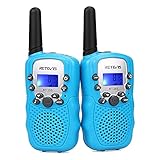 | Retevis RT388 Kids Walkie Talkies, Outdoor Toys for Kids Camping Essentials | Check Price On Amazon |
 | Cobra RX680 Walkie Talkies (2-Pack), IP54 Water Resistant Design | Check Price On Amazon |
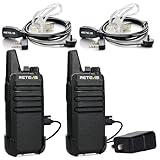 | Retevis RT22 Walkie Talkies Long Range Rechargeable with Earpiece (2 Pack) | Check Price On Amazon |
 | Midland GXT1000VP4 GMRS Two-Way Radios with Headsets, Black, 2 Pack | Check Price On Amazon |
 | Retevis RT628 Walkie Talkies for Kids,Toys Gifts for 6-12 Years Old Boys Girls,Long Range 2 Way Radio 22CH VOX,Birthday Gift,Family Walkie Talkie for Camping Hiking Indoor Outdoor | Check Price On Amazon |


