Walkie talkie headsets are specialized audio accessories that connect to two-way radios, enabling hands-free communication while maintaining full radio functionality. These devices combine speakers and microphones with connectors specifically designed for radio compatibility. Proper headset selection significantly improves communication clarity, operational efficiency, and user comfort across various environments from construction sites to outdoor adventures.
In this comprehensive guide, you’ll learn about different headset types, connector compatibility, key features to consider, and how to select the perfect headset for your specific needs. We’ll also cover maintenance tips and troubleshooting solutions to help you get the most from your investment.
| Photo | Popular Portable Walkie Talkies | Price |
|---|---|---|
 | SKIWARRIOR Multifunctional Smart Wireless Ski Goggles with Walkie-Talkie, Anti-Fog Zeiss Lens, Music & Call Function (Cylindrical Blue) | Check Price On Amazon |
 | SINORISE Super Mini Walkie Talkies, Two-Way Radios, 3 Pack | Up to 12 Hours Battery Life, for Baseball Coaches, Restaurants, Retail Stores, Hospitals, Outdoor Sports & Travel | Check Price On Amazon |
 | KOSPET Tank M4C Smart Watch Rugged, Dual-Band GPS, 5ATM & IP69K Waterproof | 1.96" AMOLED Display, 170+ Sport Modes, Built-in LED Flashlight/Walkie-Talkie, Heart Rate/Sleep Monitor for Android & iPhone | Check Price On Amazon |
 | Retevis RT15 Walkie Talkies 3 Pack, Birthday Gift, Outdoor Adventure Kit | Durable, Lightweight, VOX, Key Lock, Mini Walkie Talkies for Adults, School Family Outdoor Travel Camping Hiking | Check Price On Amazon |
 | Rechargeable Walkie Talkies Toys for Kids: DIY Astronaut Walkie Talkies for Boys Christmas Birthday Gifts for 3 4 5 6 7 8 9 10 Boy Walkie Talkie Outdoor Hiking Toy 2 Way Radio Camping Outdoor Game | Check Price On Amazon |
What Are Walkie Talkie Headsets and How Do They Work?
Walkie talkie headsets are specialized audio accessories designed to connect with two-way radios, providing hands-free communication while maintaining all the functionality of your radio device. They transfer audio signals between your radio and ears while keeping your hands free for other tasks.
These headsets consist of several key components:
- Speaker(s): Delivers incoming audio to one or both ears
- Microphone: Captures your voice for transmission
- PTT (Push-to-Talk) Button: Controls when your microphone activates
- Connector: The plug that interfaces with your specific radio model
- Cable: Connects all components together
When you press the PTT button, the microphone activates and sends your voice through the connector into the radio for transmission. Incoming transmissions travel from the radio through the connector to the speaker in your ear. This simple system allows for effective two-way communication without needing to hold the radio.
Compatibility between headsets and radios depends primarily on the connector type. Different radio brands use distinct connector designs, meaning a headset designed for a Motorola radio typically won’t work with a Kenwood radio without an adapter.
Most walkie talkie headsets work with both analog and digital radios, but some advanced features may only function with specific radio types. Always verify compatibility with your exact radio model before purchasing.
7 Types of Walkie Talkie Headsets Compared
Walkie talkie headsets come in various designs, each optimized for specific environments and use cases. Understanding the differences between these types will help you select the right headset for your needs.
1. Earpiece with Inline Microphone
These lightweight, compact headsets feature a single earpiece with a microphone attached to the cable.
- Best for: Light-duty use, discrete communications, retail environments
- Price range: $15-40
- Comfort: Good for short periods, can become uncomfortable during extended use
- Noise isolation: Minimal – you can hear ambient sounds easily
2. D-Shape Earpiece
These headsets hook over the ear with a “D” shaped design for secure fit.
- Best for: Active environments where earpieces need to stay in place
- Price range: $20-50
- Comfort: Moderate for extended wear
- Noise isolation: Low to moderate depending on design
3. Over-the-Ear Headsets
Available in single or dual ear designs, these headsets feature a headband that goes over or behind the head with a boom microphone.
- Best for: Noisy environments, extended use
- Price range: $30-150
- Comfort: Excellent for long periods
- Noise isolation: Good to excellent, especially in dual-ear models
4. Behind-the-Head Headsets
These wrap around the back of the head rather than over the top, making them compatible with helmets and hats.
- Best for: Construction, factory work, situations requiring headwear
- Price range: $40-120
- Comfort: Good for extended wear with headgear
- Noise isolation: Moderate to good
5. Throat Microphone Systems
These specialized headsets use sensors that rest against your throat to pick up voice vibrations rather than air movement.
- Best for: Extremely noisy environments, dusty conditions, situations requiring quiet speaking
- Price range: $50-200
- Comfort: Varies – requires adjustment to the sensation
- Noise isolation: Excellent for transmission, varies for reception
6. Tactical/Covert Acoustic Tube Earpieces
These security-style headsets use a clear acoustic tube to deliver audio and provide discrete communication.
- Best for: Security personnel, surveillance, situations requiring discretion
- Price range: $25-100
- Comfort: Good for moderate periods
- Noise isolation: Good reception clarity due to in-ear design
7. Helmet-Compatible Headsets
Specifically designed to mount inside or attach to helmets for motorcycle, tactical, or industrial use.
- Best for: Motorcycle communication, tactical operations, industrial environments requiring head protection
- Price range: $80-300+
- Comfort: Excellent when properly mounted
- Noise isolation: Very good to excellent
Selecting the Right Headset Type for Your Environment
The environment where you’ll use your walkie talkie headset significantly impacts which type will perform best. Let’s examine how to match headset types to specific settings.
For noisy environments (construction, events, factories):
- Over-the-ear headsets with dual speakers provide the best noise isolation
- Throat microphones offer excellent transmission clarity in high noise
- Look for models with at least 24dB noise reduction rating
For outdoor/weather-exposed environments:
- Choose headsets with IP54 or higher water/dust resistance
- Behind-the-head models work well with hats and sun protection
- Consider wind-resistant microphone designs
For discreet/professional settings (retail, hospitality, security):
- Acoustic tube earpieces offer professional appearance
- Single earpiece designs allow awareness of surroundings
- Smaller PTT buttons that can be concealed under clothing
For extended wear comfort (8+ hour shifts):
- Lightweight over-the-ear headsets with padded earpieces
- D-shape earpieces with soft materials
- Behind-the-head models that distribute weight evenly
Understanding Walkie Talkie Headset Connector Types and Compatibility
One of the most critical aspects of selecting a walkie talkie headset is ensuring connector compatibility with your radio. Using the wrong connector means your headset simply won’t work with your device.
The connector serves as the interface between your headset and radio, transferring audio signals in both directions. Different radio manufacturers use proprietary connector designs, creating compatibility challenges.
Common Connector Types
K-Type Connectors: Used primarily with Kenwood radios, featuring a straight plug with specific pin configuration.
M-Type Connectors: Found on many Motorola radios, with variations for different model lines.
2-Pin Connectors: Common on Baofeng, Wouxun, and other budget radios, with spacing variations between pins.
Multi-Pin Connectors: Used on professional-grade radios with advanced features, often with proprietary designs.
3.5mm and 2.5mm Plugs: Found on some consumer-grade radios, similar to phone headset jacks but with different pin configurations.
Radio Brand Compatibility Guide
Here’s a quick reference for which connector types work with popular radio brands:
- Motorola: Multiple connector types depending on series (XPR, CP, CLS, etc.)
- Kenwood: K-type connector for most models
- Icom: Proprietary multi-pin connector
- Baofeng: 2-pin connector (K-type compatible)
- Midland: Often uses 2.5mm and 3.5mm jacks
- Hytera: Proprietary multi-pin connector
Always verify the exact connector type for your specific radio model before purchasing a headset. Many radio manufacturers change connector designs between different model series.
Adapters and Cross-Compatibility Solutions
When you already own a quality headset but need to use it with a different radio model, adapters can provide a cost-effective solution—though with some important limitations to consider.
Adapters connect between your headset and radio, converting one connector type to another. They typically cost between $15-40 depending on the specific connector types and quality.
When adapters make sense:
- You have a high-quality headset you want to keep using
- You use multiple radio types and want one headset for all
- You need a temporary solution until purchasing a compatible headset
Limitations of adapters:
- May introduce additional points of failure
- Some feature loss possible (advanced functions might not transfer)
- Bulky connection point that can catch on clothing or equipment
- Potential audio quality reduction
Quality adapters from brands like Impact, Pulsat, and HQRP provide reliable connections without significant audio degradation.
Wireless and Bluetooth Options for Walkie Talkie Headsets
Wireless technology has finally reached the world of walkie talkie headsets, offering freedom from connector compatibility concerns—but with important trade-offs in reliability, battery life, and cost.
Traditional walkie talkie headsets connect directly to the radio via cable. Wireless options introduce a transmitter that plugs into the radio and communicates with the headset over Bluetooth or proprietary wireless protocols.
Advantages of wireless headsets:
- Freedom of movement without cable restrictions
- Eliminates connector compatibility issues
- Reduces cable-related failures
- Can often pair with both radios and phones
Disadvantages of wireless headsets:
- Require charging (typical battery life: 8-12 hours)
- Higher cost (typically 30-100% more than wired equivalents)
- Potential for interference in certain environments
- May introduce slight audio delay
- Another battery to manage in the field
Bluetooth 5.0 and newer standards provide the most reliable connections with approximately 30-foot range in typical conditions. Proprietary wireless systems may offer greater range but limit compatibility with other devices.
Key Technical Features to Consider When Choosing a Walkie Talkie Headset
Beyond the basic type and connector compatibility, several technical features significantly impact a walkie talkie headset’s performance in specific situations. Understanding these features ensures you select a headset that meets your exact needs.
Noise Cancellation Technology
Noise cancellation in headsets comes in two forms:
Passive noise isolation: Physical barriers (ear cups, in-ear seals) that block ambient sound. Measured in decibels of attenuation, with higher numbers indicating better isolation.
Active noise cancellation: Electronic systems that detect external noise and generate inverse sound waves to cancel it out. More effective for constant background noise than sudden sounds.
Microphones also use noise cancellation technology:
Directional microphones: Focus on sounds from specific directions while rejecting others.
Noise-canceling microphones: Use multiple microphone elements to distinguish voice from background noise.
Water and Dust Resistance (IP Ratings)
IP (Ingress Protection) ratings indicate protection against environmental elements:
- IPX4: Resistant to water splashes from all directions
- IPX5: Protected against water jets
- IPX7: Can withstand immersion up to 1 meter for 30 minutes
- IP5X: Dust protected (limited ingress permitted)
- IP6X: Completely dust tight
For outdoor or industrial use, look for headsets with at least IPX4 water resistance and IP5X dust protection.
VOX (Voice-Activated Transmission)
VOX allows hands-free transmission by automatically activating the microphone when you speak. Key considerations include:
- Sensitivity levels: Adjustable settings to prevent unintended transmissions
- Activation time: How quickly the system recognizes speech
- Cut-off delay: How long the microphone stays active after you stop speaking
VOX works best in moderate noise environments. In very loud settings, it may trigger continuously or fail to recognize speech.
PTT (Push-to-Talk) Button Design
The PTT button activates your microphone for transmission. Consider these aspects:
- Button placement: Inline (on cable), lapel clip, finger PTT, wireless remote
- Size and tactile feedback: Larger buttons are easier to find by touch
- Locking capability: Some PTTs can lock in transmit position for extended talking
- Durability: Quality buttons should withstand 100,000+ presses
Comfort Features for Extended Wear
For all-day use, prioritize these comfort features:
- Weight: Lighter headsets (under 4oz/115g) cause less fatigue
- Padding materials: Memory foam and soft silicone provide better comfort
- Pressure distribution: How weight and clamping force are distributed
- Adjustability: Multiple size adjustments to fit different users
- Ear pad size: Larger pads distribute pressure more evenly
How to Select the Right Walkie Talkie Headset: A Step-by-Step Guide
Selecting the perfect walkie talkie headset requires considering multiple factors in the right order. Follow this systematic approach to narrow down your options and find the ideal headset for your specific requirements.
- Identify your radio model and connector type
- Check your radio documentation or manufacturer website
- Look for the accessory port type on the radio body
- Determine if you need single or dual connectors (some radios separate audio in/out)
- Assess your primary usage environment
- Noise level: Quiet, moderate, or extremely loud
- Weather exposure: Indoor, outdoor, wet conditions
- Dust/dirt exposure: Clean or contaminated environment
- Temperature extremes: Will it be used in very hot or cold conditions
- Determine your wearing duration needs
- Short periods (under 1 hour)
- Moderate duration (1-4 hours)
- Extended wear (full day/shift)
- Consider physical activity level during use
- Mostly stationary (office, dispatch)
- Moderate movement (retail, event management)
- High activity (construction, sports)
- Evaluate privacy and awareness requirements
- Need to hear surroundings? (single earpiece)
- Need maximum noise isolation? (dual earpiece)
- Require discreet appearance? (low-profile design)
- Determine necessary durability level
- Standard indoor use
- Moderate outdoor exposure
- Rugged industrial/extreme conditions
- Establish your budget range
- Budget ($20-50)
- Mid-range ($50-150)
- Professional grade ($150-300+)
- Decide between wired or wireless operation
- Consider battery management capabilities
- Evaluate if cable management is a significant issue
- Determine if multi-device connectivity is needed
Budgeting for Quality: Price vs. Performance Considerations
Walkie talkie headsets range from under $20 to over $300, with significant differences in quality, durability, and features. Understanding what you get at each price point helps ensure you invest wisely without overspending.
Budget Range ($20-50)
- What to expect: Basic functionality, limited durability
- Best for: Occasional use, indoor environments, backup headsets
- Limitations: Typically less comfortable, minimal noise cancellation, shorter lifespan
- Value picks: Retevis PTT MIC Earpiece, KEESIN Acoustic Tube Headset
Mid-Range ($50-150)
- What to expect: Good durability, moderate noise cancellation, comfortable for extended wear
- Best for: Regular use, mixed environments, professional applications
- Key improvements: Better sound quality, reliable PTT buttons, water resistance
- Value picks: Klein Electronics Phantom, Tacticom Headset
Premium ($150-300+)
- What to expect: Excellent durability, advanced noise cancellation, maximum comfort
- Best for: Daily professional use, harsh environments, critical communications
- Key improvements: Ruggedized construction, excellent noise handling, 2+ year warranties
- Value picks: 3M PELTOR, Otto Professional
For occasional or light use, budget options offer adequate performance. For regular professional use, mid-range headsets provide the best value. Premium headsets make sense for daily use in harsh environments or when communication clarity is critical to safety.
Industry-Specific Walkie Talkie Headset Recommendations
Different industries have unique communication challenges that require specific headset features. Here are optimized headset recommendations for various professional and recreational contexts.
Construction and Industrial Environments
Primary challenges: Extreme noise, dust exposure, need for hearing protection, rough handling
Key features needed:
- High noise reduction rating (25dB+)
- Hearing protection integration
- Dust/water resistance (IP65+)
- Durable cables and connectors
- Glove-friendly PTT button
Top recommendations:
- 3M PELTOR Series (behind-the-head with hearing protection)
- Klein Electronics TITAN
- Howard Leight Sync Wireless Earmuff
Security and Law Enforcement
Primary challenges: Need for discretion, reliable operation, situational awareness
Key features needed:
- Low-profile design
- Clear audio in variable environments
- Durable PTT
- Comfortable for extended shifts
Top recommendations:
- Acoustic tube earpieces (FBI-style)
- Throat microphone systems for tactical operations
- Pryme DEFENDER
Event Management and Hospitality
Primary challenges: Variable noise levels, professional appearance, extended wear comfort
Key features needed:
- Discreet appearance
- Good noise cancellation for microphone
- Lightweight comfort
- Single-ear design for customer awareness
Top recommendations:
- D-shape earpieces with boom microphone
- Lightweight behind-the-head single-ear designs
- Acoustic tube styles with clear coil
Outdoor Recreation and Adventure
Primary challenges: Weather exposure, durability, battery life for wireless options
Key features needed:
- Water resistance (IPX5+)
- Wind noise reduction
- Secure fit during movement
- Temperature tolerance
Top recommendations:
- Behind-the-head designs with boom microphone
- Skull conductor microphones for extreme conditions
- Bluetooth options for helmet integration
How to Properly Use and Maintain Your Walkie Talkie Headset
Proper use and regular maintenance significantly extend the life of your walkie talkie headset while ensuring consistent performance. Follow these best practices to protect your investment.
Proper Wearing and Adjustment
Over-the-head headsets:
- Adjust headband size before putting on
- Position ear cups directly over ears
- Set boom microphone approximately 1/4 inch from mouth corner
- Position microphone at 45° angle pointing toward mouth
Behind-the-head headsets:
- Position band comfortably on back of head
- Adjust ear cups/pieces for stable fit
- Set microphone position as with over-head models
Acoustic tube earpieces:
- Insert earpiece with slight twisting motion
- Route acoustic tube behind ear and down
- Attach lapel microphone within 6-8 inches of mouth
- Secure cables to prevent pulling
Connection and Setup
- Ensure radio is powered off before connecting headset
- Align connector pins carefully and never force
- Secure connector with locking mechanism if available
- Test transmission before critical use
- Adjust volume to minimum necessary level
Cleaning and Maintenance
Regular cleaning (weekly for frequent use):
- Wipe headband and ear cushions with mild disinfectant
- Clean connectors with electronics-safe contact cleaner
- Remove and clean acoustic tubes with warm soapy water
- Allow all components to dry completely before reassembly
Cable maintenance:
- Inspect cables for cuts, kinks, or stress points
- Store cables loosely coiled, never tightly wrapped
- Use cable management clips to prevent strain
- Apply small amount of dielectric grease to connectors in wet environments
Storage recommendations:
- Store in dry, room-temperature environment
- Use included storage case if provided
- Remove batteries from wireless units during extended storage
- Hang over-the-head models rather than placing pressure on ear cups
Troubleshooting Common Walkie Talkie Headset Problems
Even quality walkie talkie headsets can experience issues. Before seeking replacement or repair, try these troubleshooting steps for common problems.
No audio transmission:
- Check that connector is fully inserted
- Verify radio is on correct channel
- Test with another radio if available
- Inspect cable for damage, especially near connector and PTT
- Try another headset to determine if radio or headset is the issue
Intermittent audio:
- Check for loose connections
- Wiggle cable to identify break points
- Clean connector with contact cleaner
- Test PTT button functionality
- Check for water damage or corrosion
Poor sound quality:
- Reposition microphone closer to mouth
- Check for wind interference or breath hitting microphone
- Verify correct connector type for your radio
- Test at different volume levels
- Check for interference from other electronic devices
PTT button not functioning:
- Inspect for visible damage
- Listen for click sound when pressed
- Clean with compressed air
- Check if VOX is enabled and disabling the PTT
Comparing Top Walkie Talkie Headset Brands
Several manufacturers specialize in walkie talkie headsets, each with different strengths and specializations. Understanding brand differences helps inform your purchasing decision.
Motorola
- Quality reputation: Excellent
- Price range: $40-200
- Specialty: Perfect compatibility with Motorola radios
- Warranty: 1-2 years depending on model
- Strengths: Guaranteed compatibility, good durability
- Weaknesses: Higher price for comparable features, limited cross-compatibility
Retevis
- Quality reputation: Good for price point
- Price range: $15-80
- Specialty: Value-oriented products, wide compatibility
- Warranty: 1 year typical
- Strengths: Affordable, many connector options
- Weaknesses: Less durable than premium brands, inconsistent quality control
Impact
- Quality reputation: Very good
- Price range: $60-250
- Specialty: Professional-grade communications gear
- Warranty: 2 years typical
- Strengths: Durability, noise cancellation, custom solutions
- Weaknesses: Limited retail availability, higher prices
Klein Electronics
- Quality reputation: Very good
- Price range: $50-200
- Specialty: Public safety and security applications
- Warranty: 1-3 years depending on model
- Strengths: Rugged designs, good audio quality
- Weaknesses: Focused primarily on professional market
Generic/Third-Party Manufacturers
- Quality reputation: Variable (from poor to decent)
- Price range: $10-60
- Specialty: Budget options, basic functionality
- Warranty: 30-90 days typical
- Strengths: Low cost, readily available
- Weaknesses: Inconsistent quality, poor durability, limited support
When selecting between brands, consider your usage frequency and environment. For daily professional use, established brands like Motorola, Impact, or Klein Electronics justify their higher prices through reliability and durability. For occasional or light-duty use, mid-tier brands like Retevis offer good value.
Future Trends in Walkie Talkie Headset Technology
Walkie talkie headset technology continues to evolve, with several emerging trends that may influence your purchasing decision—especially if you’re investing in equipment for long-term use.
Advanced Noise Cancellation
Next-generation walkie talkie headsets incorporate AI-driven noise suppression algorithms that can distinguish speech from background noise with remarkable precision. These systems can maintain clear communication even in extremely loud environments like construction sites or crowded events.
Multi-System Compatibility
Newer headsets increasingly offer simultaneous connectivity with both traditional walkie talkies and Bluetooth devices. This allows users to monitor radio communications while also connected to a smartphone or tablet, eliminating the need to switch between devices.
Bone Conduction Technology
Bone conduction transmits sound through vibrations against the skull rather than through the ear canal. This technology allows users to maintain full environmental awareness while receiving communications. Several manufacturers are developing walkie talkie headsets that incorporate this technology for specialized applications.
Extended Battery Life
For wireless options, battery technology improvements are extending operational times from the current 8-12 hours to 24+ hours on a single charge. Quick-charge capabilities are also being incorporated, providing several hours of use from just 15 minutes of charging.
Lightweight, Durable Materials
Advanced composite materials are making headsets simultaneously lighter and more durable. These improvements are particularly important for users wearing headsets throughout long shifts where comfort directly impacts productivity.
Frequently Asked Questions About Walkie Talkie Headsets
Can you use Bluetooth headsets with walkie talkies?
Standard Bluetooth headsets designed for phones cannot connect directly to most walkie talkies. However, special Bluetooth adapters are available that connect to your radio and then pair with Bluetooth headsets. Some newer professional radio models also have built-in Bluetooth capability.
How do I know which connector type my radio needs?
Check your radio’s user manual or manufacturer website for accessory information. You can also look for model-specific compatibility charts online or contact the manufacturer directly. The accessory port on your radio may have identifying marks or a specific shape that indicates connector type.
What’s the difference between VOX and PTT?
PTT (Push-to-Talk) requires manually pressing a button to activate transmission. VOX (Voice-Activated Transmission) automatically activates the microphone when you speak. PTT offers more control and prevents accidental transmissions, while VOX provides hands-free operation but may trigger accidentally in noisy environments.
Are expensive headsets worth the investment?
For regular professional use in demanding environments, premium headsets ($150+) offer superior durability, comfort, and audio quality that justify their cost. For occasional or light use, mid-range ($50-150) options typically provide the best value. Budget options under $50 may require frequent replacement if used regularly.
Can I use my phone headset with a walkie talkie?
Standard phone headsets are not compatible with walkie talkies due to different connector types and the lack of a PTT function. Some adapters exist for specific radio models, but these often provide limited functionality and poor audio quality. Purpose-built walkie talkie headsets deliver far better performance.
How long do walkie talkie headsets typically last?
Durability varies significantly by price point and usage conditions. Budget headsets may last 6-12 months with regular use. Mid-range headsets typically survive 1-3 years of professional use. Premium headsets often last 3-5+ years even in harsh environments. The most common failure points are cables and connectors.
Are walkie talkie headsets waterproof?
Some are, but not all. Look for headsets with an IPX rating to determine water resistance. IPX4 resists splashes, IPX5/6 withstands water jets, and IPX7/8 can handle temporary immersion. Models designed for outdoor use typically offer better water resistance than those designed for indoor environments.
Can multiple headsets connect to one radio?
Most radios support only one headset connected directly. However, some professional systems offer junction boxes or special adapters that allow multiple headsets to connect to a single radio. These are commonly used in training environments or for team communications where multiple people need to monitor the same radio.
Conclusion: Making Your Final Walkie Talkie Headset Decision
Selecting the right walkie talkie headset involves balancing numerous factors, from technical compatibility to environmental needs and budget constraints. The perfect headset provides reliable communication, comfortable wear, and durability appropriate for your specific conditions.
Remember these key considerations during your selection process:
- Compatibility comes first – Even the best headset is useless if it doesn’t connect properly to your radio
- Match the design to your environment – Different headset types excel in different conditions
- Consider long-term value – Sometimes spending more initially saves money over time through greater durability
- Prioritize comfort for extended use – Even small discomfort becomes significant during all-day wear
For professional users, investing in quality equipment pays dividends through better communication, increased productivity, and reduced replacement costs. For recreational users, balancing feature needs against budget typically leads to the best satisfaction.
Use the selection process outlined in this guide to systematically narrow your options and find the headset that best matches your specific requirements. With the right walkie talkie headset, you’ll experience clearer communication, increased convenience, and greater effectiveness in all your radio communications.
| Photo | TOP RATED WALKIE TALKIES | Price |
|---|---|---|
 | Retevis RT628 Kids Walkie Talkies, Toys Gifts for 4-12 Year Old Girl Boy | Kids Camping Essentials Outdoor Toys, Birthday Gift, 22CH, VOX, Keypad Lock, Durable, Easy to Use Walkie Talkies for Kids | Check Price On Amazon |
 | Cobra ACXT545 Weather-Resistant Walkie Talkies, Rechargeable, 22 Channels | Long Range 28-Mile Two-Way Radio Set (2-Pack) | Check Price On Amazon |
 | Retevis RT388 Kids Walkie Talkies, Outdoor Toys for Kids Camping Essentials | 4-12 Year Old Boy Birthday Gift, 22 CH VOX Flashlight Clear Sound, Kids Walkie Talkies 2 Pack for Camping Hiking Adventure | Check Price On Amazon |
 | Cobra RX680 Walkie Talkies (2-Pack), IP54 Water Resistant Design | Rugged & Splashproof Two Way Radios Long Range, 60 Pre-Programmed Channels, Weather Alerts | Check Price On Amazon |
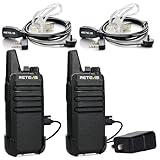 | Retevis RT22 Walkie Talkies Long Range Rechargeable with Earpiece (2 Pack) | Slim & Lightweight 2 Way Radio For Camping & Hiking, Pocket-Friendly Antenna, Ready to Use, 10-Hour Battery, USB-C Charging | Check Price On Amazon |
 | Midland GXT1000VP4 GMRS Two-Way Radios with Headsets, Black, 2 Pack | 50 Channels, 142 Privacy Codes, Up to 36 Mile Long Range, JIS4 Water Resistant, NOAA Weather Alert, Rechargeable NiMH | Check Price On Amazon |
 | Retevis RT628 Walkie Talkies for Kids,Toys Gifts for 6-12 Years Old Boys Girls,Long Range 2 Way Radio 22CH VOX,Birthday Gift,Family Walkie Talkie for Camping Hiking Indoor Outdoor | Check Price On Amazon |