Walkie talkies and intercom systems serve different communication needs based on mobility and infrastructure requirements. Walkie talkies offer portable, wireless communication ideal for mobile teams, while intercom systems provide fixed-point communication networks better suited for building-wide coverage. Your choice depends on your specific operational needs, environment, and budget constraints.
Selecting the wrong communication system can lead to operational inefficiencies, wasted resources, and potential safety risks. This guide helps you understand the key differences between these technologies and provides a framework for making the right decision for your organization’s specific needs.
| Photo | Popular Portable Walkie Talkies | Price |
|---|---|---|
 | SKIWARRIOR Multifunctional Smart Wireless Ski Goggles with Walkie-Talkie, Anti-Fog Zeiss Lens, Music & Call Function (Cylindrical Blue) | Check Price On Amazon |
 | SINORISE Super Mini Walkie Talkies, Two-Way Radios, 3 Pack | Up to 12 Hours Battery Life, for Baseball Coaches, Restaurants, Retail Stores, Hospitals, Outdoor Sports & Travel | Check Price On Amazon |
 | KOSPET Tank M4C Smart Watch Rugged, Dual-Band GPS, 5ATM & IP69K Waterproof | 1.96" AMOLED Display, 170+ Sport Modes, Built-in LED Flashlight/Walkie-Talkie, Heart Rate/Sleep Monitor for Android & iPhone | Check Price On Amazon |
 | Retevis RT15 Walkie Talkies 3 Pack, Birthday Gift, Outdoor Adventure Kit | Durable, Lightweight, VOX, Key Lock, Mini Walkie Talkies for Adults, School Family Outdoor Travel Camping Hiking | Check Price On Amazon |
 | Rechargeable Walkie Talkies Toys for Kids: DIY Astronaut Walkie Talkies for Boys Christmas Birthday Gifts for 3 4 5 6 7 8 9 10 Boy Walkie Talkie Outdoor Hiking Toy 2 Way Radio Camping Outdoor Game | Check Price On Amazon |
Understanding Communication System Fundamentals
Before comparing specific features, it’s essential to understand what each communication system is and how they fundamentally differ in function and design.
What Are Walkie Talkies (Two-Way Radios)?
Walkie talkies, also known as two-way radios, are portable communication devices that allow users to transmit and receive voice messages wirelessly through radio frequencies. They operate without requiring fixed infrastructure, making them ideal for mobile teams that need to stay connected while moving.
Key characteristics of walkie talkies include:
- Portable, handheld devices that operate on radio frequencies
- Push-to-talk functionality for immediate communication
- Battery-powered operation for complete mobility
- Available in analog or digital versions with varying features
- Range typically from 0.5-5 miles depending on conditions and model
Modern walkie talkies come in different frequency bands (UHF/VHF) and can include features like GPS tracking, Bluetooth connectivity, noise cancellation, and emergency alerts. For a comprehensive introduction to how these devices work, check out how walkie talkies communicate with each other.
What Are Intercom Systems?
Intercom systems are communication networks that enable two-way audio (and sometimes video) communication between fixed points within a building or defined area. These systems typically require installation and are integrated into a building’s infrastructure.
Key characteristics of intercom systems include:
- Fixed communication points installed in specific locations
- Centralized control with station-to-station connectivity
- Typically powered by building electrical systems
- Available in wired or wireless configurations
- Often integrated with access control and security systems
Modern intercom systems have evolved from simple audio devices to sophisticated IP-based systems that can integrate with smartphones, security cameras, access control systems, and building management platforms.
Key Performance Factors: Head-to-Head Comparison
When selecting between walkie talkies and intercom systems, several critical performance factors will determine which solution better serves your specific needs.
| Performance Factor | Walkie Talkies | Intercom Systems |
|---|---|---|
| Mobility | High – fully portable | Low – fixed installation points |
| Range | 0.5-5 miles (open area) 100-500 ft (in buildings) | Building-wide (wired) 300-1000 ft (wireless) |
| Power Source | Rechargeable batteries | Building electrical system (typically) |
| Infrastructure | None required | Wiring/mounting needed |
| Audio Quality | Moderate to Good | Good to Excellent |
| User Capacity | Limited by channels (typically 16-128) | Extensive (potentially hundreds) |
| Durability | High (models with IP67 rating) | Varies (fixed stations less exposed) |
| Setup Time | Minutes | Hours to days |
Range and Coverage Analysis
Range capabilities vary significantly between walkie talkies and intercom systems, with building materials, system quality, and environmental factors all affecting real-world performance.
Walkie talkies typically offer:
- 0.5-2 miles range in urban environments
- Up to 5 miles in open areas with no obstructions
- 100-500 feet inside buildings (depending on construction)
- Signal degradation through concrete walls (30-50% loss per wall)
Intercom systems typically provide:
- Building-wide coverage for wired systems (unlimited by walls)
- 300-1000 feet for wireless systems
- Consistent performance regardless of building layout (for wired systems)
- Less susceptible to environmental interference
For larger facilities, walkie talkies may require repeaters to extend range, while intercoms need proper planning for station placement. Testing is recommended before full deployment in either case. If you’re specifically looking to maximize your two-way radio’s performance, exploring factors that affect walkie talkie range can help you make more informed decisions.
Audio Quality and Reliability Comparison
Communication clarity can make the difference between effective operations and costly misunderstandings, making audio quality a critical consideration.
Walkie talkies audio characteristics:
- More susceptible to environmental noise interference
- Digital models offer better clarity than analog versions
- Quality degrades at range limits or through obstacles
- Premium models include noise cancellation features
- Half-duplex communication (one person speaks at a time)
Intercom systems audio characteristics:
- Generally superior audio clarity in fixed locations
- Less affected by environmental interference
- Many systems offer full-duplex communication (like a phone call)
- Modern systems include ambient noise compensation
- Consistent audio quality throughout coverage area
In high-noise environments like manufacturing floors or construction sites, digital walkie talkies with noise cancellation or specialized intercoms designed for industrial use are recommended. For challenging environments, specialized walkie talkies designed for loud environments offer enhanced audio features to maintain clear communication.
Implementation Requirements and Considerations
The practical realities of implementing each communication system can significantly impact your decision, as installation complexity, cost factors, and ongoing maintenance requirements vary substantially.
Installation and Setup Processes
The installation processes for walkie talkies and intercom systems differ dramatically, with important implications for timeline, cost, and disruption to your operations.
Walkie talkie setup process:
- Unbox and charge devices (4-8 hours initial charge)
- Program channels and features (30-60 minutes)
- Conduct basic testing (30 minutes)
- Train users on operation (1-2 hours)
- Deploy to team (immediate use)
Intercom system installation process:
- Site survey and planning (1-2 days)
- Infrastructure preparation (wiring, mounting points) (1-7 days)
- Hardware installation (1-3 days)
- System configuration and programming (1 day)
- Testing and adjustments (1 day)
- User training (1-2 hours)
Walkie talkies can be operational within hours, while intercom systems typically require days or weeks from purchase to full operation, depending on system complexity and building size.
Maintenance and Ongoing Management
Beyond initial setup, the long-term maintenance requirements and system management needs differ significantly between walkie talkies and intercom systems.
Walkie talkie maintenance requirements:
- Regular battery charging (daily to weekly)
- Battery replacement every 1-2 years
- Occasional firmware updates for digital models
- Physical cleaning and inspection
- Replacement of damaged antennas or accessories
Intercom system maintenance requirements:
- Periodic system testing (monthly recommended)
- Software/firmware updates as released
- Hardware inspection and cleaning
- Wiring checks for wired systems
- Professional service visits for advanced systems
Walkie talkies generally require more frequent but simpler maintenance tasks, while intercom systems need less regular attention but may require technical expertise when issues arise. For detailed information on keeping your walkie talkies in top condition, explore walkie talkie maintenance guidelines to extend the life of your devices.
Total Cost of Ownership Analysis
Understanding the true cost of communication systems requires looking beyond initial purchase prices to analyze the total cost of ownership (TCO) over the system’s lifespan.
| Cost Factor | Walkie Talkies | Intercom Systems |
|---|---|---|
| Initial Equipment | $30-500 per unit | $1,000-20,000+ (system) |
| Installation | $0 (DIY) | $500-5,000+ (professional) |
| Infrastructure | $0-500 (charging stations) | $500-10,000+ (wiring, etc.) |
| Licensing (if required) | $75-150 per year | Usually none |
| Maintenance (annual) | $100-300 (batteries, repairs) | $200-1,000 (service contracts) |
| Training | $0-100 per user | $0-200 per user |
| Expansion Cost | $30-500 per additional unit | $300-2,000 per additional point |
| 5-Year TCO (10 users) | $3,000-10,000 | $5,000-30,000+ |
For smaller teams and temporary deployments, walkie talkies offer significantly lower TCO. For permanent installations in fixed locations, especially when integrated with other building systems, intercom systems may provide better long-term value despite higher initial costs.
Cost-Benefit Analysis Framework
To determine which communication system offers better value for your organization, apply this cost-benefit framework to your specific operational needs and constraints.
- Identify primary communication goals (team coordination, emergency response, visitor management)
- List must-have features for your specific operations
- Calculate total implementation costs (equipment, installation, training)
- Estimate 5-year operational costs (maintenance, upgrades, expansion)
- Quantify benefits (time savings, improved response times, enhanced security)
- Determine ROI timeframe based on costs vs. operational benefits
Consider both tangible and intangible benefits. For example, a manufacturing plant might see tangible production increases from faster communication, while a hospital might prioritize the intangible benefit of more reliable emergency coordination.
Industry-Specific Applications and Recommendations
Different industries have unique communication requirements that may favor either walkie talkies or intercom systems—or in some cases, a hybrid approach combining both technologies.
Manufacturing and Industrial Environments
Manufacturing and industrial environments present unique communication challenges including high noise levels, potential hazards, and the need for reliable communication across large facilities.
Key requirements:
- Communication in high-noise areas
- Coverage across large facilities
- Durability in harsh conditions
- Integration with emergency systems
- Hazardous environment certifications (where needed)
Recommendation: Digital walkie talkies with noise cancellation features are often preferred for manufacturing environments due to mobility needs and ruggedized designs. Models with IP67 ratings and ATEX certification for hazardous environments provide necessary durability.
For fixed workstations, consider supplementing with intercom stations at critical control points, creating a hybrid system that balances mobility with reliable fixed-point communication.
Healthcare Facilities
Healthcare environments require communication systems that balance reliability, privacy considerations, and integration with existing medical systems while maintaining compliance with healthcare regulations.
Key requirements:
- HIPAA-compliant communications
- Integration with nurse call systems
- Infection control considerations
- Emergency code coordination
- Quiet operation in patient areas
Recommendation: Modern intercom systems typically better serve healthcare environments, particularly those that integrate with existing nurse call systems and offer quiet operation modes for patient areas.
For security and maintenance staff, supplement with digital walkie talkies that offer discrete earpieces and vibration alerts. Ensure any walkie talkie system offers encrypted communications for HIPAA compliance.
Integration with Modern Technology Ecosystems
Modern communication systems increasingly need to integrate with broader technology ecosystems, with significant differences in how walkie talkies and intercom systems connect with other business technologies.
Walkie talkie integration capabilities:
- Limited native integration with other systems
- Some digital models offer Bluetooth connectivity to smartphones
- Advanced systems may include API access for custom integration
- GPS tracking integration for team location awareness
- Emergency button integration with alert systems
Intercom system integration capabilities:
- Extensive integration options, especially with IP-based systems
- Direct connection to access control systems
- Video surveillance integration
- Building management system connectivity
- Mobile app extensions for remote access
- VoIP and SIP protocol support for telephony integration
For organizations with advanced technology ecosystems, intercom systems typically offer more comprehensive integration capabilities, particularly those based on IP technologies. However, some premium digital walkie talkie systems now offer API access for custom integrations with other business systems.
Security System Integration
Communication systems often form a critical component of broader security infrastructure, with important differences in how walkie talkies and intercom systems integrate with access control, surveillance, and emergency response systems.
Intercom systems offer superior security integration through:
- Direct connection to access control for door release
- Video intercom capabilities for visitor verification
- Emergency lockdown initiation
- Integration with alarm systems
- Automated announcements during emergencies
Walkie talkies support security operations through:
- Mobile communication for security personnel
- Emergency button functionality
- Group calls for rapid response coordination
- GPS tracking of security team locations
For comprehensive security operations, many organizations implement both systems, with intercoms handling visitor management and access control while security personnel use walkie talkies for mobile coordination. Security teams often benefit from specialized equipment – check out the best walkie talkies for security professionals for solutions tailored to security applications.
Regulatory and Compliance Considerations
Communication systems are subject to various regulations and compliance requirements, with important distinctions between walkie talkie and intercom regulatory frameworks.
Walkie talkie regulatory considerations:
- FCC licensing requirements for certain frequencies and power levels
- Business-band radios often require specific licenses ($75-150 per year)
- Unlicensed GMRS/FRS radios have power and usage limitations
- International travel restrictions for certain radio equipment
- Industry-specific certifications (ATEX for hazardous environments)
Intercom system regulatory considerations:
- Generally fewer regulatory requirements than walkie talkies
- Building code compliance for wired installations
- ADA accessibility requirements for public-facing intercoms
- Privacy laws regarding audio/video recording (if applicable)
- Industry-specific requirements (HIPAA in healthcare)
Organizations operating in regulated industries should consult with compliance officers before implementing any communication system, particularly when the system will handle sensitive information or be used in public-facing applications.
Future Trends and Technology Evolution
Both walkie talkie and intercom technologies continue to evolve, with emerging trends that may influence your long-term communication strategy and system selection.
Emerging walkie talkie trends:
- Integration with smartphones through companion apps
- Cloud-based fleet management and programming
- Advanced noise cancellation using AI algorithms
- Push-to-talk over cellular (PoC) extending range limitations
- Enhanced location services beyond basic GPS
- Longer battery life through improved power management
Emerging intercom trends:
- Full IP-based systems replacing analog technology
- Touchless operation using voice commands and motion sensors
- Mobile app extensions for remote answering
- AI-powered visitor recognition and management
- Integration with smart building systems
- Enhanced cybersecurity protections
Both technologies are increasingly converging with mobile devices and cloud services, potentially offering more flexible deployment options in the future. When making long-term investments, consider systems that offer upgrade paths to accommodate these emerging capabilities. For insights into what’s coming next in two-way radio technology, explore the future of walkie talkies and upcoming innovations.
Making the Right Choice: Decision Framework
Selecting between walkie talkies and intercom systems requires a structured approach that weighs your specific operational needs against the capabilities, limitations, and costs of each system.
Answer these key questions to guide your decision:
- Mobility needs: Do your users need to communicate while moving throughout a facility or area?
- Infrastructure constraints: Can your facility accommodate wiring and installation work?
- Budget considerations: What is your upfront budget vs. ongoing operational budget?
- User capacity: How many simultaneous users need to communicate?
- Integration requirements: Does the system need to connect with other technologies?
- Environmental factors: What noise levels, hazards, or physical conditions exist?
- Coverage area: What is the total area needing coverage?
- Timeline: How quickly does the system need to be operational?
When to Choose Walkie Talkies
Walkie talkies represent the optimal communication solution when certain operational factors and requirements are present in your business environment.
Choose walkie talkies when:
- Teams need to communicate while remaining mobile
- Rapid deployment is required (hours vs. days/weeks)
- Installation of fixed infrastructure is impractical
- Upfront budget constraints exist
- Deployment may be temporary or needs to be flexible
- Teams operate across indoor and outdoor environments
- Users need rugged, portable communication devices
Walkie talkies excel in environments like construction sites, event management, security operations, and field service where mobility is essential and fixed infrastructure may be impractical.
When to Choose Intercom Systems
Intercom systems offer superior communication solutions when specific facility, operational, and integration requirements are prioritized in your organization.
Choose intercom systems when:
- Communication primarily occurs between fixed points
- Integration with building systems is required
- Access control and visitor management are priorities
- Highest audio quality is necessary
- User capacity needs are extensive
- Long-term, permanent installation is planned
- Building-wide coverage is needed regardless of obstacles
Intercom systems are ideal for office buildings, healthcare facilities, schools, residential complexes, and retail environments where fixed-point communication and system integration provide more value than mobility.
When Hybrid Solutions Make Sense
In many organizations, the optimal communication strategy involves implementing both walkie talkies and intercom systems in a complementary hybrid approach that leverages the strengths of each technology.
Consider hybrid solutions when:
- Different departments have varying communication needs
- Both fixed-point and mobile communication are required
- Security needs include both access control and mobile response
- Budget allows phased implementation of different systems
- Building layout includes both structured and open/outdoor areas
Effective hybrid deployments typically use intercoms for main entrances, critical workstations, and integration with building systems, while walkie talkies equip mobile staff like security, maintenance, and operations teams.
Conclusion: Implementing Your Communication Strategy
Selecting the right communication system represents just the first step in enhancing your organization’s operational efficiency and coordination capabilities.
To ensure successful implementation:
- Conduct thorough needs assessment before purchasing
- Test systems in your actual environment when possible
- Develop clear communication protocols and training
- Create a maintenance schedule to ensure ongoing reliability
- Regularly evaluate performance against operational goals
- Plan for system expansion as needs evolve
Whether you choose walkie talkies, intercom systems, or a hybrid approach, the right communication solution should align with your specific operational requirements, environment, and budget constraints while providing reliable performance and appropriate features for your users.
| Photo | TOP RATED WALKIE TALKIES | Price |
|---|---|---|
 | Retevis RT628 Kids Walkie Talkies, Toys Gifts for 4-12 Year Old Girl Boy | Kids Camping Essentials Outdoor Toys, Birthday Gift, 22CH, VOX, Keypad Lock, Durable, Easy to Use Walkie Talkies for Kids | Check Price On Amazon |
 | Cobra ACXT545 Weather-Resistant Walkie Talkies, Rechargeable, 22 Channels | Long Range 28-Mile Two-Way Radio Set (2-Pack) | Check Price On Amazon |
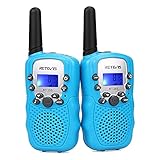 | Retevis RT388 Kids Walkie Talkies, Outdoor Toys for Kids Camping Essentials | 4-12 Year Old Boy Birthday Gift, 22 CH VOX Flashlight Clear Sound, Kids Walkie Talkies 2 Pack for Camping Hiking Adventure | Check Price On Amazon |
 | Cobra RX680 Walkie Talkies (2-Pack), IP54 Water Resistant Design | Rugged & Splashproof Two Way Radios Long Range, 60 Pre-Programmed Channels, Weather Alerts | Check Price On Amazon |
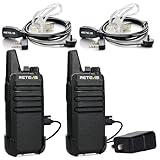 | Retevis RT22 Walkie Talkies Long Range Rechargeable with Earpiece (2 Pack) | Slim & Lightweight 2 Way Radio For Camping & Hiking, Pocket-Friendly Antenna, Ready to Use, 10-Hour Battery, USB-C Charging | Check Price On Amazon |
 | Midland GXT1000VP4 GMRS Two-Way Radios with Headsets, Black, 2 Pack | 50 Channels, 142 Privacy Codes, Up to 36 Mile Long Range, JIS4 Water Resistant, NOAA Weather Alert, Rechargeable NiMH | Check Price On Amazon |
 | Retevis RT628 Walkie Talkies for Kids,Toys Gifts for 6-12 Years Old Boys Girls,Long Range 2 Way Radio 22CH VOX,Birthday Gift,Family Walkie Talkie for Camping Hiking Indoor Outdoor | Check Price On Amazon |