SiriusXM’s Weather Channel gives you continuous, talk-free weather audio on satellite radio, but it does not replace a dedicated NOAA weather radio for emergency alerts. Understanding exactly what the service delivers, and what it cannot do, matters most when severe weather is approaching.
What Is the Weather Channel on SiriusXM?
The Weather Channel on SiriusXM is a dedicated satellite radio station that broadcasts continuous weather forecasts, regional conditions, and weather-related programming on a subscription basis. It operates on SiriusXM Channel 201 and delivers audio-only content produced by The Weather Channel, covering national and regional forecasts without the commercial interruptions found on AM/FM broadcast radio.
| Photo | Popular Portable Walkie Talkies | Price |
|---|---|---|
 | SKIWARRIOR Multifunctional Smart Wireless Ski Goggles with Walkie-Talkie, Anti-Fog Zeiss Lens, Music & Call Function (Cylindrical Blue) | Check Price On Amazon |
 | SINORISE Super Mini Walkie Talkies, Two-Way Radios, 3 Pack | Check Price On Amazon |
 | KOSPET Tank M4C Smart Watch Rugged, Dual-Band GPS, 5ATM & IP69K Waterproof | Check Price On Amazon |
 | Retevis RT15 Walkie Talkies 3 Pack, Birthday Gift, Outdoor Adventure Kit | Check Price On Amazon |
 | Rechargeable Walkie Talkies Toys for Kids: DIY Astronaut Walkie Talkies for Boys Christmas Birthday Gifts for 3 4 5 6 7 8 9 10 Boy Walkie Talkie Outdoor Hiking Toy 2 Way Radio Camping Outdoor Game | Check Price On Amazon |
The service transmits via satellite in the S-band frequency range (2.3 GHz), which means it reaches your vehicle, home receiver, or portable SiriusXM tuner regardless of local AM/FM broadcast tower coverage. You need an active SiriusXM subscription to access it, with plans starting at approximately $9 to $22 per month depending on the tier.
Key Specifications:
- Channel: SiriusXM Channel 201
- Transmission band: S-band satellite (2.3 GHz)
- Content format: Continuous audio weather programming
- Subscription required: Yes, starting at approximately $9/month
- Alert type: Informational broadcast only, no automatic alarm activation
The Weather Channel on SiriusXM is a type of satellite radio broadcast service, not an emergency alerting system. It differs fundamentally from NOAA Weather Radio All Hazards (NWR), which broadcasts on dedicated VHF frequencies between 162.400 and 162.550 MHz and can trigger an audible alarm on a dedicated NOAA weather alert receiver automatically.
Understanding this distinction is the single most important thing a reader can take from this article before evaluating whether SiriusXM’s Weather Channel serves their emergency communication needs.
What You Actually Get With SiriusXM Weather Channel
SiriusXM Channel 201 delivers curated, talk-show-style weather audio from The Weather Channel’s broadcast team, covering national outlooks, severe weather tracking, and regional forecasts. The content is produced by meteorologists and updates continuously throughout the day, making it more engaging and contextually rich than the robotic synthesized voice of a NOAA NWR broadcast.
You get weather news coverage in addition to raw forecast data. When a major hurricane is approaching the Gulf Coast or a nor’easter is tracking up the Eastern Seaboard, The Weather Channel’s SiriusXM programming covers the storm’s progress with expert commentary, which NOAA’s automated broadcasts do not provide.
The service includes these core content types:
- Continuous national and regional weather forecasts
- Severe weather tracking and expert storm coverage
- Travel weather forecasts (air, road, and marine conditions)
- Seasonal weather outlooks and climate context
- Weather news segments and meteorologist analysis
SiriusXM’s satellite signal also works where AM/FM terrestrial radio cannot reach reliably. In rural areas, deep valleys, or long highway stretches far from broadcast towers, Channel 201 maintains consistent audio quality because the signal originates from a geostationary satellite rather than a ground-based transmitter.
For drivers covering long distances across multiple states, SiriusXM weather content updates regionally without the need to rescan for new local stations every 100 miles. That is a genuine practical advantage over AM/FM weather coverage on road trips or commercial fleet routes.
SiriusXM also offers a separate marine and aviation weather data service through its SiriusXM Aviation and Marine platforms, but those are distinct subscription products from Channel 201. They deliver real-time graphical weather data to cockpit displays and chartplotters and are not part of the standard SiriusXM radio subscription.
The bottom line: SiriusXM Channel 201 delivers high-quality, continuously updated weather audio that outperforms AM/FM weather broadcasts for coverage continuity and contextual depth, but it requires an active subscription and a compatible receiver.
What SiriusXM Weather Channel Cannot Do
SiriusXM Channel 201 cannot activate an alarm when severe weather threatens your specific location. This is the most important limitation to understand. A dedicated NOAA weather alert radio with S.A.M.E. (Specific Area Message Encoding) technology monitors its broadcast channel continuously and triggers a loud alarm the moment NWS issues a warning for your county, even if the radio is on standby and your volume is at zero.
SiriusXM weather audio plays only when you are actively listening. If Channel 201 is not tuned in, you receive no alert. If you are asleep, driving with a different channel selected, or away from your receiver, you miss every warning that airs.
Here is a direct comparison of what each system provides:
Use the table below to understand which system fits your specific emergency alerting needs.
| Feature | SiriusXM Channel 201 | NOAA Weather Radio (NWR) |
|---|---|---|
| Automatic alarm activation | No | Yes (with S.A.M.E. receiver) |
| County-level alert filtering | No | Yes (S.A.M.E. FIPS codes) |
| Works while you sleep (standby alert) | No | Yes |
| Subscription required | Yes ($9-$22/month) | No (free broadcast) |
| Works in vehicle without cell signal | Yes (satellite) | Yes (VHF 162 MHz) |
| Expert meteorologist commentary | Yes | No (synthesized voice) |
| Coverage across all US regions | National (satellite) | Regional (1,000+ transmitters) |
| Works during power outage (battery backup) | Depends on receiver | Yes (battery-powered NWR receiver) |
| Transmits on EAS-linked frequency | No | Yes (162.400-162.550 MHz) |
NOAA NWR broadcasts on seven VHF frequencies per FCC and NOAA documentation. SiriusXM Channel 201 operates on satellite S-band (2.3 GHz) and is not part of the Emergency Alert System (EAS) infrastructure.
SiriusXM Channel 201 is not part of the Emergency Alert System (EAS). The EAS is a national public warning infrastructure that links NOAA NWR transmitters, broadcast TV and radio stations, and the Wireless Emergency Alerts (WEA) cell broadcast system. A dedicated NOAA weather alert radio receives these EAS-encoded alerts directly from NWR transmitters broadcasting on 162.400, 162.425, 162.450, 162.475, 162.500, 162.525, and 162.550 MHz.
SiriusXM also cannot filter alerts by county. NOAA NWR uses six-digit FIPS S.A.M.E. codes to target warnings to specific counties or portions of counties. If you live in Dallas County, Texas, your S.A.M.E.-programmed weather radio ignores a tornado warning issued for Denton County 30 miles north. SiriusXM Channel 201 has no equivalent filtering capability.
The service has no battery backup alarm function by design. Even if you own a portable SiriusXM receiver with battery power, it will not sound an alarm when a tornado warning is issued for your area unless you are actively tuned to Channel 201 at that moment.
SiriusXM Channel 201 delivers excellent weather information when you choose to listen to it. It cannot protect you when you are not listening.
How SiriusXM Weather Compares to NOAA NWR Broadcasts
NOAA Weather Radio All Hazards broadcasts on seven dedicated VHF frequencies between 162.400 and 162.550 MHz and covers approximately 95% of the US population within 40 miles of a transmitter, according to NOAA’s NWR program documentation. The network operates more than 1,000 transmitters across the United States and its territories, making it the most extensive weather broadcast infrastructure in the country.
This happens because NWR transmitters are placed at high elevation with high-power output specifically to maximize coverage. Each transmitter operates at between 300 watts and 1,000 watts effective radiated power, which is why a basic Sangean CL-100 weather radio with a short whip antenna can receive NWR signals across an entire county from indoors.
SiriusXM’s satellite signal covers the entire continental US from geostationary orbit, which gives it a theoretical coverage advantage in areas too remote for NWR terrestrial transmitters. In practice, this matters most in Alaska, deep wilderness, and offshore marine environments where NWR coverage degrades below the 40-mile radius of the nearest transmitter.
The audio quality difference is significant for practical usability. NWR uses automated text-to-speech synthesis, which produces a recognizable robotic voice that reads NWS forecast text verbatim. SiriusXM Channel 201 uses live and pre-recorded human meteorologists, which makes longer weather briefings easier to parse while driving or working.
However, NWR broadcasts are updated by NWS meteorologists every few hours and issue warnings within minutes of NWS confirmation. SiriusXM weather commentary may lag behind NWS official alert issuance depending on the live broadcast schedule. For time-critical tornado or flash flood warnings, NOAA NWR’s automated system delivers faster alert-to-broadcast time than a live commentary format.
For Canadians, the equivalent of NWR is Weatheradio Canada, which broadcasts on the same seven VHF frequencies as the US NWR system. If you are researching how Weatheradio Canada broadcasts weather alerts across provinces, the transmitter network and alert encoding system operate on an identical technical standard to NWR.
The practical comparison comes down to purpose: NWR is a passive safety system that wakes you up; SiriusXM Channel 201 is an active information service you choose to consume.
Who Should Use SiriusXM Weather Channel (and Who Should Not)
SiriusXM Channel 201 is the right choice for drivers who spend significant time on the road across multiple states and want continuous, high-quality weather audio without manually retuning FM stations. Long-haul truckers, regional sales drivers, and road-trip travelers get genuine value from a national satellite signal that does not drop out in rural gaps between FM broadcast tower coverage areas.
It also suits listeners who want weather context beyond raw forecast data. If you want to understand why a cold front is producing unusual snowfall patterns across the Midwest, or want a meteorologist’s assessment of a developing tropical system, Channel 201 provides that explanatory layer that a NOAA NWR broadcast does not.
SiriusXM Channel 201 is not the right primary weather safety tool for any of these scenarios:
- Homeowners in tornado-prone regions who need overnight protection
- Anyone whose primary concern is receiving alerts while asleep or away from a receiver
- Emergency preparedness kits designed to function during power outages
- Anyone needing county-specific alert filtering to avoid false alarms
- Boaters and pilots who need real-time graphical weather data (those users need SiriusXM Marine or Aviation data services, not Channel 201)
For home emergency preparedness, a dedicated NOAA weather alert radio with S.A.M.E. technology is non-negotiable. A $40 to $70 S.A.M.E.-capable receiver does what no SiriusXM subscription can: it monitors your county’s alert frequency continuously and activates a 90-decibel alarm the moment NWS issues a tornado warning for your specific location.
The two systems are not competitors. They serve different needs and the most prepared households and vehicles use both.
The right choice for your situation depends on whether you need passive alerting (NOAA NWR), active weather information (SiriusXM Channel 201), or both.
SiriusXM Weather Channel in Your Vehicle vs At Home
In a vehicle, SiriusXM Channel 201 performs at its best. Vehicles with factory-installed SiriusXM receivers or aftermarket SiriusXM vehicle tuner kits can receive the satellite signal continuously without the FM-station dropout problem that affects AM/FM weather coverage in rural areas. The satellite signal experiences brief interruptions when the vehicle passes under large overpasses or dense tree canopy, but these are momentary and self-correcting.
A vehicle does not have a passive alert mode for SiriusXM. If your car’s radio is off or tuned to music, Channel 201 cannot interrupt with a severe weather alert the way your phone’s Wireless Emergency Alert (WEA) system can. For driving safety in severe weather regions, the WEA system on your phone remains the most reliable passive vehicle alert, not SiriusXM.
At home, SiriusXM weather audio is available through the SiriusXM app on smartphones and smart speakers, through home satellite receivers, and through some smart televisions. The content is identical to the in-vehicle experience. For home use, however, the case for SiriusXM as a weather safety tool weakens considerably compared to the vehicle use case.
A home NOAA weather radio on a nightstand, programmed with your county’s FIPS S.A.M.E. code, costs $40 to $70 as a one-time purchase with no monthly subscription. It operates from battery backup during power outages. It activates a loud alarm specifically for your county without requiring you to be awake or attentive. SiriusXM’s home audio cannot replicate any of those three functions.
For the complete technical explanation of how NOAA NWR broadcasts reach your home receiver, the overview of NOAA Weather Radio technology and how the alert system works covers the transmitter network, EAS encoding, and S.A.M.E. filter programming in full detail.
Use SiriusXM Channel 201 in vehicles for continuous weather audio; rely on a dedicated NOAA weather alert radio at home for passive overnight protection.
SiriusXM Aviation and Marine Weather: A Different Product Entirely
SiriusXM offers weather data services for aviation and marine users that are completely separate from Channel 201 and operate on a different technical and subscription model. These services deliver real-time graphical weather data, not audio programming, and they require specialized receivers rather than a standard SiriusXM radio tuner.
SiriusXM Aviation weather products transmit processed weather data including NEXRAD radar, METARs (Meteorological Aerodrome Reports), TAFs (Terminal Aerodrome Forecasts), PIREPs (Pilot Reports), and Temporary Flight Restrictions (TFRs) to cockpit avionics displays. This data is formatted for display on aviation GPS units and electronic flight bags, not for audio broadcast. A SiriusXM aviation weather receiver like the WX-300 connects to compatible avionics and delivers subscription-based in-flight weather data over satellite.
SiriusXM Marine weather products deliver similar graphical data to chartplotters on boats, including wave height, wind speed, NOAA buoy data, and NEXRAD radar overlays. These are available through subscriptions separate from the standard SiriusXM audio package and require a compatible marine chartplotter with SiriusXM Marine data capability.
Key Specifications (SiriusXM Marine Weather):
- Data type: Graphical weather overlays, not audio broadcast
- Compatible devices: Garmin, Humminbird, Lowrance, and Simrad chartplotters with SiriusXM capability
- Required hardware: SiriusXM Marine weather receiver (separate from Channel 201 tuner)
- Subscription: Separate marine data plan, not included in standard audio subscription
- Update frequency: NEXRAD radar data updated every 5 minutes
Neither the aviation nor marine SiriusXM data products are related to Channel 201. Purchasing a standard SiriusXM audio subscription does not include access to aviation or marine graphical weather data.
Pilots and boaters who need real-time weather data for safety decisions require these specialized data products, not Channel 201’s audio programming.
What Wireless Emergency Alerts Do That Neither SiriusXM Nor NWR Can Match
Wireless Emergency Alerts (WEA) are geographically targeted text messages broadcast directly to cell towers by FEMA’s IPAWS (Integrated Public Alert and Warning System) infrastructure, reaching every compatible cell phone in a defined geographic area simultaneously without requiring an app, subscription, or pre-programmed receiver. WEA messages for Tornado Warnings and Extreme Threat alerts activate a distinctive audio alert tone and vibration pattern on your phone even if it is on silent mode, as specified in FEMA’s IPAWS program documentation.
This capability is unique to WEA. SiriusXM Channel 201 requires active listening. NOAA NWR requires a pre-programmed dedicated receiver. Your cell phone’s WEA system requires nothing from you except that the phone be turned on and within range of a cell tower serving the warned area.
WEA has one significant limitation: it requires cell network coverage. In areas without cellular service, WEA cannot reach you. This is where NOAA NWR and SiriusXM both have structural advantages, since both operate independently of cellular infrastructure.
The most resilient emergency weather communication setup combines all three systems:
- WEA on your cell phone for instant alerts anywhere with cell coverage
- A dedicated NOAA weather alert radio with S.A.M.E. for home overnight protection and areas with poor cell coverage
- SiriusXM Channel 201 in your vehicle for continuous weather context on long drives
For a detailed technical comparison of dedicated weather radio alerting versus cellular emergency systems, the analysis of when a dedicated weather radio outperforms wireless emergency alerts covers the coverage gaps, timing differences, and redundancy value of maintaining both systems.
No single system covers every failure scenario. Redundancy across WEA, NWR, and SiriusXM provides the most complete severe weather alerting coverage.
Setting Up a Complete Weather Information System
Building a complete home and vehicle weather information system takes three components, each costing under $100 combined for the hardware that matters most. The goal is passive protection at home, active information on the road, and cellular backup wherever cell signal exists.
For the home, the highest-priority purchase is a dedicated NOAA weather alert radio with S.A.M.E. programming capability. The Midland WR400 weather alert radio supports up to 50 programmable S.A.M.E. location codes and alerts for 25 NOAA hazard types.
Key Specifications (Midland WR400):
- Frequencies: 162.400, 162.425, 162.450, 162.475, 162.500, 162.525, 162.550 MHz (all 7 NWR channels)
- S.A.M.E. alert types: 25
- Programmable S.A.M.E. locations: Up to 50 county codes
- Power: AC adapter with 3x AA battery backup
- Alert output: 90+ dB siren alarm
Program your home county’s 6-digit FIPS S.A.M.E. code into the radio. You can find your county’s FIPS code through the NOAA NWR website. Once programmed, the radio monitors your NWR broadcast channel continuously and activates only for warnings targeting your county.
For portable use in a go-bag or emergency kit, a hand-crank solar NOAA emergency weather radio provides backup reception without requiring grid power or batteries. These typically include AM/FM reception, a USB charging port for phones, and NWR reception on all seven broadcast frequencies.
For the vehicle, SiriusXM Channel 201 provides continuous weather audio that supplements but does not replace the passive alerting function. Keep your phone’s WEA notifications enabled as the primary passive vehicle alert. Use Channel 201 for weather context and regional forecast information during long drives.
This three-layer setup costs approximately $40 to $70 for the home NWR receiver, $20 to $50 for a portable emergency radio, and the cost of your existing SiriusXM subscription if you already have it. No single component is redundant; each covers a gap the others cannot fill.
A fully redundant weather alerting setup relies on hardware you own outright, not on subscription continuity or cell tower availability.
SiriusXM Channel 201 vs Other Weather Audio Sources
SiriusXM Channel 201 competes with several other weather audio sources for your attention in the car and at home. Understanding where each source excels helps you use each appropriately rather than over-relying on any one system.
AM radio weather coverage is free and widespread, but it depends on local station programming decisions. A station may preempt weather coverage for sports, news, or music. AM signals degrade at night due to skywave interference and in urban environments due to electrical noise. AM coverage requires a station within roughly 50 miles for clear daytime reception.
FM radio weather coverage is limited to stations that actively program weather content. Very few FM stations broadcast continuous weather audio. Most weather coverage on FM is limited to brief updates during morning and afternoon drive time. FM range is typically 30 to 50 miles from the transmitter under normal propagation conditions.
Weather apps on smartphones deliver on-demand forecast data with excellent geographic precision, but they require cell or Wi-Fi data service, battery power, and active user engagement. They cannot deliver passive audio alerts unless specifically configured to do so, and they rely entirely on cellular network availability.
Shortwave radio can carry weather forecasts from international broadcasters and the US Coast Guard’s maritime weather broadcasts on specific shortwave frequencies. For off-grid and maritime users, how shortwave radio delivers weather information when no other signal reaches explains which frequencies and broadcast schedules provide the most reliable coverage for remote environments.
Use the table below to select the right weather audio source for your situation.
| Source | Coverage | Cost | Passive Alert | Works off-grid | Best for |
|---|---|---|---|---|---|
| SiriusXM Ch. 201 | National (satellite) | $9-22/month | No | Yes (satellite) | Road trips, drivers |
| NOAA NWR | Regional (VHF 162 MHz) | Free + receiver cost | Yes | Yes (battery radio) | Home, emergency prep |
| AM Radio | Regional (50-mile radius) | Free | No | Yes (battery radio) | Local news + weather |
| WEA (Cell) | Cell tower coverage area | Free (built into phone) | Yes | No (needs cell signal) | Urban, suburban use |
| Weather App | Cell/Wi-Fi coverage area | Free to premium | Requires setup | No | On-demand forecast detail |
| Shortwave Radio | International/remote | Free + receiver cost | No | Yes (battery receiver) | Maritime, wilderness, off-grid |
NOAA NWR coverage and WEA capabilities per NOAA NWR program documentation and FEMA IPAWS technical specifications. SiriusXM pricing current at time of publication.
Each weather audio source fills a distinct role and no single source replaces the others entirely.
Ham Radio as a Supplementary Weather Information Source
Amateur radio operators have access to weather information channels and networks that neither SiriusXM nor NOAA NWR can replicate, particularly for real-time ground-truth weather reports during severe events. The Amateur Radio Service, licensed under FCC Part 97, operates a nationwide Skywarn network in coordination with the National Weather Service, where trained ham radio operators report ground-level storm conditions directly to NWS forecast offices during severe weather.
Skywarn nets operate on local VHF repeater frequencies, typically in the 144 to 148 MHz (2-meter) and 420 to 450 MHz (70-centimeter) amateur bands. These frequencies vary by region and are coordinated by local amateur radio clubs. A licensed Technician-class amateur operator with a Yaesu FT-70DR dual-band handheld radio or similar VHF/UHF transceiver can monitor local Skywarn nets during severe weather events.
This provides a type of weather information neither SiriusXM nor NOAA NWR broadcasts: real-time eyewitness storm reports from trained spotters already in the field. During a tornado event, Skywarn spotters may be reporting funnel clouds or confirmed touchdowns to the NWS forecast office while the official NWR broadcast is still processing the initial warning issuance.
For readers interested in using amateur radio frequencies for weather monitoring, the resource covering which amateur radio frequencies carry live weather nets and Skywarn activations provides regional frequency lists and Skywarn enrollment information.
Ham radio weather monitoring is an advanced capability requiring an FCC Technician license ($15 exam fee, no renewal cost for 10 years) and a VHF/UHF transceiver, but it provides ground-truth storm reporting that no broadcast service can match.
Comparing SiriusXM Weather to Other SiriusXM Services
SiriusXM operates multiple weather-related services under different subscription structures, and the distinction between them matters for anyone trying to determine what their existing subscription covers. Channel 201 (The Weather Channel audio) is included in SiriusXM’s standard Select and All Access audio subscription tiers.
SiriusXM Travel Link is a separate data service that delivers real-time traffic, weather maps, fuel prices, and sports scores to compatible in-dash navigation systems and head units from Toyota, Honda, General Motors, Ford, and other major automakers. Travel Link weather delivers graphical radar and current conditions overlays to your vehicle’s touchscreen rather than audio commentary. It requires a separate Travel Link subscription from the standard audio plan, though some vehicle packages bundle it together.
Key Specifications (SiriusXM Travel Link Weather):
- Data type: Graphical weather overlays for in-dash navigation screens
- Compatible systems: Select factory navigation systems (varies by manufacturer)
- Subscription: Separate from standard audio plan
- Content: Current conditions, precipitation radar, forecast maps
- Alert type: Informational display only, no audible alarm
SiriusXM Weather Data for Aviation (the WX-series receivers) is a third distinct product intended for general aviation pilots. It delivers processed NEXRAD radar, METARs, TFRs, and SIGMETs (Significant Meteorological Information) to compatible avionics panels. This product operates under a different subscription tier than both Channel 201 and Travel Link and requires a certified aviation weather receiver.
None of these three products function as passive emergency alert systems. All three require active user engagement with a screen or audio output. They complement emergency alerting systems but cannot replace them.
Understanding which SiriusXM weather product you have, or need, prevents the common mistake of assuming a standard audio subscription includes graphical weather data or aviation weather feeds.
Here is the Before/After widget showing what happens when you add a dedicated NOAA weather alert radio to a SiriusXM-only setup.
Results
What Changes When You Add a Dedicated NOAA Weather Alert Radio
Impact of adding a S.A.M.E.-capable NOAA weather alert radio alongside a SiriusXM subscription
SiriusXM Only
- ✗No alert if not actively listening to Channel 201
- ✗No overnight alarm activation during tornado warnings
- ✗No county-level alert filtering via S.A.M.E. FIPS codes
- ✗No function during subscription lapse or satellite signal loss
SiriusXM + NOAA NWR Radio
- ✓Passive 90+ dB alarm activates for your county without active listening
- ✓Overnight tornado and flash flood warnings wake occupants automatically
- ✓S.A.M.E. FIPS code filters alerts to your specific county only
- ✓Battery backup operates on 162.400-162.550 MHz during power outages
Adding a $40 to $70 S.A.M.E.-capable NOAA weather alert radio converts passive SiriusXM weather listening into an active emergency protection system for home and overnight use.
Common Misconceptions About SiriusXM Weather Coverage
The most widespread misconception is that a SiriusXM subscription covering “weather” includes emergency alert functionality. It does not. The Weather Channel on SiriusXM is a programming service, identical in technical function to any other SiriusXM audio channel. It delivers broadcast audio content produced by The Weather Channel’s media team and has no connection to the Emergency Alert System infrastructure.
A second common misconception is that satellite coverage makes SiriusXM weather more reliable than NOAA NWR for emergency use. NOAA NWR operates on dedicated VHF frequencies specifically engineered for emergency communication reliability. NWR transmitters use hardened infrastructure with backup power specifically to remain operational during the severe weather events they are broadcasting about. SiriusXM’s satellite signal is reliable for audio entertainment, but the system is not designed or certified as emergency alerting infrastructure.
A third misconception is that SiriusXM Travel Link weather data and Channel 201 audio are the same product. Travel Link delivers graphical data to compatible navigation screens; Channel 201 delivers audio programming. They use different data pipelines and different subscription structures, and Travel Link requires compatible factory-installed navigation hardware.
A fourth misconception is that SiriusXM coverage gaps are primarily a rural problem. Satellite signal loss in urban areas also occurs under dense building canopy, in underground parking structures, and in tunnels. For drivers who frequently travel through urban tunnels or park underground, satellite-only weather audio has real gaps that AM/FM or cellular-based weather systems do not.
Understanding what the service is, and is not, prevents the false confidence that comes from assuming any single weather information source covers every scenario.
Frequently Asked Questions About the Weather Channel on SiriusXM
Does SiriusXM Channel 201 send automatic severe weather alerts to my receiver?
SiriusXM Channel 201 does not send automatic severe weather alerts to any receiver. The channel delivers continuous audio programming that requires active listening. No SiriusXM audio product can activate an alarm or interrupt your selected channel with an emergency warning. For passive automatic alerting, you need a dedicated NOAA weather alert radio operating on 162.400 to 162.550 MHz with S.A.M.E. technology.
The distinction matters most during overnight hours. A tornado warning issued at 2 a.m. for your county will trigger a 90-decibel alarm on a NOAA weather alert radio programmed with your FIPS code. It will not produce any alert on a SiriusXM receiver unless that receiver is actively tuned to Channel 201 and the on-air host mentions the warning.
Is the Weather Channel on SiriusXM the same as the Weather Channel on cable TV?
SiriusXM Channel 201 is produced by The Weather Channel and uses The Weather Channel’s meteorologists and programming team, but it is an audio-only satellite radio broadcast rather than a cable television channel. The two products share branding and some on-air talent, but they operate through entirely different distribution infrastructure and carry different content formats.
The cable TV version of The Weather Channel includes graphical radar displays, on-screen forecast maps, and visual storm coverage. Channel 201 on SiriusXM delivers audio commentary only, with no visual component. Some programming segments are shared or simulcast, but the experience is not identical.
Can I get SiriusXM weather on a standard weather radio receiver?
Standard NOAA weather radios receive VHF broadcasts on 162.400 to 162.550 MHz and cannot receive SiriusXM’s satellite signal. SiriusXM transmits in the S-band at 2.3 GHz, which requires a SiriusXM-compatible receiver with the appropriate hardware decoder and an active subscription. The two systems use incompatible frequencies and completely different broadcast protocols.
A standard NOAA weather receiver like the Uniden BC365CRS will never receive SiriusXM content, and a SiriusXM tuner will never receive NOAA NWR broadcasts. There is no crossover hardware that receives both on the same device.
What is the difference between SiriusXM Channel 201 and SiriusXM Travel Link weather?
SiriusXM Channel 201 is audio programming from The Weather Channel, available on all SiriusXM audio subscription tiers. SiriusXM Travel Link is a separate data service that delivers graphical weather maps, radar overlays, and real-time conditions to compatible factory-installed in-dash navigation systems. Travel Link requires a separate subscription from the standard audio plan and hardware compatibility with your vehicle’s navigation system.
Travel Link weather is a graphical display product; Channel 201 is audio content. Neither product delivers passive emergency alerts. Some vehicle packages bundle both services together; check your vehicle’s SiriusXM package confirmation to determine which services your subscription includes.
Does SiriusXM work in areas with no cell signal?
SiriusXM’s satellite signal operates independently of cellular networks. The service uses two geostationary satellites and a network of terrestrial repeaters to maintain coverage across the continental United States, Alaska, Hawaii, and surrounding waters. In areas with no cell signal, SiriusXM audio continues working normally, provided your vehicle or receiver has a clear view of the southern sky.
Signal interruption occurs in tunnels, underground parking structures, and under dense building canopies in dense urban environments. In open rural areas without cell service, SiriusXM typically maintains consistent signal quality. For remote wilderness or offshore marine environments at extreme distances from land, SiriusXM Marine data subscriptions provide weather graphical data through the same satellite infrastructure.
Is there a free version of SiriusXM weather?
SiriusXM offers a free streaming option through the SiriusXM app that includes access to some channels during promotional periods, but Channel 201 and weather programming are not permanently free. NOAA Weather Radio All Hazards is the free alternative: it broadcasts continuously on seven VHF frequencies between 162.400 and 162.550 MHz at no cost, requiring only a one-time receiver purchase. A basic Midland WR120B weather alert radio costs approximately $30 to $45 and receives NWR broadcasts indefinitely with no subscription.
Can I use SiriusXM weather for marine or boating safety?
SiriusXM Channel 201 provides weather audio useful for planning purposes, but it is not a substitute for dedicated marine weather safety systems on the water. NOAA broadcasts dedicated marine weather forecasts on NWR frequencies and through NAVTEX systems. Marine VHF radio on Channel 16 (156.800 MHz) provides Coast Guard contact capability that no SiriusXM product replicates.
Boaters with serious offshore needs should consider the SiriusXM Marine weather data subscription, which delivers NEXRAD radar, wind and wave data, and buoy reports to compatible chartplotters. This is a different product from Channel 201 and requires a separate subscription and compatible marine hardware. A Standard Horizon HX890 marine VHF radio with DSC provides Coast Guard distress capability that any weather product, SiriusXM included, cannot replace.
Why does my SiriusXM weather audio cut out in the city but not on the highway?
SiriusXM’s satellite signal requires a line-of-sight path to the satellites, which orbit in geostationary positions to the south of North America. In dense urban environments, tall buildings on both sides of a street block or reflect the satellite signal, causing brief audio interruptions. On open highways with no obstructions to the south, the satellite path is unobstructed and the signal remains consistent.
SiriusXM supplements its satellite coverage with a network of terrestrial repeaters in major metropolitan areas to reduce urban signal loss. If your receiver has a compatible antenna positioned to receive both satellite and terrestrial signals, urban dropouts are reduced. Repositioning your SiriusXM magnetic mount antenna to the roof center of your vehicle, away from the vehicle’s A-pillars, typically improves urban signal reception.
Does SiriusXM’s Weather Channel cover Canada?
SiriusXM’s standard Weather Channel programming on Channel 201 focuses primarily on US weather content. SiriusXM Canada operates as a separate service with its own channel lineup, and weather coverage for Canadian listeners is delivered through SiriusXM Canada’s programming rather than through the US Weather Channel channel number. Canadian users also have access to Weatheradio Canada, which broadcasts on the same seven VHF frequencies (162.400 to 162.550 MHz) used by NOAA NWR in the United States.
For Canadian listeners specifically, the complete guide to Environment Canada’s Weatheradio broadcast network and alert categories covers which provinces are served by which transmitters and how to program S.A.M.E.-equivalent alert filtering on compatible receivers.
What happened when SiriusXM and XM merged, and how does that affect the Weather Channel?
Sirius Satellite Radio and XM Satellite Radio completed their merger in July 2008 to form SiriusXM Radio. Before the merger, XM offered its own weather data products and Sirius carried different programming. After the merger, the combined company unified its channel lineup and The Weather Channel audio content became available across the merged subscriber base on Channel 201.
The merger did not change the fundamental technical limitations of the audio service. Channel 201 has operated as an audio-only weather programming channel since the merger without adding passive alert functionality. References to the “SiriusXM Weather Channel” and the “XM Weather Channel” are the same product on the same channel in the post-merger unified service.
Can I listen to SiriusXM weather on a handheld radio or walkie-talkie?
Standard FRS, GMRS, or amateur handheld radios cannot receive SiriusXM’s satellite signal. SiriusXM operates at 2.3 GHz with proprietary encoding and requires a licensed SiriusXM receiver with a paid subscription. No standard two-way radio or walkie-talkie includes SiriusXM hardware. The closest handheld alternatives for weather monitoring are GMRS radios with built-in NOAA weather scan features, which receive NWR broadcasts on 162.400 to 162.550 MHz and allow you to scan all seven channels while on the go.
Many Midland and Motorola FRS/GMRS radios include dedicated NOAA weather channels as a built-in feature. This provides weather audio from NWR broadcasts on the same device you use for two-way communication, at no additional subscription cost.
Is there a way to get SiriusXM weather alerts pushed to my phone?
SiriusXM does not offer a push notification or alert system tied to Channel 201 weather content. The SiriusXM app streams audio content to your phone but does not integrate with the Emergency Alert System or send location-based weather push notifications. For phone-based weather alerts, your phone’s built-in Wireless Emergency Alert system, governed by FEMA’s IPAWS infrastructure, already provides this function at no cost. WEA Extreme and Severe alerts for tornado warnings activate automatically on compatible phones in the warned area without requiring any app or subscription.
The Right Role for SiriusXM Weather Channel in Your Setup
SiriusXM Channel 201 is a high-quality weather audio service that excels at delivering continuous, expert-narrated weather coverage to vehicles and listeners who want more than AM/FM weather updates. It is not an emergency alerting system, does not integrate with the Emergency Alert System, and cannot wake you during a tornado warning at 3 a.m.
Use it for what it does well: long-drive weather context, national storm coverage, and continuous audio across rural gaps where FM stations fade. Pair it with a dedicated NOAA weather alert radio programmed with your county’s FIPS S.A.M.E. code for passive protection at home, and keep Wireless Emergency Alerts enabled on your phone for cellular coverage areas. If you want to explore how NOAA’s full alert infrastructure works at a technical level, the detailed breakdown of SiriusXM’s weather services and where each product fits alongside NWR and WEA covers the complete picture.
| Photo | TOP RATED WALKIE TALKIES | Price |
|---|---|---|
 | Retevis RT628 Kids Walkie Talkies, Toys Gifts for 4-12 Year Old Girl Boy | Check Price On Amazon |
 | Cobra ACXT545 Weather-Resistant Walkie Talkies, Rechargeable, 22 Channels | Check Price On Amazon |
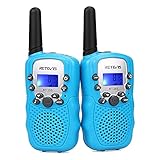 | Retevis RT388 Kids Walkie Talkies, Outdoor Toys for Kids Camping Essentials | Check Price On Amazon |
 | Cobra RX680 Walkie Talkies (2-Pack), IP54 Water Resistant Design | Check Price On Amazon |
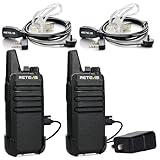 | Retevis RT22 Walkie Talkies Long Range Rechargeable with Earpiece (2 Pack) | Check Price On Amazon |
 | Midland GXT1000VP4 GMRS Two-Way Radios with Headsets, Black, 2 Pack | Check Price On Amazon |
 | Retevis RT628 Walkie Talkies for Kids,Toys Gifts for 6-12 Years Old Boys Girls,Long Range 2 Way Radio 22CH VOX,Birthday Gift,Family Walkie Talkie for Camping Hiking Indoor Outdoor | Check Price On Amazon |