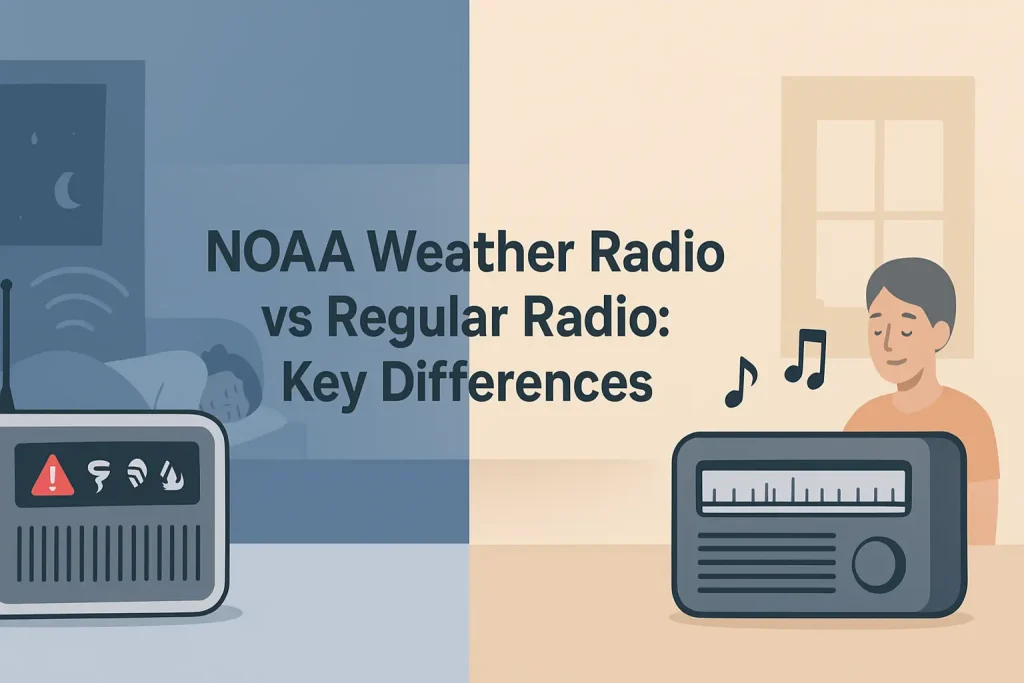
SAME weather radio codes use a 6-digit FIPS format to filter NOAA alerts down to your specific county. Without these codes, a weather radio will sound an alarm for every alert broadcast across a 40-mile radius, waking you for storms that pose no threat to your location.
Understanding how to find and program your Specific Area Message Encoding (SAME) code transforms a generic alert receiver into a precise emergency warning system. This database and guide covers how these codes work, how to locate yours, and which radios support this life-saving feature.
| Photo | Popular Portable Walkie Talkies | Price |
|---|---|---|
 | SKIWARRIOR Multifunctional Smart Wireless Ski Goggles with Walkie-Talkie, Anti-Fog Zeiss Lens, Music & Call Function (Cylindrical Blue) | Check Price On Amazon |
 | SINORISE Super Mini Walkie Talkies, Portable Two-Way Radios for Restaurants, Outdoor Sports, Retail Stores, Hospital & Travel – 3 Pack | Check Price On Amazon |
 | KOSPET Tank M4C Outdoor Smart Watch with GPS, 1.96" AMOLED Display, Built-in LED Flashlight & Walkie-Talkie, Long Battery Life, 50m Waterproof, Bluetooth Calls, 24/7 Heart Rate/Sleep Monitor | Check Price On Amazon |
 | Retevis RT15 Walkie Talkies, Portable FRS Two Way Radios Rechargeable, Durable, Compact, VOX, Key Lock, Mini Walkie Talkies for Adults and Kids, School Family Outdoor Travel Camping Hiking (3 Pack) | Check Price On Amazon |
 | Rechargeable Walkie Talkies Toys for Kids: DIY Astronaut Walkie Talkies for Boys Christmas Birthday Gifts for 3 4 5 6 7 8 9 10 Boy Walkie Talkie Outdoor Hiking Toy 2 Way Radio Camping Outdoor Game | Check Price On Amazon |
Here is a quick look at the key specifications and standards for SAME technology.
By the Numbers
SAME Weather Radio Codes – Key Specifications and Standards
Sources: NOAA National Weather Service, FCC documentation.
What Are SAME Weather Radio Codes and How Do They Work?
SAME codes are 6-digit numerical identifiers assigned to every county and independent city in the United States by the National Weather Service. The first digit identifies the subdivision, the next two digits identify the state, and the final three digits identify the specific county.
This system works because NOAA Weather Radio All Hazards (NWR) transmitters broadcast digital header data before every audible alert tone. A weather radio equipped with a SAME decoder reads this header and compares it to your programmed codes.
If the broadcast code matches your programmed code, the radio unmutes the speaker and sounds the alarm. If the codes do not match, the radio remains silent, sparing you from irrelevant alerts.
According to NOAA documentation, this digital encoding system allows for targeted warnings across 25 different alert types. These range from Tornado Warnings to Civil Emergency Messages and AMBER Alerts.
How to Find Your Specific SAME County Code
Finding your correct 6-digit code is a simple process using the official NOAA database. You can search by state, county, or zip code on the National Weather Service website.
When searching for your code, ensure you select the correct state and county combination. Large metropolitan areas often span multiple counties, so knowing your physical county is essential.
You can also find your code by entering your zip code directly into the NOAA search tool. This method is highly accurate and ensures you receive warnings for your exact location.
Why SAME Codes Are Essential for Emergency Preparedness
Programming your radio with a SAME code prevents alert fatigue, which is a dangerous state where you ignore warnings due to constant false alarms. A standard weather radio without SAME technology will alert you for every storm within a 40-mile radius of the transmitter.
This broad coverage area means you might wake up at 3 AM for a flash flood warning happening 30 miles away. Alert fatigue causes people to disable or unplug their weather radios entirely.
By utilizing SAME filtering, your radio acts as a precise localized warning system. The radio becomes a reliable tool that only sounds when a genuine threat targets your immediate area.
This happens because the S.A.M.E. decoder chip in the radio filters out non-matching digital headers before they trigger the audio alert circuit. This only occurs when the radio is properly programmed and the transmitter broadcasts the correct FIPS code.
If the code is entered incorrectly, the result is a missed alert, which you can fix by verifying the 6-digit sequence against the NOAA database. This targeted approach is what makes SAME weather radios an essential part of any emergency kit.
Top Weather Radios with SAME Programming Capability
Choosing a radio with SAME technology is critical for accurate emergency alerts. Several models offer robust programming features and reliable reception.
The Midland WR400 is a popular desktop model that allows you to program up to 25 different SAME location codes. It features a bright display, alarm clock functionality, and public alert certification.
- Key Specifications: Frequency: 162.400-162.550 MHz (7 NOAA channels).
- Alert types: 25.
- Alert memory: 25 programmable S.A.M.E. codes.
- Power: AC adapter + 4x AA battery backup.
For portable use, the Midland WR10 offers SAME programming in a compact footprint. It provides visual alert indicators and runs on backup batteries during power failures.
Understanding NOAA Alert Type Activity
NOAA weather radios broadcast alerts for a wide variety of hazards, from severe weather to civil emergencies. Understanding the frequency of different alert types helps you anticipate what your radio will most likely broadcast.
Troubleshooting SAME Code Programming Issues
If your weather radio is not alerting for your county, the most common cause is an incorrectly entered FIPS code. A single transposed digit will cause the radio to ignore the alert header entirely.
To fix this, write down your 6-digit code and compare it against the official NOAA database. Re-enter the code using your radio’s menu buttons, ensuring each digit matches exactly.
Another frequent issue is a weak signal causing the radio to miss the digital header data entirely. This happens because the S.A.M.E. decoder requires a strong, clean signal to reliably read the transmitted FIPS code.
This only occurs when the radio is too far from the NWR transmitter or a building is blocking the signal. If the signal is weak, the result is a missed alert, which you can fix by moving the radio near a window or upgrading to a weather radio external antenna.
If you are interested in learning more about the broadcast bands, our guide on NOAA weather radio broadcast frequencies provides a detailed breakdown. Ensuring you are on the correct frequency is the first step before troubleshooting your codes.
Can I Program Multiple SAME Codes on One Radio?
Yes, you can program multiple SAME codes on a single weather radio to monitor surrounding counties. Most modern SAME-equipped radios allow you to enter anywhere from 10 to 25 different location codes.
Programmers often enter the codes for their home county, their work county, and the adjacent county where severe weather typically approaches. This strategy ensures advanced warning without triggering alerts for areas too far away to matter.
However, adding too many codes defeats the purpose of the SAME filtering system. Limit your programmed codes to areas within a 20-mile radius of your daily locations.
How Do I Know If My SAME Code Is Working Correctly?
You can test your SAME programming by utilizing the weekly test function on your weather radio. The National Weather Service broadcasts a Required Weekly Test (RWT) header, usually between 11 AM and noon on Wednesdays.
If your radio unmutes and announces the weekly test, your programming is functioning correctly. Some radios have a switch to ignore these weekly tests, so check your settings if you do not hear it.
You can learn more about radio operation and alert types in our comprehensive resource on how to use a weather radio. This ensures you understand every function before an emergency strikes.
What Is the Difference Between FIPS and SAME Codes?
FIPS (Federal Information Processing Standards) codes are the official government numerical designations for states and counties. SAME codes are simply the application of these FIPS codes for emergency alert broadcasting.
Every SAME code is a FIPS code, but not every FIPS code is used for weather alerts. The NWS utilizes the 6-digit county-level FIPS code to identify the geographic area for a weather warning.
If you want to understand the broader context of this system, our article on what is a S.A.M.E. weather radio covers the technology in depth. This distinction helps clarifies why your radio requires a specific 6-digit sequence.
Do SAME Codes Work During a Power Outage?
SAME codes continue to function during a power outage as long as your weather radio has backup batteries. The programming is stored in the radio’s non-volatile memory and does not rely on AC power to remember your location.
When the AC power fails, the radio automatically switches to battery power, maintaining all your SAME settings and alert capabilities. This is why keeping fresh backup batteries in your radio is critical for emergency preparedness.
Are SAME Codes the Same as NOAA Weather Radio Frequencies?
No, SAME codes are entirely different from NOAA weather radio frequencies. Frequencies are the radio wavelengths you tune into to hear the broadcast, while SAME codes are the digital data headers broadcast over those frequencies.
NOAA Weather Radio broadcasts on 7 specific frequencies between 162.400 and 162.550 MHz. You must tune your radio to the correct local frequency first, then program the SAME code to filter the alerts you hear on that frequency.
Can I Use a Walkie-Talkie to Receive SAME Alerts?
Standard consumer walkie-talkies operating on FRS, GMRS, or amateur bands cannot decode SAME alerts. These radios lack the specific decoder chip required to read the 6-digit FIPS header data from NOAA broadcasts.
While some Baofeng UV-5R models can receive the 162 MHz weather audio, they will not trigger an alarm based on your county code. To receive targeted alerts, you must have a dedicated weather radio or a high-end scanner with SAME decoding.
For specific handheld options designed for emergencies, check out our review of the best handheld weather radios. These models offer true SAME capability in a portable format.
Why Does My Weather Radio Alert for Counties I Did Not Program?
If your weather radio alerts for unprogrammed counties, you likely have the radio set to “All Counties” mode instead of “Single” or “Multiple” mode. In the all-counties mode, the radio ignores your programmed codes and sounds every alert.
Check your radio’s menu settings to ensure the location filter is actively turned on. You must also verify that the specific county codes were saved to memory after you entered them.
A comprehensive guide to programming S.A.M.E. codes can help you navigate your specific model’s menu structure. Following the exact keystrokes ensures the filter engages properly.
For broader recommendations on upgrading your equipment, our list of the best weather radios highlights models with the most reliable alert filtering. Choosing the right hardware prevents these configuration headaches.
If you are new to this technology, you might first want to read up on what is NOAA weather radio to build a solid foundation. Understanding the broadcast network makes programming your codes much easier.
Conclusion
Programming your weather radio with the correct 6-digit SAME code ensures you only receive life-saving alerts for your specific county. This targeted filtering prevents alert fatigue and keeps you informed during true emergencies. Find your code in the NOAA database, enter it into your radio’s memory, and verify it during the weekly test. Taking these steps guarantees your emergency communication equipment functions exactly when you need it most.
| Photo | TOP RATED WALKIE TALKIES | Price |
|---|---|---|
 | Retevis RT628 Walkie Talkies for Kids,Toy Gifts for 6-12 Year Old Boys Girls,Kid Gifts Walkie Talkie for Adults Outdoor Camping Hiking(Silvery 1 Pair) | Check Price On Amazon |
 | Cobra ACXT545 Weather-Resistant Walkie Talkies - Rechargeable, 22 Channels, Long Range 28-Mile Two-Way Radio Set (2-Pack) | Check Price On Amazon |
 | Retevis RT388 Kids Walkie Talkies, Toys for 6 7 8 9 12 Year Old Boys, 22 CH 2 Way Radio Backlit LCD Flashlight, Blue Walkie Talkies Outdoor Camping Games Toys for Kids 8-12 Boys Gifts(Blue, 2 Pack) | Check Price On Amazon |
 | Cobra RX680 Walkie Talkies (2-Pack) - Rugged & Splashproof Two Way Radios Long Range, IP54 Water Resistant Design, 60 Pre-Programmed Channels, Weather Alerts, Included Charging Dock (Black/Orange) | Check Price On Amazon |
 | Retevis RT22 Walkie Talkies, Mini 2 Way Radio Rechargeable, VOX Handsfree, Portable, Two-Way Radios Long Range with Earpiece, for Family Road Trip Camping Hiking Skiing(2 Pack, Black) | Check Price On Amazon |
 | Midland GXT1000VP4 GMRS Two-Way Radio (50 Channel, Long Range, 142 Privacy Codes, SOS, NOAA, Rechargeable Nickel Battery, Black/Silver 2-Pack) | Check Price On Amazon |
 | Retevis RT628 Walkie Talkies for Kids,Toys Gifts for 6-12 Years Old Boys Girls,Long Range 2 Way Radio 22CH VOX,Birthday Gift,Family Walkie Talkie for Camping Hiking Indoor Outdoor | Check Price On Amazon |