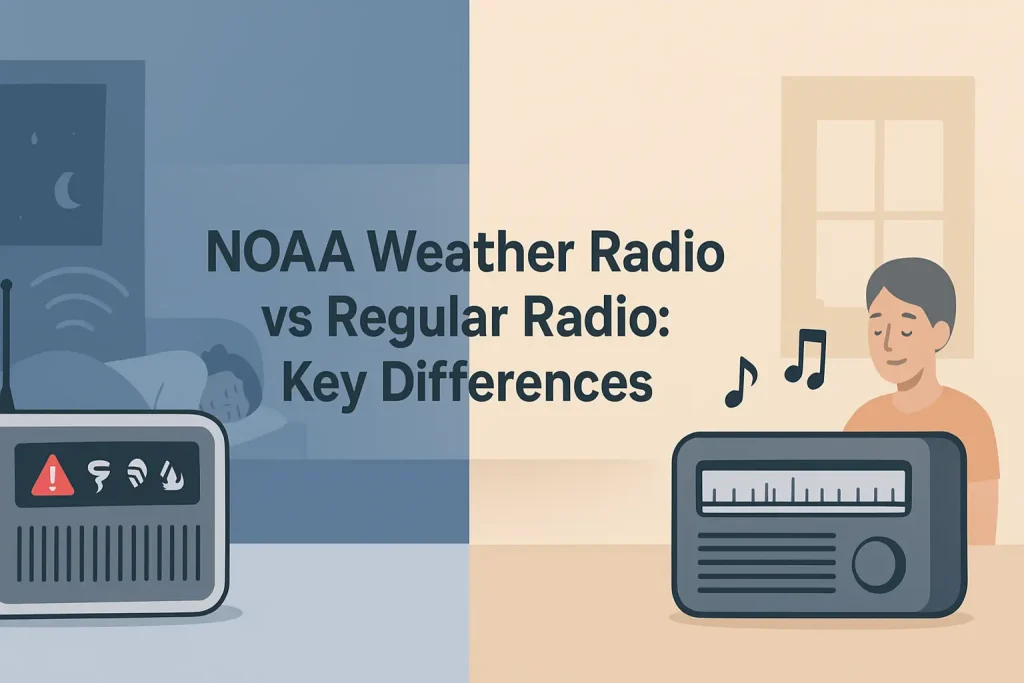
That weather radio you bought at the hardware store will wake you up for every tornado warning in your state if it lacks S.A.M.E. technology. NOAA Weather Radio All Hazards broadcasts continuous emergency warnings 24 hours a day on seven dedicated frequencies between 162.400 and 162.550 MHz.
This guide covers S.A.M.E. programmable desktop receivers, portable hand-crank units, and NOAA-certified alert radios. We examined S.A.M.E. programming, power backup systems, and alert siren decibel levels.
| Photo | Popular Portable Walkie Talkies | Price |
|---|---|---|
 | SKIWARRIOR Multifunctional Smart Wireless Ski Goggles with Walkie-Talkie, Anti-Fog Zeiss Lens, Music & Call Function (Cylindrical Blue) | Check Price On Amazon |
 | SINORISE Super Mini Walkie Talkies, Portable Two-Way Radios for Restaurants, Outdoor Sports, Retail Stores, Hospital & Travel – 3 Pack | Check Price On Amazon |
 | KOSPET Tank M4C Outdoor Smart Watch with GPS, 1.96" AMOLED Display, Built-in LED Flashlight & Walkie-Talkie, Long Battery Life, 50m Waterproof, Bluetooth Calls, 24/7 Heart Rate/Sleep Monitor | Check Price On Amazon |
 | Retevis RT15 Walkie Talkies, Portable FRS Two Way Radios Rechargeable, Durable, Compact, VOX, Key Lock, Mini Walkie Talkies for Adults and Kids, School Family Outdoor Travel Camping Hiking (3 Pack) | Check Price On Amazon |
 | Rechargeable Walkie Talkies Toys for Kids: DIY Astronaut Walkie Talkies for Boys Christmas Birthday Gifts for 3 4 5 6 7 8 9 10 Boy Walkie Talkie Outdoor Hiking Toy 2 Way Radio Camping Outdoor Game | Check Price On Amazon |
By the Numbers
NOAA Weather Radio – Key Specifications and Standards
Sources: NOAA NWR documentation, FCC Part 95
What Makes a NOAA Weather Radio Essential for Emergency Preparedness?
A NOAA weather radio receives direct radio signals from the National Weather Service on frequencies between 162.400 and 162.550 MHz. These radios trigger a loud siren when the NWS issues a severe weather warning for your area.
They function even when your cell phone is dead or cellular towers are down. According to NOAA NWR documentation, the network covers 95% of the US population.
A public warning system consists of the NWR transmitter network, the S.A.M.E. encoding system, and the EAS receiver hardware in your radio. S.A.M.E. (Specific Area Message Encoding) technology works with your radio’s alert circuit to prevent the speaker from opening unless the received signal matches your programmed 6-digit FIPS code.
If you do not program a S.A.M.E. code, the result is false alarms for distant counties. Fix it by finding your county FIPS code on the NOAA website.
This happens because NOAA transmitters broadcast alerts across a 40-mile radius. The signal only filters to your specific area when matched against the FIPS code.
Proper S.A.M.E. programming ensures you only hear alerts relevant to your exact county.
Top NOAA-Certified Weather Radios Tested and Compared
Use the table below to compare top weather radio features and choose the right model for your home or travel kit.
Product Comparison
NOAA Weather Radios – At-a-Glance Specs Comparison
Key specs compared across top picks. Source: manufacturer data sheets, FCC Part 95.
| Model | S.A.M.E. Codes | Power Source | Alert Type | Price |
|---|---|---|---|---|
| Midland WR400 | 25 | AC / AA | S.A.M.E. | $65 |
| Midland WR120 | 25 | AC / AA | S.A.M.E. | $35 |
| Uniden BC365CRS | None | AC / AA | Basic | $90 |
| Eton FRX3+ | None | Solar / Crank | Basic | $50 |
| Midland ER310 | None | Solar / Crank | Basic | $70 |
1. Midland WR400 Deluxe NOAA Weather Radio
The Midland WR400 weather radio represents the best overall desktop unit for most households. It offers full S.A.M.E. programming and AM/FM reception.
It features a large backlit display that shows alert text even in the dark. The radio stores up to 25 specific county codes.
Key Specifications:
- Frequency: 162.400 to 162.550 MHz (7 NOAA channels)
- S.A.M.E. memory: 25 programmable locations
- Power: AC adapter + 4x AA battery backup
- Alert types: 80+ EAS alerts
2. Midland WR120 NOAA Weather Alert Radio
The Midland WR120 is the best budget desktop radio available. It provides the same S.A.M.E. filtering as the WR400 without the AM/FM radio features.
It uses a tri-color alert indicator to show the severity of the warning. You can program up to 25 county codes into the memory bank.
Key Specifications:
- Frequency: 162.400 to 162.550 MHz (7 NOAA channels)
- S.A.M.E. memory: 25 programmable locations
- Power: AC adapter + 3x AA battery backup
- Alert types: 80+ EAS alerts
3. Eton FRX3+ Hand-Crank Weather Radio
The Eton FRX3+ weather radio is ideal for portable use and power outages. It features a hand crank, solar panel, and rechargeable battery.
It receives all 7 NOAA channels but lacks S.A.M.E. technology. You must leave it on to hear alerts.
Key Specifications:
- Frequency: 162.400 to 162.550 MHz (7 NOAA channels)
- S.A.M.E. memory: None
- Power: Rechargeable battery / Hand crank / Solar
- Alert types: Basic siren
4. Midland ER310 Emergency Crank Weather Radio
The Midland ER310 offers superior battery life compared to the Eton FRX3+. It includes a 2600 mAh battery that charges your phone.
It uses a hand crank and solar panel for off-grid power. The radio lacks S.A.M.E. filtering but detects weak signals automatically.
Key Specifications:
- Frequency: 162.400 to 162.550 MHz (7 NOAA channels)
- Power: 2600 mAh battery / Hand crank / Solar
- Battery life: Up to 32 hours
- Extras: Built-in flashlight and SOS beacon
5. Sangean CL-100 NOAA Public Alert Radio
The Sangean CL-100 delivers high-quality audio and advanced S.A.M.E. programming. It functions as a premium desktop receiver.
It stores up to 20 FIPS codes for multi-county monitoring. The display shows specific alert text and expiration times.
Key Specifications:
- Frequency: 162.400 to 162.550 MHz (7 NOAA channels)
- S.A.M.E. memory: 20 programmable locations
- Power: AC adapter + 4x C battery backup
- Alert types: 80+ EAS alerts
6 through 10: Honorable Mentions
The Reecom R-1650C offers a wide 30-code S.A.M.E. memory. The Midland ER210 provides a smaller hand-crank alternative to the ER310.
The Uniden BC365CRS is a scanner that includes the NOAA weather band. The RunningSnail emergency radio is a budget crank model.
The Kaito KA500 includes multiple charging inputs and a shortwave band. These models fit specific use cases but lack the full feature set of the top five.
Choose a radio based on whether you prioritize S.A.M.E. filtering or off-grid power generation.
How to Program S.A.M.E. Codes on Your Weather Radio
You must program your 6-digit S.A.M.E. FIPS code to prevent false alarms from neighboring counties. This code tells the radio which specific geographic area matches the incoming alert signal.
According to NOAA NWR documentation, FIPS codes consist of a zero, a two-digit state code, and a three-digit county code. You can find your code on the NOAA website.
This happens because the radio analyzes the digital header attached to every broadcast. The radio only unmutes the siren when the transmitted FIPS code matches your stored value.
This only occurs when the radio receives a clean signal on the 162.400 to 162.550 MHz band. If the signal is weak, the radio may fail to decode the header.
If the radio fails to decode the header, the result is a missed alert. Fix it by repositioning the radio near a window to improve antenna reception.
Enter the code through the menu system on your Midland or Sangean radio. Always test the alert after programming to verify the filter works.
Midland ER210 vs ER310: Which Emergency Radio Should You Buy?
The Midland ER210 and ER310 are both hand-crank emergency radios, but they differ in battery capacity and flashlight output. The ER310 is a type of emergency receiver with a larger power reserve.
The ER210 features a 2000 mAh battery and a smaller profile. The ER310 features a 2600 mAh battery and a brighter Cree LED flashlight.
Both radios receive the 7 NOAA frequencies between 162.400 and 162.550 MHz. Neither model includes S.A.M.E. technology.
According to manufacturer data sheets, the ER310 provides up to 32 hours of runtime on a full charge. The ER210 provides up to 25 hours.
If you need extended off-grid power and a better flashlight, choose the ER310. If you want a lighter, more compact radio for short trips, choose the ER210.
Complete Buying Guide: How to Choose a Weather Radio
Choosing a weather radio depends on whether you need a stationary alert system or a portable emergency receiver. Desktop models with S.A.M.E. technology function differently than portable hand-crank radios.
A NOAA weather radio consists of a receiver circuit, a whip antenna, a S.A.M.E. decoder chip, and a power supply. You must evaluate each component to ensure reliable performance.
S.A.M.E. technology differs from basic alert mode in how it handles incoming signals. S.A.M.E. filters alerts by county, while basic mode triggers a siren for any alert within the 40-mile transmitter radius.
According to FCC Part 95, NOAA frequencies occupy the 162.400 to 162.550 MHz band. You need a receiver explicitly designed to scan these seven specific channels.
This happens because standard AM/FM radios cannot tune to the 162 MHz band. The receiver hardware must match the NOAA transmission frequency.
If the radio lacks a dedicated weather band, the result is no reception at all. Fix it by buying a certified NOAA Public Alert radio.
For home use, prioritize S.A.M.E. programming and battery backup. For outdoor use, prioritize hand-crank and solar charging capabilities.
Common Troubles with Weather Radios and How to Fix Them
Your weather radio might fail to trigger an alert even when the National Weather Service issues a warning. This usually happens due to weak signal reception or incorrect S.A.M.E. programming.
A dead zone occurs when buildings block the 162 MHz signal from reaching your antenna. If you live in a concrete building, signal attenuation reduces effective range regardless of transmitter power.
Fix dead zones by moving the radio near a window facing the nearest NOAA transmitter. You can also attach an external antenna if your radio has a coaxial port.
If your radio triggers constantly for distant storms, you have a S.A.M.E. programming error. Re-enter your specific 6-digit FIPS code to fix false alarms.
If the siren sounds but no voice follows, the radio is likely receiving only the header data without the full broadcast audio. This indicates severe signal interference.
Always keep fresh AA batteries in your desktop radio. If the AC power fails during a storm, the battery backup keeps the receiver active.
Do weather radios work when the power and internet are out?
Yes, weather radios work when the power and internet are out because they receive direct radio signals from NOAA transmitters on the 162.400 to 162.550 MHz band. They do not need internet or cellular service to function.
Desktop models include battery backup systems to maintain power during outages. Hand-crank and solar models generate their own power.
Keep extra batteries in your emergency kit. A weather radio is useless if the backup batteries die.
Can I use a Baofeng UV-5R as a weather radio?
Yes, you can use a Baofeng UV-5R as a weather radio because it receives the 162 MHz VHF weather band. However, it lacks S.A.M.E. technology and will not trigger an alert siren automatically.
You must leave the radio scanning or monitoring the weather frequency manually to hear updates. A dedicated NOAA receiver remains better for emergency alerts.
According to FCC Part 97, the Baofeng UV-5R is an amateur radio transmitter. Always check local rules regarding transmit use.
What is the difference between a weather radio and a regular AM/FM radio?
A weather radio tunes exclusively to the seven NOAA frequencies between 162.400 and 162.550 MHz. A regular AM/FM radio tunes to commercial broadcast stations.
Weather radios include alert features like S.A.M.E. decoding and loud sirens. Regular radios do not have automatic emergency alert hardware.
Commercial radio stations often delay weather warnings. A NOAA receiver delivers the warning instantly from the National Weather Service.
How do I find my S.A.M.E. code for my county?
You can find your 6-digit S.A.M.E. code on the NOAA Weather Radio website by entering your state and county. The code corresponds to your specific geographic area.
Enter this code into your weather radio menu to filter alerts. This prevents your radio from sounding the siren for distant counties.
The code includes a leading zero, a two-digit state identifier, and a three-digit county identifier. Write this down in your emergency kit.
Do I need a license to operate a NOAA weather radio?
No, you do not need a license to operate a NOAA weather radio. These radios are receive-only devices.
According to FCC Part 95, only transmitting devices like GMRS radios require licensing. A weather radio poses no regulatory restrictions.
You can legally own and operate as many weather radios as you want. The FCC regulates transmitters, not receivers.
Why does my weather radio beep randomly at night?
Your weather radio beeps randomly at night because it receives a required weekly test from the National Weather Service. It is designed to alert you to these tests to confirm receiver functionality.
You can disable the test alert in your radio menu. However, disabling tests may also disable some actual warnings depending on the model.
Read your manual to see if you can mute the weekly test while keeping tornado and flash flood warnings active.
What does the S.A.M.E. technology actually do?
S.A.M.E. (Specific Area Message Encoding) technology filters incoming NOAA alerts by matching a 6-digit FIPS code programmed into your radio. It prevents your radio from triggering for alerts outside your county.
Without S.A.M.E., your radio will alarm for any alert within the 40-mile transmitter radius. This leads to alarm fatigue and ignored warnings.
S.A.M.E. works by decoding a digital burst transmitted before the audio alert. Your radio compares this burst to your saved codes.
Is a hand-crank weather radio worth buying?
A hand-crank weather radio is worth buying for extended power outages and outdoor adventures where grid power is unavailable. The crank charges an internal battery to power the receiver.
However, hand-crank radios often lack the full S.A.M.E. programming found in desktop units. They are best used as secondary emergency receivers.
If you want a full home alert system, buy a desktop S.A.M.E. radio. If you want a portable survival tool, buy a hand-crank radio.
Will a weather radio pick up AMBER alerts?
Yes, a NOAA weather radio will pick up AMBER alerts if your local NWS office broadcasts them. The EAS system routes child abduction emergencies through the NOAA network.
You can usually disable AMBER alerts in the radio menu. Civil emergency warnings cannot always be disabled.
The radio stores these alerts in its memory bank. You can review the text on the display screen.
Can I use an FRS walkie-talkie to receive weather alerts?
Yes, many FRS and GMRS walkie-talkies feature a WX band button to receive NOAA frequencies. They can monitor the 162 MHz band.
However, walkie-talkies do not have S.A.M.E. decoding or alert sirens. You will only hear weather updates if you manually tune to the channel.
Walkie-talkies operate on the 462 MHz band while NOAA broadcasts on 162 MHz. The hardware includes a separate receiver for the weather band.
When you need reliable emergency communication, a dedicated NOAA weather radio for your home provides instant warnings. The ability to filter alerts by county using S.A.M.E. technology prevents dangerous alarm fatigue.
For outdoor use or situations where grid power fails, a hand-crank or solar emergency weather radio ensures you maintain signal reception. These self-powered models keep you informed even when your phone battery dies.
Before buying a desktop unit, read our detailed Midland WR120B review to see if this budget model meets your needs. If you need more features, the advanced Uniden weather radio models offer scanner capabilities alongside standard alert functions.
Those who prioritize accessibility should explore how a weather radio strobe light for the deaf provides visual alerts. If you want a reliable portable unit, our Eton FRX3+ review highlights the best hand-crank features.
If you need maximum battery life in the field, our comparison of the Midland ER210 vs ER310 breaks down the differences. Finally, understanding how much a NOAA weather radio costs helps you budget for the right combination of features and durability.
NOAA weather radios deliver life-saving alerts directly from the National Weather Service on the 162.400 to 162.550 MHz band. By combining S.A.M.E. programming with reliable battery backup, you eliminate false alarms while ensuring total preparedness.
Choose a certified desktop model like the Midland WR400 for home defense against tornadoes and severe storms. Keep a hand-crank receiver like the Midland ER310 in your go-bag for off-grid power. Program your FIPS code today and test the alert siren immediately.
| Photo | TOP RATED WALKIE TALKIES | Price |
|---|---|---|
 | Retevis RT628 Walkie Talkies for Kids,Toy Gifts for 6-12 Year Old Boys Girls,Kid Gifts Walkie Talkie for Adults Outdoor Camping Hiking(Silvery 1 Pair) | Check Price On Amazon |
 | Cobra ACXT545 Weather-Resistant Walkie Talkies - Rechargeable, 22 Channels, Long Range 28-Mile Two-Way Radio Set (2-Pack) | Check Price On Amazon |
 | Retevis RT388 Kids Walkie Talkies, Toys for 6 7 8 9 12 Year Old Boys, 22 CH 2 Way Radio Backlit LCD Flashlight, Blue Walkie Talkies Outdoor Camping Games Toys for Kids 8-12 Boys Gifts(Blue, 2 Pack) | Check Price On Amazon |
 | Cobra RX680 Walkie Talkies (2-Pack) - Rugged & Splashproof Two Way Radios Long Range, IP54 Water Resistant Design, 60 Pre-Programmed Channels, Weather Alerts, Included Charging Dock (Black/Orange) | Check Price On Amazon |
 | Retevis RT22 Walkie Talkies, Mini 2 Way Radio Rechargeable, VOX Handsfree, Portable, Two-Way Radios Long Range with Earpiece, for Family Road Trip Camping Hiking Skiing(2 Pack, Black) | Check Price On Amazon |
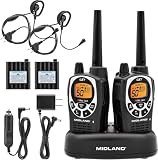 | Midland GXT1000VP4 GMRS Two-Way Radio (50 Channel, Long Range, 142 Privacy Codes, SOS, NOAA, Rechargeable Nickel Battery, Black/Silver 2-Pack) | Check Price On Amazon |
 | Retevis RT628 Walkie Talkies for Kids,Toys Gifts for 6-12 Years Old Boys Girls,Long Range 2 Way Radio 22CH VOX,Birthday Gift,Family Walkie Talkie for Camping Hiking Indoor Outdoor | Check Price On Amazon |