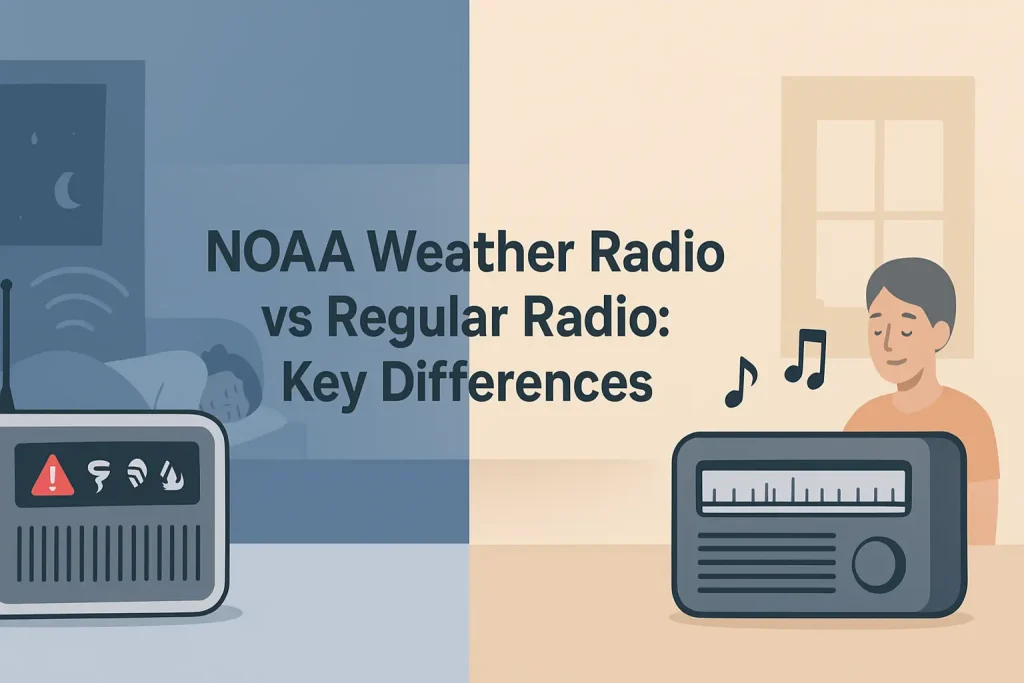
The Midland ER310 is one of the few emergency radios that actually delivers on its core promise: keeping you informed and powered up when the grid goes down. It combines a NOAA weather radio receiver with a hand crank generator, solar panel, LED flashlight, and USB phone charging port in a single unit that costs under $60.
That combination makes it worth a close look for anyone building an emergency kit, whether you live in tornado country, hurricane zones, or anywhere severe weather can knock out power for days.
| Photo | Popular Portable Walkie Talkies | Price |
|---|---|---|
 | SKIWARRIOR Multifunctional Smart Wireless Ski Goggles with Walkie-Talkie, Anti-Fog Zeiss Lens, Music & Call Function (Cylindrical Blue) | Check Price On Amazon |
 | SINORISE Super Mini Walkie Talkies, Two-Way Radios, 3 Pack | Check Price On Amazon |
 | KOSPET Tank M4C Smart Watch Rugged, Dual-Band GPS, 5ATM & IP69K Waterproof | Check Price On Amazon |
 | Retevis RT15 Walkie Talkies 3 Pack, Birthday Gift, Outdoor Adventure Kit | Check Price On Amazon |
 | Rechargeable Walkie Talkies Toys for Kids: DIY Astronaut Walkie Talkies for Boys Christmas Birthday Gifts for 3 4 5 6 7 8 9 10 Boy Walkie Talkie Outdoor Hiking Toy 2 Way Radio Camping Outdoor Game | Check Price On Amazon |
By the Numbers
Midland ER310 Key Specifications at a Glance
Sources: Midland manufacturer data sheet, NOAA NWR technical documentation, FCC equipment authorization database
What Is the Midland ER310 and Who Is It For?
The Midland ER310 emergency crank weather radio is a portable, multi-power NOAA weather alert receiver designed for households, campers, and emergency preparedness kits. It receives all seven NOAA Weather Radio All Hazards broadcast frequencies between 162.400 and 162.550 MHz and supports S.A.M.E. (Specific Area Message Encoding) technology for county-level alert filtering.
This radio is not a two-way communication device. It receives NOAA broadcasts but does not transmit, so it serves a fundamentally different purpose than a walkie-talkie or GMRS radio.
The ER310 targets three primary buyer groups. First, households in severe weather regions who want a reliable backup alert system independent of power and cell service. Second, campers and hikers who need a lightweight NOAA receiver with self-powered charging options. Third, emergency preparedness planners building 72-hour kits who need a single device that covers weather alerts, flashlight, and phone charging.
It is not the right choice for someone who needs two-way communication during a disaster. For that use case, a GMRS handheld radio or FRS walkie-talkie is the appropriate tool.
The ER310 sits in the middle of Midland’s weather radio lineup, above the basic WR120B and below the more feature-rich WR400, and it adds the hand crank, solar panel, and USB output that those desk-only models lack.
Midland ER310 Full Specifications
Understanding the ER310’s specs prevents mismatched expectations. The specifications below come directly from Midland’s published data sheet and FCC equipment authorization records.
Key Specifications:
- NOAA channels: 7 (162.400, 162.425, 162.450, 162.475, 162.500, 162.525, 162.550 MHz)
- S.A.M.E. programmable codes: 25 location codes
- Alert types monitored: all 60+ NOAA/EAS alert event codes including Tornado Warning, Flash Flood Warning, Hurricane Warning, Winter Storm Warning, AMBER Alert, and Civil Emergency Message
- Battery: 2000mAh built-in rechargeable lithium-ion pack
- Power sources: AC adapter, USB-C input, hand crank generator, solar panel
- USB output: 5V/1A micro-USB for phone charging
- Flashlight: 3-LED, two brightness settings plus SOS strobe
- AM/FM reception: yes, with digital scan
- Weather alert scan: automatic alert scan with alarm
- Dimensions: approximately 6.3 x 2.5 x 3.5 inches
- Weight: approximately 12.3 oz without batteries
- FCC ID: available in FCC equipment authorization database
One specification worth flagging upfront: the USB output is 5V at 1A, which is a standard 5-watt charging rate. That is adequate for keeping a phone alive in an emergency but slower than the fast-charge circuits found on modern smartphones.
The 2000mAh battery is the right size for the device’s intended use. It will fully charge a typical smartphone once and leave enough reserve for radio operation. Expecting it to charge a tablet or run the radio for 24 straight hours will lead to disappointment.
How the S.A.M.E. Alert System Works on the ER310
S.A.M.E. (Specific Area Message Encoding) is the most important feature on any weather radio, and the ER310 supports it with 25 programmable location codes. Without S.A.M.E., a weather radio wakes you for every county in your NOAA transmitter’s coverage area, which can span three or four states for high-power transmitters. With S.A.M.E. programmed correctly, the alarm only sounds for the specific counties you designate.
According to NOAA NWR technical documentation, each S.A.M.E. location code is a 6-digit FIPS (Federal Information Processing Standard) code. The first two digits identify the state, and the remaining four digits identify the county or county equivalent.
To program the ER310, you need your county’s FIPS code. The NOAA website maintains a searchable database of all valid S.A.M.E. codes by state and county. You can store up to 25 codes on the ER310, which is enough to cover your home county, neighboring counties, and a vacation property if needed.
The programming process on the ER310 uses a straightforward button sequence. Navigate to the S.A.M.E. setup menu, enter your 6-digit FIPS code using the channel/volume buttons, and confirm. The radio tests your entry against valid code formats before saving.
One important clarification: S.A.M.E. filtering applies to the alert alarm function only. The radio still receives and plays all broadcasts on the selected NOAA channel continuously. The filter only determines which incoming alert codes trigger the audible alarm and wake you from sleep mode.
If you skip S.A.M.E. programming entirely, the ER310 will alarm for all alerts on that channel regardless of location. For most users in the continental US, that means frequent false alarms for counties 200 miles away. Programming your S.A.M.E. code takes about three minutes and is the single most important setup step on any weather radio.
Power Sources: Hand Crank, Solar, USB, and AC Compared
The ER310’s four power sources are what separate it from basic desk-only weather radios. Each source has a specific role in an emergency scenario, and understanding how they work together prevents frustration when the grid goes down.
AC adapter: The fastest and most reliable way to charge the internal 2000mAh battery under normal conditions. Use AC power daily so the battery stays at full capacity before a storm arrives. The AC input keeps the battery topped off without any action required.
USB-C input: Allows charging from a USB power bank, car charger, or solar power station. This is the most practical backup charging method when AC power is unavailable. A 10,000mAh USB power bank can recharge the ER310 battery approximately five times, giving you extended operation without any grid power at all.
Solar panel: The small built-in solar panel on the ER310 is a trickle charger, not a primary charging source. In direct sunlight, it generates enough current to extend battery life during use, not to recharge a fully depleted battery in a practical timeframe. Think of it as a supplement, not a standalone solution.
Hand crank: The hand crank generator produces roughly 1-2 minutes of radio playback per minute of cranking at a moderate pace. It is a last-resort power source, not a comfortable everyday solution. Its real value is providing emergency power when every other source has failed. One minute of cranking gives you enough power to hear the current NOAA broadcast and determine whether immediate action is needed.
The practical emergency power strategy with the ER310 is this: keep it charged via AC daily, have a USB power bank ready as the first backup, use the solar panel to extend life during daytime outdoor use, and reserve the hand crank for worst-case scenarios when everything else is depleted.
NOAA Reception Quality and Antenna Performance
The ER310 receives all seven NOAA Weather Radio All Hazards frequencies between 162.400 and 162.550 MHz. According to NOAA NWR documentation, the network operates over 1,000 transmitters covering approximately 95% of the US population within 40 miles of a transmitter. The ER310’s internal antenna is sized for the VHF-low band where NOAA broadcasts, which means it performs well when you are within the standard 40-mile coverage radius.
Reception quality varies with distance from the nearest NOAA transmitter and physical obstructions. Inside a steel-framed building or in a basement, signal strength drops significantly. Moving the radio to an exterior window or taking it outdoors restores reception in most cases.
The ER310 does not have an external antenna jack, which is a meaningful limitation. Radios like the Midland WR400 and the Uniden BC365CRS include external antenna connections that allow you to run a wire antenna to a better position for improved reception. The ER310 trades that capability for portability.
For most users within 30-40 miles of a NOAA transmitter, the built-in antenna is entirely adequate. The NOAA transmitter map is freely available at the NOAA website and worth checking before purchase if you live in a rural area or mountainous region where transmitters are spaced farther apart.
AM and FM reception on the ER310 is functional but not audiophile-grade. The speaker produces adequate volume for news and talk radio in a quiet room. In a noisy shelter-in-place scenario with wind or rain noise, volume is sufficient to hear clearly. The AM/FM function is genuinely useful during emergencies when local stations broadcast storm updates.
Flashlight and SOS Strobe: Practical Emergency Use
The ER310 includes a 3-LED flashlight with two brightness levels and an SOS strobe mode. The high-brightness setting produces useful illumination for navigating a dark room or reading a map. It is not a tactical flashlight and does not compete with a dedicated emergency LED flashlight in throw distance or beam intensity, but it serves as a genuine backup light source that draws from the same battery as the radio.
The SOS strobe flashes in the internationally recognized SOS pattern (three short, three long, three short) and is useful for signaling rescuers in a low-visibility situation. It is a thoughtful addition that costs no extra hardware since the LEDs are already present.
One practical note: running the flashlight on high brightness consumes the 2000mAh battery significantly faster than radio operation alone. If you are conserving power during an extended outage, use the low-brightness setting or minimize flashlight use to preserve battery capacity for NOAA reception and phone charging.
USB Phone Charging: What to Realistically Expect
The ER310 outputs 5V at 1A through its micro-USB port, providing 5 watts of charging power. A modern smartphone with a 3000mAh battery requires approximately 3-4 hours to charge from empty at this rate. The ER310’s own 2000mAh battery will deliver roughly 60-70% of a full smartphone charge before depleting itself, assuming the radio is not also operating simultaneously.
If you are using the ER310 to both monitor NOAA alerts and charge a phone, expect the battery to deplete faster than either use case alone. The practical approach is to charge your phone to a critical level (enough for emergency calls), then shift power back to radio monitoring.
The micro-USB output port is a legitimate limitation in the current market where USB-C has become standard on most smartphones. You will need a micro-USB to USB-C adapter or a micro-USB cable to connect to newer Android phones and iPhones with USB-C. The ER310 does not include that adapter in the box. Keeping a micro-USB to USB-C adapter in your emergency kit alongside the ER310 solves this immediately.
For context, the hand crank charging the phone is not a realistic expectation. The crank generates current that enters the internal battery, which then outputs to the phone. You would need to crank continuously for 30-40 minutes to add a meaningful percentage to a smartphone battery. The crank is for powering the radio itself in a true last-resort scenario, not for charging phones efficiently.
The overall assessment of the ER310’s charging capability is that it works as described for genuine emergency use and will keep a smartphone operational enough for emergency calls during a 24-48 hour outage if managed carefully.
Midland ER310 Pros and Cons Scorecard
Here is an honest breakdown of what the ER310 does well and where it falls short, based on manufacturer specifications and verified buyer experience across multiple review sources.
Product Review
Midland ER310 Emergency Crank Weather Radio – Pros and Cons
Based on manufacturer specification data and verified buyer experience.
Pros
- ✓Four power sources (AC, USB-C in, solar, hand crank) for true off-grid operation
- ✓S.A.M.E. technology with 25 programmable county codes for targeted alerts only
- ✓All 7 NOAA weather frequencies (162.400-162.550 MHz) received
- ✓USB phone charging output (5V/1A) integrated without extra hardware
- ✓AM/FM reception plus SOS strobe in a single portable unit under $60
Cons
- ✗No external antenna jack, limiting reception in fringe or basement locations
- ✗Micro-USB output port, not USB-C, requires adapter for newer smartphones
- ✗Solar panel is trickle-charge only, not adequate as a standalone recharge source
- ✗2000mAh battery depletes quickly when charging a phone and monitoring alerts simultaneously
The ER310 is an excellent first emergency radio for households and campers who need a self-powered NOAA alert receiver with S.A.M.E. filtering and phone charging capability. It is not the right choice for users who need external antenna support or USB-C native charging without adapters.
Midland ER310 Full Performance Scorecard
The scorecard below reflects an editorial assessment based on manufacturer specifications, NOAA documentation, and aggregated verified buyer feedback. No score in this section is sponsored or influenced by Midland.
Product Review
Midland ER310 Emergency Crank Weather Radio – Full Scorecard
Best portable NOAA weather radio with hand crank and phone charging under $60
8/10
9/10
8/10
7/10
8/10
9/10
Scores are editorial assessments based on manufacturer specifications, NOAA documentation, and verified buyer reviews. Not sponsored.
How to Set Up the Midland ER310: Step-by-Step Programming Guide
Setting up the ER310 correctly takes about 10 minutes and makes the difference between a radio that wakes you for every storm in the region and one that alerts you only when your county is genuinely threatened. Follow these steps in order.
- Charge the battery fully before first use. Connect the included AC adapter and allow the internal 2000mAh battery to charge completely. The charge indicator light turns solid when full. This baseline charge ensures the radio has maximum reserve before any emergency.
- Select your NOAA channel. Press the WX button to cycle through the seven NOAA frequencies (162.400 to 162.550 MHz). Listen to each channel briefly and select the one with the strongest, clearest signal. This is the transmitter closest to your location.
- Look up your S.A.M.E. county code. Go to the NOAA website and search “SAME codes” to find your 6-digit FIPS code. Write it down. If you want alerts for neighboring counties (useful if you live near a county line), write down those codes too. The ER310 stores up to 25 codes.
- Enter your S.A.M.E. code on the ER310. Press and hold the SNOOZE/MEMORY button to enter S.A.M.E. programming mode. Use the channel up/down buttons to enter each digit of your 6-digit FIPS code. Confirm with the SNOOZE/MEMORY button after the last digit. Repeat for additional county codes if needed.
- Set alert preferences. Choose between ALL HAZARDS (receives all 60+ EAS event codes) or WEATHER ONLY mode. For most users, ALL HAZARDS is the correct setting because it includes non-weather emergencies like AMBER Alerts and civil emergency messages.
- Test your programming. Switch the radio to ALERT mode and confirm it is scanning the correct NOAA frequency. NOAA broadcasts periodic test signals (weekly on Wednesdays in most areas) that will trigger the alarm if your S.A.M.E. code matches the test code transmitted.
- Store the radio in your emergency kit location. Keep the AC adapter plugged in to maintain the battery charge. Place a micro-USB to USB-C adapter alongside it if your primary phone uses USB-C.
The most common setup error is skipping S.A.M.E. code entry entirely. Without it, the ER310 alarms for every county in the transmitter’s range, producing false alarms that cause users to ignore the radio during actual emergencies.
Midland ER310 vs Midland WR120B: Which Should You Choose?
The ER310 and WR120B are both Midland NOAA weather radios, but they serve different primary use cases. The WR120B is a compact desktop receiver designed for permanent home placement. The ER310 is a portable multi-power unit designed for both home use and emergency go-bags. The right choice depends on whether you need portability and self-powered operation or simply a compact home alert receiver.
Use the table below to decide which Midland weather radio fits your situation.
| Specification | Midland ER310 | Midland WR120B |
|---|---|---|
| NOAA channels | 7 (162.400-162.550 MHz) | 7 (162.400-162.550 MHz) |
| S.A.M.E. codes | 25 programmable | 25 programmable |
| Power sources | AC, USB-C, solar, hand crank | AC adapter + AA battery backup |
| Phone charging output | Yes (5V/1A micro-USB) | No |
| External antenna jack | No | No |
| Portability | Fully portable, go-bag ready | Desktop only |
| AM/FM radio | Yes | Yes |
| Flashlight / SOS | Yes (3-LED + SOS strobe) | No |
| Typical price | $50-60 | $25-35 |
If your only goal is a bedside NOAA alert receiver for your home and you never plan to move it, the Midland WR120B desktop receiver covers the same NOAA channels and S.A.M.E. alert types at roughly half the cost. The ER310’s $25-30 premium buys you the hand crank, solar panel, USB phone charging, flashlight, and portability.
For most people building a genuine emergency preparedness kit, the ER310’s additional features justify the price difference. For a bedroom bedside NOAA alert receiver that never leaves the house, the WR120B is the smarter spend.
Midland ER310 vs Eton FRX3+: Which Emergency Radio Wins?
The Eton FRX3+ emergency weather radio is the most direct competitor to the ER310 in the same price bracket. Both offer hand crank power, NOAA reception, solar charging, and phone charging output. The differences come down to battery capacity, S.A.M.E. code storage, and a few hardware details that matter in actual emergency use.
Use the table below to compare the two radios on the specifications that matter most for emergency preparedness.
| Specification | Midland ER310 | Eton FRX3+ |
|---|---|---|
| Battery capacity | 2000mAh | 800mAh |
| S.A.M.E. programmable codes | 25 | 25 |
| NOAA channels | 7 | 7 |
| Phone charging output | 5V/1A micro-USB | 5V/0.5A USB-A |
| USB-C input charging | Yes | Micro-USB input |
| Flashlight type | 3-LED + SOS strobe | LED + SOS strobe |
| AM/FM | Yes | Yes |
| Typical price | $50-60 | $50-60 |
The most significant hardware difference is battery capacity: the ER310’s 2000mAh battery holds 2.5 times more charge than the FRX3+’s 800mAh cell. That difference determines how long the radio operates between charges and how much phone charging capacity remains after a night of monitoring.
Both radios sell for similar prices and cover the same NOAA frequencies with S.A.M.E. support. For users who prioritize extended battery life and USB-C input charging, the ER310 wins this comparison. If you want a more detailed look at the Eton, our full review of the Eton FRX3+ emergency radio covers its performance across extended power outage scenarios.
Midland ER310 vs Midland WR400: When to Upgrade
The Midland WR400 is Midland’s premium desktop weather radio, and it differs from the ER310 in ways that matter specifically to stationary home users. The WR400 includes an external antenna jack (the ER310 does not), stores up to 50 S.A.M.E. codes (the ER310 stores 25), and features a larger speaker for louder alert volume. The WR400 does not include a hand crank, solar panel, or USB phone charging output.
The decision between the two comes down to whether portability or reception flexibility matters more to you. If you live in a fringe coverage area where the signal from your nearest NOAA transmitter is marginal, the WR400’s external antenna jack lets you connect a longer wire antenna positioned for better reception. The ER310 cannot accommodate that improvement.
If you need the radio to work during a power outage away from home, in a shelter, or in a vehicle, the ER310’s self-powered operation makes it the only viable choice between the two. You can read the complete specs and performance notes in our detailed Midland WR400 review and setup guide to see how it performs in strong-signal home installations.
The ER310 is the right choice for emergency preparedness kits, camping, and households that want one radio to serve both home alert and go-bag roles. The WR400 is the right choice for a permanent home installation where reception quality and alert volume are the primary priorities.
Common Mistakes When Using the Midland ER310
The ER310 is a straightforward device, but several consistent errors appear across buyer reviews and emergency preparedness forums. Avoiding them takes less than five minutes of initial setup.
Not programming S.A.M.E. codes: This is the single most common mistake. An ER310 without a S.A.M.E. code programmed alarms for every county served by the nearest NOAA transmitter. High-power NOAA transmitters can cover areas spanning hundreds of miles. The result is constant false alarms that lead users to disable the alert function entirely.
Not keeping the battery charged: The ER310’s 2000mAh battery depletes over time even when the radio is not in use. Lithium-ion cells lose charge through self-discharge. Connect the AC adapter and keep it plugged in. The charging circuit manages the battery safely and prevents overcharging.
Relying on the solar panel to recharge from empty: The built-in solar panel on the ER310 is a supplemental trickle charger. Placing a fully depleted ER310 in sunlight and expecting a full charge is not realistic with this panel size. Recharge via AC or USB-C input and use the solar panel to offset consumption during outdoor use.
Leaving no adapter for USB-C phones: Many users discover during an actual power outage that their phone uses USB-C and the ER310’s output is micro-USB. Keep a micro-USB to USB-C adapter stored with the radio permanently.
Selecting the wrong NOAA channel: Cycling through the seven NOAA frequencies and selecting the one with the strongest signal quality matters. If you select a weaker signal channel, the S.A.M.E. decoder may miss partially corrupted alert headers, causing alerts to fail silently. Always select the clearest channel at your specific location.
Correcting all five of these errors during initial setup takes approximately 10 minutes and eliminates the most common sources of dissatisfaction with the ER310.
Who Should Buy the Midland ER310 and Who Should Not
The ER310 earns a clear recommendation for specific buyer profiles and is the wrong choice for others. Being precise about this prevents buyer regret.
Buy the ER310 if:
- You want a single portable device that covers NOAA weather alerts, phone charging, flashlight, and emergency power in one package under $60
- You are building a 72-hour emergency kit or go-bag and need a NOAA receiver that works independently of AC power
- You camp, hike, or spend time in locations where severe weather monitoring matters and grid power is unavailable
- You live in a tornado, hurricane, or flood zone and want a backup alert system that functions during extended power outages
Do not buy the ER310 if:
- Your primary need is a desktop home alert receiver that never moves (the Midland WR120B or WR400 serves that need better)
- You live in a marginal NOAA coverage area and need an external antenna jack to improve reception
- You need to charge USB-C devices without carrying an additional adapter
- You expect the radio to serve as a primary phone charging source during a multi-day outage (supplement it with a dedicated power bank)
At $50-60, the ER310 is priced appropriately for what it delivers. No weather radio at this price point does everything perfectly, but the ER310’s combination of S.A.M.E. support, four power sources, and phone charging output makes it one of the most genuinely useful emergency radios available without crossing into specialized or professional product territory.
If you are still deciding between handheld options with weather alert capability, our guide to the best handheld weather radios for outdoor and emergency use covers the full range of portable options across multiple price points.
Where to Buy the Midland ER310 and What to Expect on Price
The Midland ER310 is widely available through major retailers. Street price typically falls between $50 and $60, with occasional sale pricing down to $40-45 around disaster preparedness awareness periods. Prices above $65 for a new unit suggest price inflation and are not justified by the hardware.
You can purchase the Midland ER310 on Amazon with Prime shipping. The Amazon listing typically includes the radio, AC adapter, and documentation. Confirm the listing includes the AC adapter, as third-party sellers occasionally list the radio only.
Midland sells directly through its own website with a manufacturer warranty. Retailer purchases (Amazon, Walmart, Best Buy, REI) typically carry a 90-day return window and Midland’s standard one-year warranty. Register the product on Midland’s website after purchase to activate warranty coverage.
For a broader look at where to find NOAA weather radios from multiple brands with price comparison, our guide to where to purchase NOAA weather radios and what to check before buying covers both online and in-store options with current availability notes.
Emergency Preparedness Context: What the ER310 Covers and What It Does Not
The ER310 is a receive-only emergency radio. It receives NOAA broadcasts and EAS alerts from the federal emergency alert infrastructure, but it does not transmit. During a disaster where you need to communicate with family members across different locations, you need a separate two-way communication solution alongside the ER310.
FRS walkie-talkies operating on the 462-467 MHz band provide short-range two-way communication (0.5-2 miles in suburban areas) with no license required under FCC Part 95E. A pair of FRS walkie-talkies stored alongside the ER310 covers the communication gap the weather radio cannot fill.
For longer-range emergency communication, GMRS radios operating at up to 5 watts (handheld) or 50 watts (mobile) on the same 462-467 MHz band require a $35 FCC license under FCC Part 95E, Section 95.1733. That license covers your entire immediate family for 10 years with no exam required and no per-person fee.
A complete household emergency communication setup looks like this: an ER310 (or equivalent) for incoming NOAA and EAS alerts, FRS or GMRS walkie-talkies for short-range family coordination, and a charged power bank for extended operation. That combination costs under $150 for most households and provides genuine communication capability during the scenarios the ER310 is designed to alert you about.
For guidance on building out that broader emergency communication capability, our complete weather radio buying guide for emergency preparedness covers the full decision framework for pairing NOAA receivers with two-way communication devices.
Quick Reference: Key Terms Used in This Review
The following terms appear throughout this review. Each definition uses plain language for readers who are new to weather radio technology.
- NOAA Weather Radio All Hazards (NWR): A nationwide network operated by the National Oceanic and Atmospheric Administration broadcasting continuous weather information and emergency alerts on seven dedicated VHF frequencies.
- S.A.M.E. (Specific Area Message Encoding): A technology that embeds geographic FIPS codes in NOAA alert transmissions, allowing weather radios to alarm only for designated counties rather than the entire transmitter coverage area.
- FIPS code: A 6-digit Federal Information Processing Standard code identifying a specific US county. The first two digits identify the state; the remaining four identify the county.
- EAS (Emergency Alert System): The federal warning system that distributes emergency alerts through broadcast media, cable, satellite, and the NOAA weather radio network.
- S.A.M.E. event code: A standardized code embedded in EAS/NOAA alerts identifying the type of emergency (Tornado Warning, Flash Flood Warning, AMBER Alert, etc.).
- mAh (milliampere-hour): The unit measuring rechargeable battery capacity. Higher mAh means more stored energy and longer operation before recharging.
- Trickle charge: A very low-rate charge that supplements or maintains battery level without providing rapid recharging. The ER310’s built-in solar panel operates as a trickle charger.
- VHF (Very High Frequency): The radio frequency band from 30 to 300 MHz. NOAA weather broadcasts at 162.400 to 162.550 MHz fall within this band.
- FRS (Family Radio Service): An FCC-licensed radio service (Part 95E) allowing unlicensed short-range two-way radio communication on 22 channels in the 462-467 MHz band.
- GMRS (General Mobile Radio Service): An FCC-licensed radio service (Part 95E) requiring a $35 family license, allowing transmit power up to 5 watts (handheld) on the 462-467 MHz band.
Is the Midland ER310 Worth It for Apartment Dwellers?
Yes, the ER310 is well suited to apartment use. Apartment dwellers face the same severe weather risks as homeowners and often have less structural protection during tornado or hurricane events. NOAA weather radio alerts are transmitted regardless of whether you own or rent your home.
The relevant limitation for apartment dwellers is reception. Concrete and steel buildings attenuate the 162 MHz NOAA signal more than wood-frame structures. Position the ER310 near an exterior window for best reception. If reception is marginal in your unit, the ER310’s lack of an external antenna jack becomes a genuine constraint. In that case, a desk radio with an external antenna jack, like the Midland WR400, gives you more flexibility even though it sacrifices portability.
Does the Midland ER310 Work Without AC Power for Extended Periods?
The ER310 operates from its 2000mAh internal battery without AC power. In standby alert monitoring mode (radio on, waiting for a NOAA alert), the battery lasts significantly longer than in active playback mode. Most users report 12-20 hours of standby alert monitoring from a full charge, though Midland does not publish an official standby runtime specification.
For extended outages beyond 24 hours, pairing the ER310 with a large-capacity USB power bank (20,000mAh or larger) provides multiple full recharges, effectively extending operation indefinitely as long as the power bank itself can be recharged via a vehicle, solar station, or generator when available.
Can You Use the Midland ER310 for Camping and Backpacking?
The ER310 is suitable for car camping and basecamp use. It is not an ultralight backpacking tool. At approximately 12.3 oz, it adds meaningful weight to a pack, and its plastic construction does not offer the drop resistance of a ruggedized field radio. For car camping trips where severe weather is a realistic concern, the ER310’s self-powered operation and portability make it a practical addition to the gear list.
Backpackers who need weather alert capability in a lighter form factor should consider a smaller, lighter NOAA-only pocket receiver. Those units lack the phone charging and hand crank features but weigh significantly less. For established campsites with vehicle access, the ER310 hits the right balance of features and portability. If you are comparing options for field use, our roundup of the best weather radios for outdoor and emergency scenarios includes weight and portability comparisons across multiple categories.
What Alert Types Does the Midland ER310 Receive?
The ER310 receives all 60+ EAS (Emergency Alert System) event codes broadcast over NOAA Weather Radio All Hazards when set to ALL HAZARDS mode. Setting the radio to WEATHER ONLY mode restricts alerts to meteorological events only.
In ALL HAZARDS mode, the ER310 alarms for severe weather events (Tornado Warning, Severe Thunderstorm Warning, Flash Flood Warning, Hurricane Warning, Winter Storm Warning, Blizzard Warning), non-weather public safety events (AMBER Alert, Civil Emergency Message, Hazardous Materials Warning, Nuclear Power Plant Warning, Evacuation Immediate), and administrative messages (Required Monthly Test, Required Weekly Test). According to NOAA NWR documentation, the ALL HAZARDS setting is recommended by FEMA and NOAA for most residential users because non-weather emergencies occur without advance meteorological warning.
Why Does My Midland ER310 Keep Going Off for Areas Far Away?
If your ER310 alarms for counties or states far from your location, S.A.M.E. county codes have not been programmed. Without a S.A.M.E. code entered, the radio alarms for every EAS event transmitted on your selected NOAA channel regardless of geographic target area. High-power NOAA transmitters can cover coverage areas spanning multiple states, so an unprogrammed ER310 in Ohio may receive and alarm for alerts targeted at Indiana or Kentucky counties.
The fix is straightforward: look up your 6-digit FIPS county code on the NOAA S.A.M.E. code database, enter it through the ER310’s S.A.M.E. programming menu, and save. Once programmed, the radio only alarms when the transmitted alert includes your county’s FIPS code. This takes approximately three minutes and permanently resolves the false alarm problem.
Is the Midland ER310 S.A.M.E. Alert Technology Reliable?
S.A.M.E. alert decoding on the ER310 is reliable when receiving a strong, clear NOAA signal. The technology has been standardized by NOAA since the mid-1990s and operates on a defined digital header format that all EAS-compliant receivers decode identically. The ER310 is FCC equipment-authorized for NOAA weather radio reception, confirming compliance with the receiver standards that govern S.A.M.E. decoding accuracy.
S.A.M.E. decoding failures occur when signal quality is poor. A weak NOAA signal with significant noise can corrupt the digital header that precedes each alert, causing the decoder to miss the event or the geographic code. The fix is selecting the strongest NOAA channel at your location and positioning the radio for the best possible signal quality. In fringe areas, using a radio with an external antenna jack and a longer wire antenna is more reliable than relying on an internal antenna alone.
How Does the Hand Crank Charging Actually Work on the ER310?
The ER310’s hand crank generator is a small dynamo (a device that converts mechanical rotation into electrical current) connected to the internal charging circuit. Rotating the crank at moderate speed generates a low-voltage DC current that enters the battery charging circuit. The charge rate from manual cranking is far lower than AC or USB-C input charging.
At a sustainable cranking pace, the generator produces enough current to power the radio directly in real time. It adds a slow trickle to the battery while you crank. One minute of cranking produces roughly 1-2 minutes of radio playback, not a measurable increase in stored battery percentage that persists after you stop. The hand crank’s real function is keeping the radio operational during the moment you need to hear a NOAA broadcast, not recharging the battery for later use. This is the correct mental model for using it effectively in an emergency.
Do I Need Any License to Use the Midland ER310?
No license of any kind is required to own or operate the Midland ER310. It is a receive-only device that listens to NOAA Weather Radio All Hazards broadcasts on public frequencies. FCC licensing requirements apply to radio transmitters, not receivers. The ER310 does not transmit on any frequency, so no FCC license, registration, or fee applies under any FCC Part 95, Part 97, or any other rule set.
This is one important distinction between a weather radio and a two-way communication radio. GMRS radios that transmit on the 462-467 MHz band require a $35 FCC license under FCC Part 95E, Section 95.1733. FRS radios transmit on the same band without a license but at power levels limited to 2 watts. The ER310 does neither and carries no regulatory burden for the user.
Can the Midland ER310 Pick Up Non-NOAA Frequencies?
The ER310 receives NOAA weather frequencies (162.400 to 162.550 MHz) and AM/FM broadcast radio. It does not receive GMRS, FRS, amateur radio, marine VHF, aviation VHF, or any other two-way radio service. It is not a scanner. If you need a portable device that monitors multiple radio services simultaneously, you need a dedicated handheld scanner radio like the Uniden BC125AT, which covers a wide frequency range but does not include S.A.M.E. weather alert capability on its own.
For weather monitoring specifically, the seven NOAA WX channels are the only frequencies that carry the standardized S.A.M.E.-encoded EAS alerts. AM and FM stations broadcast weather information verbally during storms, but they do not transmit the digital S.A.M.E. header that triggers an automatic alarm on a weather radio. The ER310’s automatic alert function only works on the seven dedicated NOAA WX frequencies, not on AM or FM stations.
How Does the Midland ER310 Compare to Other Emergency Radios on the Market?
The ER310 sits in the mid-range of the portable emergency weather radio category. Below it sit basic hand-crank radios without S.A.M.E. support, often priced at $20-35. These receive NOAA broadcasts but alarm for all alerts without geographic filtering. Above the ER310 sit more expensive units from brands like Kaito, Sangean, and Ambient Weather that add features like digital displays, stereo speakers, shortwave reception, or larger batteries at $80-150+.
Use the table below to see where the ER310 fits among comparable portable emergency radios.
| Model | S.A.M.E. | Battery | Hand Crank | Phone Charging | Price |
|---|---|---|---|---|---|
| Midland ER310 | 25 codes | 2000mAh | Yes | 5V/1A | $50-60 |
| Eton FRX3+ | 25 codes | 800mAh | Yes | 5V/0.5A | $50-60 |
| Kaito KA500 | No | Li-ion (capacity varies) | Yes | Yes | $40-55 |
| Midland WR400 | 50 codes | AA backup (no Li-ion) | No | No | $55-70 |
| Sangean CL-100 | 50 codes | AC + AA backup | No | No | $50-65 |
The ER310 leads this comparison on battery capacity among portable hand-crank units. The Kaito KA500 is a notable alternative for users who do not need S.A.M.E. filtering, though S.A.M.E. support is strongly recommended for any emergency preparedness application. To see how the ER310 fits within the broader market of options across all weather radio categories, our comprehensive weather radio comparison covering all major categories ranks both portable and desktop models.
How to Use the Midland ER310 Effectively During an Actual Emergency
Knowing how to use the ER310 before an emergency arrives is the difference between it functioning as intended and causing confusion under stress. The following protocol reflects NOAA’s guidance on weather radio use and standard emergency communications practice.
Before the emergency (preparation phase):
- Verify the battery is fully charged via AC adapter
- Confirm S.A.M.E. county codes are programmed for your county and neighboring counties if applicable
- Confirm the radio is set to the strongest NOAA channel at your location
- Confirm the alert mode is set to ALL HAZARDS
- Store the micro-USB to USB-C adapter and the AC adapter with the radio
- Keep a charged USB power bank in the same emergency kit
During the emergency (response phase):
- The ER310 alarms automatically when a matching S.A.M.E. alert is received; you do not need to be monitoring actively
- When the alarm sounds, listen to the full NOAA broadcast to understand the nature of the event and the affected area
- Use the AM/FM function to receive local broadcast updates from emergency management stations
- Minimize phone charging until you have confirmed the alert does not require immediate action, to preserve battery for continued monitoring
- If AC power fails, switch to USB power bank charging input and conserve battery by limiting flashlight use to low brightness
During extended outages:
- Monitor NOAA continuously in standby mode to catch all follow-on alerts and all-clear notices
- Recharge from vehicle USB adapter or solar power station when power bank approaches depletion
- Use hand crank only if all other power sources are unavailable
Understanding how to properly use your weather radio during and after a severe weather event is covered in detail in our guide on how to operate a NOAA weather radio correctly during storm alerts, which covers both programming and real-time use across all common weather radio models.
The Midland ER310 is a genuinely useful emergency preparedness tool when set up correctly and understood for what it actually is: a self-powered NOAA alert receiver with supplemental phone charging and lighting capability, priced at under $60. Program your S.A.M.E. county code, keep the battery charged, store a USB-C adapter alongside it, and the ER310 reliably delivers on its core purpose. If you are starting to research weather radio options and want to see how the ER310 fits into the broader product landscape, our complete guide to the top-rated NOAA weather radios for home and emergency use provides a full comparison across portable, desktop, and combination models.
| Photo | TOP RATED WALKIE TALKIES | Price |
|---|---|---|
 | Retevis RT628 Kids Walkie Talkies, Toys Gifts for 4-12 Year Old Girl Boy | Check Price On Amazon |
 | Cobra ACXT545 Weather-Resistant Walkie Talkies, Rechargeable, 22 Channels | Check Price On Amazon |
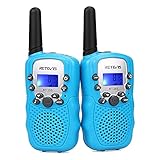 | Retevis RT388 Kids Walkie Talkies, Outdoor Toys for Kids Camping Essentials | Check Price On Amazon |
 | Cobra RX680 Walkie Talkies (2-Pack), IP54 Water Resistant Design | Check Price On Amazon |
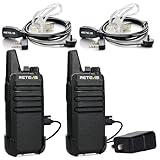 | Retevis RT22 Walkie Talkies Long Range Rechargeable with Earpiece (2 Pack) | Check Price On Amazon |
 | Midland GXT1000VP4 GMRS JIS4 Two-Way Radio, Black,2 Pack | Check Price On Amazon |
 | Retevis RT628 Walkie Talkies for Kids,Toys Gifts for 6-12 Years Old Boys Girls,Long Range 2 Way Radio 22CH VOX,Birthday Gift,Family Walkie Talkie for Camping Hiking Indoor Outdoor | Check Price On Amazon |