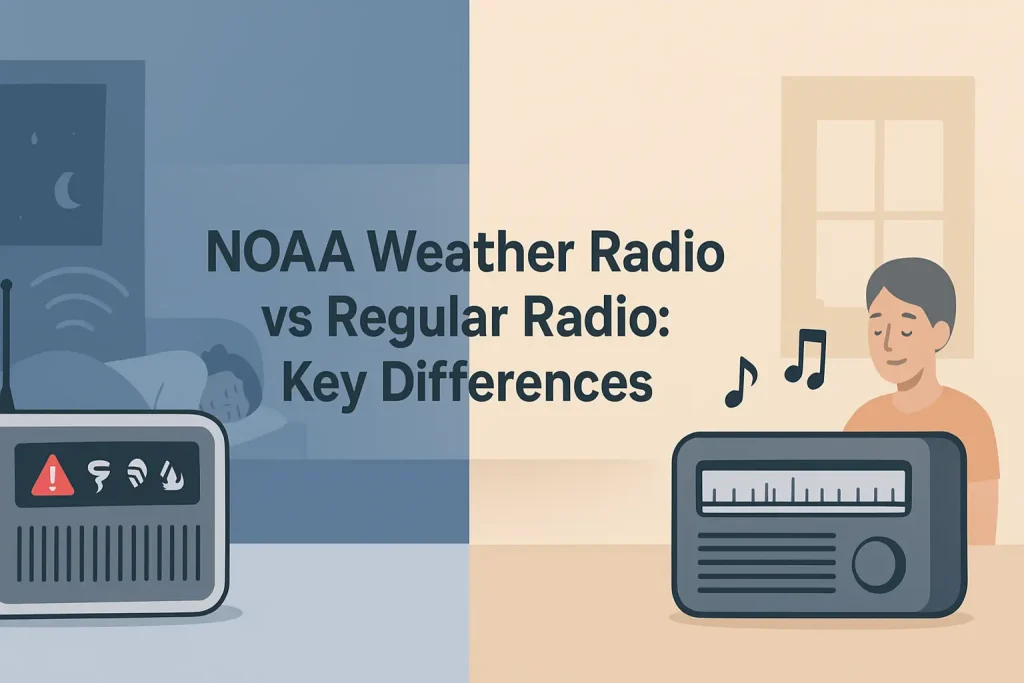
Your Midland weather radio will alert you to every severe weather warning in your entire state unless you program a SAME code into it. SAME stands for Specific Area Message Encoding, and it is the technology that lets your radio filter alerts down to your exact county or group of counties.
Without a SAME code entered, your radio treats every alert broadcast by your local NOAA transmitter as relevant to you. That means 3 a.m. alerts for counties 200 miles away.
By the Numbers
Midland Weather Radio SAME Codes: Key Facts and Figures
Sources: NOAA National Weather Service, FCC, FEMA IPAWS documentation
What Is a SAME Code and Why Does Your Midland Weather Radio Need One?
A SAME code is a 6-digit Federal Information Processing Standards (FIPS) number that identifies a specific county or independent city in the United States. NOAA embeds these codes into every weather alert broadcast so that receivers can filter which alerts to sound an alarm for.
Without a SAME code programmed, your Midland weather radio will activate its alarm for every single alert broadcast on your selected NOAA channel. That channel typically covers a multi-county or multi-state area.
With the correct SAME code entered, the radio only triggers an audible alarm when an alert applies to the county you specified. All other alerts are received silently and logged, but they will not wake you up at night.
The SAME system is defined and administered by NOAA under the Emergency Alert System (EAS) framework, which is coordinated by FEMA and the FCC. Every NOAA Weather Radio All Hazards (NWR) transmitter broadcasts SAME-encoded digital headers ahead of each alert message.
Your Midland radio decodes that digital header in real time and compares the embedded county FIPS code against the codes you have stored in its memory. If there is a match, the alarm activates. If there is no match, the radio stays silent.
Programming a SAME code is the single most important setup step for any Midland weather radio, and it takes less than two minutes once you have your county code ready.
How to Find Your SAME County Code Before You Start Programming
Your SAME code is the 6-digit FIPS code for your county. NOAA publishes the complete list of SAME codes for every county and independent city in the United States on the National Weather Service website at weather.gov/nwr/counties.
The code structure is straightforward. The first two digits identify your state. The next three digits identify your county within that state. A leading zero is added to make the total exactly six digits.
For example, Harris County, Texas uses SAME code 048201. The “048” identifies Texas as the state. The “201” identifies Harris County within Texas.
Cook County, Illinois uses SAME code 017031. The “017” identifies Illinois. The “031” identifies Cook County.
You can also find your SAME code by searching for your county on the NOAA NWR SAME code lookup tool. Enter your state and county name, and the tool returns the correct 6-digit code instantly.
Write down your code before you start the programming process. Midland radios require you to enter each digit individually using the keypad, so having the number in front of you prevents entry errors.
If you live near a county border, you can and should program codes for neighboring counties. Most Midland models accept multiple SAME codes simultaneously. The Midland WR400 weather radio stores up to 50 location codes, which covers even the most complex multi-county situations.
Which Midland Weather Radio Models Support SAME Code Programming?
All current Midland weather radio models support SAME programming. The feature has been standard on Midland weather radios since the adoption of SAME technology by NOAA, and every model from the entry-level WR120B to the flagship WR400 uses the same basic FIPS code entry process.
The differences between models relate to how many SAME codes they can store and how many alert event types they let you filter. Use the table below to identify your model’s SAME storage capacity before programming.
| Midland Model | SAME Codes Stored | Alert Event Types | Programming Method | Display |
|---|---|---|---|---|
| WR120B | 25 | 23 | Keypad | LCD |
| WR120EZ | 25 | 23 | Simplified keypad | LCD |
| WR300 | 25 | 25 | Keypad | LCD |
| WR400 | 50 | 25 | Keypad | Large LCD |
| ER310 | 25 | 23 | Keypad | LCD |
| HH54VP2 | 25 | 23 | Keypad | LCD |
Source: Midland Radio product documentation. SAME code storage capacity verified against current model specifications.
The WR120B is the most common entry-level model and supports everything a typical household needs. If you need coverage for more than 25 counties, such as for a business with multiple locations, the WR400 is the appropriate choice.
Knowing your model’s storage limit before you start prevents the frustrating situation of running out of slots mid-programming.
Here is a closer look at two of the most popular models in the Midland lineup and what their SAME programming setup looks like in practice.
Midland WR120B: SAME Programming Overview
The Midland WR120B weather alert radio is the brand’s most widely used entry-level model and handles SAME code entry through a straightforward keypad menu. It stores up to 25 location codes and monitors 23 alert event types including Tornado Warning, Flash Flood Warning, and Severe Thunderstorm Warning.
Key Specifications:
- SAME code storage: 25 location codes
- Alert event types monitored: 23
- NOAA channels: 7 (162.400 to 162.550 MHz)
- Power: AC adapter with 3x AA battery backup
- Programming: manual keypad entry, digit by digit
The WR120B uses a menu-driven setup where you press the SNOOZE/ALERT button to enter programming mode, then navigate with the up and down arrows to select SAME, and finally enter your 6-digit code using the number pad.
The display shows each digit as you enter it, so you can confirm accuracy before saving.
Midland WR400: SAME Programming Overview
The Midland WR400 weather radio features and alert setup process is more capable than the WR120B but follows the same basic digit-entry approach. It stores 50 SAME codes and supports 25 alert event types, making it the right choice for users who monitor alerts across a wide geographic area.
Key Specifications:
- SAME code storage: 50 location codes
- Alert event types monitored: 25
- NOAA channels: 7 (162.400 to 162.550 MHz)
- Power: AC adapter with 6x AA battery backup
- Display: large backlit LCD with alert type text
- Programming: manual keypad entry with visual confirmation
The WR400 also displays the full text name of each alert event type on screen, which makes it easier to confirm that you are looking at the right alert when one activates.
Both models use the same FIPS 6-digit code format, so the codes you look up work identically on either radio.
The step-by-step programming guide below applies to both models. Where the button labels differ, both versions are noted.
Here is the step-by-step guide for entering SAME codes on the most common Midland weather radio models.
Step-by-Step Guide
How to Enter a SAME County Code on a Midland Weather Radio
8 steps · Estimated time: 3 to 5 minutes · Applies to WR120B, WR120EZ, WR300, WR400, ER310, HH54VP2
Look up your 6-digit SAME county code before touching the radio
Go to weather.gov/nwr/counties or search “SAME code” plus your county and state name. Write the 6-digit FIPS number down. Do not attempt to enter from memory, as a single wrong digit will program the wrong county.
Power on the radio and ensure it is in normal monitoring mode
The radio should be displaying the time or scanning NOAA channels. If it is mid-alarm or in a menu from a previous session, press the SNOOZE or OFF button to return it to standby before starting the programming sequence.
Press and hold the SNOOZE/ALERT button (labeled ALERT on some models) for 2 seconds
The display will change to show the programming menu. On the WR120B and WR300, the screen shows “PROG” or navigable menu items. On the WR400, you will see a backlit menu with labeled options.
Navigate to the SAME or LOCATION menu option using the up and down arrow buttons
The menu items cycle through options such as SAME, EVENT (alert types), and CHANNEL. Stop when the display shows SAME or LOCATION, depending on your model’s labeling. Press the right arrow or SELECT button to enter that menu.
Select a memory slot number (01 through 25, or 01 through 50 on the WR400)
If this is your first code, select slot 01. If you are adding a second county, navigate to slot 02. Each slot stores one 6-digit SAME code. The radio monitors all filled slots simultaneously.
Enter your 6-digit SAME code one digit at a time using the number keypad
The display shows a flashing cursor at the first digit position. Press the number corresponding to the first digit of your SAME code. The cursor advances automatically. Continue entering all six digits in order. If you make an error, press the left arrow or BACK button to move back one digit position and re-enter.
Confirm the 6-digit code on screen matches your written code exactly, then press ENTER or SELECT to save
The display will briefly show a confirmation message or flash the saved code. On most Midland models, you will hear a short confirmation beep. If the code does not match, press BACK and re-enter before saving.
Exit the menu and verify the radio returns to normal monitoring mode
Press the SNOOZE/ALERT or BACK button repeatedly until the radio returns to the standby display showing the time and NOAA channel. The SAME filter is now active. Repeat steps 5 through 7 for any additional county codes you need to add.
How to Enter SAME Codes on the Midland WR120B: Detailed Walkthrough
The Midland WR120B uses a menu structure controlled by the SNOOZE/ALERT button and the directional arrow buttons. It stores up to 25 SAME codes and requires no special tools or computer software to program.
This process takes approximately 2 to 3 minutes per county code for a first-time user.
Step-by-Step for the WR120B
Start by pressing the SNOOZE/ALERT button and holding it for approximately 2 seconds until the display changes from the standby clock view to the programming menu.
The display will show the first menu option. Use the UP and DOWN arrows to scroll through the options until you see “SAME” on the display.
Press the right arrow button to enter the SAME sub-menu. The display now shows a slot number, starting at “01.”
If slot 01 already contains a code you want to keep, press UP or DOWN to move to an empty slot. If you are replacing an existing code, you can stay on the occupied slot and overwrite it.
Press the right arrow again to enter the digit entry screen. The display shows six underscores or a cursor at the first position.
Enter your 6-digit SAME code by pressing the number buttons one at a time. The WR120B does not have a dedicated number pad on all versions, so you may use the UP and DOWN arrows to cycle through digits 0 through 9 at each position, pressing the right arrow to advance to the next digit.
After entering all six digits, press the SNOOZE/ALERT button or ENTER to save. A short beep confirms the code is stored.
Press the SNOOZE/ALERT button several times to exit programming mode and return to standby. Your SAME filter is now active on the WR120B.
Common WR120B Programming Errors and How to Avoid Them
The most frequent mistake is entering only 5 digits instead of 6. Every valid SAME code is exactly 6 digits, including any leading zeros. If your county code starts with a zero, such as 017031 for Cook County, Illinois, you must enter the zero as the first digit.
Skipping it produces a 5-digit code that does not match any NOAA broadcast, and your radio will never trigger an alarm.
A second common error is selecting the wrong slot. If slot 01 already contains an old code for a previous location, programming your new county into slot 01 overwrites the old code without warning. Check all existing slots before adding new codes if you are updating a previously programmed radio.
The third error is exiting the menu before pressing ENTER to save. If you press BACK or SNOOZE before the save confirmation beep, the code is not stored.
Programming your SAME code correctly on the WR120B takes under 3 minutes and the radio will then filter alerts to your county automatically.
How to Enter SAME Codes on the Midland WR400: Detailed Walkthrough
The Midland WR400 uses a more capable menu system with a larger backlit display that shows full text for each menu option. The process is similar to the WR120B but the menu labels are more descriptive, which makes navigation easier.
The WR400 stores up to 50 SAME location codes across its programmable memory slots.
Step-by-Step for the WR400
Press and hold the MENU button on the WR400 for 2 seconds. The display transitions to a menu screen showing options in readable text.
Use the UP and DOWN arrow buttons to scroll to “LOCATION” in the menu list. Press ENTER or the right arrow to select it.
The display now shows the first memory slot. Scroll to the slot you want to program (01 through 50) and press ENTER.
The cursor appears at the first digit of a 6-digit entry field. Press the number keypad buttons to enter your 6-digit SAME code. The WR400 has a full numeric keypad on the face of the unit, which makes digit entry faster than on the WR120B.
After entering all six digits, the display shows the complete code. Press ENTER to save. A confirmation beep sounds and the display briefly shows “SAVED.”
Press the MENU button repeatedly to exit back to standby, or wait for the radio to time out of the menu automatically after approximately 30 seconds of inactivity.
To verify the code was saved correctly, re-enter the MENU, go to LOCATION, and scroll to the slot you just programmed. The display should show your 6-digit code exactly as entered.
If you are setting up a complete Midland WR400 alert configuration for the first time, it is worth also reviewing the EVENT TYPE settings in the same menu session, which lets you choose which categories of alerts trigger the alarm versus which ones are received silently.
How to Enter SAME Codes on Other Midland Models (WR300, ER310, HH54VP2)
Midland’s other weather radio models follow the same SAME code entry logic but use slightly different button labels and navigation sequences. The core process is identical: enter programming mode, navigate to the SAME or location menu, select a slot, enter 6 digits, and save.
Midland WR300
On the WR300, press and hold the SNOOZE button for 2 seconds to enter programming mode. Navigate with the UP/DOWN arrows to the SAME option and press the right arrow to enter it. Select a slot, enter your 6-digit code using the UP/DOWN arrows to change each digit (there is no dedicated number keypad on this model), advance with the right arrow, and press SNOOZE to save.
The WR300 stores 25 SAME codes and covers 25 alert event types.
Midland ER310 Emergency Crank Radio
The Midland ER310 emergency hand-crank radio supports SAME programming through the same menu structure. Press and hold the ALERT button for 2 seconds, navigate to SAME with the arrow keys, select a slot, enter the 6-digit code, and press ALERT to save.
Key Specifications for the ER310:
- SAME code storage: 25 location codes
- Alert event types: 23
- Power: hand crank, solar panel, 6x AA battery, micro-USB
- NOAA channels: 7 (162.400 to 162.550 MHz)
The ER310 is a portable emergency radio, so SAME programming is especially important. Without it, the radio sounds an alarm for every alert in a wide broadcast area, which is disruptive during extended emergency use.
Midland HH54VP2 Portable Weather Radio
The Midland HH54VP2 portable weather radio is a handheld unit that supports SAME programming via keypad. The menu entry method is the same as the WR120B: press and hold ALERT for 2 seconds, navigate to SAME, select a slot, enter your 6-digit code, and save.
Because this is a handheld radio often used during outdoor activities or travel, users frequently need to update the SAME code when moving between counties or states. The same digit-entry process applies each time.
For all models, the SAME filter remains active across power cycles. Once programmed, you do not need to re-enter the code each time you turn the radio on or off.
How to Program Multiple County SAME Codes on a Midland Weather Radio
Most Midland weather radios monitor all programmed SAME codes simultaneously. You do not need to choose between them or toggle between slots. The radio triggers an alarm if an incoming alert matches any of the codes stored in memory.
This means you can program your home county, your workplace county, and neighboring counties into separate slots and the radio will alert you for any of them.
When to Program Multiple SAME Codes
Program multiple codes if you live near a county border. Severe weather systems rarely respect county lines, and an alert for an adjacent county may be just as relevant to your safety as an alert for your own.
Program multiple codes if you commute between counties. A tornado warning for the county you are driving through matters even if your home county is not under threat.
Program multiple codes if you have family members in different counties. A single radio near a family member’s location can be programmed with all relevant county codes without any compromise in alert accuracy.
How to Add a Second SAME Code
Re-enter the programming menu using the same sequence as your first entry. Navigate to the SAME or LOCATION menu. Use the UP arrow to advance from slot 01 to slot 02. Enter the 6-digit SAME code for the second county and save.
Repeat this for each additional county, advancing to the next empty slot each time. The radio will monitor all filled slots in parallel with no additional setup required.
To delete a SAME code from a slot, navigate to that slot in the menu and overwrite it with zeros (000000) or, on some models, press a DELETE or CLEAR button while the slot is selected. Consult your model’s user manual for the exact delete procedure, as it varies between models.
Programming multiple SAME codes takes no longer than two minutes per code and immediately expands your alert coverage area without any trade-off in specificity for your home county.
Quick Reference
Midland Weather Radio SAME Programming: Key Terms Defined
Plain-language definitions for terms used throughout this guide
A digital encoding system used by NOAA to embed county-level location data into weather alert broadcasts, allowing compatible receivers to filter alerts by geographic area.
Federal Information Processing Standards code. A 6-digit number identifying a specific US county. The first two digits are the state code, the next three are the county code within that state. This is the same number as a SAME code in weather radio context.
The nationwide network of radio stations broadcasting continuous weather, emergency, and hazard information 24 hours a day on seven frequencies between 162.400 and 162.550 MHz.
The national public warning system coordinated by FEMA and the FCC that distributes alerts through broadcasters, cable providers, and NOAA Weather Radio. SAME technology is a component of EAS.
A category of hazard, such as Tornado Warning, Flash Flood Watch, or Winter Storm Warning. Midland radios let you filter which event types trigger an audible alarm versus which are received silently.
One of the numbered storage positions in your Midland radio’s memory where a single 6-digit SAME code is saved. The WR120B has 25 slots. The WR400 has 50 slots.
One of seven designated broadcast frequencies for the NOAA Weather Radio network: WX1 (162.550 MHz), WX2 (162.400 MHz), WX3 (162.475 MHz), WX4 (162.425 MHz), WX5 (162.450 MHz), WX6 (162.500 MHz), WX7 (162.525 MHz).
The combination of your programmed SAME codes and selected event types that determines which broadcasts trigger your radio’s alarm. Without any SAME codes programmed, no filtering occurs and all alerts sound.
Selecting the Right NOAA Channel Alongside Your SAME Code
A SAME code filters which alerts trigger your alarm. But the code only works if your radio is tuned to a NOAA transmitter that actually broadcasts alerts for your county. Choosing the right NOAA channel is just as important as entering the correct SAME code.
NOAA operates hundreds of transmitters across the country. Each transmitter covers a geographic area and broadcasts on one of seven dedicated frequencies: 162.550 MHz (WX1), 162.400 MHz (WX2), 162.475 MHz (WX3), 162.425 MHz (WX4), 162.450 MHz (WX5), 162.500 MHz (WX6), and 162.525 MHz (WX7).
How to Find the Right NOAA Channel for Your Location
The NOAA Weather Radio station finder at weather.gov/nwr lets you enter your zip code and returns the nearest transmitter, its broadcast frequency, and the counties it covers. Use this to confirm that the transmitter broadcasting on your chosen channel actually covers your county.
In most locations, the strongest receivable NOAA signal is the transmitter you want. Midland radios include an automatic channel scan function that finds the strongest NOAA signal at your location.
To use automatic channel scan on the WR120B: press the CHANNEL button while the radio is in standby. The radio scans all seven frequencies and locks onto the strongest signal. This typically selects the correct transmitter for your area automatically.
If you are in a fringe reception area near the border of two transmitters’ coverage zones, your radio may receive signals from both. In that case, check the NOAA station finder to confirm which transmitter covers your specific county and set the channel manually to that frequency.
What Happens When Your NOAA Channel Does Not Cover Your County
This is the most frequently overlooked SAME programming problem. A correctly entered SAME code produces no alarm if the NOAA transmitter on your selected channel does not broadcast alerts for your county. The radio simply never receives a matching SAME header.
If your radio received alerts before you programmed a SAME code but stopped alerting afterward, this is the first thing to check. Confirm that your selected NOAA channel is the correct transmitter for your county, not just the strongest receivable signal.
In rural areas, the strongest signal is sometimes a transmitter from a neighboring state or region that does not cover your county at all. The NOAA station finder resolves this definitively.
Choosing the right NOAA channel and entering the correct SAME code together are the two steps that ensure your Midland weather radio alerts you reliably and only for your area.
How to Select Alert Event Types on Midland Weather Radios
Beyond county filtering, Midland weather radios let you control which categories of alerts trigger an audible alarm. This is the EVENT TYPE or ALERT TYPE setting, separate from the SAME location code setting.
NOAA broadcasts dozens of alert event types through the NWR network. These include Tornado Warning, Tornado Watch, Severe Thunderstorm Warning, Flash Flood Warning, Flash Flood Watch, Winter Storm Warning, Blizzard Warning, Hurricane Warning, Hazardous Materials Warning, Civil Emergency Message, AMBER Alert, and National Information Center messages, among others.
How Event Type Filtering Works
On most Midland models, you can toggle each event type individually between ALARM (sounds the audible alert), ALERT (logs silently without alarm), and OFF (ignores the event type entirely). The specific options vary by model.
To access event type settings on the WR120B: enter the programming menu (hold SNOOZE/ALERT for 2 seconds), navigate with the UP/DOWN arrows to “EVENT” or “ALERT TYPE,” and press the right arrow to enter. Scroll through the event type list, pressing the right arrow or ENTER to toggle each type between ALARM, ALERT, and OFF.
On the WR400, the EVENT menu is more detailed, showing the full event type name on the display and offering the same three-option toggle.
Recommended Event Type Settings for Residential Use
Set Tornado Warning, Flash Flood Warning, and Severe Thunderstorm Warning to ALARM. These are immediate life-safety threats where nighttime activation is essential.
Set Tornado Watch and Severe Thunderstorm Watch to ALERT (silent log) rather than ALARM if nighttime false alarm fatigue is a concern. Watches indicate conditions are favorable for severe weather but do not mean it is occurring imminently.
Set test messages (Weekly Test, Required Weekly Test) to ALERT or OFF to prevent scheduled test broadcasts from triggering your alarm mid-sleep.
Set AMBER Alert to ALARM if you want to be notified of child abduction alerts, or to ALERT if you prefer them silently logged.
Event type filtering works in combination with your SAME code. An alert must match both your programmed county code and your ALARM-configured event types to trigger the audible alarm.
Configuring both SAME codes and event types gives you precise control over exactly which alerts wake you at night and which ones are logged silently for review in the morning.
Troubleshooting SAME Code Programming Problems on Midland Radios
The most common SAME programming problems fall into four categories: the radio is not alarming when it should, the radio is alarming when it should not, the code was not saved correctly, or the display is showing an error during entry.
Radio Is Not Alarming for Your County
Verify three things in this order. First, confirm the 6-digit code in your radio’s memory matches the NOAA SAME code for your county exactly. Re-enter the programming menu, navigate to the SAME slot, and read back the stored digits. Even one transposed digit means the code will never match.
Second, confirm you are tuned to the correct NOAA channel for your county using the NOAA station finder. A valid SAME code cannot trigger an alarm on a transmitter that does not broadcast your county’s alerts.
Third, confirm that the alert event type for the kind of alert you expected is set to ALARM, not ALERT or OFF, in the event type menu.
Radio Is Alarming for Wrong Counties or Too Frequently
This usually means the SAME code was not saved, and the radio is operating without a filter. Re-enter the programming menu and check whether your SAME slot contains a valid 6-digit code or shows all zeros or blanks. If the slot is empty, the radio treats all received alerts as matching, which produces alerts for every county the NOAA transmitter covers.
Re-enter your 6-digit code, save it with the confirmation step, and verify via the readback method described above.
Display Shows an Error or Freezes During Code Entry
Remove power from the radio (unplug AC and remove backup batteries) for 30 seconds, then restore power. This resets the menu state. Attempt the programming sequence again from the beginning.
If the radio freezes repeatedly at the same menu step, consult the Midland Radio support page at midlandusa.com or the user manual for your specific model. Midland provides PDF manuals for all current and legacy weather radio models on their website.
Code Entry Accepts Only 5 Digits
This is caused by a county code that begins with zero. If your county’s SAME code starts with “0,” you must enter that zero as the first digit. Some users skip it assuming it is not part of the code. The entry field requires all 6 digits to be filled. Enter the leading zero first, then the remaining five digits.
For detailed troubleshooting steps that go beyond SAME programming, the complete weather radio setup and troubleshooting reference on this site covers common reception and alert problems across multiple brands and models.
Resolving SAME programming errors usually takes under 5 minutes once you know which of the four causes applies to your situation.
SAME Code Programming for Special Situations
Programming a SAME Code When Traveling or in a Different County
When you travel with a portable Midland weather radio such as the Midland ER310 emergency hand-crank radio or the HH54VP2, you will need to update the SAME code to match your temporary location.
Look up the SAME code for your destination county before you leave, or use the NOAA SAME code lookup tool on a smartphone at your destination. Enter the new code in an available memory slot so the radio covers both your home county and your travel destination simultaneously.
When you return home, you can either leave the travel county code in memory (it will not cause problems), or navigate to that slot and overwrite it with zeros to clear it.
Programming SAME Codes for a Beach House, Cabin, or Secondary Property
If you maintain a weather radio at a secondary property, program the SAME codes for that property’s county, not your primary residence county. The radio must match the county where it is physically located, not where you live.
This is a common oversight. A radio programmed with your home county code will not alarm for severe weather at your vacation property if the vacation county is different.
SAME Code for a Whole State (All-Hazards Monitoring)
NOAA assigns special SAME codes that represent entire states rather than individual counties. These state-level codes trigger an alarm for any alert issued for any county in the state.
State-level codes follow a specific pattern: the first two digits are the state FIPS code, and the last three digits are “000.” For example, Texas (state FIPS 048) uses the all-state SAME code 048000. Illinois (state FIPS 017) uses 017000.
Using a state-level code is appropriate for emergency management personnel, broadcast facilities, or businesses that need to monitor all alerts statewide. For residential use, it produces an excessive volume of alarm activations and is not recommended.
If you want broader coverage than a single county but do not want statewide monitoring, program the SAME codes for each specific county you want to monitor individually into separate memory slots. This gives you precise multi-county coverage without the noise of a state-wide filter.
What Happens After a SAME Alert Activates on Your Midland Radio
When an incoming NOAA alert matches both your programmed SAME county code and an event type set to ALARM, the Midland radio activates its alarm tone and turns on the display backlight. The alarm is loud enough to wake most people from sleep, which is by design.
On most Midland models, the display shows the alert event type in text (such as “TORNADO WARNING”) along with the duration of the alert and sometimes the affected area description.
The radio then switches its audio output to broadcast the NOAA voice message describing the alert in full. This includes the specific counties affected, the threat description, the expected duration, and the recommended action.
Pressing the SNOOZE button silences the alarm tone while the voice message continues to play. Pressing it again on most models stops the audio entirely but keeps the radio in active alert mode until the alert expires.
After the alert message ends, the radio returns to its normal monitoring state. On the WR400 and WR300, the alert is logged in memory and can be reviewed by pressing the ALARM or MEMORY button to scroll through past alerts.
The entire alert-to-silence sequence from the moment the alarm sounds to the end of the voice message typically takes 2 to 4 minutes for a standard severe weather alert. For Civil Emergency Messages or National Information Center broadcasts, the message may be longer.
Your radio does not require any manual reset between alerts. It returns automatically to monitoring mode and will alarm again if a new matching alert is broadcast.
Comparing Midland Weather Radios by SAME Capability
If you are choosing a Midland weather radio specifically for its SAME programming features, the key differences between models are SAME code storage capacity, alert event type count, and display readability during an event. Use the table below to match the right model to your needs.
| Feature | WR120B | WR300 | WR400 | ER310 |
|---|---|---|---|---|
| SAME codes stored | 25 | 25 | 50 | 25 |
| Alert event types | 23 | 25 | 25 | 23 |
| Number keypad for code entry | No (arrow keys) | No (arrow keys) | Yes | No (arrow keys) |
| Alert event name shown on display | Abbreviated | Abbreviated | Full text | Abbreviated |
| Alert memory log | No | Yes | Yes | No |
| Battery backup | 3x AA | 3x AA | 6x AA | 6x AA + crank + solar |
| Best for | Single household | Home use, alert log | Multi-county, business | Go-bag, travel |
Source: Midland Radio product documentation. Specifications verified against current model data sheets.
For most single-family households monitoring one or two counties, the WR120B or WR300 provides everything needed. The WR400 is the right choice when you need to monitor more than 25 counties or want the clarity of a full-text display during alert events.
For a detailed look at how these models compare in real-world alert scenarios, the top-rated weather radios compared across alert performance metrics covers the full lineup with hands-on context.
How Often Should You Test Your SAME Code Programming?
NOAA broadcasts a Required Weekly Test (RWT) every Wednesday between 11 a.m. and noon local time on all NWR transmitters. This test includes a full SAME-encoded header for all counties covered by that transmitter, followed by a short voice message identifying it as a test.
If your SAME code is programmed correctly and your event type settings include the weekly test on ALARM, your radio will sound its alarm during this test window. This is the easiest way to confirm your SAME programming is working without waiting for a real severe weather event.
If you have set the weekly test to ALERT or OFF in your event type settings (a reasonable choice to avoid a weekly alarm), you can still test your SAME code by temporarily switching the Required Weekly Test to ALARM, waiting for Wednesday, and then switching it back afterward.
You should also re-verify your SAME code after any power outage that required you to re-insert batteries or after any factory reset of the radio. Some early Midland models lose programmed settings during extended power interruptions, though most current models retain settings in non-volatile memory across power cycles.
Check your SAME code settings at least once per year as part of a broader emergency preparedness review. Replace the backup AA batteries in the same session.
The weather radio selection and setup guide for new buyers includes a full annual maintenance checklist covering SAME code verification, battery replacement intervals, and antenna positioning for all major brands.
Can You Use the Same SAME Code on Multiple Radios?
Yes. A SAME code is a publicly defined geographic identifier, not a device-specific registration. The same 6-digit FIPS code for your county can be programmed into as many weather radios as you own, and each radio will filter alerts independently using the same code.
There is no registration, pairing, or coordination required between radios. Each radio decodes incoming SAME headers independently and applies its own stored codes to determine whether to alarm.
This is useful for households that maintain multiple radios: one in the bedroom, one in the kitchen, and a portable one in a go-bag. All three can be programmed with the same county code and will alarm simultaneously when a matching alert is broadcast.
You can also program different radios with different primary SAME codes. For example, a bedroom radio programmed primarily for your home county and an office radio programmed for your workplace county, with overlapping codes on each for the adjacent county between them.
SAME Codes vs. Whole-County vs. Partial-County Alerts
NOAA can issue alerts for a specific county, a group of counties, a portion of a county (such as a zone within a large county), or an entire state. SAME codes at the county FIPS level will trigger for any alert that includes your county FIPS code, whether the alert covers the whole county or only a portion of it.
Some large counties have NWS forecast zones that subdivide the county into northern, southern, or coastal zones. NOAA uses zone-based SAME codes for alerts targeting these subdivisions. Zone SAME codes are different from county FIPS codes and follow a different numbering format (for example, “TXZ043” for a Texas zone, converted to a numeric code for radio entry).
For most residential use, the county-level FIPS SAME code is the correct choice. It covers all alerts that include your county, whether they target the full county or a zone within it.
Zone-level SAME codes are used by broadcast stations and emergency management agencies that need to distinguish between northern and southern portions of large counties. For a home weather radio, county-level coverage is appropriate and simpler to maintain.
If you live in a coastal county where coastal vs. inland zone distinctions matter significantly, check with your local National Weather Service office (weather.gov) for guidance on whether zone-level codes are worth adding to your radio’s memory alongside the county FIPS code.
Does SAME Code Programming Work on Non-Midland Weather Radios?
Yes. SAME code programming works the same way on all SAME-capable weather radios, regardless of brand. The 6-digit FIPS codes are standardized by NOAA and work identically across Midland, Uniden, Sangean, Eton, Meade, RadioShack, and any other brand that supports SAME technology.
The difference between brands is the menu navigation process and the number of SAME codes the radio can store. The actual codes you enter are identical.
For example, if your county’s SAME code is 039049, you enter 039049 on a Midland WR120B, a Uniden BC365CRS weather radio, or a Sangean CL-100 weather alert radio, and the radio will filter alerts for the same county regardless of brand.
The step-by-step process described in this guide for Midland radios applies in concept to all SAME-capable weather radios. The button names and menu structure will differ, but the underlying logic (enter programming mode, navigate to SAME, select a slot, enter 6 digits, save) is universal.
For a comparison of how Eton’s SAME programming compares to Midland’s in a real-world setup, the Eton FRX3 Plus hands-on review covers the alert programming process for that model in detail.
Where to Buy a Midland Weather Radio With SAME Support
All current Midland weather radios include SAME support as a standard feature. You do not need to specifically search for a “SAME-capable” model because all current models in the Midland lineup support it.
The Midland WR120B weather radio is widely available through major retailers and is the most affordable starting point for SAME programming.
The Midland WR400 is available at higher price points and offers the 50-code storage and full-text display that larger households or businesses need.
For a portable option that works on battery, solar, and hand crank power, the Midland ER310 emergency crank weather radio is the most versatile option for go-bags and off-grid use.
For guidance on where to find these radios in person if you prefer to buy locally, the retail and online sourcing guide for weather radios lists the major stores and online options that carry the full Midland lineup with current availability information.
All Midland weather radios sold through authorized retailers include a user manual with model-specific SAME programming instructions. Keep the manual after setup, as the button labels and menu sequence for SAME entry are documented there for future reference.
Is My SAME Code Entered Correctly? How to Verify Without Waiting for a Real Alert
You can verify SAME code programming without waiting for a severe weather event by using the NOAA Required Weekly Test broadcast. This test occurs every Wednesday between 11 a.m. and noon local standard time on every NWR transmitter.
To test your programming: temporarily set the Required Weekly Test event type to ALARM in your radio’s event type menu. At the next Wednesday test window, the radio should alarm if your SAME code is stored correctly and your selected NOAA channel covers your county.
If the radio does not alarm during the Wednesday test, work through the three-step check: verify the stored code matches your county FIPS exactly, confirm the NOAA channel covers your county, and confirm the Required Weekly Test is set to ALARM rather than ALERT or OFF.
A second verification method is to look up a recent alert log for your county using the NOAA NWS alert archive at alerts.weather.gov. If any alerts were issued for your county recently, check whether your radio logged them. On models with alert memory (WR300, WR400), review the stored alert log by pressing the MEMORY or ALARM HISTORY button. If the alert appears in memory but did not sound an alarm, your event type for that alert category may be set to ALERT rather than ALARM.
If no alerts appear in memory at all during a period when alerts were issued for your county, the issue is either a wrong SAME code, a wrong NOAA channel, or a power interruption that caused settings to reset.
Verification takes 10 minutes and eliminates uncertainty about whether your radio will respond when it matters most.
What Is a SAME Code on a Weather Radio?
A SAME code on a weather radio is a 6-digit number that identifies a specific county or independent city in the United States. Entering this code into your weather radio tells it to only sound an alarm for alerts issued for that county, rather than for every alert broadcast across the entire NOAA transmitter coverage area.
The code uses the Federal Information Processing Standards (FIPS) format, where the first two digits represent the state and the next three represent the county within that state. NOAA embeds these codes into the digital header of every weather alert broadcast over the NOAA Weather Radio All Hazards network, operating on frequencies between 162.400 and 162.550 MHz.
Where Can I Find My County’s SAME Code?
Your county’s SAME code is available on the NOAA National Weather Service website at weather.gov/nwr/counties. The page lists every county and independent city in the United States with its corresponding 6-digit FIPS SAME code. You can also use the NOAA NWR SAME code lookup tool by entering your state and county name.
The code is always exactly 6 digits. If the FIPS code for your county appears to be 5 digits, it begins with a leading zero that must be entered as the first digit in your radio’s programming menu. For example, Cook County, Illinois is 017031, not 17031.
Do I Need to Reprogram My SAME Code If I Move to a Different County?
Yes. If you move to a different county, you must update the SAME code in your weather radio to the FIPS code for your new county. The radio has no automatic location detection. If you leave the previous county’s code in memory without adding the new one, the radio will not alarm for alerts in your new location.
You can either overwrite the old code in the same memory slot or add the new code in a separate slot while keeping the old one, which is useful if you still have property or family in the previous county.
Why Is My Midland Weather Radio Not Alarming During Severe Weather?
The most common cause is a SAME code that was not saved correctly, resulting in no county filter being applied. Paradoxically, this can also mean the radio alarms less frequently rather than more, because the radio may be monitoring a NOAA channel that does not cover your county when no code is filtering it to a specific transmitter area.
Check these three things in order: verify the 6-digit code stored in your SAME memory slot matches your county’s FIPS code exactly; confirm your selected NOAA channel is the correct transmitter for your county using the NOAA station finder; and confirm the event type for the relevant alert category (such as Tornado Warning) is set to ALARM, not ALERT or OFF, in the event type menu.
Can I Program SAME Codes for Multiple Counties on One Radio?
Yes. Midland weather radios store between 25 and 50 SAME codes simultaneously depending on the model. The WR120B, WR300, ER310, and HH54VP2 store 25 codes. The WR400 stores 50 codes. The radio monitors all stored codes simultaneously and alarms if any incoming alert matches any of the stored county codes.
There is no performance penalty for programming multiple codes. The radio checks all stored codes against every received SAME header in real time. This means you can monitor your home county, workplace county, and neighboring counties all at once without any compromise in alert speed or accuracy.
What Is the Difference Between a Tornado Warning and a Tornado Watch Alert on My Weather Radio?
A Tornado Warning means a tornado has been detected by radar or confirmed by a trained weather spotter. It is an immediate life-safety alert requiring immediate action. Your radio should be configured with Tornado Warning set to ALARM. A Tornado Watch means atmospheric conditions are favorable for tornado formation but no tornado has been detected yet. A watch gives you time to prepare but does not require immediate protective action.
Midland weather radios let you set each of these event types independently in the event type menu. Setting Tornado Warning to ALARM and Tornado Watch to ALERT (silent log) is a common configuration that reduces nighttime alarm frequency while still ensuring immediate notification for confirmed tornadoes.
Does Programming a SAME Code Affect My Radio’s Reception of the NOAA Voice Broadcast?
No. SAME code programming only controls whether the radio’s alarm tone activates for a given alert. The NOAA voice broadcast plays in full for all alerts on your selected channel, regardless of whether your SAME code matches the county in the alert. The SAME filter only determines whether the alarm wakes you up, not whether the audio message is received.
This means that if an alert for a neighboring county plays on your NOAA channel, your radio will receive and could play the audio but will not sound the alarm if that county’s code is not in your programmed memory. On most Midland models, you can review this audio by pressing the ALARM or LISTEN button.
What Is the Difference Between a SAME Code and a Privacy Code on a Two-Way Radio?
A SAME code and a privacy code are completely different technologies used in different radio systems. A SAME code is a 6-digit FIPS county identifier used exclusively by weather radios to filter NOAA alert broadcasts by geographic area. A privacy code (also called a CTCSS tone or DCS code) is a sub-audible signal used on FRS, GMRS, and other two-way radios to filter which transmissions open the radio’s speaker, preventing you from hearing all activity on a shared channel.
SAME codes are received passively by weather radios from NOAA broadcasts. Privacy codes are transmitted and received between two-way radios as part of their normal communication. The two systems have no interaction with each other and serve entirely different purposes.
Do I Need a License to Use a Weather Radio With SAME Technology?
No license is required to own or operate a NOAA weather radio, including models with SAME technology. Weather radios are receive-only devices that passively listen to NOAA broadcasts on 162.400 to 162.550 MHz. They do not transmit on any frequency. Receive-only radio equipment does not require an FCC license under any circumstances for personal or business use in the United States.
This is distinct from two-way radios such as GMRS handhelds, which do transmit and require an FCC license under Part 95 for operation. Weather radios with SAME capability are fully legal to operate in the US without any registration or licensing requirement.
Can I Use a SAME Code to Monitor Weather Alerts in Another State?
Yes. SAME codes work for any county in the United States, and there is no restriction on programming a code for a county in a different state than where you are located. If you have family in a hurricane-prone coastal county in Florida and you live in Ohio, you can program that Florida county’s SAME code into your radio alongside your Ohio county code.
Your radio will need to receive that county’s NOAA transmitter signal to alert for it. In practice, you cannot receive a Florida NOAA transmitter from Ohio due to signal range limitations. Cross-state SAME code monitoring is therefore only practical when you are physically in or near the county you want to monitor, such as during travel or at a seasonal property.
For remote monitoring of weather conditions in distant locations, cellular-based weather alert apps rather than NOAA weather radios are the practical solution, since cellular coverage extends nationally while radio reception is geographically limited to within approximately 40 miles of a NOAA transmitter.
Correctly programming your Midland weather radio with the right SAME county code and the right NOAA channel takes about 5 minutes and is the difference between a radio that wakes you for every storm in your state and one that alerts you precisely when your specific area faces a genuine threat.
Look up your 6-digit FIPS code at weather.gov/nwr/counties, follow the step-by-step programming guide above for your specific model, and test the setup on the next Wednesday NOAA test broadcast to confirm everything is working before severe weather season arrives.